Our readers keep the lights on and my smoothie glass nicely filled. As an Amazon Associate, I earn from qualifying purchases.
Waking up with a raw, red, or chafed bridge of your nose is a brutal way to start the day after a night of interrupted sleep. That relentless friction between silicone and skin doesn’t just hurt—it undermines your compliance with a therapy that’s literally keeping you alive. The right barrier cream changes everything by creating a protective film that lets your mask seal properly without grinding into your dermis.
I’m Mohammad Maruf — the founder and writer behind WellFizz. I’ve spent countless hours analyzing skin barrier formulations, medical-grade ointments, and the specific material compatibilities that matter when a product has to sit under a CPAP mask for eight hours straight.
After sorting through dozens of formulas for their occlusion power, ingredient safety, and non-comedogenic properties, I have identified the best cream for cpap irritation that actually stops the chafing cycle without ruining your mask seal.
How To Choose The Best Cream For CPAP Irritation
Choosing wrong here means waking up with greasy mask cushions, a destroyed seal, or skin that’s still raw. You need a cream that stays put, plays nice with silicone, and actually heals the tissue underneath.
Occlusivity is Everything
A standard lotion evaporates within an hour under the warm, pressurized air of a CPAP mask. You need an occlusive barrier — think petrolatum, dimethicone, or zinc oxide — that physically blocks moisture loss and friction. The thicker the base, the longer the protection lasts through the night.
Mask Material Safety
Some creams contain oils, silicones, or preservatives that degrade silicone cushions over time, causing them to yellow or lose their tack. Look for formulas explicitly labeled as CPAP-safe or those with inert ingredients that won’t react with medical-grade silicone. A compromised cushion means a leaking seal and zero therapy benefit.
Healing vs. Prevention
If you already have broken skin or scabbing, you need an ingredient like hydrocortisone (an anti-inflammatory) or allantoin (a tissue regenerator) to actually heal the wound. If you’re looking to prevent future irritation before it starts, a simple barrier ointment without active medicated ingredients is usually sufficient and safer for nightly use.
Quick Comparison
On smaller screens, swipe sideways to see the full table.
| Model | Category | Best For | Key Spec | Amazon |
|---|---|---|---|---|
| Mars Wellness CPAP Gel | Gel Protectant | CPAP-specific irritation | Allantoin formula | Amazon |
| Aquaphor Healing Ointment | Multi-Purpose Ointment | Dry, cracked skin | 7 oz tube, water-free | Amazon |
| Calmoseptine Cream | Zinc Oxide Barrier | Active irritation healing | 2.5 oz jar | Amazon |
| Restorz Hydrocortisone Stick | Medicated Stick | Redness & itch relief | 1% hydrocortisone | Amazon |
| Critic-Aid Clear Barrier | Moisture Barrier | Long-term prevention | 6 oz tube, clear formula | Amazon |
In‑Depth Reviews
1. Mars Wellness CPAP Gel Skin Protectant

This gel was designed from the ground up for CPAP users, and it shows in every detail. Its allantoin-based formula actively soothes existing chafing while forming a thin, flexible barrier that doesn’t interfere with your mask cushion’s silicone grip. Users report that applying a sparing amount and letting it dry for sixty seconds before strapping in actually allows them to loosen their headgear without losing seal integrity.
The texture is notably lighter than a standard ointment—more of a viscous gel that spreads evenly without pilling or clumping. This low-friction quality is critical under a pressurized mask where any uneven surface can create a leak point. The formula is also free of harsh preservatives and fillers that could degrade mask components over time, a genuine concern with household creams.
Nightly use is safe because the formulation prioritizes prevention over aggressive medication. It won’t thin your skin with repeated application, making it a sustainable long-term solution for anyone who sleeps with a nasal or full-face mask every night. A single tube, used sparingly, lasts well over a month.
Why it’s great
- Specifically engineered for CPAP mask compatibility, not repurposed
- Allantoin actively repairs tissue while protecting from friction
- Gel texture improves seal, allowing looser strap tension
Good to know
- Tube is compact at 1 oz, so replace more often than larger jars
- Very liquid consistency requires a brief drying period before mask application
2. Aquaphor Healing Ointment Advanced Therapy
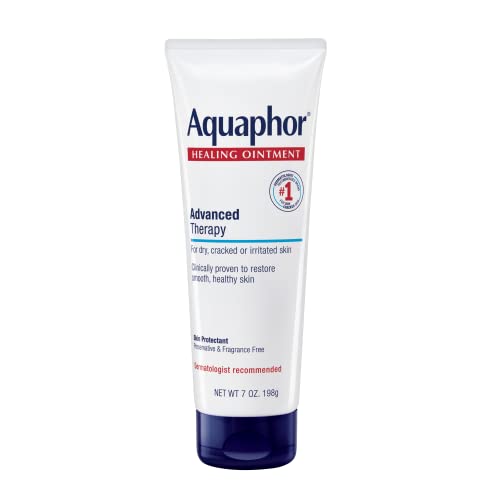
Aquaphor is the dermatologist’s utility knife for dry, compromised skin for a reason. Its water-free formula creates a semi-occlusive barrier that allows oxygen flow while sealing in moisture—a critical distinction from plain petroleum jelly which can suffocate healing tissue. For CPAP irritation, a tiny dab on the bridge of the nose before mask application provides hours of friction reduction.
The squeeze tube format is actually more hygienic than a jar because you’re not dipping fingers into the product repeatedly, reducing the risk of contaminating the ointment with skincare residue or bacteria that could further irritate sensitive skin. A 7 oz tube provides months of nightly use, making it remarkably economical compared to specialty CPAP gels on a per-ounce basis.
Advanced therapy ointments work best as a preventive barrier rather than a treatment for already broken skin. If you already have scabbing or open sores, you’ll want something with active healing ingredients underneath. For everyone else looking to stop the chafing before it starts, this is the most reliable and affordable option.
Why it’s great
- Massive 7 oz tube offers exceptional longevity for nightly CPAP use
- Water-free formula allows oxygen flow for optimal healing environment
- Clinically proven to restore dry, compromised skin
Good to know
- Thicker texture can feel heavy under a full-face mask for some users
- Not specifically formulated for CPAP mask silicone compatibility
3. Calmoseptine Cream Skin Protectant

Zinc oxide is the gold standard for barrier protection in the medical world, and Calmoseptine delivers it in a thick, soothing cream that seals like a physical bandage over irritated skin. This is the cream you reach for when the damage is already done—when the bridge of your nose is raw, red, and painful to touch. The zinc physically blocks moisture from weeping wounds while allowing the skin to breathe underneath.
The cream’s consistency is significantly thicker than a standard lotion, spreading easily over small areas like the nasal bridge or cheekbone contact points. Users report that a pea-sized amount works for an entire night, and the effect of “sealing” the sore like a liquid bandage means you can actually wear your mask again without wincing. The calamine component provides the “calmo” in the name, delivering a noticeable cooling sensation on inflamed skin.
The jar packaging is worth noting—dipping fingers into a jar introduces possible contamination over time, so keep the cream clean and use a small spatula if you have especially sensitive skin. This is a treatment cream, not an everyday preventive, so cycle it in when you feel a hot spot forming.
Why it’s great
- Zinc oxide creates a physical barrier that seals weeping sores
- Soothes on contact with a cooling sensation from calamine
- Extremely long-lasting, small amount covers an entire night
Good to know
- Thick white paste may leave visible residue on mask cushions
- Jar format less hygienic than tube for nightly use
4. Restorz Hydrocortisone 1% Cream Treatment Stick

Hydrocortisone is the active ingredient that actually reduces inflammation, redness, and itching at the cellular level. For CPAP users whose irritation has progressed to dermatitis—where the skin is not just chafed but inflamed and itchy—this stick format delivers the medication precisely where needed without greasy fingers. A single swipe across the nasal bridge applies a thin, controlled layer that absorbs quickly without the sticky mess of a cream.
This is specifically useful for the daytime treatment phase, when you need to calm the skin between CPAP sessions. Apply it after your morning shower and let the hydrocortisone work for a few hours before your next sleep cycle. The stick format is also completely portable, fitting into a pocket or CPAP travel bag without risk of leaking or spilling.
Important caution: hydrocortisone should not be used as a nightly preventive under your mask indefinitely. Prolonged use can thin the skin, ironically making it more prone to future CPAP irritation. Use this to break the cycle of active inflammation, then switch to a non-medicated barrier cream for ongoing nightly prevention.
Why it’s great
- No-mess stick applicator perfect for daytime healing between CPAP sessions
- 1% hydrocortisone actively reduces redness and itching on contact
- Water-resistant formula stays put during daily activities
Good to know
- Not for nightly long-term use due to skin-thinning risk
- Stick smaller than expected, limited coverage area per application
5. Critic-Aid Clear Moisture Barrier Ointment

Critic-Aid comes from the medical wound-care world, originally formulated for incontinence-associated dermatitis but equally effective for CPAP pressure points. The clear formula is a practical advantage—it doesn’t leave white streaks on dark mask cushions or your face, so you can apply it generously without worrying about visible residue. The 6 oz tube is generous and designed for high-frequency use in clinical settings.
The ointment spreads smoothly and thinly, creating a transparent barrier that stays in place for hours under occlusion. Users switching from thicker pastes notice how much less product they need compared to zinc-based creams, and the tube packaging keeps the ointment sterile for months. It’s also fragrance-free, a non-negotiable for anyone whose CPAP irritation is worsened by perfumes or essential oils.
NICU staff have recommended this for the most fragile infant skin, which speaks to its safety profile. For CPAP users with hypersensitive skin that reacts to every new product, this is the safest bet for preventing the cycle of irritation before it begins. The only trade-off is that it’s purely preventive—if you need active healing, pair it with a medicated treatment underneath.
Why it’s great
- Clinically tested for fragile skin, safe for long-term nightly use
- Clear formula leaves no visible marks on mask cushions or face
- Easy to apply and even easier to wash off with mild soap
Good to know
- Primarily a moisture barrier with no active healing ingredients
- Thinner consistency may require reapplication for very long sleep sessions
FAQ
Can I use any moisturizer under my CPAP mask?
How do I apply barrier cream under my CPAP mask without ruining the seal?
Will these creams damage my CPAP mask cushion over time?
Final Thoughts: The Verdict
For most users, the best cream for cpap irritation winner is the Mars Wellness CPAP Gel because it was engineered for this exact problem—it soothes existing damage, prevents new chafing, and actively improves mask seal. If you want maximum value with a huge tube, grab the Aquaphor Healing Ointment. And for active, painful sores that need real healing, nothing beats the Calmoseptine Cream.

Mo Maruf
I created WellFizz to bridge the gap between vague wellness advice and actionable solutions. My mission is simple: to decode the research and give you practical tools you can actually use.
Beyond the data, I am a passionate traveler. I believe that stepping away from the screen to explore new environments is essential for mental clarity and physical vitality.