Our readers keep the lights on and my smoothie glass nicely filled. As an Amazon Associate, I earn from qualifying purchases.
Runners who overpronate face a frustrating trade-off: pick a stability shoe that feels like a brick, or choose plush cushioning and risk knee and hip pain. The latest generation of stability running shoes has shattered that compromise, using advanced foam and guide rails to deliver a soft, responsive ride without sacrificing the medial support that keeps your gait aligned. Whether you are training for a marathon or just trying to stay pain-free on daily jogs, finding the right blend of cushion and correction is the single most important gear decision you will make.
I’m Mohammad Maruf — the founder and writer behind WellFizz. My research process involves analyzing hundreds of verified customer reviews, studying midsole geometries, and comparing foam densities and stability technologies across premium and mid-range models to identify the shoes that genuinely deliver on their promises.
After weeks of deep-dive analysis, I have curated a list of nine top contenders that represent the best on the market today. This guide breaks down each shoe’s strengths, ideal use case, and specific stability features so you can confidently choose the pair that matches your foot type and running style. Here is everything you need to know about selecting cushioned stability running shoes that actually work.
How To Choose The Best Cushioned Stability Running Shoes
Not every stability shoe delivers equal amounts of cushion and correction. Understanding how your foot strikes the ground and how different brands approach stabilization will help you avoid a purchase that leaves you sore. Focus on these three areas when comparing models.
Pronation Support vs. Medial Posting
Traditional stability shoes use a firm medial post (a denser piece of foam under the arch) to slow down excessive inward rolling. Newer designs, like Brooks’ GuideRails and Hoka’s J-Frame, use a broader, less intrusive approach that wraps the heel rather than jamming a hard wedge under your arch. If you have mild to moderate overpronation, a guide-rail system typically feels more comfortable over long miles. If you need aggressive correction, a traditional medial post (common in the Mizuno Wave Inspire or ASICS GT-2000) provides a more positive stop.
Cushion Stack Height and Foam Type
Stack height — the amount of foam between your foot and the ground — directly impacts how soft the shoe feels. Premium models push past 30mm in the heel, while lighter stability options sit around 25mm. EVA-based foams are firmer and more durable, while polyolefin blends (like PWRRUN PB or FF BLAST) offer higher energy return and a bouncier feel. A higher stack shoe is not automatically better for stability; the platform width and how the foam is shaped matter just as much. Look for a wide base at the heel and a rocker profile that smooths the transition from heel strike to toe-off.
Weight and Breathability Trade-offs
Adding stability components and thick cushioning inevitably increases weight. Many premium stability shoes tip the scale near 10–11 ounces for a men’s size 9. That extra weight becomes noticeable during speed work or long runs. Mesh quality and ventilation also vary — some shoes use engineered knit that breathes well but holds moisture, while others use a denser woven mesh that keeps out debris but runs warm. Decide whether your primary use is daily training, race day, or casual walking, and prioritize weight and upper breathability accordingly. A shoe that feels heavy on the shelf might still be the right choice for recovery runs where you prioritize plushness over pace.
Quick Comparison
On smaller screens, swipe sideways to see the full table.
| Model | Category | Best For | Key Spec | Amazon |
|---|---|---|---|---|
| Brooks Glycerin GTS 23 | Premium | Maximum cushion with GuideRail stability | DNA Loft v3 foam, 32mm heel stack | Amazon |
| Brooks Adrenaline GTS 23 | Premium | Reliable daily trainer with proven support | GuideRails holistic alignment, 30mm heel | Amazon |
| Hoka Arahi 7 | Premium | Lightweight stability with J-Frame tech | J-Frame midsole, 29mm heel stack | Amazon |
| Hoka Arahi 8 | Premium | Updated J-Frame for smoother ride | New foam compound, 29mm heel | Amazon |
| ASICS GT-2000 14 Men’s | Mid-Range | Reliable medial post stability at a fair price | FF BLAST foam, 26mm heel stack | Amazon |
| Saucony Guide 18 | Mid-Range | Light, cloud-like ride for mild overpronation | PWRRUN foam, 28mm heel stack | Amazon |
| Mizuno Wave Inspire 21 | Mid-Range | Firm, responsive support for shin splints | Wave plate + Enerzy foam, 27mm heel | Amazon |
| Saucony Hurricane 24 | Mid-Range | Maximum plushness for recovery and long runs | PWRRUN PB + PWRRUN frame, 32mm heel | Amazon |
| ASICS GT-1000 14 Women’s | Budget | Entry-level stability at a friendly price | EVA foam, 24mm heel stack | Amazon |
In-Depth Reviews
1. Brooks Women’s Glycerin GTS 23
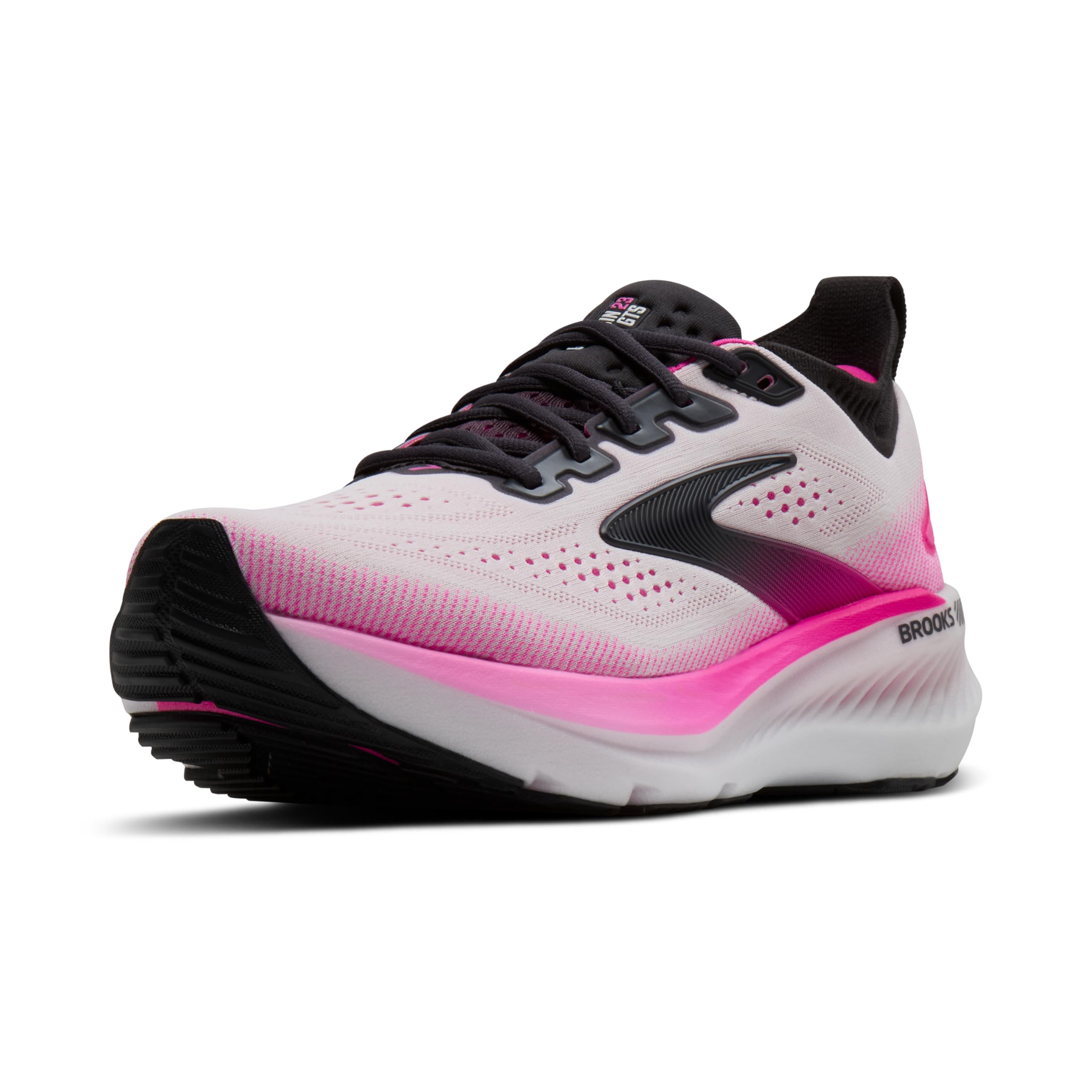
The Brooks Glycerin GTS 23 is the gold standard for runners who refuse to choose between pillowy softness and pronation control. It uses Brooks’ GuideRails system — essentially raised sidewalls at the heel — that gently steers your foot into a neutral alignment without the harsh feel of a traditional medial post. The DNA Loft v3 midsole delivers a plush, bouncy ride that reviewers consistently describe as “cloud-like,” while maintaining enough structure for daily training and even half-marathon distances. Multiple verified users with plantae fasciitis and plus-size frames report zero discomfort after four-mile walks, which speaks to the shoe’s ability to distribute impact evenly.
The wide-width availability is a standout feature. Users note that the toe box is roomy without feeling sloppy, and the navy colorway hides dirt well for everyday wear. One reviewer noted that after 9,000+ steps on a Disney trip, the shoe caused some toe and heel rubbing — a reminder that break-in time may be needed for very long walking days. The Glycerin GTS weighs around 10.5 ounces, putting it squarely in the premium daily-trainer weight class. If you want the softest possible ride with integrated stability, this shoe is the top choice.
Durability is excellent across multiple half marathons, with users retiring pairs to everyday wear after hundreds of miles. The only consistent critique is the limited color range for the GTS version — the neutral options are safe but uninspired. Overall, this is a shoe that solves the fundamental tension of the category: it is both cushioned and stable, and it does both at a high level.
Why it’s great
- Unmatched plushness with DNA Loft v3 foam
- GuideRails provide effective, non-intrusive stability
- Roomy toe box and true-to-size fit
- Excellent arch support without feeling stiff
Good to know
- Limited color options for GTS version
- May feel warm on very long runs due to dense upper
- Higher price point than mid-range competitors
2. Brooks Men’s Adrenaline GTS 23

The Brooks Adrenaline GTS 23 is arguably the most recognized name in stability running, and this iteration refines the formula rather than reinventing it. The GuideRails system sits on the medial and lateral sides of the heel, creating a cradle that limits excessive motion without pushing the foot back into place — a gentler approach than the rigid medial posts of earlier designs. The 30mm heel stack uses Brooks’ DNA Loft foam, which provides a balanced feel that is neither too soft nor too firm. Reviewers praise its versatility across road running, treadmill work, and even light trail use, noting that the grip is surprisingly capable on slick surfaces.
One verified user reported taking the Adrenaline through 500–600 miles of wear across blizzards, Caribbean heat, and daily gym sessions, and the shoe retained its structural integrity. That kind of durability is rare in the stability category, where foam often compresses faster than neutral trainers. The shoe comes in a wide range of widths, which accommodates different foot shapes well. A minor issue is the mesh upper: during heavy rain, water can seep through, so it is not fully waterproof despite being described as such in some reviews. The toe box initially runs snug for some users, though it loosens up after a few runs.
The Adrenaline GTS 23 weighs about 10.2 ounces, making it one of the lighter options in the premium stability tier. The color palette is vibrant — some users found the bright yellow accents on the blue colorway garish, but Brooks offers several subdued options. If you want a do-everything stability shoe that balances cushion and correction without extreme softness, the Adrenaline is a safe, proven pick.
Why it’s great
- Proven GuideRails system trusted for years
- Exceptional durability over 500+ miles
- Versatile for road, trail, and gym
- Wide width and color variety
Good to know
- Upper not fully waterproof despite claims
- Toe box may feel tight until broken in
- Some colorways are very loud
3. Hoka Men’s Arahi 7
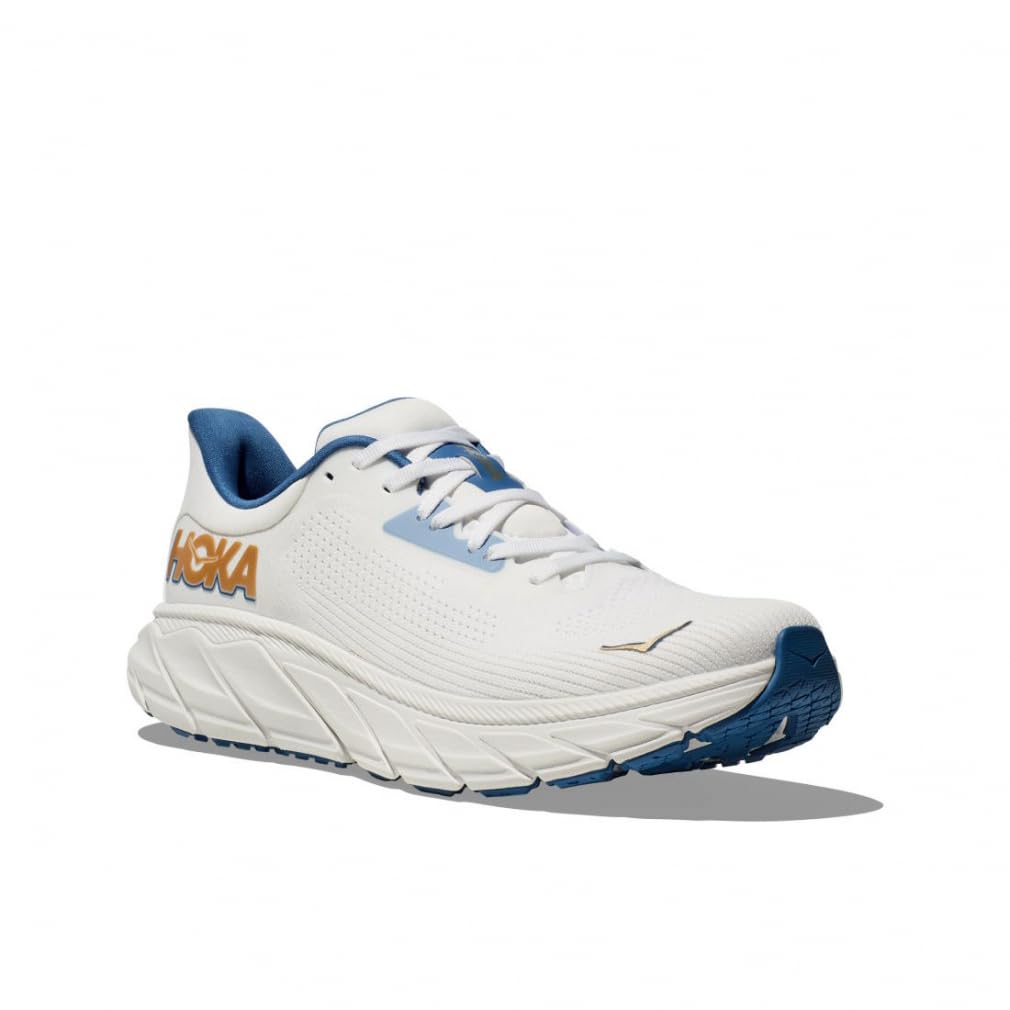
The Hoka Arahi 7 is the stability shoe for runners who want the signature Hoka cushioned feel without the exaggerated rocker that can feel unstable. Instead of a medial post, Hoka uses a J-Frame — a firmer foam density that wraps from the medial heel around to the arch, creating a supportive cradle. The result is a shoe that feels remarkably light (around 9.8 ounces) and nimble, with a 29mm heel stack that provides generous cushioning without making the shoe feel tall or wobbly. Multiple reviewers with narrow feet specifically praise the snug fit, noting that the heel counter locks the foot in place securely.
The Arahi 7 is not ideal for wide feet. Hoka’s D-width options are generally narrower than Brooks’ wide sizing, and several users with broader forefeet reported discomfort even in the wide version. The heel counter has a hard plastic backing that some reviewers found annoying when sitting with legs crossed — a minor ergonomic quirk rather than a running issue. The cushioning is described as “very comfortable for long wear” and “supportive but not intrusive,” making it a strong choice for all-day standing or walking.
Durability is solid, with users reporting that the outsole rubber holds up well on paved surfaces. The upper is a lightweight engineered mesh that breathes adequately but is not as robust as Brooks’ offerings. If you have narrow to medium feet and want a stability shoe that feels quick and airy rather than tank-like, the Arahi 7 delivers a unique combination of lightweight feel and pronation support that few competitors match.
Why it’s great
- Very lightweight for a stability shoe
- J-Frame provides subtle, comfortable support
- Snug heel lock for narrow feet
- Classic Hoka cushioning without instability
Good to know
- Not built for wide feet
- Hard heel counter can be annoying off-feet
- Upper may wear faster than competitors
4. Hoka Men’s Arahi 8
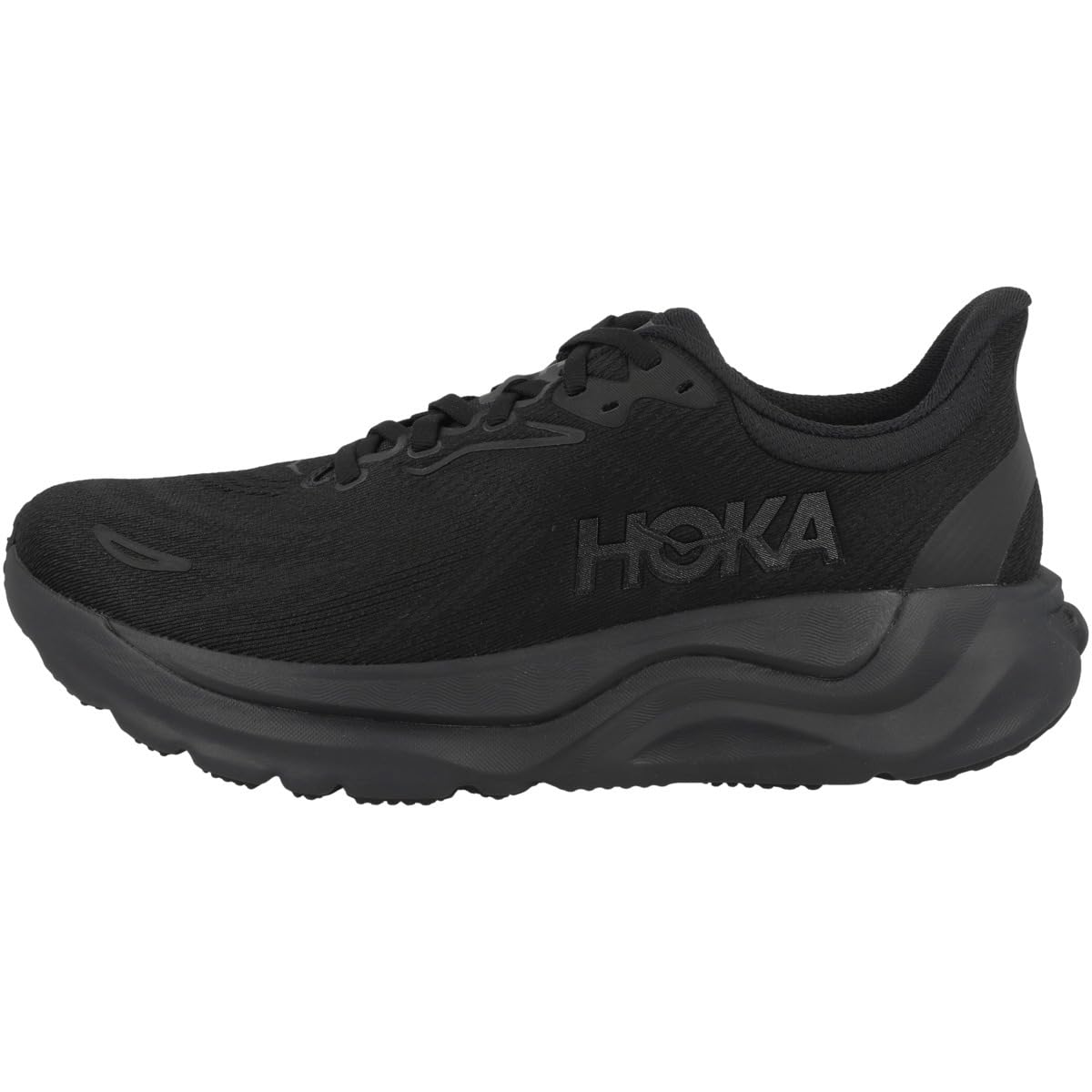
The Hoka Arahi 8 is the direct successor to the Arahi 7, refining the J-Frame midsole with a new foam compound that aims for a smoother, more responsive ride. Early reviews confirm that the shoe feels “extremely lightweight and comfortable,” with a toe-off that is more energetic than the previous version. The 29mm heel stack remains, but the foam formulation has been tweaked to improve energy return without adding weight. The heel bevel encourages a natural heel-to-toe strike pattern, though some users noted a brief gait adjustment period when transitioning from other stability models.
Support is strong for mild to moderate overpronation. The shoe includes a “prominent yet soft arch support” that one reviewer found excellent for sciatica relief, and the roomy toe box accommodates foot swelling during longer runs. The upper is a breathable mesh that dries quickly, making it suitable for warm-weather training. However, like the Arahi 7, the D-width options are not generous for wider feet, and the heel counter remains fairly rigid. One reviewer mentioned that the arch support feels more pronounced than in the previous model, which could be a pro or con depending on your arch height.
At approximately 9.7 ounces, the Arahi 8 is one of the lightest stability shoes available, beating many neutral trainers in weight. The trade-off is a slightly less plush feel underfoot compared to the Brooks Glycerin GTS — this is a firmer, more responsive shoe that rewards efficient form. For runners who prioritize weight and ground feel over maximum softness, the Arahi 8 is a worthy update that improves on an already strong platform.
Why it’s great
- Updated foam improves energy return
- Extremely lightweight for a stability shoe
- Heel bevel encourages natural gait
- Breathable, quick-drying upper
Good to know
- Not ideal for wide feet
- Firmer ride than premium competitors
- Pronounced arch may not suit flat feet
5. ASICS Men’s GT-2000 14
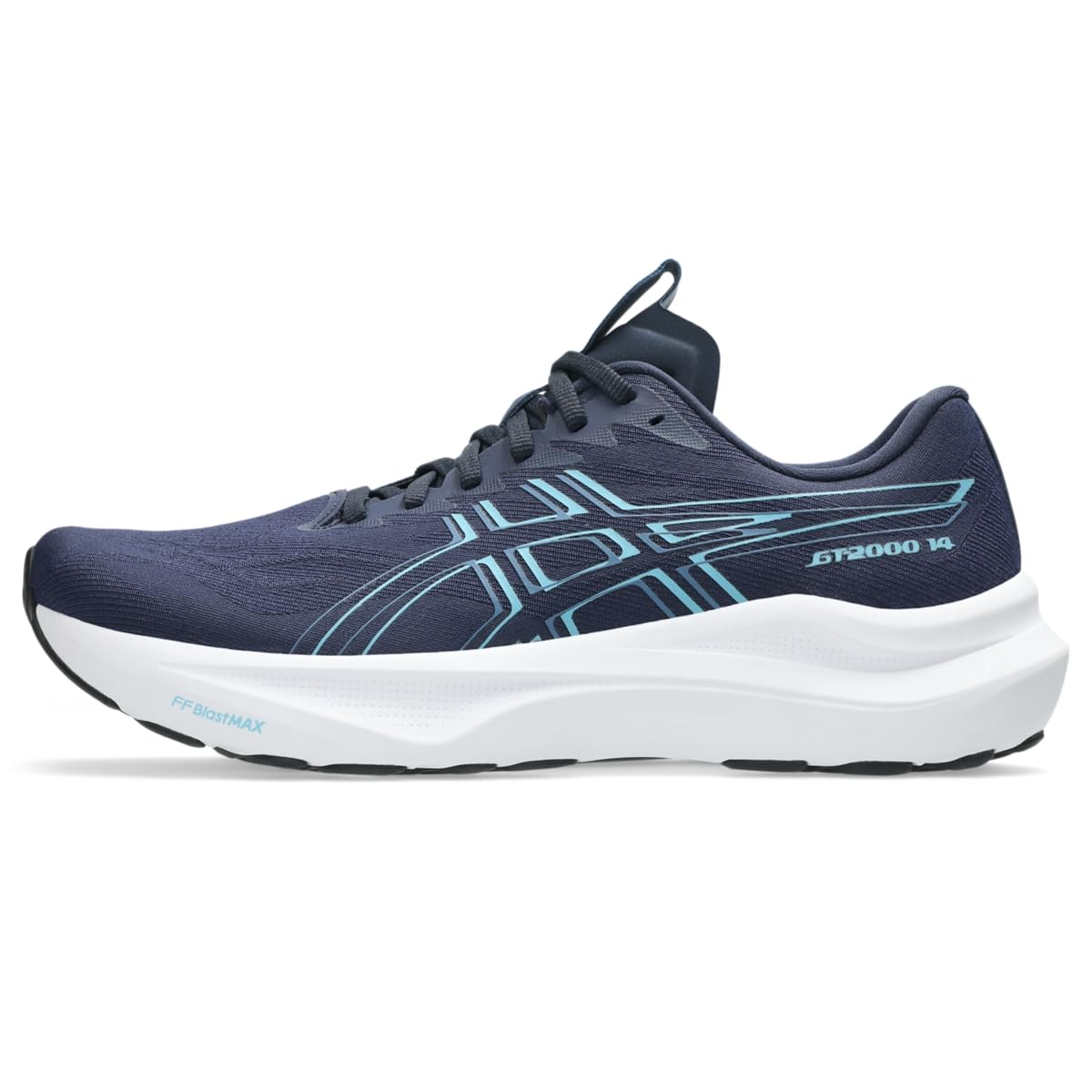
The ASICS GT-2000 14 sits in the sweet spot of the ASICS stability lineup: more cushioning than the budget GT-1000, but without the premium price tag of the Kayano. It uses LITETRUSS — a less intrusive version of ASICS’ traditional medial post — integrated into an FF BLAST foam midsole. The result is a shoe that feels “lightweight and comfortable” straight out of the box, with zero break-in required according to users. The 26mm heel stack is moderate by modern standards, providing enough cushion for daily training without sacrificing ground feel or stability.
Durability is a recurring theme in reviews. Multiple users report that the GT-2000 lasts 1 to 1.5 years of regular use, with the upper staying clean and intact well past the 300-mile mark. The shoe is available in wide sizes, which owners appreciate for accommodating swollen feet during long runs. The outsole rubber is thick and grippy on dry pavement, though it can feel a bit stiff on wet surfaces. One reviewer who switched from Saucony found the ASICS outlasted the competition significantly in terms of material quality.
The GT-2000 14 is not the most exciting shoe in the category — it lacks the bouncy feel of the Saucony Guide or the cloud-like softness of the Brooks Glycerin. But it compensates with consistency and value. If you are looking for a reliable daily trainer that offers solid stability, moderate cushioning, and long-lasting construction at a mid-range price, the GT-2000 is a safe and smart choice.
Why it’s great
- Proven LITETRUSS stability system
- Excellent durability over many miles
- Available in wide sizes
- No break-in needed, true to size
Good to know
- Lacks the plush feel of premium models
- Outsole grip average on wet roads
- Moderate heel stack may not suit high-cushion lovers
6. Saucony Men’s Guide 18
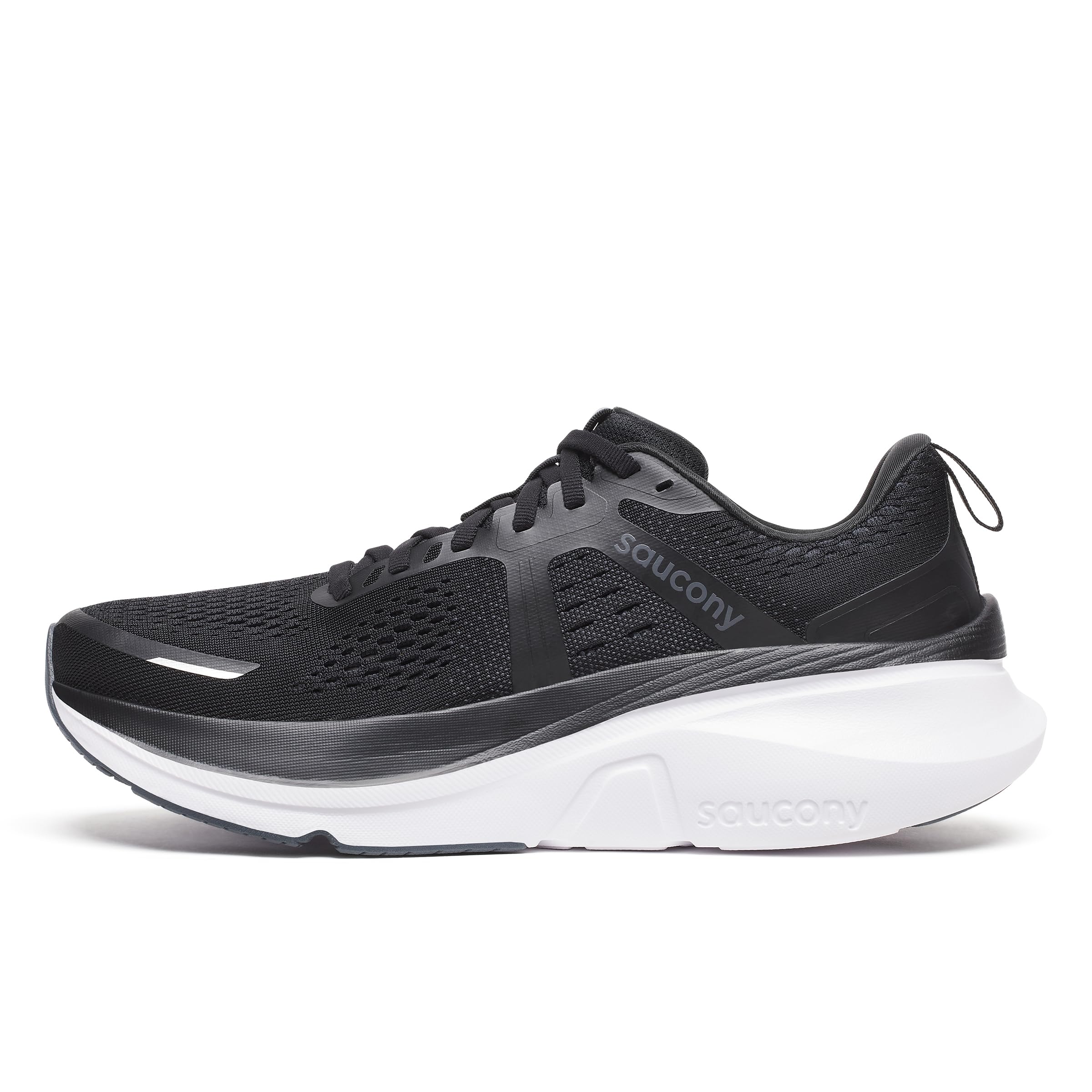
The Saucony Guide 18 is a stability shoe that punches above its weight class in terms of ride quality. It uses Saucony’s PWRRUN foam, which strikes a balance between softness and responsiveness, creating a sensation that users describe as “walking on clouds” with “uncanny support.” The stability system uses a medial post that is softer than previous Guide models, making it more forgiving for runners who find traditional posts too aggressive. The shoe is remarkably light — several reviewers compared it to old racing flats — while still providing the arch and heel support that overpronators need.
Flat-footed users and bigger runners (200+ pounds) report that the Guide 18 works well as an all-day standing shoe for hard surfaces like concrete warehouse floors. The toe box is slightly narrower than the Guide 14 and 15, which some long-time Saucony users noted as a regression. The soles show dirt quickly, but the rubber holds up well over time with no peeling or delamination reported. The laces are long and durable, and the all-black colorway is a favorite for those who want a clean, professional look.
One thing to note: the Guide 18 lacks the hard plastic insert found in previous versions, which gives it a more flexible, natural feel underfoot. This makes it a better match for runners who want stability without stiffness. If you are looking for a lightweight, breathable stability shoe that feels fast and comfortable, the Guide 18 is an excellent mid-range option that competes directly with the ASICS GT-2000 and the Mizuno Wave Inspire.
Why it’s great
- Very light and breathable for stability category
- Cloud-like cushioning with good support
- Versatile for running and all-day standing
- No break-in required
Good to know
- Toe box narrower than previous versions
- Soles attract dirt and show wear quickly
- Moderate arch support may not suit high arches
7. Mizuno Men’s Wave Inspire 21
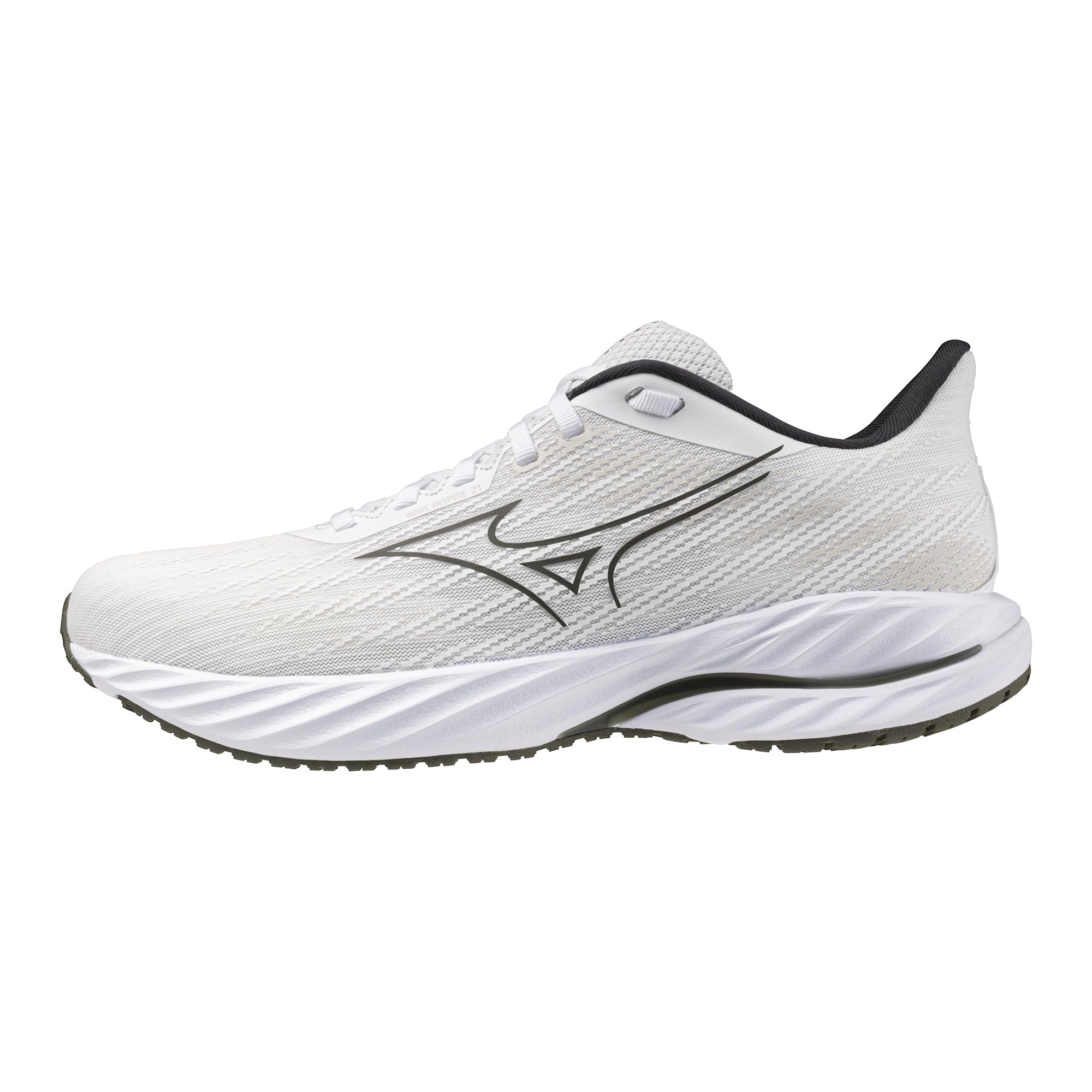
The Mizuno Wave Inspire 21 takes a fundamentally different approach to stability than the other shoes on this list. Instead of foam density variations or guide rails, it uses a Wave Plate — a corrugated thermoplastic plate embedded in the midsole that provides both cushioning and pronation control through its geometric shape. This creates a firmer, more responsive ride that runners with shin splints have come to rely on. Multiple long-term users report that the Wave Inspire is the only shoe that has kept them injury-free over decades of running, with one reviewer noting that it resolved chronic shin splints that no other shoe could address.
The 27mm heel stack uses Mizuno’s Enerzy foam, which is softer than the brand’s older U4ic foam but still firms up compared to Brooks’ DNA Loft or Saucony’s PWRRUN. This is not a shoe for runners who want a sink-in, pillowy feel — it is a stable, workhorse shoe for runners who prioritize structural support over pure plushness. The upper is made from high-quality materials that hold their shape well, and the fit is true to size. The shoe is described as “cushioned but not over the top,” making it suitable for runners who run 15-20 miles per week.
Durability is excellent, with users reporting that the Wave Plateau stays intact for years of regular use. The outsole rubber is thick and provides solid traction on dry pavement. The main downside is the weight — at around 10.5 ounces, it is not as light as the Hoka Arahi or Saucony Guide, and the firmer foam can feel harsh on recovery days. If you struggle with shin splints and want a shoe that offers reliable, consistent support run after run, the Wave Inspire 21 is a proven, specialized tool.
Why it’s great
- Unique Wave Plate offers firm, consistent support
- Proven track record for shin splint relief
- High-quality materials and construction
- True-to-size fit with no break-in
Good to know
- Firmer ride than most competitors
- Heavier than average for the category
- Not ideal for runners seeking maximum plushness
8. Saucony Women’s Hurricane 24
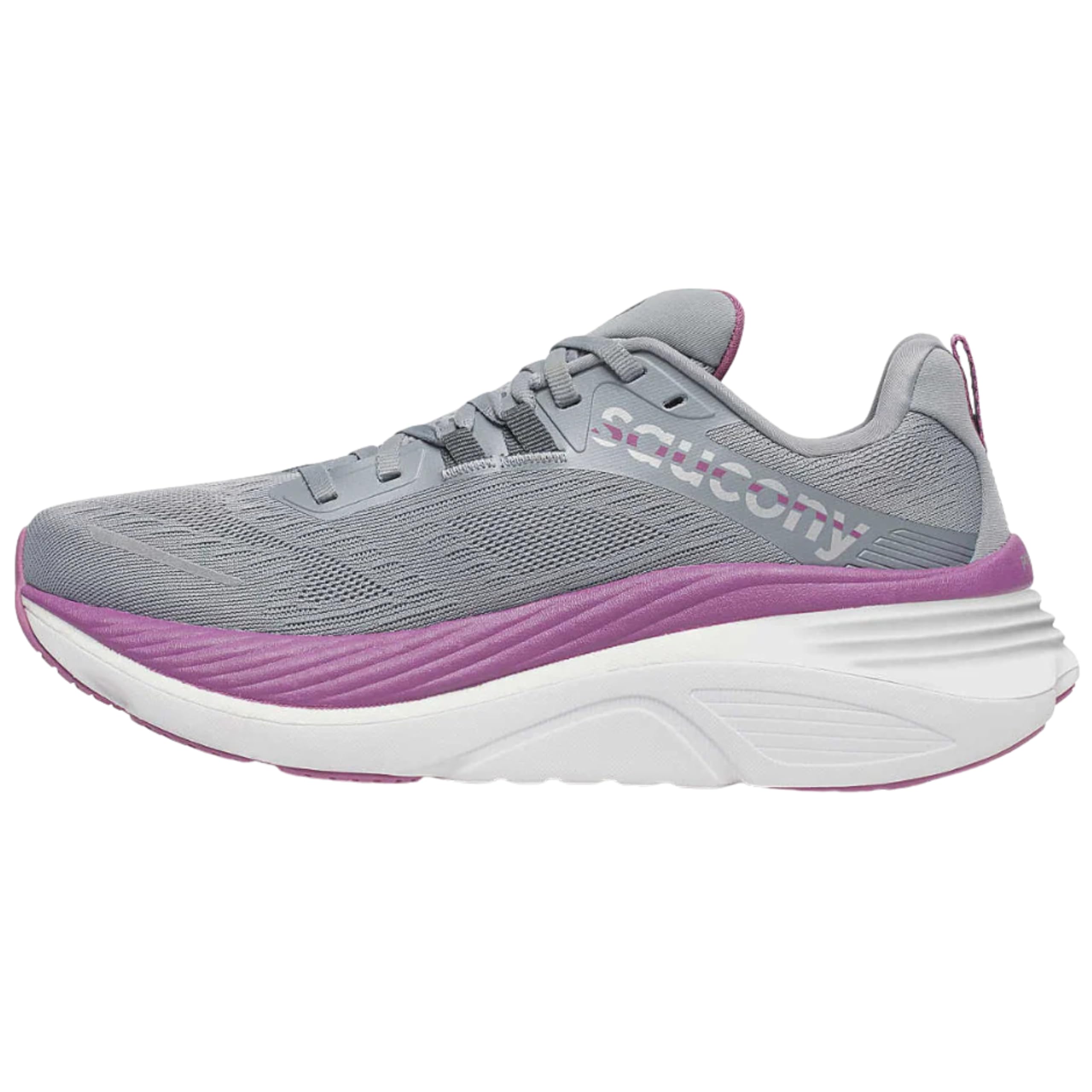
The Saucony Hurricane 24 is Saucony’s maximum-cushion stability shoe, built with a dual-layer midsole that combines a PWRRUN PB core (the bouncy, pebax-based foam used in their premium racing shoes) with a PWRRUN frame that wraps around the heel and arch for stability. The result is a shoe that delivers 32mm of heel stack with a “squishy but stable” feel that one reviewer described as ideal for injury recovery. The aggressive toe rocker helps propel you forward, making each stride feel effortless even when you are tired or sore.
The shoe is heavy — around 9.8 ounces for the women’s version — and multiple reviewers note that the weight becomes noticeable during speed workouts or interval training. One user specifically switched to the lighter New Balance 1080x v14 because the Hurricane caused leg fatigue on longer efforts. However, for walking, easy recovery runs, and everyday wear, the weight is less of an issue. The support is excellent for overpronation and plantae fasciitis, with one reviewer reporting that the shoe resolved hammer toe and tendon pain after just a few days of wear.
Build quality receives mixed marks. While the overall construction is solid, some users experienced durability issues: the melon color from the insole allegedly stained the mesh, and the reflective strip on the heel began peeling after moderate use. The wide platform provides excellent stability, but the narrow heel fit can feel insecure for runners with wider heels. If you want a high-cushion stability shoe for easy days and recovery runs, and you are willing to accept the extra weight and the potential for minor durability hiccups, the Hurricane 24 delivers the most plush ride in the Saucony stable.
Why it’s great
- Maximum cushion with PWRRUN PB core
- Aggressive toe rocker smooths transitions
- Excellent for overpronation and plantae fasciitis
- Stable wide platform
Good to know
- Heavy for speed work or tempo runs
- Some durability concerns with upper components
- Narrow heel fit may not suit all foot shapes
9. ASICS Women’s GT-1000 14
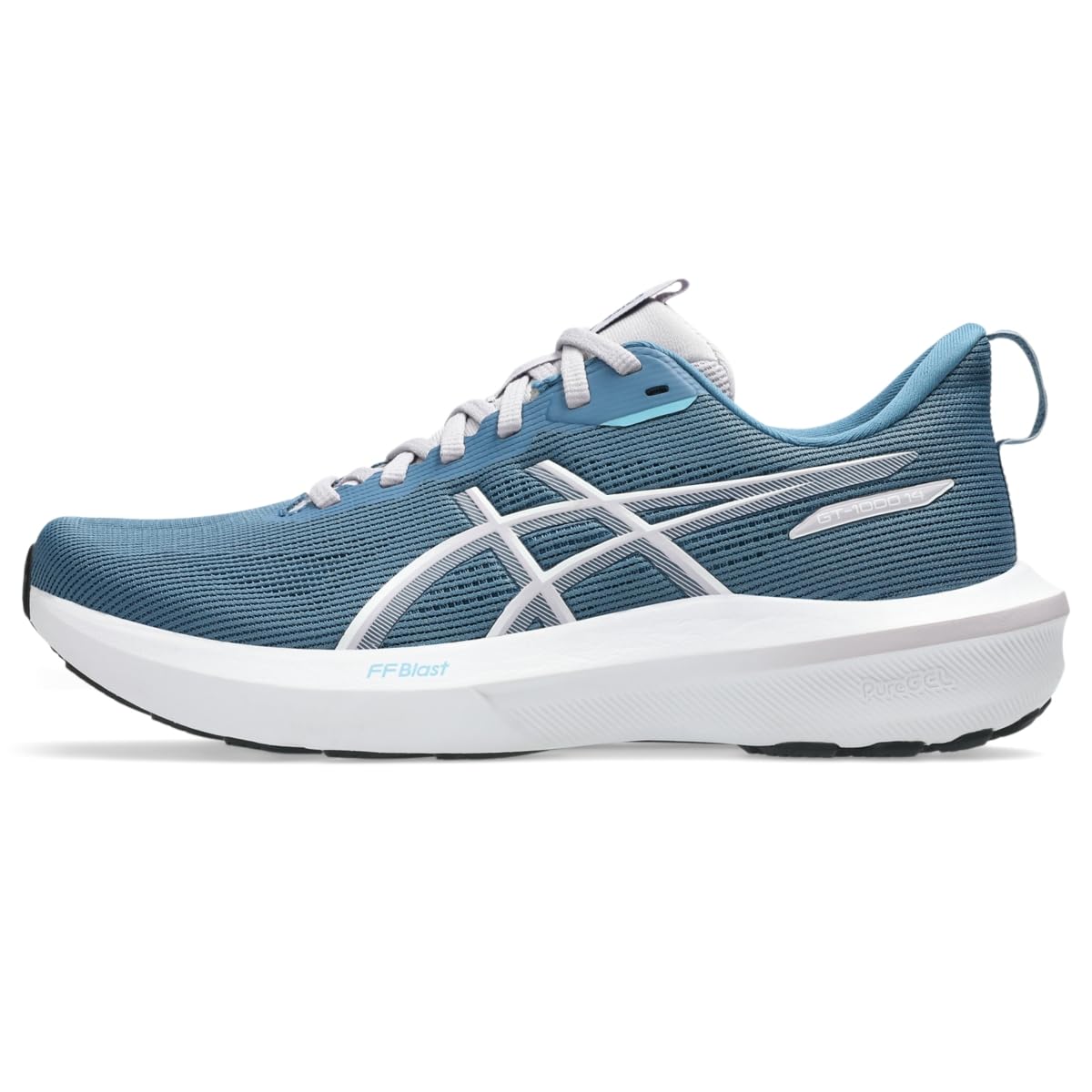
The ASICS GT-1000 14 is the entry-level stability shoe from ASICS, and it delivers surprising value for runners who need basic pronation support without breaking the bank. It uses a standard EVA foam midsole with a medial post (LITETRUSS) that provides reliable correction for mild to moderate overpronation. The 24mm heel stack is lower than most shoes on this list, which means less cushioning but a more stable, ground-connected feel. Reviewers consistently describe the shoe as “very cushy” and “cloud-like,” which speaks to how well the foam is tuned for this price point.
The shoe is lightweight at around 8.8 ounces for the women’s version, making it one of the lightest options in the entire guide (partly due to the lower stack height). The fit is true to size, and multiple users with wide feet confirm that the wide option fits perfectly. The breathable mesh upper keeps feet cool during runs, and the outsole traction is solid on both pavement and treadmill belts. One user noted that the black colorway looks clean and is easy to maintain, while the black-lilac color shifts from navy to black depending on the light.
Durability is good for the price, but the EVA foam will compress faster than the premium blends used in the Brooks Glycerin or Saucony Hurricane. Expect the GT-1000 to last around 300-400 miles before the cushioning noticeably degrades. This is not a shoe for high-mileage training or intense speed work — it is best suited for shorter runs, gym sessions, and everyday walking. For the budget-conscious runner who wants ASICS reliability without paying for the Kayano’s premium features, the GT-1000 14 is a solid, honest performer.
Why it’s great
- Very affordable entry into stability category
- Lightweight and breathable upper
- True-to-size fit with wide option
- Reliable medial post support
Good to know
- Lower stack height offers less cushioning
- EVA foam compresses faster than premium blends
- Not ideal for high-mileage training
FAQ
Can I use cushioned stability shoes if I have flat feet?
How many miles should I expect from a cushioned stability shoe?
Are cushioned stability shoes heavier than neutral running shoes?
Can I wear stability shoes for walking and standing all day?
What is the difference between the Brooks Adrenaline GTS and Glycerin GTS?
Final Thoughts: The Verdict
For most runners, the cushioned stability running shoes winner is the Brooks Glycerin GTS 23 because it combines the highest level of plush comfort with a non-intrusive GuideRails system that effectively corrects overpronation without feeling stiff or controlling. If you want a lighter, more responsive ride that still provides solid stability, grab the Hoka Arahi 8. And for a dependable daily trainer that balances support and value without any compromises, nothing beats the ASICS GT-2000 14.

Mo Maruf
I created WellFizz to bridge the gap between vague wellness advice and actionable solutions. My mission is simple: to decode the research and give you practical tools you can actually use.
Beyond the data, I am a passionate traveler. I believe that stepping away from the screen to explore new environments is essential for mental clarity and physical vitality.