Our readers keep the lights on and my smoothie glass nicely filled. As an Amazon Associate, I earn from qualifying purchases.
The velvety dark patches that appear on the back of your neck, under your arms, or around your knuckles aren’t a hygiene problem — they are a sign of insulin resistance and a skin condition called acanthosis nigricans. Most over-the-counter lightening creams fail because they target melanin instead of the thickened, hyperkeratotic skin layer that gives AN its rough texture. The correct approach requires chemical exfoliants like urea, lactic acid, or salicylic acid paired with retinoids to normalize cell turnover and soften the thickened plaque.
I’m Mohammad Maruf — the founder and writer behind WellFizz. I’ve spent hundreds of hours analyzing dermatological research on keratolytic agents, skin-lightening pathways, and patient-reported outcomes to isolate which formulations actually reduce the raised, velvety plaques characteristic of acanthosis nigricans.
After cross-referencing ingredient concentrations, clinical trial data, and thousands of user experiences, the following breakdown narrows the field to the formulations that treat the actual pathology — not the cosmetic surface. Use this guide to find the most effective cream for acanthosis nigricans for your specific skin type and body area.
How To Choose The Best Cream For Acanthosis Nigricans
Acanthosis nigricans requires a two-pronged attack: a keratolytic agent to thin the raised skin and a cell-communicating ingredient to normalize turnover. Here are the critical factors to weigh before buying.
Urea Concentration — The Keratolytic Backbone
Urea at concentrations above 20% breaks down the corneodesmosomes that hold dead skin cells together. For AN, formulas with 40% to 50% urea deliver the exfoliation depth needed to soften the velvety texture. Lower concentrations (under 10%) function as humectants only and will not reduce the raised plaque.
Acid Synergy — Salicylic vs. Lactic vs. Glycolic
Salicylic acid is lipid-soluble and penetrates the oily environment of skin folds, making it ideal for armpits and neck creases. Lactic acid is a larger molecule that stays more superficial but also boosts ceramide production, helping the skin barrier recover after exfoliation. Glycolic acid penetrates deepest and works fastest, but it can cause stinging on sensitive flexural skin.
Retinol — The Nighttime Accelerator
Retinol increases epidermal turnover by binding to retinoic acid receptors, which directly counteracts the hyperkeratosis of AN. Use it only at night and never skip sunscreen the next morning — retinized skin burns easily. A 0.1% to 0.3% retinol is adequate for most body areas; higher strengths risk irritation in the thin skin of the neck and armpits.
Quick Comparison
On smaller screens, swipe sideways to see the full table.
| Model | Category | Best For | Key Spec | Amazon |
|---|---|---|---|---|
| FIXDERMA Nigrifix | Targeted AN Formula | Neck, armpits, and knuckles | Lactic Acid + Retinol | Amazon |
| Urea Cream 50% (Grocerism) | Maximum Urea | Thick callused AN patches | 50% Urea + 2% Salicylic | Amazon |
| OUKEYA 42% + Salicylic | High-Value Tub | Daily body maintenance | 42% Urea + 2% Salicylic | Amazon |
| OUKEYA 40% + Salicylic | Lightweight Formula | Sensitive or irritated AN | 40% Urea + 2% Salicylic | Amazon |
| Urea Cream 42% 2-Pack (Charmonic) | Budget Twin Pack | Full-body AN coverage | 42% Urea + 2% Salicylic | Amazon |
In‑Depth Reviews
1. FIXDERMA Nigrifix Cream for Acanthosis Nigricans
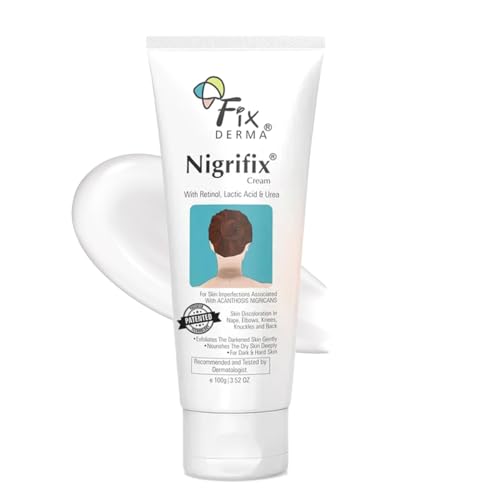
This is the only product in this lineup developed specifically for acanthosis nigricans rather than repurposed as a general foot cream. The formulation uses 5% lactic acid as the primary alpha-hydroxy acid to dissolve the intracellular glue holding the thickened AN plaque together, while 0.1% retinol accelerates keratinocyte turnover from the basal layer upward. Users with AN on the neck, armpits, and inner elbows reported visible lightening and texture softening within three weeks of nightly application.
The inclusion of urea and tea tree oil adds a secondary keratolytic effect and antibacterial protection for moist body folds where yeast overgrowth can worsen discoloration. Sweet almond oil provides a fatty-acid base that minimizes the sting common with lactic acid on sensitive flexural skin. The cream absorbs completely within 60 seconds and leaves no sticky film — important for daytime use under clothing.
A small subset of users experienced irritation when they applied it more than once daily or skipped moisturizer. Because retinol increases photosensitivity, morning sunscreen is non-negotiable. One verified user paired it with a glycolic acid toner and saw accelerated results, though this combination requires very tolerant skin. The 3.52-ounce tube lasts roughly six to eight weeks with once-daily use on a single body area.
Why it’s great
- Specifically formulated for AN — lactic acid targets hyperkeratosis directly
- Retinol provides deeper cell turnover than urea alone
- Non-greasy, fast-absorbing texture suitable for the neck and armpits
Good to know
- Must be used with sunscreen every morning
- Can cause stinging on broken or sensitive skin
- Smaller tube size compared to urea-based alternatives
2. Urea Cream 50% with Oat and 2% Salicylic Acid (Grocerism)

At 50% urea, this cream delivers the highest keratolytic concentration in the list — strong enough to soften the thickest AN plaques on elbows, knees, and heels. The addition of 2% salicylic acid provides a lipid-soluble exfoliant that penetrates the sebum-rich environment of skin folds better than water-soluble AHAs. Oat-derived beta-glucan and vitamin E offset the potential drying effect of high urea, helping the skin retain moisture after the dead layers slough off.
User reports consistently note that a pea-size amount is enough for both feet or a single elbow, making the 10.58-ounce jar a multi-month supply even with daily use. The scent is described as a faint, natural oat aroma rather than a chemical or floral perfume — relevant for those who react to fragrance in skin folds. Hyaluronic acid in the formula provides a humectant boost that reduces the tight feeling some high-urea creams leave behind.
The texture falls on the creamier side; some users found it slightly liquidy compared to paste-like urea formulas. It absorbs fully within two to three minutes, which is acceptable for morning application under socks or loose clothing. Since this product lacks retinol, it is safe to use twice daily without photosensitivity concerns. Thick callused AN patches may require two to three weeks of consistent application before the texture softens enough for the dark pigment to begin fading.
Why it’s great
- 50% urea — the highest concentration available for thick AN plaques
- Large jar delivers excellent value per application
- Fragrance-free oat-based formula minimizes irritation risk
Good to know
- No retinol or melanin-inhibiting ingredients for pigmentation
- Texture is creamier and slightly thinner than some prefer
- Does not address underlying insulin resistance — treats symptom only
3. OUKEYA Urea Cream 42% plus Salicylic Acid 2% (350g)
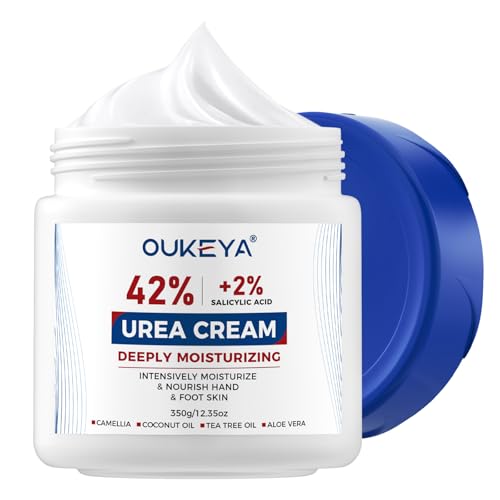
The 350-gram (12.35-ounce) tub is the largest single-container option in this comparison, ideal for users who need to treat multiple body areas simultaneously. The 42% urea concentration sits in the sweet spot for AN: strong enough to dissolve the thickened stratum corneum of plaques on the knees and elbows, yet less likely to cause stinging on thinner flexural skin than a 50% formula. Peppermint and camellia extracts add a cooling sensation that users find soothing on irritated patches.
Multiple verified buyers noted that the cream completely eliminated painful cracked heels within one week and significantly softened callused AN patches on the elbows within two weeks. The fragrance-free, paraben-free formulation suits those with contact allergies or sensitivities to essential oils. The texture is rich but non-greasy; it absorbs fully in about 90 seconds, allowing immediate dressing over treated areas.
One user reported that the slight grit from the peppermint particles created a mild physical exfoliation when rubbed in, which actually enhanced the chemical exfoliation. This product contains no retinol, so it can be used morning and night without phototoxicity risk. The large tub may last three to four months with daily full-body application, making it the most cost-efficient option for maintenance therapy after the initial AN plaque has thinned.
Why it’s great
- Largest tub size — 350g covers multiple body areas for months
- 42% urea provides strong keratolysis without excessive irritation
- Completely fragrance-free and hypoallergenic
Good to know
- Peppermint cooling may feel intense on very sensitive skin
- No active ingredients for melanin inhibition
- Gritty texture may feel unusual during application
4. OUKEYA Urea Cream 40% with 2% Salicylic Acid
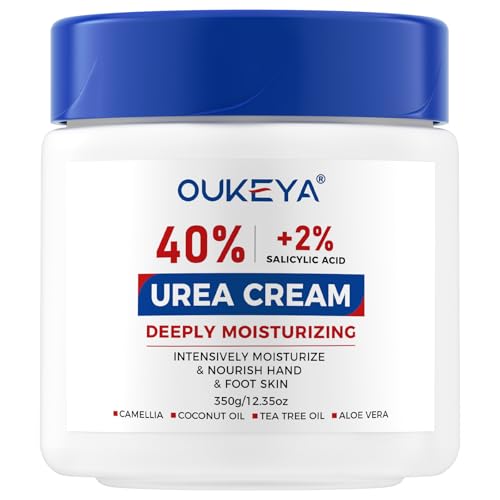
At 40% urea, this formulation is designed for users whose AN plaques are moderate rather than extreme — the kind that presents as velvety darkening without the thick callus buildup seen in long-standing cases. The lower urea percentage reduces the risk of over-exfoliation on sensitive areas like the inner elbows and underarms. The 2% salicylic acid is particularly useful for AN on the neck, where sebaceous glands are abundant and a lipid-soluble exfoliant can reach deeper into the follicle.
Customer feedback highlights the upgraded lightweight formula as a key differentiator. Unlike some high-urea creams that leave a tacky residue, this version absorbs in roughly two minutes and leaves the skin feeling silky rather than coated. Users with AN on their knuckles found that the cream did not interfere with hand movement or leave visible residue during the workday. The 12.35-ounce size is generous but not as bulky as the 350g tub, making it easier to store in a bathroom cabinet.
A small number of users noted a noticeable fragrance — inconsistent with the product claims — and advised patch-testing on the inner arm before applying to the neck or face. For those who find 50% urea too aggressive or 42% too thick, this 40% formulation provides an effective middle ground that still produces visible softening within one week of daily application.
Why it’s great
- Lightweight, non-greasy texture ideal for daytime wear
- 40% urea balances efficacy with gentleness on moderate AN
- Large tub provides extended use without bulk
Good to know
- Fragrance present despite some claims of being unscented
- Not strong enough for thick, callused AN plaques
- No retinol or tyrosinase inhibitors for pigmentation
5. Urea Cream 42% Plus Salicylic Acid 2% 2-Pack (Charmonic)
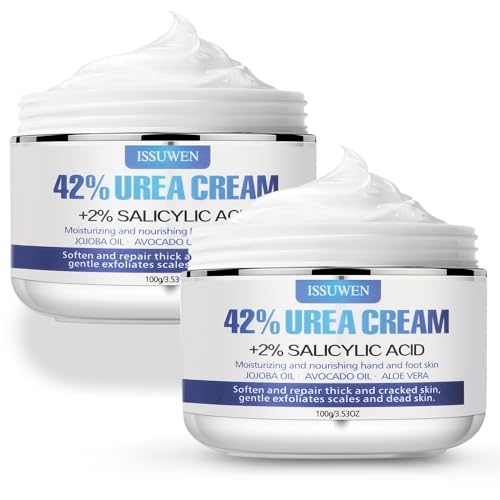
This two-tube set provides 14.12 total ounces of 42% urea cream at a per-ounce cost that undercuts every other product in this comparison. The 42% concentration is identical to the OUKEYA tub, but the tube format offers better hygiene for users who prefer not to dip fingers into a jar. The addition of shea butter and jojoba oil makes the formula richer than the OUKEYA version, which some users with very dry AN patches prefer for the extra emollience.
A podiatrist recommended this cream to one reviewer for diabetic foot care, and several users with AN on their legs noted that the texture was thick enough to stay in place overnight under cotton socks without rubbing off on bedding. The cream is dermatologist-tested and meets medical-grade standards, which provides reassurance for those managing AN alongside prediabetes or PCOS. Users reported visible softening of cracked heels within one week and smoother kneecap skin within two weeks.
The richer formula takes slightly longer to absorb — roughly three to four minutes — and may leave a faint oily residue if too much is applied. One user with AN on the armpits found the shea butter component slightly comedogenic in that area, causing minor folliculitis. For body areas with thicker skin like the knees and elbows, this formulation is excellent; for the thin skin of the neck or armpits, a lighter formula may be preferable.
Why it’s great
- Two tubes provide excellent value for full-body treatment
- Shea butter and jojoba oil add deep emollience for thick skin
- Dermatologist-tested and podiatrist-recommended
Good to know
- Richer texture may feel heavy on the neck and armpits
- Shea butter can be mildly comedogenic for some users
- Longer absorption time compared to lightweight formulas
FAQ
Can a cream alone fix acanthosis nigricans?
How long does it take for urea cream to work on AN?
Final Thoughts: The Verdict
For most users, the cream for acanthosis nigricans winner is the FIXDERMA Nigrifix Cream because it combines lactic acid with retinol in a formula purpose-built for AN — not a repurposed foot cream. If you want a high-urea option for thick, callused plaques on the knees and elbows, grab the Urea Cream 50%. And for full-body maintenance over many months without breaking your budget, nothing beats the value of the OUKEYA 42% 350g Tub.

Mo Maruf
I created WellFizz to bridge the gap between vague wellness advice and actionable solutions. My mission is simple: to decode the research and give you practical tools you can actually use.
Beyond the data, I am a passionate traveler. I believe that stepping away from the screen to explore new environments is essential for mental clarity and physical vitality.