Our readers keep the lights on and my smoothie glass nicely filled. As an Amazon Associate, I earn from qualifying purchases.
Old scar tissue behaves differently than a fresh wound — it’s denser, less vascular, and stubbornly resistant to change. The wrong cream sits on top of that hardened collagen without ever penetrating the layers where discoloration and raised texture live. Finding a formulation that actually signals mature scar tissue to remodel requires understanding the specific ingredients and delivery systems designed for that job.
I’m Mohammad Maruf — the founder and writer behind WellFizz. I’ve spent hundreds of hours cross-referencing dermatological research with real user data to identify which formulations actually deliver measurable changes to old scar tissue versus those just moisturizing the surface.
This guide breaks down the top performers by ingredient mechanism and scar type so you can confidently choose the cream for old scars that matches your specific skin concern and daily routine.
How To Choose The Best Cream For Old Scars
Old scars have a blood supply that is different from the surrounding skin — they are often avascular, which means topical ingredients struggle to reach the fibroblasts that produce collagen. The right formula must either create an occlusive environment that traps moisture and softens the tissue (silicone’s job) or deliver active molecules that can penetrate the denser dermal layer. Ignoring this distinction is why many people apply creams for months with zero visible change.
Medical-Grade Silicone Percentage
Silicone is the only ingredient with repeated clinical evidence for flattening raised scars and reducing discoloration. But not all silicone gels are equal — a formula must contain at least 70% medical-grade silicone to form an effective barrier that hydrates the stratum corneum and signals fibroblasts to stop overproducing collagen. Products advertising “silicone” without a listed percentage often use a concentration too low to create the occlusive film needed on old, dense tissue. Look for explicitly stated percentages on the label.
Additional Active Ingredients for Pigmentation
Old scars that have turned dark (hyperpigmented) or white (hypopigmented) require more than just silicone. Vitamin C is a stable antioxidant that inhibits melanin production and brightens the discoloration over weeks of consistent use. Ingredients like squalane and emu oil help carry the active molecules deeper while reducing the inflammation that keeps the scar looking red. For darker skin tones, avoid hydroquinone-heavy formulas without consulting a dermatologist, as they can paradoxically worsen pigmentation over time.
Format and Wearability for Daily Use
A scar cream that feels greasy or pills under sunscreen will never be used consistently, and consistency is the single biggest predictor of results. Gel-based formulas dry transparent and allow makeup to layer on top, making them practical for facial scars. Oil-based serums work better for larger body areas where texture rather than visibility is the main concern, but they require more patience with absorption time. Choose the format that fits your specific routine — a perfect formula that sits unused is worthless.
Quick Comparison
On smaller screens, swipe sideways to see the full table.
| Model | Category | Best For | Key Spec | Amazon |
|---|---|---|---|---|
| Rejuvaskin RejuvaSil | Silicone Gel | Raised & keloid scars on face | 97% Medical-Grade Silicone | Amazon |
| MyNewGel Plus UV | Silicone + SPF | Scars exposed to sun | SPF 30 Mineral Sunscreen | Amazon |
| Cicatricure Advanced Scar Gel | Regenerative Gel | General scar maintenance | Regenerare Complex Hydration | Amazon |
| Bio-Oil Skincare Body Oil | Oil Serum | Dry, textured scars & stretch marks | Vitamin E & Chamomile Oil Blend | Amazon |
| Derma E Scar Gel | Light Gel | Fresh discolorations & redness | Panthenol Infusion | Amazon |
In‑Depth Reviews
1. Rejuvaskin RejuvaSil Silicone Scar Gel
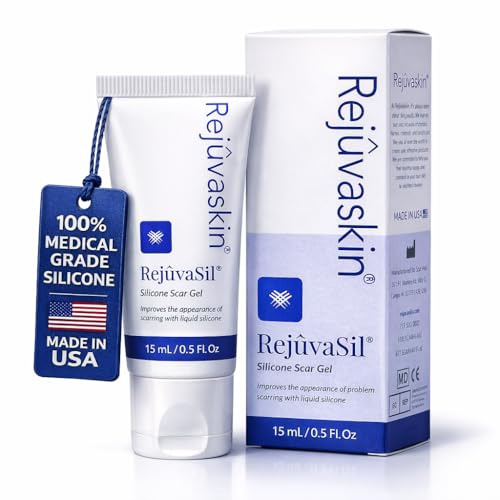
The RejuvaSil gel hits the highest silicone concentration in this lineup at 97% medical-grade, which creates a truly occlusive barrier that forces hydration back into the scar bed. That level of occlusion is critical for old, raised scars because it signals fibroblasts to stop the excessive collagen production that keeps the tissue elevated. Users with open-heart surgery scars and keloids report visible flattening and softening within weeks, not months — a timeline consistent with silicone’s mechanism of action on mature tissue.
Beyond the silicone, the inclusion of Vitamin C and squalane directly targets the discoloration that often remains after the scar has flattened. Vitamin C inhibits the tyrosinase enzyme responsible for hyperpigmentation, while squalane acts as a penetration enhancer to drive the active deeper into the avascular scar tissue. The gel dries clear and non-greasy, which makes it practical for facial use under makeup — a common complaint with thicker silicone tapes.
The main trade-off is the small tube size at 15 ml, which feels disproportionate to the premium price point. Users applying to large surgical incisions will burn through the tube quickly, making it more suitable for targeted facial scars or keloids rather than broad body coverage. The non-comedogenic and hypoallergenic formulation makes it safe for even the most sensitive skin, including pediatric use.
Why it’s great
- Highest silicone concentration in the lineup at 97%
- Dries clear, non-greasy, layers well under makeup
- Vitamin C targets both raised texture and pigmentation
Good to know
- Small 15 ml tube — limited coverage area per tube
- Premium positioning; cost per application is higher
2. MyNewGel Plus UV Advanced Silicone Scar Gel
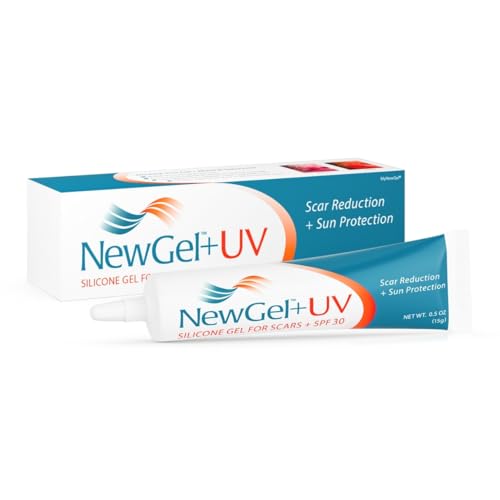
MyNewGel Plus UV solves a problem that most scar creams ignore entirely: ultraviolet exposure actively darkens scar tissue and reverses the fading progress you worked weeks to achieve. This formula combines 100% medical-grade silicone with zinc oxide as a mineral SPF 30 sunscreen, creating a single-step product that both treats the scar and protects it from the UV rays that stimulate melanocyte activity in the damaged area. For scars on arms, hands, and face — areas constantly exposed — this dual action is a practical advantage.
The gel applies smoothly and dries with a slight opacity from the zinc oxide, which can be masked with concealer on facial scars. Users report that it feels less tacky than traditional silicone gels, and the non-comedogenic, fragrance-free formulation avoids irritation on sensitive post-surgical skin. The built-in sun protection eliminates the common mistake of applying a separate sunscreen over the scar cream, which can disrupt the silicone barrier and reduce its efficacy.
The 15 g tube is even smaller than the RejuvaSil, and the zinc oxide opacity may not suit deeper skin tones without a concealer layer. It also doesn’t include the brightening antioxidants that RejuvaSil offers, so users targeting pigmented scars may need an additional Vitamin C serum. For those who prioritize UV protection as part of their scar management routine, this is the most targeted option available.
Why it’s great
- Integrated SPF 30 mineral sunscreen prevents UV darkening
- Non-tacky, smooth application compared to standard silicones
- Dermatologist-trusted brand with medical-grade ingredients
Good to know
- Zinc oxide leaves slight white cast on darker skin tones
- No added brightening agents for pigmentation of the scar
3. Cicatricure Advanced Scar Gel (Pack of 2)

Cicatricure’s Advanced Scar Gel uses a proprietary Regenerare Complex that combines hydrating agents designed to improve skin texture and reduce scar appearance across surgical, burn, and acne scars. The pack of two 1-ounce tubes provides significantly more product per dollar compared to the premium silicone gels, making it a practical choice for users applying to larger areas or multiple scars. The manufacturer advertises visible results within two weeks, and multiple user reviews confirm noticeable softening and color improvement within that timeframe when applied four times daily.
The formula is lightweight and non-greasy, absorbing quickly without leaving a sticky residue — an important factor for daytime use under clothing or on the face. Users with surgical scars and acne marks report that consistent application reduces redness and flattens the texture, though the mechanism relies more on sustained hydration than the occlusive silicone barrier found in the higher-tier products. It is also suitable for children, which broadens its utility for families managing pediatric surgical scars.
The main limitation is that it lacks the medical-grade silicone concentration needed for truly old, raised keloids or hypertrophic scars. Users with mature white or very dense scar tissue may find the results plateau after the initial improvement. For general scar fading and texture smoothing on scars that are not extremely raised, the value proposition of two tubes at a mid-range price point is difficult to beat.
Why it’s great
- Two-tube pack offers strong value for larger coverage areas
- Non-greasy, fast-absorbing, suitable for daily use
- Safe for adults and children across various scar origins
Good to know
- Lower silicone concentration — less effective on keloids
- Requires 4 applications daily for best results
4. Bio-Oil Skincare Body Oil Serum

Bio-Oil is arguably the most recognized scar product on the market, and its 4.2-ounce bottle offers generous volume at a budget-friendly price point. The formulation relies on a blend of Vitamin E, chamomile oil, and lavender oil to hydrate the skin and improve the appearance of scars and stretch marks through sustained moisture retention rather than occlusive barrier formation. This oil-based approach excels at softening dry, textured scar tissue and improving overall skin suppleness, especially on larger body areas like thighs and abdomen.
The oil absorbs surprisingly quickly for a non-greasy feel, and it is non-comedogenic, meaning it will not clog pores even when applied to the face. Users with very dry, sensitive skin report that it calms irritation and reduces the itching associated with healing scars. The versatility as an all-over moisturizer makes it a multi-purpose product that fits easily into a daily skincare routine without additional steps.
For old scars that are deeply pigmented or significantly raised, the lack of silicone means Bio-Oil will not physically flatten the tissue. Users expecting dramatic remodeling of old keloid or hypertrophic scars will be disappointed. It works best on flat, dry, or mildly discolored scars where improved hydration and gentle exfoliation over weeks can make a visible difference in texture and tone.
Why it’s great
- Large 4.2 oz bottle with strong value per application
- Fast-absorbing, non-greasy oil suitable for face and body
- Multi-purpose: moisturizer, stretch mark, and scar treatment
Good to know
- No silicone — does not flatten raised scar tissue
- Effects on old pigmented scars are subtle and gradual
5. Derma E Scar Gel
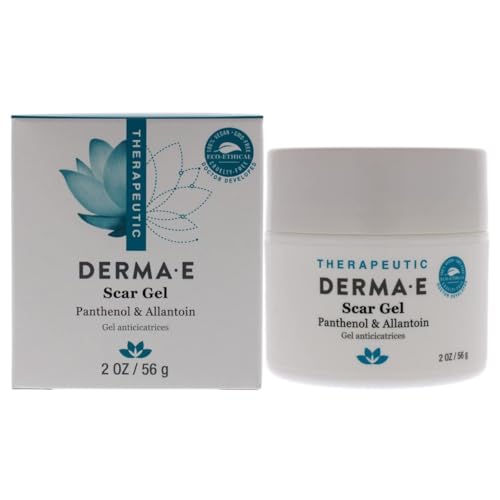
Derma E’s Scar Gel is a lightweight formulation centered on panthenol (pro-vitamin B5), which is known for its ability to soothe inflammation and support the skin barrier during the healing process. The gel texture is thin, absorbs almost instantly, and leaves zero residue, making it one of the most cosmetically elegant options for daytime wear under makeup or sunscreen. Users specifically praise its effectiveness on fresh red discolorations, such as post-acne marks and surgical incisions that are still in the early healing stages.
The affordable price point and 2-ounce tube size make it an accessible entry point for someone new to scar management. Reviews consistently note that a little product goes a long way, extending the tube life significantly. The light medicinal scent fades quickly and does not linger, which is a plus for those sensitive to fragrances.
User reports are clear that this gel is less effective on old, mature scar tissue. Multiple long-term users mention that while it helps lighten scars over a year of use, the results plateau compared to silicone-based alternatives. It is best positioned as a maintenance scar gel for fading redness and preventing new marks from becoming permanent, rather than remodeling old, dense scar tissue.
Why it’s great
- Ultra-light texture, absorbs instantly, invisible under makeup
- Panthenol soothes redness on healing and fresh scars
- Good value with a 2 oz tube that lasts a long time
Good to know
- Limited effect on old, raised, or dense scar tissue
- Results require many months of consistent application
FAQ
Can a cream actually flatten a scar that is more than a year old?
Should I use a scar cream with SPF or apply sunscreen separately?
Why does my old white scar stay white even after months of cream use?
Final Thoughts: The Verdict
For most users, the cream for old scars winner is the Rejuvaskin RejuvaSil Silicone Scar Gel because its 97% medical-grade silicone combined with Vitamin C targets both the raised texture and the discoloration that define old scar tissue. If you specifically need UV protection for a scar on your face or hands, grab the MyNewGel Plus UV Advanced Silicone Scar Gel. And for a budget-friendly, multi-purpose hydrator that softens texture without the premium price, nothing beats the Bio-Oil Skincare Body Oil Serum.

Mo Maruf
I created WellFizz to bridge the gap between vague wellness advice and actionable solutions. My mission is simple: to decode the research and give you practical tools you can actually use.
Beyond the data, I am a passionate traveler. I believe that stepping away from the screen to explore new environments is essential for mental clarity and physical vitality.