Our readers keep the lights on and my smoothie glass nicely filled. As an Amazon Associate, I earn from qualifying purchases.
The ache that radiates from your heels up through your lower back after an eight-hour shift on concrete isn’t just fatigue — it’s the sound of your boot’s original foam bottoming out. Swapping those factory insoles for a purpose-built cushion layer is the single most effective upgrade you can make to your work footwear, turning a punishing surface into a forgiving one.
I’m Mohammad Maruf — the founder and writer behind WellFizz. For this guide, I spent dozens of hours cross-referencing foam densities, arch profiles, and real-user durability reports to find the pairs that actually hold up under a working person’s weight.
Whether you’re framing houses, running a kitchen line, or walking warehouse aisles, the right pair transforms how your body feels at the final bell. This is your research-backed roadmap to finding the best cushion insoles for work boots that deliver real relief shift after shift.
How To Choose The Best Cushion Insoles For Work Boots
A work boot insole lives a harder life than a sneaker insert. It must absorb repeated impact from hard floors, resist compression under 200+ pounds, wick sweat inside a sealed leather upper, and not slide around during a full day of bending and climbing. Three specifications separate the insoles that last from the ones that flatten by lunch.
Foam Density and Rebound Rate
The material under your heel determines how many shifts you get before the cushion disappears. EVA foam is lightweight and soft but compresses faster. Polyurethane (PU) is denser and holds its shape longer — ideal for heavy-duty work. Memory foam adds a slow-rebound layer that molds to your foot’s shape, which helps distribute pressure evenly across the sole. Look for insoles that combine a PU base with a memory foam or gel top layer for the best balance of longevity and immediate plushness.
Heel Cup Depth and Arch Profile
A shallow heel cup lets your foot slide inside a loose boot, causing blisters and instability. A deep, structured heel cup (15mm or more) cradles the calcaneus and keeps the foot centered over the insole. The arch support must match your foot’s natural curve — too flat and you get no lift, too high and it digs into the arch. Work boots with removable insoles usually have a neutral last, so a medium-to-high arch profile works for most users, but those with flat feet should choose an insole labeled for low arches or flat feet.
Moisture Management and Odor Control
Work boots trap heat and sweat. An insole with a moisture-wicking top cloth (look for Coolmax or a polyester-nylon blend) pulls sweat away from the foot, reducing blister risk and bacterial growth. Some premium insoles integrate antimicrobial treatments like Polygiene or Aegis microbe shield, which stop odor before it starts. Avoid thick wool or cotton-top insoles for all-day wear — they soak up moisture and become breeding grounds for smell.
Quick Comparison
On smaller screens, swipe sideways to see the full table.
| Model | Category | Best For | Key Spec | Amazon |
|---|---|---|---|---|
| Ariat Men’s Energy Max Work Insole | Premium | All-day standing on concrete | Rebound foam + Agion odor defense | Amazon |
| BestHalo Heavy Duty Plantar Fasciitis Insoles | Mid-Range | High arch support and heel pain | Gel + EVA foam, deep heel cup | Amazon |
| Timberland PRO Insite Technology AFT Footbed | Mid-Range | Boot-specific fit and arch stability | Plastic arch support shell | Amazon |
| RockRooster Memory Foam Anti-Fatigue Insoles | Budget-Friendly | Memory foam plushness under | PU base + Coolmax top layer | Amazon |
| Dr. Scholl’s Work Insoles | Budget-Friendly | Massaging gel shock absorption | Extended gel cushioning + Polygiene | Amazon |
In‑Depth Reviews
1. Ariat Men’s Energy Max Work Insole

The Ariat Energy Max sits at the top because it solves the two problems work-boot users report most: bottoming-out and foot odor. The rebound foam layer doesn’t just absorb impact — it returns energy into your stride, which reduces the cumulative drag of a ten-hour shift. The open-cell foam regulates temperature so your foot doesn’t cook inside a leather boot, and the Agion antimicrobial treatment actually works for months, not weeks.
Users consistently report that this insole fits true to size with no trimming required — it matches the shape of Ariat boots exactly, and it also drops neatly into Timberland, Wolverine, and Red Wing models. The arch support is moderate, not aggressive, which makes it a safe choice for people who don’t need orthotic-level correction but do need reliable all-day shock absorption.
The top cloth is a durable moisture-wicking liner that stays grippy even after a full year of daily wear. Several construction workers note these are the only insoles they’ve bought a second pair of, because the original set held shape for twelve months of heavy use before the heel pad began to thin. At this price point, the longevity alone justifies the upgrade.
Why it’s great
- Rebound foam delivers noticeable energy return and reduces leg fatigue
- Agion technology keeps odor under control for months
- True-to-size fit, no trimming needed for most work boots
Good to know
- Arch support is moderate, not suitable for high-arch orthotic needs
- Men’s sizing only, women needing smaller sizes may have to cut down
2. BestHalo Heavy Duty Plantar Fasciitis Insoles
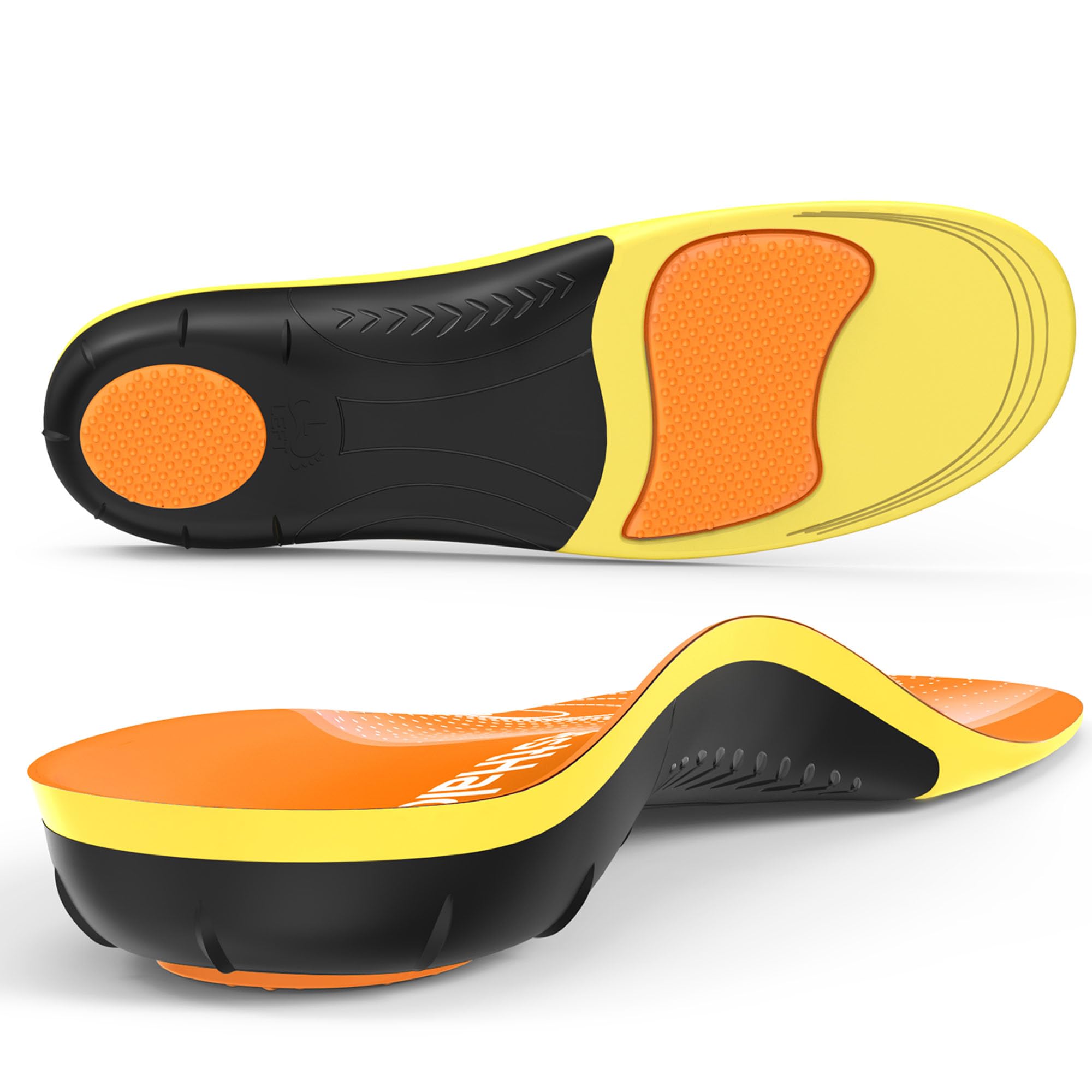
The BestHalo insole is built around a biomechanical arch structure that rises higher than most competitors — this is the pair to grab if your foot has a pronounced arch and you feel every step landing on the ball of your foot. The structured arch system promotes natural alignment and reduces the stress that leads to plantar fasciitis. For workers who are 220+ pounds, the EVA foam base resists compression better than standard insoles.
The deep heel cup is a standout feature: it wraps the calcaneus firmly, preventing the heel from shifting sideways inside a wide steel-toe boot. The gel cushioning under the heel and forefoot absorbs the sharp impact of concrete floors. Users note that the arch feels intense for the first three to five days — your foot is being repositioned — but after that adaptation period, the relief is substantial.
The trim-to-fit design works well for both men’s and women’s sizes. The adhesive backing keeps the insole anchored to the boot’s footbed, so it doesn’t bunch up under the toes. One caveat: if you have flat feet or a low arch, this insole will likely cause discomfort because the arch is too aggressive. It’s designed specifically for high-arch wearers and confirms that in every review.
Why it’s great
- Pronounced arch support relieves plantar fasciitis pain after adaptation
- Deep heel cup stabilizes foot inside steel-toe and wide boots
- Gel + EVA combo handles 220+ lbs without flattening
Good to know
- Arch is too high for flat-footed users — causes discomfort if misaligned
- Requires a 3–7 day break-in period with gradual wear
3. Timberland PRO Insite Technology AFT Footbed

The Timberland PRO Insite uses a rigid plastic arch shell inside the foam — a design that provides structural stability that all-foam insoles can’t match. That plastic shank prevents the insole from twisting under load, which is critical when you’re carrying materials up ladders or walking on uneven construction sites. The foam itself is medium-density, offering a balance between plushness and support that works for most foot types.
Users who work in construction and walk six thousand or more steps a day report that these insoles eliminate the end-of-day foot ache that factory Timberland insoles allow. The fit is purpose-built for Timberland boots, but it also works in other brands because the trim-to-size guidelines are clearly marked. Several reviewers mention that the arch support is noticeable but not intrusive — it supports without pushing.
The top cover is a moisture-wicking fabric that stays dry inside sealed boots. The heel cup is moderately deep, enough to stabilize without feeling restrictive. The only common complaint is sizing confusion: the L and M markers on the packaging aren’t intuitive, so double-check the measurement guide before ordering. Once sized correctly, these insoles deliver consistent, long-lasting comfort that multiple buyers repurchased after a year of daily wear.
Why it’s great
- Rigid plastic arch shell prevents twisting and adds structural support
- Medium-density foam suits most foot types without a break-in period
- Moisture-wicking fabric keeps feet dry inside sealed work boots
Good to know
- Sizing labels (L/M) can be confusing — check the size chart carefully
- Not ideal for users who need extreme cushioning or a soft feel
4. RockRooster Memory Foam Anti-Fatigue Insoles
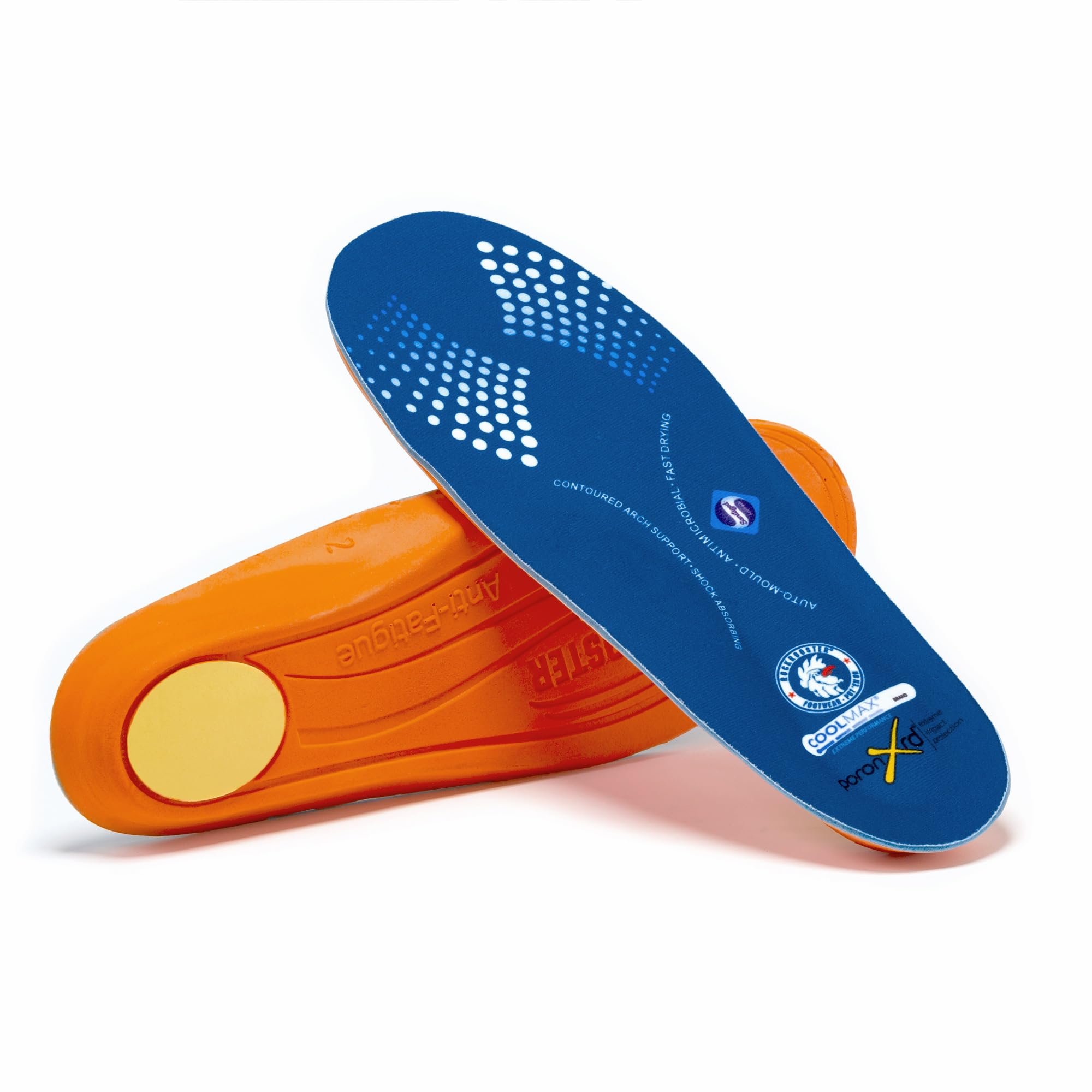
RockRooster’s RC930 model adds a memory foam layer on top of a PU base, creating a slow-rebound surface that molds to the exact contours of your foot. This is the most plush insole in the lineup — if your priority is a soft, cloud-like feel underfoot rather than rigid orthotic correction, this is your match. The Poron XRD composite material in the heel and forefoot absorbs high-impact shock better than standard EVA.
What sets this insole apart is the Coolmax top fabric, which actively wicks moisture and dries fast. In hot conditions or during intense physical work, that breathability prevents the swamp-foot feeling that accelerates blister formation. The arch support is moderate, and the deep heel cup wraps securely to prevent heel slip inside loose-fitting boots.
Construction trade workers who spend all day on their feet report that these are the most comfortable insoles they’ve ever used, and several have bought them as replacements for the same boot model after a year of use. The trade-off is that memory foam compresses faster than dense PU — users who are over 220 lbs may find the cushion bottoms out after six months rather than twelve. At this price point, that’s a reasonable compromise for the immediate comfort.
Why it’s great
- Memory foam layer molds to foot shape for personalized cushioning
- Coolmax fabric keeps feet dry and comfortable in hot work environments
- Poron XRD composite absorbs high-impact shock effectively
Good to know
- Memory foam compresses faster than dense PU — may flatten by 6 months for heavy users
- Arch support is moderate, not suitable for high-arch corrective needs
5. Dr. Scholl’s Work Insoles

Dr. Scholl’s Work Insoles bring massaging gel technology that distributes foot pressure evenly across the sole. The extended gel cushioning is particularly effective on hard surfaces — asphalt, concrete, and wood floors — because the gel layer absorbs the repetitive shock that leads to joint strain. The adaptive cushioning responds to your stride and returns some energy with each step, which helps reduce the fatigue that builds over an eight-hour shift.
The Polygiene StayFresh Technology provides reliable odor control, which is a significant advantage for workers who wear the same boots five or six days a week. The trim-to-fit design is straightforward, and the insole stays in place even inside steel-toe boots where clearance is tight. Users note that the reinforced arch support adds noticeable stability compared to the factory insoles that come with most work boots.
The main trade-off is depth: these insoles are thinner than the Ariat or RockRooster options, so they won’t fill up a loose boot as effectively. Workers with existing arch pain from flat feet may find the arch support insufficient — one reviewer noted they needed stronger correction. However, for the price, this pack delivers reliable shock absorption and odor control that outperforms many competitors in the same range.
Why it’s great
- Massaging gel layer absorbs shock effectively on hard surfaces like concrete
- Polygiene technology provides long-lasting odor control
- Thin profile fits comfortably inside steel-toe boots without adding bulk
Good to know
- Thinner construction won’t fill loose boots or provide deep cushioning
- Arch support is mild — may not be enough for flat feet or plantar fasciitis
FAQ
How often should I replace cushion insoles in my work boots?
Can I use running shoe insoles in my work boots?
Will thicker insoles make my steel toe boots too tight?
What is the best insole material for standing all day on concrete?
Final Thoughts: The Verdict
For most users, the cushion insoles for work boots winner is the Ariat Men’s Energy Max Work Insole because it combines rebound foam durability, effective odor control, and a reliable fit that holds up for twelve months of heavy daily wear in construction and warehouse environments. If you have high arches and need aggressive support for plantar fasciitis, grab the BestHalo Heavy Duty Insoles. And for a plush, memory-foam feel that contours to your foot without breaking the bank, nothing beats the RockRooster RC930 for immediate comfort your first shift.

Mo Maruf
I created WellFizz to bridge the gap between vague wellness advice and actionable solutions. My mission is simple: to decode the research and give you practical tools you can actually use.
Beyond the data, I am a passionate traveler. I believe that stepping away from the screen to explore new environments is essential for mental clarity and physical vitality.