Our readers keep the lights on and my smoothie glass nicely filled. As an Amazon Associate, I earn from qualifying purchases.
Off-the-shelf insoles treat every foot the same, but your arches, heel strike, and pressure points are yours alone. That one-size-fits-all assumption is why most store-bought inserts feel fine in the box but fail after a few miles — the foam flattens or the arch sits in the wrong spot. Custom insoles solve that by conforming to your unique foot shape, delivering targeted arch support exactly where you need it.
I’m Mohammad Maruf — the founder and writer behind WellFizz. I spent dozens of hours analyzing arch profiles, heat-molding processes, cushion densities, and material layers across the custom insole market to identify which models deliver genuine contouring versus just marketing claims.
This guide breaks down seven top contenders based on real foot mechanics, material science, and user outcomes so you can confidently choose your ideal pair of custom insoles.
How To Choose The Best Custom Insoles
Selecting the right custom insole isn’t about picking the most expensive or the softest — it’s about matching the insole’s material behavior, arch profile, and thickness to your foot’s specific needs and your primary activity. Here are the key factors to evaluate.
Arch Type And Support Profile
Your arch — low (flat), neutral, or high — dictates where the insole must provide lift or cushion. Flat feet need firm medial support to prevent overpronation. High arches require deep heel cups and metatarsal padding to distribute pressure evenly. Many custom insoles use heat molding to adapt to any arch, but the base shape varies: some start with a neutral arch and let you mold down or up, while others offer pre-formed arch heights. Check whether the insole’s default arch matches your foot type before relying on the heat-mold feature alone.
Material Composition And Durability
EVA foam is lightweight and forgiving but compresses over time. Cork (often layered with a foam cushion) resists compression better and conforms gradually through use and heat. TPU frames add rigid support for heavy pronators but feel stiffer. The top fabric also matters — moisture-wicking materials reduce odor, while thicker top sheets add friction resistance against socks. If you plan to wear the insoles daily for 8+ hours on hard floors, prioritize cork-based or TPU-reinforced constructions over pure soft foam.
Heat Molding Vs. Trim-To-Fit
Heat-moldable insoles require a brief oven heating (typically 2‑3 minutes at 175‑200°F) then stepping into them to shape to your arch and heel. This delivers a true custom contour. Trim-to-fit insoles let you cut the forefoot to size but offer no vertical arch customization — they rely on a pre-formed arch that may or may not align with your foot. For genuine personalization, choose heat-moldable. If you simply need size adjustment for a tight shoe, trim-to-fit is adequate and faster.
Insole Thickness And Shoe Compatibility
Thick insoles (4‑6mm) provide max cushioning and arch support but fit best in boots, hiking shoes, or sneakers with removable factory insoles. Thin insoles (1.5‑3mm) fit dress shoes, cycling shoes, and low-volume athletic shoes. Always measure your factory insole thickness and compare. If the custom insole is significantly thicker, your heel may sit too high inside the shoe, causing instability or pressure on the top of your foot.
Quick Comparison
On smaller screens, swipe sideways to see the full table.
| Model | Category | Best For | Key Spec | Amazon |
|---|---|---|---|---|
| PowerStep Archmolds | Heat‑Moldable | Overpronation & daily stability | Heat‑moldable EVA with TPU frame | Amazon |
| SOLE Performance Thick | Cork+Cushion | Boots & hiking, heavy use | 4.8mm total / 3.2mm cushion on cork | Amazon |
| Dr. Scholl’s CF750 Comfort | Full‑Length Foam | All‑day standing & plantar fasciitis | Multi‑layer foam, 220+ lbs rated | Amazon |
| Move Game Day | Athletic | Running, basketball, active sports | Composite heel, reactive stability | Amazon |
| FORM Maximum Support | Heat‑Moldable | Plantar fasciitis & flat feet | Heat‑moldable, TemperWeave top sheet | Amazon |
| Dr. Scholl’s Custom Fit CF130 | 3/4 Length | High arches & knee pain | 3/4 length, triple‑layer cushioning | Amazon |
| Icebug SLIM Low Cushion | Cycling/Niche | Cycling, metatarsal pain relief | Metatarsal button, arch flex tech | Amazon |
In‑Depth Reviews
1. PowerStep Archmolds
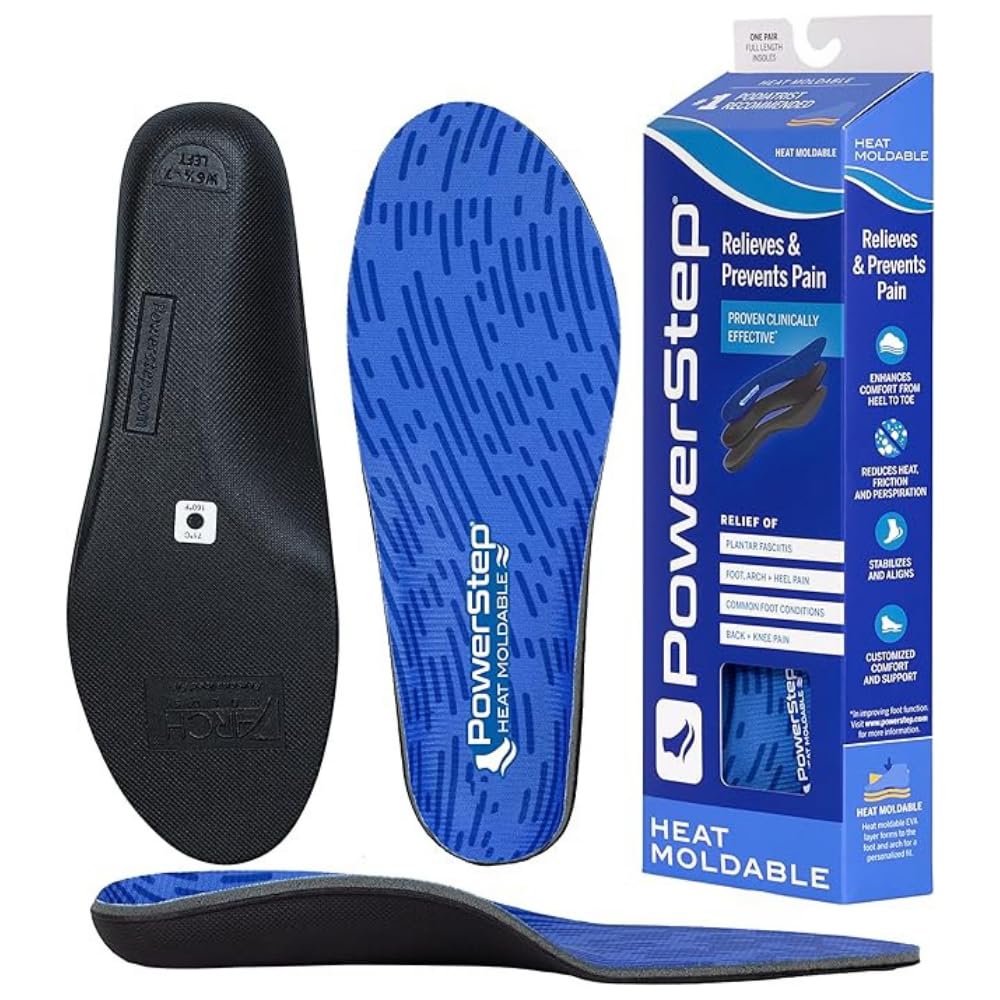
PowerStep’s Archmolds combine a heat-moldable EVA core with a semi-rigid TPU arch frame, delivering a rare balance of customized contour and biomechanical control. The 4‑step heat fitting process lets you achieve a heel cup and arch shape that mirrors your foot, while the TPU shell prevents the arch from collapsing under heavier loads — a feature missing in most all-foam competitors.
Long-term users report consistent arch support lasting several months, though the foam does stiffen over time, especially for those spending full shifts on concrete. The moldable nature works well for medium to high arches; users with very flat or severely fallen arches may find the base arch too elevated before molding. The top cloth breathes adequately, and the full-length design fits most sneakers and casual shoes without major volume issues.
Customer feedback regularly highlights the “perfect fit” after heat molding, with several reviewers noting that PowerStep’s customer service responds quickly to sizing or durability concerns. The TPU frame adds noticeable pronation control, making this a strong daily orthotic for mild to moderate overpronation rather than a high-cushion walking aid.
Why it’s great
- Heat-moldable contour with rigid TPU arch for pronation control
- Balanced cushion-to-support ratio for all-day wear
- Responsive customer support and easy heat-fit process
Good to know
- EVA stiffens over months, may aggravate old conditions
- Base arch is moderate — limited relief for severe flat feet
- Full length may crowd toe box in low-volume shoes
2. SOLE Performance Thick Insoles

SOLE’s thick profile (4.8mm total, 3.2mm cushion on a ReCORK base) is engineered specifically for boots and high-volume footwear where maximum cushion and firm arch support must coexist. The heat-moldable cork layer conforms to your arch after a brief oven cycle, and the cork itself resists compression far longer than EVA, making this an excellent choice for extended standing, hiking, or military wear.
Military, construction, and outdoors users report three years of daily use without the arch flattening or the top layer peeling — durability that pure-foam insoles rarely match. The cork does add noticeable weight compared to foam, and the thick profile requires boots with removable insoles and sufficient interior depth. The trim-to-fit edges allow width customization, but the arch height is best suited for medium to high arches; very flat feet may need additional medial posting.
A few reviewers note the initial stiffness before heat molding, but once shaped, the insoles provide a stable platform that aligns the foot and reduces lower back fatigue. The deep heel cup cradles the calcaneus firmly, limiting heel movement inside the boot during uneven terrain walking.
Why it’s great
- Compression-resistant cork base outlasts EVA by years
- Heat moldable for custom arch and heel contour
- Ideal for boots, hiking, and heavy-duty outdoor use
Good to know
- Thick profile requires boot or shoe with ample interior space
- Heavier than foam-based alternatives
- Cork can feel stiff before heat molding
3. Dr. Scholl’s Custom Fit Comfort CF750
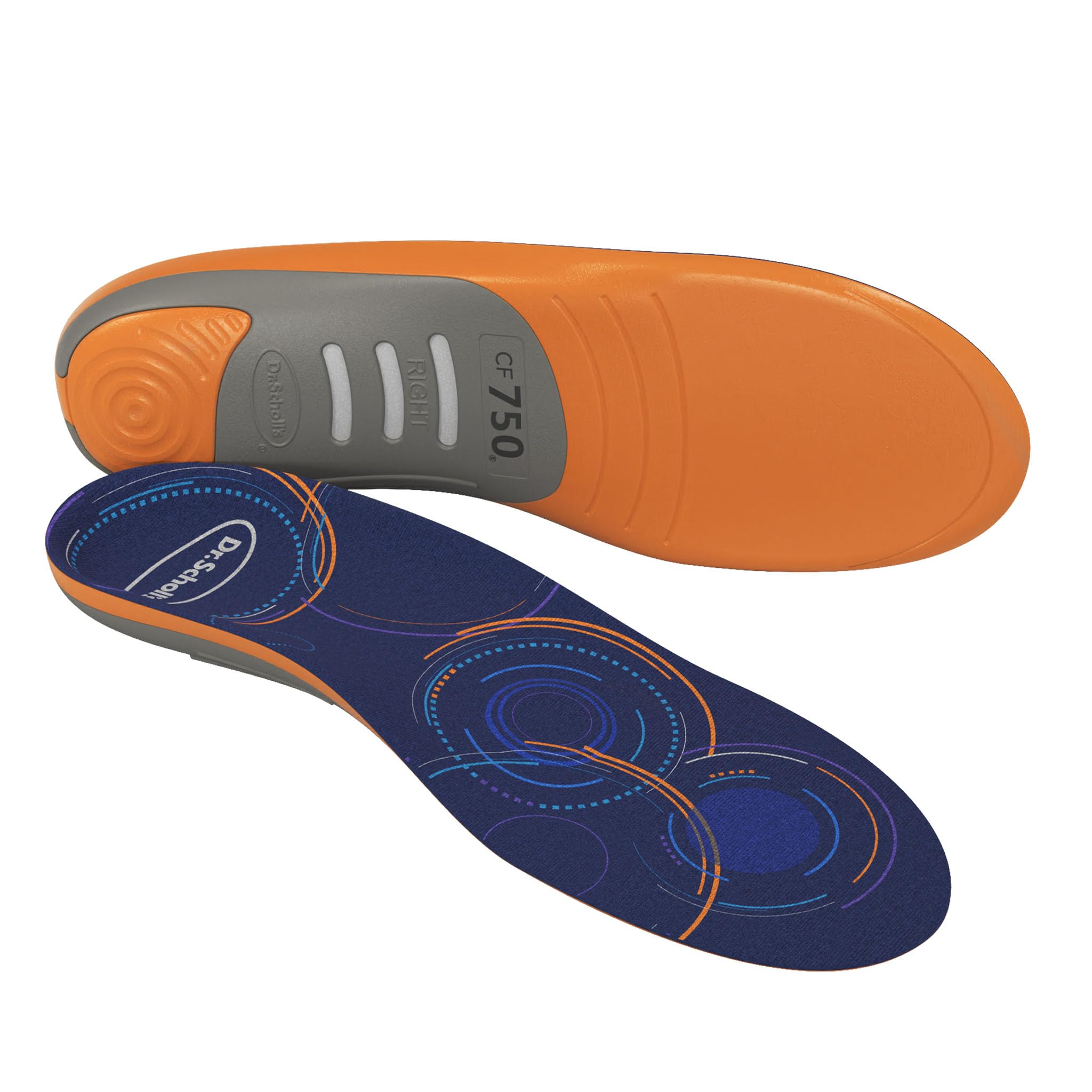
Dr. Scholl’s CF750 is a full-length, multi-layer foam insole designed for people who spend hours on their feet — restaurant workers, nurses, warehouse staff. It’s the only model in this lineup rated for individuals weighing over 220 pounds, thanks to its dense foam stack that resists bottoming out even after months of daily wear.
The arch support is flexible and adaptive rather than rigid, which suits users who need comfort over strict biomechanical correction. The full-length design (no trimming required) fits most shoes with removable insoles, and the cushioning extends from heel through the ball of the foot, reducing pressure on key plantar fascia attachment points. Several reviewers confirm it keeps plantar fasciitis symptoms in check when replaced every three months.
The main trade-off is width — the CF750 runs narrow, causing overhang or sliding for wearers with wide feet (2E or wider). The foam also compresses faster than cork-based alternatives, so durability is limited to roughly 90 days of heavy use before cushion loss becomes noticeable.
Why it’s great
- Rated for 220+ lbs with dense foam that resists flattening
- Full-length cushioning reduces heel and ball-of-foot pressure
- No trimming required for standard shoe sizes
Good to know
- Too narrow for wide feet (2E+) — overhang or sliding reported
- Foam compresses noticeably after ~3 months of daily use
- Flexible arch offers less pronation control than rigid orthotics
4. Move Game Day Performance Insoles

Co-founded by NBA guard Damian Lillard, Move’s Game Day insole targets dynamic sports — basketball, running, court sports — where quick lateral cuts, jumps, and hard landings demand both cushion and proprioceptive feedback. The composite heel insert and reactive stability layer work together to absorb high-impact shock while maintaining a responsive, low-profile feel inside athletic shoes.
Users report dramatic reductions in shin splints and knee pain after switching to Game Day, with several noting that old shoes felt “new again” after the swap. The molded forefoot design keeps the insole locked in place inside the shoe, and no trimming is required for standard sizes. The arch support is pronounced and firm, making it suitable for medium to high arches but potentially aggressive for flat-footed users who prefer a softer transition.
The main concern comes from heavier or older athletes — the heel cushioning is less plush than competitor options, and the firm arch can feel uncomfortable for users over 45 or those with existing ankle instability. For younger, active feet, however, the energy return and stability are hard to beat in this price tier.
Why it’s great
- Composite heel insert absorbs impact from jumping and cutting
- Molded forefoot stops insole shifting inside the shoe
- Proven reduction in shin splints and knee pain for active users
Good to know
- Firm arch can be uncomfortable for older or heavier athletes
- Heel cushion is less plush than dedicated walking insoles
- Not ideal for very flat feet requiring medial posting
5. FORM Maximum Support Plantar Fasciitis Insoles

FORM’s Maximum Support insole uses a heat-moldable base combined with a moisture-wicking TemperWeave top sheet that minimizes odor and keeps feet dry during long wear. The comfort-shaped arch is designed specifically for plantar fasciitis relief, and the oven-molding process creates a deep heel cup that locks the calcaneus in place — a critical feature for morning-step pain sufferers.
Real-world reviews confirm immediate heel pain relief after molding, with several customers reporting pain-free running and sports within days. The insoles run slightly large; size 10 women’s users note the insole barely fits athletic shoes and requires minor toe trimming. The full-length design works best with shoes that have removable factory insoles — layering on top of existing inserts will crowd the toe box and raise heel height.
A few heavier users (over 300 lbs) experienced left foot numbness after 60 hours, though the company’s responsive customer service replaced them with memory foam alternatives. The balance of support, breathability, and moldability makes these a strong entry-level custom insole for plantar fasciitis sufferers who don’t want to spend on podiatrist visits.
Why it’s great
- Heat-moldable for personalized arch and heel contour
- TemperWeave top fabric reduces odor and moisture buildup
- Immediate pain relief for plantar fasciitis heel pain
Good to know
- Runs large — may require toe trimming in women’s sizes
- Not suitable for shoes without removable factory insoles
- Heavy users may experience numbness; customer service responsive
6. Dr. Scholl’s Custom Fit Orthotics CF130

Dr. Scholl’s CF130 takes a different approach — a 3/4 length orthotic that ends before the toes, making it compatible with shoes that lack removable insoles or have tight toe boxes. The three-layer system (shock-absorbing base, adaptive 3D arch support, soft top cloth) provides immediate lower-body pain relief for feet, knees, hips, and lower back, as confirmed by clinical testing.
Users with high arches consistently report that the CF130 keeps knee pain in check, and chiropractors often recommend it as a bridge between drugstore inserts and custom podiatric orthotics. The sizing is determined online through Dr. Scholl’s Fit Finder system, which matches your arch type and body weight to the appropriate model. The 3/4 length does mean there’s less forefoot cushioning than full-length options, which some users notice during long runs or high-impact activities.
The main drawback is thickness — the 3/4 design still adds volume under the midfoot, requiring looser laces in snug shoes. Price is mid-range compared to basic foam insoles, but the targeted arch support and durability (reviewers report 6‑12 months of daily use) make it a cost-effective option for those with consistent arch-related knee or back pain.
Why it’s great
- 3/4 length fits shoes without removable insoles
- Clinically proven lower-body pain relief across knees, hips, back
- Customized via online Fit Finder for arch type and weight
Good to know
- Added midfoot volume may require looser laces
- Less forefoot cushioning than full-length alternatives
- Higher upfront cost than basic foam inserts
7. Icebug SLIM Low Cushion Support Insole
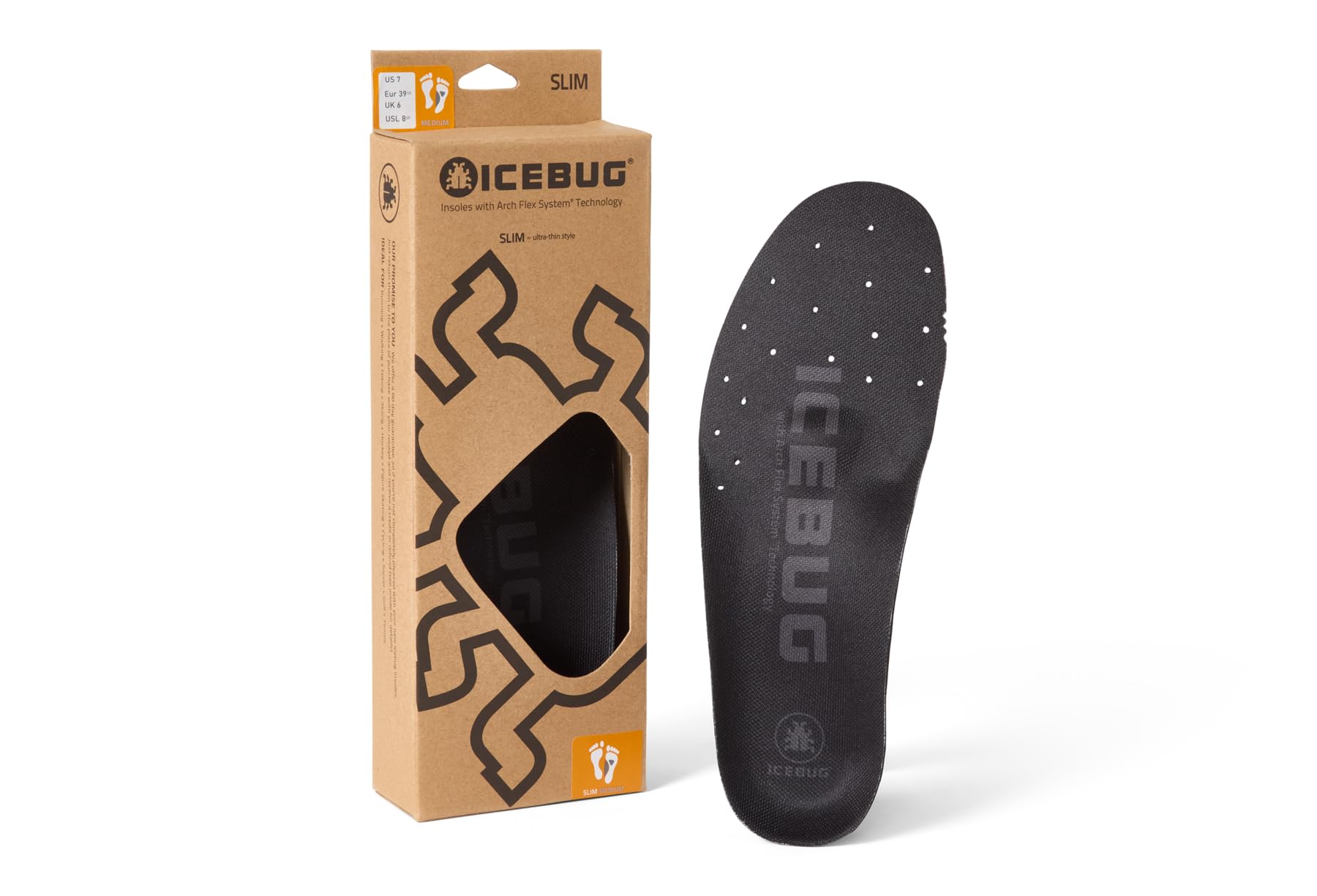
The Icebug SLIM is a specialized low-cushion insole designed for cycling shoes and other low-volume footwear where every millimeter of thickness affects cleat alignment and pedal feel. Its defining feature is the metatarsal button — a raised pad positioned behind the ball of the foot that relieves nerve impingement and numbness during long rides.
Cyclists with metatarsalgia, Morton’s neuroma, or general forefoot numbness report that the Icebug SLIM extends comfortable ride duration from 35 minutes to over 90 minutes, with zero hot spots even on 70‑mile days. The high arch profile provides excellent support for riders with flexible flat feet or weak ankles, and the slim profile fits easily into narrow European cycling shoes without volume issues. Users with wide feet simply size up and trim the forefoot.
The trade-off is specificity — this insole performs poorly in walking shoes or boots because the metatarsal button feels unnatural under the ball of the foot during normal gait, and the low cushioning offers little shock absorption for heel strikes. It’s a niche tool for cyclists and some court-sport athletes who prioritize foot-to-pedal connection over walking comfort.
Why it’s great
- Metatarsal button relieves nerve impingement in cycling shoes
- Slim profile fits low-volume footwear without raising heel height
- High arch support for flat, flexible feet on the bike
Good to know
- Metatarsal button feels unnatural during walking or running
- Low cushioning provides minimal heel shock absorption
- Best suited for cycling and specialized court sports only
FAQ
Can custom insoles fix flat feet permanently?
How long do heat-moldable insoles last before needing replacement?
Are custom insoles covered by FSA or HSA accounts?
What’s the difference between 3/4 length and full-length custom insoles?
Can I heat mold an insole multiple times?
Final Thoughts: The Verdict
For most users, the custom insoles winner is the PowerStep Archmolds because it combines heat-moldable contouring with a TPU stability frame — delivering personalized support and pronation control in one package. If you need maximum cushion for boot or outdoor use, grab the SOLE Performance Thick for its compression-resistant cork base. And for cyclists battling forefoot numbness, nothing beats the Icebug SLIM with its targeted metatarsal button.

Mo Maruf
I created WellFizz to bridge the gap between vague wellness advice and actionable solutions. My mission is simple: to decode the research and give you practical tools you can actually use.
Beyond the data, I am a passionate traveler. I believe that stepping away from the screen to explore new environments is essential for mental clarity and physical vitality.