Our readers keep the lights on and my smoothie glass nicely filled. As an Amazon Associate, I earn from qualifying purchases.
A dull drill bit doesn’t just slow you down—it burns wood, walks across metal, and wastes material. A dedicated sharpener restores that factory edge in under a minute, saving you from constantly buying replacements and keeping your work accurate.
I’m Mohammad Maruf — the founder and writer behind WellFizz. I’ve spent hours breaking down the motor specs, collet systems, abrasive wheel materials, and build quality of the top drill bit sharpeners on the market to sort the precision tools from the dust-makers.
Whether you run a busy shop or a weekend garage, this guide walks through the best drill bit sharpener picks for every budget, from compact electric models to professional-grade jigs.
How To Choose The Best Drill Bit Sharpener
Not all drill bit sharpeners work the same way. Some use a manual jig on a water stone, others a fixed-angle electric port. Your choice depends on bit size range, material type, and how much precision you need. Here are the three specs that separate a money-saving tool from a frustrating paperweight.
Point Angle and Lip Relief Adjustment
The standard 118-degree point angle suits general-purpose drilling in steel and wood, while 135-degree points reduce walking on harder materials like stainless. Some sharpeners lock you into one angle—look for adjustable models (95-140 degrees) if you work with mixed materials. Lip relief angle determines how aggressively the bit bites; tunable relief gives you control over chip evacuation.
Abrasive Wheel Material
Cubic Boron Nitride (CBN) wheels handle high-speed steel bits efficiently without loading up, while Silicon Carbide (SDC) wheels are formulated for tungsten carbide. Entry-level electric sharpeners often use standard aluminum oxide or diamond-plated discs that wear faster. A dual-wheel system (CBN + SDC) covers both HSS and carbide bits in one machine.
Collet Count and Range
Each bit diameter requires a matching collet. A sharpener that comes with 11 to 13 elastic collets (typically covering 3mm to 15mm) saves you from buying extras. Fewer collets mean you can only sharpen the sizes included, so check the range against the bits you actually use. Split-point capability is a bonus—it creates four cutting edges for smoother entry and less wandering.
Quick Comparison
On smaller screens, swipe sideways to see the full table.
| Model | Category | Best For | Key Spec | Amazon |
|---|---|---|---|---|
| MRCM MR-13A | Premium | All-metal precision with 13 collets | 13 elastic collets, 3–15mm, 4400 RPM | Amazon |
| VEVOR MR-13B | Premium | Dual CBN/SDC wheels, 19 lbs build | 11 collets, 3–13mm, 4500 RPM, dual wheel | Amazon |
| Drill Doctor DD750X | Mid-Range | Fast split-point sharpening, 3/32–3/4″ | 115-140° adjustable, 100/180 grit wheel | Amazon |
| Tormek DBS-22 | Premium | Water-cooled 4-facet point for Tormek users | 1/8–7/8″ bits, 90-150° angle range | Amazon |
| Electric 95W 3–12mm | Mid-Range | Budget-friendly 95W electric port | 3–12mm, 118°, 1500 RPM | Amazon |
| CHAOFEIUS 95W 3–12mm | Mid-Range | Compact 95W for HSS/carbon steel | 3–12mm, 118°, 1500 RPM | Amazon |
| Sharp Pebble Honing Guide | Budget | Manual honing jig for chisels & plane irons | Stainless steel, single wheel, 0.25–1.96″ chisels | Amazon |
In‑Depth Reviews
1. MRCM MR-13A Drill Bits Sharpener
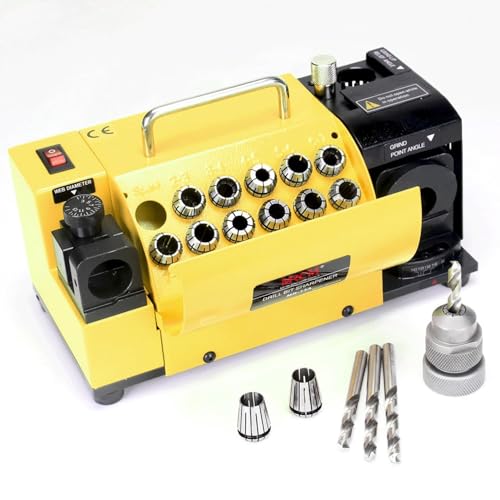
The MR-13A is the standout in this lineup for a simple reason: it packs 13 elastic collets covering 3mm to 15mm, a 4400 RPM DC motor, and a CBN grinding wheel into a fully cast-iron housing that won’t drift over time. The point angle adjusts from 95 to 135 degrees, and it includes a split-point feature that creates four cutting edges for aggressive, walk-free entry. Users report getting bits sharper than factory condition in under 30 seconds after a short learning curve.
Build quality is exceptional for the price tier. The all-metal chassis weighs enough to stay planted on a bench, and the open protective cover makes dust cleanup straightforward. The cubic boron nitride wheel handles HSS bits with a clean finish and minimal heat buildup, so you don’t risk softening the steel.
The main trade-off is documentation—the manual is sparse on center-adjustment details, and there is no UL listing sticker. Experienced shops will adapt quickly; beginners should watch a few setup videos before the first grind.
Why it’s great
- 13 precision collets deliver an unusually wide diameter range (3–15mm)
- CBN wheel produces a surface finish that rivals new bits
- Cast-iron frame resists vibration and long-term deformation
Good to know
- User manual lacks detail on center-point adjustment
- No UL or voltage compliance label noted on the unit
2. VEVOR MR-13B Drill Bits Sharpener

The VEVOR MR-13B sits just above the MRCM in the same family but adds a second SDC grinding wheel for tungsten carbide bits and an all-metal construction that tips the scale at 19 pounds. The 120-watt DC motor spins at 4500 RPM, and the machine includes 11 collets covering 3mm to 13mm with a split-point grind capability on a single wheel. Users consistently describe it as “amazingly well engineered” and note it makes a Drill Doctor look primitive.
Angle adjustment covers 95 to 135 degrees, and you can also set the lip relief angle via positioner pins to four different profiles. The CBN wheel (pre-installed) cuts aggressively on HSS, while the included SDC wheel swaps in for carbide without any extra tooling. The machine runs quieter than expected given the torque, and the tight tolerances mean consistent geometry from one bit to the next.
The weak spot is the same as its stablemate—the manual is minimal, and setup for bits under 4mm requires patience. The instruction packet lacks the finer points of alignment, making YouTube tutorials almost mandatory. If you are comfortable experimenting and want dual-wheel flexibility in a rugged package, this is the pick.
Why it’s great
- Two grinding wheels (CBN + SDC) cover HSS and carbide bits
- 19-pound all-steel chassis dampens vibration for clean grinds
- Adjustable lip relief via positioning pins for four angle profiles
Good to know
- Instructions are sparse; setup videos are essential first step
- Collet range maxes at 13mm, so larger bits need a different machine
3. Drill Doctor DD750X Electric Drill Bit Sharpener

The Drill Doctor DD750X is the most recognizable name in the category, and for good reason—it sharpens twist bits from 3/32 inch up to 3/4 inch with a quick port-and-turn action that requires almost no technique. It offers adjustable angles from 115 to 140 degrees and includes a split-point feature that reduces walking. Users report sharpening dozens of bits in a single session with consistent results after reading the instructions.
The motor is rated for continuous shop use, and the included two grit wheels (100 and 180) cover initial shaping and final honing. The machine is designed, engineered, and calibrated in Oregon, which shows in the overall fit and finish. It handles HSS, masonry, carbide, cobalt, and tin-coated bits without complaint, and the included alignment guide makes it beginner-friendly.
Criticisms center on the plastic dust tray (which fits poorly and lets debris escape) and the side split-point access port, which some users find imprecise and requiring manual tweaking. The angle adjustment slide is stiff out of the box. Still, for a user who wants predictable results without a steep learning curve, the DD750X remains a solid mid-range workhorse.
Why it’s great
- Fast, foolproof port-and-turn sharpening for common bit sizes
- Split-point feature improves centering and reduces bit walk
- Wide material compatibility—HSS, carbide, cobalt, masonry
Good to know
- Plastic dust tray fits loosely, allowing metal dust to spill
- Side split-point access requires careful manual alignment
4. Tormek DBS-22 Drill Bit Sharpener

The Tormek DBS-22 is not a standalone machine—it is a jig attachment for Tormek water-cooled sharpening systems, but it produces the most geometrically precise drill bits in this lineup. It cuts a four-facet point with a chisel edge that eliminates walking, and the water-cooled wheel prevents heat damage that compromises edge hardness. The jig handles bits from 1/8 inch up to 7/8 inch and lets you set clearance angles at 7, 9, 11, or 14 degrees.
Build quality is typical Tormek: precision-cast zinc, stainless steel, and black composite that feels rock-solid in hand. First-time setup takes about 30 minutes, but after that sharpening a bit is straightforward. The four-facet geometry is noticeably superior to standard two-facet points on everything from hard steel to wood, and users consistently report bits cutting better than new.
The downsides are cost and speed. The DBS-22 is the most expensive option here by a wide margin, and the wet-grinding process is slower than a dry electric port. The slides can feel sticky until broken in, and the system is overkill for someone sharpening one or two bits a month. If you already own a Tormek or demand show-quality bit geometry, it is worth every penny.
Why it’s great
- Four-facet point geometry prevents bit walking and drills round holes
- Water cooling eliminates heat damage to bit hardness
- Wide bit range (3mm to 22mm) with full angle and relief control
Good to know
- Requires a Tormek base unit; not a standalone sharpener
- Process is slower than dry electric port sharpeners
5. Electric Drill Bit Sharpener 95W (3–12mm)
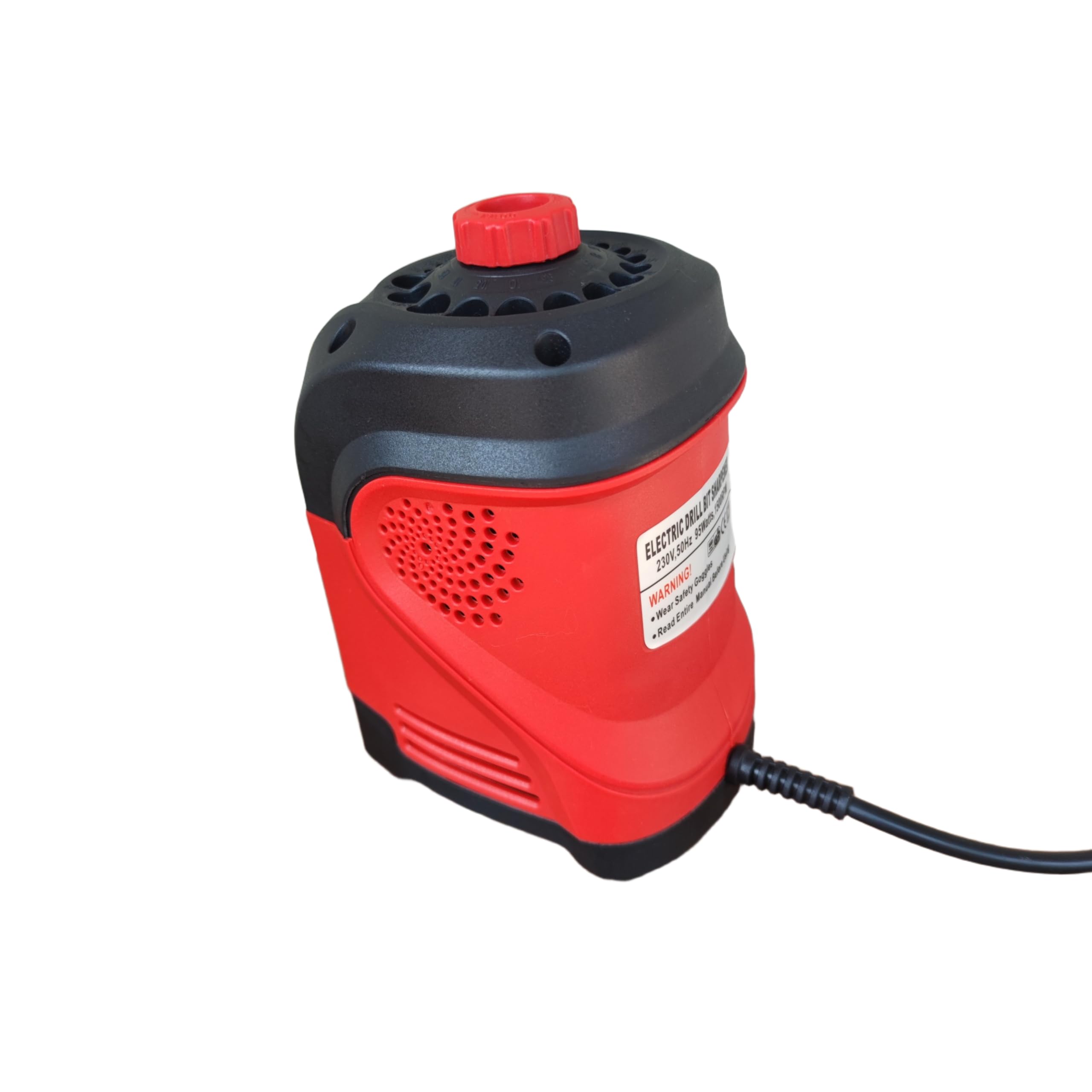
This compact 95-watt electric sharpener covers the most common consumer range (3mm to 12mm) for HSS and carbon steel bits at a 118-degree fixed angle. The 1500 RPM motor is modest compared to premium units, but it handles quick touch-ups on dull bits without overcomplicating the process. Users describe it as “handy” and note it pays for itself after sharpening a handful of bits.
The design is simple: insert the bit into the correct-size port, rotate until you feel resistance, and let the stone do the work. It weighs under three pounds and measures about 6 inches tall, so it can sit on a shelf or in a tool bag. The included metric and fractional sizing chart covers the most common twist bit dimensions.
The main limitation is fixed geometry—you get 118 degrees and nothing else, so it won’t handle 135-degree split points or bits with complex relief angles. Some users note the finish is “usable but not like-new,” and the stone wears faster than CBN equivalents. For a budget-friendly entry point that keeps your everyday bits cutting, this is a practical choice.
Why it’s great
- Lightweight and small enough for portable workshop use
- No setup or angle adjustment needed—insert and grind
- Pays for itself quickly if you regularly dull small HSS bits
Good to know
- Fixed 118-degree angle limits material and bit type compatibility
- Stone wears faster than CBN or diamond alternatives
6. CHAOFEIUS 95W Electric Drill Bit Sharpener (3–12mm)

This CHAOFEIUS model shares the same 95W, 1500 RPM, 3–12mm, 118-degree specs as the previous electric sharpener but comes from a different manufacturer with a slightly different housing design. It is a no-frills machine aimed at users who want a dedicated port for reviving dull HSS and carbon steel bits without spending time on setup. Reviews confirm that after a few tries, the sharpener produces usable edges that extend bit life significantly.
One standout user report notes the machine “saved us a lot of money on buying drill bits” after a couple months of regular use. The motor provides enough torque for the small stone, and the simple push-and-twist action works well for 118-degree standard twist bits. The package is compact, and the weight around 2.7 pounds means it can be moved between workstations easily.
The most common complaint is the lack of included instructions—the box contains safety precautions but no visual guide for proper bit alignment or stone replacement. A few users also mention the grinding wheel is small, so it takes multiple passes to fully reshape a badly chipped bit. If you can YouTube your way through the first setup, it delivers solid value at the entry level.
Why it’s great
- Very affordable entry point for reviving worn twist bits
- Compact footprint fits into crowded workbenches
- Users report significant savings on replacement bit costs
Good to know
- No printed setup instructions—only safety warnings included
- Small grinding stone requires multiple passes for chipped bits
7. Sharp Pebble Honing Guide for Chisels & Planes

The Sharp Pebble Honing Guide is not a drill bit sharpener in the traditional electric sense—it is a manual jig for sharpening chisel and plane iron edges on water stones or diamond plates. While it does not sharpen twist drills directly, it belongs in this guide because many woodworkers who sharpen bits also maintain edge tools with the same stones. The stainless steel body and bronze bearing make it exceptionally solid for the price point.
The single-wheel design rolls directly on the abrasive surface, unaffected by plate thickness, which is a genuine advantage over multi-wheel guides that can wobble. The knurled brass locking knob has wrench flats for secure clamping, and the included guide provides projection measurements for common bevel angles. Users with decades of freehand sharpening experience report switching to this jig for razor-sharp results with half the effort.
It does not fit tools with tapered bevels on the side, and the mechanism collects stone dust that needs periodic cleaning. This is not a replacement for an electric drill sharpener—it serves a different purpose. If your shop already uses water stones and you want to bring your chisels and plane irons to the same precision level as your bits, this is a well-built addition.
Why it’s great
- Solid stainless steel construction with brass bearing—no paint to chip
- Single-wheel design works on any plate thickness without recalibration
- Produces razor-sharp chisel and plane edges with minimal practice
Good to know
- Does not sharpen twist drill bits—for chisels and plane irons only
- Cannot clamp chisels with tapered side bevels without modifications
FAQ
Can I sharpen carbide drill bits with a standard electric sharpener?
Why does my drill bit walk even after sharpening?
How often should I replace the grinding wheel on my sharpener?
Final Thoughts: The Verdict
For most users, the best drill bit sharpener winner is the MRCM MR-13A because it combines 13 collets, a CBN wheel, and split-point grinding in an all-metal frame that delivers precision without costing as much as a pro-level machine. If you want dual-wheel flexibility for both HSS and carbide bits, grab the VEVOR MR-13B. And for woodworkers who already own a Tormek system and demand the finest four-facet geometry, nothing beats the Tormek DBS-22.

Mo Maruf
I created WellFizz to bridge the gap between vague wellness advice and actionable solutions. My mission is simple: to decode the research and give you practical tools you can actually use.
Beyond the data, I am a passionate traveler. I believe that stepping away from the screen to explore new environments is essential for mental clarity and physical vitality.