Our readers keep the lights on and my smoothie glass nicely filled. As an Amazon Associate, I earn from qualifying purchases.
Choosing the right cream for healing wounds is often the difference between a scar that fades fast and a site that stays angry for weeks. The wrong product stings on application, dries out too quickly, or fails to create the moist barrier modern wound science demands—forcing you to repeat the process and prolonging the entire recovery cycle.
I’m Mohammad Maruf — the founder and writer behind WellFizz. I’ve spent countless hours analyzing clinical data, ingredient safety profiles, and real user outcomes for wound-care topicals so you can skip the trial-and-error phase entirely.
This guide isolates the five most effective formulations for everything from minor abrasions to pressure sores, helping you identify the cream for healing wounds that matches your specific recovery need without guesswork.
How To Choose The Best Cream For Healing Wounds
Selecting a wound-healing cream isn’t just about grabbing the first tube on the shelf. You need to consider the wound type, the active ingredient’s mechanism, and the consistency that will stay in place for hours. Below are the three factors that make or break a topical’s effectiveness.
Active Ingredient Profile
Each active ingredient targets a specific healing phase. Manuka honey creates a moist, bacteriostatic environment ideal for deep or slow-healing wounds. Colloidal silver offers broad antimicrobial action without the sting of traditional antiseptics. Triple antibiotic ointments cover gram-positive and gram-negative bacteria but can cause contact dermatitis with prolonged use. Choose based on whether your priority is infection prevention, non-sting application, or deep tissue repair.
Consistency and Occlusion
A wound cream that is too runny will migrate off the wound bed, forcing frequent reapplication and drying out the site. Ointments with a petrolatum or beeswax base create an occlusive seal that retains moisture and allows oxygen exchange—ideal for larger surface areas. Gels absorb faster but may need a secondary dressing for deep wounds. For pressure sores or stationary wounds, the density of the formulation determines how long the barrier lasts.
Packaging and Hygiene
Open jars force you to dip fingers into the product, introducing bacteria. Single-use packets eliminate cross-contamination and are perfect for first-aid kits or travel. Airless pump bottles preserve ingredient stability—especially important for silver-based formulations that degrade with air exposure. If you treat multiple family members, individual packets offer the safest and most cost-effective long-term approach.
Quick Comparison
On smaller screens, swipe sideways to see the full table.
| Model | Category | Best For | Key Spec | Amazon |
|---|---|---|---|---|
| Aquaphor Healing Ointment | Ointment | Dry, cracked skin & minor burns | 14 oz value jar | Amazon |
| ActivOn Manuka Honey Gel | Gel | Deep wounds & pressure sores | 100% medical-grade Manuka honey | Amazon |
| Silver Miracles Colloidal Silver Gel | Gel | Burns & irritated sensitive skin | 25 PPM nano silver, unscented | Amazon |
| MED PRIDE Triple Antibiotic Packets | Single-Use | Travel kits & bulk first-aid | 144 individual packets | Amazon |
| Dimora Wound Cleanser | Cleanser | Pre-bandage wound cleaning | PHMB formula, sting-free | Amazon |
In‑Depth Reviews
1. Aquaphor Healing Ointment
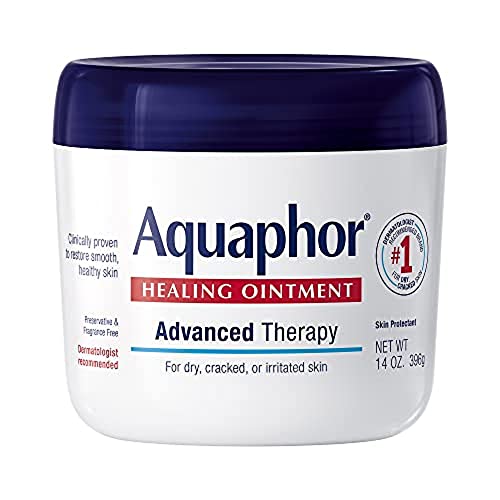
Aquaphor’s formula creates a water-free, semi-occlusive barrier that clinically restores smooth skin while allowing oxygen to reach the wound bed—an ideal environment for healing minor cuts, burns, and cracked skin. Dermatologists commonly prescribe it for post-cryotherapy and surgical aftercare because its chamomile content soothes without irritating, unlike straight petrolatum. The 14-ounce jar delivers enough coverage for families or frequent users, reducing the need to reorder monthly.
The texture is thick but spreads easily, making it effective on cracked heels, dry cuticles, chapped lips, and post-procedure wounds. Users report that a small amount goes a long way, and the product stays on the wound site without migrating. Licensed cosmetologists use it as a nightly hand-and-foot treatment to repair damage from constant water and chemical exposure, with visible results by morning.
It’s not a medicated antibiotic, so it won’t actively kill bacteria—but it does create a sealed, breathable environment that supports the body’s natural repair process. The large jar is economical, but some users prefer the tube format for hygienic dispensing without finger dipping. Aquaphor remains the most versatile single product for anyone needing a multi-surface, non-stinging healing ointment.
Why it’s great
- Clinically proven to restore compromised skin
- Versatile for cuts, burns, chapped skin, and surgical sites
- Value-size jar offers extended use
Good to know
- Large jar requires clean fingers or spatula
- Not an antibiotic—no active infection treatment
2. ActivOn Medical Grade Manuka Honey Gel
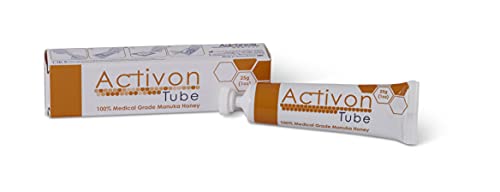
The ActivOn gel delivers 100 percent medical-grade Manuka honey in a 1-ounce tube, and its real-world performance speaks volumes: users report healing severe finger crush injuries with exposed bone and closing wheelchair pressure sores within days after a surgeon’s approval. Manuka honey’s high methylglyoxal content creates a bacteriostatic moisture barrier that draws fluid from the wound bed while preventing biofilm formation—something standard antibiotic creams cannot replicate.
The consistency is noticeably runnier than ointment-based products, but that fluidity allows it to penetrate deep wounds and fill irregular cavities. Several reviewers discovered that refrigerating the gel for a few minutes thickens it enough for cleaner application on elevated or tricky wound sites. It heals thin, fragile skin quickly without the macerated “prune” look that prolonged bandage wear usually causes.
Packaging is the main friction point: the twist-off cap cannot be resealed, making it impractical to toss in a bag or pocket without risking leaks. For stationary home use with a secondary dressing, this limitation is minor. If you need a potent, chemical-free active that outperforms synthetic ointments on stalled or deep wounds, this is the tube to reach for.
Why it’s great
- Medical-grade Manuka honey accelerates deep wound closure
- Prevents maceration and biofilm formation
- Approved for use by surgeons on severe injuries
Good to know
- Twist-off cap is not resealable
- Runny consistency requires refrigerating for controlled application
3. Silver Miracles Colloidal Silver Gel

Silver Miracles combines 25 PPM of 99.999% pure nano silver with a gel base that soothes irritated skin without the chemical smell or sting of conventional wound creams. The airless bottle protects the silver from oxidation, preserving potency through the entire use cycle. Reviewers consistently mention using it not just for minor cuts and scrapes, but also on sunburns, insect bites, dry itchy patches, and even pressure wounds on bedridden patients.
Because colloidal silver acts as a broad-spectrum antimicrobial without generating resistance, this gel is especially valuable for sensitive skin types—including children and adults prone to contact dermatitis from neomycin or bacitracin. The formula is non-GMO, paraben-free, gluten-free, and free of added colors or fragrances, making it one of the cleanest wound options available. Users report that it calms redness and irritation within hours of application.
The gel absorbs faster than an ointment, which is ideal for superficial wounds but may require more frequent reapplication on deeper sites. A handful of reviews note the color can vary from clear to light amber, which is a natural property of colloidal silver and not a quality issue. For anyone seeking a natural, sting-free antimicrobial that pulls double duty as a skin soother, this is the standout gel.
Why it’s great
- Sting-free antimicrobial action suitable for sensitive skin
- Airless bottle preserves silver potency
- Works on cuts, burns, bites, and rashes
Good to know
- Gel absorbs quickly, may need reapplication on deep wounds
- Natural color variation between batches is normal
4. MED PRIDE Triple Antibiotic Ointment Packets
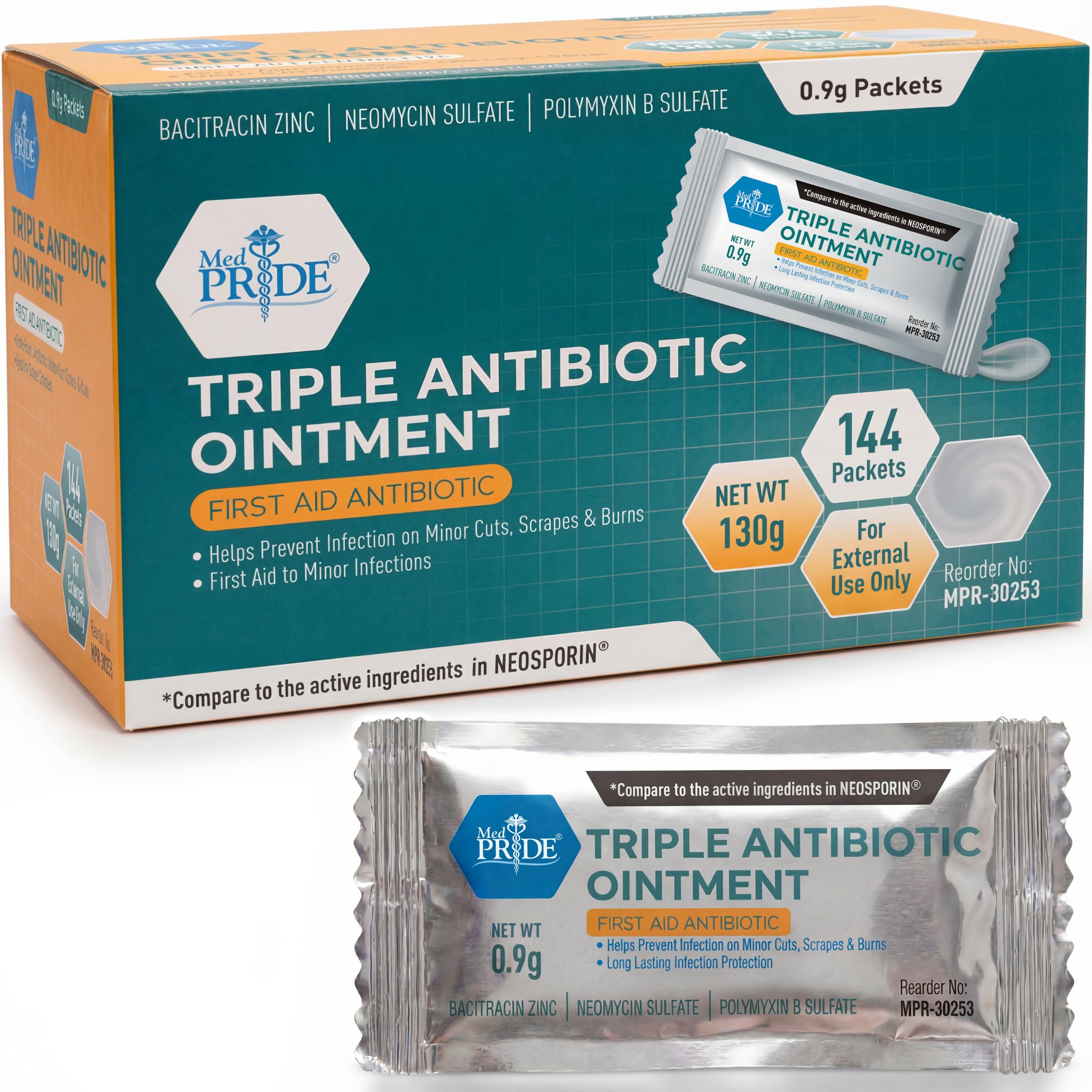
MED PRIDE delivers 144 individually sealed packets of triple antibiotic ointment—a combination of bacitracin, neomycin, and polymyxin B—making it the ultimate bulk solution for families, sports teams, or anyone building first-aid kits for car, office, and camping gear. The single-use format eliminates cross-contamination risks that come with shared tubes, and each packet contains enough ointment to treat a standard cut or scrape without waste.
Beyond infection prevention, the ointment base helps keep the wound moist, which accelerates epithelial migration and reduces scab formation. Real-world users have stocked four separate first-aid kits from a single bulk purchase and still had packets left over. Parents of active children appreciate being able to toss a few packets into a diaper bag or backpack without worrying about a tube leaking inside.
The obvious trade-off is in ingredient profile—triple antibiotic ointments containing neomycin carry a small risk of contact dermatitis in sensitive individuals. If you or your family has known sensitivities, you may prefer a silver or honey alternative. But for general household use where speed, hygiene, and infection coverage are the priority, the packet format is the most practical long-term investment.
Why it’s great
- Individual packets prevent cross-contamination
- Bulk quantity is ideal for multiple first-aid kits
- Broad-spectrum antibiotic coverage
Good to know
- Neomycin can cause skin sensitivity in some users
- Not suitable for deep puncture wounds without medical evaluation
5. Dimora Skin and Wound Cleanser

Dimora’s wound cleanser is not a healing cream itself—it’s the essential pre-treatment step that prepares the wound bed for optimal healing. Powered by PHMB (polyhexamethylene biguanide), this solution gently flushes debris and residue from cuts, abrasions, lacerations, and burns without the burn of alcohol or the tissue damage of iodine. The pH 5.5 formula matches the skin’s natural acidity, supporting the microbiome rather than stripping it.
Users note that it feels cool and comfortable on application, making it ideal for children or adults who flinch at traditional antiseptics. The 237mL bottle fits neatly into first-aid kits, and the 8-week stability after opening ensures the product stays effective through multiple uses. One review describes using it on a large equine surgical wound, reducing the injury from six inches to one inch with no infections—a testament to its cleaning efficacy.
Remember that cleanser and cream serve different roles: Dimora preps the site, then a healing ointment or gel should follow to maintain the moist environment. If your current wound routine involves painful cleaning that discourages proper care, this sting-free alternative removes that barrier entirely. It is a supporting player, but an indispensable one for any serious wound management protocol.
Why it’s great
- Sting-free, alcohol-free, and iodine-free cleansing
- PHMB effectively removes biofilm and debris
- pH-balanced to preserve skin health
Good to know
- Does not replace a healing ointment—used before application
- 8-week stability after opening requires tracking usage
FAQ
Can I use a wound cream on a deep laceration that needs stitches?
How often should I reapply a wound healing cream for optimal results?
Final Thoughts: The Verdict
For most users, the cream for healing wounds winner is the Aquaphor Healing Ointment because it combines clinical-grade occlusion, multi-surface versatility, and the largest value jar for the price—making it the single product that handles cuts, burns, cracked skin, and post-procedure care without stinging. If you want a deep-wound specialist that tackles stalled or severe injuries, grab the ActivOn Manuka Honey Gel. And for sting-free antimicrobial coverage across the whole family, nothing beats the Silver Miracles Colloidal Silver Gel.

Mo Maruf
I created WellFizz to bridge the gap between vague wellness advice and actionable solutions. My mission is simple: to decode the research and give you practical tools you can actually use.
Beyond the data, I am a passionate traveler. I believe that stepping away from the screen to explore new environments is essential for mental clarity and physical vitality.