Our readers keep the lights on and my smoothie glass nicely filled. As an Amazon Associate, I earn from qualifying purchases.
Crack climbing demands a specific foot: a shoe that slides into a fissure, protects your foot from abrasive granite, and still edges confidently when you smear on the face. The wrong pair turns every jam into a wince and every multi-pitch into a torture session.
I’m Mohammad Maruf — the founder and writer behind WellFizz. I’ve spent hundreds of hours dissecting the sole profiles, rand constructions, and closure systems of specialized crack shoes to build this guide.
Whether you’re grinding offwidths in Indian Creek or splitter fingers at Seneca Rocks, the right footwear is non-negotiable. This guide breaks down the anatomy of the best crack climbing shoes to help you find the perfect fit for your foot shape and project grade.
How To Choose The Best Crack Climbing Shoes
A dedicated crack shoe prioritizes protection and comfort over aggressive edging precision. The wrong last shape or closure system can leave you hobbled after a single pitch. Here are the three non-negotiable criteria for a proper crack-specific shoe.
Last Profile: Low, Flat, and Symmetrical
A low-profile toe box slides into thin finger cracks without catching. A flat or mildly asymmetrical last keeps your foot straight so it doesn’t torque sideways inside the crack. Avoid aggressively downturned lasts for traditional crack climbing — they curl the toes and create painful pressure points against the rock.
Midsole Stiffness and Rand Protection
Stiff midsoles transfer load to the edges rather than bending the foot around a constriction. A full-length rubber rand that wraps the upper protects the leather and laces from the abrasive granite edges found in classic splitter cracks. Softer shoes that flex easily tend to deform under the weight of a loaded crack jam.
Closure System: Laces or Slippers
Laces allow micro-adjustments around the instep and heel, reducing pressure points inside the crack. Slipper-style shoes with hook-and-loop straps offer convenience but can leave the top of the foot exposed to sharp rock edges. For long multi-pitch cracks, laces provide the best protection and customizable tension.
Quick Comparison
On smaller screens, swipe sideways to see the full table.
| Model | Category | Best For | Key Spec | Amazon |
|---|---|---|---|---|
| Mad Rock Drone HV 2.0 | Mid-Range | All-day crack comfort at a great value | Low-profile toe, stiff midsole | Amazon |
| La Sportiva Mythos (Men’s) | Mid-Range | Multi-pitch crack climbing (lace closure) | Symmetrical last, low toe profile | Amazon |
| BUTORA Acro | Mid-Range | Technical face-to-crack transitions | German split-leather upper, triple straps | Amazon |
| OCUN Ozone | Mid-Range | Wide feet or Morton’s toe on cracks | Centered toe point, wider forefoot | Amazon |
| SCARPA Drago | Mid-Range | Steep bouldering that blends into cracks | Soft sole, narrow fit, aggressive last | Amazon |
| SCARPA Instinct VS | Premium | Crack-to-face hybrid routes | Bi-Tension rand, superior edging | Amazon |
| La Sportiva Solution (Men’s) | Premium | Hard boulder problems with crack sections | Aggressive downturn, P3 platform | Amazon |
| La Sportiva Solution (Women’s) | Premium | High-angle bouldering with small edges | Narrower fit, aggressive heel rand | Amazon |
| SCARPA Instinct VSR | Premium | Premium edging and toe-hooking in cracks | Full rubber toe cap, stiff sole | Amazon |
In‑Depth Reviews
1. Mad Rock Drone HV 2.0

The Drone HV 2.0 delivers a stiff platform that protects the foot through tight finger locks and offwidth jams, yet the moderate downturn still bites on small footholds when transitioning to face climbing. Multiple reviewers confirm that after a short break-in period the shoe molds to the foot without deadening all edge sensitivity.
The hook-and-loop closure system keeps the top of the foot shielded, while the durable rubber rand resists abrasion from granite and sandstone. Sizing is close to street shoe — go half a size down for a performance fit that still allows blood flow during long cracks.
At a mid-range price point, the Drone HV 2.0 rivals models that cost significantly more, making it the smartest buy for crack climbers who want one quiver-killing shoe that works on splitters, dihedrals, and face moves without punishing the wallet.
Why it’s great
- Excellent value for the performance level
- Stiff midsole protects foot in constrictions
- Breaks in quickly for a custom fit
Good to know
- Initial toe space can feel odd before break-in
- Heel cup fit varies due to hand assembly
2. La Sportiva Mythos (Men’s)

The Mythos has been a crack climbing staple for three decades, and the current version retains the low-profile symmetrical toe that slides cleanly into finger cracks without snagging. The lace system extends nearly to the toe, allowing precise tension adjustments that protect the instep from rock abrasion.
The moderate stiffness is ideal for multi-pitch cracks up to 5.12 on Wingate sandstone and granite, and the leather upper breathes well during long days. Reviewers praise the ability to keep the shoes on between pitches without pain — a telltale sign of proper crack-specific design.
One trade-off: the stock rubber is only average for edging, and the leather eyelets at the forefoot wear quickly against rough crack edges. Resoling with a stiffer rubber like XS Edge or C4 solves both issues and extends the shoe’s life significantly.
Why it’s great
- Ultra-adjustable laces for personalized fit
- Comfortable for full-day multi-pitch sessions
- Classic symmetrical last protects toes in cracks
Good to know
- Leather eyelets prone to abrasion in tight cracks
- Stock rubber lacks edge stiffness for hard face climbing
3. BUTORA Acro

The BUTORA Acro uses a German split-leather upper that resists stretching and provides reliable protection against sharp crack edges. The triple hook-and-loop strap system locks the heel securely without adding bulk, and the extended rubber toe cap prevents fraying at the front of the shoe.
Reviewers note that these run narrow and fit best for climbers with low-volume feet. The stiffness is higher than average for the mid-range tier, making the Acro a good choice for technical face-to-crack transitions where you need a solid platform for edging and smearing.
One common caveat: the heel cup is high-volume, which can feel slightly loose during heel hooks, though it stays on securely. The rubber compound is not as sticky as the best Five Ten Stealth rubber, but the extra thickness makes it last longer on abrasive stone.
Why it’s great
- Durable split-leather upper resists crack abrasion
- Triple straps provide a secure lock-down fit
- Extended toe rubber protects the front of the shoe
Good to know
- Runs narrow — not ideal for wide feet
- High-volume heel may feel less precise on small hooks
4. OCUN Ozone
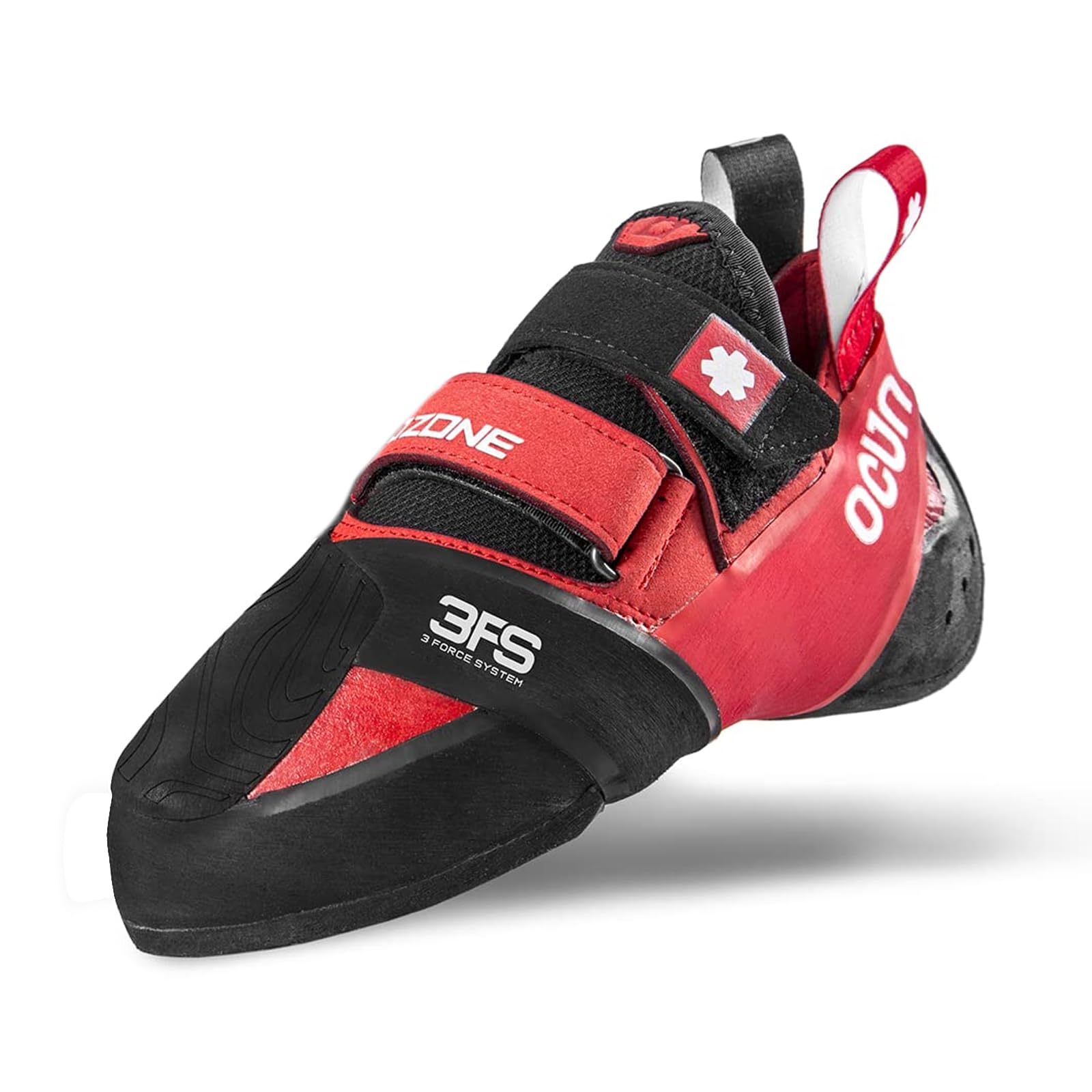
The OCUN Ozone is specifically designed for climbers with Morton’s toe, where the second toe is longer than the big toe. The centered toe point aligns the foot’s natural shape, reducing pain and pressure inside a crack. The forefoot is notably wider than many other aggressive shoes, offering relief for climbers who struggle with pinching.
Reviewers report that the rubber toehooking feel is excellent, and the moderate downturn provides enough aggression for steep bouldering while remaining comfortable for crack sequences. Sizing is tricky — many users need to go up half to a full size from their street shoe to avoid toe knuckle pain.
The trade-off for the wider fit is that climbers with very narrow feet will find the Ozone too loose. The bootie construction makes it less breathable than leather models, but the snug heel pocket minimizes dead space for heel hooks.
Why it’s great
- Ideal for wide feet and Morton’s toe climbers
- Centered toe point aligns foot naturally in cracks
- Excellent rubber feel for toe hooks and smears
Good to know
- Sizing can be unpredictable — try before buying
- Not breathable enough for hot-weather multi-pitch
5. SCARPA Drago

The SCARPA Drago is not a pure crack shoe — its soft sole and aggressive downturn make it better suited for steep bouldering with occasional crack sequences. However, for climbers who prioritize sensitivity on tiny footholds and trust their feet on slopey holds, the Drago delivers unmatched feedback.
The narrow fit and low-volume heel cup work best for climbers with slender feet. Reviewers consistently note that the shoe breaks in quickly and molds to the foot, but the soft rubber wears faster than stiffer options. It’s not recommended for first-year climbers or sustained hand-crack climbing on abrasive rock.
Inside a crack, the Drago can feel too flexible — the sole bends around constrictions rather than sliding smoothly. It’s best used as a specialist shoe for the face moves between crack sections, not for the cracks themselves.
Why it’s great
- Exceptional sensitivity for precise edge work
- Breaks in quickly and feels like a second skin
- Great for slopey holds and technical bouldering
Good to know
- Soft sole flexes too much inside constricted cracks
- Rubber wears faster than stiffer competitors
6. SCARPA Instinct VS

The SCARPA Instinct VS bridges the gap between crack comfort and face precision. The Bi-Tension active rand system allows the shoe to be worn slightly loose between climbs while still delivering a locked-down fit for edging. The XS Edge rubber provides a stiffer platform for smearing and holding on small crystals.
Reviewers with wide feet report a snug but not painful fit after a few sessions. The toe box is shaped for a predominant big toe, making it less ideal for Morton’s-toe foot shapes. Heel hooking is among the best in this class, with a sticky rand that grabs holds without slipping.
The trade-off: the shoe is less breathable than full-leather models, and the stiff rubber can feel precarious on low-angle smears before being fully broken in. For crack-to-face hybrid routes, though, this is one of the most versatile options in the premium tier.
Why it’s great
- Versatile for crack and face climbing transitions
- Excellent heel hook performance
- Bi-Tension rand allows loose wear between pitches
Good to know
- Poor breathability during hot weather
- XSM rubber can be slippery on smears before break-in
7. La Sportiva Solution (Men’s)
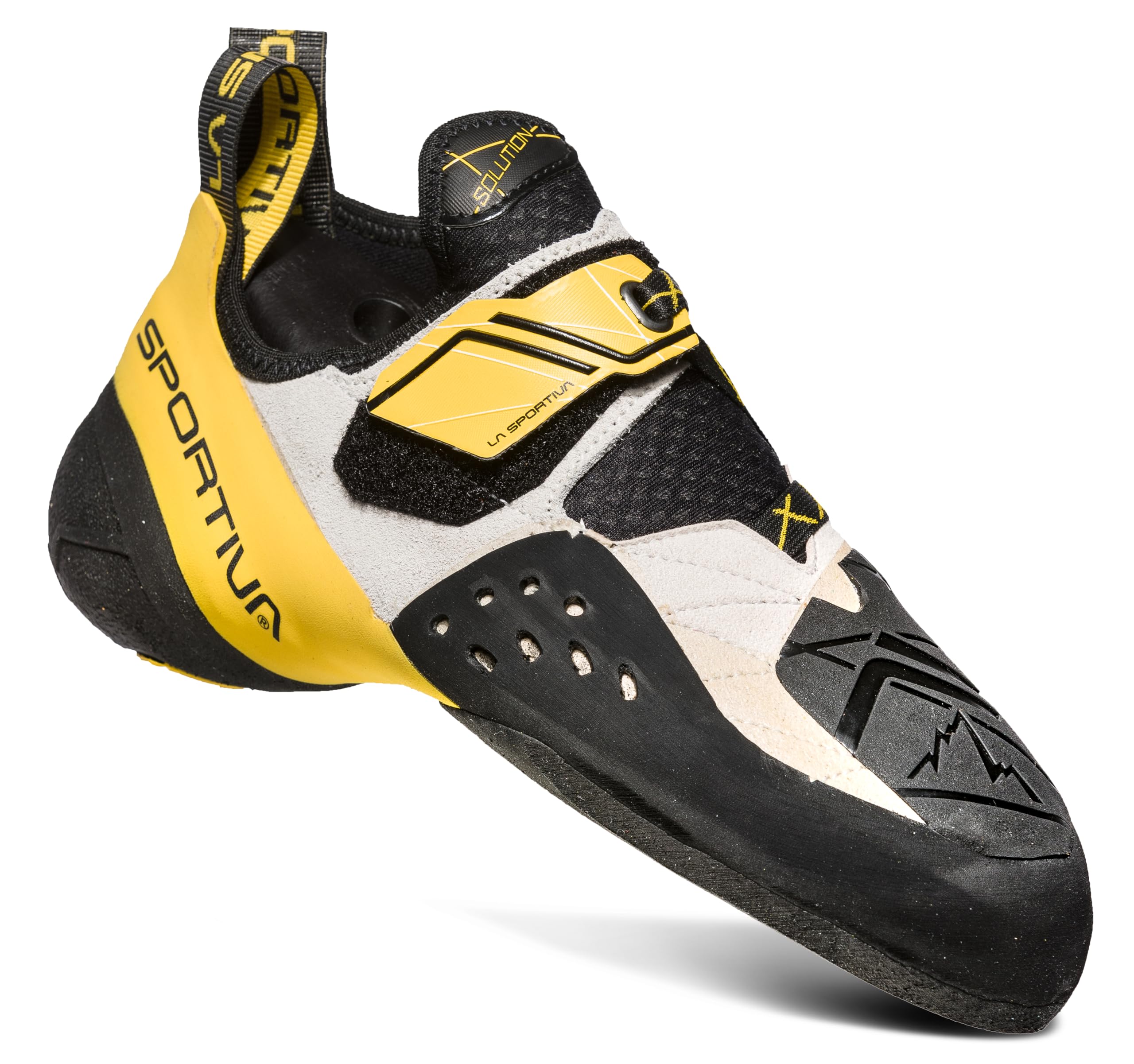
The La Sportiva Solution is the benchmark for aggressive bouldering shoes, but it also performs on sections of hard crack that require powerful heel hooks and precise toe placement. The P3 platform maintains the shoe’s downturn over its lifespan, providing consistent performance for dynamic movements.
Reviewers warn that this is not a beginner shoe — the aggressive shape requires significant foot strength and proper technique. Sizing down by half a size is common for a secure fit, and the shoe excels on overhanging terrain where the downturn hooks into slots.
For pure crack climbing at moderate grades, the Solution is overkill. The downturn creates painful pressure when your foot is torqued inside a constriction. However, for boulder problems or sport routes with crack sections, it’s a high-powered tool.
Why it’s great
- World-class heel hook retention
- P3 platform maintains aggressive downturn
- Precise on small edges and slots
Good to know
- Too aggressive for sustained crack climbing
- Not suitable for beginner or intermediate climbers
8. La Sportiva Solution (Women’s)
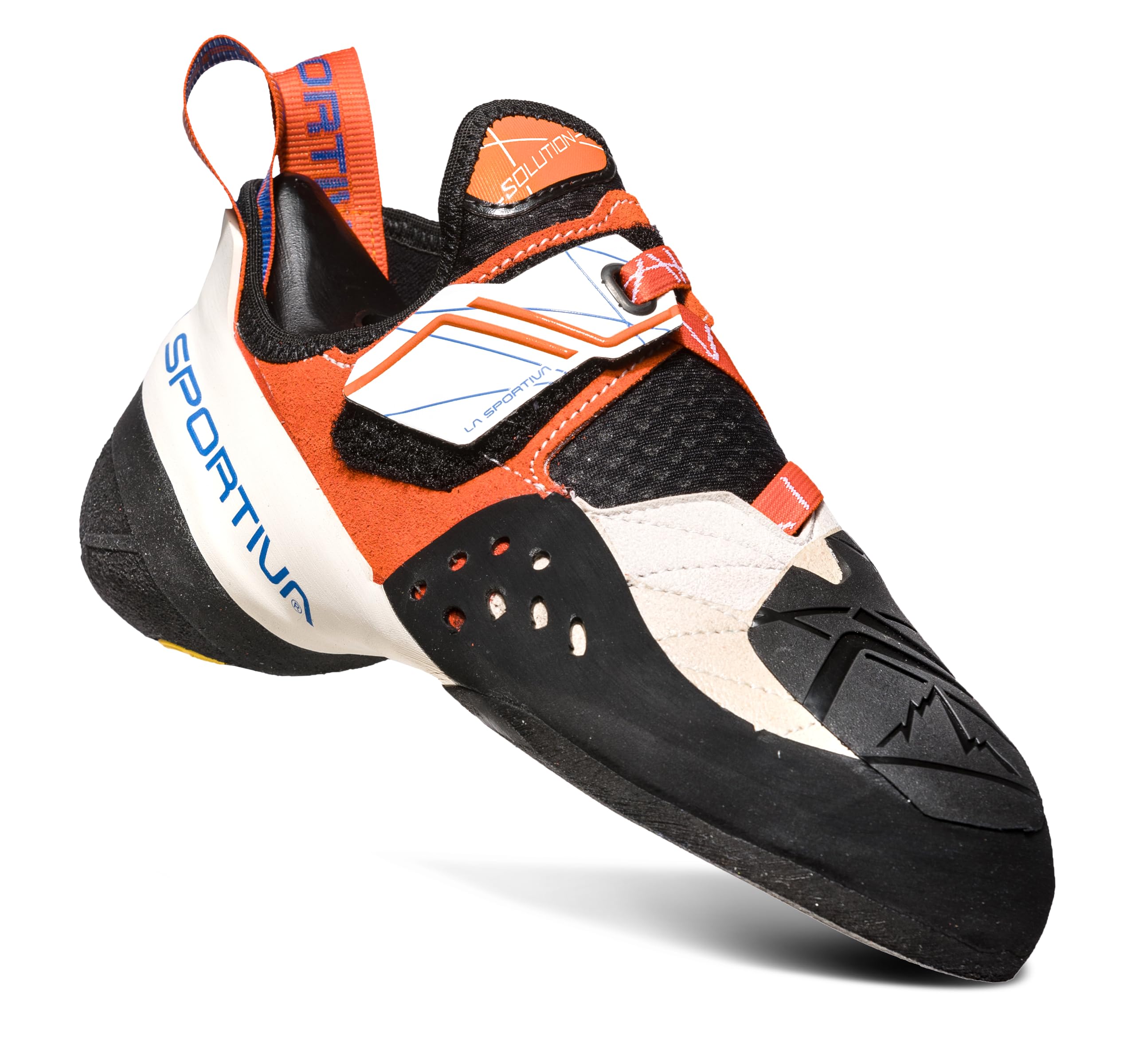
The women’s version of the Solution is built on a narrower last with a lower-volume heel rand that fits smaller feet more securely. The aggressive downturn and P3 platform are identical to the men’s version, delivering the same high-end performance for dynamic, high-angle moves.
Reviewers note that the women’s model runs slightly smaller than other La Sportiva shoes, so ordering a half size up from your usual climbing shoe size is a safe starting point. The heel cup is comfortable for short sessions but can feel tight on long routes.
For crack climbing, the same caveat applies: the aggressive shape is not ideal for sustained jams. The thick heel rubber can make heel hooks feel less precise on small edges, though the grip is still excellent when engaged properly.
Why it’s great
- Narrower fit for smaller, lower-volume feet
- Same aggressive P3 platform as the men’s version
- Excellent for high-angle bouldering
Good to know
- Not designed for sustained crack climbing
- Takes longer to break in than other models
9. SCARPA Instinct VSR

The Instinct VSR is the upgraded version of the Instinct VS, featuring a full rubber toe cap that provides superior protection and grip for toe hooks inside cracks. The stiff sole and Bi-Tension rand work together to deliver edge precision that rivals the best in the premium tier.
Reviewers consistently praise the tight fit and sensitive feedback, though sizing runs smaller than other Scarpa models — many climbers need to go a full size up from their street shoe. The rubber is sticky and performs well on both granite and sandstone, and the heel pocket is snug without dead space.
Inside a crack, the full toe cap adds bulk that can catch on tight fissures, but the extra protection is a worthwhile trade-off for toe-hooking and jamming. This is the premium pick for climbers who want a dedicated all-rounder that handles cracks and faces with equal competence.
Why it’s great
- Full rubber toe cap adds durability and grip
- Excellent edge precision for face climbing
- Snug heel pocket for confident heel hooks
Good to know
- Toe cap can catch on very tight cracks
- Sizing runs small — try before you buy
FAQ
Should I size crack climbing shoes differently than face climbing shoes?
Are lace-up shoes always better for crack climbing?
Can I use an aggressive bouldering shoe for crack climbing?
Final Thoughts: The Verdict
For most users, the best crack climbing shoes winner is the Mad Rock Drone HV 2.0 because it delivers a stiff, low-profile platform at a mid-range price without sacrificing the comfort needed for all-day crack sessions. If you want a classic lace-up for multi-pitch crack climbing, grab the La Sportiva Mythos. And for premium hybrid performance that bridges crack and face climbing, nothing beats the SCARPA Instinct VSR.

Mo Maruf
I created WellFizz to bridge the gap between vague wellness advice and actionable solutions. My mission is simple: to decode the research and give you practical tools you can actually use.
Beyond the data, I am a passionate traveler. I believe that stepping away from the screen to explore new environments is essential for mental clarity and physical vitality.