Our readers keep the lights on and my smoothie glass nicely filled. As an Amazon Associate, I earn from qualifying purchases.
Whether you are outfitting a sensory room for a child who craves deep proprioceptive input or building a home bouldering wall in the garage, the common denominator is the landing surface. A crash pad that is too thin transfers impact directly to joints, while one that is too soft fails to absorb controlled falls from even modest heights. The difference between a safe landing and a painful one comes down to foam density, panel geometry, and total coverage area — details that separate a smart purchase from a regrettable one.
I’m Mohammad Maruf — the founder and writer behind WellFizz. This guide is the result of hundreds of hours spent analyzing foam formulations, stitching methods, cover abrasion tests, and real user reports across the full spectrum of sensory and athletic crash pads available today.
After reviewing nine distinct models ranging from compact home-use mats to oversized outdoor bouldering pads, the clearest conclusion is that the best crash pads combine thick high-density foam with a durable, washable cover and a shape that matches your primary use case — whether that is indoor sensory play, gymnastics training, or bouldering outdoors.
How To Choose The Best Crash Pads
Selecting the right crash pad requires matching the pad’s construction to the specific drop height, user weight, and environment where it will be used. A pad that works for a 50-pound child jumping off a couch may be woefully inadequate for a 180-pound climber falling from six feet.
Foam Density and Layer Composition
The most critical spec is not total thickness alone — it is the density of the foam and whether it uses open-cell, closed-cell, or a hybrid layering system. High-density closed-cell foam resists bottoming out under heavy loads, while open-cell foam provides a softer, more forgiving feel for smaller users. Hybrid pads that stack a firm closed-cell bottom layer with a plush open-cell top layer offer the best of both worlds for multi-use scenarios.
Cover Material and Cleaning Requirements
Crash pad covers take heavy abuse from shoes, dirt, sweat, and daily play. Heavy-duty 18oz vinyl, reinforced polyester, and suede are the three most common materials. Vinyl is the easiest to wipe clean and most abrasion-resistant, making it ideal for gymnastics and bouldering. Suede offers a softer, more comfortable lounging surface but is harder to fully clean and more prone to staining. Removable, machine-washable covers are a practical necessity for sensory pads used indoors by children.
Portability and Storage
If the pad will move between rooms or travel to an outdoor crag, weight and folding mechanism become deciding factors. Bi-fold and tri-fold designs with integrated backpack straps reduce carrying burden significantly. Pads designed for stationary use in a sensory room can be single-piece slabs that are heavier but offer a larger uninterrupted landing surface without seams.
Quick Comparison
On smaller screens, swipe sideways to see the full table.
| Model | Category | Best For | Key Spec | Amazon |
|---|---|---|---|---|
| Matini Home Crash Pad | Sensory/Premium | Indoor sensory play & lounging | 5×5 ft | Low-VOC shredded foam fill | Amazon |
| Meister Boulder Beast XL | Bouldering | Outdoor bouldering / highball falls | 72x44x5 in | 4-layer hybrid foam | Amazon |
| Metolius Session Pad II | Bouldering | Portable bouldering / gym sessions | 36x48x4 in | 9 lbs | backpack straps | Amazon |
| Cheer Collection Crash Pad | Sensory/Mid-Range | Sensory rooms & general play | 4×4 ft | Mesh vents | washable cover | Amazon |
| WOUDY Crash Mat | Sensory/Mid-Range | Therapy & classroom use | 5 ft | 4 mesh vents | PU foam blocks | Amazon |
| We Sell Mats Bifolding Mat | Gymnastics | Tumbling / cheer / back handspring | 4x4x4 in | 18oz vinyl | bi-fold | Amazon |
| SaferBounce Crash Pad | Sensory/Value | Active play / sensory seeking kids | 5×5 ft | High-density foam | washable | Amazon |
| ODOXIA Crash Pad | Sensory/Budget | Small spaces / starter pad | 4×3 ft | High-density foam | handle | Amazon |
| SENSORY4U Crash Pad | Sensory/Entry-Level | Kids sensory gym / travel use | 5×5 ft | Suede cover | foam blocks | Amazon |
In‑Depth Reviews
1. Matini Home Crash Pad
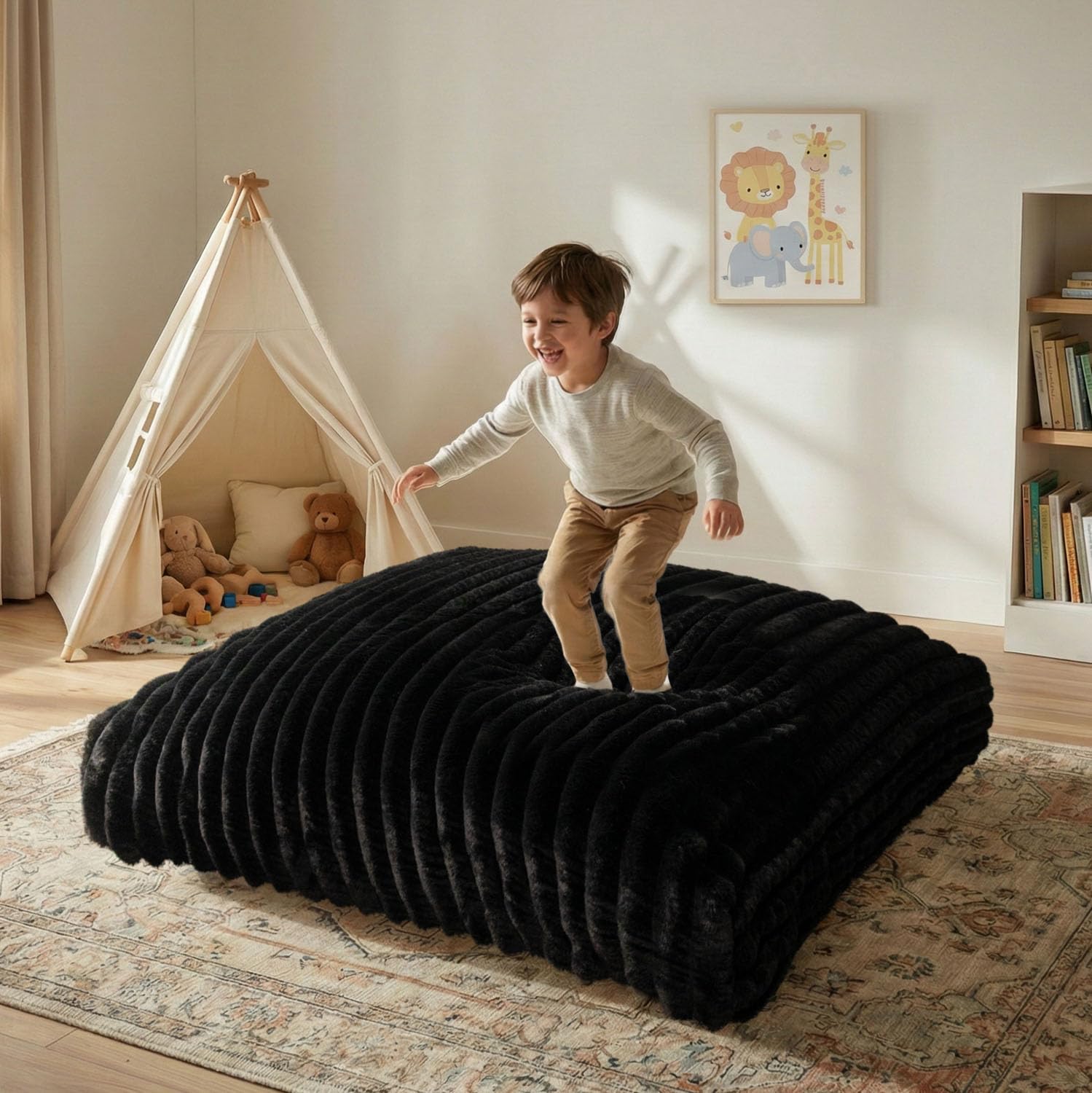
The Matini Home Crash Pad stands out for its balanced blend of luxury feel and genuine safety performance. The shredded foam core is certified low-VOC and free of flame retardants, making it a responsible choice for sensory rooms where children spend hours in close contact with the material. At 5×5 feet, the landing zone is generous enough for both children and adults to crash safely, and the suede cover provides a soft, quiet surface that reduces noise compared to vinyl alternatives.
Users consistently praise the pad’s ability to maintain its shape even after repeated heavy use from multiple children. The water-resistant inner lining protects the foam blocks from moisture, addressing a common pain point found in budget pads where foam can become damp and moldy over time. The charcoal color hides everyday stains well, maintaining a presentable appearance in living areas.
One area requiring attention is the cover’s seam integrity. A small number of owners have reported seams splitting after extended use, particularly when the pad is used for high-impact jumping directly onto the same spot. The manufacturer recommends hand washing only, which adds a layer of maintenance commitment compared to machine-washable competitors.
Why it’s great
- Certified low-VOC foam fill with no flame retardants improves indoor air safety
- Water-resistant inner liner protects foam from moisture and prevents mold
- Generous 5×5 foot surface accommodates both kids and adults comfortably
Good to know
- Suede cover is not machine washable — hand wash only
- Some reports of seams splitting under heavy daily impact
2. Meister Boulder Beast XL Tri-Fold

The Meister Boulder Beast XL delivers the largest surface area of any pad in this roundup at 72 by 44 inches, with a full five inches of padding constructed from four alternating layers of open and closed cell foam. This hybrid design provides the firm bottom layer needed to prevent bottoming out on uneven outdoor terrain while maintaining a forgiving top layer that absorbs the initial impact of a fall. Climbers landing from highball problems will appreciate the confidence this thickness inspires.
Portability is handled through removable backpack straps with both waist and chest belts, plus duffel-style handles for shorter carries. The pad folds into a compact 44x24x15 inch package that fits into most car trunks. External gear loops allow clipping shoes, water bottles, and chalk bags directly to the pad, streamlining the approach hike. The reinforced all-weather polyester cover withstands scraping against sharp granite and sandstone without tearing.
The main trade-off is bulk. At over 12 kilograms, the Beast is heavy for a single person to carry over long approaches. The tri-fold design also leaves two narrow gaps along the fold lines where a foot could slip through if the pad is not positioned perfectly. Experienced climbers sometimes pair two pads to eliminate this gap entirely.
Why it’s great
- Five inches of hybrid foam provides industry-leading impact absorption for high falls
- Massive 6×3.5 foot coverage area protects against off-target landings
- Heavy-duty polyester cover resists abrasion from sharp outdoor rock
Good to know
- Heavy at over 27 pounds — tiring on long approaches
- Tri-fold seams create small gaps that can catch an ankle on awkward falls
3. Metolius Session Pad II

The Metolius Session Pad II is the go-to choice for climbers who prioritize weight and packability above all else. At just nine pounds with integrated padded shoulder straps and a waist belt, this pad disappears onto your back and makes solo approaches feel effortless. The open dimensions of 36 by 48 inches with four inches of closed-cell foam provide adequate protection for low-to-moderate bouldering problems, particularly on flat landing zones.
A built-in cross-clipper logo rug on the outer flap gives you a dedicated surface to clean muddy or dusty climbing shoes before stepping onto the pad, a small touch that keeps the landing area clean and improves shoe friction. The pad compresses to a folded size of 36 by 26 by 8 inches, making it easy to stash in a gym bag or car trunk without dominating the space. Multiple user reports confirm the material survives bushwhacking, stone contact, and gravel without developing tears.
The foam is notably stiff when new — a characteristic common to high-density closed-cell pads. Break-in requires several sessions of repeated impact before the foam softens to its intended feel. For heavier climbers or anyone falling from above eight feet, the four-inch thickness and stiff initial foam may transmit more impact than desired.
Why it’s great
- Extremely lightweight at 9 pounds with comfortable backpack carry system
- Integrated shoe-cleaning rug keeps landing surface free of debris
- Durable outer shell resists abrasion from rock, gravel, and vegetation
Good to know
- Foam is very stiff when new and requires a break-in period
- Four-inch thickness may feel insufficient for highball falls or heavier users
4. Cheer Collection Crash Pad
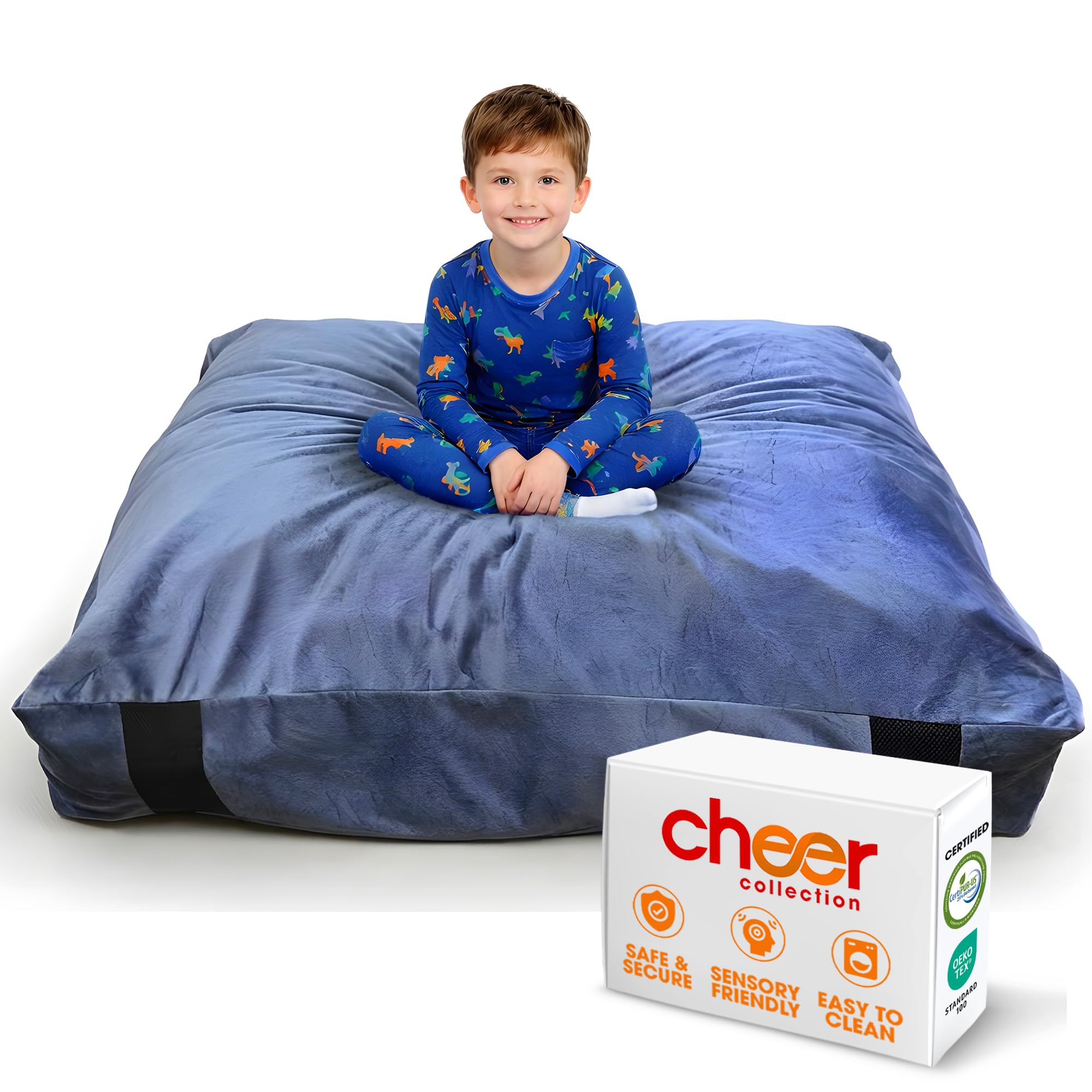
The Cheer Collection Crash Pad occupies a sweet spot in the mid-range market for sensory rooms. At 48 inches square, the pad offers a substantial landing area without overwhelming a standard bedroom or playroom. High-density foam pieces fill the interior, and four mesh vents allow air to escape gradually during impact, preventing the pad from puffing up and reducing the risk of foam migrating out of place during active play.
The removable cover is machine-washable and made from a polyester blend that balances softness with durability. Parents report that the pad is light enough for children to drag from room to room, encouraging independent play. The pad doubles as a bean bag lounge for reading or watching movies, making it a versatile addition that earns its place in a sensory gym or living room corner.
Some users have noted that the foam is softer than expected, which reduces impact absorption for harder falls. Children who prefer a firmer landing surface for gymnastics-style jumps may find the pad too plush. The soft fill also means the pad compresses visibly under adult weight, making it less ideal for parent-supervised crash games.
Why it’s great
- Mesh air vents prevent foam migration and allow controlled compression
- Machine-washable cover simplifies cleaning after heavy play
- Lightweight enough for children to reposition independently
Good to know
- Foam is on the softer side — less ideal for high-impact gym-style falls
- Cover may compress visibly under adult weight during use
5. WOUDY Crash Mat
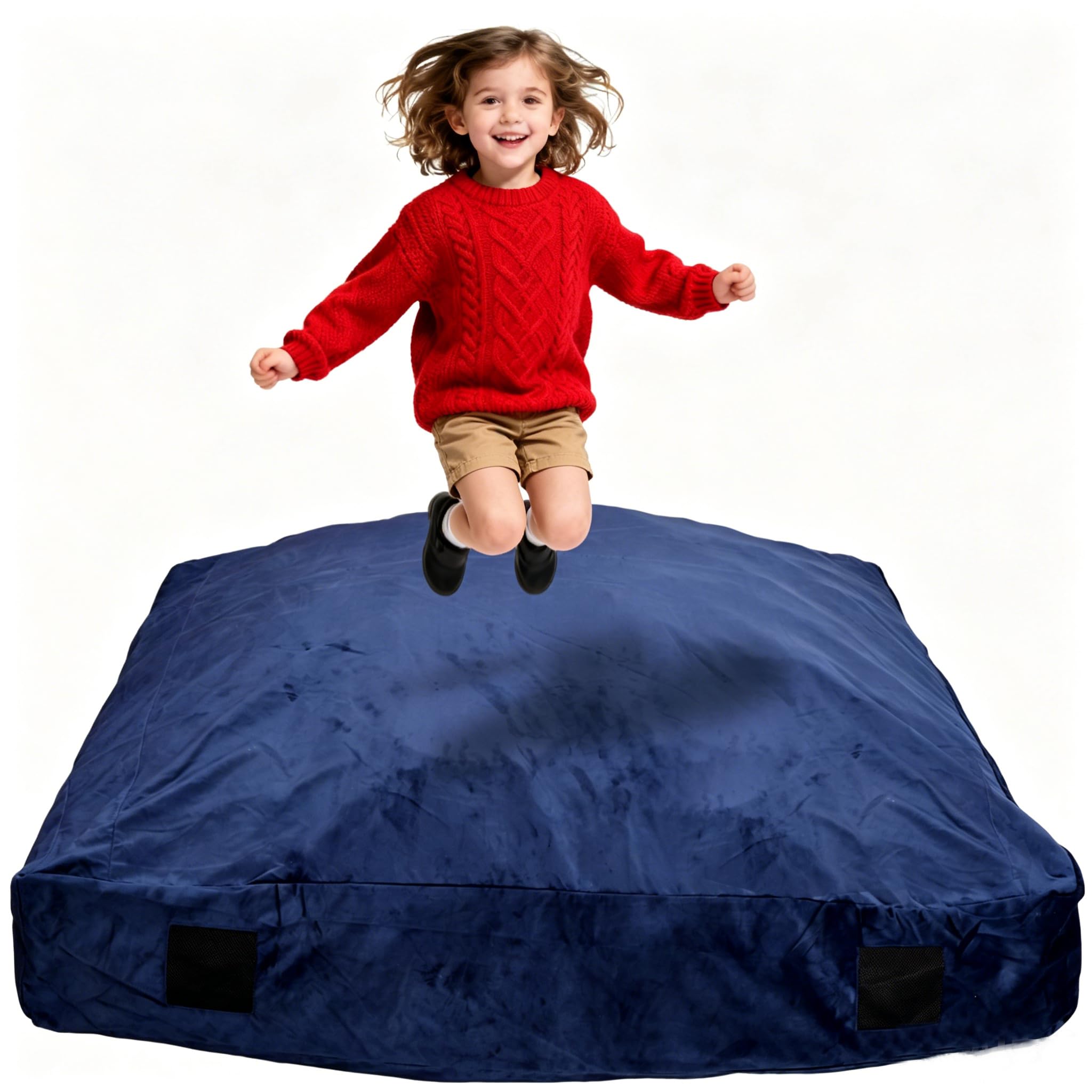
The WOUDY Crash Mat is engineered specifically for therapeutic and classroom environments where sensory regulation is the primary goal. The pad uses high-density polyurethane foam blocks that provide a firm yet forgiving landing surface, and four mesh ventilation ports release air gently during impact to maintain consistent cushioning. The 5-foot diameter gives children ample room to jump, roll, and land without stepping off the edge.
Occupational therapists and parents of neurodivergent children praise this pad for its ability to provide deep proprioceptive input during crash play. The foam density is calibrated to absorb the energy of a jumping child without being so soft that it bottoms out. The cover is removable and machine-washable, a critical feature for pads used in high-traffic therapy settings where spills and dirt are routine. The 1-year warranty provides additional peace of mind for institutional buyers.
At nearly 39 pounds, the WOUDY mat is among the heaviest in its class, making it impractical to move between rooms frequently. The blue color scheme, while visually appealing, shows dirt and chalk marks more readily than darker shades. Some users note that the foam blocks settle and require occasional redistributing to maintain uniform thickness.
Why it’s great
- High-density PU foam blocks deliver consistent support for sensory crashes
- Four mesh vents control airflow and prevent foam displacement
- Includes a 1-year warranty for institutional or high-use environments
Good to know
- Heavy at 39 pounds — not easily portable between rooms
- Blue cover shows dirt and marks quickly
6. We Sell Mats Bifolding Gymnastics Mat

The We Sell Mats Bifolding Gymnastics Crash Landing Mat is a purpose-built training tool for gymnastics, cheerleading, and tumbling disciplines. Unlike sensory crash pads that prioritize plush comfort, this mat uses a sponge-core foam covered by heavy-duty 18oz vinyl, creating a surface that is firm enough to support standing and walking while offering sufficient cushioning for back handsprings and controlled falls. The 4×4 foot footprint with 4 inches of thickness is standard for home gym use.
The bi-fold design allows the mat to be folded in half for storage, and integrated straps make it easy to carry. Many gymnasts appreciate that the mat can be laid flat for tumbling drills or folded to create an 8-inch thick landing zone for higher-risk skills. The vinyl surface wipes clean with a damp cloth, resisting chalk, sweat, and dirt buildup far better than fabric covers. The mesh side panels allow the foam to breathe and compress evenly without ballooning.
The vinyl surface can be slippery when used on top of a smooth floor, particularly for athletes wearing socks. Some users recommend placing the mat on a rug or using a non-slip underlay to prevent sliding during drills. The 4-inch thickness is adequate for low-height skills but may not provide enough shock absorption for falls from a kip bar or uneven bars without additional padding underneath.
Why it’s great
- Firm sponge-core foam supports standing balance and tumbling landings
- Heavy-duty 18oz vinyl cover resists stains and wipes clean easily
- Bi-fold design with strapping allows 8-inch stacked thickness for higher falls
Good to know
- Vinyl surface can be slippery on smooth floors without a rug underneath
- Four-inch thickness may be insufficient for high-height gymnastics falls
7. SaferBounce Crash Pad
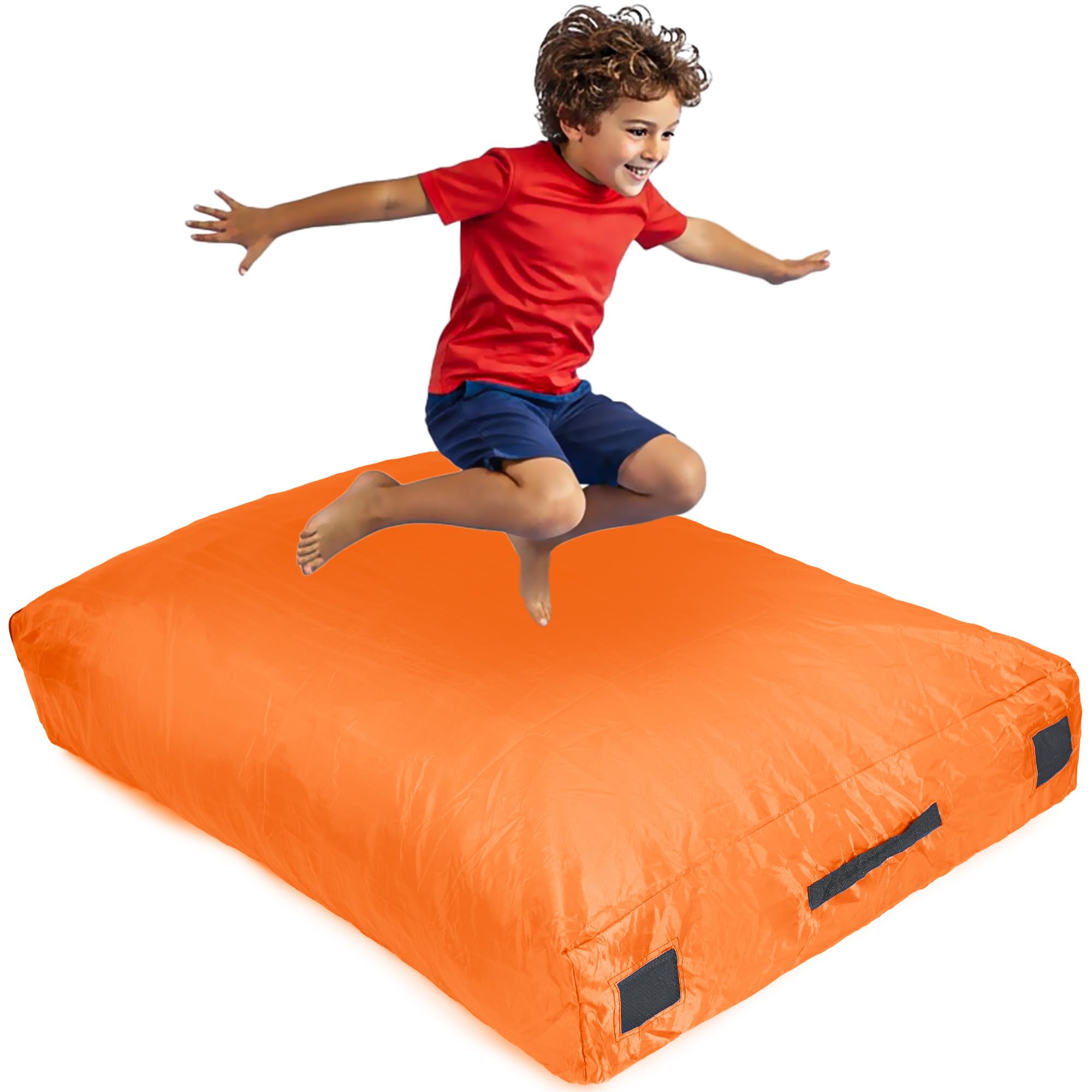
The SaferBounce Crash Pad delivers a compelling value proposition by combining a 5×5 foot landing zone with high-density foam fill at a mid-range price point. The orange cover is visually distinct and easy to spot in a busy playroom, and the material is durable enough to withstand daily jumping, tumbling, and lounging. Parents report that the pad handles the weight of a 170-pound adult falling backward without seam failure, demonstrating robust construction for the category.
Setup requires patience — the pad arrives shrink-wrapped and needs several hours to fully expand to its intended thickness. The cover, while durable, has a slightly slick texture that some children prefer to remove for better grip on the foam surface. The pad integrates well with modular play couches like the Nugget, expanding the creative play possibilities in a sensory room.
The tight fit of the cover makes installation and removal a workout — it takes significant effort to zip the cover back on after washing. The slick cover material can also cause lightweight objects placed on top to slide off. Parents of younger toddlers report that the pad stays in place well during active play and does not slide across carpeted floors.
Why it’s great
- Large 5×5 foot surface with high-density foam for robust impact absorption
- Seams hold up under adult-weight falls, indicating durable construction
- Works seamlessly with modular play couches for expanded play configurations
Good to know
- Cover installation is very tight and requires significant effort
- Slick cover texture reduces grip; some kids prefer using it without the cover
8. ODOXIA Crash Pad
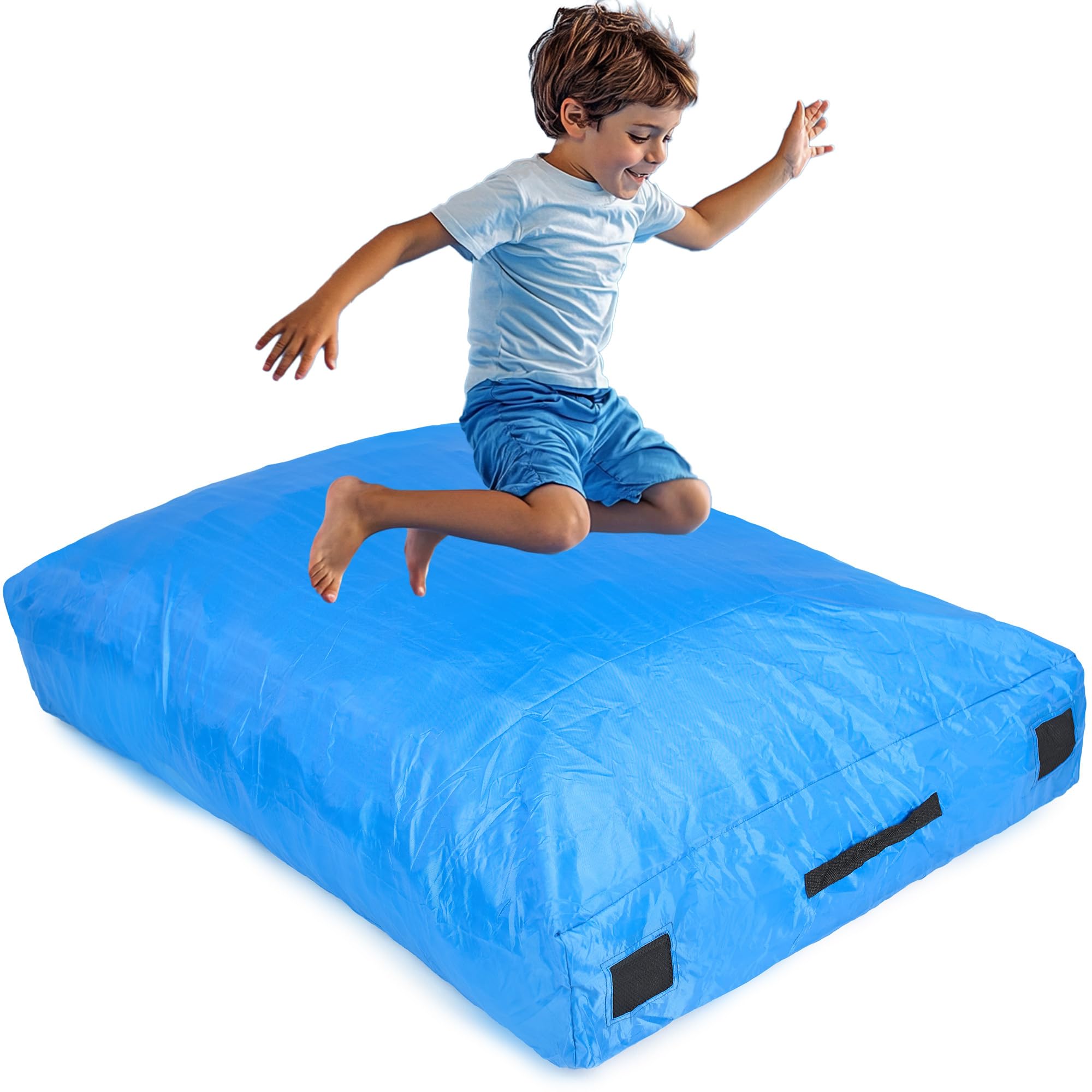
The ODOXIA Crash Pad serves as an accessible entry point for families looking to introduce a crash pad into their home without a large upfront commitment. At 4 by 3 feet, the pad is compact enough to fit in small bedrooms or apartment living rooms while still providing a usable landing zone for younger children. The high-density foam fill delivers respectable impact absorption for toddlers and early elementary-age kids jumping from sofa height.
The blue cover is machine-washable and includes a built-in handle on the side for portability. Parents report that the pad can be moved easily between rooms and even taken to grandparents’ houses for sleepovers. The foam does not emit a strong chemical odor out of the box, a common complaint in budget pads that use lower-grade foam. The pad also doubles as a comfortable lounging spot for reading or watching TV.
The small footprint means older or larger children will quickly outgrow the pad’s surface area. Children jumping from higher surfaces than a couch may land partially off the edge, defeating the purpose of the pad. The foam blocks can shift and create uneven lumps over time, requiring manual redistribution to maintain a flat surface.
Why it’s great
- Compact 4×3 foot size fits small spaces and is easy to move between rooms
- Machine-washable cover with handle simplifies cleaning and transport
- No strong chemical odor out of the box, unlike many budget foam pads
Good to know
- Small footprint limits usability as children grow taller and heavier
- Foam blocks may shift and create uneven spots that need manual adjustment
9. SENSORY4U Crash Pad

The SENSORY4U Crash Pad offers a unique dual-purpose design: it functions as a 5×5 foot sensory crash pad when laid flat, and the cover can be cinched into a bean bag form for lounging. This convertible feature is a smart space-saving solution for families who cannot dedicate floor space to a dedicated crash pad at all times. The suede cover gives the pad a soft, premium hand feel that kids enjoy for comfortable lounging and reading.
The pad comes with improved foam density compared to earlier versions, and the cover is removable and machine-washable — a must for sensory pads that see daily use. Occupational therapists specifically recommend this pad for its ability to meet sensory needs while remaining unobtrusive in a home setting. The grey color blends easily into most interior decors, making it a visually acceptable addition to living rooms and family spaces.
The suede fabric, while soft, is not waterproof. One recurring concern from parents is that liquid spills can soak through to the foam blocks, creating a risk of mold if not dried quickly. The zipper quality on some units has been flagged as a weak point, with reports of zippers jamming or breaking after repeated cover removals for washing.
Why it’s great
- Converts between a flat crash pad and a bean bag for dual functionality
- Suede cover provides a soft, comfortable surface for lounging and reading
- Machine-washable cover with improved foam density over previous versions
Good to know
- Suede cover is not waterproof — spills can soak through to foam blocks
- Zipper quality is inconsistent and may fail after repeated wash cycles
FAQ
What is the minimum thickness I need for a crash pad used by children indoors?
How do I prevent my crash pad from developing uneven lumps over time?
Can I use an outdoor bouldering pad as a sensory crash pad indoors?
Final Thoughts: The Verdict
For most users, the best crash pads winner is the Matini Home Crash Pad because it pairs a generous 5×5 foot landing zone with certified low-VOC foam and a water-resistant inner liner — delivering safety, comfort, and peace of mind for sensory-seeking families. If you need a portable pad for outdoor bouldering, grab the Meister Boulder Beast XL for its massive coverage and five-inch hybrid foam. And for budget-conscious families with limited floor space, nothing beats the convertible design and soft suede feel of the SENSORY4U Crash Pad.

Mo Maruf
I created WellFizz to bridge the gap between vague wellness advice and actionable solutions. My mission is simple: to decode the research and give you practical tools you can actually use.
Beyond the data, I am a passionate traveler. I believe that stepping away from the screen to explore new environments is essential for mental clarity and physical vitality.