Our readers keep the lights on and my smoothie glass nicely filled. As an Amazon Associate, I earn from qualifying purchases.
A Crossfit workout demands explosive lifts, rapid transitions, and uncompromised core stability. The right belt must move with you during Olympic lifts, stay locked during deadlifts, and never pinch or dig in during high-rep sets — a tall order that separates purpose-built gear from standard gym belts.
I’m Mohammad Maruf — the founder and writer behind WellFizz. I’ve spent hundreds of hours analyzing material thickness, buckle systems, and real user feedback to find which designs actually deliver for the intensity of functional fitness.
After comparing leather density, velcro durability, and contour geometries across top competitors, this guide breaks down every spec you need to pick the best crossfit belt for your training style and body mechanics.
How To Choose The Best Crossfit Belt
Crossfit blends powerlifting, Olympic lifting, and high-volume metcons. A belt that works for static squats can fail during a snatch or burpee-to-box jump transition. Focus on these factors to match the belt to real training demands.
Closure System: Speed and Security
Velcro closures allow micro-adjustments between lifts and quick removal during timed workouts, but cheap velcro wears out under heavy use. Lever and prong systems offer rock-solid lockup for max-effort lifts, though adjustments take longer and may feel restrictive during dynamic movements. A hybrid self-locking mechanism combines both philosophies for a middle ground.
Width and Contour
A 4-inch wide belt provides consistent support across the core without encroaching on the rib cage or hip bones during deep squats. Contoured designs that taper at the front and flair at the back follow the natural curvature of the torso, preventing gaps that reduce intra-abdominal pressure. Straight belts often dig or shift during movements like overhead squats and cleans.
Material and Thickness
Leather belts offer stiffness and feedback for heavy loads, but require break-in and can be inflexible for metcons. Nylon belts are lightweight, comfortable from day one, and silent during movement, though they provide less definitive proprioceptive feedback. Hybrid designs weld a leather core with nylon adjustability for a balance of rigidity and range of motion. Thickness between 6mm and 10mm is common: thinner belts suit dynamic training, thicker belts excel under maximal loads.
Quick Comparison
On smaller screens, swipe sideways to see the full table.
| Model | Category | Best For | Key Spec | Amazon |
|---|---|---|---|---|
| Schiek Sports Model 3004 | Nylon Contour | Dynamic WODs & Olympic lifts | 4.75″ contoured back panel | Amazon |
| Element 26 Hybrid Leather | Hybrid Self-Lock | All-purpose training & competition | Self-locking lever + velcro | Amazon |
| Iron Infidel Lever Belt | Lever Buckle | Heavy squats & deadlifts | 10mm leather, steel lever buckle | Amazon |
| Bear KompleX 6″ Velcro | Nylon Velcro | Comfortable all-day sessions | 6″ stiff back, steel roller buckle | Amazon |
| MRX Powerlifting Leather | Leather Prong | Budget-friendly power work | 10mm thick, 4″ width | Amazon |
| Beast Power Gear Leather | Leather Double Prong | Lower back support & value | 6mm thickness, foam padded | Amazon |
| Vikingstrength Leather | Leather Hook | Big waist sizes & entry-level | 10mm thick, includes lifting straps | Amazon |
In‑Depth Reviews
1. Schiek Sports Model 3004 Power Lifting Belt
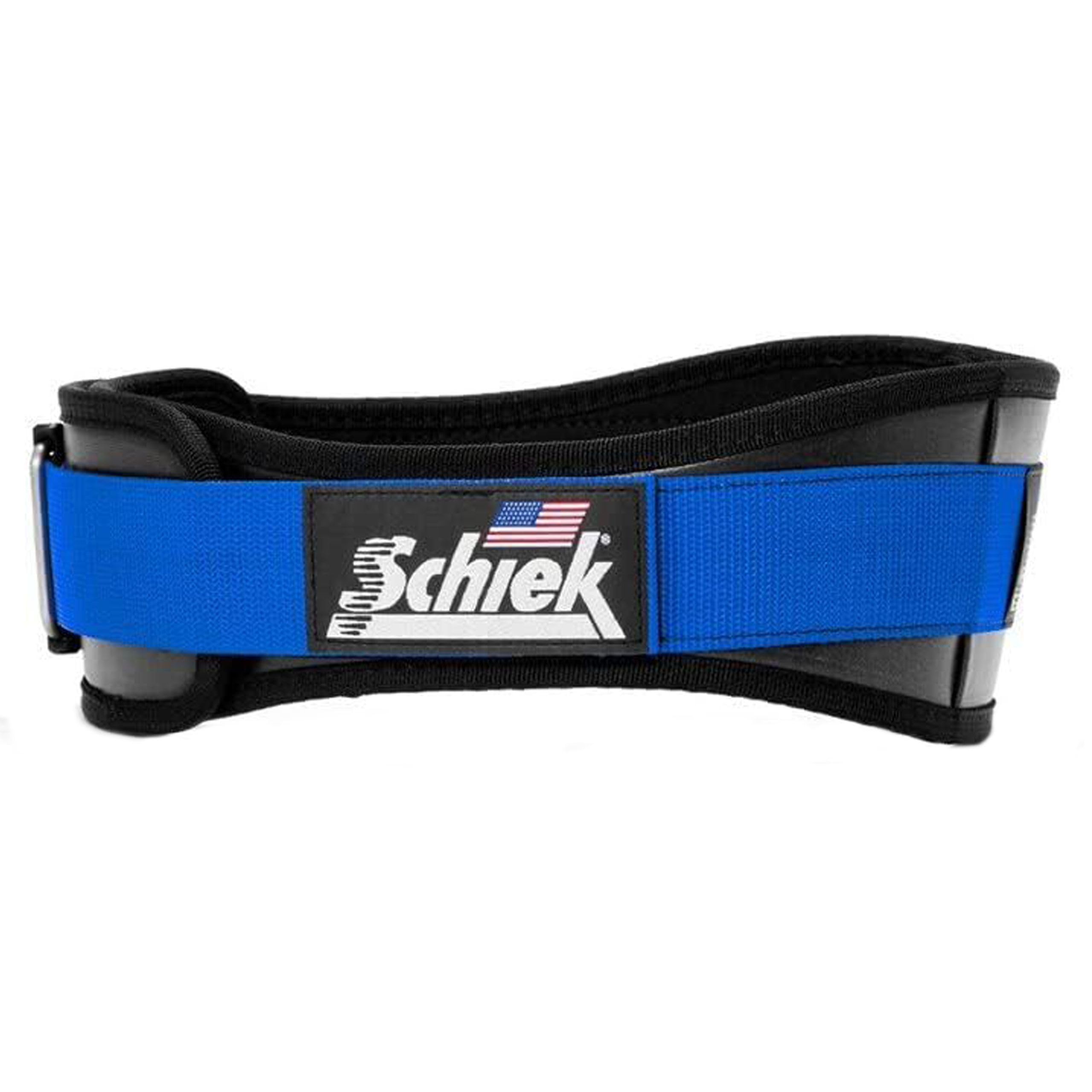
The Schiek 3004 redefines what a Crossfit belt can be. Its 4.75-inch contoured back panel matches the natural curve of the spine, sitting comfortably between the ribs and hips without riding up during Olympic lifts. The nylon construction keeps weight low and flexibility high, while the one-way velcro closure delivers micro-adjustability that prong systems cannot match.
Users consistently praise the zero-break-in comfort — this belt supports from the first wear. The dual-layer neoprene coating adds stiffness for heavy bracing, yet the tapered front prevents bar interference during clean pulls and snatches. The heavy-duty stainless steel slide bar completes the package with a security that outlasts standard velcro belts.
For the athlete who moves between max-effort squats and fast-paced metcons, this belt provides the versatility and fit precision that few other designs can touch. It is the reference point for hybrid support in functional fitness.
Why it’s great
- Anatomical contour eliminates digging and shifting
- One-way velcro allows infinite fit adjustment
- Lightweight yet structurally sound for heavy loads
Good to know
- Velcro may be too aggressive on some materials
- Premium pricing reflects the contoured design
2. Element 26 Hybrid Leather Weightlifting Belt
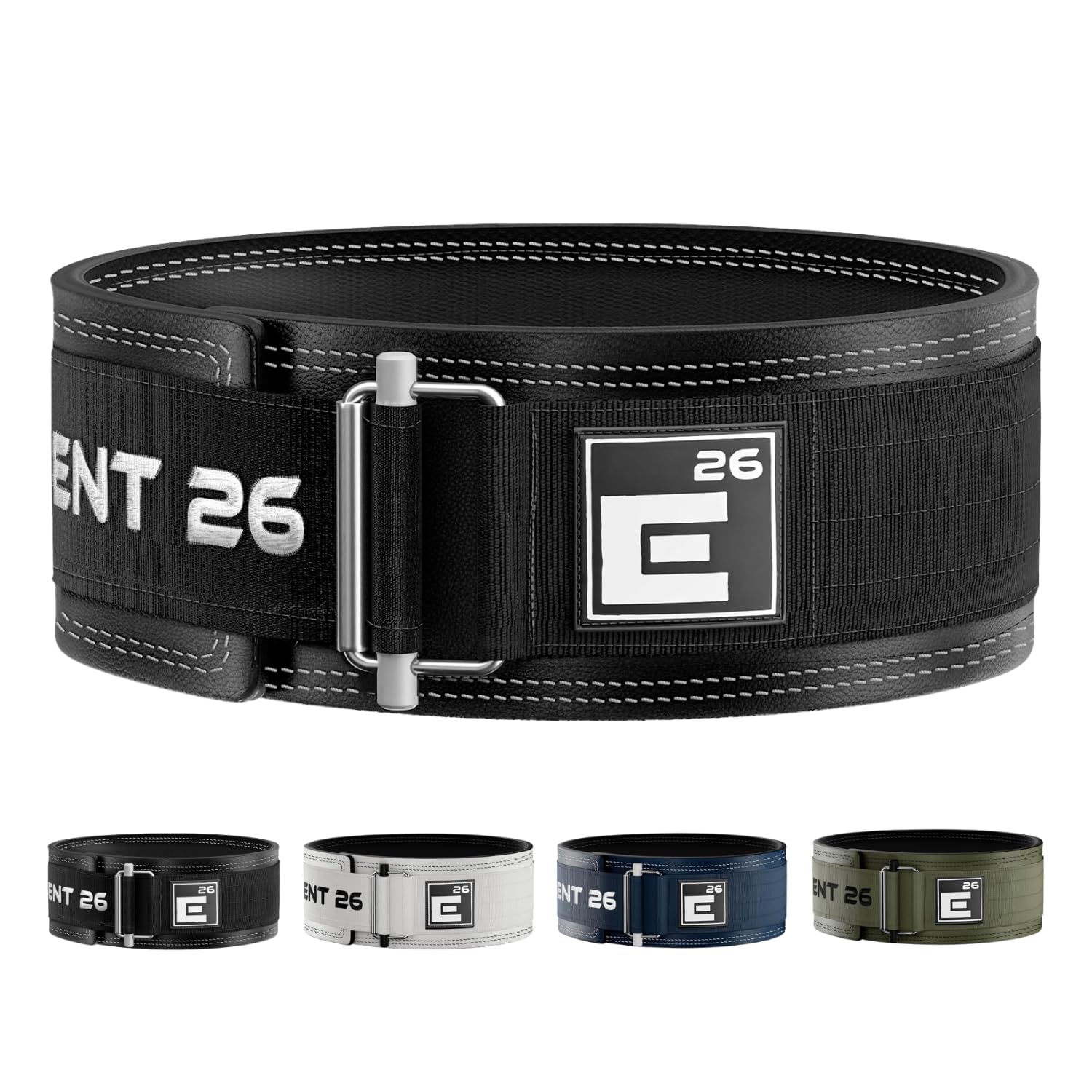
Element 26’s patent-pending hybrid design merges the adjustability of nylon with the stability of leather. The core is thick, flexible leather that provides the feedback serious lifters demand, while the velcro and self-locking mechanism allow infinite tightness — no punched holes or incremental notches. This is the first leather belt that can be dialed perfectly for every lift.
Designed by a Doctor of Physical Therapy, the geometry focuses on maximizing intra-abdominal pressure without limiting mobility. The self-locking bar adds a fail-safe layer: even if velcro shifts, the belt stays locked through the entire rep. Users report excellent support for both heavy deadlifts and dynamic Crossfit movements, with easy release between rounds.
Competition approved for Olympic lifting and functional fitness events, this belt suits the athlete who wants leather rigidity without sacrificing the convenience of velcro micro-adjustment. It is a clever blend that solves the traditional pain point of leather belts being either too loose or too tight.
Why it’s great
- Self-locking mechanism prevents pop-opens
- Hybrid construction: leather feedback, velcro adjustability
- PT-designed contour for core bracing
Good to know
- Velcro tongue surface area could be larger for firmer grip
- Sizing runs small; measure carefully
3. Iron Infidel Lever Gym Belt

The Iron Infidel belt is built for athletes who want maximum rigidity for max-effort lifts. The 10mm thick leather and steel lever buckle deliver uncompromising support — once locked, there is zero give. This belt is designed for the squat and deadlift portion of your training, where consistent bracing pressure makes the difference between a new PR and a failed rep.
Lever buckles allow one-handed fastening and release, which is faster than traditional prong belts during timed circuits. The 4-inch width provides even pressure distribution across the lower back and abdomen without digging into the rib cage. Users note that the belt molds to the body with use, becoming more comfortable over time.
This is a dedicated heavy-lifting tool, not a do-everything belt. For Crossfit athletes who prioritize strength days and need a lever system that holds tight without loosening mid-session, the Iron Infidel delivers exceptional value at a mid-range price.
Why it’s great
- 10mm leather provides stiff, consistent support
- Steel lever buckle offers fast, secure closure
- Molds to body shape after break-in
Good to know
- Not ideal for dynamic metcons or Olympic lifts
- Sizing runs large; double-check measurements
4. Bear KompleX Weight Lifting Belt

Bear KompleX focuses on the comfort factor that keeps you training longer. The 6-inch firm back panel distributes pressure across a larger area than standard 4-inch belts, reducing localized strain on the lower back. The soft inner lining prevents the skin irritation and pinching that leather belts often cause during high-rep sets.
The steel roller buckle combined with heavy-duty velcro keeps the belt locked through snatches, bent-over rows, and clean pulls. Users specifically note the lack of hip digging — a common issue with traditional leather belts during movements that involve hip flexion. The velcro allows quick adjustments between exercises, making it practical for circuit-style training.
This belt excels for athletes who prioritize all-day wearability and need a non-abrasive option for high-volume WODs. It may not provide the same absolute rigidity as a 10mm leather belt for one-rep max deadlifts, but for dynamic training it is hard to beat.
Why it’s great
- 6″ back panel spreads pressure effectively
- Soft lining prevents chafing during long sessions
- Velcro holds tight without mid-set adjustments
Good to know
- Less rigid than 10mm leather belts for max loads
- Velcro can wear over extended use
5. MRX Powerlifting Leather Belt
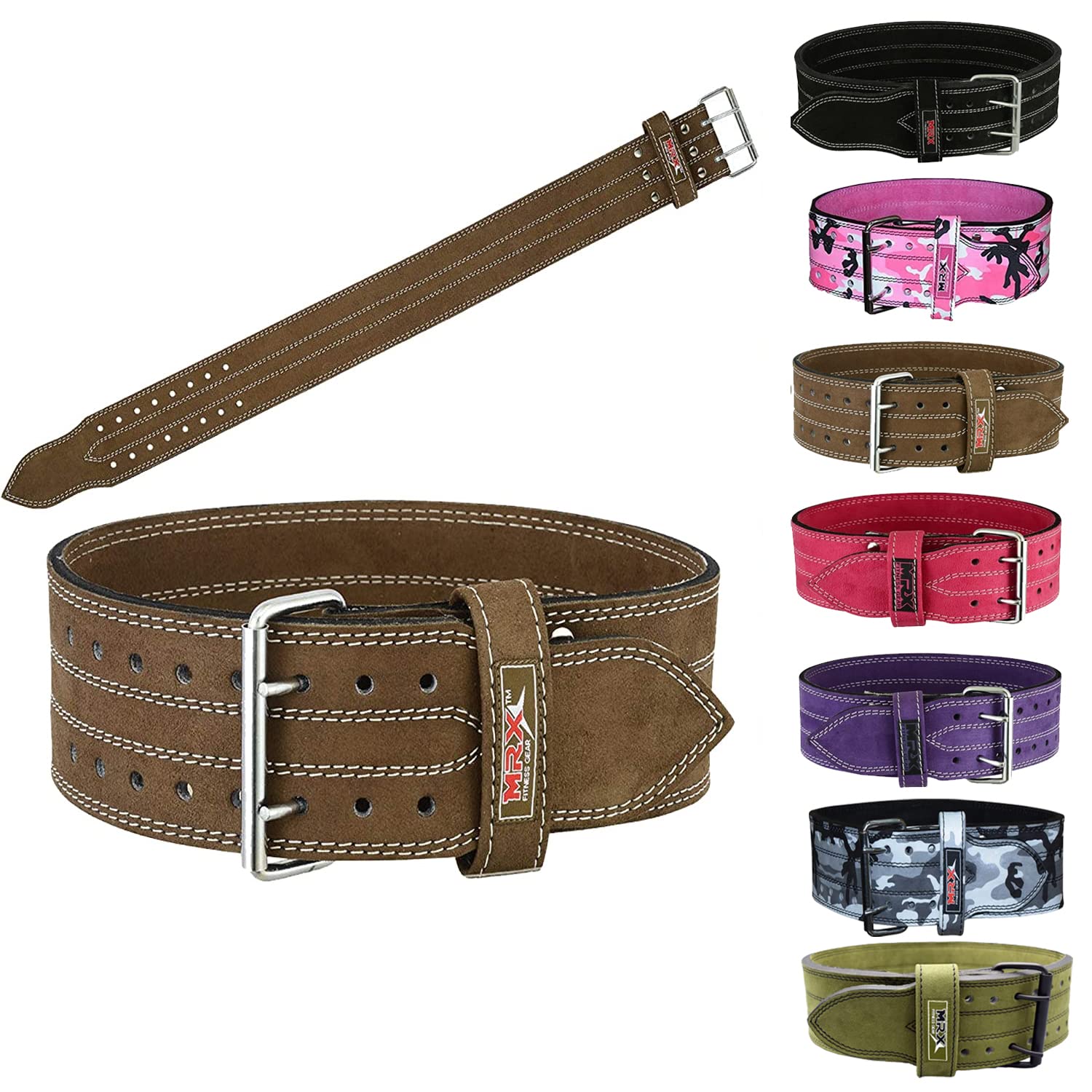
The MRX belt delivers 10mm leather thickness at an entry-level price that competes with belts costing significantly more. The 4-inch width provides standard support coverage, and the stainless steel slide bar buckle allows quick adjustment across a range of sizes. The leather is stiff out of the box — users report it requires deliberate break-in through bending and wearing during lighter sessions.
Stitching and hardware feel robust, with many users reporting multiple years of heavy use without failure. The size range extends to 3XL, accommodating larger athletes who struggle to find supportive belts. The buckle system is simple and reliable, though it lacks the convenience of velcro for rapid fit changes.
This is a straightforward, no-frills leather belt ideal for the lifter who wants maximum thickness and durability without spending premium dollars. It is best suited for strength-focused training blocks where consistent support matters more than quick transitions.
Why it’s great
- 10mm thickness for heavy bracing at a low price
- Stainless steel hardware lasts years
- Wide size range up to 3XL
Good to know
- Very stiff initially; requires break-in period
- Buckle adjustments slower than velcro
6. Beast Power Gear Leather Belt
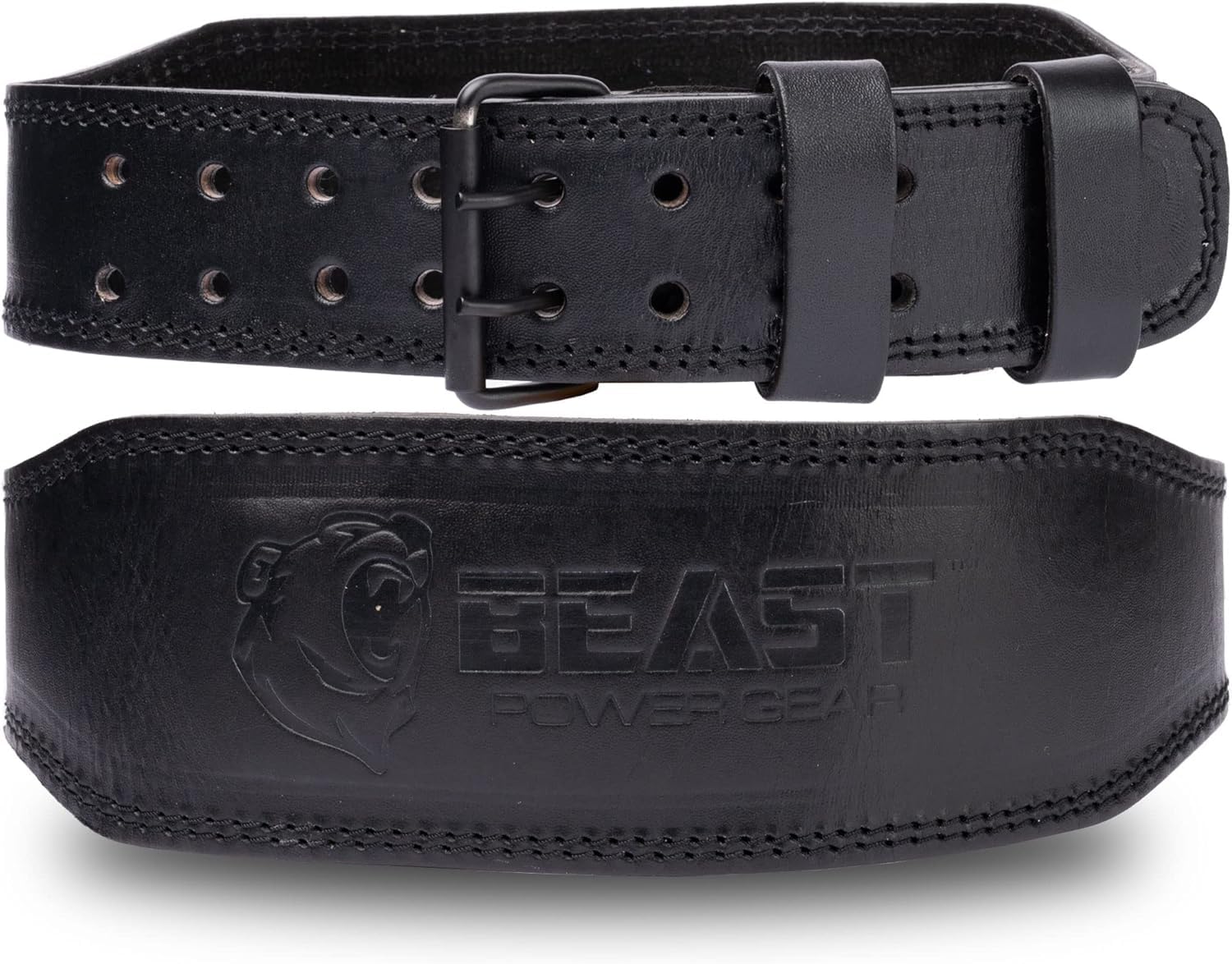
The Beast Power Gear belt focuses on balance between support and flexibility. At 6mm thickness, it is thinner than powerlifting-specific belts, making it more forgiving for dynamic movements that require torso mobility. The foam padding adds a layer of comfort that bare leather belts lack, reducing pressure points during deep squats and bent-over rows.
The double-prong steel buckle provides secure closure without the risk of velcro wear. Users with lower back pain report noticeable relief during training, as the belt helps maintain core tension and reduces strain. The included wrist wraps add convenience, though the wraps themselves are thinner than standalone options.
This belt works well for the lifter who wants a moderate level of support without the bulk and stiffness of a 10mm competitor. It is particularly suited for general strength training and lighter Crossfit sessions where speed and comfort matter more than absolute rigidity.
Why it’s great
- Foam padding enhances comfort for long sessions
- Double-prong buckle stays secure under load
- Includes free wrist wraps
Good to know
- 6mm thickness less supportive for maximal lifts
- Wrist wraps are thin and may not last
7. Vikingstrength Premium Weight Lifting Belt

The Vikingstrength belt pairs 10mm thickness with a hook closure to provide strong support at a low entry cost. The leather is substantial and requires break-in, but users note that once softened, it offers dependable support for squats and deadlifts. The included set of lifting straps adds utility for heavy pulling exercises.
Size availability extends up to 3XL, making this one of the more inclusive options for athletes with larger waist measurements. The Amara suede interior lining adds a touch of comfort that raw leather belts often skip, reducing abrasion during extended wear. The hook closure is simple and robust, though it lacks the quick-release convenience of a lever or velcro system.
This belt is best suited for beginners or budget-conscious lifters who need a thick leather belt without a high upfront investment. It gets the job done for strength training but may not satisfy athletes who need rapid adjustability for competitive Crossfit environments.
Why it’s great
- 10mm thickness for robust bracing
- Includes free lifting straps
- Extended size range up to 3XL
Good to know
- Hook closure slower to remove than lever/velcro
- Runs slightly small; size up for comfort
FAQ
Should I use a 4-inch or 6-inch belt for Crossfit?
Can I wear a velcro belt for competitive Crossfit?
How tight should a Crossfit belt feel during a workout?
Is leather or nylon better for multi-discipline training?
Final Thoughts: The Verdict
For most users, the best crossfit belt winner is the Schiek Sports Model 3004 because its contoured design, velcro adjustability, and lightweight nylon construction handle everything from heavy squats to fast-paced metcons without compromise. If you want the rigidity of leather with infinite adjustability, grab the Element 26 Hybrid Leather. And for dedicated heavy-lifting sessions where absolute lockup matters most, nothing beats the Iron Infidel Lever Belt.

Mo Maruf
I created WellFizz to bridge the gap between vague wellness advice and actionable solutions. My mission is simple: to decode the research and give you practical tools you can actually use.
Beyond the data, I am a passionate traveler. I believe that stepping away from the screen to explore new environments is essential for mental clarity and physical vitality.