Our readers keep the lights on and my smoothie glass nicely filled. As an Amazon Associate, I earn from qualifying purchases.
Dry, flaky patches on a newborn’s skin can be distressing for any new parent. The outermost layer of a baby’s delicate skin is thinner and more porous than an adult’s, meaning it loses moisture faster and reacts more easily to irritants. Finding a cream that provides deep hydration without triggering a reaction is the single most critical skincare decision you’ll make for your infant in those first few months.
I’m Mohammad Maruf — the founder and writer behind WellFizz. My research process for this guide involved cross-referencing dermatologist recommendations, ingredient lists for common irritants, verified buyer experiences with newborn eczema and sensitivity, and the specific certifications (like the National Eczema Association Seal) that matter most when choosing a safe formula for your baby’s first year.
After analyzing the science behind barrier repair and pore-clogging potential, I’ve narrowed the market to the most reliable options. These are my expert picks for the best cream for newborn dry skin based on safety, efficacy, and real-world results.
How To Choose The Best Cream For Newborn Dry Skin
Newborn skin is still developing its acid mantle and moisture barrier, making it highly susceptible to transepidermal water loss and irritation. Choosing a cream isn’t about marketing claims; it’s about understanding a few core physiological and formulation principles. Here are the three most critical factors to evaluate.
Prioritize Fragrance-Free Over Unscented
“Unscented” often means a masking fragrance has been added to cover the natural scent of the ingredients. “Fragrance-free” means no aroma chemicals are included at all. For a newborn, fragrance is one of the most common contact allergens and offers zero therapeutic benefit. Always look for a formula explicitly labeled fragrance-free to minimize the risk of a reaction.
Look for Barrier-Strengthening Lipids
The skin barrier is composed of lipids, primarily ceramides, cholesterol, and fatty acids. A cream that contains these components helps fill the gaps between skin cells, locking moisture in and keeping irritants out. Formulas with multiple ceramides (like ceramide NP, AP, and EOP) and beta-glucan provide superior support for a compromised barrier compared to simple petrolatum-based occlusives alone.
Check the National Eczema Association Seal
The National Eczema Association (NEA) Seal of Acceptance is not a guarantee of a cure, but it is a rigorous third-party verification. Products bearing this seal have been reviewed by experts and determined to be free of known irritants and suitable for those with eczema or extremely sensitive skin. This is a reliable shortcut for parents navigating hundreds of product options.
Quick Comparison
On smaller screens, swipe sideways to see the full table.
| Model | Category | Best For | Key Spec | Amazon |
|---|---|---|---|---|
| CeraVe Baby Cream | Cream | Daily barrier support | 3 Ceramides + Hyaluronic Acid | Amazon |
| Vanicream Moisturizing Cream for Baby | Cream | Ultra-sensitive skin | Beta-Glucan & Ceramides | Amazon |
| Aquaphor Healing Ointment | Ointment | Severe dryness & barrier repair | Water-Free, Oxygen Flow | Amazon |
| Mustela Baby Nourishing Lotion | Lotion | Daily light hydration | Avocado & Cold Cream | Amazon |
| CeraVe Daily Moisturizing Lotion | Lotion | Budget body hydration | 3 Ceramides, MVE Tech | Amazon |
In‑Depth Reviews
1. CeraVe Baby Cream
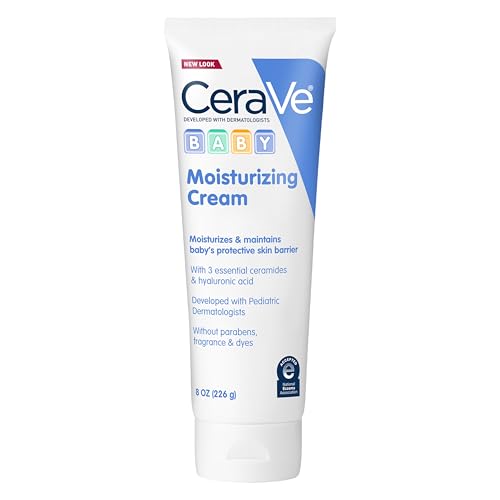
CeraVe Baby Cream is a benchmark for a reason: it was developed with pediatric dermatologists and delivers a rich, non-greasy formula packed with three essential ceramides and hyaluronic acid. The texture is a significant advantage — it provides the deep hydration of a thick cream without the heavy, sticky feeling that can disturb a sleeping infant. Many parents report that a single application in the morning keeps their baby’s skin soft well into the evening, confirming its long-lasting hydration profile.
The NEA Seal of Acceptance here is not just a sticker; it signals that the formula has passed a third-party review for use on eczema-prone skin. Users frequently describe this as the product that finally soothed stubborn dry patches on their newborn’s cheeks and thighs without any stinging or redness. The 8-ounce tub is a practical size for daily use, lasting several weeks of full-body application.
Where this cream truly shines is its balance of efficacy and tolerability. It strengthens the moisture barrier without including fragrance, parabens, dyes, or phthalates. For the parent who wants a single, trusted, and effective daily moisturizer backed by dermatological science, this is the default recommendation.
Why it’s great
- Rich, non-greasy texture that absorbs instantly
- Contains 3 essential ceramides for barrier repair
- Eczema Association seal for sensitive skin
Good to know
- Some may prefer a thicker ointment for severe overnight dryness
2. Vanicream Moisturizing Cream for Baby

If your newborn has already shown signs of contact dermatitis or you simply want the absolute minimum number of ingredients, Vanicream Moisturizing Cream for Baby is the peace-of-mind choice. This formula strips away essentially every known common irritant: no gluten, fragrance, dye, lanolin, parabens, formaldehyde, botanical extracts, or essential oils. Its base relies on beta-glucan and ceramides to enhance hydration without relying on potentially sensitizing plant oils.
User reviews consistently highlight that this cream is one of the few products that doesn’t sting or cause any reaction on already-compromised skin. Parents of babies with eczema who had tried multiple other creams often describe Vanicream as the only one that provided relief without setbacks. The texture is rich but absorbs well, leaving a smooth finish rather than a greasy slip.
The company has a 50-year history of formulating for sensitive skin, and it shows in the pH-balanced, non-irritating nature of this baby-specific product. It is also a favorite among adults for their own sensitive facial skin, making it a versatile household staple. For the ultra-cautious parent, this is the safest formula on the market.
Why it’s great
- Formulated without virtually all common irritants
- Includes beta-glucan and ceramides for barrier support
- Unscented and non-greasy with deep penetration
Good to know
- May require reapplication for very dry climates
3. Aquaphor Healing Ointment
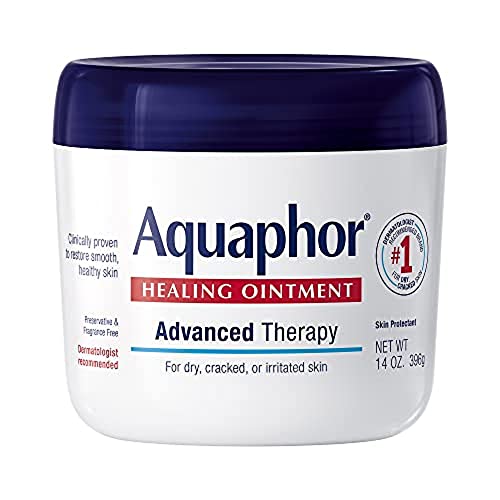
Aquaphor Healing Ointment belongs in a different category than creams and lotions. It is a water-free, semi-occlusive ointment designed to create a protective barrier over the skin. For newborn dry skin that has progressed to cracked, chapped, or severely compromised patches, this is the heavy artillery. The formula allows oxygen to flow to the skin while sealing in moisture, creating an ideal environment for the skin to repair itself.
Parents commonly use this as a barrier against drool-induced chin rash, diaper irritation, and on the cheeks during cold weather. The 14-ounce value size jar is economical for such a multi-purpose product, and a small amount goes a long way. Users report that a thin layer applied at night transforms rough, red skin into smooth, calm skin by morning. It is also frequently prescribed by dermatologists for post-procedure care, confirming its medical-grade safety.
It is thicker than any cream, so it is best suited for targeted applications on dry spots rather than all-over daily body use. The lack of preservatives and fragrance makes it safe even for newborns, but the greasy feel means it is not a product you’ll want to spread over the entire body twice a day. Keep this one for the stubborn areas that a cream can’t fix.
Why it’s great
- Creates a breathable protective barrier for healing
- Water-free formula is ideal for severe dryness
- Multi-purpose: diaper area, cheeks, cracked patches
Good to know
- Greasy texture is not ideal for all-over daily use
4. Mustela Baby Nourishing Lotion
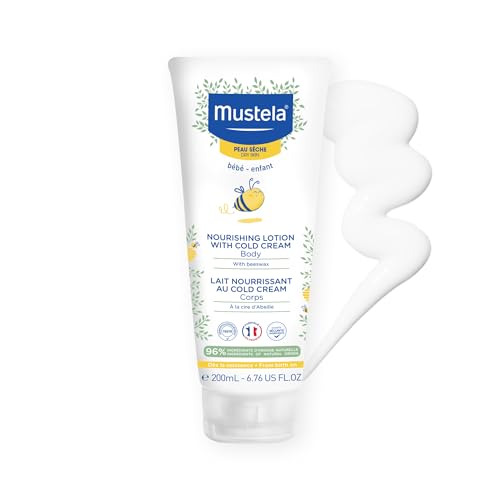
Mustela Baby Nourishing Lotion offers a different experience from the minimalist creams above. It has a pleasant, naturally-derived scent (many users describe it as clean and gentle) and a lighter, runnier texture that spreads easily over a baby’s whole body. The formula uses natural avocado extract, cold cream, and beeswax to protect and treat sensitive skin. For parents who enjoy the ritual of a lightly scented post-bath massage, this is an appealing choice.
Review data shows that this lotion is particularly effective at clearing up general dryness and mild skin irritation quickly. It dries down without leaving an oily or sticky residue, making it comfortable for the baby and less messy for the parent. The 6.76-ounce bottle is smaller than some competitors, but the thinner consistency means you may use more product per application.
The primary consideration here is the presence of natural fragrance components. While many babies tolerate this well, if your newborn has known sensitivity or a history of eczema, you may want to start with a completely fragrance-free formula first. For a baby without pre-existing skin issues, however, this lotion is a lovely, effective option for daily hydration.
Why it’s great
- Lightweight, non-greasy texture perfect for daily use
- Contains natural avocado and cold cream ingredients
- Pleasant, gentle scent that doesn’t linger heavily
Good to know
- Contains natural fragrance, not for ultra-sensitive skin
- Runny consistency may require more frequent application
5. CeraVe Daily Moisturizing Lotion
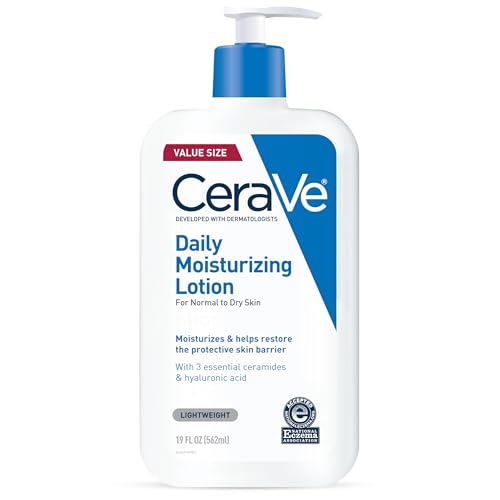
The CeraVe Daily Moisturizing Lotion is the standard-bearer for an affordable, dermatologist-developed moisturizer. While it is not specifically marketed for babies, its formula is identical in spirit to the Cream version: three essential ceramides, hyaluronic acid, and MVE technology for 24-hour hydration. The key difference is texture — this is a lightweight, oil-free lotion that absorbs almost instantly, leaving no sticky trace. For a parent on a budget who wants to moisturize a newborn’s body without a heavy feel, this 19-ounce pump bottle is an incredible value.
The NEA Seal of Acceptance applies here too, confirming that it has been reviewed for use on eczema-prone and sensitive skin. Users frequently note that it is gentle enough for daily use on both face and body, and that a single pump covers a large area. The pump mechanism does tend to fail near the end of the bottle, which is a minor annoyance for an otherwise excellent product.
Because the texture is thinner than a specialized baby cream, it may not be sufficient for severe patches of dry skin on a newborn. For general maintenance and hydration, it works beautifully, but you will likely need a richer cream or ointment for cracked or flaky areas. It is an excellent, fragrance-free companion to a more intensive treatment.
Why it’s great
- Lightweight, fast-absorbing, non-comedogenic formula
- Contains 3 ceramides and hyaluronic acid
- Large 19-ounce bottle offers excellent value
Good to know
- Thinner texture may not be enough for severe dryness
- Pump mechanism often fails before product is empty
FAQ
Can I use a regular adult moisturizer on my newborn?
How often should I apply cream to my baby’s dry skin?
What is the difference between a cream and an ointment for newborns?
Final Thoughts: The Verdict
For most users, the best cream for newborn dry skin winner is the CeraVe Baby Cream because it strikes the perfect balance between deep hydration, barrier repair, and a non-greasy texture that parents love. If you want the absolute purest formula with no common irritants, grab the Vanicream Moisturizing Cream for Baby. And for severe dry patches that need intensive, overnight healing, nothing beats the Aquaphor Healing Ointment as a targeted spot treatment.

Mo Maruf
I created WellFizz to bridge the gap between vague wellness advice and actionable solutions. My mission is simple: to decode the research and give you practical tools you can actually use.
Beyond the data, I am a passionate traveler. I believe that stepping away from the screen to explore new environments is essential for mental clarity and physical vitality.