Our readers keep the lights on and my smoothie glass nicely filled. As an Amazon Associate, I earn from qualifying purchases.
Facial scars from acne, surgery, or injury can feel like permanent markers on your skin, stubbornly refusing to fade despite your best efforts with serums, oils, and cover-ups. The difference between a product that actually works and one that just feels nice comes down to the active ingredients and their delivery system — something most creams fail to address correctly for the delicate facial skin barrier.
I’m Mohammad Maruf — the founder and writer behind WellFizz. I’ve spent hundreds of hours analyzing dermatological formulations and cross-referencing clinical studies on wound healing and scar remodeling to compile this guide on the best cream for scarring on face.
Whether you’re dealing with fresh post-inflammatory hyperpigmentation or old, raised scar tissue, the right formula can make a measurable difference in texture and tone. This guide breaks down the top performers so you can choose with confidence the best cream for scarring on face.
How To Choose The Best Cream For Scarring On Face
Facial skin is thinner, more vascular, and more prone to irritation than the rest of your body. A scar cream that works on your knee may clog pores or cause breakouts on your face. The key is finding a formula that balances active scar-fighting ingredients with a texture that won’t disrupt your skin barrier or cause comedones.
Understand the Scar Type You’re Treating
Fresh surgical scars respond best to silicone-based gels that create a protective moisture barrier. Old, flat scars with dark discoloration (post-inflammatory hyperpigmentation) need ingredients like Vitamin E, Niacinamide, or Hyaluronic Acid to lighten and plump. Raised hypertrophic scars require ingredients that inhibit collagen overproduction, such as Onion Extract or Madecassoside.
Check for Non-Comedogenic and Fragrance-Free Labels
Facial scar creams should always be labeled non-comedogenic, meaning they won’t clog pores. Fragrance-free formulas are also safer for sensitive, healing skin — added essential oils or perfumes can trigger irritation that actually worsens scar discoloration. A lightweight gel texture is almost always better than a thick balm for daytime wear under makeup.
Quick Comparison
On smaller screens, swipe sideways to see the full table.
| Model | Category | Best For | Key Spec | Amazon |
|---|---|---|---|---|
| La Roche-Posay Cicaplast Gel B5 | Premium Gel | Post-procedure & broken barrier | 21% Glycerin + 5% Panthenol | Amazon |
| Mederma Scar Serum | Mid-Range Serum | Old scars & discoloration | Vitamin E + Niacinamide | Amazon |
| Bio-Oil Skincare Oil | Mid-Range Oil | General scar & stretch mark fading | Vitamin E + Chamomile oil | Amazon |
| Cicatricure Advanced Scar Gel | Budget-Friendly Gel | Acne scars & surgical scars | Regenerare Complex | Amazon |
| Derma E Gel Scar | Budget-Friendly Gel | Fresh redness & acne marks | Panthenol gel base | Amazon |
In‑Depth Reviews
1. La Roche-Posay Cicaplast Gel B5

This is the gold standard for healing post-procedure skin — tested on skin that has undergone laser, microneedling, and stitches. The active complex centers on 21% Glycerin for deep humectant draw, 5% Panthenol (Pro-Vitamin B5) to calm inflammation and speed barrier repair, and Madecassoside, a potent centella asiatica derivative known to stimulate collagen synthesis and reduce fibrosis. A unique mineral blend of Copper, Zinc, and Manganese provides antioxidant protection that scavenges free radicals during the wound healing cascade.
What sets this apart from standard scar creams is its protective gel film that stays on the skin without suffocating it. Users report visible reduction in redness and irritation within days, not weeks, especially after aggressive procedures like CO2 laser or microneedling. The formulation is fragrance-free and non-comedogenic, making it safe for the most sensitive facial skin types. It works as a daytime barrier that can be layered under makeup without pilling.
The primary limitation is that it was designed as a healing protectant rather than a long-term scar remodeler. For old, settled scars that need pigment lightening or texture smoothing, you may need to pair it with a dedicated serum afterward. But for fresh surgical scars, broken barriers, and irritated skin, this is the most targeted option available in this range.
Why it’s great
- Clinically tested post-laser and post-procedure with rapid soothing action
- Non-comedogenic, fragrance-free, and safe for sensitive skin
- Creates a protective barrier without being greasy
Good to know
- Better for healing than for fading old pigmented scars
- Small 1.35 oz tube may run out quickly with twice-daily use
2. Mederma Scar Serum
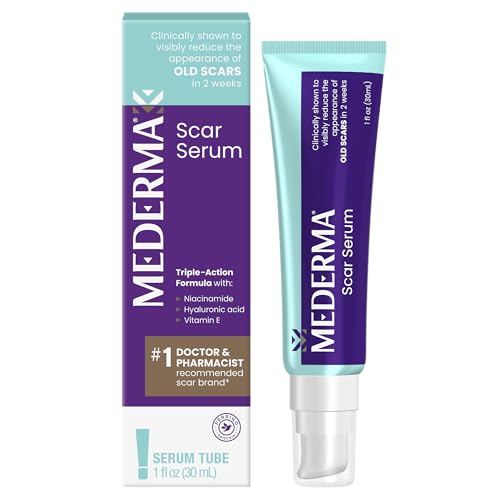
Mederma shifted from its classic onion-extract gel to this triple-action serum that targets the three main components of scar visibility: color, texture, and hydration. The star ingredients are Vitamin E (Tocopherol) for antioxidant protection and moisture retention, Hyaluronic Acid for plumping the indented appearance of atrophic scars, and Niacinamide (Vitamin B3) for brightening post-inflammatory hyperpigmentation. This makes it one of the most comprehensive formulas for old scars that have already settled into flat, dark marks.
Clinical data from the manufacturer shows visible improvement in scar appearance and discoloration in as little as two weeks with consistent twice-daily application. The serum texture absorbs quickly without leaving a greasy film, which is a major improvement over traditional Mederma gel. Users report it works particularly well on acne scars and surgical incision lines that are at least six months old. The concentrated dropper system allows for precise application, minimizing waste.
The main caveat is that it requires strict consistency — apply twice daily for a full eight-week cycle to see maximum results on scars older than six months. Some users with very sensitive skin may experience mild tingling from the active ingredient blend, although this typically subsides within a few days of regular use.
Why it’s great
- Targets both color and texture with three active ingredients
- Lightweight serum format absorbs quickly with no greasy residue
- Clinically shown results in as little as two weeks
Good to know
- Requires twice-daily application for eight weeks on old scars
- May cause mild tingling on very sensitive skin at first
3. Bio-Oil Skincare Body Oil Serum

Bio-Oil has been a staple in dermatology circles for years, primarily due to its unique formulation that combines Vitamin E with natural Chamomile and Lavender oils in a non-comedogenic base. The oil format delivers deep hydration without clogging pores, making it safe for facial use despite being labeled as a body oil. It’s dermatologist-recommended and clinically tested for improving the appearance of scars, stretch marks, and uneven skin tone.
The key to its effectiveness lies in its ability to lock in moisture while the active botanical ingredients work to soften and lighten scar tissue over time. Users consistently report that it absorbs surprisingly well for an oil — after a minute or two, the greasiness dissipates and leaves skin feeling soft rather than slick. It works especially well on newer scars that are still in the remodeling phase, and many users apply it as a general facial moisturizer for its brightening effects.
The oil format can be a drawback for those with very oily or acne-prone skin, as the texture may feel heavy during humid conditions or under makeup. Additionally, it works best on flat scars rather than raised or hypertrophic ones, which typically require a silicone-based gel to flatten and soften the collagen buildup.
Why it’s great
- Non-comedogenic formula safe for facial use despite being an oil
- Versatile — works for scars, stretch marks, and general skin tone
- Quick absorption with a subtle, pleasant scent
Good to know
- Oil texture may feel heavy on oily skin types
- Not ideal for raised or hypertrophic scars
4. Cicatricure Advanced Scar Gel

This two-pack of Cicatricure Scar Gel provides a budget-friendly entry point for those who need consistent, long-term application without breaking the bank. The proprietary Regenerare Complex is designed to visibly reduce the appearance of surgical scars, acne scars, and stretch marks in as little as two weeks. The gel format is lightweight and non-greasy, absorbing quickly so it can be worn under makeup without disturbing the finish.
The manufacturer recommends applying the gel four times per day for optimal results, which is a higher frequency than most competitors. However, the fast-absorbing texture makes this achievable without feeling like you’re layering product constantly. Users report noticeable softening and fading of recent scars within weeks, particularly those from surgeries, cuts, and burns. The pack of two tubes ensures you have enough product for the full treatment cycle without running out halfway through.
The main trade-off is that the gel is less effective on very old, deeply set scars compared to silicone-based alternatives. Some users also note that the formula has a slight medicinal scent that fades quickly after application. For fresh to moderately aged scars, this offers outstanding value for the price point.
Why it’s great
- Two-pack provides plenty of product for full treatment cycles
- Non-greasy gel absorbs fast and works under makeup
- Clinically proven results visible in as little as two weeks
Good to know
- Requires four daily applications for best results
- Less effective on deep, old hypertrophic scars
5. Derma E Gel Scar
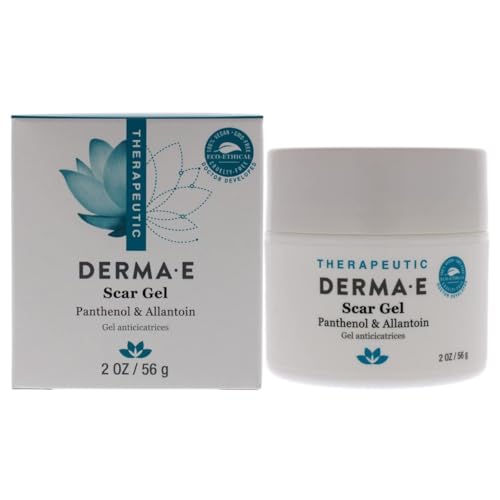
Derma E formulates this scar gel around Panthenol (Pro-Vitamin B5), which is widely used in dermatology for its ability to penetrate the skin and convert to pantothenic acid, a key component in cellular repair and regeneration. The gel format is incredibly lightweight — it sinks in almost immediately, leaving zero residue, which makes it an ideal daytime treatment that layers seamlessly under sunscreen or makeup.
Users specifically praise its effectiveness on fresh red skin discoloration and post-acne marks. Unlike heavier balms that sit on the surface, this gel is designed to calm inflammation while it hydrates, making it a strong option for those with active breakouts who need to treat scars without clogging pores. A little goes a long way; the 2 oz tube lasts several weeks even with daily use. The formula has a very light medicinal fragrance that fades quickly.
The primary drawback is that its effectiveness drops significantly on older, more established scars. Users with scars that are years old report minimal visible change, as the gel lacks the silicone or enzyme-based actives needed to remodel mature collagen. It is best viewed as a gentle maintenance gel for ongoing scar fading rather than a heavy-duty treatment for stubborn tissue.
Why it’s great
- Ultra-light gel absorbs instantly with zero greasy residue
- Panthenol-based formula calms redness and hydrates skin
- Excellent for fresh acne marks and post-inflammatory erythema
Good to know
- Low efficacy on old, deep, or hypertrophic scars
- May require extended use for visible fading on settled marks
FAQ
Can I use facial scar cream on fresh wounds?
How long should I use a scar cream to see results?
Do silicone scar gels work better than oil-based treatments?
Can I wear makeup over my facial scar cream?
Final Thoughts: The Verdict
For most users, the best cream for scarring on face winner is the La Roche-Posay Cicaplast Gel B5 because it combines healing power with a protective barrier that’s safe for post-procedure and sensitive skin. If you want a serum that specifically targets old discolored acne scars, grab the Mederma Scar Serum. And for a versatile budget-friendly option that works across face and body, nothing beats the Cicatricure Advanced Scar Gel.

Mo Maruf
I created WellFizz to bridge the gap between vague wellness advice and actionable solutions. My mission is simple: to decode the research and give you practical tools you can actually use.
Beyond the data, I am a passionate traveler. I believe that stepping away from the screen to explore new environments is essential for mental clarity and physical vitality.