Our readers keep the lights on and my smoothie glass nicely filled. As an Amazon Associate, I earn from qualifying purchases.
Sunburn blisters are the skin’s cry for help after a serious UV assault — they signal a second-degree burn where the top layer of skin has separated from the layer beneath, filling with fluid to protect the raw tissue. Treating them wrong (popping them, using greasy lotions that trap heat) can turn a painful week into an infection risk and prolonged misery. The right cream doesn’t just soothe the sting — it creates a breathable, moist environment that lets the blister heal intact while calming the surrounding inflammation.
I’m Mohammad Maruf — the founder and writer behind WellFizz. I’ve spent hundreds of hours cross-referencing dermatological guidelines, clinical studies on wound healing, and real-world user reports to isolate the formulations that genuinely support second-degree sunburn recovery without trapping heat or promoting infection.
After evaluating dozens of options against evidence-based criteria for moisture balance, breathability, and infection prevention, I’ve narrowed the field to the five most effective formulations. This is the definitive guide to the best cream for sunburn blisters available right now.
How To Choose The Best Cream For Sunburn Blisters
Sunburn blisters demand a specific healing environment — too dry and the blister cracks open; too wet and bacteria thrive. The wrong product, such as an alcohol-based after-sun lotion or a heavy occlusive that traps heat, can slow recovery or cause infection. Here are the three critical factors that separate a genuine healing aide from a first-aid mistake.
Moisture Barrier vs. Breathability
The blister roof needs to stay intact as long as possible. A water-free ointment base (like petrolatum) creates a semi-occlusive barrier that locks in the wound’s own moisture while still allowing oxygen exchange. Thick body butters or oil-heavy creams can suffocate the skin and increase surface temperature. Look for products that specifically state they allow oxygen flow — that airflow is what prevents maceration.
Infection Prevention Without Stinging
Open or weeping blisters are vulnerable to bacterial invasion. Traditional antibiotic ointments like bacitracin or neomycin can cause contact dermatitis on sensitive sunburned skin. Silver-based gels (colloidal silver or silver oxide particles) offer broad-spectrum antimicrobial protection without the stinging or allergy risk. Hydrogel dressings that incorporate tea tree oil or aloe vera also provide gentle antimicrobial activity while cooling the burn.
Viscosity and Spreadability
Blisters are tender — rubbing or dragging a thick paste across them can tear the skin. The ideal formulation spreads with minimal friction, either because it’s a thin ointment that melts at body temperature or a gel that glides without dragging. Avoid anything that requires vigorous rubbing to absorb. A product that can be dabbed or gently rolled onto the blister is best.
Quick Comparison
On smaller screens, swipe sideways to see the full table.
| Model | Category | Best For | Key Spec | Amazon |
|---|---|---|---|---|
| Aquaphor Healing Ointment | Ointment | Protecting intact blisters during the day | Water-free petrolatum base, 7 oz tube | Amazon |
| Dimora Hydrogel First Aid Ointment | Hydrogel | Cooling relief for unbroken and weeping blisters | Oil-free hydrogel, 2-pack of 6 oz | Amazon |
| BurnFix Burn Gel Dressing | Hydrogel Pad | Immediate cooling and infection control on damaged skin | Tea tree oil + aloe vera, 4 x 4″ pads | Amazon |
| Rawleigh Antiseptic Salve | Salve | Multi-purpose antiseptic protection for open blisters | Turpentine + liquefied phenol, 4.5 oz tin | Amazon |
| SilvrSTAT First Aid Kit Gel | Silver Gel | Rapid infection clearance on open or weeping burns | 32 PPM silver particles, 1 oz tube | Amazon |
In‑Depth Reviews
1. Aquaphor Healing Ointment
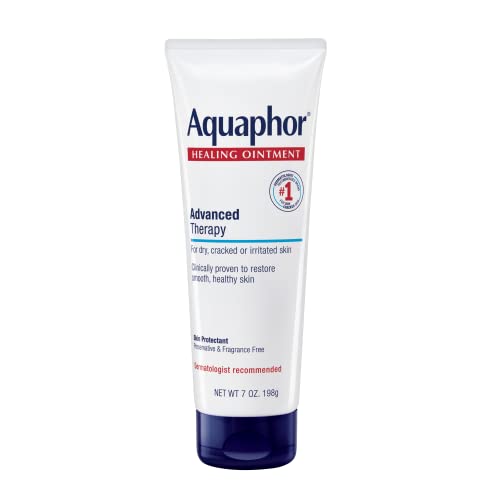
Aquaphor is the foundational product for anyone serious about sunburn blister recovery. Its water-free petrolatum base sits on top of the skin without absorbing, creating a protective barrier that lets oxygen reach the burn while sealing out bacteria and debris. Dermatologists routinely prescribe it for post-cryogenic and surgical wound care because it provides the ideal moist healing environment without macerating the tissue — exactly what a second-degree sunburn needs.
The 7-ounce tube is generous enough for full-body coverage, and because it’s unscented and free of preservatives, it won’t sting or irritate even the most inflamed skin. Unlike thick creams that require rubbing, Aquaphor glides on with minimal friction, which is critical when the blister roof is fragile. It lasts on the skin for hours without reapplication, reducing the need to touch the tender area repeatedly.
Think of Aquaphor as the safe foundation layer — it won’t actively cool the burn like a hydrogel, but it is the single best product for keeping intact blisters protected throughout the day. Users consistently report faster healing and reduced scabbing when using this as their primary barrier.
Why it’s great
- Creates breathable oxygen-permeable barrier
- Unscented, non-irritating, dermatologist staple
- Long-lasting coverage, full-body size tube
Good to know
- No active cooling or antimicrobial properties
- Very thick consistency may feel heavy on hot skin
2. Dimora Hydrogel First Aid Ointment

Where Aquaphor protects, Dimora cools. This oil-free hydrogel is designed specifically for painful wounds, burns, and blisters — its water-based structure evaporates slowly, drawing heat away from the burn and providing immediate soothing relief. That cooling effect is a lifesaver during the first 48 hours after a sunburn blister forms, when the trapped heat beneath the skin is causing the most pain.
The gel conforms to irregular surfaces, which is important for blisters on curved areas like shoulders, the bridge of the nose, or the tops of feet. It’s gentle enough for daily use on sensitive private areas, and users recovering from mastectomies and surgical wounds have reported it keeps tissue moist and infection-free. The 2-pack offers excellent value — one tube for active treatment and one for emergency backup.
One note: hydrogel does absorb into the wound bed over time and may need reapplication every few hours as it dries. It is not intended for wounds with heavy exudate, but for typical sunburn blisters with minimal weeping, it provides the perfect balance of moisture and cooling.
Why it’s great
- Provides immediate cooling relief on burned skin
- Oil-free formula won’t clog pores or trap heat
- Conforms to body contours and joints
Good to know
- Needs reapplication as gel absorbs
- Not suitable for heavy-drainage wounds
3. BurnFix Burn Gel Dressing

BurnFix takes a different approach — rather than a tube or jar, it delivers a pre-soaked 4×4-inch hydrogel pad infused with tea tree oil and aloe vera. This format is ideal for covering a specific blister cluster without spreading product across healthy skin. The pad sits directly on the burn, cooling the tissue while the tea tree oil provides natural antimicrobial protection against the bacteria that commonly infect open blisters.
Users report rapid pain relief upon application — the hydrogel creates a moist environment that soothes the raw nerve endings while the aloe reduces inflammation. It’s designed for first and second-degree burns, which is precisely the severity of a sunburn that produces blisters. The 4-pack means you can rotate pads every few hours without running out, making it a practical option for the first 24-hour crisis period.
The one practical drawback is pad size — at 4×4 inches, each pad covers a limited area. For small, localized blisters (common on the nose, shoulders, or tops of feet), this format works well. For widespread sunburn blisters across the back or chest, a tube product will be more efficient.
Why it’s great
- Pre-soaked pad format, no spreading needed
- Tea tree oil fights infection naturally
- Aloe infusion provides dual soothing and anti-inflammatory effect
Good to know
- Patches may feel small for larger burn areas
- Packaging instructions are poorly translated
4. Rawleigh Antiseptic Salve
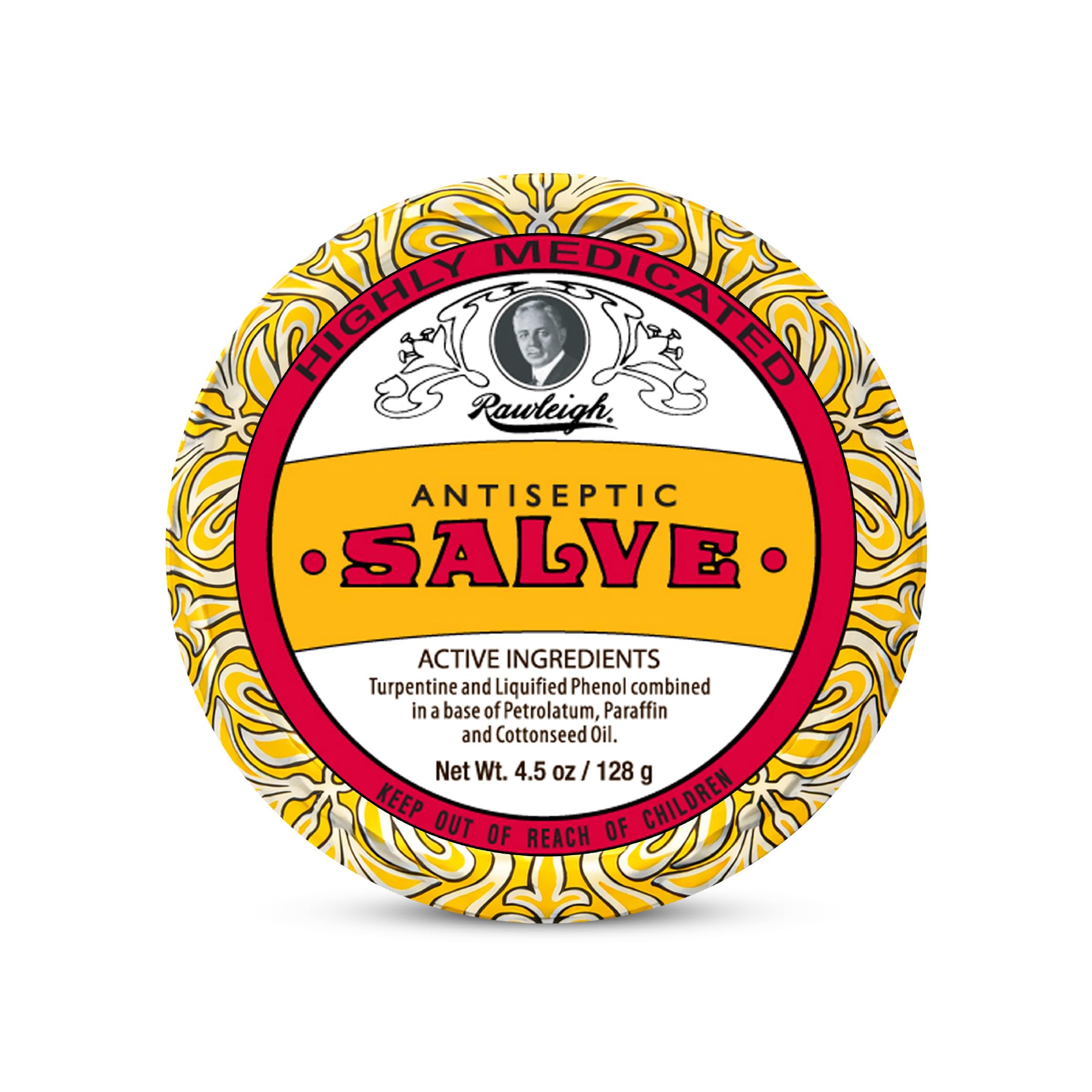
Rawleigh Antiseptic Salve is an American formula unchanged since 1889, and its longevity in the market is not nostalgia — it works. The active ingredients (turpentine and liquefied phenol in a petrolatum base) provide genuine antiseptic action against the bacteria that colonize open blisters, while the paraffin and cottonseed oil base creates a thick, protective barrier that stays in place for hours. It’s designed for humans and animals alike, which tells you how robust the formulation is.
The classic yellow tin is deeply practical — the salve stays solid at room temperature but melts on contact with skin, allowing you to dab it onto blisters without dragging or friction. Users with thin, fragile skin (common in older adults) report it reduces bruising and speeds healing. It absorbs quickly without leaving a greasy residue, which is unusual for a petrolatum-based product.
One important consideration: the phenol and turpentine content means this is a true antiseptic, not just a moisturizer. It should be used on open or weeping blisters, not as a preventative on intact skin. The herbal scent is noticeable and may not appeal to everyone, but the protective results are undeniable for those who need infection control on a blister that has already broken.
Why it’s great
- True antiseptic salve, not just a moisturizer
- Melts on contact, applies without friction
- Multi-species tested for safe broad-spectrum use
Good to know
- Strong herbal/pine scent lingers
- Not recommended for intact blister skin as preventative
5. SilvrSTAT First Aid Kit Gel

SilvrSTAT is the high-tech solution for sunburn blisters that have already become infected or are at high risk of infection. The active agent is SilverSol Ag₄O₄, a patented silver particle that delivers 32 PPM of ionic silver — a concentration proven to kill bacteria, fungi, and even some viruses without damaging healthy tissue. Users with severe burns and hand infections report swelling and redness clearing within 24 hours, which is remarkable for a topical gel.
The gel itself is smooth and non-greasy, absorbing quickly without leaving a residue that might stick to clothing or bandages. It’s packaged in a compact 1-ounce tube designed for first aid kits, so it’s ideal for travel, camping, or keeping in the car during beach trips. One tube goes a long way — a pea-sized amount covers a palm-sized blister cluster.
The trade-off is cost per ounce — silver-based medical gels are more expensive than petrolatum ointments or hydrogels. For a single blister episode, the 1-ounce tube is sufficient for daily application until the burn heals. For multiple family members or widespread coverage, you may want to use SilvrSTAT as a spot-treatment on the highest-risk areas and rely on a bulk ointment for the rest.
Why it’s great
- Medical-grade silver kills infection rapidly
- Non-greasy, absorbs quickly, no residue
- Designed specifically for 1st and 2nd degree burns
Good to know
- Higher cost per ounce than basic ointments
- Small tube may not cover large body areas
FAQ
Should I pop a sunburn blister before applying cream?
Can I use a regular body lotion on sunburn blisters?
How often should I reapply cream on a sunburn blister?
Final Thoughts: The Verdict
For most users, the cream for sunburn blisters winner is the Aquaphor Healing Ointment because it provides the gold-standard barrier protection that dermatologists trust, works on intact and lightly weepy blisters alike, and comes in a generous tube that covers large areas without stinging. If you need immediate cooling and pain relief in the first 48 hours, grab the Dimora Hydrogel. And for an open, weeping blister that shows signs of infection, nothing beats the infection-fighting power of the SilvrSTAT First Aid Gel.

Mo Maruf
I created WellFizz to bridge the gap between vague wellness advice and actionable solutions. My mission is simple: to decode the research and give you practical tools you can actually use.
Beyond the data, I am a passionate traveler. I believe that stepping away from the screen to explore new environments is essential for mental clarity and physical vitality.