Our readers keep the lights on and my smoothie glass nicely filled. As an Amazon Associate, I earn from qualifying purchases.
Bare patches in your lawn, muddy spots under trees, and the constant battle against weeds on a slope — these are the problems a truly effective ground cover solves. The right choice transforms problem areas into a living, low-maintenance carpet that chokes out weeds, holds the soil, and stays green with far less water than traditional turf.
I’m Mohammad Maruf — the founder and writer behind WellFizz. After countless hours analyzing germination rates, drought tolerance ratings, spread habits, soil compatibility, and packaging quality from dozens of seed and plant varieties, this guide narrows the field to the options that deliver real results for American gardens.
Whether you are replacing a tired lawn, filling a tricky shady bank, or creating a pollinator-friendly patch, selecting the right best creeping ground cover means matching the plant’s growth habits and hardiness zone to your specific site conditions for long-term success.
How To Choose The Best Creeping Ground Cover
Selecting ground cover is about matching plant biology to your specific landscape conditions. The wrong choice can mean a plant that spreads too aggressively or one that simply fails to thrive.
Sunlight Exposure and Soil Type
Some creeping plants, like clover varieties, handle a wide range from full sun to partial shade, while others, like Creeping Jenny, need consistent moisture and can tolerate deeper shade. Test your soil drainage — clover enriches poor soils by fixing nitrogen, making it ideal for clay-heavy or sandy patches.
Growth Habit and Spread Rate
Understand whether a plant spreads by above-ground runners (stolons) or underground roots (rhizomes). Clover seeds germinate quickly into a dense mat, making it a fast filler for bare spots. Live plants like Creeping Jenny root at every node, creating a thick carpet that is excellent for controlling erosion on banks but may require edging in garden beds.
Maintenance Requirements
The biggest advantage of a quality ground cover is reduced upkeep. Look for “no-mow” or “low-growing” varieties like micro clover that top out at 4–6 inches, eliminating the need for weekly trimming. Also consider drought tolerance — established clover stays green with far less watering than traditional grass, saving time and your water bill.
Quick Comparison
On smaller screens, swipe sideways to see the full table.
| Model | Category | Best For | Key Spec | Amazon |
|---|---|---|---|---|
| Micro Clover Seed (1 lb) | Seed | No-mow lawn alternative | ~400,000 seeds; covers up to 8000 sq ft | Amazon |
| Miniature Clover Seed (1 lb) | Seed | Erosion control & soil enrichment | ~400,000 seeds; perennial in Zones 3-10 | Amazon |
| Creeping Jenny 4-Pack | Live Plant | Shady banks & container spill-over | 4 plants; spreads to 18 inches per plant | Amazon |
| Strawberry Clover Seed (2 lb) | Seed | Pet-friendly low-maintenance lawn | Covers 1000 sq ft; drought-tolerant | Amazon |
| Creeping Jenny (1 Quart) | Live Plant | Quick fill for woodland edges & stream banks | Hardy in Zones 3-8; fragrant yellow flowers | Amazon |
In‑Depth Reviews
1. Micro Clover Seed for Lawn – 1 Lb by Mountain Valley Seed Company

This micro clover from Mountain Valley Seed Company is the cleanest seed option for anyone wanting to transition away from a traditional grass lawn. With approximately 400,000 seeds per pound, coverage density is excellent, and the dwarf variety stays at a manageable 4 to 6 inches tall — eliminating the need for weekly mowing. The heirloom, non-GMO classification gives purists confidence in the genetic lineage.
Customer feedback consistently highlights germination as fast as three days even in challenging clay soil, with the clover thriving under moderate watering. The nitrogen-fixing ability naturally enriches the soil, reducing or eliminating the need for chemical fertilizers over successive seasons. It is truly a self-sustaining ground cover once established.
Be aware that the tiny seed size makes even broadcasting difficult by hand — users recommend mixing with sand or using a broadcast spreader for uniform distribution. Some buyers noted that covering a full lawn may require multiple bags, making this more of an upfront investment than patch-fix options, but the long-term water and maintenance savings are significant.
Why it’s great
- Germinates in as little as 3 days in most soil types
- Grows only 4-6 inches tall for a true no-mow lawn
- Nitrogen-fixing reduces need for chemical fertilizers
- Heirloom, non-GMO seeds from a trusted US brand since 1974
Good to know
- Very tiny seeds require careful distribution method to avoid overseeding
- Covering a large full lawn may require purchasing multiple pounds
2. Miniature Clover Seeds – 1 lb by Mountain Valley Seed Company
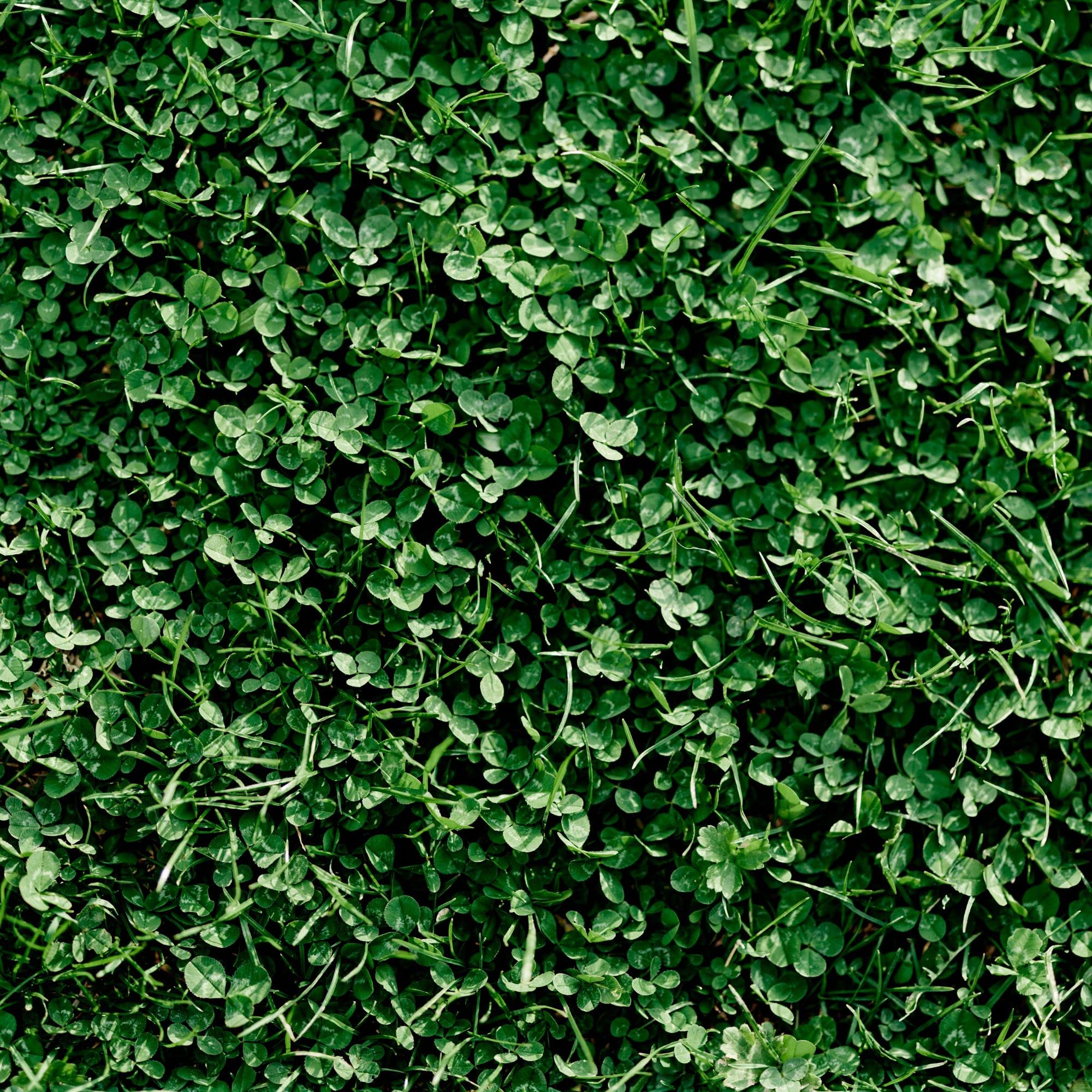
This miniature white clover seed is essentially a companion to the micro clover above, but it is better suited to erosion control and soil remediation projects. The 1-pound bag holds roughly 400,000 seeds and can cover up to 8,000 square feet when used for overseeding. The perennial nature means it returns year after year in hardiness zones 3 through 10, making it adaptable to nearly every continental US climate.
Users converting from Bermuda grass or filling bare spots from vehicle damage report excellent germination within a week. The low-growing habit creates a dense mat that holds soil on slopes and suppresses weed germination through sheer coverage density. The nitrogen-fixing root system also improves soil structure for future plantings.
A minority of buyers reported that the clover grew taller than expected, with some stems reaching 10–12 inches rather than the advertised micro-stature, and noted occasional weed seeds mixed in. For precise lawn replacement where uniform height is critical, the micro clover product is the more reliable choice, but for broad coverage and soil building, this remains a strong option.
Why it’s great
- Massive coverage potential — up to 8,000 sq ft per pound
- Thrives in full sun to partial shade across a wide hardiness range
- Excellent germination rate in clay, sand, and loam soils
- Drought-tolerant once established, reducing water usage significantly
Good to know
- Some batches have grown taller than the micro clover standard
- A few users reported weed seeds mixed into the bag
3. Creeping Jenny Live Plant (Lysimachia nummularia) – 4 Plants Per Pack
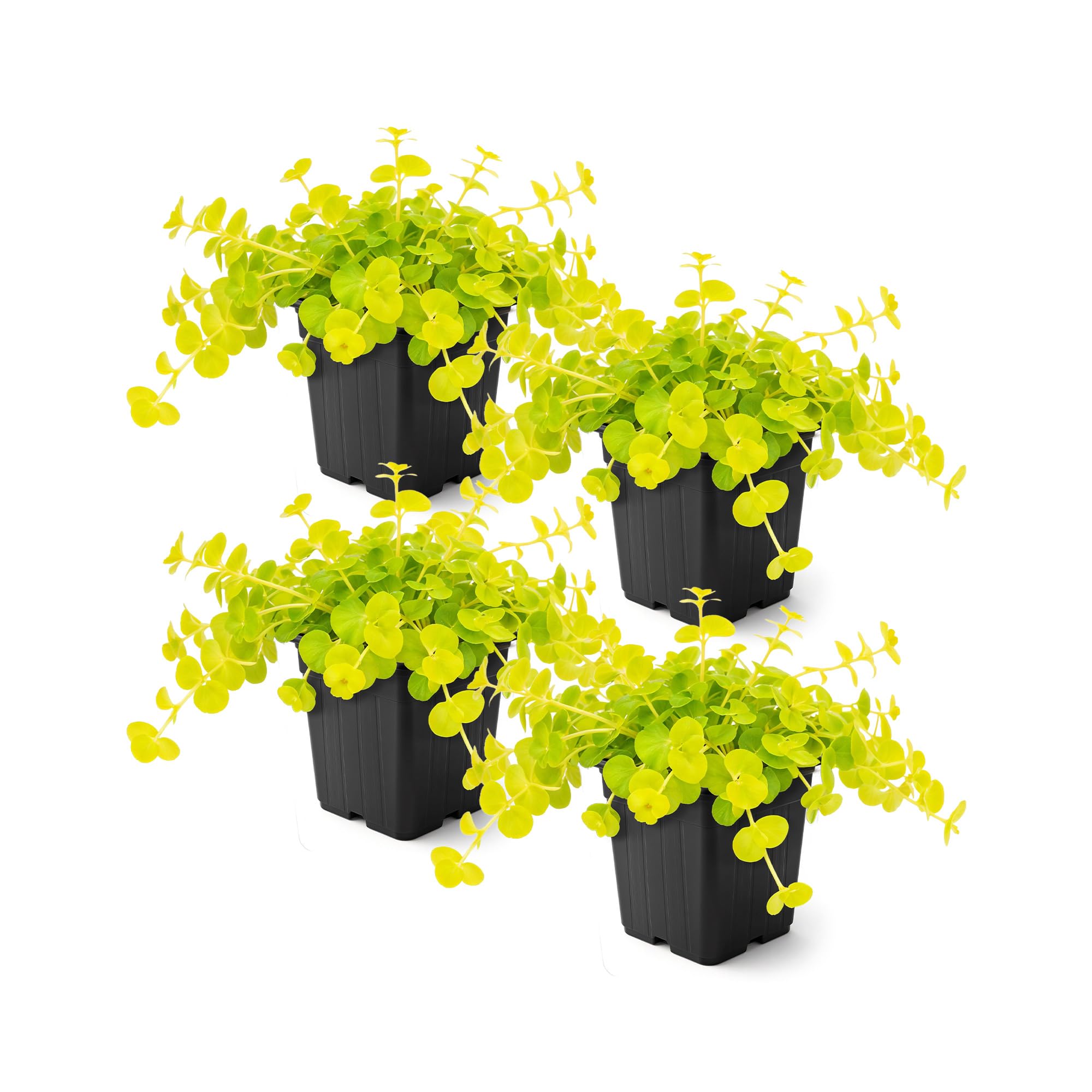
For gardeners who want an immediate visual impact rather than waiting for seeds to germinate, this 4-pack of Creeping Jenny delivers mature starts that spread quickly. Each plant reaches about 4 inches tall with an 18-inch spread at maturity, and the vibrant chartreuse-green foliage provides a bright accent that contrasts beautifully with darker-leaved shrubs and perennials. The “moneywort” coin-shaped leaves add textural interest to any bed or container.
The packing quality has received mixed reports — while many buyers received healthy, well-hydrated plants that established within a week, some reported shipment in bulb-sized boxes without adequate protection, resulting in crushed stems and wilted leaves. Ordering in milder weather and opening the package immediately upon arrival mitigates much of this risk.
Once planted in moist, well-draining soil with sun to partial shade, this variety roots at every node and can fill a 3-foot area in a single season. It is excellent for softening the edges of pathways, spilling over retaining walls, or stabilizing the soil around a pond or stream bank where moisture is consistent.
Why it’s great
- Four established plants provide faster coverage than seed
- Vibrant chartreuse foliage adds unique color contrast
- Roots at every node for effective erosion control
- Thrives in both full sun and partial shade with consistent moisture
Good to know
- Packaging inconsistency can lead to damaged plants on arrival
- Requires consistent moisture — not ideal for dry, sandy sites
4. O.M. Scott & Sons Strawberry Clover Seed – 2 lb
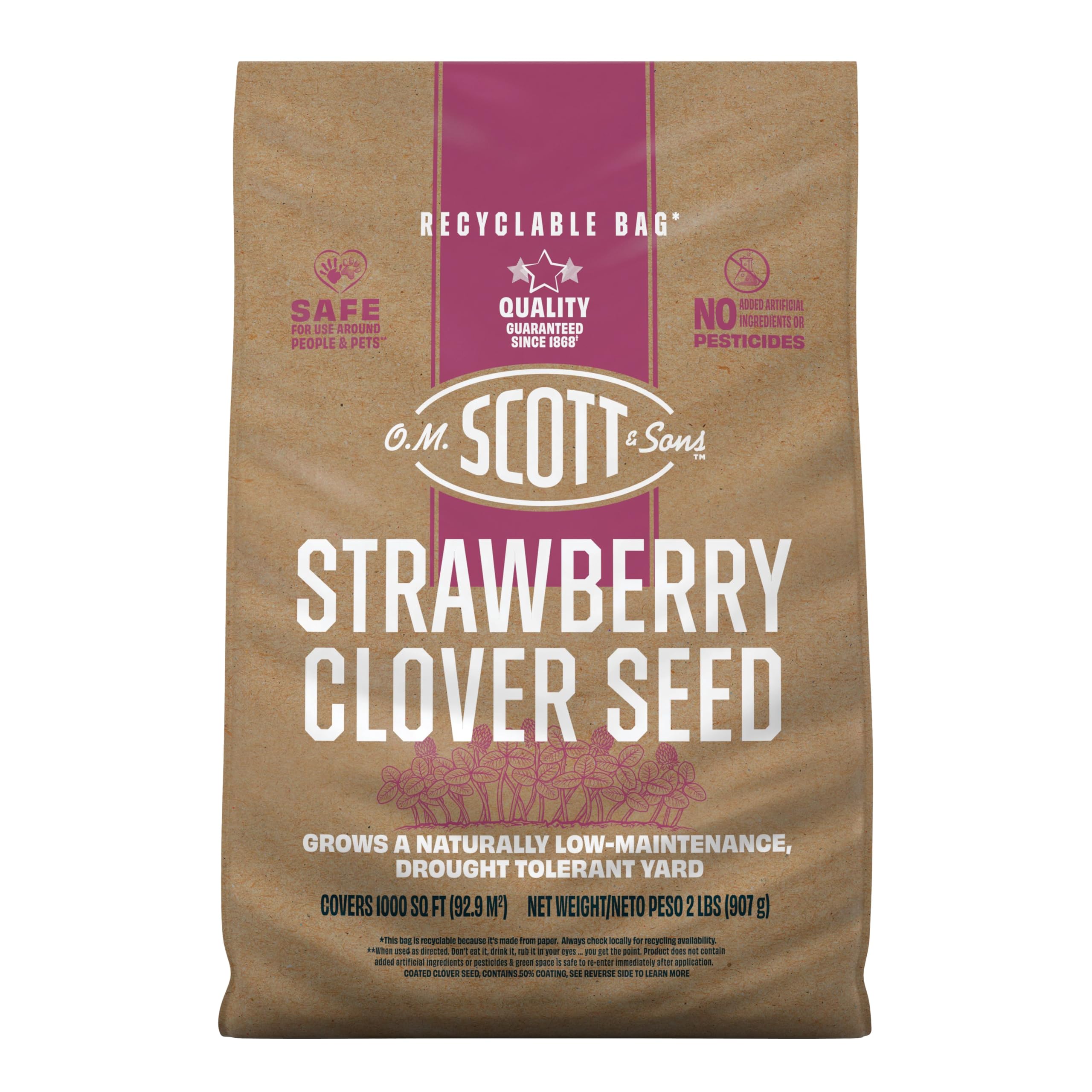
Scotts brings its trusted lawn expertise to the clover category with this strawberry clover blend that includes small pink flowers — a unique aesthetic feature most ground covers lack. The 2-pound bag covers 1,000 square feet, and the product is explicitly marketed as safe for children and pets with no added artificial ingredients or pesticides. The recyclable paper bag is a nice touch for eco-conscious buyers.
Germination has been strong in nutrient-poor clay soil, with the clover’s nitrogen-fixing ability actually improving the soil over time. The drought tolerance is genuine — the clover stays greener longer during dry spells compared to traditional fescue or bluegrass. Multiple customers reported successful establishment even in areas where turf grass was struggling.
The primary concern is germination consistency. While most buyers saw quick sprouting, some reported no germination at all, and a few received a different bag color than advertised, leading to confusion about the exact variety. Hand-sowing is recommended over spreaders to maintain control of seed placement, and protecting seeds from birds with a light straw cover improves success rates significantly.
Why it’s great
- Safe for children and pets with no artificial pesticides
- Drought-tolerant with small pink flowers for visual appeal
- Thrives in poor clay soil and enriches it with nitrogen
- Recyclable paper packaging reduces plastic waste
Good to know
- Germination can be hit-or-miss depending on soil contact and birds
- Some orders received wrong bag color or variety
5. Perennial Farm Marketplace Lysimachia nummularia (Creeping Jenny) – 1 Quart

This single quart pot of Creeping Jenny is the most budget-friendly way to test this vigorous spreader before committing to a larger planting. Hardy in USDA Zones 3 through 8, it handles a range of lighting from full sun to part shade, making it versatile for tricky spots like the base of a downspout or a shaded woodland edge. The fragrant yellow flowers in May add a subtle sensory bonus that seeds cannot provide.
Shipping packaging for this seller has earned rare praise — multiple customers described it as the best they have ever seen for live plants, with the plant arriving intact, properly moist, and without any soil spillage even after rough handling during transit. The plant is fully rooted in the quart pot and ready for immediate transplanting.
Be mindful of its aggressiveness. The species spreads rapidly through root nodes that form wherever a stem touches moist soil, so it can overwhelm neighboring plants if not contained. It is ideal for filling in between stepping stones or spilling over a container edge, but avoid planting it in small, structured garden beds where it may need constant trimming to stay in bounds.
Why it’s great
- Exceptional packaging ensures live plants arrive healthy
- Fragrant yellow flowers provide seasonal interest
- Highly adaptable to sun or shade with consistent moisture
- Fast-rooting nodes create quick coverage on banks and slopes
Good to know
- Aggressive spreader may require edging in formal garden beds
- Does not ship to several western states (AK, AZ, CA, CO, ID, MT, NV, OR, UT, WA, HI)
FAQ
Will creeping ground cover choke out existing grass?
How do I control the spread of Creeping Jenny in my garden beds?
Can I walk on a clover lawn every day?
Final Thoughts: The Verdict
For most users, the best creeping ground cover winner is the Micro Clover Seed from Mountain Valley Seed Company because it combines fast germination, true no-mow growth height, and exceptional density in a single pound bag. If you want immediate visual impact and have consistently moist soil, grab the Creeping Jenny 4-Pack for quick coverage of small shady spots. And for a pet-friendly, drought-tolerant lawn replacement that softens the look of a backyard, nothing beats the O.M. Scott Strawberry Clover with its charming pink flowers.

Mo Maruf
I created WellFizz to bridge the gap between vague wellness advice and actionable solutions. My mission is simple: to decode the research and give you practical tools you can actually use.
Beyond the data, I am a passionate traveler. I believe that stepping away from the screen to explore new environments is essential for mental clarity and physical vitality.