Our readers keep the lights on and my smoothie glass nicely filled. As an Amazon Associate, I earn from qualifying purchases.
A mountain bike crankset is the mechanical core where your power meets the trail, and choosing the wrong one can turn every pedal stroke into a compromise between durability, weight, and drivetrain compatibility. A poorly matched crank arm bends chainrings, causes dropouts under load, and forces you to compensate with inefficient body positioning when climbing technical sections. The right crankset delivers immediate stiffness, precise chainline alignment, and the specific spindle interface your frame demands — without those compromises.
I’m Mohammad Maruf — the founder and writer behind WellFizz. I’ve spent hundreds of hours analyzing spindle geometries, chainring tooth profiles, alloy grades, and real-world customer feedback across the full spectrum of mountain bike cranksets to build this guide.
Whether you’re upgrading a budget build or chasing grams on a carbon enduro rig, this guide to finding the best crankset for mtb breaks down every material, spline interface, and chainline spec that actually matters on the trail.
How To Choose The Best Crankset For MTB
The wrong crankset creates chainline noise, premature bearing wear, and inefficient power transfer that saps momentum on every climb. Focus on these four variables to match the crankset to your frame and riding style.
Spindle Standard and Bottom Bracket Compatibility
SRAM’s DUB spindle uses a 28.99mm diameter that simplifies compatibility across BSA, BB30, PF30, and BB92 shells with the correct DUB bottom bracket. Hollowtech-style spindles (24mm) are typical on Shimano-compatible designs but require specific Hollowtech bottom brackets. The 29mm spindle on many budget-oriented aftermarket cranksets fits PF30, BB30, and BB89.5 shells but demands precise bearing preload adjustment. Verify your frame’s shell width (68mm, 73mm, 83mm, or 92mm) and internal diameter before selecting a spindle standard — buying the wrong interface means buying a new bottom bracket or returning the entire crankset.
Crank Arm Length and Trail Clearance
Standard lengths range from 165mm to 175mm. Shorter arms (165mm) reduce pedal strikes over rock gardens and allow a lower saddle position for aggressive descending without knee hyperflexion. Longer arms (175mm) provide more torque leverage but increase strike risk on technical trails. Riders with shorter inseams or those running low bottom bracket heights should lean toward 165mm or 170mm cranks. Enduro and downhill riders consistently choose shorter arms to keep pedals clear of obstacles through rough sections.
Chainline Offset and Drivetrain Speed
Boost frames (148mm rear hub spacing) require a 52mm chainline crankset with a 3mm offset chainring to maintain proper chain alignment and prevent dropped chains under load. Non-Boost 135mm or 142mm hubs work with a 49mm chainline. Most modern 1x drivetrains use a direct mount interface (SRAM 3-bolt or 8-bolt) that eliminates the separate spider and reduces weight. The tooth count on the direct mount ring, typically 30T to 34T for mountain biking, should match your climbing demands and cassette range — 32T is the most versatile starting point.
Material Grade and Construction Method
Forged 7000-series aluminum (7075-T6) delivers the best stiffness-to-weight ratio for aluminum cranksets, resisting flex under sprint loads and hard cornering. Forged 6000-series aluminum (6061 or 6066) is slightly heavier and less stiff but significantly more affordable. Carbon fiber arms, like those on the Truvativ Descendant Carbon, save approximately 150 grams over aluminum but require careful torque specification during installation to avoid crushing the composite structure. CNC-machined alloy chainrings wear faster than stamped steel rings but offer weight savings and improved mud shedding through wider tooth profiles.
Quick Comparison
On smaller screens, swipe sideways to see the full table.
| Model | Category | Best For | Key Spec | Amazon |
|---|---|---|---|---|
| Truvativ Descendant Carbon Eagle Dub | Carbon Premium | Weight‑conscious enduro racers | 555g carbon arms, Boost 52mm chainline | Amazon |
| SRAM GX Eagle Boost 165mm | Mid-Range | Boost‑frame trail & enduro bikes | Forged 7000 series, 52mm chainline | Amazon |
| SRAM GX Eagle Dub 175mm | Mid-Range | All‑mountain with 175mm preference | Forged 7000 series, 49mm chainline | Amazon |
| SRAM GX Eagle Dub 165mm (Lunar) | Mid-Range | Short‑crank seekers on 135mm hubs | Forged 7000 series, 49mm chainline | Amazon |
| SRAM GX Eagle Dub Boost Groupset | Complete Drivetrain | Full 1×12 conversion projects | 10‑52T range, 32T direct mount ring | Amazon |
| SRAM NX Eagle 165mm Dub | Entry-Level | Budget upgrade to 12‑speed | 6000 series forged, 32T steel ring | Amazon |
| SRAM NX Eagle 175mm Dub | Entry-Level | Budget long‑crank 12‑speed build | 6000 series forged, 49mm chainline | Amazon |
| BUCKLOS 170mm Hollowtech | Budget | Cost‑sensitive 1x conversions | 7075 alloy, 32T wide/narrow ring | Amazon |
| CobraCrawler Ultralight 170mm | Budget | Multiple speed compatibility needs | 7075 forged, 29mm spindle, 32T ring | Amazon |
In‑Depth Reviews
1. Truvativ Descendant Carbon Eagle Dub Crankset – Boost
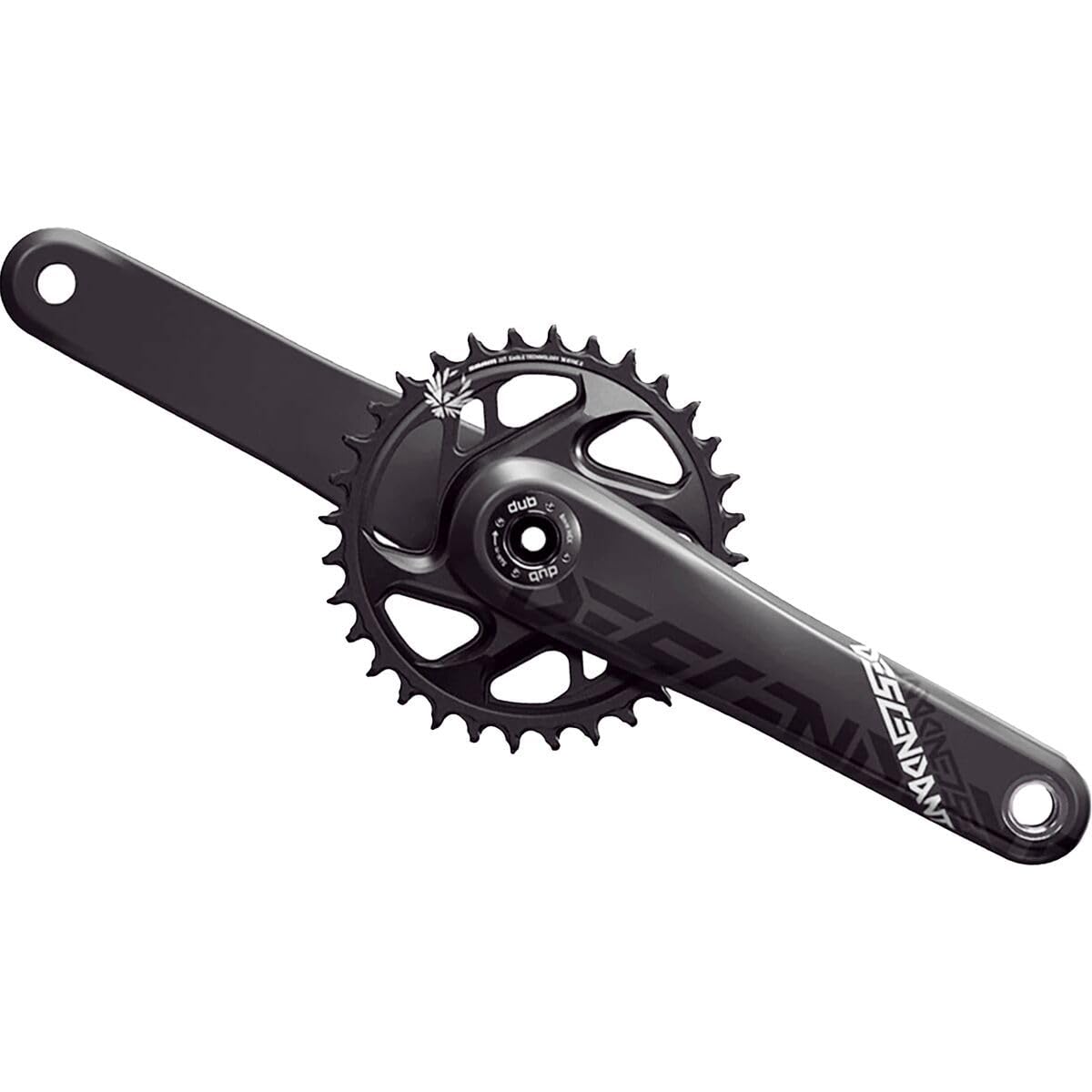
The Truvativ Descendant Carbon Eagle Dub is the highest-performance option in this lineup, combining a full carbon fiber arm construction with SRAM’s DUB spindle and an integrated X-SYNC 2 direct mount chainring. At 555 grams, it sheds significant rotational mass compared to aluminum alternatives while maintaining the torsional stiffness needed for aggressive enduro riding and hard cornering exits. The Boost 52mm chainline aligns precisely with 148mm rear hubs, eliminating chain rub and improving shift consistency under load.
Riders upgrading from entry-level aluminum cranks report an immediate reduction in pedal feedback vibration and a noticeably stiffer platform when sprinting out of berms. The included 32T X-SYNC 2 ring features alternating tooth profiles that actively shed mud and maintain chain engagement even in wet loam conditions. The carbon arms are wrapped with a protective clear film that prevents trail debris from chipping the layup — a detail that extends the finish lifespan significantly.
Installation requires a DUB bottom bracket specific to your frame’s shell standard, and the crank arm preload must be set with the DUB adjustment ring according to SRAM’s 0.5–1.5 Nm torque specification. The carbon interface is intolerant of over-torque, so a calibrated torque wrench is mandatory. For riders targeting a weight-weenie build or those who routinely push their bike through technical enduro stages, this crankset delivers the highest stiffness per gram of any option here.
Why it’s great
- Extremely light 555g carbon construction reduces rotating mass
- X-SYNC 2 chainring provides superior mud clearance and chain retention
- Stiff DUB spindle interface improves power transfer under sprint loads
Good to know
- Requires a DUB bottom bracket (sold separately)
- Carbon arms demand precise torque specs during installation
- Premium cost compared to aluminum alternatives
2. SRAM GX Eagle Boost Crankset 165mm
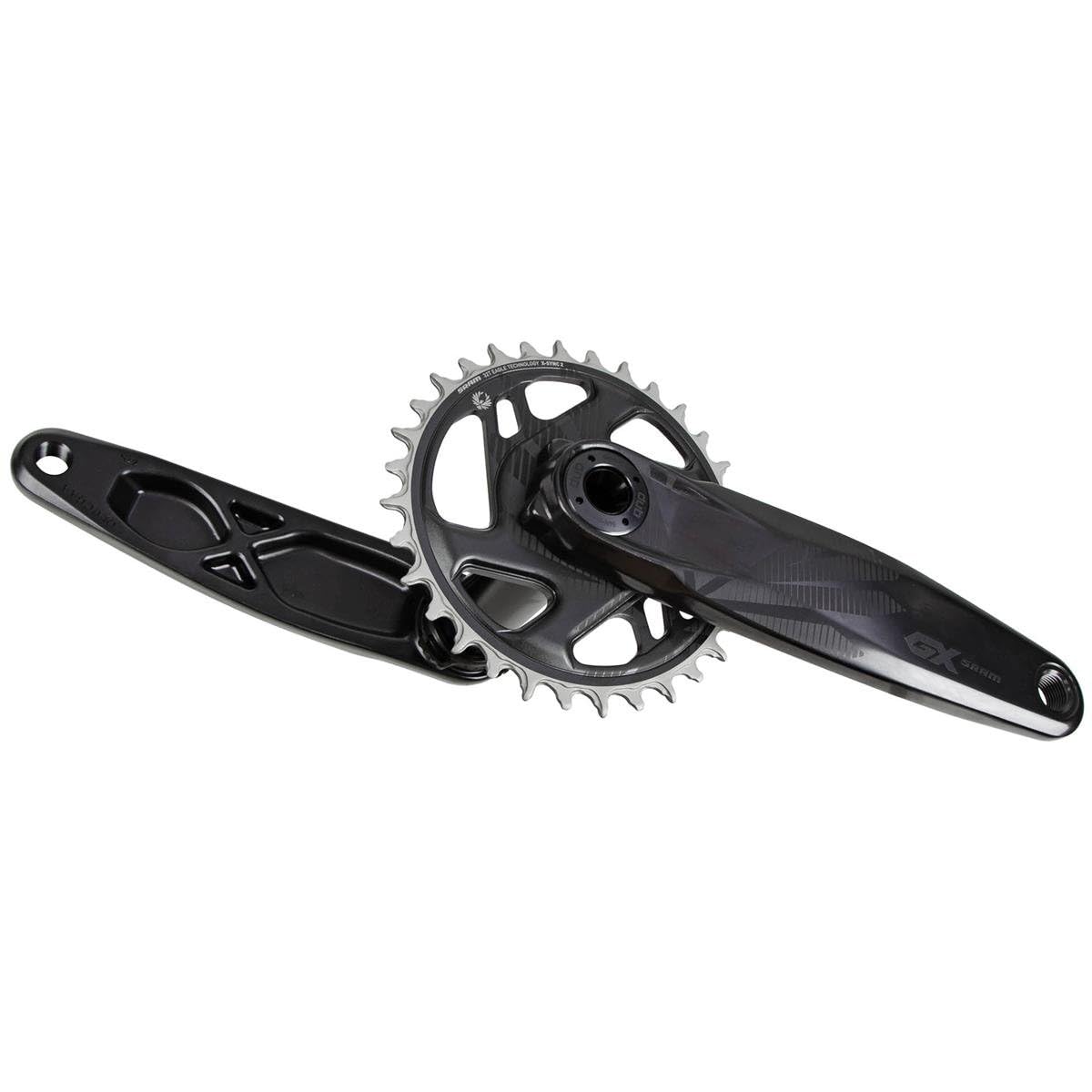
The SRAM GX Eagle Boost Crankset bridges the gap between entry-level NX and premium X01 by using forged 7000-series aluminum arms that offer stiffness approaching carbon at a fraction of the cost. The 165mm arm length is deliberately short to minimize pedal strikes on low-bottom-bracket enduro frames, and the Boost 52mm chainline pairs with 148mm rear hubs to keep the drivetrain quiet and efficient through chunky sections. The direct mount X-SYNC 2 ring is fabricated from steel, which extends chainring life considerably compared to aluminum rings.
Owners consistently note that the DUB spindle simplifies bottom bracket selection compared to older GXP standards, and the 28.99mm diameter interface reduces bearing stress by distributing load across a wider surface area. The 165mm length has become a favorite among riders who found 170mm cranks producing frequent pedal strikes on trail features. Shortening the crank also allows a lower saddle position for descending, improving center-of-gravity control without compromising climbing biomechanics.
The crank arms come in a lunar gray finish that hides wear better than polished or black surfaces. A minor caveat is that the Boost version uses a 3mm offset chainring, while the standard GX uses a 6mm offset — Verify your frame’s chainline requirement before ordering to avoid a mismatch that pushes the chainring too close to the chainstay.
Why it’s great
- 7000-series forged aluminum provides high stiffness with moderate weight
- 165mm length dramatically reduces pedal strikes on technical terrain
- Steel X-SYNC 2 ring outlasts aluminum alternatives significantly
Good to know
- Boost 52mm chainline only compatible with 148mm rear hubs
- Lunar finish may not match all frame color schemes
- Requires DUB bottom bracket; not compatible with GXP frames
3. SRAM GX Eagle Dub Crankset – 175mm
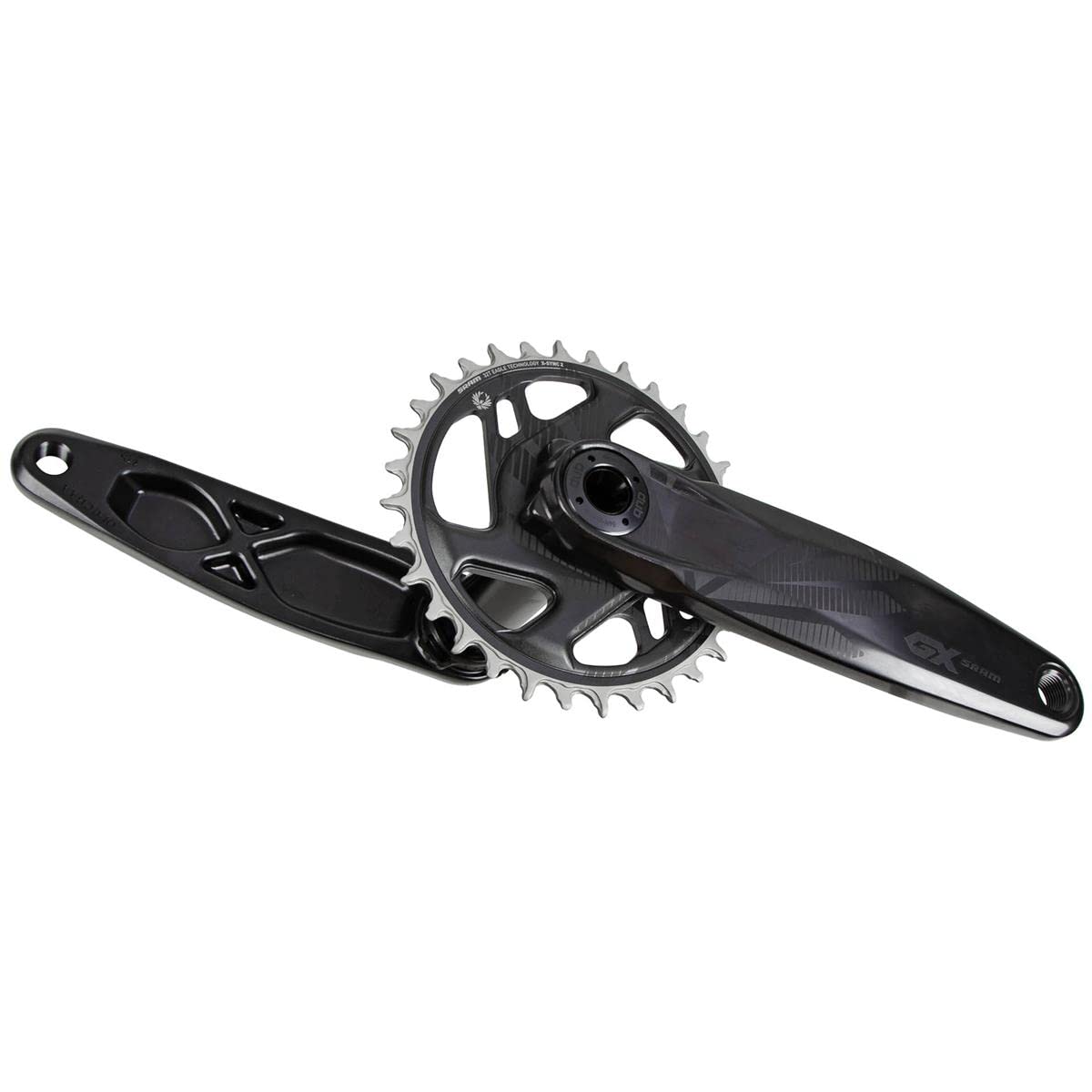
The 175mm version of the SRAM GX Eagle Dub Crankset delivers the same forged 7000-series aluminum construction and DUB spindle interface as its shorter counterpart but with the longer leverage arm that many riders prefer for climbing efficiency and power output. The 49mm chainline is designed for standard 135mm and 142mm rear hub spacing, making it the correct choice for non-Boost frames that account for a significant portion of the existing trail bike fleet. The 175mm length provides a 1.6% mechanical advantage over 170mm cranks, translating to slightly lower pedal force requirements on sustained climbs.
Installation feedback from the community highlights the straightforward DUB interface that eliminates the need for spacers on most 68mm and 73mm BSA shells. The steel X-SYNC 2 direct mount ring shows minimal wear even after extended use in sandy conditions, and the chainline noise is noticeably lower than older GXP-based cranksets. Owners who accidentally ordered the 175mm instead of 170mm noted an increase in pedal strikes, so confirming your preferred length before purchase is essential.
The lunar gray finish resists scratching well, and the crank arm profile includes a subtle chamfer on the outer edge that deflects rocks rather than gouging. This crankset is a direct-fit upgrade for riders moving from SRAM SX or NX who want better stiffness without spending for XO-level parts. Pair it with a DUB bottom bracket specific to your shell standard, and torque the 54Nm crank bolt to spec for reliable retention.
Why it’s great
- Longer 175mm arms provide leverage advantage on steep climbs
- 49mm chainline fits standard 135mm/142mm frames perfectly
- Steel X-SYNC 2 ring delivers excellent durability and quiet running
Good to know
- Pedal strikes increase noticeably on low-bottom-bracket bikes
- Requires a DUB bottom bracket; not compatible with older GXP
- Less suited for aggressive descending compared to 165mm version
4. SRAM GX Eagle Dub Crankset – 165mm (Lunar)

This 165mm SRAM GX Eagle Dub Crankset is essentially the same forged 7000-series aluminum core as the Boost version but configured with a standard 49mm chainline for use on non-Boost frames. It is an ideal upgrade path for riders with 135mm or 142mm rear hub spacing who want the clearance and biomechanical advantages of shorter cranks without switching to a Boost-compatible frame. The DUB interface accepts a wide array of bottom bracket shells, including BSA, BB30, PF30, and BB92, depending on the specific DUB BB purchased separately.
Users report that the 165mm length eliminates pedal strikes on rock gardens where 175mm cranks would regularly catch, and the shorter stroke reduces knee strain for riders with shorter inseams or a history of patellar issues. The direct mount X-SYNC 2 chainring is a steel unit that maintains consistent tooth engagement even after prolonged use in gritty conditions. The arm finish is a subtle lunar gray with a matte texture that does not show smudges or small scratches easily.
One point to note: the standard non-Boost GX crankset comes with a 6mm offset chainring, which pushes the chainring slightly outward. If your frame has tight chainstay clearance, measure the gap between the current ring and stay before ordering. Some riders found that switching to a 3mm offset ring cleaned up the chainline on frames with Boost spacing adapted to 142mm hubs.
Why it’s great
- 165mm arms provide excellent ground clearance for technical descending
- 49mm chainline suits standard 135mm/142mm hub spacing
- Steel X-SYNC 2 ring is highly durable and reduces drivetrain noise
Good to know
- 6mm offset ring may contact tight chainstays on some frames
- Requires separate DUB bottom bracket purchase
- Not Boost-compatible; 52mm chainline version needed for 148mm hubs
5. SRAM GX Eagle Dub Boost Groupset
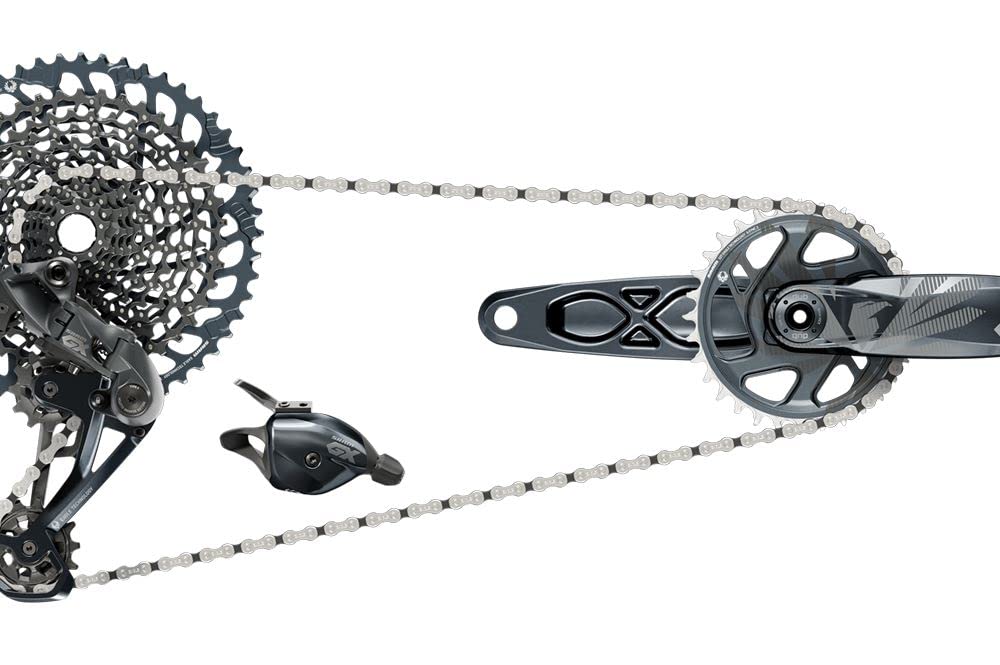
The SRAM GX Eagle Dub Boost Groupset is not merely a crankset — it is a complete 1×12 drivetrain that includes the DUB crankset, rear derailleur, trigger shifter, cassette, and chain in one package. The crankset itself shares the same forged 7000-series aluminum construction and Boost 52mm chainline as the standalone GX Boost crank, but the 10-52T cassette provides a 520% gear range that can handle steep alpine climbs without a front derailleur. The X-SYNC 2 chainring on the crank is a 32T steel unit that pairs with the wide-range cassette for balanced gearing across most trail profiles.
Conversion builds — upgrading from older 2×9 or 2×10 systems — benefit from the groupset’s matched components that guarantee shift indexing compatibility out of the box. The GX derailleur features updated cage architecture that maintains chain wrap on 52T cogs, and the trigger shifter uses a single lever push for downshifts with a short, positive throw. Owners who converted their bikes report that the groupset shifted flawlessly under pedaling load and never dropped a chain even through repeated square-edge hits.
Installation requires compatible wheel-hub driver body (XD driver is needed for the 10-52T cassette), and the GX crankset demands a DUB bottom bracket specific to your frame shell. The entire package saves money compared to buying crankset, derailleur, shifter, cassette, and chain individually, making it the most cost-effective path to a full Eagle drivetrain upgrade. Note that shift cable housing is not included; you will need Jagwire or similar housing to complete the install.
Why it’s great
- Complete drivetrain eliminates component mismatch risks
- 520% gear range handles steep climbs and fast descents
- Matched GX components shift reliably under pedaling load
Good to know
- Requires XD driver body on rear hub for cassette installation
- Cable housing not included; must be purchased separately
- Boost 52mm chainline only; not compatible with non-Boost frames
6. SRAM NX Eagle 165mm Dub Crankset
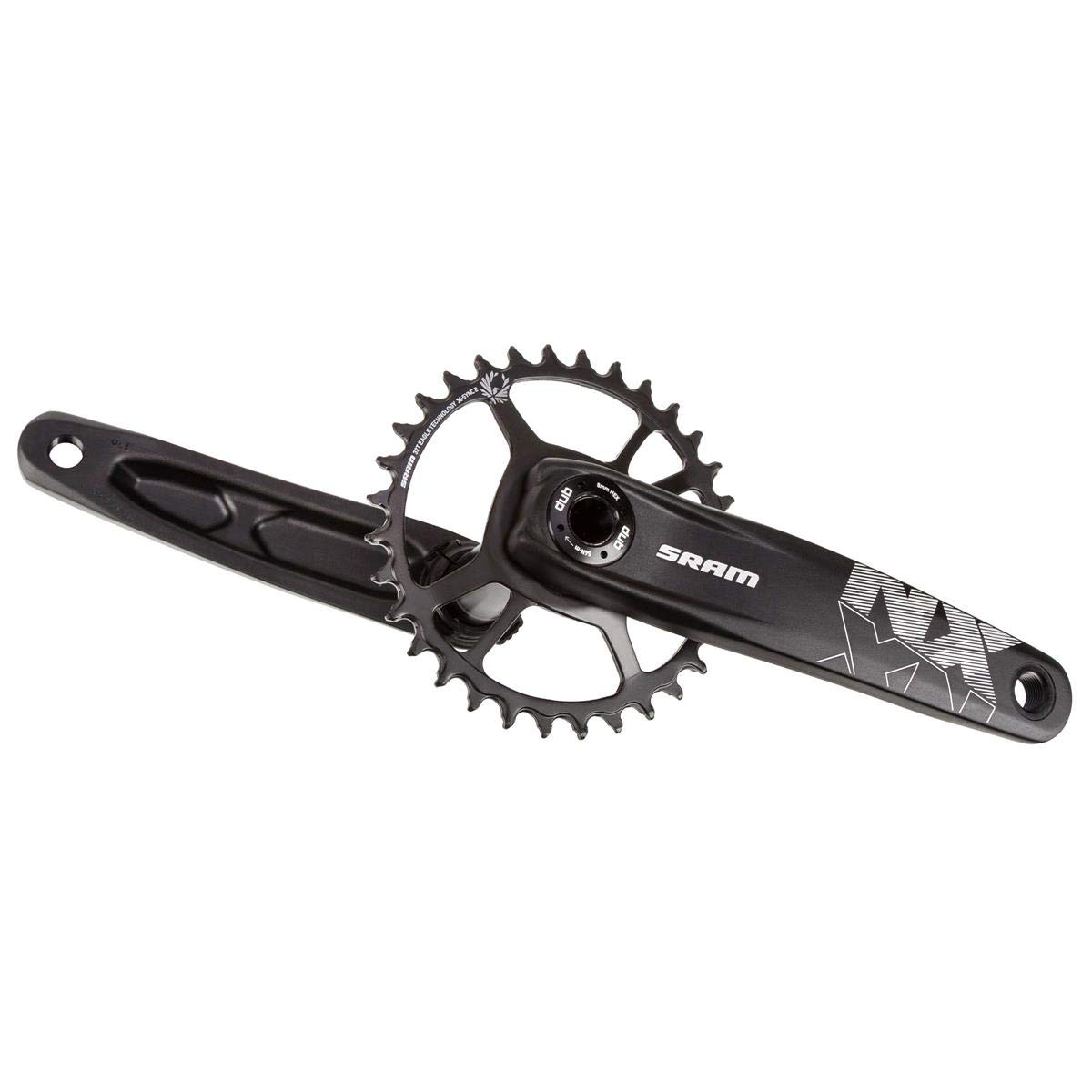
The SRAM NX Eagle 165mm Dub Crankset is the most budget-conscious way to get DUB spindle technology and a 12-speed direct mount chainring on your mountain bike. The arms are forged from 6000-series aluminum, which adds roughly 150 grams compared to the GX’s 7000-series construction but preserves the same 28.99mm DUB interface and 49mm chainline. The 165mm length provides the same ground clearance advantages as pricier short cranks, making it a popular choice for riders who want to test shorter crank arms without committing to a higher-tier component.
The included chainring is a 32T steel X-SYNC 2 unit that offers the same wear resistance and mud-shedding tooth profile as the GX ring — the difference is purely in the arm material and bearing preload adjuster, which uses a simpler plastic ring instead of the machined aluminum one on GX. Riders report that the NX crank works reliably with SRAM’s full 12-speed Eagle drivetrain and that the DUB interface reduces creaking compared to older square-taper or GXP systems.
Be aware that the NX crankset does not include the DUB bottom bracket — factor that into your total upgrade cost. The 6000-series arms are slightly more prone to surface scratching than the 7000-series alloy, but the structural integrity under normal trail riding remains adequate. This is a solid entry point for transitioning from a 3x or 2x setup to a modern 1×12 Eagle drivetrain.
Why it’s great
- Affordable entry into DUB spindle and 12-speed compatibility
- 165mm length provides excellent strike clearance on technical trails
- Steel X-SYNC 2 chainring matches GX durability standards
Good to know
- Heavier 6000-series arms compared to GX and X01 options
- DUB bottom bracket not included; adds to total cost
- Plastic preload adjuster feels less premium over time
7. SRAM NX Eagle 175mm Dub Crankset
The 175mm variant of the SRAM NX Eagle Dub Crankset shares the same 6000-series forged aluminum arms and steel X-SYNC 2 chainring as the 165mm version, but extends the crank length to 175mm for riders who want maximum torque leverage on sustained climbs. The 49mm chainline matches standard 135mm and 142mm rear hub spacing, and the DUB interface ensures compatibility with the same broad range of bottom bracket shells as the higher-tier SRAM cranks. The 175mm length provides a measurable mechanical advantage over 170mm cranks, which riders who prioritize climbing torque over descending clearance will appreciate.
Customer reports confirm that the crankset installs smoothly on BSA73 and PF30 frames with the appropriate DUB bottom bracket, and the steel chainring holds up well against rock strikes that would gouge aluminum rings. The arms are finished in black anodizing that resists corrosion, though the 6000-series alloy does show crease marks under high torque loads more readily than the 7000-series material used in the GX line. For riders on a strict budget who need 175mm arms to match their preferred pedaling mechanics, this is the most cost-effective option in the list.
Keep in mind that the 175mm length increases pedal strike frequency on bikes with low bottom bracket heights, particularly when cornering through uneven terrain. If your frame already has a sub-330mm bottom bracket drop, consider the 165mm NX or stepping up to a shorter GX crank instead. The NX does not include the bottom bracket cups, so calculate that cost before purchasing.
Why it’s great
- 175mm leverage provides climbing torque advantage
- Steel X-SYNC 2 ring is highly resistant to wear and impact
- Black anodized finish hides trail scratches well
Good to know
- Increases pedal strike risk on low-bottom-bracket bikes
- 6000-series arms heavier and less stiff than GX 7000-series
- DUB bottom bracket required and not included with crankset
8. BUCKLOS MTB Crankset 170mm Hollowtech
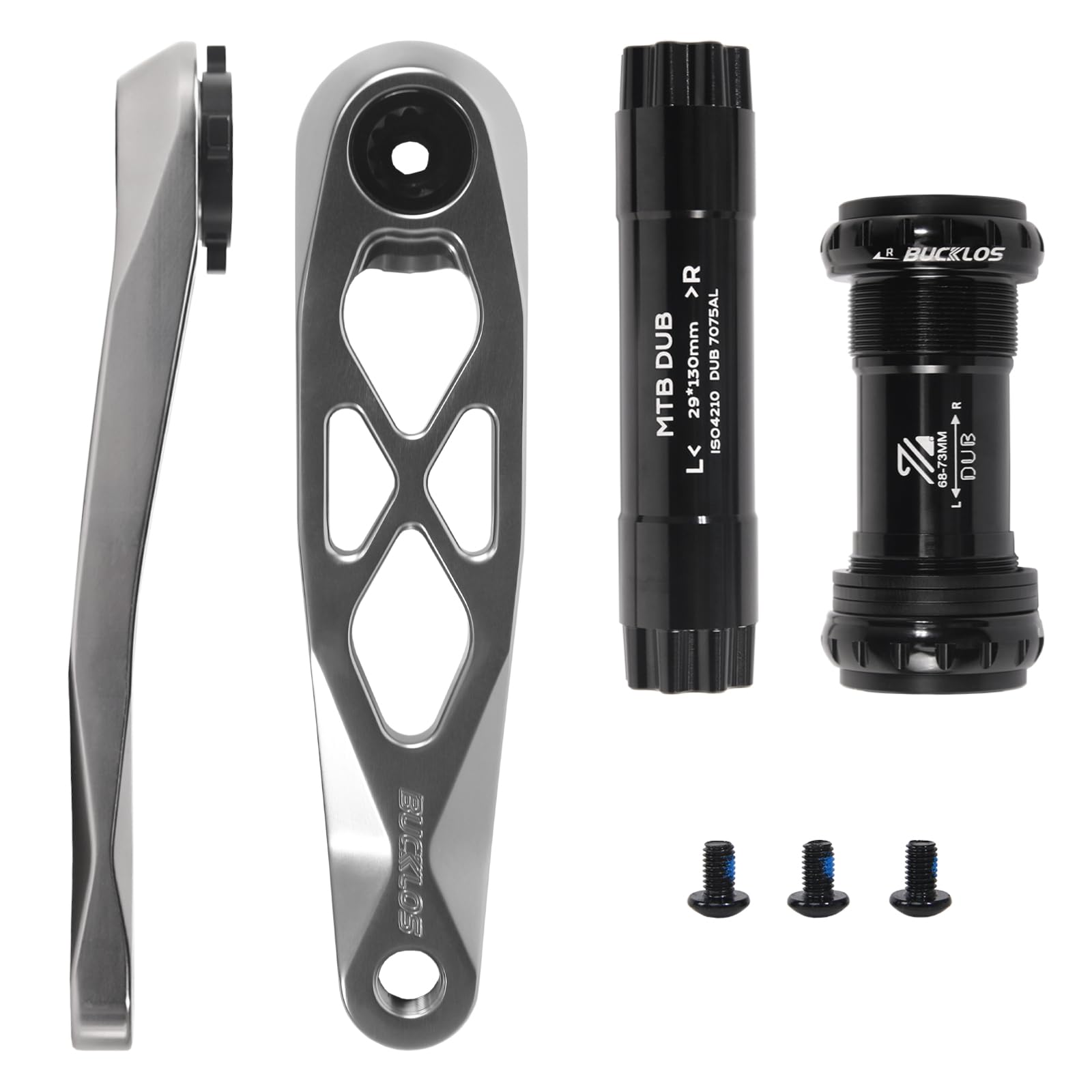
The BUCKLOS Crankset uses forged 7075 aluminum for both the crank arms and the chainring, which is a higher alloy grade than the 6000-series found on entry-level SRAM components. The 170mm arms are designed around a 29mm spindle that mimics the DUB diameter, making it compatible with a wide range of bottom brackets including BSA, PF30, BB30, and BB92 when paired with the correct adapter. The wide-narrow tooth profile on the 32T ring is designed to maximize chain retention across 8, 9, 10, and 11-speed drivetrains, though it is not optimized specifically for SRAM Eagle 12-speed chains.
Users report that the crankset offers a smooth power transfer feel once the spindle bolt is properly torqued, though a consistent note across reviews is that the spindle bolts have a tendency to loosen during the first few rides. Applying blue Loctite to the spindle bolt and re-torquing after the break-in period resolves this issue reliably. The 7075 alloy arms resist flex well under sprint loads, and the titanium-colored anodized finish provides a distinct aesthetic compared to the black-dominated SRAM lineup.
The primary tradeoff is that the bottom bracket included in some configurations has been described as having insufficient grease from the factory, leading to premature bearing roughness. Repacking the bearings with quality grease before installation and applying Loctite to the spindle bolt makes this a reliable budget option for riders converting older frames to a 1x setup. It is not recommended for hard enduro or e-bike applications where torque loads are consistently high.
Why it’s great
- 7075 forged aluminum arms are stiffer than typical budget alloy
- Wide-narrow ring improves chain retention across multiple speeds
- Distinct titanium anodized finish stands out from standard black
Good to know
- Spindle bolts prone to loosening without thread locker
- Included bottom bracket often needs grease repacking
- Not optimized for SRAM Eagle 12-speed chain profile
9. CobraCrawler Ultralight MTB Crankset 170mm

The CobraCrawler Ultralight Crankset is built entirely from forged 7075-T6 aluminum, including the chainring, and is available in multiple anodized finishes including polished titanium and rainbow. The 29mm spindle length of 130mm is designed to fit the same range of bottom bracket shells as the BUCKLOS — BSA, PF30, BB30, BB89.5, and BB92 — with a DUB-compatible adjustment ring included. The 170mm crank arms are offered alongside 165mm and 175mm options, and the chainring teeth are profiled for 8 through 12-speed chains, making this one of the most speed-agnostic cranksets on the list.
Reviews highlight that the crankset looks premium for the price point, but several consistent quality issues emerge. The chainring is manufactured from a relatively soft batch of 7075, and users report that it bends or deforms after minor rock strikes, causing chain drops that are difficult to correct trailside. The pedal threads on the left crank arm have been reported to have a tight section that makes torquing pedals to spec difficult, and this can interfere with power meter pedal installation. The included bottom bracket has been widely described as having poor bearing smoothness and insufficient longevity.
This crankset is best suited for riders who prioritize aesthetic customization and low upfront cost over long-term durability — think flow trails or pump track use where impacts are minimal. If you choose this option, plan to replace the included bottom bracket immediately with a quality unit from Wheels Manufacturing or Chris King, and regularly inspect the chainring for signs of tooth deformation after every few rides on rocky terrain.
Why it’s great
- Fully forged 7075-T6 construction at a competitive price point
- Multiple anodized color options for custom builds
- Compatible with 8 to 12-speed drivetrains out of the box
Good to know
- Chainring bends easily from minor rock impacts
- Included bottom bracket bearings are low quality
- Pedal threading inconsistencies reported on some units
FAQ
How do I know if I need a Boost or non-Boost crankset?
Can I install an SRAM Eagle crankset on a Shimano drivetrain?
What crank arm length should I choose for trail riding?
Do I need a new bottom bracket to install a DUB crankset?
Why does my chain keep coming off on rough terrain after installing a new crankset?
Final Thoughts: The Verdict
For most riders, the best crankset for mtb winner is the SRAM GX Eagle Boost 165mm because it delivers the stiffness of 7000-series forged aluminum, the ground clearance of a short 165mm arm, and the Boost 52mm chainline that modern trail and enduro frames demand — all at a price point that avoids carbon-tier spending. If you want the absolute lightest rotating mass for race day, grab the Truvativ Descendant Carbon Eagle Dub. And for a complete drivetrain rebuild on a non-Boost frame, nothing beats the versatility and value of the SRAM GX Eagle Dub 165mm (Lunar).

Mo Maruf
I created WellFizz to bridge the gap between vague wellness advice and actionable solutions. My mission is simple: to decode the research and give you practical tools you can actually use.
Beyond the data, I am a passionate traveler. I believe that stepping away from the screen to explore new environments is essential for mental clarity and physical vitality.