Our readers keep the lights on and my smoothie glass nicely filled. As an Amazon Associate, I earn from qualifying purchases.
Setting up a dedicated CrossFit space means facing one brutal truth: standard puzzle mats simply disintegrate under dropped barbells, heavy kettlebells, and relentless burpee traffic. The thin foam tiles found at big-box stores compress permanently under a 250-pound deadlift, leaving your equipment wobbling and your concrete floor exposed to cracks. Serious athletes need flooring that absorbs impact, stops slipping, and endures the daily grind of Olympic lifting, box jumps, and sprints without breaking down at the seams.
I’m Mohammad Maruf — the founder and writer behind WellFizz. I’ve spent hundreds of hours analyzing the material science, thickness specs, and real-world durability data behind gym flooring to identify which products actually hold up under the punishing demands of CrossFit-style training.
This guide breaks down the top contenders in the best crossfit flooring category, comparing thickness, rubber-to-foam construction, and interlocking security so you can choose the right foundation for your home or affiliate box.
How To Choose The Best Crossfit Flooring
Selecting the right flooring for a CrossFit gym requires balancing impact protection, surface grip, and long-term durability. Here are the critical factors to consider before you buy.
Material Construction: Rubber vs. EVA Foam
Pure rubber mats deliver the highest durability and weight capacity, making them ideal for heavy deadlifts and dropped barbells. However, they are dense, heavy, and provide less shock absorption for your joints. Rubber-top tiles with an EVA foam base offer a middle ground: the rubber surface provides grip and abrasion resistance, while the foam layer cushions landings from box jumps and burpees. Avoid all-foam tiles for high-impact zones — they compress and lose shape under repeated heavy loads.
Thickness and Density
Thickness directly correlates with impact absorption and floor protection. For CrossFit, a minimum of half an inch is recommended for moderate training, while three-quarters to one inch is ideal for Olympic lifts and heavy dumbbell drops. Density matters too — a thin, high-density rubber mat can outperform a thick, low-density foam tile. Look for tiles with a spec of at least 1 inch of combined rubber and EVA layers for the best balance of joint safety and subfloor protection.
Interlocking System and Surface Texture
A secure puzzle-fit edge prevents tiles from shifting during dynamic movements like sprinting or lateral lunges. Upgraded locking mechanisms with larger tabs provide a tighter hold than standard jigsaw edges. The surface texture should be non-slip but not abrasive — a matte rubber finish with a subtle grain pattern offers excellent traction for bare feet and gym shoes without tearing up your hands during push-ups or burpees. Reversible tiles add value by doubling the lifespan when one side wears out.
Quick Comparison
On smaller screens, swipe sideways to see the full table.
| Model | Category | Best For | Key Spec | Amazon |
|---|---|---|---|---|
| SUPERJARE 1″ Thick | Rubber Top | Heavy drops & HIIT | 1 inch / EPDM Rubber + EVA | Amazon |
| ProsourceFit ¾-inch | Rubber Top | Balanced cushion & durability | 0.75 inch / Rubber + EVA | Amazon |
| AIRHOP 0.79in | Rubber Top | Secure locking & non-slip | 0.79 inch / Recycled Rubber + EVA | Amazon |
| Xspec 1″ Extra Thick | EVA Foam | Cushion & affordability | 1 inch / Reversible Dual-Side EVA | Amazon |
| HIAARO 0.56in | Rubber Top | Light gym & yoga | 0.56 inch / Rubber + EVA | Amazon |
| IncStores 4’x6′ | Pure Rubber | Heavy machinery & horse stalls | 0.38 inch / Vulcanized Rubber | Amazon |
| Sivan Fitness ½-inch | Rubber Top | Multi-purpose home gym | 0.5 inch / Rubber + EVA | Amazon |
In‑Depth Reviews
1. SUPERJARE 1″ Extra-Thick Rubber Top Exercise Mat
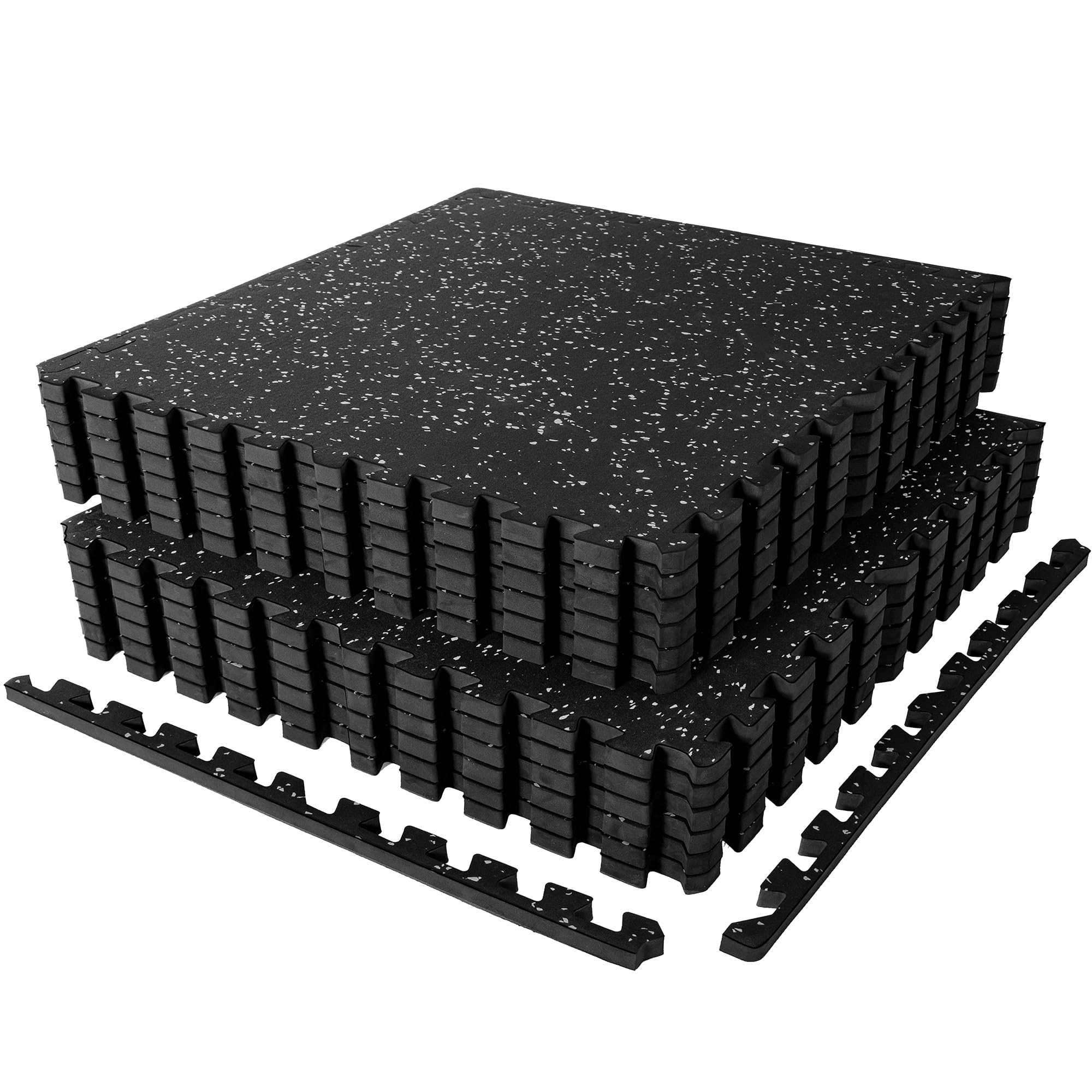
The SUPERJARE tile hits the sweet spot between thickness and density. At a full 1 inch, the high-density EVA foam base paired with a strong EPDM rubber top creates a platform that absorbs the shock of heavy deadlifts and dropping a loaded barbell without transferring force to the subfloor. The matte rubber surface delivers serious traction — no slipping during cleans or split jerks — and the interlocking edges stay tight even after months of daily use. Multiple reviewers note that this flooring stands up to intense pressure without compressing, making it a reliable foundation for any dedicated CrossFit area.
Unlike thinner hybrid tiles that bottom out under heavy loads, the SUPERJARE maintains its shape and cushioning integrity. The rubber layer also dampens impact noise significantly, so training in a garage or second-story room won’t disturb the rest of the household. The 12-piece set covers 48 square feet, which is enough for a squat rack area or a dedicated lifting platform.
Odor out of the box is minimal compared to pure rubber mats, and the tiles clean easily with a damp cloth. The only real trade-off is weight — each tile is substantial, but that solid feel translates to confidence when you’re moving heavy weights.
Why it’s great
- Full 1-inch thickness with dense EVA base
- Strong EPDM rubber top resists tearing and slipping
- Excellent noise reduction for shared spaces
- Secure interlocking fit that stays aligned
Good to know
- Heavier than all-foam tiles
- Border edges require manual cutting for odd-shaped rooms
2. ProsourceFit Rubber Top Exercise Puzzle Mat ¾-inch
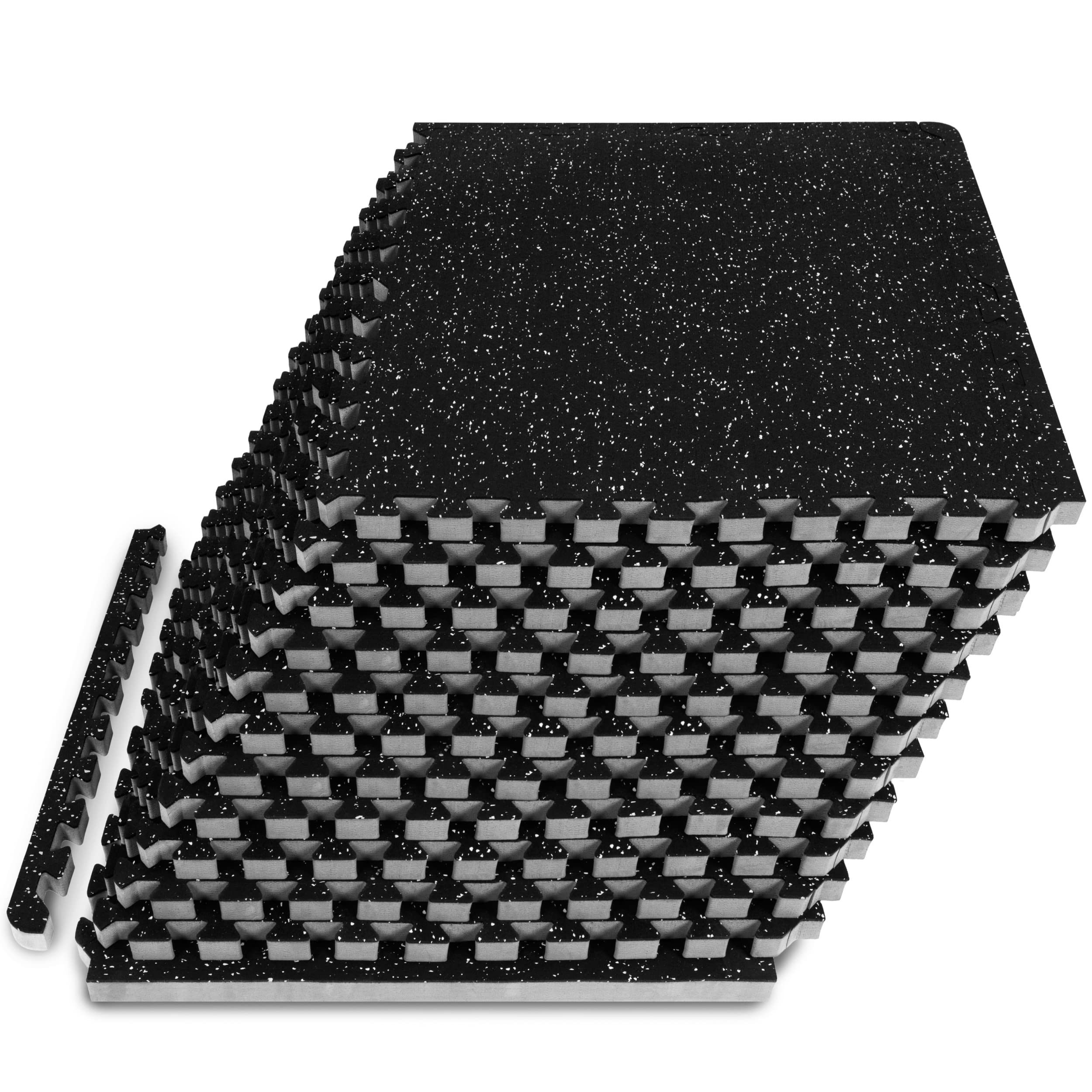
ProsourceFit has been a staple in home gym flooring for years, and this ¾-inch tile shows why. The speckled rubber top provides a non-slip surface that feels secure underfoot during dynamic movements, while the high-density EVA foam underneath cushions landings from box jumps and burpees. Multiple customer reviews highlight that these tiles are significantly more durable than cheaper all-foam alternatives, withstanding repeated dropped dumbbells and loaded barbells without permanent dents.
The jigsaw-style interlocking design makes assembly straightforward, and the included edge pieces give the finished floor a polished look. At 48 square feet per box, you can cover a dedicated lifting area or full workout room. Users report that the tiles hold together well without separating during intense sessions, and the surface cleans quickly after sweaty workouts. The ¾-inch thickness offers a good compromise: more shock absorption than half-inch tiles, but not as tall as the full 1-inch options, keeping the profile lower for transitioning between flooring types.
One minor complaint from a few reviewers is a slight rubber smell when the tiles are new, which dissipates after a few days of airing out. Overall, the ProsourceFit delivers a proven formula that works reliably for daily CrossFit-style training.
Why it’s great
- Proven durability from a trusted brand
- Textured rubber top prevents sliding
- Easy to assemble with clean edge borders
- Good balance of cushion and firmness
Good to know
- May need a non-slip mat underneath on smooth concrete
- Slight rubber odor initially
3. AIRHOP 0.79in Thick Rubber Top Gym Flooring
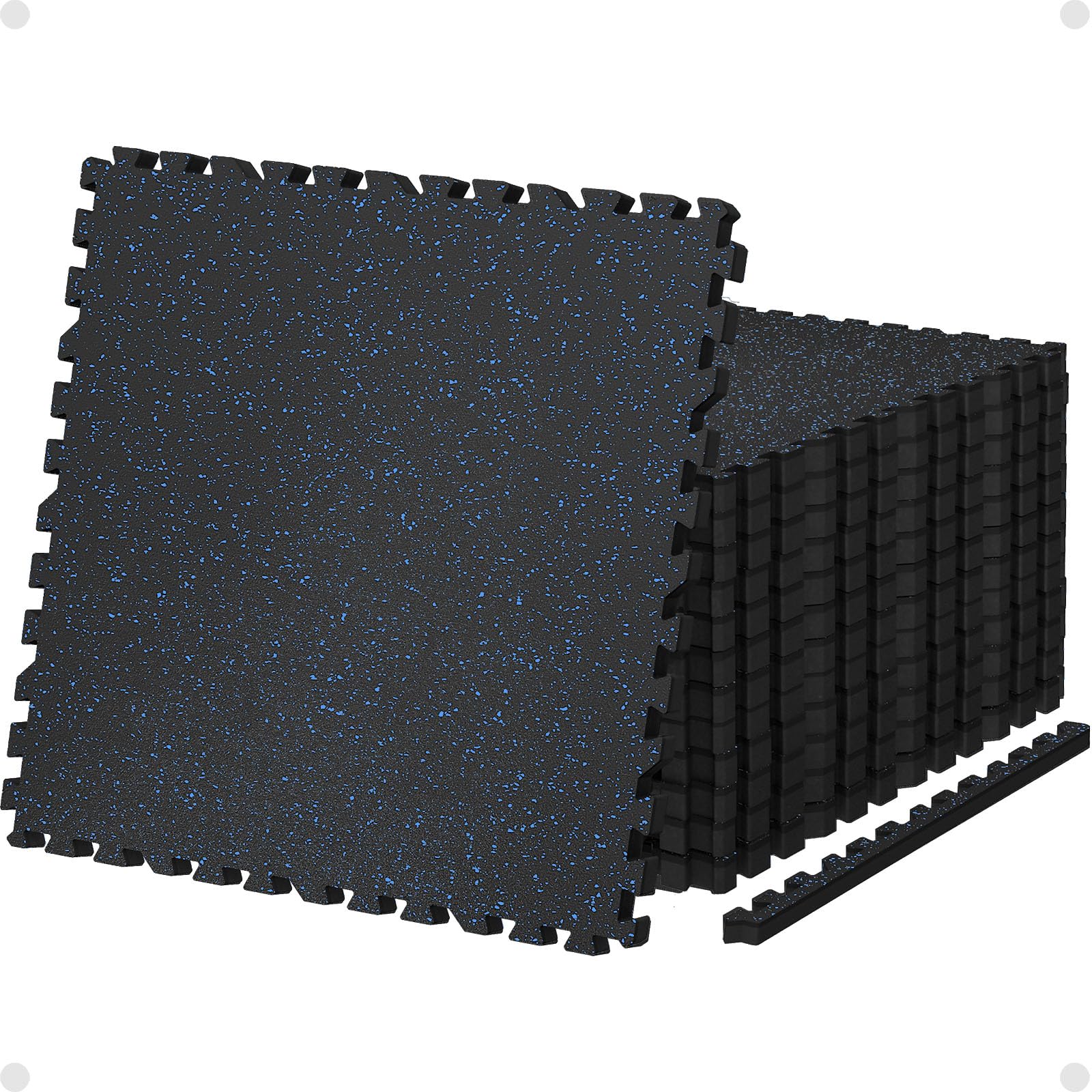
The AIRHOP tiles stand out for their upgraded interlocking system. The larger locking tabs create a noticeably tighter connection between tiles, which is critical for CrossFit movements that involve lateral shuffles, sprints, and heavy equipment dragging. The dual-layer design combines a recycled rubber top with a high-density EVA foam base, delivering a non-slip surface that feels cool to the touch — a pleasant surprise for barefoot training. At 0.79 inches thick, it sits between the standard ¾-inch and full 1-inch options, offering a solid compromise for athletes who want substantial cushion without adding too much height.
Customer feedback consistently praises the build quality: the tiles support heavy machinery and dropped weights without scratching floors, and the waterproof surface makes cleaning spills and sweat simple. Users who purchased multiple sets for larger spaces report that the tiles cut easily with a utility knife for custom fit around racks and benches. The blue accents add a professional aesthetic that matches well with gym equipment from brands like Rogue.
The main consideration is price — it sits at a premium compared to entry-level hybrids, but the upgraded locking security and rubber density justify the investment for serious training environments. The included one leaf (likely an edge or transition piece) may require ordering extras for complete room coverage.
Why it’s great
- Upgraded locking tabs prevent shifting
- Recycled rubber top is durable and non-slip
- Waterproof and easy to clean
- Ideal thickness for versatile training
Good to know
- Premium pricing tier
- May need extra edge pieces for full room borders
4. Xspec 1″ Extra Thick Reversible EVA Gym Foam Mat

The Xspec tile offers serious cushioning at a budget-friendly price point. At a full 1 inch thick, these pure EVA foam tiles provide excellent shock absorption for floor exercises, yoga, and moderate-impact CrossFit movements. The reversible design means each tile has two usable sides with a steel grip pattern, effectively doubling the lifespan — when one side shows wear, flip the tile over for a fresh surface. Customer reviews highlight that these mats hold up well over a year of use, withstanding daily training and even serving as play area protection for kids.
Assembly is straightforward with puzzle-piece edges, and the lightweight foam makes rearranging your gym layout simple. The tiles are water-resistant and noise-absorbing, which helps keep your workout space quiet. However, pure EVA foam has limitations for heavy CrossFit use — dropping loaded barbells or heavy kettlebells can create permanent indentations, and the foam may compress over time under sustained weight from racked barbells or heavy machines. The manufacturer explicitly recommends indoor use only and notes that excessive weight may cause indents.
For athletes focusing primarily on bodyweight WODs, jump rope, and light dumbbell work, the Xspec delivers fantastic value. For those planning to drop heavy weights regularly, consider placing a dedicated rubber deadlift platform on top.
Why it’s great
- Full 1-inch thickness for maximum cushion
- Reversible design extends product life
- Lightweight and easy to assemble
- Great value for the price
Good to know
- Not suitable for heavy weight drops
- May compress under heavy equipment over time
- Indoor use only
5. IncStores 4’x6′ Premium Vulcanized Rubber Mat

The IncStores mat takes a completely different approach — instead of interlocking tiles, it offers a solid 4×6-foot slab of pure vulcanized rubber. At just 3/8-inch thick, it’s far thinner than foam-based options, but the density is dramatically higher. This mat is designed for extreme durability: it can withstand dropped bumper plates, heavy deadlifts, and even horse stall abuse without tearing or compressing. The vulcanized rubber construction makes it moisture-resistant, odor-resistant after initial off-gassing, and impervious to liquid spills.
Customer feedback confirms that this mat excels at vibration dampening. Users with heavy treadmills and Peloton Treads report that the mat eliminates almost all floor vibration, making it ideal for second-story gyms where noise transfer is a concern. The slip-resistant surface keeps equipment stable during intense cardio and lifting sessions. Unlike tile systems, this single-piece mat has no seams to separate, but it is extremely heavy — moving or repositioning it requires significant effort.
The main drawbacks are the initial rubber smell, which can be strong for the first few weeks, and the lack of significant cushion for joint protection. This is a floor protector and vibration damper, not a comfort pad. For athletes who prioritize equipment protection and noise reduction over impact absorption, the IncStores mat is an outstanding choice.
Why it’s great
- Extremely durable vulcanized rubber
- Excellent vibration and noise dampening
- No seams to separate
- Suitable for heavy machinery and dropped weights
Good to know
- Strong initial rubber smell
- Very heavy and hard to reposition
- Minimal cushion for joint protection
6. Sivan Fitness 1/2″ Thick Rubber Top Gym Flooring

The Sivan Fitness tiles come in an 18-pack, covering more square footage than standard 12-tile sets, which makes them a practical choice for larger workout areas. The half-inch rubber-top-over-EVA-foam construction strikes a balance between cushioning and stability, making it suitable for yoga, floor work, light weightlifting, and moderate CrossFit training. The speckled rubber surface provides good grip without being overly abrasive, and the interlocking edges stay connected during daily use as confirmed by multiple long-term reviewers.
Customer feedback notes that these tiles offer a noticeable upgrade over all-foam mats, with the rubber top adding durability and the EVA foam providing enough softness for kneeling exercises and dynamic stretches. Users who have owned the tiles since 2021 report they still look and perform like new, with no separation issues even under a weight bench. The set includes a carry bag for storage or transport, which is a unique convenience feature.
The half-inch thickness is the main limitation for heavy CrossFit use. Dropping loaded barbells or heavy kettlebells on these tiles will likely transfer impact to the concrete below, and repeated heavy drops may cause permanent compression over time. For athletes who train with lighter weights or focus on bodyweight and cardio WODs, the Sivan tiles offer excellent value and versatility.
Why it’s great
- 18-tile set provides extra coverage
- Durable rubber top with soft foam base
- Secure interlocking holds up over years
- Includes carry bag for portability
Good to know
- Only half-inch thick — not for heavy drops
- Some users find it slightly expensive for the thickness
7. HIAARO 0.56in Thick Rubber Top EVA Foam Mats

The HIAARO tiles are a solid entry-level option for setting up a home gym without a big investment. The double-layer construction combines a rubber top for durability with an EVA foam base for cushioning, providing a non-slip surface that protects floors from scratches and scuffs. At just over half an inch thick, these tiles are best suited for lighter training — bodyweight exercises, dumbbell work, yoga, and cardio — rather than heavy Olympic lifting or dropped barbells.
Customer reviews highlight easy installation and a snug fit between tiles, with users reporting that the mats hold together well during floor work and free weight sessions. The black-and-white color scheme keeps the floor looking clean and professional. The detachable borders allow you to create clean edges without needing to cut tiles.
The main trade-off is thickness: at 0.56 inches, these tiles lack the impact absorption needed for high-intensity CrossFit movements that involve dropping weights from overhead. Athletes who plan to deadlift heavy or perform snatches will want to stack these on top of a thicker platform or upgrade to a ¾-inch or 1-inch option. For budget-conscious beginners building their first garage gym, the HIAARO tiles provide a functional foundation that can be upgraded later.
Why it’s great
- Affordable entry-level rubber hybrid
- Easy to assemble with detachable borders
- Holds up well in garage environments
- Non-slip surface for safe training
Good to know
- Thin — not suitable for heavy weight drops
- May require underlayment on rough concrete
FAQ
Can I use pure EVA foam tiles for CrossFit?
What is the minimum thickness recommended for Olympic lifting?
How do I clean and maintain my CrossFit flooring?
Final Thoughts: The Verdict
For most users, the best crossfit flooring winner is the SUPERJARE 1″ Thick because it provides the ideal balance of impact absorption, surface grip, and subfloor protection at a thickness that handles heavy drops. If you want a proven mid-range option with a slightly lower profile, grab the ProsourceFit ¾-inch. And for a pure rubber solution that excels at vibration dampening and will outlast everything else, nothing beats the IncStores 4×6 Vulcanized Rubber Mat.

Mo Maruf
I created WellFizz to bridge the gap between vague wellness advice and actionable solutions. My mission is simple: to decode the research and give you practical tools you can actually use.
Beyond the data, I am a passionate traveler. I believe that stepping away from the screen to explore new environments is essential for mental clarity and physical vitality.