Our readers keep the lights on and my smoothie glass nicely filled. As an Amazon Associate, I earn from qualifying purchases.
Ice climbing demands absolute trust in your equipment, and nothing connects you more directly to the frozen surface than the 12 metal points under your feet. Choosing the wrong crampon means wasted energy, poor grip, or even a dangerous fall on technical ice.
I’m Mohammad Maruf — the founder and writer behind WellFizz. I’ve spent hundreds of hours researching the engineering, materials, and binding systems that define modern crampons for ice climbing.
A proper pair of crampons is as critical as your axe. This guide evaluates nine models based on spike geometry, binding compatibility, steel quality, and anti-balling performance to help you identify the best crampons for ice climbing that match your boot type and climbing style.
How To Choose The Best Crampons For Ice Climbing
Not all crampons work for vertical ice. Trail crampons and microspikes can handle a flat icy path, but they fail on steep, solid ice where front-pointing is required. You need rigid or semi-rigid frames, aggressive spike geometry, and a secure binding that keeps the crampon locked to your boot through dynamic movement.
Match the Binding to Your Boot
Your boots have either a toe and heel welt (automatic), only a heel welt (semi-automatic), or no welt at all (universal/flexible). Automatic bindings use a front bail and heel lever for the most secure connection on technical ice. Semi-automatic bindings strap over the toe. Universal bindings use webbing and are best for flexible winter boots, not for sustained front-pointing on steep ice.
Evaluate Spike Count and Point Geometry
Twelve-point crampons are the standard for serious ice climbing and mountaineering. Look at the front points: two long, angled, or horizontal points provide stability when driving your foot into vertical ice. Shorter front points (around 25 mm) work for general mountaineering, while longer points (30+ mm) offer better penetration on hard, clear ice.
Does It Have Anti-Balling Plates?
When snow packs under your crampon, you lose traction and risk a fall. Integrated anti-balling plates — also called Antibot or Antisnow systems — prevent snow buildup between the spikes. This feature is crucial in wet or sticky snow conditions and is found on most dedicated ice-climbing crampons above the entry-level price point.
Steel vs. Aluminum
Steel is heavier but holds a sharper edge longer and withstands rock abrasion. Aluminum saves significant weight — great for long alpine approaches — but dulls quickly if you scrape against rock, and is not recommended for mixed climbing where you encounter both rock and ice on the same pitch.
Quick Comparison
On smaller screens, swipe sideways to see the full table.
| Model | Category | Best For | Key Spec | Amazon |
|---|---|---|---|---|
| Petzl Sarken LL Universal | Premium | Vertical Ice Routes | 12 spikes, LeverLock Universal | Amazon |
| Salewa Alpinist Combi | Premium | All-Around Alpine | Semi-automatic, 920g pair | Amazon |
| Petzl Vasak LeverLock | Premium | Classic Mountaineering | FlexLock, Antisnow plates | Amazon |
| Petzl VASAK 12-Point | Mid-Range | Technical Entry-Level | Alloy steel, 12 points | Amazon |
| Grivel Air Tech Evo | Premium | Glacier & Mixed | Antibott, 458g pair | Amazon |
| Grivel Option for cramping | Mid-Range | Lightweight Glacier | Aluminum, 610g pair | Amazon |
| CAMP Stalker Universal | Mid-Range | Versatile Fit | NiCrMo steel, 12 points | Amazon |
| Kahtoola K 10 | Mid-Range | Long Hiking Approaches | 10 spikes, stainless steel | Amazon |
| Hillsound Trail Crampon | Budget | Non-Technical Ice | 11 spikes, carbon steel | Amazon |
In‑Depth Reviews
1. Petzl Sarken LL Universal Crampons
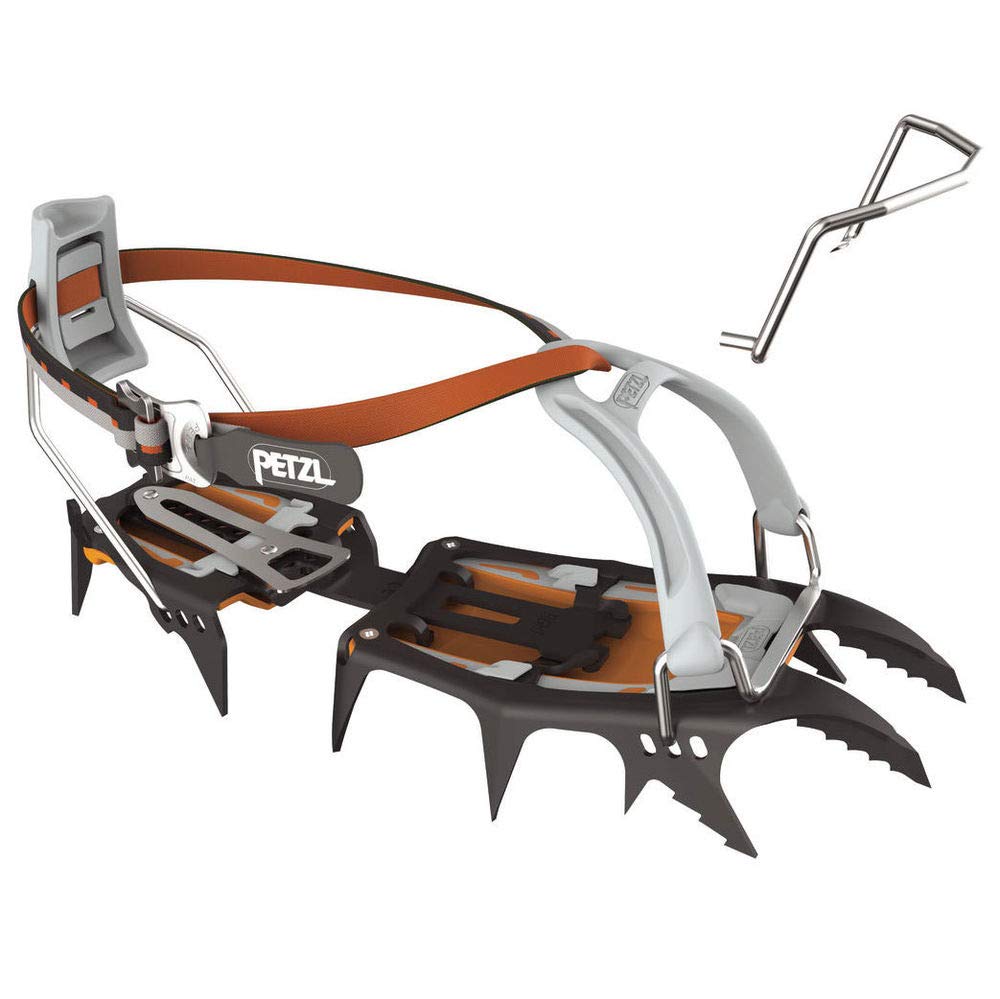
The Sarken is Petzl’s most aggressive general-use crampon. Its 12 points include two long, angled front spikes designed for holding on steep, hard ice. The LeverLock binding with a rear universal system works with all boots that have a heel welt, giving you a semi-automatic security that stays locked during dynamic front-pointing.
The Antisnow system is integrated directly into the frame and does a superior job of shedding wet snow. At just under a kilogram per pair, the Sarken is light enough for long approaches but built from steel that withstands rock contact on mixed routes. Users consistently report exceptional penetration on blue ice and secure fit on boots sized up to US 16.
One caution: the binding requires a solid heel welt. If your boots lack a defined heel, the rear lever will not lock properly. This is a dedicated ice tool, not a universal step-in system for casual boots.
Why it’s great
- Aggressive front-point geometry for vertical ice
- Lightweight steel with excellent durability when contacting rock
- Antisnow system significantly reduces balling in sticky snow
Good to know
- Requires a heel welt on boots
- Some users reported receiving a single unit instead of a pair — verify when purchasing
2. Salewa Alpinist Combi
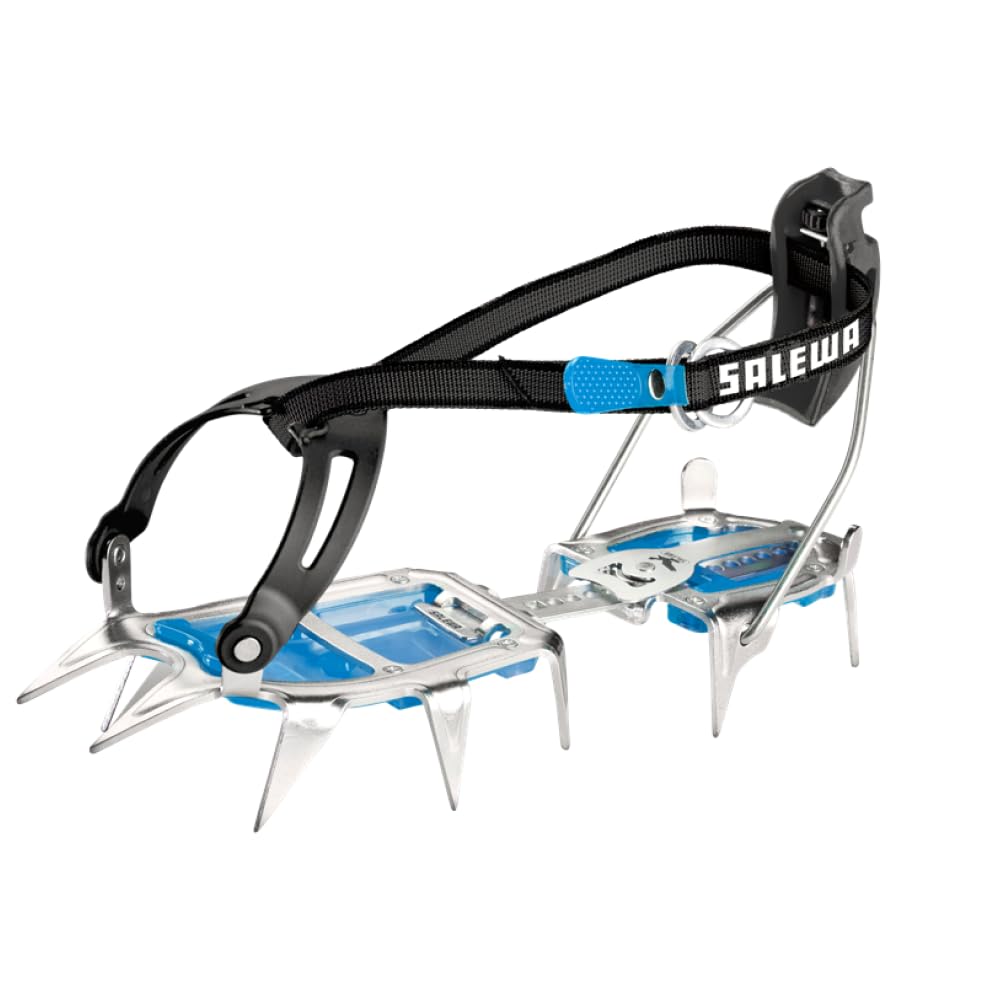
The Salewa Alpinist Combi is a premium 12-point steel crampon built for mixed terrain. Its semi-automatic binding uses a heel lever with a toe strap, making it compatible with a wider range of boots than full-automatic models. The points are made from high-quality alloy steel that holds a sharp edge through multiple seasons of glacier and ice climbing.
At 920 grams per pair, it sits on the heavier side, but the durability rewards those who regularly encounter rock steps on alpine routes. Reviewers note the stability: once adjusted correctly, there is zero shift even on steep traverses. The chromium finish helps resist corrosion, though it may wear off over time.
The one-size design fits most adult boot sizes, but the strap system is more rigid than some competitors. If you plan to climb predominantly on waterfall ice, a full-automatic binding may provide a more rigid connection.
Why it’s great
- Durable alloy steel points with excellent edge retention
- Semi-automatic binding fits many boot types
- Zero movement once secured — stable on traverses
Good to know
- Chromium finish can wear off with abrasive rock contact
- Strap is less flexible than some webbing-based competitors
3. Petzl Vasak LeverLock Universal

The Vasak LeverLock is Petzl’s most versatile modular crampon. The Alpen Adapt system lets you swap bindings — from full-automatic to universal — and even exchange front sections, so one pair evolves with your climbing. The FlexLock binding works with boots that lack toe and heel welts, making it a strong option for climbers who also ski tour or do approach-heavy objectives.
The 12-point configuration is optimized for walking comfort and bite on snow slopes, with two front points that deliver precise placements on moderate ice. The Antisnow system limits balling across a wide snow-temperature range. Users highlight the tool-free length adjustment and the large boot-size range (36 to 50) as standout practical features.
The trade-off: in full manual (strap) mode, the binding is not as rigid as a dedicated automatic crampon. If you plan to climb sustained vertical ice, the Sarken or a traditional automatic Vasak may offer better front-point security.
Why it’s great
- Modular system — swap bindings and front sections
- Tool-free length adjustment, huge boot-size range
- Effective Antisnow plates for variable conditions
Good to know
- Universal strap mode less rigid than automatic bindings
- Rear bail adjustment felt finicky to some reviewers
4. Petzl VASAK 12-Point Mountaineering Crampons
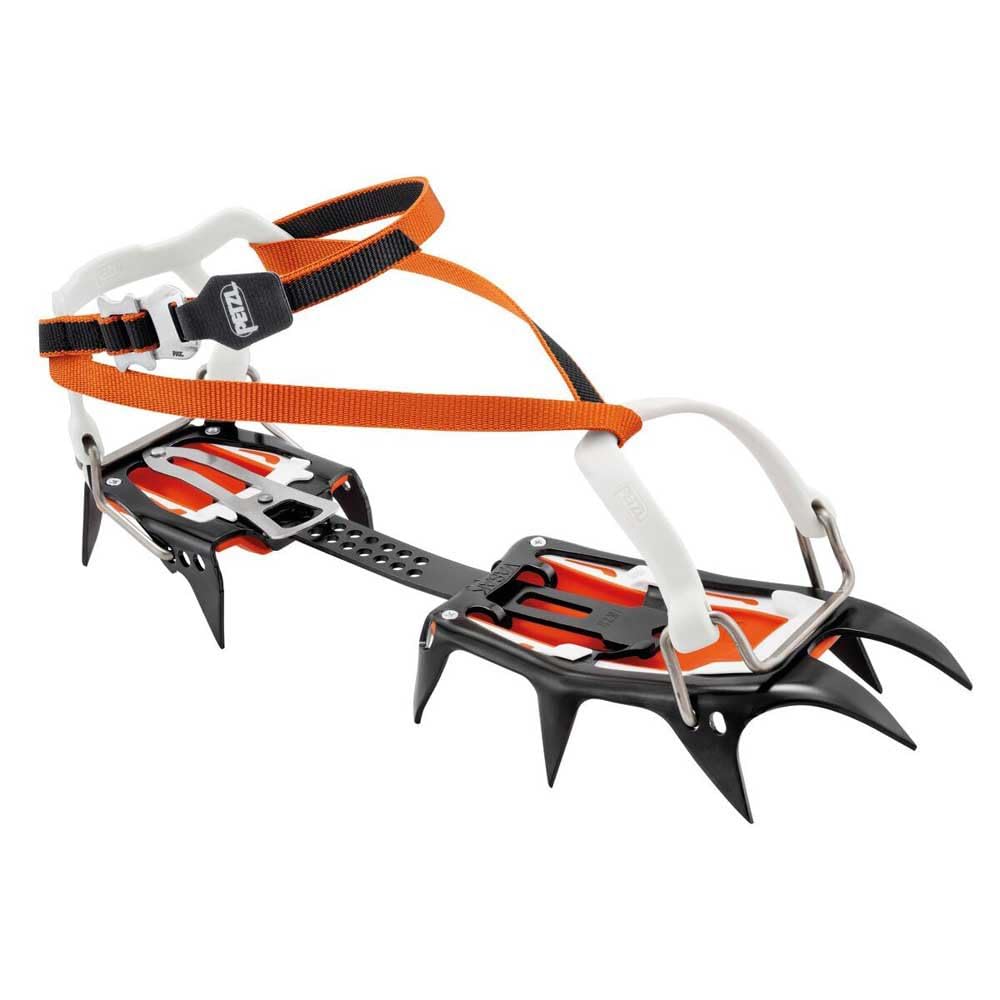
The standard Vasak is Petzl’s classic 12-point mountaineering crampon. It features two broad front points that provide solid grip on hard snow and moderate ice, making it a dependable option for climbing gullies, snow couloirs, and easy alpine ice. The steel frame is durable enough for mixed approaches and the FlexLock binding accommodates boots without toe and heel piping.
The Antisnow system is built into the frame and reduces snow buildup across a variety of conditions. Reviewers praise the fit for larger boots (US 13 and beyond), noting the adjustment range is generous. It is an excellent entry point for climbers moving from hiking snow into technical terrain for the first time.
On very steep or compact ice, the front points are not as long or aggressive as the Sarken. This is a generalist tool — it excels on mixed alpine ground but is not optimized for sustained vertical ice climbing.
Why it’s great
- Durable steel frame with effective Antisnow system
- Great boot-size range, fits large feet well
- Versatile FlexLock binding for non-standard boots
Good to know
- Front points less aggressive than dedicated ice crampons
- Not ideal for vertical or overhanging ice
5. Grivel Air Tech Evo
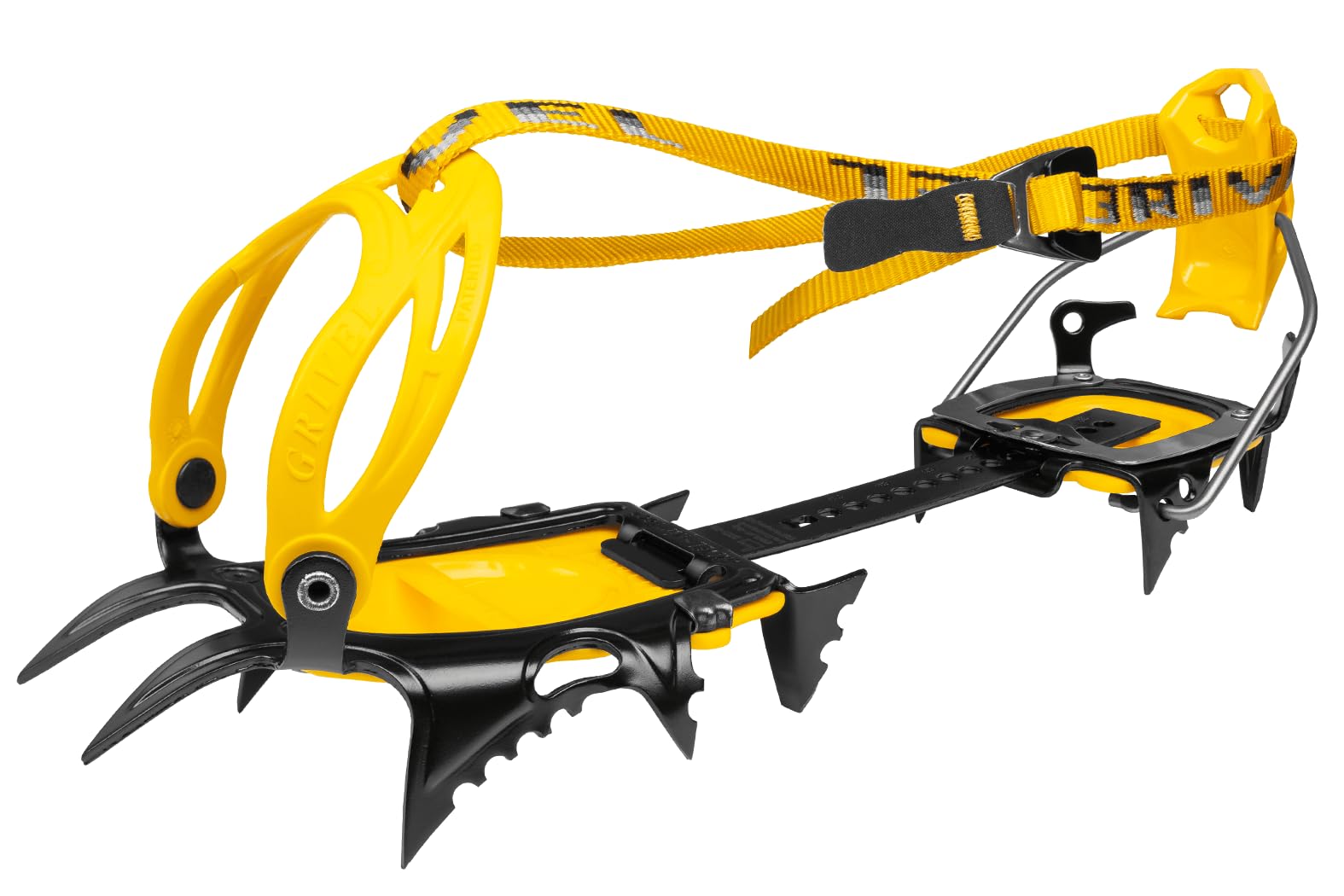
The Air Tech Evo is Grivel’s classic 12-point steel crampon, built for glacier travel, alpine climbing, and mixed rock/ice routes. The chromoly steel frame is lightweight at 458 grams per pair yet very strong. The eight front points and four rear points provide stable placement on ascents, descents, and traverses.
It comes with front and rear Antibott plates that prevent snow from balling underneath, which is critical on wet spring snow. Available in multiple Evo binding options (New-Matic, New-Classic, Cramp-O-Matic, Dual-Matic), you can match the binding exactly to your boot’s welt configuration. The adjustable bar fits EU sizes 35 to 46.
Some users reported quality-control issues — one pair arrived with different left and right sizes. It is worth checking the fit carefully when the package arrives. When properly matched, the Air Tech Evo is a precise, durable tool for technical mountaineering.
Why it’s great
- Very light for a steel crampon — 458 g per pair
- Multiple binding options for precise boot fit
- Antibott plates effective at shedding snow
Good to know
- Quality control can vary — check sizing immediately
- Steel points are shorter than some dedicated ice crampons
6. Grivel Option for cramping (Aizen)

The Grivel Option (sold as Aizen) is a 12-point aluminum crampon engineered for speed. At 610 grams per pair, it shaves significant weight for glacier travel and ski mountaineering where every gram counts. The aluminum construction provides adequate grip on snow and moderate ice but will dull rapidly on rock.
It features integrated Antibott anti-balling plates and is EN 893:2019 certified, meeting European PPE standards. The flexible regulation bar fits boot sizes 35 to 46 and the binding options (Cramp-O-Matic, New-Matic, New-Classic) let you match your boots. The weight savings make a real difference on long, non-technical approaches.
This is not a crampon for mixed climbing or scratchy alpine rock. The aluminum points cannot hold an edge against abrasive surfaces, and the material wears quickly. It is a specialist tool for clean snow and ice routes where weight is the priority.
Why it’s great
- Extremely light at 610 g per pair
- EN 893 certified, includes Antibott plates
- Flexible regulation bar for easy adjustment
Good to know
- Aluminum dulls quickly on rock — avoid mixed terrain
- Some customers received incorrect binding versions
7. CAMP Stalker Universal Crampons

The CAMP Stalker is a best-selling 12-point crampon with a universal binding that fits almost any boot. The NiCrMo steel frame is strong and resistant to corrosion, and the 12 points deliver a high level of performance on technical terrain. The tool-free size adjustment and included dynamic anti-balling plates make it a convenient package for climbers who switch between different boots.
The linking bar is flexible, allowing the crampon to adapt to boot flexion while walking, which improves comfort on long approaches. The pre-shaped front platform adapts precisely while walking, reducing fatigue. A carrying case is included for storage and transport.
The main issue reported by buyers: some units arrived in used or damaged condition with dull points. Inspect your pair immediately upon arrival. When brand new, the Stalker is a capable mid-range option for moderate ice and snow routes.
Why it’s great
- Universal binding fits all boot types
- Dynamic anti-balling plates prevent snow buildup
- Tool-free adjustment, flexible linking bar
Good to know
- Reports of receiving used product with dull points
- Not as rigid as automatic bindings for vertical ice
8. Kahtoola K 10 Hiking Crampon

The Kahtoola K10 is a 10-point crampon designed for fast-and-light travel on non-technical snow and ice. The leaf-spring flex bar allows the crampon to move naturally with flexible footwear, making it a comfortable choice for all-day winter hiking and backpacking. The spikes are 3/4 inches long and made from stainless steel for corrosion resistance.
The Quick-Fit-Binding system uses independent front and rear bindings that maintain constant tension, increasing stability. Reviewers consistently report that the K10 stays securely on boots and transforms icy climbs into easy walks. The platform is less aggressive than 12-point crampons but more capable than microspikes.
The K10 is not suited for vertical or steep front-pointing. It is an excellent upgrade for hikers who need reliable traction on icy trails and low-angle snow slopes, but it lacks the rigidity and front-point aggressiveness required for technical ice climbing.
Why it’s great
- Comfortable flex bar works with flexible hiking boots
- Stainless steel spikes resist rust better than carbon steel
- Secure binding with independent front and rear adjustments
Good to know
- 10-point design limits performance on steep ice
- Rubber pads over spikes require effort to bend initially
9. Hillsound Trail Crampon

The Hillsound Trail Crampon uses 11 carbon steel spikes on a hinged front plate system that provides flexibility on rolling terrain. It is designed for beginner and experienced winter hikers who face icy trails, packed snow, and muddy sections. The elastomer harness stays flexible in sub-zero temperatures and the adjustable strap across the foot provides extra security.
It includes a puncture-proof carry bag for compact storage. Reviewers praise the traction on deep snow and uneven ice, noting it outperforms smaller microspikes for stability. The chain system is sufficient for non-technical use but lacks the rigid frame needed for front-pointing on steep ice.
This is an affordable entry point for winter traction. It handles moderate slopes but is not a technical climbing crampon. Users who plan to climb vertical or near-vertical ice should invest in a 12-point steel crampon with a rigid frame instead.
Why it’s great
- Strong traction on icy trails and packed snow
- Lightweight and easy to put on and take off
- Includes puncture-proof carry bag for convenient storage
Good to know
- Carbon steel spikes will rust if not dried after use
- Not rigid enough for technical ice climbing
FAQ
Are microspikes sufficient for ice climbing?
How do anti-balling plates help during a climb?
Can I use aluminum crampons for mixed rock and ice climbing?
Final Thoughts: The Verdict
For most ice climbers, the strongest crampons for ice climbing are the Petzl Sarken LL Universal — they combine aggressive front-point geometry with a secure LeverLock binding and effective Antisnow plates for challenging vertical ice. If you climb a mix of alpine terrain and want a modular system that adapts to different boots, the Petzl Vasak LeverLock is the most versatile option. And if you are a weight-conscious glacier traveler who rarely encounters rock, the aluminum Grivel Option will save you significant weight on long approaches.

Mo Maruf
I created WellFizz to bridge the gap between vague wellness advice and actionable solutions. My mission is simple: to decode the research and give you practical tools you can actually use.
Beyond the data, I am a passionate traveler. I believe that stepping away from the screen to explore new environments is essential for mental clarity and physical vitality.