Our readers keep the lights on and my smoothie glass nicely filled. As an Amazon Associate, I earn from qualifying purchases.
Cellulitis on the legs is not just redness — it’s a bacterial infection that can spread deep beneath the skin, causing swelling, warmth, and pain that demands immediate, targeted care. The wrong cream can leave the infection unchecked, while the right one supports the skin barrier and fights bacterial growth directly at the source.
I’m Mohammad Maruf — the founder and writer behind WellFizz. I’ve spent countless hours analyzing clinical wound care data, ingredient studies, and real user outcomes to identify which formulas actually support healing for leg cellulitis without irritating fragile skin.
This guide breaks down the top options to help you find the most effective cream for cellulitis on legs that balances infection protection, skin barrier repair, and fast recovery.
How To Choose The Best Cream For Cellulitis On Legs
Cellulitis requires more than basic moisturizing. The cream you choose must target bacterial growth, protect the compromised skin barrier, and keep the wound environment moist without trapping infection. Here are the critical factors to evaluate.
Antibiotic Active Ingredients
Bacitracin zinc and triple antibiotic formulas (bacitracin, neomycin, polymyxin B) are the clinical standards for preventing infection in minor cuts and scrapes. For leg cellulitis specifically, a single-ingredient bacitracin cream reduces the risk of allergic reactions while still providing strong gram-positive bacteria coverage. Avoid formulas with neomycin if you have sensitive skin or known allergies.
Moisture Barrier and Absorption
Leg skin — especially on the shin or ankle — has thinner dermal layers and slower circulation, which means creams must absorb well without sitting on top of the skin. Ointments with petrolatum or beeswax create a protective seal, while gel-based colloidal formulas cool and penetrate quickly. The right choice depends on whether your cellulitis area is dry, cracked, or weeping fluid.
Additional Healing Compounds
Allantoin, vitamin E, zinc, and cocoa butter support tissue regeneration and reduce scarring. Activated minerals and herbal extracts like calendula and jojoba oil can calm inflammation without stinging. These adjunct ingredients become especially important when cellulitis leaves behind discoloration or fragile skin that needs rebuilding.
Quick Comparison
On smaller screens, swipe sideways to see the full table.
| Model | Category | Best For | Key Spec | Amazon |
|---|---|---|---|---|
| LMNOOP Wound Healing Ointment | Premium Herbal | Chronic leg wounds & deep cellulitis | Beeswax + linoleic acid base | Amazon |
| CURAD Bacitracin Ointment with Zinc | Clinical Antibiotic | Preventing infection in fragile leg skin | 500 units Bacitracin zinc per 0.9g | Amazon |
| terrasil Wound Care 3X | Mid-Range Activated Mineral | Bed sores & leg ulcers with redness | Activated Minerals + Allantoin | Amazon |
| GoodSense Triple Antibiotic Ointment | Entry-Level Multi-Pack | Minor scrapes & barrier protection | Vitamin E + cocoa butter infusion | Amazon |
| Silver Miracles Colloidal Silver Gel | Budget Gel Formula | Sensitive skin burns & mild irritation | 99.999% pure nano silver | Amazon |
In‑Depth Reviews
1. LMNOOP Wound Healing Ointment

This premium ointment uses a rich blend of beeswax, linoleic acid from sesame and flax oils, propolis, and honey to create a thick protective layer over chronic leg wounds. The formula is designed for deep, non-healing wounds, varicose ulcers, and purulent areas — exactly the kind of compromised skin that accompanies serious cellulitis. Users report visible improvement in deep leg wounds within days of twice-daily application, with wound nurses noting accelerated granulation tissue formation.
The herbal scent is noticeable but fades quickly after application, and the brown color can stain clothing if not covered with a bandage. Its emollient consistency is ideal for cracked or weeping skin because it seals moisture in while keeping bacteria out. Clinical feedback from doctors cited by users supports its use for chronic care, making it a strong candidate for cellulitis that has progressed to an open or ulcerated stage.
One limitation: a small number of users with cellulitis discoloration (redness without open wound) saw minimal improvement after months of use, suggesting it works best when the skin barrier is already broken rather than for superficial redness alone. Still, for deep leg cellulitis with tissue damage, this is the most potent option on the list.
Why it’s great
- Promotes cell regeneration in chronic, non-healing wounds
- Thick beeswax base seals out debris and bacteria
- Doctor-recommended for ulcerated leg tissue
Good to know
- Strong herbal odor may be off-putting
- Less effective on cellulitis without open wound
- Premium price point for a specialized formula
2. CURAD Bacitracin Ointment with Zinc

This is a hospital-quality single-antibiotic ointment trusted by medical professionals for its targeted gram-positive bacteria coverage. The bacitracin zinc active ingredient is particularly useful for leg cellulitis prevention in minor cuts and abrasions because it avoids the neomycin that often triggers contact dermatitis in sensitive users. The zinc content supports wound healing by providing essential mineral nutrition to regenerating tissue.
The ointment consistency is thick and stays in place, making it ideal for covering small affected areas with a sterile bandage. Users with latex allergies specifically note this formula causes no reaction, unlike common triple antibiotic brands. It works quickly on superficial leg sores and cuts, reducing redness and preventing the infection spread that characterizes cellulitis.
One drawback: this is a single antibiotic, so it won’t cover gram-negative bacteria that sometimes complicate leg cellulitis in immunocompromised patients. The 1-ounce tube is also relatively small for large area applications, but it’s a smart choice for targeted, localized leg infections where you want minimal ingredient exposure.
Why it’s great
- Hypoallergenic single-antibiotic formula for sensitive skin
- Hospital-grade quality used in clinical settings
- Zinc actively supports tissue repair
Good to know
- Single antibiotic has limited bacterial spectrum
- Tube size is best for small affected patches
3. terrasil Wound Care 3X

Terrasil’s patented Activated Minerals technology combined with allantoin creates a formula that kills 99.99% of bacteria while calming inflammation and reducing redness — two key symptoms of leg cellulitis. This mid-range option is dermatologist-tested and free of parabens, alcohol, and fragrance, making it safe for the fragile skin that often surrounds cellulitic areas. Users report noticeable relief in 2-3 days for pressure sores and leg ulcers.
The cream applies easily without stinging, a major advantage when the affected skin is already painful and tender. The jojoba oil and calendula provide moisturizing support that prevents the cracking that can worsen cellulitis. Many users specifically mention it worked better than prescription Santyl for bed sores, which suggests its enzyme-modulating properties may help when cellulitis-related tissue damage stalls natural healing.
The 0.5-ounce tube is quite small for larger leg areas, and you may need multiple purchases for extended treatment over several weeks. It is also positioned primarily for bed sores and pressure ulcers — users with purely cellulitic redness without an open wound may find better options elsewhere.
Why it’s great
- 99.99% bacterial reduction with no stinging
- Hypoallergenic for sensitive or allergic skin
- Fast noticeable relief in 2-3 days
Good to know
- Small tube may require frequent repurchasing
- Optimized for bed sores more than surface cellulitis
4. GoodSense Triple Antibiotic Original Ointment
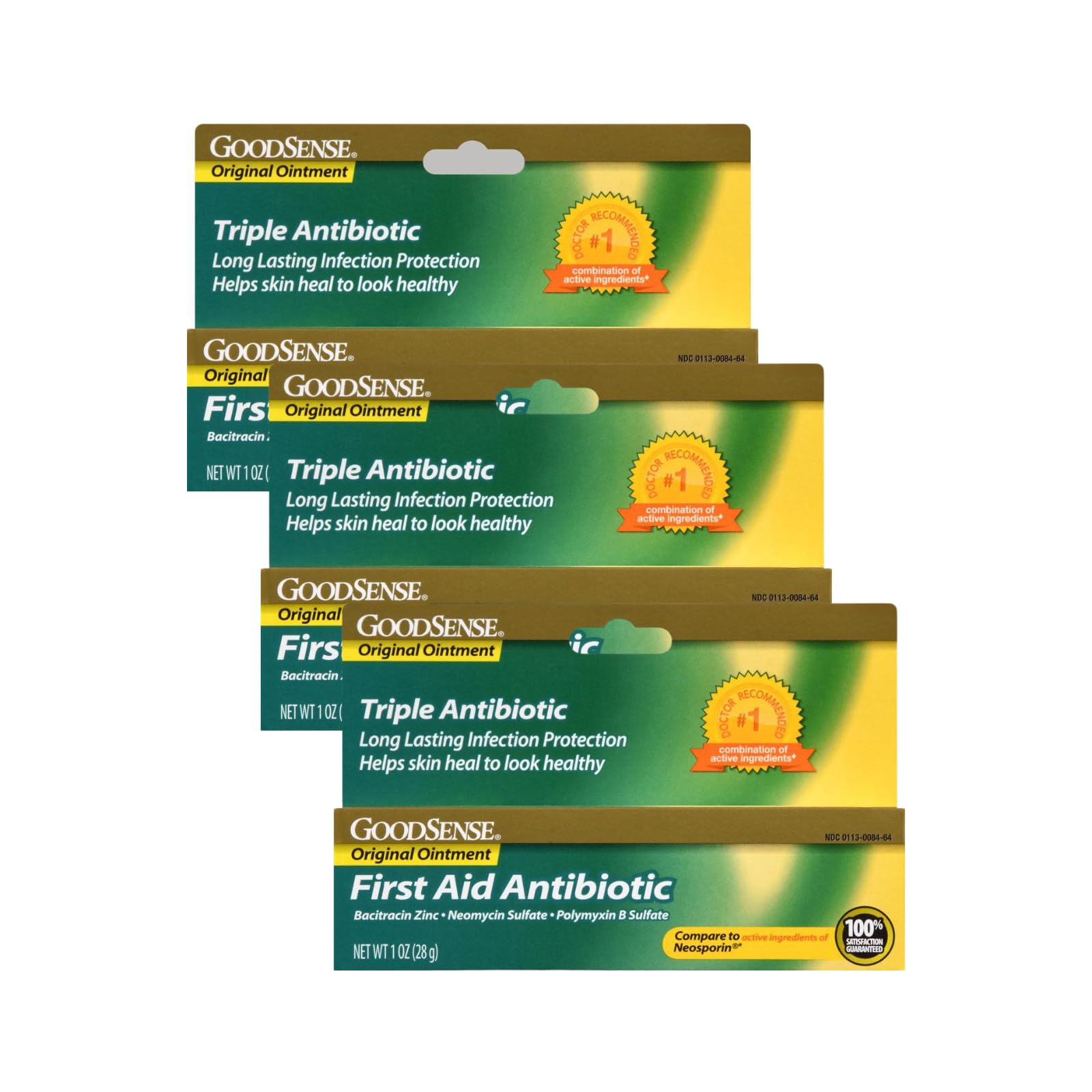
This three-tube pack brings the same active ingredients (bacitracin, neomycin, polymyxin B) as branded Neosporin at a more accessible price point. For leg cellulitis that starts from minor scrapes or insect bites, this triple antibiotic combination provides broad-spectrum coverage. The addition of vitamin E and cocoa butter helps condition the surrounding skin, which can become dry and cracked during infection treatment.
Users appreciate that it creates a reliable long-lasting barrier over affected areas, keeping dirt and debris out while maintaining a moist environment that supports natural healing. The ointment is easy to apply and stays on the leg even under clothing when covered with a bandage. Multiple customers confirm it works as well as the name brand, which makes it a practical choice for families who want to keep a ready supply in the first aid kit.
One limitation: the neomycin component can cause allergic reactions in some users, manifesting as increased redness that may be mistaken for worsening cellulitis. If you have known contact allergies, the CURAD bacitracin-only ointment is a safer alternative. Also, expiration dates on some batches have been reported as short, so check the tube before purchasing in bulk.
Why it’s great
- Triple antibiotic coverage for broad bacterial protection
- Three-tube value pack for extended use
- Vitamin E and cocoa butter prevent skin cracking
Good to know
- Neomycin may trigger allergic skin reactions
- Short expiration on some production batches
5. Silver Miracles Colloidal Silver Gel

This colloidal silver gel provides gentle antibacterial and cooling relief for leg skin that is irritated, burned, or mildly infected. The nano silver particles are small enough to penetrate the upper dermis, where they can disrupt bacterial cell membranes without the use of pharmaceutical antibiotics. The gel texture is lightweight and non-sticky, making it comfortable for large-area application on the leg without leaving residue on clothing.
Users with eczema and mild leg irritation report significant reduction in hotspots and redness within days, and the formula is unscented, which matters when the skin is already inflamed and reacts to fragrances. For cellulitis that involves sunburned or heat-damaged skin as a precursor, the cooling effect provides immediate comfort. The 4-ounce container offers good volume for the entry-level price point.
The drawback: colloidal silver is not a clinically proven first-line treatment for bacterial cellulitis that involves deep tissue infection. If the leg cellulitis is accompanied by fever, spreading redness, or warmth, this gel should be used as a supportive measure alongside medical care rather than a standalone treatment. It is best for mild, superficial skin irritation rather than active, spreading infection.
Why it’s great
- Cooling gel soothes burns and irritated leg skin
- Unscented and hypoallergenic for sensitive skin
- Good volume for the budget-friendly price
Good to know
- Not strong enough for deep or spreading cellulitis
- Gel consistency may require reapplication more often
FAQ
Can I use a triple antibiotic cream directly on open cellulitis wounds?
Will colloidal silver gel cure cellulitis on my leg?
How do I know if my leg redness is cellulitis or just dry skin irritation?
Final Thoughts: The Verdict
For most users, the cream for cellulitis on legs winner is the LMNOOP Wound Healing Ointment because it combines a thick protective barrier with clinically proven herbal ingredients for deep chronic wounds. If you want a no-allergy clinical antibiotic for localized prevention, grab the CURAD Bacitracin Ointment with Zinc. And for a cooling, budget-friendly option for mild leg irritation, nothing beats the Silver Miracles Colloidal Silver Gel.

Mo Maruf
I created WellFizz to bridge the gap between vague wellness advice and actionable solutions. My mission is simple: to decode the research and give you practical tools you can actually use.
Beyond the data, I am a passionate traveler. I believe that stepping away from the screen to explore new environments is essential for mental clarity and physical vitality.