Our readers keep the lights on and my smoothie glass nicely filled. As an Amazon Associate, I earn from qualifying purchases.
The sharp chirp of a cricket bouncing around your basement or garage at 2 a.m. is infuriating—and finding the right spray that actually stops them dead without drenching your home in harsh chemicals is harder than it should be. Most general-purpose bug sprays lack the residual power to eliminate crickets hiding behind baseboards or in dark crevices, leaving you chasing noise night after night.
I’m Mohammad Maruf — the founder and writer behind WellFizz. I’ve spent countless hours studying insecticide formulations, reading through technical specs, and analyzing real-world user reports to separate the sprays that genuinely work from the ones that just smell like they do.
Whether you’re dealing with house crickets, field crickets, or the occasional camel cricket, choosing the right solution comes down to knowing your active ingredients and delivery method. That’s why I put together this guide to help you find the best cricket killer spray for your home and yard.
How To Choose The Best Cricket Killer Spray
Not all cricket sprays work the same way. Some kill on contact but evaporate within hours, while others leave a long-lasting barrier that keeps crickets from hopping back in. Understanding the key differences in formulation and application will help you avoid wasted money and sleepless nights.
Active Ingredients Matter Most
Permethrin-based sprays (like those from Gordon’s and Martin’s) provide the longest residual protection—often lasting four weeks or more on treated surfaces. They require mixing and careful application but offer the most reliable knock-down and prevention. On the other hand, essential oil sprays (peppermint, lemongrass, rosemary) are safer around pets and kids but usually require reapplication every few days and work better as repellents than instant killers for established infestations.
Residual vs. Contact-Only Action
A spray that only works on direct contact will not stop new crickets from entering the next night. Look for a product that explicitly states it leaves a residual barrier. Concentrates you mix yourself tend to offer the best residual performance, while ready-to-use trigger sprays are more convenient for spot-treating a single cricket you can see.
Application Area and Safety Profile
If you’re treating a basement, garage, or outdoor perimeter, a synthetic pyrethroid concentrate is the strongest choice. For kitchen countertops, pet areas, or bedrooms where children play, a plant-based formula with a pleasant scent is the smarter move—even if it means reapplying more often. Always check the label for whether a spray is rated for indoor or outdoor use.
Quick Comparison
On smaller screens, swipe sideways to see the full table.
| Model | Category | Best For | Key Spec | Amazon |
|---|---|---|---|---|
| Martin’s Permethrin 13.3% | Concentrate | Long-term perimeter control | 32 oz concentrate (makes ~8 gal) | Amazon |
| Gordon’s Permethrin 10 | Concentrate | Livestock & large areas | 32 oz quart concentrate | Amazon |
| Wondercide Ant & Roach Aerosol | Aerosol | Indoor spot treatment | Plant-based, 10 oz can | Amazon |
| BugMD Multi-Insect Killer | Trigger Spray | Pet-safe indoor use | 24 oz, peppermint oil | Amazon |
| Maggie’s Farm Home Bug Spray | Trigger Spray | Quick indoor knock-down | 24 oz, plant oils | Amazon |
In‑Depth Reviews
1. Martin’s Permethrin 13.3% Concentrate
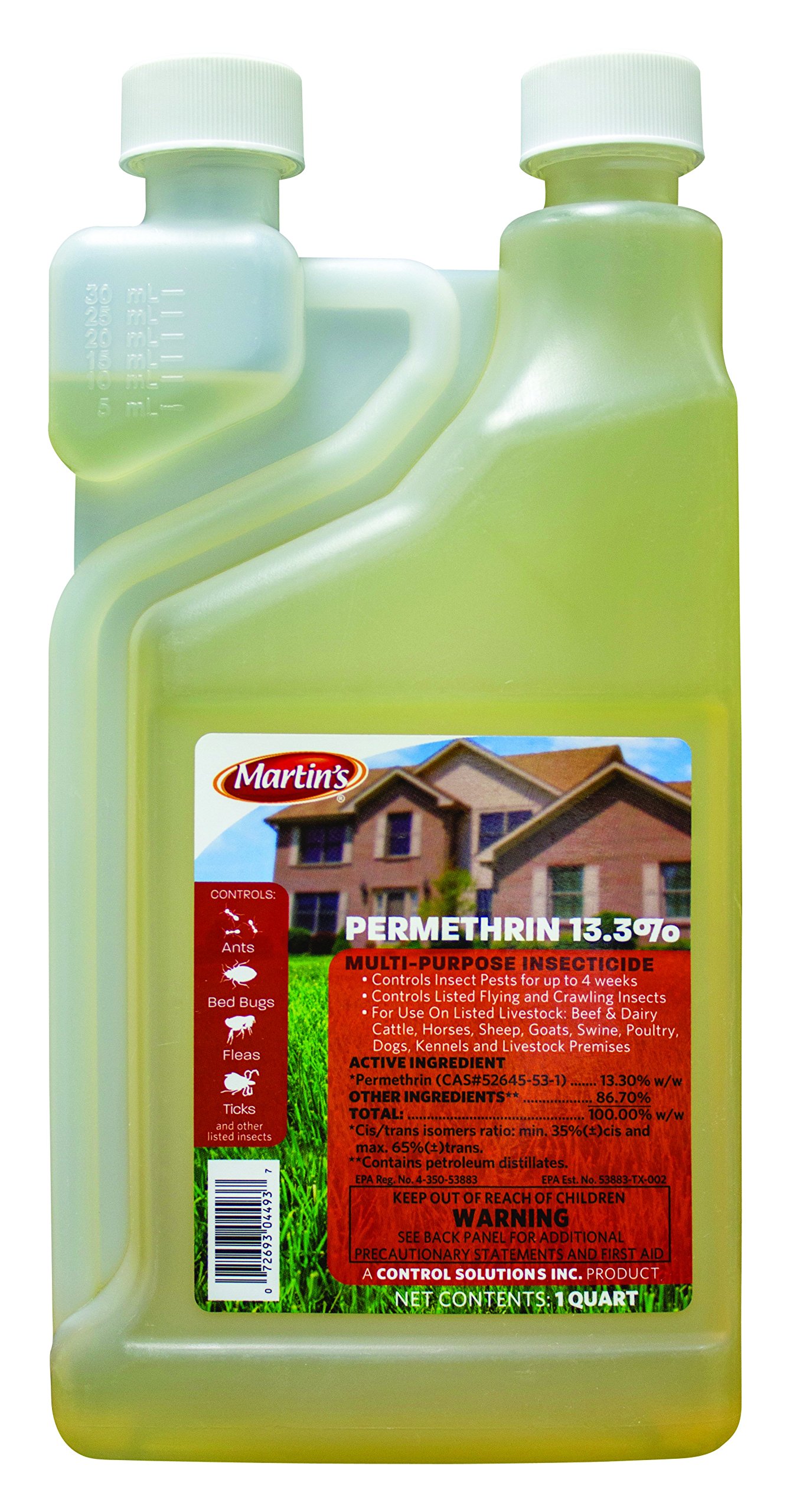
This is the heavyweight champion for anyone serious about cricket control. At 13.3% Permethrin, Martin’s is a concentrated synthetic pyrethroid that you mix with water—just 4 ounces makes a full gallon of ready-to-use spray. What sets it apart is the residual power: a single application around your home’s perimeter, garage, or basement baseboards can keep crickets at bay for four to six weeks, even through rain and dew.
Real-world feedback confirms it absolutely annihilates crickets, ticks, and fleas on contact and continues killing for weeks. Users report spraying the foundation and door thresholds in early spring, then hearing zero chirps for the rest of the month. It does have a noticeable chemical smell during application that can linger indoors, so ventilate well and keep pets out of treated areas until dry.
This is not a grab-and-go trigger bottle—you need to mix it, use a garden sprayer, and plan your application. But if you want a season-long solution that works, this is the spray that outperforms everything else in its class. It is powerful stuff, so follow the dilution instructions exactly and wear gloves.
Why it’s great
- Four-week residual barrier stops new infestations
- Extremely economical—one bottle makes up to 8 gallons of spray
- Kills ticks, fleas, mosquitoes, and spiders alongside crickets
Good to know
- Strong chemical odor requires outdoor mix and application
- Not safe for use on edible plants or near food prep surfaces
2. GORDON’S Permethrin 10 Livestock & Premise Spray

Gordon’s Permethrin 10 is nearly a twin to Martin’s in performance, formulated at a slightly lower 10% concentration but still packing serious residual punch. The quart size is ideal for farm and property owners who need to treat large areas—barn stalls, chicken coops, fence lines, and the perimeter of a house. It mixes easily with water, sprays evenly, and starts working within a day.
User reports highlight its effectiveness not just on crickets but on flies, mites, and mosquitoes around livestock. One reviewer mentioned treating their hiking clothes with a 2-ounce-per-gallon mix to repel ticks—and hasn’t seen a tick in years. It leaves a milky tint when mixed but has no overpowering gasoline odor like some synthetic concentrates.
The trade-off is that it is a concentrate requiring a sprayer and careful measurement. It is also not labeled for direct application on edible garden produce, so keep it to structural perimeters and animal housing. For the price per square foot of coverage, it’s one of the most cost-effective cricket sprays on the market for heavy-duty outdoor use.
Why it’s great
- Excellent value for covering acreage or large perimeters
- Safe for use around livestock when mixed correctly
- Results visible within 24 hours of application
Good to know
- Requires a separate sprayer—no ready-to-use option
- Not effective against insect eggs embedded in surfaces
3. Wondercide Ant & Roach Aerosol Spray

If you absolutely cannot use synthetic chemicals in your home—maybe you have small children, pets, or a kitchen application—Wondercide is the strongest plant-powered alternative I found. Powered by lemongrass and geraniol, this aerosol kills crickets, roaches, ants, and spiders on contact. It’s lab-proven to be effective without artificial colors or fragrances, and it’s classified as a minimum-risk pesticide under EPA FIFRA 25(b).
Customer reviews consistently praise how safe it feels to spray around dogs and toddlers. It smells like lemongrass—pleasant, not cloying—and the scent fades within minutes. The aerosol format gives you precise stream control for shooting crickets in tight corners or behind appliances. However, it is strictly a contact killer with minimal residual action; crickets that wander in 24 hours later will not be stopped unless you spray again.
Be aware that the can’s nozzle tends to clog before the product runs out, and the spray leaves a slightly oily residue on smooth floors. Wipe away after contact. For heavy infestations, this is a daily maintenance spray, not a one-and-done solution. But for peace of mind around your family, it’s unmatched.
Why it’s great
- Plant-based formula safe around children and pets
- Pleasant lemongrass scent that dissipates quickly
- Effective fast knock-down on visible crickets
Good to know
- No residual barrier—requires daily reapplication
- Nozzle clogs frequently, wasting product
4. BugMD Pet Safe Multi-Insect Killer & Repellent
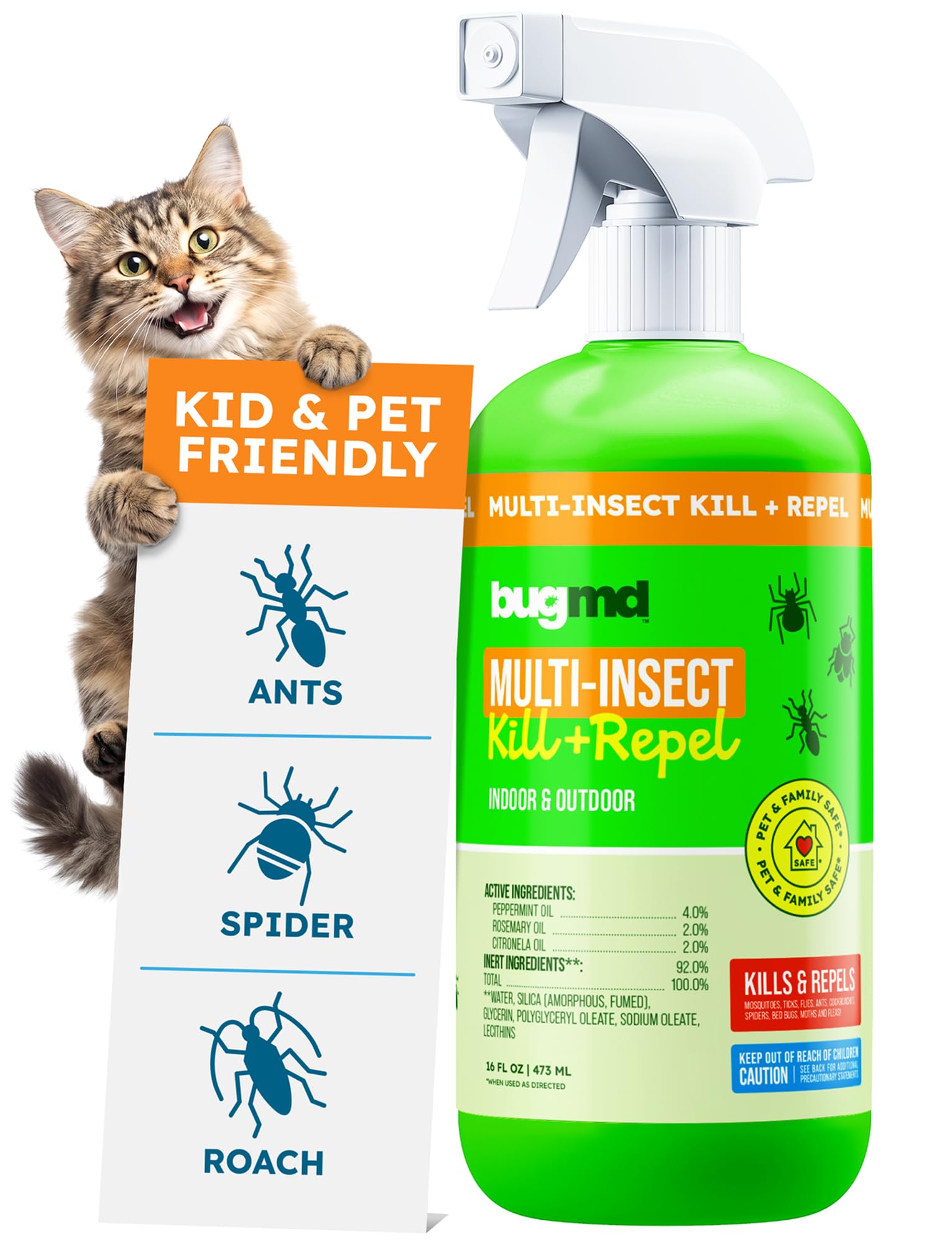
BugMD takes the natural approach a step further with 4% pure peppermint essential oil as its primary active ingredient. This concentration is significant—most essential-oil sprays use far less—and it works by overstimulating pests’ nervous systems, repelling them as much as killing on contact. The scent is strong and minty, making your home smell fresh while actively driving crickets, spiders, and rodents away.
Users report 100% success on springtails and sugar ants, and the same applies to crickets. It’s a dual-action formula: it kills the cricket you spray and leaves a repellent barrier that lasts three to five days. The trigger bottle makes spot treatment easy, and the brand specifically markets it as safe around children and pets when used as directed. That said, a small number of users mention mild skin irritation from the concentrated oils—you may want to wear gloves.
Where it falls short is against serious infestations. The repellent effect is real but short-lived, and you absolutely must seal food scraps and cracks in your walls to make it work long-term. Think of BugMD as your everyday maintenance spray and rodent deterrent rolled into one, not a single-application cure for a full-blown cricket invasion.
Why it’s great
- High 4% peppermint oil concentration for strong repellency
- Also deters rodents—an unexpected bonus for garages
- Fresh mint scent is pleasant and lingers lightly
Good to know
- Requires reapplication every 3–5 days to maintain barrier
- Concentrated oils can irritate sensitive skin
5. Maggie’s Farm Home Bug Spray
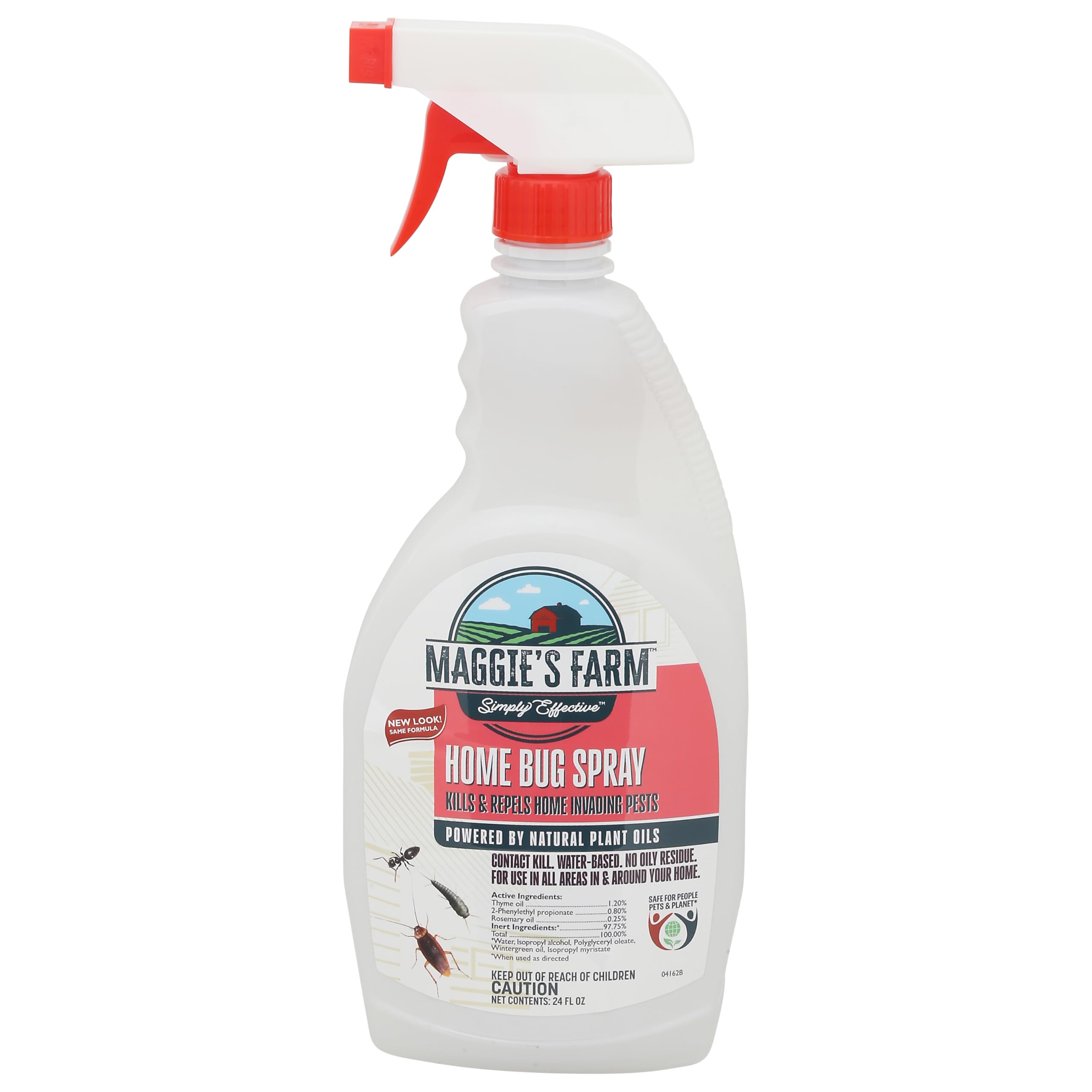
Maggie’s Farm occupies the sweet spot between natural safety and real effectiveness. It uses plant oils as active ingredients and is EPA FIFRA 25(b)-classified, making it safe for use around children and pets when applied as directed. The water-based formula leaves no harmful residue and won’t stain fabrics, which is a huge plus for indoor baseboard and window-sill spraying.
On crickets, it delivers fast knock-down. Users consistently report that it kills tiny ants, spiders, and crickets on contact in seconds. The smell is herbal but not overbearing—more pleasant than most synthetic sprays, though a few reviewers note it has a strong odor that some find unpleasant indoors. The click-and-lock trigger nozzle gives good directional control for shooting crickets hiding in corners.
The catch: Maggie’s Farm is primarily a contact killer with moderate residual action. It works brilliantly for spot-treating visible pests, but for long-term perimeter protection, you’ll need to pair it with a concentrate spray around the outside of your home. Also, some customers on the East Coast have trouble reordering due to zip code shipping restrictions. It is best for those who want a low-toxicity spray they can grab quickly without mixing.
Why it’s great
- Water-based formula won’t stain upholstery or clothing
- Fast contact kill with a tolerable herbal scent
- Safe for kitchen use around food prep areas
Good to know
- Strong odor bothers some users; best with ventilation
- Limited residual power against reinfestation
FAQ
Does cricket killer spray work on camel crickets?
Can I use a cricket spray indoors if I have pets?
How often should I reapply cricket spray around my home?
Final Thoughts: The Verdict
For most users, the best cricket killer spray winner is the Martin’s Permethrin 13.3% Concentrate because it delivers the longest residual protection at the lowest cost per application, making it the only one that truly stops chirps for a month. If you want a pet-safe option that you can grab off the shelf without mixing, grab the Wondercide Aerosol Spray. And for large properties or livestock areas where coverage matters most, nothing beats the Gordon’s Permethrin 10.

Mo Maruf
I created WellFizz to bridge the gap between vague wellness advice and actionable solutions. My mission is simple: to decode the research and give you practical tools you can actually use.
Beyond the data, I am a passionate traveler. I believe that stepping away from the screen to explore new environments is essential for mental clarity and physical vitality.