Our readers keep the lights on and my smoothie glass nicely filled. As an Amazon Associate, I earn from qualifying purchases.
A barbell slam sends shockwaves through your forearms, and the only thing you need to know mid-WOD is your heart rate recovery — not how many steps you took today. Crossfit demands a tracker that survives high-impact, high-intensity intervals and delivers real-time metrics that match your effort, not your commute. The wrong tracker frustrates you with dead batteries mid-metcon, inaccurate rep counts, or a screen that shatters on the first rope climb.
I’m Mohammad Maruf — the founder and writer behind WellFizz. I’ve spent countless hours analyzing heart rate sensor accuracy, battery endurance metrics, and activity profiles to separate the trackers built for the box from the ones built for the couch.
Whether you are chasing a new Fran time or grinding through a 20-minute AMRAP, this guide isolates the hardware that handles the stress, the sweat, and the impact. This is the definitive field-tested analysis of the best crossfit tracker for athletes who train with intensity.
How To Choose The Best Crossfit Tracker
Your tracker will face violent movements, high heart rates, sweat saturation, and occasional wall collisions. Selecting the right one demands you prioritize sensor type, durability, battery life, and data granularity over style or smartwatch features.
Heart Rate Sensor Accuracy in High-Intensity Training
Optical wrist sensors lose lock during rapid wrist flexion like burpees, thrusters, and kettlebell swings. Chest strap monitors such as those from Garmin and Wahoo maintain contact with your torso, delivering continuous HR data you can actually use to gauge effort zones and recovery during a metcon. If you live for the whiteboard, you need a strap-based tracker.
Durability and Water Resistance Ratings
Crossfit involves barbells, ropes, and medicine balls making contact with your wrist. Look for a tracker with a 5 ATM or 10 ATM water resistance rating, a mineral glass or sapphire crystal lens, and a reinforced polymer or aluminum chassis. A tracker that dings on the first snatch won’t survive a month of programming.
Battery Life for Daily Trainers
A tracker that needs daily charging will fail you by day three of the Open when you forget to plug it in. Aim for a minimum of five days in smartwatch mode with GPS off. Premium models deliver two weeks or more, so you can train, sleep, and recover without hunting for a charging cable every evening.
Standalone Recording Capabilities
Some movements make it impossible to wear a wrist watch — think team sports or when you need total wrist freedom. Trackers that store workout data onboard and sync later, like the Garmin HRM 600, let you leave the watch in your locker and still walk away with complete heart rate, calorie, and duration data.
Quick Comparison
On smaller screens, swipe sideways to see the full table.
| Model | Category | Best For | Key Spec | Amazon |
|---|---|---|---|---|
| Garmin Forerunner 970 | Premium GPS Watch | Multi-sport data analysis | Sapphire lens, 15-day battery | Amazon |
| Garmin fēnix 8 | Rugged Multisport | Extreme impact environments | AMOLED, 47hr GPS mode | Amazon |
| COROS PACE Pro | Mid-Range Running | Focused running & WOD | AMOLED, 20-day battery | Amazon |
| Amazfit Balance 2 | Premium Hybrid | HYROX & gym versatility | Sapphire glass, 21-day battery | Amazon |
| Garmin Forerunner 570 | Mid-Range Tri | Triathlon & daily box work | AMOLED, 10-day battery | Amazon |
| Amazfit Active Max | Mid-Range Watch | Long battery & bright screen | 4GB storage, 25-day battery | Amazon |
| Garmin HRM 600 | Chest Strap | Wrist-free HR recording | 2-month battery, washable strap | Amazon |
| Wahoo TRACKR | Chest Strap | Reliable continuous HR | 200-hour battery, USB-C | Amazon |
| Google Fitbit Air | Screenless Band | Minimalist HR tracking | 7-day battery, 50m water | Amazon |
In‑Depth Reviews
1. Garmin Forerunner 970

The Garmin Forerunner 970 sets the benchmark for athletes who demand pro-level training data from their wrist. Its sapphire crystal lens withstands constant barbell knocks and rope scrape, while the 26-hour GPS mode ensures you never lose a session mid-endurance metcon. The built-in LED flashlight alone makes it worth the investment for early morning or late-night WODs.
Running economy metrics, step speed loss data, and wrist-based running power give you feedback you can actually apply — and its compatibility with the HRM 600 chest strap means no optical dropout during high-rep thrusters. The AMOLED touchscreen with button controls works equally well under sweat and rain.
Multisport auto-transition automatically detects swim-to-bike-to-run changes, making it perfect for triathletes who still run Crossfit-style conditioning. Users report two weeks between charges with daily activity tracking and GPS-enabled runs, outperforming most wearables in this price bracket.
Why it’s great
- Sapphire glass survives heavy contact
- Accurate dual-band GPS locks fast indoors and out
- Second-to-none battery life at 15 days smartwatch mode
- ECG app for AFib detection
Good to know
- Steep learning curve for new Garmin users
- Premium price pushes it out of entry-level budgets
2. Garmin fēnix 8

The Garmin fēnix 8 is the über-option for Crossfit athletes who punish their gear. The stainless steel bezel absorbs impacts that would chip aluminum, and the built-in LED flashlight has become an unexpectedly essential utility for pre-dawn warm-ups. It carries a 40-meter dive rating and leakproof metal buttons, so water workouts and heavy sweat won’t compromise the seals.
Real-time stamina tracking and targeted strength training plans let you monitor fatigue levels across a multi-round WOD. The 1.4-inch AMOLED panel with 24/7 health monitoring (heart rate, Pulse Ox, sleep, stress) provides the full picture without requiring you to carry your phone. SatIQ multi-band GPS locks even under a metal warehouse roof.
Battery performance reaches 16 days in smartwatch mode and 47 hours in full GPS mode — enough for training every day without plugging in over a weekend. The off-grid voice command feature lets you control settings without phone connectivity, which helps when you leave your phone in the locker.
Why it’s great
- Exceptionally impact-resistant stainless steel bezel
- Advanced training metrics with stamina tracking
- Scuba and apnea dive support
- Longest battery in this lineup
Good to know
- Large 47mm case may feel bulky on smaller wrists
- Top-tier price requires serious commitment
3. COROS PACE Pro

The COROS PACE Pro brings a fastest-in-class processor to the running world, but its value extends straight into the Crossfit box. The 1.3-inch AMOLED touchscreen with 1,500-nit peak brightness remains crisp under gym lighting and direct sun alike. Its dual-frequency GPS locks in under 10 seconds, giving you accurate route distance for outdoor conditioning intervals.
Battery life reaches 20 days in regular smartwatch mode and 38 hours with full GPS enabled, removing the charging anxiety that plagues daily trainers. The navigation system includes full offline topography maps, so you can plan long recovery runs without phone tethering. The COROS app provides training status, custom workouts, and sleep analysis that integrate seamlessly with your weekly program.
Reviewers consistently note the sprint responsiveness — swipe transitions and workout start-up happen instantly. The USB-C charging with a keychain adapter reduces cable clutter, and the 22mm standard band width makes aftermarket strap swaps easy for different WOD conditions.
Why it’s great
- Incredibly fast processor and UI response
- Free global offline maps with route planning
- 20-day battery means near-zero charging downtime
- Accurate dual-band GPS for outdoor sessions
Good to know
- Less supple silicone band compared to competitors
Limited third-party app ecosystem
4. Amazfit Balance 2

The Amazfit Balance 2 packs an industry-first official HYROX training mode — perfect for athletes who want a dedicated competition-specific activity profile. The 1.5-inch sapphire crystal glass and aluminum body offer a robust defense against barbell contact and wall impacts, while the 10 ATM water resistance allows deep submersion for sweaty dives or recovery plunges.
Dual-band GPS with six satellite systems provides lock-on reliability even inside a steel-framed gym. Users praise the 21-day battery under typical usage, with heavy training dropping to about two weeks. The Zepp Flow voice assistant lets you check stats mid-session without tapping a sweaty screen.
For athletes transitioning from an older Garmin or Apple Watch, the Balance 2 delivers 90 percent of the high-end metrics at a fraction of the cost. It connects to external sensors like a Polar H10, though some users report intermittent bluetooth dropouts during specific activity profiles.
Why it’s great
- Dedicated HYROX competition mode
- Sapphire crystal withstands daily abuse
- 21-day battery outperforms most at this tier
- AI voice assistant for hands-free control
Good to know
- Intermittent bluetooth disconnect with external HR monitors
- Band length may be short for very large wrists
5. Garmin Forerunner 570

The Garmin Forerunner 570 delivers the core training ecosystem that made Garmin’s running watches indispensable, now in a 42mm package that fits smaller wrists without sacrificing data depth. The AMOLED touchscreen with button controls provides reliable navigation even when sweat drips across the display — critical during high-rep sets or interval runs.
Garmin Coach training plans adapt based on performance and recovery, offering personalized daily suggested workouts even for Crossfit-specific goals. The training readiness score factors sleep quality, HRV status, and recent training load to tell you whether it’s a heavy day or recovery row. A built-in microphone and speaker let you take calls without grabbing your phone mid-cooldown.
Battery life clocks 10 days in smartwatch mode and 18 hours in GPS mode — enough for a week of daily WODs and a weekend long run without charging. The aluminum bezel with a silicone band stands up to typical box wear, though it’s not as tank-like as the fēnix series. Safety features like incident detection send your location to emergency contacts, a peace-of-mind bonus for solo training.
Why it’s great
- Personalized Garmin Coach for event prep
- Compact 42mm fits smaller wrists better
- Button controls work reliably with sweaty hands
- Daily suggested workouts adapt to recovery
Good to know
- Music app experience is weaker than competitors
- No built-in flashlight for low-light sessions
6. Amazfit Active Max
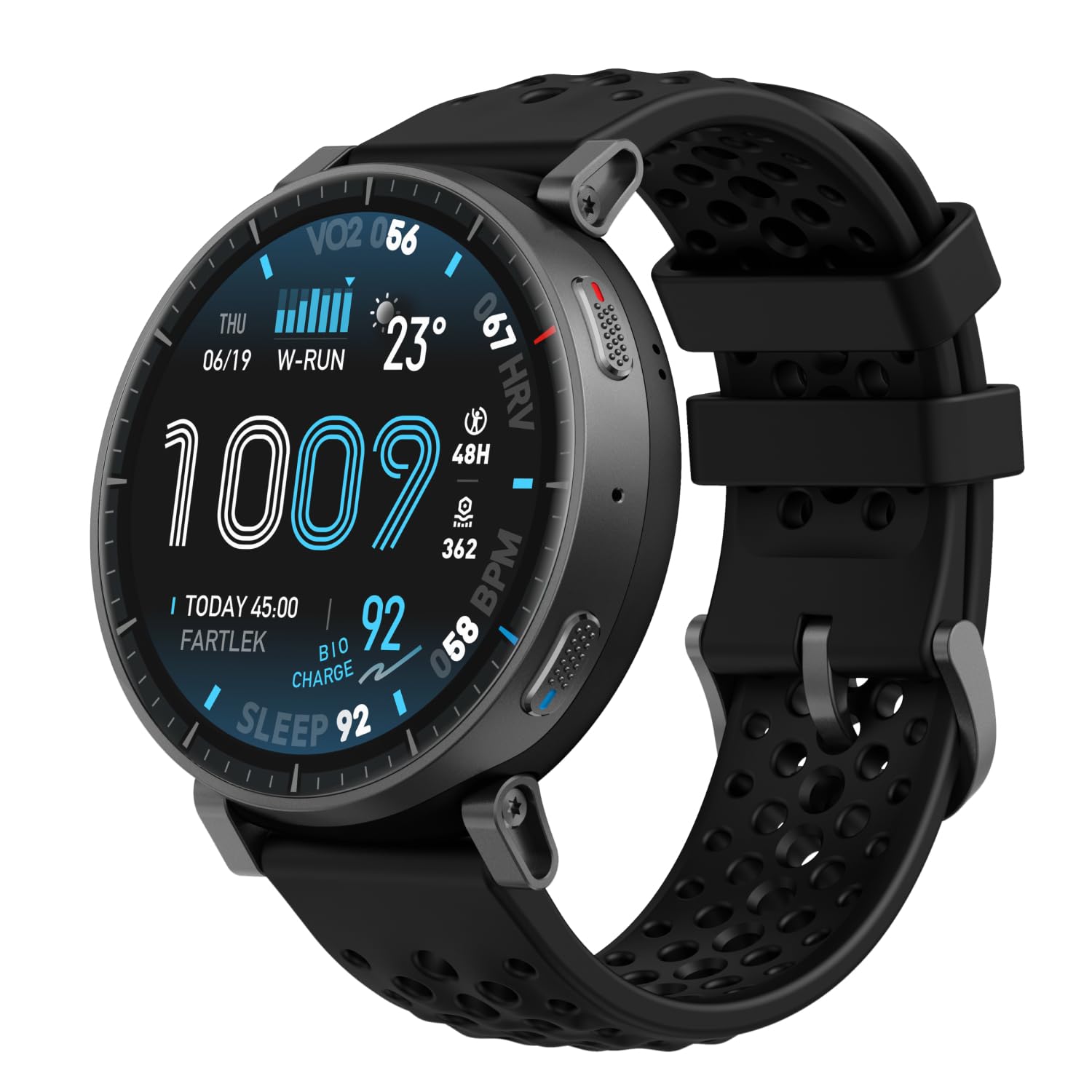
The Amazfit Active Max puts a 3,000-nit AMOLED display on your wrist — bright enough to read under the sun during outdoor circuits and clear inside a dimly lit gym. Its 1.5-inch round screen displays five data fields simultaneously, letting you track HR, rounds, time, and calories at a glance without scrolling.
Battery life reaches 25 days under typical use, making it the longest-lasting option in this mid-range tier. The 4GB onboard storage lets you load music and offline maps for run metcons without carrying a phone. With 170+ sport modes covering everything from Crossfit to functional training, you can log each session with specific tracking parameters.
The BioCharge energy monitoring score adjusts based on your daily stress and workouts, providing a simple readiness gauge for when to push and when to recover. Zepp Coach offers AI-driven running plans that adapt to your performance. The silicone band and 5 ATM water resistance handle sweat and shower rinsing well, though the silicone may irritate during all-day wear.
Why it’s great
- 3,000-nit screen is best-in-class for outdoor visibility
- Extremely long 25-day battery life
- Built-in GPS with offline map support
- Reliable heart rate and SpO2 tracking
Good to know
- Band may feel slightly small for larger wrists
- Zepp OS limited compared to Garmin Connect ecosystem
7. Garmin HRM 600

The Garmin HRM 600 solves the most persistent problem Crossfit athletes face: losing heart rate data during exercises where wrist movement corrupts optical sensors. By wearing the sensor directly on your sternum, you get continuous, accurate HR and HRV data even during burpee-box jumps, rope climbs, and handstand push-ups. Dual-band connectivity streams to Garmin watches, cycling computers, and third-party apps via ANT+ and Bluetooth.
Advanced running dynamics — stride length, vertical oscillation, and ground contact time balance — require a compatible Garmin watch but add valuable biomechanical feedback for outdoor conditioning. The machine-washable strap comes in XS–S and M–XL sizes to fit different body types without slipping during sweaty sessions. Best of all, the HRM 600 records workouts standalone when you cannot wear a wrist watch, syncing data directly to the Garmin Connect app after the session.
The rechargeable battery lasts up to two months with typical use, and the detachable pod makes replacement simple. Users report extremely consistent HR readings compared to wrist-based monitors, especially during high-intensity intervals. The premium build quality justifies the cost for serious athletes who want reliable data every session.
Why it’s great
- Optical-artifact-free heart rate during any movement
- Standalone recording for wrist-free training
- Machine-washable strap maintains hygiene
- Advanced running dynamics data with compatible watch
Good to know
- Requires compatible Garmin watch for running dynamics
- Chest strap preference may not suit all athletes
8. Wahoo TRACKR Heart Rate Monitor

The Wahoo TRACKR Heart Rate Monitor eliminates the coin-cell battery problem that plagues older chest straps. Its integrated USB-C rechargeable battery delivers over 200 hours of active training before needing a charge, so you can leave the charging cable in your bag and focus on your WODs. The slim, soft strap stays put during explosive movements like box jumps and kipping pull-ups, and the LED indicator confirms heart rate detection at a glance.
Dual ANT+ and Bluetooth connectivity pairs instantly with your smartphone, gym equipment, and popular training apps like Zwift and Cyclemeter. Users report effortless pairing and zero dropouts during extended sessions — a notable upgrade over Wahoo’s previous TICKR line. The strap’s hook closure requires a short learning curve but provides a secure fit once adjusted.
Waterproof construction means sweat and rain won’t damage the pod, and the battery indicator light prevents unexpected dead-battery discoveries mid-metcon. For athletes who train with a watch, the TRACKR supplements wrist-based HR with chest-strap accuracy. For those who prefer no watch, it pairs directly with a phone to log session data.
Why it’s great
- USB-C rechargeable eliminates battery replacement
- 200-hour active battery life for heavy training cycles
- Comfortable strap stays secure during dynamic movements
- ANT+ and Bluetooth for wide device compatibility
Good to know
- Included strap may be tight for larger chests
- LED indicator not visible mid-exercise without looking down
9. Google Fitbit Air
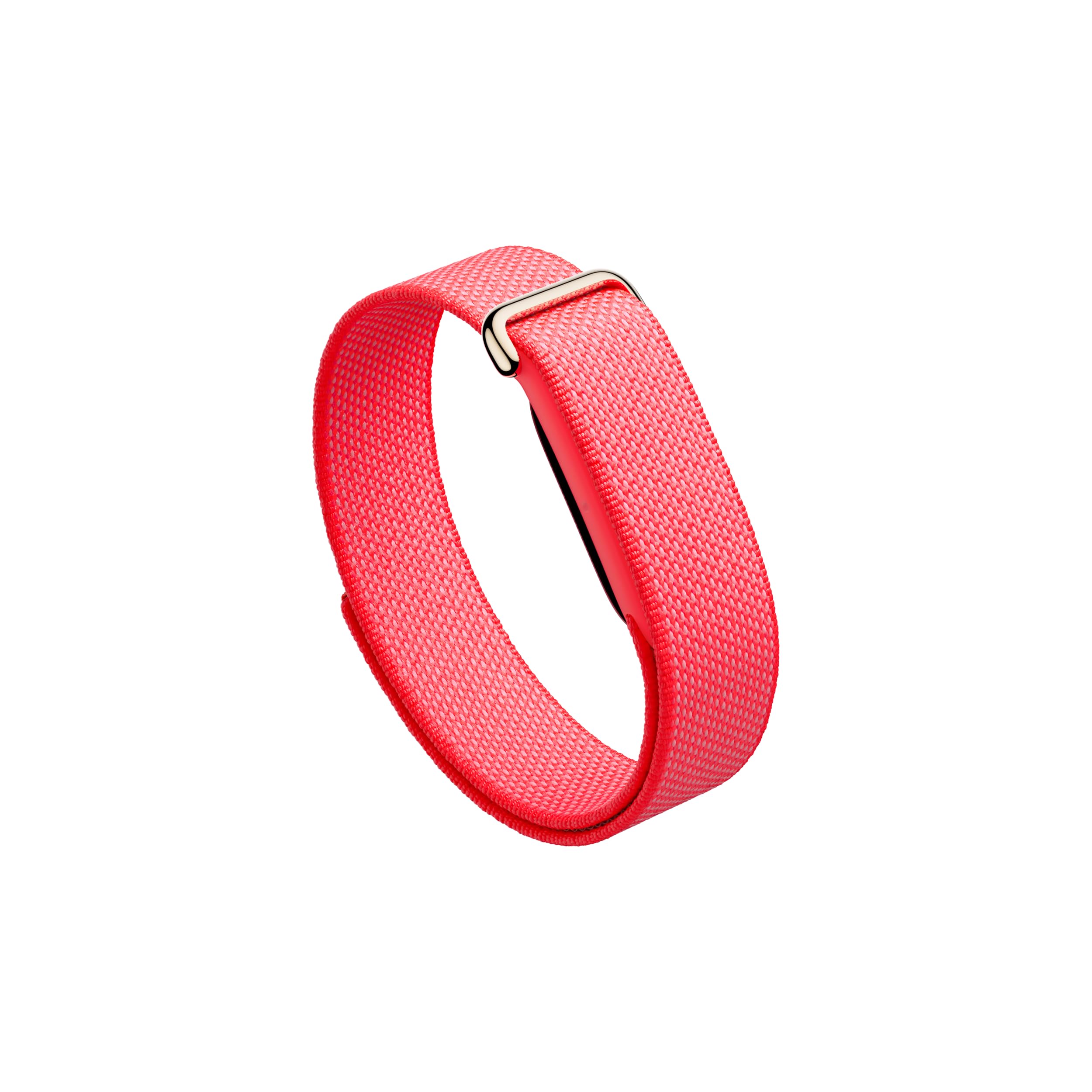
The Google Fitbit Air is an unconventional choice for Crossfit, but its screenless design solves a real pain point: cracked watches. Without a glass face, the tracker never shatters during a rope climb or wall ball impact. The lightweight micro-adjustable band sits comfortably on your wrist through all movements, and the pebble-style module presses out easily for band swaps or washing.
Tracks heart rate, sleep, HRV, SpO2, and activity 24/7, with data syncing to the Google Health app. Battery life hits seven days between charges, and a 5-minute top-up delivers a full day of use — helpful when you forget to charge overnight. The 50-meter water resistance rating handles intense sweat sessions and post-WOD showers without concern. Google Health Premium (subscription) unlocks AI-powered coaching that adapts fitness plans based on your data.
Reviewers note that distance tracking for outdoor runs lacks precision compared to GPS watches, and the screenless approach may frustrate athletes who want real-time visual metrics. However, for Crossfitters who prioritize data collection without distraction and want insurance against screen damage, the Fitbit Air offers a unique value proposition as an entry-level auxiliary tracker.
Why it’s great
- No screen to crack or shatter during high-impact WODs
- Ultra-lightweight and micro-adjustable for comfort
- Fast 5-minute charge gives one day of battery
- Excellent HR and sleep tracking for general wellness
Good to know
- No on-wrist display for real-time stats during workouts
- GPS distance tracking less accurate than sport watches
- AI coaching features require paid subscription
FAQ
Can a wrist-based tracker handle Crossfit heart rate spikes?
How do I prevent my tracker from breaking during rope climbs?
What is the minimum battery life I need for daily Crossfit training?
Do I need GPS for Crossfit workouts?
Can I use a tracker without a smartphone during workouts?
Final Thoughts: The Verdict
For most users, the best crossfit tracker winner is the Garmin Forerunner 970 because it balances pro-level metrics, sapphire durability, and an unmatched 15-day battery in a package that survives daily box abuse. If you want the most durable chassis with a built-in flashlight and dive rating, grab the Garmin fēnix 8. And for wrist-free HR accuracy during any movement, nothing beats the Garmin HRM 600.

Mo Maruf
I created WellFizz to bridge the gap between vague wellness advice and actionable solutions. My mission is simple: to decode the research and give you practical tools you can actually use.
Beyond the data, I am a passionate traveler. I believe that stepping away from the screen to explore new environments is essential for mental clarity and physical vitality.