Our readers keep the lights on and my smoothie glass nicely filled. As an Amazon Associate, I earn from qualifying purchases.
Choosing the wrong scar cream can stall healing, irritate sensitive tissue, or leave you with a tube of expensive goo that does nothing for raised or discolored marks. The science behind effective scar management is narrow and specific — it comes down to medical-grade silicone, proper hydration, and consistent application on the right wound stage.
I’m Mohammad Maruf — the founder and writer behind WellFizz. I’ve spent hundreds of hours analyzing clinical studies on scar therapies, cross-referencing ingredient lists against dermatological recommendations, and reading through thousands of real user experiences to separate what actually works from what just smells nice.
Whether you are healing from a surgery, a burn, or a stubborn acne mark, the right formula can flatten texture, reduce redness, and restore confidence. This guide breaks down the five best contenders for the title of cream to prevent scarring so you can pick with certainty.
How To Choose The Best Cream To Prevent Scarring
The scar care aisle is crowded with vitamin E oils, shea butter blends, and fancy botanical serums. Most of them moisturize well but fail to change scar structure. To actually prevent scarring, you need ingredients that modulate collagen production and maintain a hydrated occlusive barrier over the healing wound. Here are the three non-negotiable factors to evaluate.
Silicone Content and Delivery Format
Silicone is the only ingredient with consistent clinical evidence for scar prevention and treatment. It creates a protective film that hydrates the stratum corneum, reduces collagen overproduction, and flattens raised scars. You can find it in three formats: a self-drying gel that works on curved areas, an adhesive sheet that provides continuous occlusion, and an oil-based serum that doubles as a moisturizer. Gels suit the face and moving joints; sheets work best on flat, stable body areas.
Wound Maturity and Application Timing
Timing changes everything. A cream intended for a fully closed surgical incision is not appropriate for a fresh scrape. Most silicone-based formulas require the wound to be fully epithelialized — meaning the skin has sealed shut with no open tissue or scab. Starting too early traps bacteria and delays closure. Starting too late on an old, mature scar still improves texture but takes longer. Look for products that specify whether they target new scars (under six months) or old scars (over a year). Some excel at both with consistent daily use over eight to twelve weeks.
Additional Active Ingredients and Skin Compatibility
Beyond silicone, effective scar creams often include zinc oxide, panthenol, madecassoside, or squalene. Zinc oxide adds sun protection and soothing properties — critical for scars on sun-exposed areas. Panthenol (pro-vitamin B5) and madecassoside support barrier repair and reduce redness. Also check the base formula: non-comedogenic options prevent acne around facial scars, and fragrance-free formulations avoid irritation on sensitive or post-procedure skin.
Quick Comparison
On smaller screens, swipe sideways to see the full table.
| Model | Category | Best For | Key Spec | Amazon |
|---|---|---|---|---|
| Rejuvaskin RejuvaSil | Silicone Gel | Face and body scars, all ages | 0.33 oz tube, liquid silicone + emu oil + squalene | Amazon |
| Bio-Oil Skincare Oil | Oil Serum | Light scar fading and general skin texture | 4.2 oz, vitamin E + chamomile + lavender oil | Amazon |
| La Roche-Posay Cicaplast Gel B5 | Repair Gel | Post-procedure, cracked or irritated skin | 1.35 oz, 21% glycerin + 5% panthenol + madecassoside | Amazon |
| ScarAway Advanced Silicone Sheets | Silicone Sheet | Surgical, burn, and keloid scars on flat skin | 8 reusable sheets, 1.5×3 inches, lasts 7–10 days each | Amazon |
| MyNewGel Plus UV | Silicone Gel + SPF | Sun-exposed scars on arms, hands, and face | 0.5 oz, medical-grade silicone + zinc oxide SPF 30 | Amazon |
In‑Depth Reviews
1. Rejuvaskin RejuvaSil Silicone Scar Gel
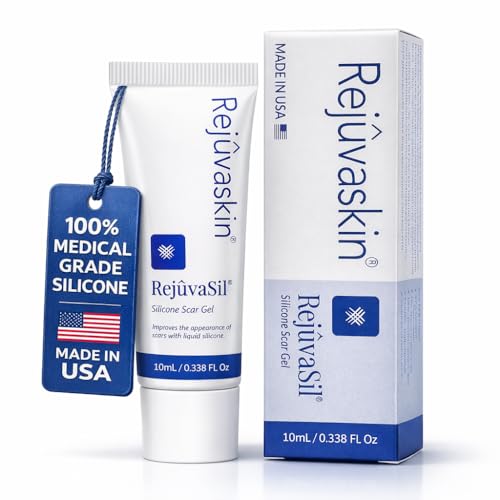
RejuvaSil combines liquid silicone with emu oil, vitamin C, and squalene — a formula that both hydrates and actively remodels scar tissue. The silicone base creates the essential occlusive film that flattens raised tissue, while emu oil penetrates deeply to reduce redness and soothe itchiness that often accompanies healing. Users report visible softening in as little as five days when applied consistently twice daily.
This gel is non-comedogenic and gentle enough for pediatric use, making it one of the few scar treatments suitable for children and adults with sensitive or acne-prone skin. The clear gel dries down without stickiness, which means it layers well under makeup or sunscreen without pilling. It works on both old and new scars — surgical incisions, burns, keloids, and facial acne marks all respond to its formulation.
The main trade-off is the tube size. At just 0.33 ounces, a single tube covers a small area for about two to three weeks of diligent twice-daily application. For larger scars or multiple treatment sites, you will need to repurchase regularly. That said, the speed of results and the ingredient transparency justify the premium positioning in this category.
Why it’s great
- Clinically proven silicone gel that absorbs quickly with no greasy residue
- Broad spectrum scar coverage — surgical, acne, burn, and keloid scars all respond
- Non-comedogenic and gentle enough for pediatric and post-surgical skin
Good to know
- Small tube size requires frequent repurchasing for larger or multiple scars
- Emu oil may be a concern for those with ethical or allergy considerations
2. Bio-Oil Skincare Body Oil Serum

Bio-Oil is one of the most recognized names in scar and stretch mark care, and its 4.2-ounce bottle offers substantial value for those treating larger surface areas. The oil-based formula relies on vitamin E, chamomile, and lavender oil to improve skin elasticity and fade discoloration rather than physically flatten raised tissue. It works best on fresh stretch marks, mild acne scars, and uneven skin tone where texture is not the primary concern.
The oil absorbs surprisingly fast for a product in this category — most users report a light, non-greasy feel after about a minute of massage. It serves double duty as a whole-body moisturizer, which makes it easy to stick to a routine. The subtle herbal scent is pleasant enough for daily use but may not suit those who prefer fragrance-free options for healing wounds or post-procedure skin.
Where Bio-Oil falls short is on mechanical scar remodeling. Because it contains no silicone, it cannot create the occlusive film that flattens hypertrophic or keloid scars. It is best positioned as a complementary product for scars that are already flat but remain discolored, or as a preventive moisturizer during the early healing phase when silicone is not yet indicated.
Why it’s great
- Large bottle size offers excellent coverage for body-wide use
- Fast-absorbing, non-greasy oil suitable for sensitive and dry skin types
- Clinically tested for improving scar and stretch mark appearance
Good to know
- Contains no silicone, so it will not flatten raised or hypertrophic scars
- Fragrance may irritate freshly healed or post-procedure skin
3. La Roche-Posay Cicaplast Gel B5

Cicaplast Gel B5 is not a traditional scar cream — it is a protective repair gel designed for the critical window immediately after skin trauma. With 21% glycerin, 5% panthenol, and madecassoside, it creates a hydrating barrier that calms irritated skin and supports the natural healing cascade. It is specifically tested for post-procedure use after stitches, laser treatments, and microneedling sessions.
The gel texture is lightweight and non-sticky, making it ideal for facial application where heavy creams would feel suffocating. Users who apply it after CO2 laser or microneedling report significantly reduced redness, less itching, and faster overall recovery compared to standard moisturizers. The formula also includes a copper-zinc-manganese complex that provides antimicrobial support without disrupting the healing tissue.
The trade-off is that Cicaplast Gel B5 does not contain medical-grade silicone, so it is not a standalone scar prevention treatment for mature wounds. It excels during the first weeks of healing — from fresh closure through the first month — but should be swapped for a silicone-based product once the skin is fully sealed to achieve optimal scar flattening and fading.
Why it’s great
- Specifically formulated for post-procedure, post-stitch, and post-laser recovery
- High concentration of panthenol and madecassoside soothes and repairs the barrier
- Fragrance-free, non-comedogenic, and safe for hypersensitive skin
Good to know
- Not a silicone-based scar treatment — best for early healing phase only
- Small 1.35 oz tube may run out quickly if applied to large body areas
4. ScarAway Advanced Silicone Scar Sheets

ScarAway’s silicone sheets deliver the gold standard of scar management — 24-hour occlusion with medical-grade silicone that hydrates the scar tissue continuously. Each sheet is self-adhesive, water-resistant, and reusable for up to ten days, making this kit an economical choice for long-term treatment of surgical scars, burns, and keloids. The tan cloth-like texture provides built-in sun protection and feels more substantial than the transparent alternatives.
Users report visible flattening and reduced redness within four weeks of consistent wear. The sheets stay in place during daily activity, though adhesion can weaken on curved joints or hairy skin. Cutting each sheet down to size minimizes waste and allows you to treat awkward areas like the chest or knees. The physical barrier also protects healing scars from friction against clothing, which can otherwise trigger further collagen buildup.
Sheets require more commitment than a gel — you need to wear them for at least twelve hours daily and replace them when adhesion fades. They are also visible on exposed skin, so they work best for overnight wear or on areas covered by clothing. For facial scars or mobile areas like knuckles, a silicone gel remains more practical and discreet.
Why it’s great
- Medical-grade silicone sheets provide continuous 24-hour occlusion for faster results
- Reusable up to 10 days per sheet, reducing long-term cost
- Tan color offers sun protection and blends better on lighter skin
Good to know
- Adhesion struggles on hairy skin or highly curved body surfaces
- Visible wear limits daytime use on exposed areas like the face or hands
5. MyNewGel Plus UV Advanced Silicone Scar Gel
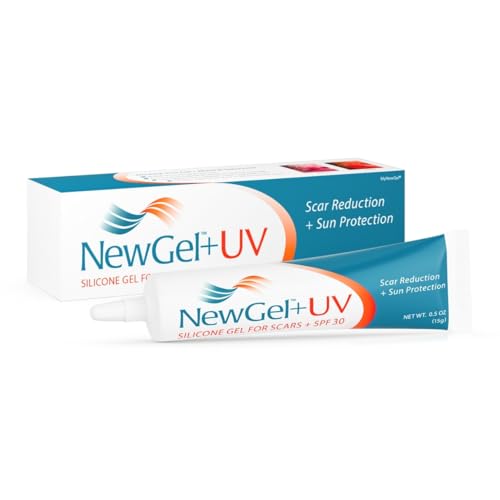
MyNewGel Plus UV solves a problem most scar creams ignore: UV exposure darkens scar tissue and reverses fading progress. This gel combines 100% medical-grade silicone with zinc oxide SPF 30 mineral sunscreen, offering two-in-one treatment and protection for scars on sun-exposed areas like the arms, face, and hands. The silicone film flattens and softens the scar while the zinc oxide shields it from darkening.
The texture is notably less tacky than many silicone-only gels — users describe it as smooth and easy to layer under makeup or a separate moisturizer. The slight white cast from the zinc oxide is minimal and can be masked with concealer on facial scars. Scentless and non-comedogenic, it works well for sensitive skin and post-surgical incisions where fragrance would cause irritation. Reviews highlight accelerated flattening of new facial scars within three weeks of twice-daily use.
The 0.5-ounce tube is small for the investment, especially if you are treating a large area that requires generous daily application. The SPF 30 protection is effective but not waterproof, so reapplication is necessary after sweating or swimming. For anyone treating a scar on a frequently exposed body part, this gel eliminates the step of applying sunscreen separately and ensures the scar is never left unprotected.
Why it’s great
- Combines medical-grade silicone with SPF 30 mineral sunscreen for unmatched UV protection
- Non-tacky, smooth texture layers well under makeup and daily moisturizers
- Clinically proven ingredients recommended by scar experts and dermatologists
Good to know
- Small tube size limits value for large or multiple treatment areas
- Zinc oxide white cast may be visible on darker skin tones without makeup
FAQ
Can I use a scar cream on an open wound or fresh stitch line?
How long does it take for a silicone scar gel to show visible results?
Do I need to wear sunscreen over a scar cream during the day?
Final Thoughts: The Verdict
For most users, the cream to prevent scarring winner is the Rejuvaskin RejuvaSil because it delivers medical-grade silicone with complementary actives in a user-friendly gel that suits all skin types and scar ages. If you want continuous occlusion and are treating a flat body area, grab the ScarAway Silicone Sheets. And for scars that see daily sunlight, nothing beats the built-in UV defense of the MyNewGel Plus UV.

Mo Maruf
I created WellFizz to bridge the gap between vague wellness advice and actionable solutions. My mission is simple: to decode the research and give you practical tools you can actually use.
Beyond the data, I am a passionate traveler. I believe that stepping away from the screen to explore new environments is essential for mental clarity and physical vitality.