Our readers keep the lights on and my smoothie glass nicely filled. As an Amazon Associate, I earn from qualifying purchases.
Nothing ruins a ride faster than a crank arm that flexes under full sprint torque or a spindle interface that develops play after a few weeks. Fixed-gear riders put unique, constant stress on the drivetrain—no coasting means every deceleration loads the crankset in reverse, which exposes weak splines, soft aluminum, and poor chainline alignment. Choosing the right set means balancing stiffness, BCD compatibility for gear ratios, and spindle standards that actually fit your frame.
I’m Mohammad Maruf — the founder and writer behind WellFizz. I’ve spent hundreds of hours cross-referencing spindle diameters, chainline measurements, arm materials, and bottom bracket interfaces to separate cranksets that hold up under skid-stop torque from those that fatigue prematurely.
Whether you ride brakeless through city traffic or chase track PRs on the velodrome, finding a reliable crank for fixed gear demands understanding BCD patterns, arm length geometry, and the difference between hollow forging and solid extrusion.
How To Choose The Best Crank For Fixed Gear
Fixed-gear drivetrains demand cranksets that resist torsional flex under both forward power and reverse braking loads. Unlike freewheel systems, every backpedal and skid sends force through the crank arm and spindle, which means material choice and interface tolerance matter more than weight alone.
BCD and Chainring Compatibility
Bolt circle diameter determines which chainrings fit your crank spider. Track and fixed-gear specific cranksets overwhelmingly use 144 BCD, which accepts the large chainrings (46T–54T) typical for high gear-inch setups. Some road-style fixed-gear conversions use 130 BCD or 110 BCD, but those limit your top-end ratio options and often require special thin chainrings to achieve proper chainline. Stick with 144 BCD if you plan to swap ratios frequently or run a classic track setup.
Crank Arm Length and Ground Clearance
Arm length directly affects pedal strike risk during banked turns and skid stops. The standard range is 165mm to 175mm. Shorter 165mm arms reduce the chance of striking the pavement during aggressive leans — a major consideration for brakeless street riders. Longer 170mm or 175mm arms offer more leverage for acceleration out of corners on the velodrome. Choose based on your primary riding environment rather than following a generic inseam chart.
Spindle Interface and Bottom Bracket Standards
The spindle-interface standard dictates how the crank arm connects to the bottom bracket. JIS square taper is the traditional fixed-gear standard — simple, cheap, and serviceable with common tools. External cup systems (Hollowtech II–style or DUB) offer stiffer interfaces and lighter weight but require specific frame shell widths and thread standards. Mis-matching the spindle standard to your frame’s bottom bracket shell creates chainline errors that cause premature chain wear and noisy drivetrains.
Quick Comparison
On smaller screens, swipe sideways to see the full table.
| Model | Category | Best For | Key Spec | Amazon |
|---|---|---|---|---|
| BOLANY 165mm 144BCD | Mid-Range | Track / Street | 144 BCD — 165mm arms | Amazon |
| Origin8 Track/SS | Mid-Range | Entry-Level Track | Forged 6061-T6 alloy, 46T ring | Amazon |
| Shimano M5100 Deore | Mid-Range | Conversions | 96mm asymmetric BCD | Amazon |
| Dioche Hollow Integral | Budget | Budget Conversions | 170mm, hollow alloy arms | Amazon |
| SE BIKES V-Ridge | Premium | BMX-Fixed Hybrid | Chromoly — 8-spline spindle | Amazon |
| SRAM NX Eagle | Premium | Multi-Speed Fixed | DUB spindle — 32T direct mount | Amazon |
| SRAM GX Eagle Boost | Premium | Aggressive Riding | 7000 series AL — 52mm chainline | Amazon |
In‑Depth Reviews
1. BOLANY 165mm 144BCD Fixed Gear Crankset

This crankset hits the sweet spot for fixed-gear riders who want a modern hollow-integrated design without paying omnium-tier prices. The 144 BCD pattern accepts standard track chainrings from 46T to 53T, and the 165mm arm length delivers exceptional cornering clearance for brakeless street riding. The included BB91 threaded bottom bracket simplifies installation on standard 68–73mm shells.
Riders report that the hollow arms improve power transfer noticeably compared to entry-level solid cranks — acceleration from a standstill feels snappier, and the built-in sealed bearing reduces drivetrain noise. Multiple long-term users have logged over 100 miles of aggressive fixed-gear climbing and skid stops without developing play at the spindle interface.
For the price, you get a complete system that includes the bottom bracket and chainring, which removes the guesswork of matching spindle lengths to frame shell widths. Consider this if you want a direct upgrade path from a stock single-speed crankset without switching to a different BCD standard later.
Why it’s great
- Hollow integrated design reduces weight while maintaining stiffness under sprint loads
- Included BB91 bottom bracket streamlines installation and ensures correct chainline
- 144 BCD provides broad chainring compatibility for gear ratio experimentation
Good to know
- Chainring options are limited to round profiles out of the box
- Some users prefer 170mm arms for velodrome-specific leverage demands
2. Origin8 Track/SS Crankset
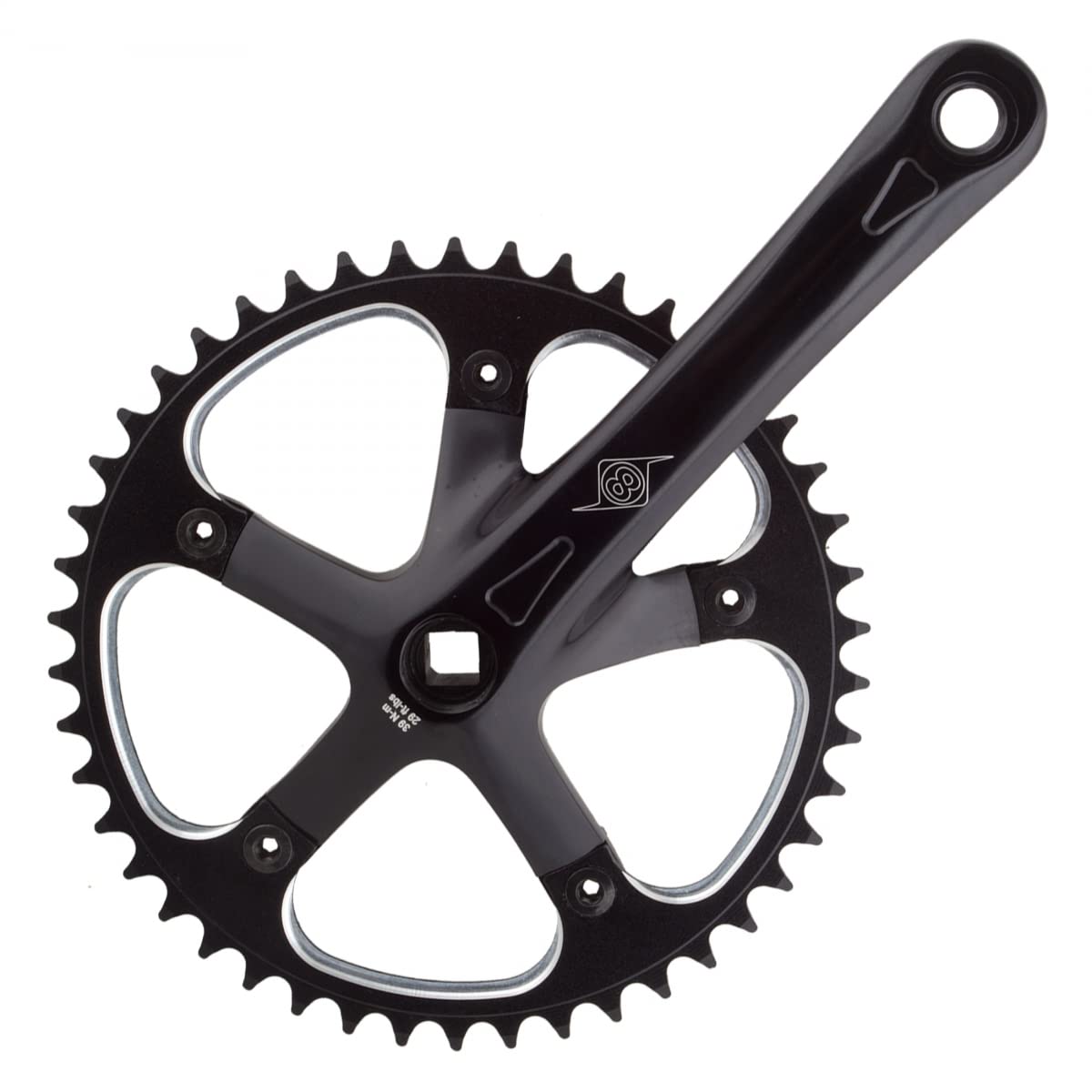
The Origin8 Track/SS is a benchmark entry-level fixed-gear crankset that has proven its reliability over years of production. The forged 6061-T6 alloy arms are heat-treated for consistent grain structure, which resists the twisting forces that cause cheaper cast cranks to fatigue. Sub-590g weight for the complete set puts it competitive with cranks costing twice as much.
It uses a JIS square taper interface, which means compatibility with nearly every square-taper bottom bracket on the market. A 42mm chainline with a 103mm BB helps track frames achieve proper alignment without excessive spacers. The 46T 1/8-inch chainring is thick enough to handle the wider chain typical of fixed-gear and single-speed drivetrains.
Some users reported thread damage on the pedal eyelets within the first week, suggesting that careful torque wrench use during installation is essential. The paint finish also chips faster than powder-coated alternatives, but this is cosmetic rather than structural. For a budget-conscious track conversion or entry-level fixed-gear build, this remains a solid choice.
Why it’s great
- Forged 6061-T6 construction offers genuine strength gains over cast alloy cranks
- Lightweight sub-590g build reduces rotating mass for faster acceleration
- Square taper interface ensures broad BB compatibility and simple service
Good to know
- Does not include bottom bracket — must purchase 103mm JIS square taper BB separately
- Occasional reports of pedal thread stripping under high torque installation
3. Shimano M5100 Deore Crankset
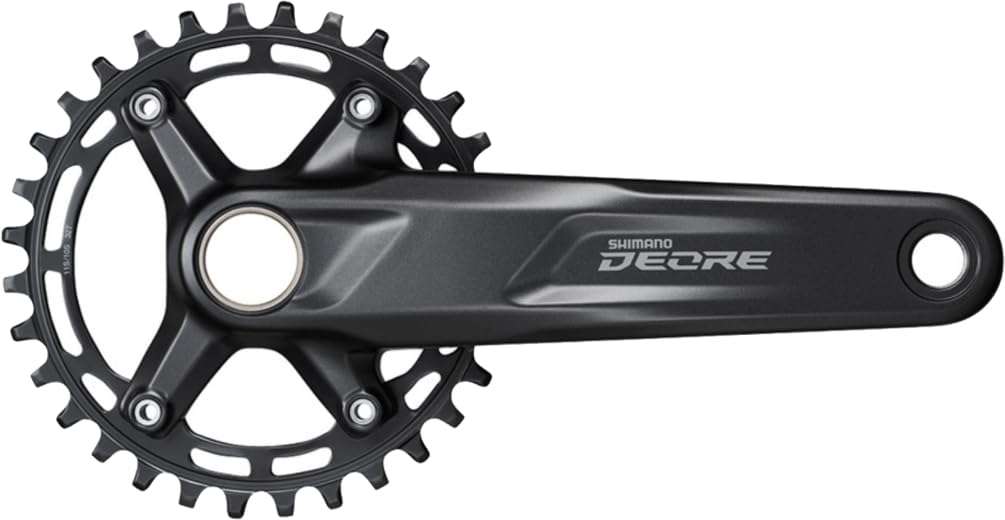
While primarily designed for 10/11-speed mountain drivetrains, the Shimano M5100 Deore crankset is a dark horse for fixed-gear conversions that need a reliable, quiet crank arm. The asymmetric 96mm BCD accepts narrow-wide chainrings that help with chain retention on conversions where the chainline is less than perfect. Users consistently mention that installation eliminated creaking noises that plagued their previous budget cranksets.
The aluminum arm construction and 170mm length provide a standard leverage profile suitable for general fixed-gear riding. The Hollowtech II interface requires an external cup bottom bracket, which adds stiffness at the spindle junction. Riders on the Kona Lava Dome and similar frame conversions report noticeable drivetrain noise reduction after swapping to this crankset.
Be aware that the stock 30T or 32T chainring sizes are far too small for typical fixed-gear gear ratios — you will need to replace the chainring with a larger offset ring to achieve appropriate gear inches. Also, installing on a 68mm frame shell requires spacers that are not included. This is a conversion specialist’s choice, not a ready-to-run track solution.
Why it’s great
- Eliminates creaking and clicking noises common with lower-end conversion cranks
- Hollowtech II interface improves spindle stiffness and power transfer
- Asymmetric 96mm BCD works with modern narrow-wide chainrings for chain retention
Good to know
- Stock chainring sizes are too small for standard fixed-gear ratios — aftermarket ring required
- Requires spacers for 68mm frame shells, which must be sourced separately
4. Dioche Hollow Integral Single Speed Crankset
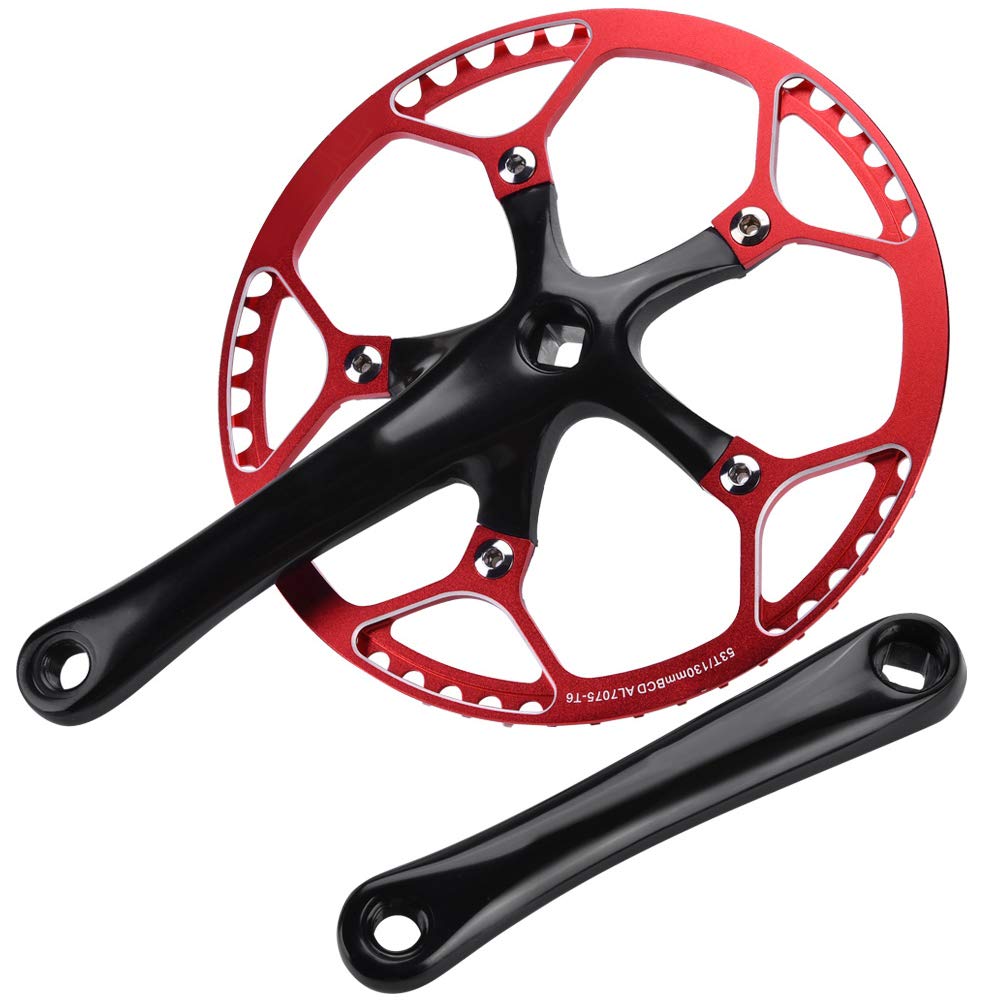
The Dioche crankset offers a genuinely lightweight hollow-aluminum option at an entry-level price point. At 0.65 kg total package weight, it shaves noticeable grams compared to solid-forged alternatives. The 183mm chain diameter and 170mm crank arm length match standard single-speed geometry, making it a drop-in replacement for OEM cranks on conversion bikes or budget track frames.
Fixed-gear riders report that the hollow construction eliminates ghost pedaling at speeds above 20 mph — a common complaint with flexy solid cranks that allow the chain to slack during coasting-equivalent motions. The precision-machined gear teeth mesh cleanly with 1/8-inch track chain, reducing noise compared to mismatched ring-and-chain combinations.
Durability over extended skid training is unconfirmed beyond 100 miles of use. Some riders note that the crank arms show cosmetic wear faster than anodized competitors, though structural integrity appears intact. This is a strong pick for budget builds where weight savings matter more than long-term finish retention.
Why it’s great
- Hollow integral design significantly reduces overall system weight
- Eliminates ghost pedaling at higher speeds for fixed-gear riders
- Precision-machined gear teeth mesh smoothly with standard 1/8-inch track chain
Good to know
- Long-term durability past 100 miles of skid training not yet verified
- Paint/finish shows wear faster than anodized competition
5. SE BIKES V-Ridge Cranks

The SE BIKES V-Ridge cranks are built from chromoly boxed tubing, which gives them a fundamentally different ride feel compared to aluminum fixed-gear cranks. Chromoly’s fatigue resistance under repeated impact loading makes this a strong candidate for riders who mix fixed-gear riding with skatepark or street-trick sessions. The 8-spline spindle interface locks securely without the creep that sometimes develops with square taper interfaces under reverse load.
With 175mm arm length and a 19mm x 150mm BMX spindle, this crankset prioritizes durability over weight. The thicker spindle diameter distributes torque across a larger contact area, reducing the risk of spline rounding during skid stops. Riders replacing cracked original cranks on big-wheel BMX cruisers report perfect fitment with standard 9/16-inch pedals and BMX sprockets.
One user experienced stripped spline engagement during installation, which suggests that precise torque and grease application matter more with this interface than with JIS square taper. The weight penalty versus aluminum is noticeable but acceptable given the strength margin. Not the first choice for weight-weenie track builds, but excellent for aggressive riding applications.
Why it’s great
- Chromoly construction provides superior impact and fatigue resistance for trick riding
- 8-spline spindle interface resists rounding better than square taper under reverse torque
- Large spindle diameter distributes skid-stop forces across a wider contact area
Good to know
- Heavier than aluminum alternatives — weight penalty is noticeable for track-oriented builds
- Careful torque and grease application required to avoid spline damage during installation
6. SRAM NX Eagle Crankset
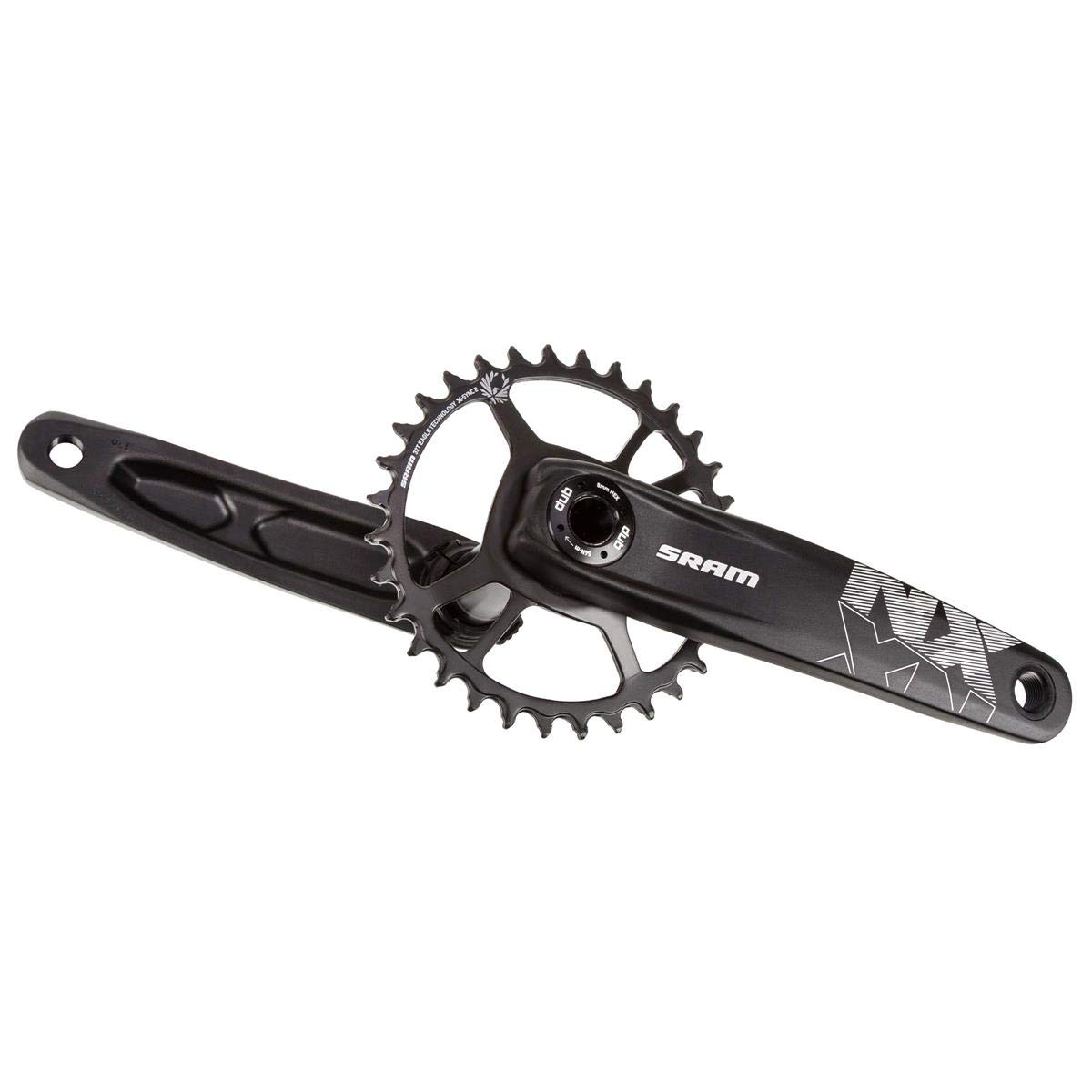
The SRAM NX Eagle crankset brings DUB spindle technology to a price point that makes sense for fixed-gear riders who also run geared bikes and want parts commonality. The 6000-series forged aluminum arms are stiff without being brittle, and the DUB interface’s sealing design keeps grit out of the bearing interface longer than traditional external cup systems. The 165mm arm length reduces pedal strikes during leaned turns and makes high-cadence spinning more comfortable for long-distance fixed rides.
DUB spindles use a consistent 28.99mm diameter across SRAM’s road and mountain lines, which simplifies bottom bracket selection regardless of frame type. The 32T steel direct-mount chainring is too small for direct track use, but the 3-bolt interface accepts aftermarket chainrings if you adapt the spider. Riders on fixed-gear mountain bike conversions particularly appreciate the improved knee clearance that shorter crank arms provide.
The crankset does not include DUB bottom bracket cups, so factor that into your total build cost. The steel chainring adds weight at the crank center but improves durability for riders who frequently skid on abrasive pavement. This is a specialized pick for riders comfortable adapting multi-speed technology to single-speed or fixed-gear applications.
Why it’s great
- DUB spindle interface offers superior sealing and standardized diameter for cross-platform builds
- 165mm arms reduce pedal strikes and improve knee clearance for taller riders
- Steel direct-mount chainring provides excellent wear resistance for skid-intensive riding
Good to know
- Bottom bracket cups not included — must purchase DUB BB separately
- Stock 32T chainring requires replacement or adapter for standard track gear ratios
7. SRAM GX Eagle Boost Crankset
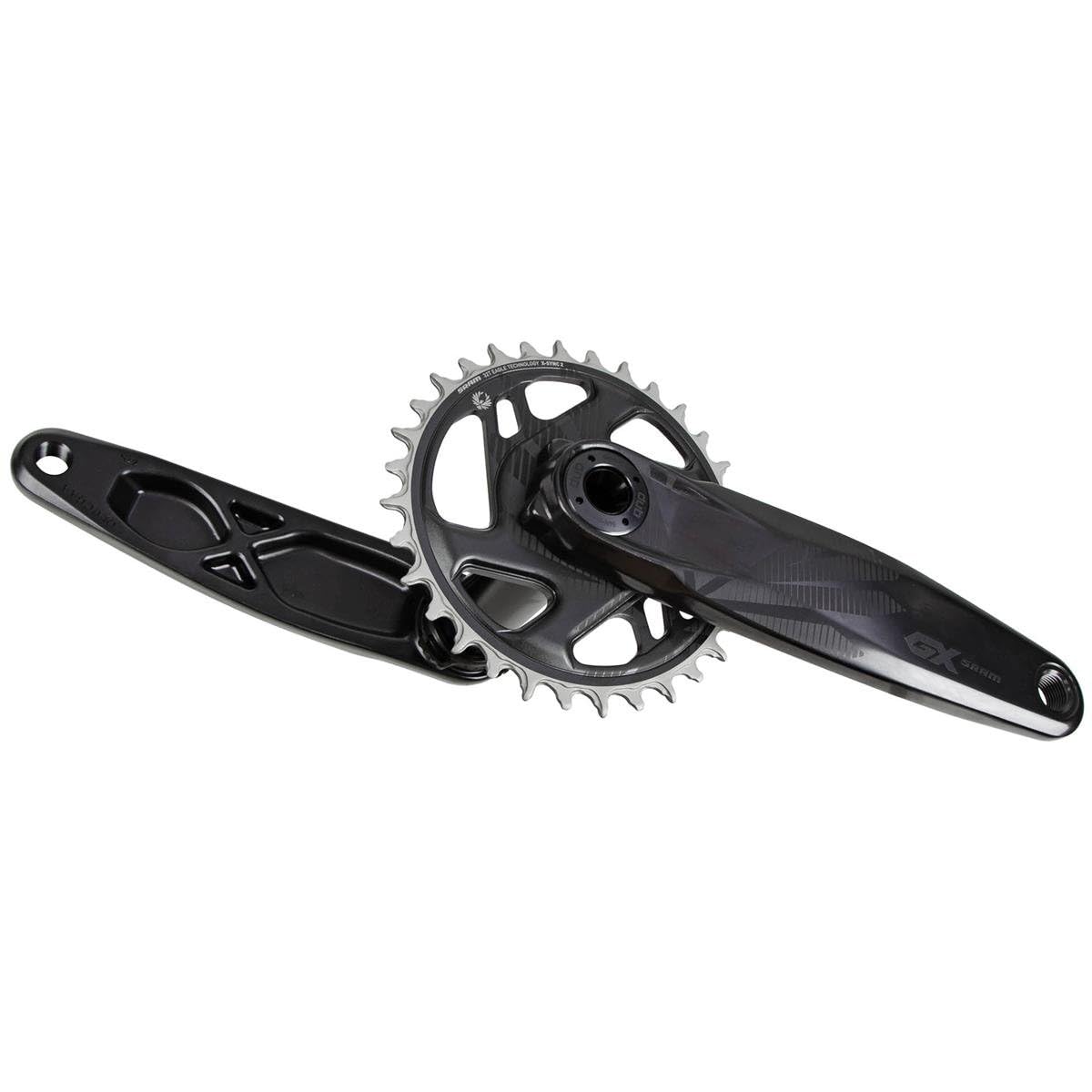
The SRAM GX Eagle Boost crankset represents the upper tier of production crank engineering, using 7000-series forged aluminum that achieves stiffness numbers approaching carbon cranks without the impact fragility. The 52mm chainline is optimized for Boost hub spacing, which matters for fixed-gear conversions on modern frames with wider rear spacing. The X-SYNC 2 chainring profiles hold the chain securely even when the drivetrain is under reverse load during skids.
The 165mm arm length hits the sweet spot for aggressive fixed-gear riders who want cornering clearance without sacrificing too much leverage for acceleration. DUB spindle integration maintains consistent bearing preload and reduces the chance of creaking over time. Riders transitioning from 175mm arms report notably better bike control in technical sections and fewer pedal strikes on banked surfaces.
This crankset is optimized for 12-speed Eagle drivetrains, meaning the direct-mount interface is specific to SRAM’s 3-bolt pattern. Converting to a fixed-gear-specific chainring requires finding a compatible direct-mount ring or using an adapter. The premium price limits this to riders who value the stiffness-to-weight ratio and already have DUB bottom bracket infrastructure in their parts bin.
Why it’s great
- 7000-series forged aluminum offers near-carbon stiffness with better impact resistance
- X-SYNC 2 chainring profiles provide exceptional chain retention under reverse drivetrain loads
- DUB spindle technology delivers consistent bearing preload and eliminates creak over time
Good to know
- Specific to SRAM 3-bolt direct-mount pattern — limits aftermarket chainring options
- Premium price point targets riders already invested in the DUB ecosystem
FAQ
Can I use a mountain bike crankset on my fixed-gear track frame?
What BCD do most fixed-gear cranksets use?
Does crank arm length affect skid patches?
Final Thoughts: The Verdict
For most users, the crank for fixed gear winner is the BOLANY 165mm 144BCD because it combines a modern hollow-integrated design with proper track-standard BCD and includes the bottom bracket, eliminating compatibility guesswork. If you want lightweight entry-level simplicity, grab the Origin8 Track/SS. And for aggressive riders who prioritize impact resistance and chromoly toughness, nothing beats the SE BIKES V-Ridge.

Mo Maruf
I created WellFizz to bridge the gap between vague wellness advice and actionable solutions. My mission is simple: to decode the research and give you practical tools you can actually use.
Beyond the data, I am a passionate traveler. I believe that stepping away from the screen to explore new environments is essential for mental clarity and physical vitality.