Our readers keep the lights on and my smoothie glass nicely filled. As an Amazon Associate, I earn from qualifying purchases.
The hollow thud of a horse latching onto a fence rail, gulping air, and grinding down teeth is a sound every stable owner dreads. Cribbing is a compulsive, destructive behavior that not only ruins barn wood and fences but can lead to colic, weight loss, and severe dental wear. A proper cribbing collar applies gentle pressure on the throatlatch, making the swallowing motion uncomfortable enough to break the cycle without restricting breathing or grazing.
I’m Mohammad Maruf — the founder and writer behind WellFizz. I’ve spent hundreds of hours analyzing equine product specifications, cross-referencing customer feedback on fit and durability, and comparing materials from budget nylon webbing to premium harness leather to understand exactly which collars stop cribbing without causing rubs or slipping.
If your horse has already damaged its teeth or developed a wind-sucking habit that worries you, finding a collar that fits correctly the first time is essential. That is why I built this guide to the best cribbing collar for horses, covering leather, nylon, and padded designs from trusted brands like Weaver Leather.
How To Choose The Best Cribbing Collar For Horses
Not every collar fits every neck. The difference between a collar that works and one that causes sores often comes down to three factors: the material’s ability to hold its shape, the positioning of the pressure point, and the adjustability range for your horse’s specific anatomy.
Material: Leather vs Nylon vs Polypropylene
Harness leather is the traditional material for cribbing collars because it has enough rigidity to stay in place but will gradually conform to the horse’s neck over weeks of use. The downside is that leather stretches with moisture and time, requiring you to punch new holes or trim the strap. Nylon and polypropylene webbing, like the 2-inch poly material used in stall guards, are more weather-resistant and hold their shape longer but can create sharp pressure points if the edges are not rounded. For horses that spend significant time turned out in rain or humidity, nylon or poly is generally more practical than leather.
Pressure Point Design: Aluminum Bar vs All-Leather
The most effective cribbing collars use a rigid bar — usually aluminum — positioned against the throatlatch. When the horse flexes its neck muscles to crib, the bar presses into the laryngeal area, making the gulping action uncomfortable. All-leather collars rely on the strap’s own stiffness to create pressure, which is gentler but may not deter a determined cribber. If your horse has already cracked a tooth from cribbing, the aluminum bar design is the stronger intervention.
Fit and Adjustability Range
A cribbing collar must sit high on the neck, just behind the jaw and above the windpipe, not low where it can slip down and rub the shoulder. Most collars range from 36 to 48 inches in total length, but the critical measurement is the throatlatch circumference, which varies dramatically between ponies, warmbloods, and draft breeds. A collar that is too large will rotate sideways when the horse drops its head to graze, causing metal components to dig into the neck. Always measure with a flexible tape and check the manufacturer’s sizing chart before ordering.
Quick Comparison
On smaller screens, swipe sideways to see the full table.
| Model | Category | Best For | Key Spec | Amazon |
|---|---|---|---|---|
| Weaver Leather Harness Leather & Aluminum Cribbing Strap | Leather + Aluminum | Severe or tooth-damaging cribbers | 1-inch russet harness leather with aluminum bar | Amazon |
| Weaver Leather All Harness Leather Cribbing Strap | All Leather | Moderate cribbers needing a gentler option | 1-inch all-harness leather, heavyweight | Amazon |
| Weaver Equine Stall Guard, Poly | Poly Webbing | Versatile stall/door guard + light cribbing | 2-inch black polypropylene webbing | Amazon |
| Weaver Leather Heavy-Duty Restraint Halter | Nylon + Chain | Controlled leading for cribbing horses | 1-inch doubled stitched nylon, chin chain | Amazon |
| Collar by BiteNot (5″ W x 21″ L) | Foam + Plastic | Post-surgery or wound protection | Flexible plastic and foam, Velcro closure | Amazon |
| Collar by BiteNot (6″ W x 27″ L) | Foam + Plastic | Large breed recovery after surgery | 6-inch wide foam/padded neck brace style | Amazon |
| Weaver Equine 3-Way Brown Horse Hobble | Felt-Lined Nylon | Trail restraint and pawing prevention | 1-inch polypropylene, felt lined, adjustable | Amazon |
In‑Depth Reviews
1. Weaver Leather Harness Leather and Aluminum Cribbing Strap
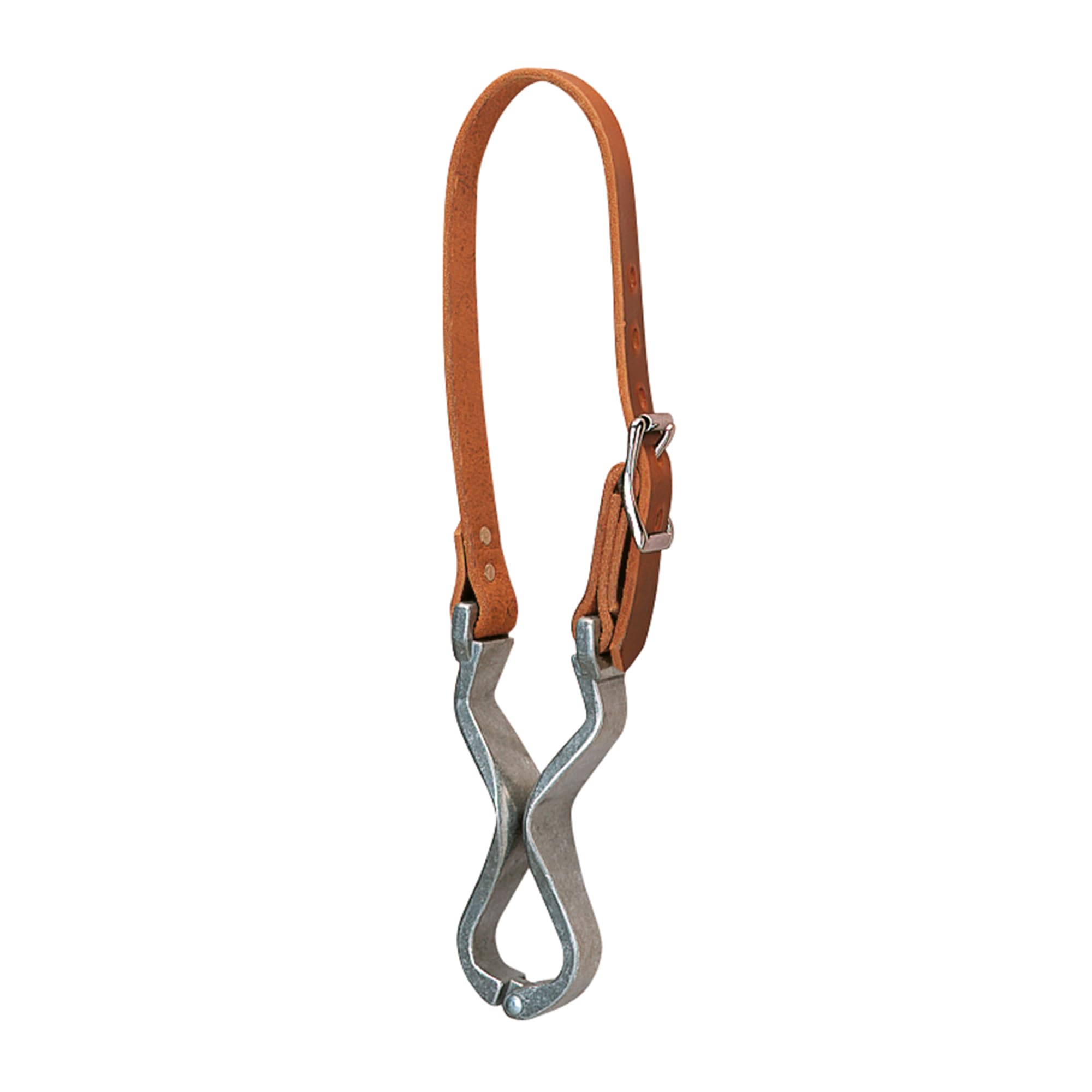
This is the collar I recommend first for horses that have already cracked a tooth or exhibit relentless wind-sucking behavior. The 1-inch russet harness leather provides a sturdy foundation, but the defining feature is the lightweight aluminum cribbing bar that sits directly against the throatlatch. When the horse engages the neck muscles to crib, that bar creates a clear pressure signal that most horses learn to avoid within two to three weeks. Nickel-plated hardware resists corrosion, and the leather is thick enough to prevent the bar from shifting sideways under normal pasture movement.
Owner feedback consistently highlights that this collar stops even the most severe cribbing habits. One buyer reported that their gelding had broken a tooth from cribbing, and after three weeks with this collar, the behavior stopped completely. Another noted immediate cessation of wind-sucking. The combination of leather and aluminum delivers a firm but adjustable deterrent that does not rely on elastic stretch to create pressure, which means the fit stays consistent day after day.
The collar’s main weakness, reported by a small number of users, is that it can loosen slightly when the horse drops its head to graze, allowing the metal bar to rotate toward the side of the neck. When this happens, the edge of the aluminum can dig into the skin and cause open sores. The solution is to ensure the collar is snug at the highest throatlatch position — if your horse has a narrow neck relative to its breed, you may need to punch an additional hole for a secure fit.
Why it’s great
- Aluminum bar creates decisive pressure that deters severe cribbers
- Russell harness leather holds shape without excessive stretch
- Nickel-plated hardware adds weather resistance
- Vet-recommended design for horses with dental damage
Good to know
- Can rotate sideways if not snugged high on the throatlatch
- Leather may require additional holes for narrow-necked horses
- Not ideal for horses that spend hours grazing with head low
2. Weaver Leather All Harness Leather Cribbing Strap
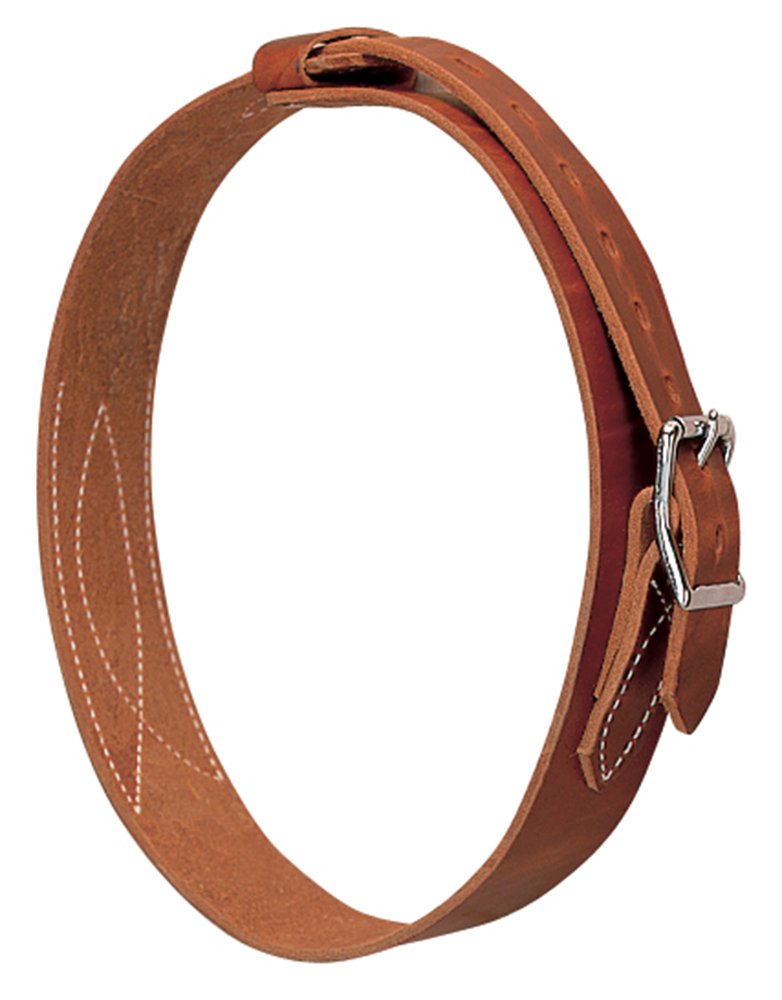
If your horse is a moderate cribber and you prefer a collar without any metal bar pressing into the throat, this all-leather strap from Weaver is the premium alternative. It is made from heavyweight harness leather with no stretch, classified as a heavyweight fabric weight, and hand-wash only. The design relies entirely on the stiffness of the leather to create enough pressure at the throatlatch to make cribbing uncomfortable, which makes it a gentler option compared to the aluminum-bar version.
Veterinarians often recommend this collar as the first line of defense for horses that have not yet damaged their teeth. Customer reviews note that it works better than budget nylon alternatives because the leather does not sag or loosen after a few days of wear. The russet color blends naturally with most coat colors, and the hardware is nickel-plated for basic corrosion resistance. Many owners report that their horses stop cribbing within a week of consistent use.
The critical issue with this collar is fit longevity. The leather stretches over time, especially if the horse wears it in wet conditions or during sweaty work. Multiple buyers reported that they had to punch an extra hole within the first month, and after two months there was no more room on the strap to tighten it further. If you have a larger warmblood or draft cross, the standard length may be too short from the start — several reviews mention returning the collar because it was too large for a horse-sized neck. Measure your horse’s throatlatch circumference carefully and consider whether you will be able to cut the strap down if needed.
Why it’s great
- Vet-recommended as the most humane and effective all-leather option
- Heavyweight harness leather holds rigidity better than budget straps
- No metal bar means less risk of skin abrasion on the neck
- Works reliably for moderate cribbers within a week
Good to know
- Leather stretches significantly, requiring hole modifications
- Limited adjustability — no extra room for larger necks
- Too large for some horses straight out of the box
3. Weaver Equine Stall Guard, Poly

This product is technically a stall guard rather than a dedicated cribbing collar, but its heavy-duty polypropylene construction makes it a multi-purpose tool for stable management. The 2-inch black webbing is thick enough to withstand leaning and pressure, and the heavy-duty nickel-plated snaps and slides allow quick attachment to stall door bars. The overall length adjusts from 36 to 48 inches, making it suitable for both standard stall doors and custom-width passages.
Owners use this guard primarily to keep horses inside their stalls without closing the bottom door, which improves air circulation and reduces confinement anxiety. The poly material holds up well against weather and repeated flexing, unlike nylon which can fray at the edges. Several buyers reported that their horses respected the guard and did not lean on it, though one customer noted that a determined horse busted through the stitching relatively quickly. For light-to-moderate cribbers, this guard can serve as an environmental management tool that prevents access to cribbing surfaces while also functioning as a general restraint.
The main limitation is that this is not a fitted collar — it is a barrier strap for stall openings. It will not apply targeted throatlatch pressure, so it should be paired with a dedicated cribbing collar if your horse cribs on fence rails or gates rather than stall doors. The poly webbing also lacks padding, so if your horse rubs against it repeatedly, the edges may cause irritation on the poll or neck.
Why it’s great
- Thick 2-inch polypropylene webbing resists weather and leaning
- Adjustable length from 36 to 48 inches fits most stall widths
- Heavy-duty nickel snaps attach securely to metal bars
- Improves stall ventilation while keeping horse contained
Good to know
- Not a throatlatch cribbing collar — does not stop wind-sucking
- Stitching can fail under pressure from a determined horse
- Unpadded webbing may rub if the horse leans repeatedly
4. Weaver Leather Heavy-Duty Restraint Halter
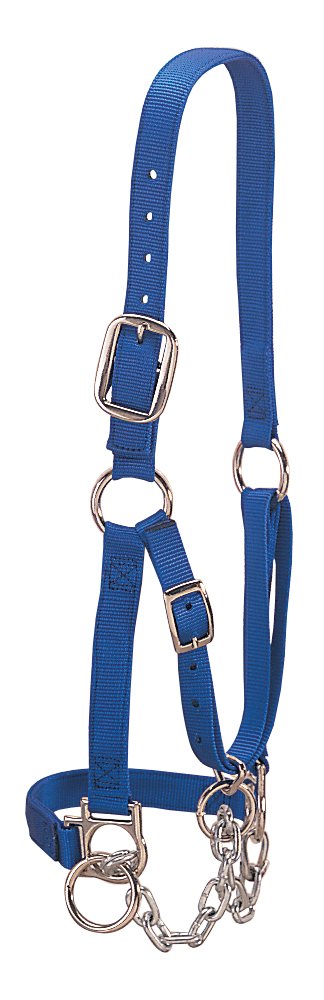
This halter is built for handling horses that need extra control during leading and tying, not for cribbing prevention per se. The 1-inch doubled and stitched nylon construction is extremely strong, and the chin choker style chain adds leverage for handlers who need to discourage pulling or rearing. Weaver Leather is a trusted brand in cattle and equine equipment, and this halter reflects that standard with consistent sizing and quality hardware.
Users with cross-tied or stall-bound cribbers might consider this halter as part of a broader behavior management system — it allows you to apply pressure cues during handling that discourage the horse from bracing against surfaces to crib. The chain under the chin provides a tactile correction that some horses respond to better than a static collar. The small size is designed for ponies, miniatures, or young horses, with plenty of adjustment notches. Several buyers confirmed it fits longhorn cattle and small equines accurately.
The drawback for cribbing-specific use is that this halter does not cover the throatlatch area at all — the chain sits low on the chin groove, not high against the larynx. It will not prevent wind-sucking during turnout or unsupervised hours. Additionally, one customer reported that the color received did not match the advertised shade, receiving a bright royal blue instead of the pictured navy. If you are looking specifically for a cribbing collar, this is a supporting tool rather than the primary solution.
Why it’s great
- Doubled and stitched nylon with chain offers strong handling control
- Consistent sizing from a top equine brand
- Many adjustment notches allow room for growth in young animals
- Works well for halter-breaking cattle and small equines
Good to know
- Does not apply throatlatch pressure for cribbing prevention
- Chain position is low on chin, not at larynx level
- Color may differ from listing images
5. Collar by BiteNot (5″ W x 21″ L)

This BiteNot collar is designed for dogs recovering from surgery, but its design — a padded foam ring that restricts neck flexibility — has some crossover utility for horses that need to be prevented from turning their heads to reach wounds or surgical sites on the body. The 5-inch width by 21-inch length is suitable for medium-to-large dogs, and the flexible plastic core is covered with foam and sealed with Velcro for quick on and off. It is machine washable, which is essential for maintaining hygiene around healing incisions.
Customer experiences with this collar are overwhelmingly positive for its intended use. Dog owners report that it is dramatically less stressful than a traditional Elizabethan collar because the animal can walk, lie down, sleep, and even drink without bumping into furniture. The collar functions like a human neck brace, holding the head in a forward-facing position that prevents licking or biting of the belly, flank, or hindquarters. The foam padding is well-regarded for comfort during extended wear, including crate training.
There are two significant safety concerns to consider. Some large-breed dogs, particularly brachycephalic breeds and heavy droolers, experienced difficulty breathing because the collar restricts air movement around the throat and traps moisture against the skin. One owner of a 103-pound Rottweiler reported that the collar caused a yeast infection on the neck due to poor breathability. Additionally, the manufacturer explicitly states that this collar is not recommended for protecting eyes or ears, and the company does not accept returns for sanitary reasons, so measuring carefully before purchase is critical.
Why it’s great
- Much more comfortable than traditional e-collars for recovery
- Machine washable foam maintains hygiene around wounds
- Allows natural sleep, drinking, and crate training
- Easy Velcro application without tools
Good to know
- Not designed for horses — limited utility for equine cribbing
- Poor breathability can cause skin infections in heavy droolers
- No returns accepted for sanitary reasons
6. Collar by BiteNot (6″ W x 27″ L)

This is the larger variant of the BiteNot recovery collar, with a 6-inch width and 27-inch length that accommodates large breed dogs weighing up to about 100 pounds. The same foam-and-plastic construction applies, but the wider profile provides more neck restriction, which is necessary for preventing access to incisions on the abdomen or hindquarters in bigger animals. The Velcro closure system is the same as the smaller model, and the collar is similarly machine washable.
The sizing distinction matters here. Owners of dogs in the 50-to-70-pound range found that the 5-inch model was too small to prevent licking of belly stitches, while the 6-inch version created enough of a neck brace to block access entirely. One buyer with a 50-pound spayed puppy confirmed that the 6×27 size allowed the dog to sleep on its side comfortably, move around the crate, and still drink from a bowl without the collar interfering. The ability to maintain normal posture makes this collar far more practical than the cone for multi-day recovery periods.
However, the same breathability issue from the smaller model persists here. The foam absorbs moisture, and when combined with the snug fit required to prevent rotation, it creates a warm, damp environment around the neck. Owners of large breeds that drool heavily — Newfoundlands, Mastiffs, Bloodhounds — should expect the collar to become soaked within hours, and the manufacturer explicitly refuses returns for sanitary reasons. Post-recovery, one Rottweiler owner reported that the collar caused a yeast infection on the neck and ears that required separate veterinary treatment. This collar is best suited for short recovery windows or dogs that do not produce excessive saliva.
Why it’s great
- 6-inch width prevents belly incision access for large dogs
- Comfortable enough for side sleeping and crate training
- Less stressful and less bulky than a plastic cone
- Machine washable for hygiene during recovery
Good to know
- Foam traps moisture, risking skin infections in drooly breeds
- Fit must be very snug to prevent rotation, limiting airflow
- Not returnable for sanitary reasons — measure carefully
7. Weaver Equine 3-Way Brown Horse Hobble

This 3-way hobble from Weaver is a restraint system designed for trail camping and high-line tying, not for cribbing prevention. The design uses 1-inch polypropylene webbing with a 1/4-inch black felt lining on the fetlock cuffs to prevent chafing, and a third connector strap that links the front legs to limit forward movement. The hobble allows the horse to graze and move at a walk but prevents running, kicking, and pawing — behaviors that can be destructive at camp or during breaks on the trail.
The felt lining is the standout feature for comfort. Multiple buyers confirmed that even after a week of continuous trail use, the hobbles did not rub or cause hair loss around the ankles. The adjustable straps fit most medium to cob-sized horses (roughly 12 to 15.1 hands), though one user noted that the front hobbles are not individually adjustable, which limited the fit for horses with significantly different front leg circumferences. The hardware is nickel-plated and held up well to trail conditions including dust, mud, and stream crossings.
The hobble is not a cribbing collar and should not be used as one. It applies no pressure to the throat or larynx, and wearing it will not deter wind-sucking or fence chewing. Its role in a cribbing management plan is indirect — if your horse cribs out of boredom during long trail stops, the hobble can keep them safely contained near the picket line while you manage the environment. For horses that paw destructively when tied, this hobble is a practical solution that prevents that specific behavior without resorting to chains or heavy restraints.
Why it’s great
- Felt lining prevents ankle chafe even after days of trail use
- Allows grazing while preventing running, kicking, and pawing
- Nickel-plated hardware resists trail corrosion
- Adjustable straps fit most medium to cob-sized horses
Good to know
- Not a cribbing collar — does not address wind-sucking at all
- Front hobbles are not individually adjustable
- Sized for smaller horses; not suitable for large warmbloods or drafts
FAQ
How tight should a cribbing collar be on the horse’s neck?
Can a cribbing collar cause sores on the horse’s neck?
Is a metal bar or all-leather collar better for a severe cribber?
Final Thoughts: The Verdict
For most users, the cribbing collar for horses winner is the Weaver Leather Harness Leather and Aluminum Cribbing Strap because the aluminum bar applies decisive pressure that deters even severe wind-sucking while the harness leather holds its shape longer than all-leather alternatives. If you want a gentler option for a moderate cribber, grab the Weaver Leather All Harness Leather Cribbing Strap. And for managing destructive pawing or kicking on the trail, nothing beats the comfort of the felt-lined Weaver Equine 3-Way Brown Horse Hobble.

Mo Maruf
I created WellFizz to bridge the gap between vague wellness advice and actionable solutions. My mission is simple: to decode the research and give you practical tools you can actually use.
Beyond the data, I am a passionate traveler. I believe that stepping away from the screen to explore new environments is essential for mental clarity and physical vitality.