Our readers keep the lights on and my smoothie glass nicely filled. As an Amazon Associate, I earn from qualifying purchases.
A bad broadhead turns a perfect shot into a tracking nightmare. The wrong blade choice—mechanical or fixed—can mean a lost deer, a bent arrow, or a heartbreaking miss. Hunters who skip the research pay for it in the field.
I’m Mohammad Maruf — the founder and writer behind WellFizz. I’ve spent hundreds of hours digging into crossbow ballistics, blade deployment mechanics, and real-world hunt reports to separate marketing hype from terminal performance.
This guide breaks down the best fixed-blade and mechanical options to match your crossbow speed, draw weight, and preferred shot distance. Read on to find the most dependable crossbow broadhead for deer that fits your hunting style and bow setup.
How To Choose The Best Crossbow Broadhead For Deer
Selecting the right broadhead for deer hunting with a crossbow means balancing blade type, weight, cutting diameter, and tip design. Your crossbow’s speed — measured in feet per second (fps) — directly affects whether a mechanical or fixed-blade head will perform reliably. Faster bows need more robust deployment systems to prevent blades opening mid-flight.
Mechanical vs Fixed-Blade Broadheads
Mechanical broadheads offer larger cutting diameters (up to 2 inches) and fly like field points because the blades stay flush with the ferrule until impact. The trade-off is reliability — cheap O-rings or rubber bands can snap at high speeds. Fixed-blade broadheads are simpler and never fail to open, but they require a well-tuned bow to fly straight. For crossbows pushing over 350 fps, a fixed-blade or a mechanical with a spring-clip or shock collar system is the safer bet.
Cutting Diameter and Wound Channels
A larger cutting diameter creates a bigger wound channel, better blood trails, and faster recoveries. Mechanical heads typically offer 1.5 to 2 inches of cut. Fixed-blade heads usually stop at 1.25 inches for better penetration and flight stability. For deer, a cutting diameter of at least 1.25 inches is recommended. Anything smaller reduces the margin for error on less-than-perfect shot placement.
Tip Design for Bone Penetration
Crossbow bolts carry enormous kinetic energy. A chisel tip or Trocar tip crushes through shoulder bone that would deflect a standard pointed tip. If you expect quartering-to shots or heavy bone contact, prioritize a broadhead with a reinforced steel or hardened tip design. This prevents blade damage and ensures the broadhead reaches the vitals.
Quick Comparison
On smaller screens, swipe sideways to see the full table.
| Model | Category | Best For | Key Spec | Amazon |
|---|---|---|---|---|
| RAGE 3 Blade Chisel Tip SC | Mechanical | Maximum blood trails & reliability | 1.6″ cutting diameter | Amazon |
| Flying Arrow Toxic Broadheads | Fixed Blade | Bone-crushing penetration | 7/8″ cutting diameter | Amazon |
| Swhacker #219 Crossbow | Mechanical | Large wound channels & accuracy | 1.75″ cutting diameter | Amazon |
| New Archery Products Killzone 2 | Mechanical | Crossbow compatibility & durability | 2″ cutting diameter | Amazon |
| Muzzy MX-3 Fixed Blade | Fixed Blade | Budget-friendly reliability | 1.25″ cutting diameter | Amazon |
In‑Depth Reviews
1. RAGE 3 Blade Chisel Tip SC Mechanical Broadhead
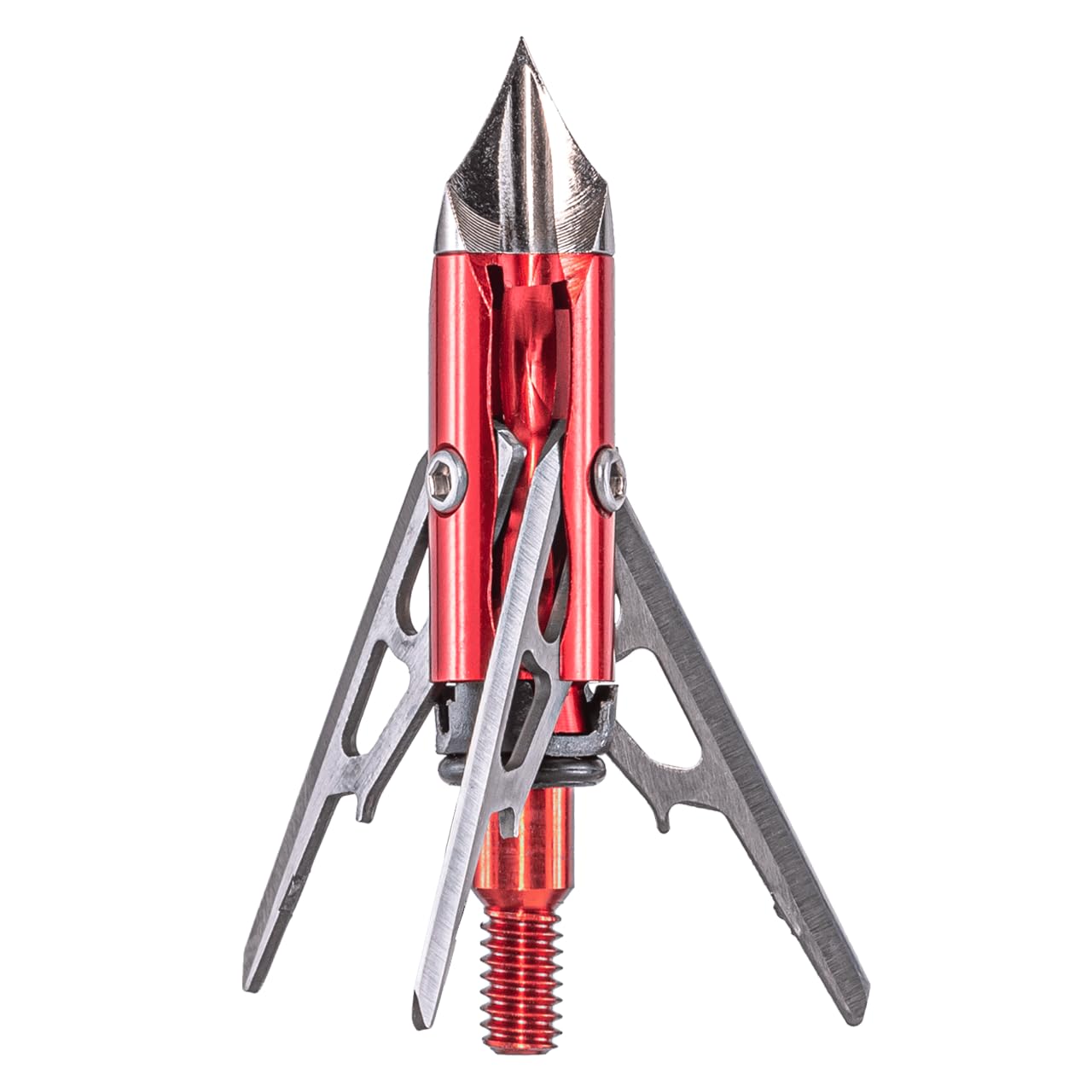
The RAGE Chisel Tip SC uses a Shock Collar that keeps blades locked tight during flight and releases only on impact. This eliminates the rubber band failure that plagues cheaper mechanicals. The chisel tip punches through shoulder bone and heavy gristle that would deflect standard pointed mechanicals, making it a top choice for high-speed crossbows.
The swept-back blade design reduces deployment resistance while the reinforced aluminum ferrule absorbs impact energy without bending. At 100 grains with a 1.6-inch cutting diameter, this head creates massive wound channels that produce easy-to-follow blood trails. Real users report complete pass-throughs on deer at 40 yards with blades staying intact after bone contact.
Several hunters mention this head flies identically to field points out to 60 yards when the bow is properly tuned. The three-pack includes replacement blades sold separately, extending the usable life. The only note is that some users replace heads after each hunt for maximum reliability, but that’s standard practice for serious bowhunters.
Why it’s great
- Shock collar prevents mid-air blade deployment at high fps
- Chisel tip crushes through bone without deflection
- Flies like a field point with a tuned bow
Good to know
- Premium price for a three-pack
- Blades may need replacement after hard-impact shots
2. Flying Arrow Toxic Broadheads 100 Grain

The Flying Arrow Toxic is a fixed-blade broadhead built specifically for crossbow bolts. Its Radical Core Decompression technology uses a coring-style head that removes a plug of tissue as it passes through, creating a permanent wound channel that doesn’t close up. The 7/8-inch cutting diameter is smaller than mechanicals, but the chisel tip drives through bone with brutal efficiency.
Real hunters report complete pass-throughs on hogs and deer at speeds up to 400 fps, with one user describing a doe going only 50 yards after a 60-yard shot. The chisel tip busted shoulder bone on multiple harvests, something that impresses experienced hunters who’ve tested both mechanicals and fixed blades for decades.
Accuracy is identical to field points from 20 to 60 yards, which eliminates the need for separate practice tips. The blades are replaceable and interchangeable with the Cyclone model. The main drawback is that the thin blades bend more easily in foam targets, so you’ll wear them out faster during practice sessions.
Why it’s great
- Bone-crushing chisel tip penetrates shoulders
- Flies exactly like field points at all ranges
- RCD technology creates massive tissue damage
Good to know
- Blades bend easily in foam targets
- Smaller cutting diameter than mechanical options
3. Swhacker #219 Crossbow Broadheads
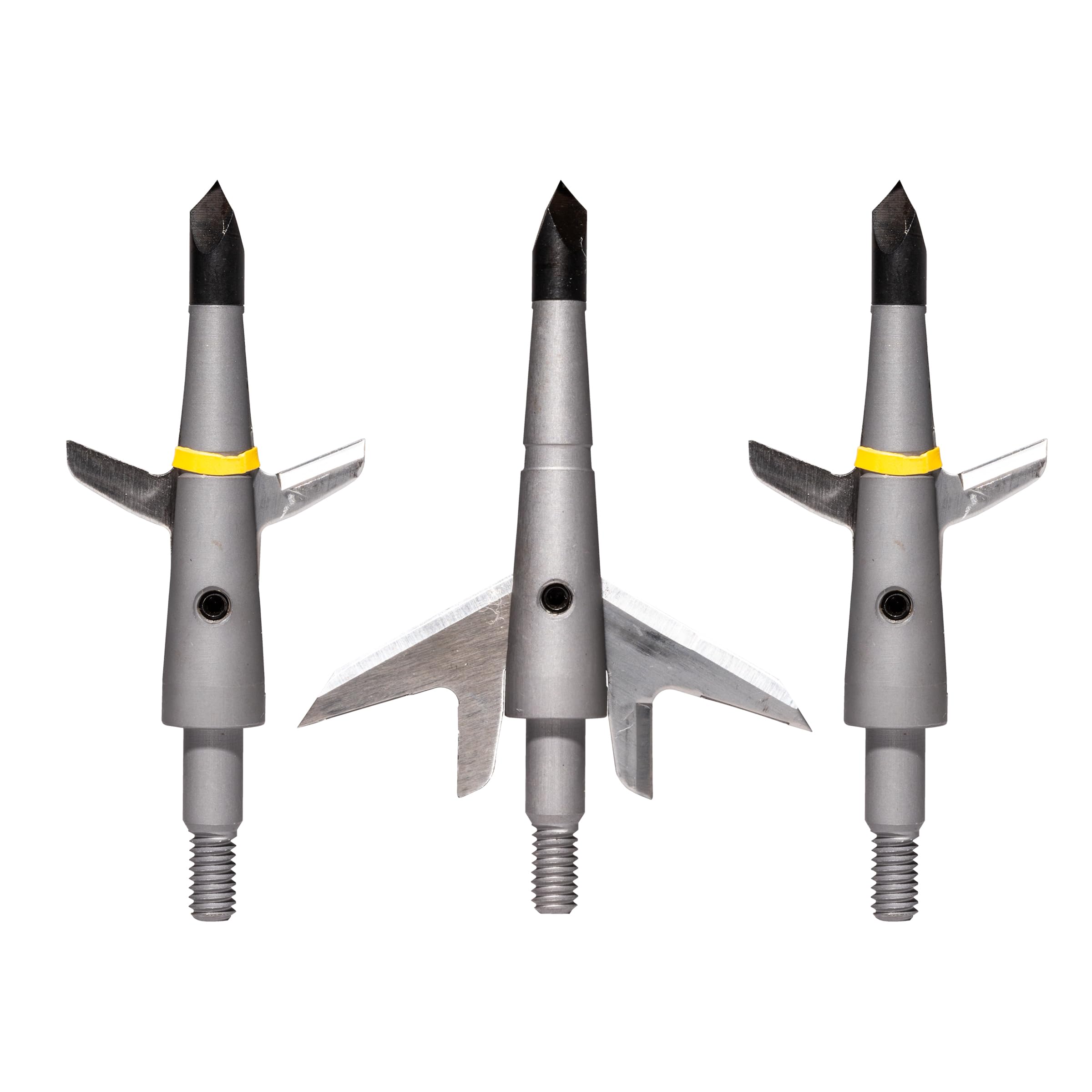
The Swhacker #219 uses patented Two-Slice Technology where the wing blades engage first while the primary blades stay closed, then deploy on impact for controlled energy transfer. This design delivers a massive 1.75-inch cutting diameter from a compact in-flight profile that supports the accuracy demands of crossbow hunting. The aircraft-grade aluminum ferrule and stainless steel blades handle high-velocity arrow speeds without structural failure.
Real-world results are impressive — multiple users report deer never going more than 50 yards after being hit, with pass-through shots at 30 yards leaving big exit holes and excellent blood trails. The 100-grain weight works well with most crossbow setups. One user reported pin-point accuracy from a Ravin R-10 at all ranges.
There is a critical installation note: the pre-installed retention bands can fail on crossbows over 400 fps. Experienced users recommend replacing the stock bands with fresh ones or using two bands for faster bows. Without this adjustment, blades can deploy mid-flight and cause a miss. Once addressed, the heads fly true and devastate on impact.
Why it’s great
- Large 1.75-inch cutting diameter for massive wound channels
- Two-Slice design controlled energy transfer on impact
- Excellent blood trails and quick recoveries
Good to know
- Stock retention bands can fail on high-speed bows
- Does not fly identically to field points without tuning
4. New Archery Products Killzone 2 Blade
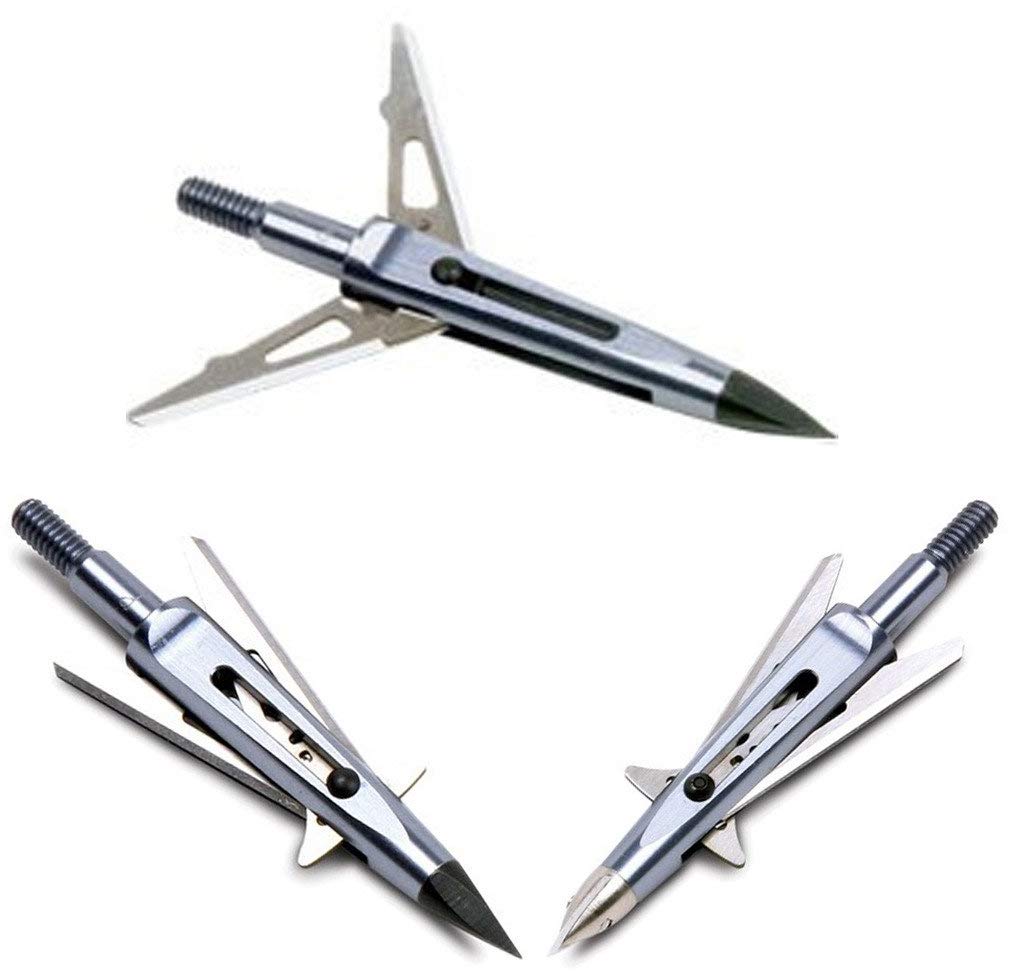
The Killzone 2 uses a spring-clip design instead of O-rings or rubber bands to keep blades closed until impact. This makes it a dependable mechanical option for crossbows pushing the 360 fps mark. The rear-deploying blades create a 2-inch cutting diameter — among the largest in this roundup — which translates to devastating wound channels and unmistakable blood trails.
One user reported a pass-through on a doe at 42 yards with an easy blood trail leading to a 50-yard recovery. The blades are durable enough to survive bone contact — one user noted a blade bent but was easily straightened. The trophy tip design adds penetration reliability on tough shots.
The 100-grain weight and compact in-flight profile allow this head to fly well with most crossbow bolt configurations. Some users reported the practice blade insert needing minor filing to fit properly, which is a small inconvenience for a head that performs so reliably in the field. No O-rings to dry out or snap means one less failure point to worry about.
Why it’s great
- Spring-clip design eliminates O-ring failure at high speeds
- 2-inch cutting diameter creates massive wound channels
- Durable blades survive bone contact
Good to know
- Practice blade insert may need fitting
- Point was not sharp out of box for some users
5. Muzzy MX-3 Fixed Blade Broadheads

The Muzzy MX-3 is a fixed-blade broadhead with a Trocar tip that crushes tough surfaces other tips deflect from. The 1.25-inch cutting diameter is paired with a compact design that flies straight with high-speed bows, eliminating the drifting common with longer heads. The 0.025-inch blade thickness reduces drag for better flight while maintaining sharpness through tough materials.
Real users confirm this head flies with field points — one discovered his bow was out of tune when the broadhead grouped 3 inches right. After tuning, it hit bullseyes at 20 yards. Penetration tests in 8-inch foam showed 12 to 14 inches of penetration at 65 pounds and 310 fps, outperforming field points by a wide margin. The lightweight aluminum ferrule drops total arrow weight compared to steel construction without sacrificing durability.
Several users mention this is their go-to broadhead because it offers the best performance for the price. While the machining isn’t as refined as double-price models and some heads fail a spin test out of the package, the sharpness, durability, and straight flight when tuned makes this a reliable choice for budget-conscious hunters who want fixed-blade dependability.
Why it’s great
- Trocar tip crushes through bone and tough surfaces
- Flies with field points after bow tuning
- Replaceable blades extend usable life
Good to know
- Occasional spin-test failures out of package
- Less refined machining than premium competitors
FAQ
Can I use compound bow broadheads in a crossbow?
What grain broadhead is best for deer hunting with a crossbow?
How often should I replace my crossbow broadheads?
Final Thoughts: The Verdict
For most hunters, the best crossbow broadhead for deer is the RAGE 3 Blade Chisel Tip SC because its Shock Collar prevents blade deployment issues at high speeds while the chisel tip handles bone contact reliably. If you want fixed-blade penetration with a chisel tip that crushes shoulders, grab the Flying Arrow Toxic Broadheads. And for extreme cutting diameter and massive wound channels on a budget, nothing beats the Swhacker #219 Crossbow Broadheads.

Mo Maruf
I created WellFizz to bridge the gap between vague wellness advice and actionable solutions. My mission is simple: to decode the research and give you practical tools you can actually use.
Beyond the data, I am a passionate traveler. I believe that stepping away from the screen to explore new environments is essential for mental clarity and physical vitality.