Our readers keep the lights on and my smoothie glass nicely filled. As an Amazon Associate, I earn from qualifying purchases.
The jump from shooting home video to making something that looks truly cinematic hinges on one critical decision: the camera body you choose. For filmmakers, the body isn’t just a box that captures light—it’s the engine that determines your color science, codec choices, dynamic range, and how much latitude you have in post-production. Whether you’re crafting a short film, a documentary, or commercial content, locking in a body that delivers rich, flexible footage is non-negotiable.
I’m Mohammad Maruf — the founder and writer behind WellFizz. After spending countless hours dissecting sensor specs, codec capabilities, and real-world stabilization performance, I’ve built this guide around the specific needs of narrative and commercial filmmaking.
The list below distills the market into the most capable options for storytelling, grading, and production workflow, helping you find the best digital camera for filmmaking that matches your budget and creative vision.
How To Choose The Best Digital Camera For Filmmaking
Selecting a camera for filmmaking goes far beyond still photography specs. You need to evaluate codec flexibility, dynamic range, bit depth, and accessory ecosystems. Here are the key factors that separate a capable cinema tool from a standard hybrid camera.
Codec and Bit Depth
Internal recording codecs like ProRes, Blackmagic RAW, or high-bitrate XAVC give you the latitude to grade footage without banding or artifacts. Look for 10-bit 4:2:2 recording as a baseline—8-bit footage falls apart quickly in color grading. A codec like BRAW or ProRes 422 HQ offers even more flexibility in post-production, allowing you to correct exposure and white balance after the fact.
Dynamic Range and Log Profiles
Dynamic range, measured in stops, determines how well the sensor holds detail in shadows and highlights. A camera with 13 stops or more paired with a log gamma curve (like V-Log, S-Log, or C-Log) enables you to capture a wider range of luminance and grade it to a cinematic look. Dual native ISO sensors further enhance low-light performance without introducing excessive noise.
Stabilization and Build
For handheld or gimbal work, in-body image stabilization (IBIS) reduces micro-jitters and minimizes the need for post-production stabilization. However, some dedicated cinema cameras omit IBIS entirely in favor of a more locked-down build. A large, bright LCD or an integrated EVF helps with framing and focus, and robust connectivity (HDMI, USB-C, XLR audio) ensures you can rig the camera for professional shoots.
Quick Comparison
On smaller screens, swipe sideways to see the full table.
| Model | Category | Best For | Key Spec | Amazon |
|---|---|---|---|---|
| Blackmagic Pocket Cinema Camera 4K | Cinema | Narrative & doc work | 13 stops DR / BRAW | Amazon |
| Blackmagic PCC 4K Power Bundle | Cinema | Extended run & gun | 3 batteries included | Amazon |
| Sony FX2 | Cinema | Professional cinema | 15+ stops DR / S-Log | Amazon |
| Canon EOS R8 | Mirrorless | Hybrid filmmaking | Uncropped 4K60 / C-Log3 | Amazon |
| Sony a7 III | Mirrorless | Hybrid full-frame | 15-stop DR / S-Log | Amazon |
| Sony a6400 | Mirrorless | Budget 4K video | Real-time Eye AF | Amazon |
| Canon EOS R10 | Mirrorless | Fast-action hybrid | 15fps mech shutter | Amazon |
| Canon VIXIA HF G70 | Camcorder | Long-throw zoom | 20x optical zoom | Amazon |
| Nikon Z50 II | Mirrorless | Entry-level vlogging | 31 preset colors | Amazon |
| FUJIFILM X-T30 III | Mirrorless | Everyday stills/video | 20 Film Simulations | Amazon |
| Panasonic LUMIX G100 | Mirrorless | Compact live-stream | 360° audio tracking | Amazon |
In‑Depth Reviews
1. Blackmagic Design Pocket Cinema Camera 4K

The Pocket Cinema Camera 4K is the gold standard for entry-level pro filmmaking. Its Micro Four Thirds sensor delivers 13 stops of dynamic range and dual gain ISO up to 25,600, giving you clean shadows and high-fidelity highlights straight out of camera. The ability to record directly to Blackmagic RAW or Apple ProRes means your footage is ready for DaVinci Resolve grading with no transcoding step.
The 5-inch touchscreen LCD is bright enough for on-set monitoring without an extra monitor, and the mini XLR input with phantom power lets you capture professional audio directly into the camera. However, there is no in-body stabilization, so you will need a tripod, gimbal, or supported rig for steady handheld shots. The LP-E6 battery life is short, and the 1080p crop at higher frame rates is a known compromise.
Despite these quirks, this camera has become the backbone of indie productions, corporate shoots, and documentary work. The included DaVinci Resolve Studio activation key alone adds hundreds of dollars in value, making this one of the most cost-effective cinema tools on the market.
Why it’s great
- Superb 13-stop dynamic range with dual native ISO
- Records Blackmagic RAW and ProRes internally
- Mini XLR audio input with phantom power
- Includes full DaVinci Resolve Studio license
Good to know
- No in-body image stabilization; needs rigging
- LP-E6 battery drains quickly on set
- 1080p crop at 120fps is significant
2. Blackmagic PCC 4K Power Bundle

This power bundle addresses the Pocket Cinema Camera 4K’s biggest weakness — its notoriously short battery life. The kit includes two additional LP-E6 batteries and a dual battery charger, giving you enough juice to shoot through a full day without scrambling for outlets. The core camera body remains the same industry-standard cinema tool with 13 stops of dynamic range and BRAW recording.
The bundle also includes a SolidSignal microfiber cloth, a small but useful addition for keeping the sensor area and LCD clean during location changes. The camera itself retains the same carbon fiber polycarbonate body and multifunction handgrip, making it comfortable to hold even during longer takes. The 5-inch LCD remains one of the brightest in its class, and the USB-C port supports direct recording to an external SSD for longer file captures.
If you are already planning to buy spare batteries and a charger for the Pocket 4K, this bundle effectively gives you the cloth and charger at no extra cost. It is the most practical way to step into the Blackmagic ecosystem without spending weeks hunting for accessories.
Why it’s great
- Three total LP-E6 batteries for all-day shoots
- Dual battery charger included in the box
- Same cinema-standard body and codecs as standalone
Good to know
- No IBIS; requires gimbal or tripod for stable footage
- Screen can be hard to see in direct sunlight
- Still uses the same short-ish battery run time per cell
3. Sony FX2 Full-Frame Cinema Camera

The Sony FX2 brings professional cinema-line features into a compact full-frame body. It is built around a 33MP Exmor R CMOS sensor with the BIONZ XR processing engine, offering 15-plus stops of dynamic range in log mode. Dual base ISO at 800 and 4000 gives you a clean high-ISO baseline, making this camera exceptionally capable in mixed and low-light environments.
The angle-adjustable EVF is a standout feature for run-and-gun filmmakers who need to compose shots in bright sunlight. The “BIG6” interface — six assignable physical buttons — gives you direct control over critical settings like ISO, white balance, and shutter without diving into a menu. The camera also supports flexible log shooting modes including Cine EI and Cine EI Quick, allowing you to match the FX2 to high-end Venice or FX6 setups on multi-camera shoots.
On the downside, the FX2 has a 60fps crop in 4K and does not offer the same high photo burst rates as a dedicated stills hybrid. The absence of certain photo-centric features may push hybrid shooters toward the a7 IV, but for dedicated filmmaking, the FX2 is a precise, powerful tool that punches above its size.
Why it’s great
- 15-stop dynamic range with S-Log3 and Cine EI modes
- Dual base ISO (800/4000) for near-noise-free low light
- Angle-adjustable EVF for sunlit outdoor work
- Compact cinema form factor with BIG6 controls
Good to know
- 4K 60p is cropped from the full sensor area
- Not designed for high-speed stills burst shooting
- Limited third-party battery options compared to a7 series
4. Canon EOS R8 Mirrorless Camera

The Canon EOS R8 offers a full-frame sensor in Canon’s lightest RF-mount body, weighing just over 460 grams. It shoots uncropped 4K video at up to 60fps oversampled from a 6K readout, producing exceptionally sharp footage. The inclusion of Canon Log 3 gives you 10-bit 4:2:2 recording internally, which is a significant advantage for color grading.
The Dual Pixel CMOS AF II system covers nearly the entire frame with 1,053 AF zones and deep-learning subject detection for people, animals, and vehicles. This makes the R8 incredibly reliable for run-and-gun setups where you need the camera to keep focus without manual pulling. The vari-angle touchscreen is ideal for vlogging or gimbal work, and the built-in UVC/UAC support allows direct streaming to a computer.
The main trade-off is battery life. The LP-E17 pack is small, and shooting 4K60 continuously can overheat the body after about 30 minutes. The single UHS-II SD card slot also limits your fail-safe options in professional environments. Despite these caveats, the R8 delivers near-flagship image quality in an entry-level body, making it one of the best values for hybrid shooters.
Why it’s great
- Uncropped 4K60 oversampled from 6K sensor area
- Canon Log 3 10-bit 4:2:2 internal recording
- Excellent Dual Pixel AF II with subject detection
- Extremely lightweight full-frame body
Good to know
- LP-E17 battery drains fast; overheating at 4K60
- Single UHS-II SD card slot only
- No in-body image stabilization
5. Sony a7 III Full-Frame Mirrorless

The Sony a7 III remains a benchmark for hybrid full-frame cameras years after its release. It features a 24.2MP back-illuminated CMOS sensor with 15-stop dynamic range and S-Log gamma curves. The 693 phase-detect AF points with 93% frame coverage produce fast, reliable focus tracking that competes with modern mirrorless systems.
Sony’s battery life is legendary — the NP-FZ100 pack yields around 710 shots per charge, far outpacing most Canon and Panasonic bodies. The camera also supports silent electronic shutter at 10fps with AE/AF tracking, and its 4K video is sharp with good detail retention. The body is weather-sealed and compact, making it a favorite for travel documentaries and event work.
The menu system is famously labyrinthine, and the touchscreen response is significantly behind Canon’s Dual Pixel implementation. The kit 28-70mm f/3.5-5.6 lens is functional but unremarkable for filmmaking; you will likely want to pair it with a fast prime or a cinema zoom. Still, the a7 III is a proven workhorse that delivers consistent results across nearly every shooting scenario.
Why it’s great
- 15-stop dynamic range with S-Log2 and S-Log3
- Excellent battery life: ~710 shots per charge
- Fast hybrid AF with 693 phase-detection points
- Weather-sealed, durable full-frame build
Good to know
- Menu system is complex and not touch-friendly
- Kit lens has limited low-light performance
- 4K rolling shutter is noticeable in fast pans
6. Sony Alpha a6400 Mirrorless

The a6400 is a compact APS-C body that punches well above its price point for video work. It offers the world’s fastest 0.02-second autofocus with real-time Eye AF and object tracking, covering 425 phase-detection and 425 contrast-detection points over 84% of the sensor. This makes it nearly impossible to lose focus on a subject, even in dynamic scenes.
The camera shoots 4K video with full pixel readout and no binning, producing sharp, detailed footage. A 180-degree tiltable LCD makes it easy to frame yourself for vlogging or gimbal work, and the camera supports time-lapse and slow/quick motion video without post-processing. The lightweight body (about 403 grams) is easy to rig on a gimbal or handheld.
The a6400 lacks in-body stabilization, so you will need a stabilized lens or a gimbal for smooth handheld footage. Its 4K rolling shutter is noticeable, and the absence of a headphone jack complicates audio monitoring. Still, for a budget-friendly APS-C body, the a6400 offers class-leading autofocus and solid 4K video quality that many filmmakers use as a B-cam or travel body.
Why it’s great
- Ultra-fast 0.02-second AF with Real-Time Eye AF
- Compact and lightweight for easy rigging
- 4K with full pixel readout, no binning
- 180-degree flip screen for self-framing
Good to know
- No in-body stabilization; rolling shutter in 4K
- No headphone audio monitoring jack
- LCD is not fully touch-responsive in menus
7. Canon EOS R10 Mirrorless

The Canon EOS R10 is a fast-shooting APS-C mirrorless camera that excels at capturing quick action in both stills and video. It packs a 24.2MP CMOS sensor with the DIGIC X processor, enabling 15fps mechanical shutter bursts with continuous AF — a significant advantage for sports, wildlife, and event coverage. The subject detection system recognizes people, animals, and vehicles with high accuracy.
Video capabilities include oversampled 4K from the full sensor width, and the RF-S 18-150mm kit lens provides a versatile 8.3x zoom range in a compact form factor. The camera is lightweight and the grip is well contoured for comfortable handheld use. Canon’s Dual Pixel CMOS AF II delivers smooth focus transitions that feel natural in video, and the electronic viewfinder offers bright, lag-free framing.
Battery life with the LP-E17 pack is modest—you will want at least one spare for a day of video shooting. The camera lacks in-body stabilization, relying on lens-based OIS for steady footage. The LCD is not fully articulating, but the touchscreen is responsive and easy to use for menu navigation. Overall, the R10 is a capable hybrid that prioritizes speed and autofocus over cinema-specific codecs.
Why it’s great
- 15fps mechanical burst with continuous autofocus
- Versatile RF-S 18-150mm kit lens with OIS
- Great subject detection and Dual Pixel AF II
- Compact, lightweight body with comfortable grip
Good to know
- No IBIS; short LP-E17 battery life
- No log gamma profile for advanced grading
- Kit lens struggles in low-light situations
8. Canon VIXIA HF G70 Camcorder

The Canon VIXIA HF G70 is a dedicated camcorder designed for long-zoom events, interviews, and documentary work. It features a 1/2.3-inch CMOS sensor with a DIGIC DV6 processor, capturing 4K UHD video at 30fps. The 20x optical zoom lens (equivalent to 35.5–627mm) gives you incredible reach without changing glass, and the 8-blade aperture produces smooth, cinema-style out-of-focus highlights.
The HF G70 offers UVC livestreaming over USB, making it simple to broadcast 1080p video directly to a computer. The Hybrid AF system with face detection delivers fast, accurate focus, and the built-in image stabilization reduces shake even at full telephoto reach. The OSD time stamp recording embeds date, time, and timecode directly into the file, which is essential for legal and archival purposes.
Low-light performance is the HF G70’s main compromise. Above ISO gain of 10, footage becomes noticeably soft and noisy, making it less suitable for dimly lit environments. The camera also limits HDMI and USB output to 1080p, not 4K. However, if you need a no-fuss point-and-shoot camcorder with massive optical zoom and reliable stabilization, this is a strong contender.
Why it’s great
- 20x optical zoom with advanced image stabilization
- 8-blade aperture for smooth bokeh highlights
- UVC livestreaming via USB for web broadcasts
- Time stamp and timecode embedding in files
Good to know
- Poor low-light performance, soft above gain of 10
- HDMI and USB output limited to 1080p
- Smallish 1/2.3-inch sensor limits dynamic range
9. Nikon Z50 II Mirrorless with Two Lenses

The Nikon Z50 II is a well-rounded APS-C (DX format) mirrorless camera that comes as a two-lens kit covering 16-50mm and 50-250mm. The 20.9MP CMOS sensor is significantly larger than a smartphone sensor, producing lifelike colors and good detail across ISO ranges. The Picture Control button gives you instant access to 31 built-in color presets, allowing you to achieve a specific look in-camera without grading.
Video features include 4K UHD at 60p and in-camera 120fps slow motion in Full HD. The camera has built-in electronic VR stabilization and a Product Review mode for close-up vlogging work. Nikon’s autofocus system can automatically detect and track people, dogs, cats, birds, and vehicles — with dedicated bird and airplane modes for extra accuracy. The built-in flash is useful for fill light indoors.
The Z50 II’s menu system takes some learning to navigate, and the video capabilities are more suited to vlogging and travel documentaries than narrative cinema work. It lacks a log profile and records in 8-bit internally, limiting grading flexibility. However, as an all-in-one travel kit that can also shoot competent 4K footage, it is a versatile choice for creators on the move.
Why it’s great
- Two-lens kit covers 16-250mm range
- 31 built-in color presets for in-camera looks
- 4K60p and 120fps slo-mo in Full HD
- Subject detection for people, animals, and vehicles
Good to know
- 8-bit internal recording limits color grading
- No log gamma profile for advanced filmmaking
- Menus are not intuitive; takes time to learn
10. FUJIFILM X-T30 III Mirrorless
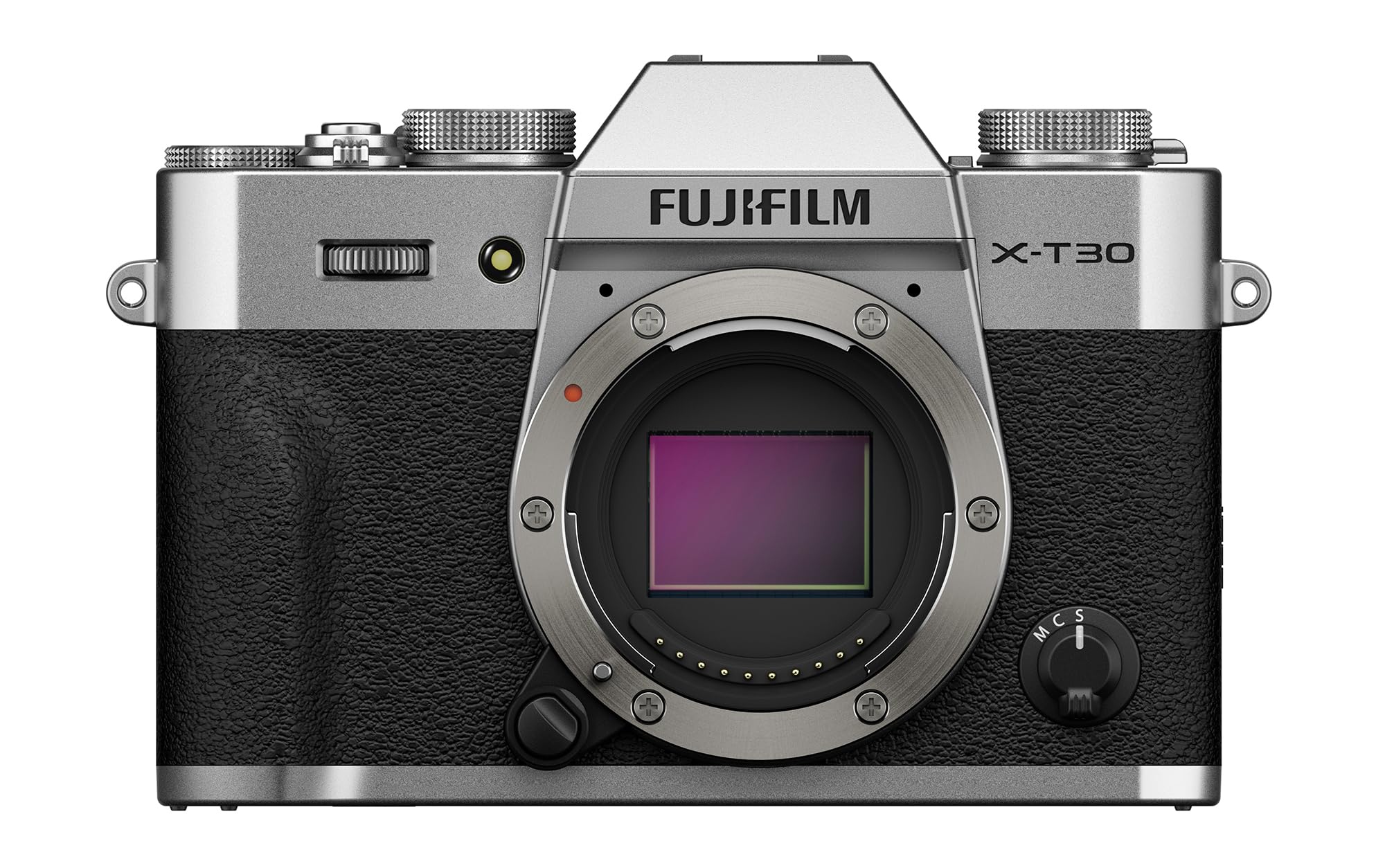
The FUJIFILM X-T30 III is a stylish, compact mirrorless camera built around a 26.1MP X-Trans CMOS 4 sensor. While its photo-oriented heritage is clear, the camera also shoots 4K video at up to 30fps with F-Log and 10-bit external recording. The standout feature for filmmakers is FUJIFILM’s 20 built-in Film Simulations, which can give your footage a distinct, cinematic look straight out of camera without color grading.
AI-powered subject detection autofocus tracks faces, eyes, and animals with solid accuracy. The camera body is small and aesthetically classic, making it a discreet choice for street-style filmmaking or travel content. The Auto mode is genuinely useful for novice users, while manual controls are fully accessible for experienced shooters.
For serious video work, the X-T30 III has limitations: no IBIS, a single UHS-I card slot, and 4K video crops slightly when using the electronic image stabilization. Its internal recording maxes out at 8-bit in standard modes, which may not satisfy heavy color graders. This camera is best suited for filmmakers who prioritize a unique aesthetic and portability over raw post-production flexibility.
Why it’s great
- 20 Film Simulations for distinctive in-camera looks
- AI subject detection with eye/face tracking
- Compact, lightweight with classic design
- F-Log and 10-bit via external recorder
Good to know
- No IBIS; relies on lens stabilization
- Single UHS-I card slot
- 4K internal limited to 8-bit; crops with EIS
11. Panasonic LUMIX G100 4K Mirrorless

The Panasonic LUMIX G100 is a compact Micro Four Thirds camera designed for vloggers and live-streamers who need portable 4K video and top-tier audio. Its built-in microphone uses tracking technology to automatically adjust pickup patterns based on where the subject is, delivering clear audio in crowded or quiet environments. The camera supports V-Log L recording, giving you a flat profile for basic color grading.
The G100 features Panasonic’s 5-axis Hybrid I.S., which works with compatible lenses to reduce shake even when shooting handheld. It can also double as a high-quality webcam via USB connection, making it a versatile tool for Zoom calls, interviews, and live-streaming. The 12-32mm kit lens is small and sharp, and the body is light enough for one-handed recording.
Video recording time is limited — the 4K mode stops after a set duration, making long-form interview capture frustrating. The digital image stabilization introduces a crop, and the Micro Four Thirds sensor struggles in low light compared to APS-C or full-frame competitors. For someone primarily shooting talking-head content or streaming, the G100 offers a unique audio advantage at a very accessible price point.
Why it’s great
- 360-degree tracking microphone for clear audio
- V-Log L for basic color grading flexibility
- Compact body with USB webcam functionality
- 5-axis Hybrid I.S. reduces handheld shake
Good to know
- 4K video recording time is strictly limited
- Low-light performance is below APS-C competitors
- Digital stabilization crops the 4K field of view
FAQ
What frame rate should I use for narrative filmmaking?
Is a full-frame sensor necessary for filmmaking?
Can I use vintage lenses on a modern cinema camera?
What external accessories do I need for run-and-gun filmmaking?
How important is audio input for a filmmaking camera?
Final Thoughts: The Verdict
For most users, the digital camera for filmmaking winner is the Blackmagic Pocket Cinema Camera 4K because it offers true cinema codecs and 13-stop dynamic range at a price that undercuts traditional cinema cameras. If you want the power of full-frame with professional log profiles, grab the Sony FX2. And for a lightweight hybrid that balances stills and video seamlessly, nothing beats the Canon EOS R8.

Mo Maruf
I created WellFizz to bridge the gap between vague wellness advice and actionable solutions. My mission is simple: to decode the research and give you practical tools you can actually use.
Beyond the data, I am a passionate traveler. I believe that stepping away from the screen to explore new environments is essential for mental clarity and physical vitality.