Our readers keep the lights on and my smoothie glass nicely filled. As an Amazon Associate, I earn from qualifying purchases.
The difference between a great travel photo and a blurry disappointment often comes down to one thing: the camera you have with you when the light shifts. A dedicated travel camera needs to balance reach and portability in a way a smartphone or a full-frame rig cannot, offering optical zoom without the weight penalty and a sensor large enough to handle uneven lighting inside a cathedral or at dusk on a mountain trail.
I’m Mohammad Maruf — the founder and writer behind WellFizz. I’ve spent hundreds of hours analyzing camera specifications, comparing sensor sizes, zoom ranges, and stabilization systems across the latest models to identify which ones actually deliver on their promises for real travel conditions.
Whether you need a pocketable compact for city exploration or a long-reach zoom for wildlife safaris, this guide breaks down the top options to help you find the perfect digital camera for travel.
How To Choose The Best Digital Camera For Travel
Selecting the right travel camera means weighing four factors against each other: zoom reach, body size, sensor performance, and battery endurance. A camera that is too large stays in the hotel safe. A camera with weak zoom leaves you cropping photos of distant landmarks. The sweet spot depends on what you plan to shoot — and how much you are willing to carry.
Zoom Range and Optical Stabilization
Optical zoom is non-negotiable for travel because digital zoom simply crops and enlarges pixels, destroying detail. A 30x optical zoom (like the 24-720mm range on the Panasonic ZS99) lets you pull in a distant mountain peak or a performer on stage without moving closer. Pair that with a strong optical image stabilizer, and handheld shots at the telephoto end stay sharp even when your pulse is still elevated from hiking.
Sensor Size and Low-Light Capability
Sensor size is the single biggest determinant of image quality in dim conditions. A 1-inch-type sensor (found in the Sony RX100 VII) collects significantly more light than the tiny 1/2.3-inch sensors used in budget superzooms, producing cleaner images at dusk and indoors without flash. APS-C sensors, like the one in the Nikon Z 30 and Ricoh GR IIIx, go further still but require larger lenses to match the same zoom range.
Portability and Build Quality
A true travel camera disappears into a jacket pocket or a small crossbody bag. Look for models under one pound with retractable lenses and flat profiles. The Ricoh GR IIIx, for example, slides into a jeans pocket while delivering APS-C image quality — but it lacks any zoom. The Panasonic ZS99 offers 30x zoom in a pocketable body, making it the most versatile compromise between reach and carry size.
Quick Comparison
On smaller screens, swipe sideways to see the full table.
| Model | Category | Best For | Key Spec | Amazon |
|---|---|---|---|---|
| Sony RX100 VII | Premium Compact | Low-light and travel vlogging | 1-inch stacked CMOS, 24-200mm zoom | Amazon |
| Ricoh GR IIIx HDF | Pocket APS-C | Street photography and everyday carry | 24MP APS-C, fixed 40mm f/2.8 | Amazon |
| Canon PowerShot SX740 HS | Superzoom Compact | All-day events and 4K time-lapse | 40x optical zoom, 20.3MP sensor | Amazon |
| Panasonic LUMIX ZS99 | Pocket Superzoom | Concerts, wildlife, and family trips | Leica 30x zoom, 24-720mm lens | Amazon |
| Nikon Z 30 | Mirrorless Vlogger | 4K video and creatorkit travel | APS-C sensor, eye-tracking AF | Amazon |
| Panasonic LUMIX FZ80D | Bridge Superzoom | Wildlife and macro travel | 60x zoom, 20-1200mm equivalent | Amazon |
| Canon EOS Rebel T7 | Entry DSLR | Learning photography on the road | 24.1MP APS-C, 18-55mm kit lens | Amazon |
| Kodak PIXPRO AZ528 | Budget Superzoom | Birdwatching and distant landscapes | 52x zoom, 16MP BSI CMOS | Amazon |
| Leica V-LUX 4 | Enthusiast Bridge | Fast action and sports travel | 12.7MP, 24x zoom, 12fps burst | Amazon |
In‑Depth Reviews
1. Sony RX100 VII
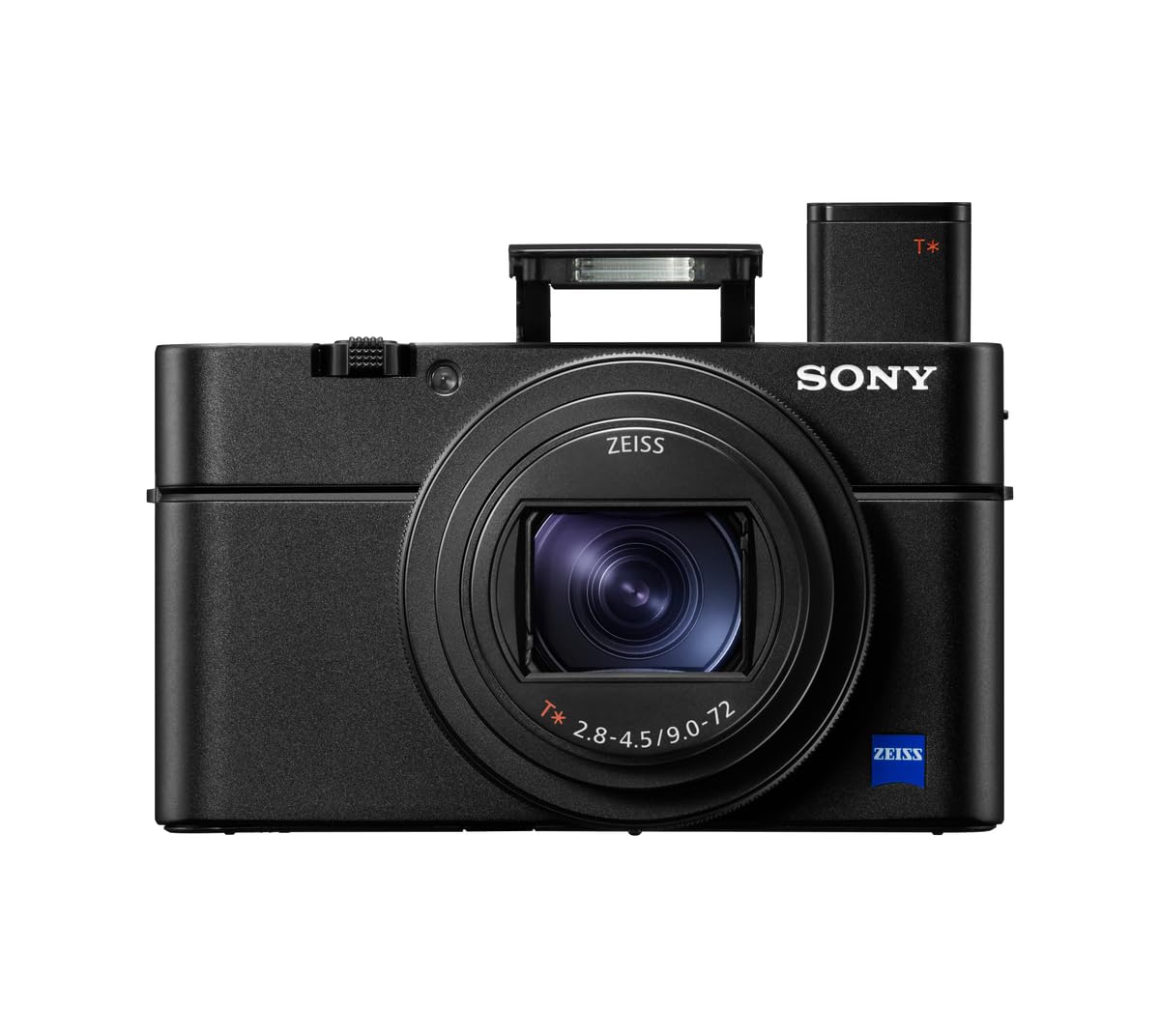
The Sony RX100 VII remains the gold standard for premium travel compacts, packing a 20.1MP 1-inch stacked CMOS sensor into a body that fits in a small pocket. The 24-200mm f/2.8-4.5 Zeiss Vario-Sonnar lens covers a versatile range for everything from wide architecture shots to compressed telephoto portraits. The 0.02-second autofocus speed with 357 phase-detection points ensures you lock onto a moving subject — whether a child running through a piazza or a busker jumping during a performance — before the moment passes.
For video creators, the RX100 VII offers 4K recording with a microphone jack, AI-based real-time eye tracking for humans and animals, and active-mode image stabilization that smooths out handheld walking shots. The 20fps blackout-free burst mode is unmatched in this form factor, and the pop-up electronic viewfinder eliminates the glare problem that plagues rear LCDs in bright sunlight. The single biggest trade-off is the fixed lens — you cannot change it, but the 24-200mm range covers 90% of travel scenarios without swapping glass.
Build quality is reassuringly solid with metal construction, though the body is somewhat slippery without an added grip. Battery life comfortably lasts a full day of mixed shooting, and USB charging means you can top up with a standard power bank. If you are willing to invest in a single camera that handles daylight, dusk, and video without compromise, this is the one to beat.
Why it’s great
- Industry-best autofocus with 0.02-second lock-on speed
- Pocketable body with 24-200mm zoom range
- 4K video with mic input and active image stabilization
Good to know
- Slippery finish; a third-party grip is recommended
- Lacks weather sealing for heavy rain conditions
- Premium investment places it at the top of the price bracket
2. Ricoh GR IIIx HDF

The Ricoh GR IIIx HDF is a specialist tool for travelers who prioritize image quality above all else and are comfortable working with a single fixed focal length. Its 24.2MP APS-C sensor is the same size found in many DSLRs, but the entire camera slides into a jeans pocket thanks to its wafer-thin profile. The 40mm equivalent f/2.8 GR lens is a classic street photography length — wide enough to capture context, tight enough to isolate a subject — and produces strikingly sharp images with natural color rendition straight out of camera.
The standout feature here is the built-in Highlight Diffusion Filter (HDF), which softens specular highlights to create a dreamy, slightly filmic look without needing post-processing. It is toggleable via a dedicated Fn button, allowing you to switch between sharp and soft rendering in a single frame. The camera also features a three-axis SR (Shake Reduction) system that provides up to 4 stops of stabilization — crucial for a fixed-lens camera used in low light without a tripod.
Focus speed is adequate but not class-leading; you may miss split-second moments compared to the Sony RX100 VII. The fixed 40mm lens also means you cannot zoom, so you will physically move to frame your shot. Dust entering the sensor chamber is a known issue, though it is manageable with careful lens cap use. For the traveler who values image quality and discretion above zoom flexibility, the GR IIIx HDF is an intoxicatingly capable companion.
Why it’s great
- APS-C sensor in a truly pocketable body
- Built-in Highlight Diffusion Filter for unique in-camera effects
- Excellent SR shake reduction for handheld low-light shots
Good to know
- Fixed 40mm lens eliminates zoom flexibility
- Autofocus can be slow, especially in dim conditions
- Sensor dust accumulation is a common concern without careful handling
3. Canon PowerShot SX740 HS
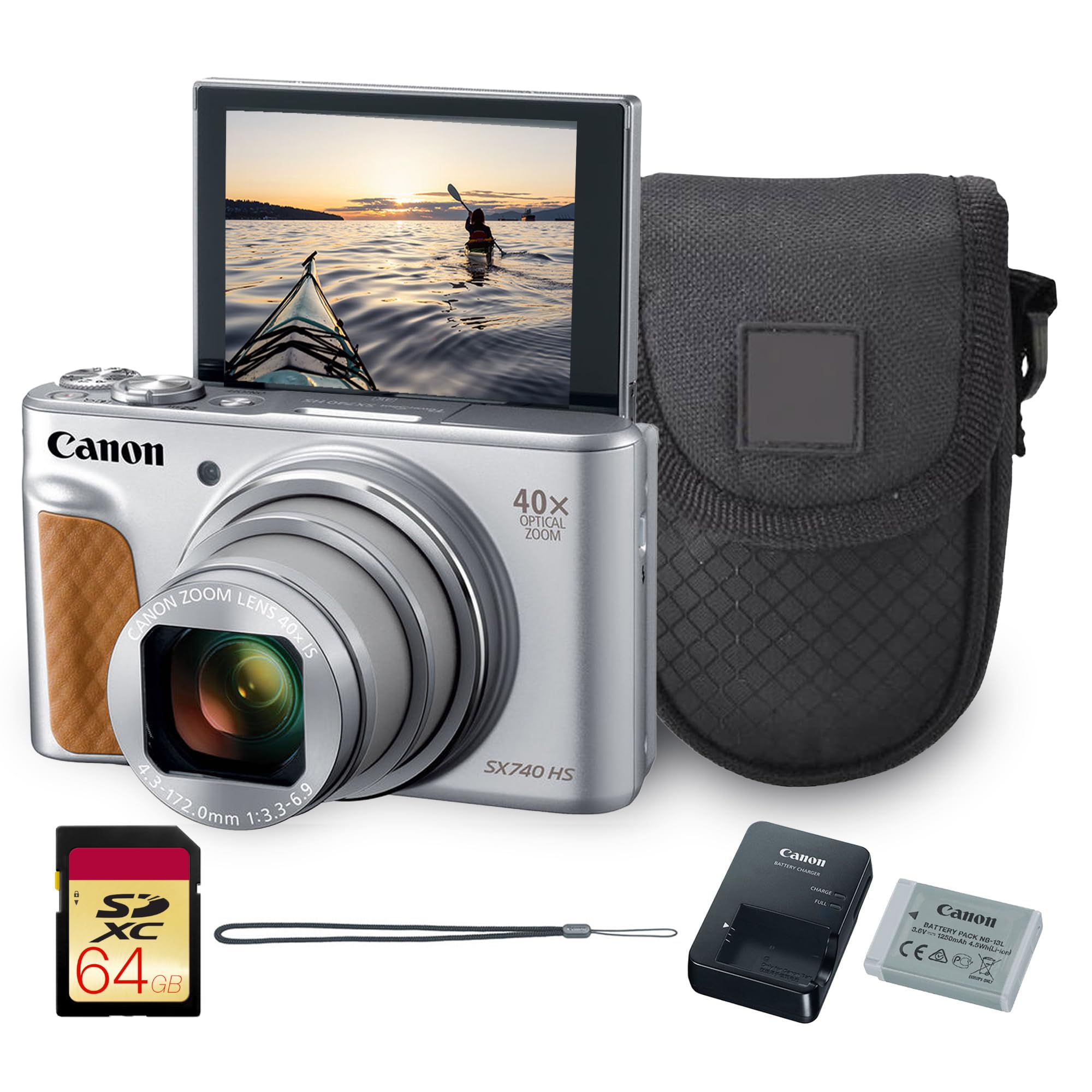
The Canon PowerShot SX740 HS is the go-to choice for travelers who need extreme reach without jumping to a bridge camera. Its 40x optical zoom (24-960mm equivalent) covers an enormous range — from wide-angle cathedral interiors to extreme telephoto captures of wildlife or performers on a distant stage — all in a body that fits comfortably in a jacket pocket. The 20.3MP CMOS sensor paired with the DIGIC 8 processor delivers vibrant, detailed images in good light, and the Optical Image Stabilization keeps handheld telephoto shots usable even at the long end.
Video capabilities are a strong point: the SX740 records 4K UHD footage and offers a 4K time-lapse mode for creative urban or landscape sequences. Built-in Wi-Fi and Bluetooth let you transfer images to your phone for quick social sharing, and the Canon Camera Connect app provides remote control for group shots or tripod-free self-portraits. Battery life is surprisingly robust — several users report shooting over three days without a recharge — which is rare for compact cameras and critical for multi-destination trips without easy access to outlets.
The main limitation is the small 1/2.3-inch sensor, which struggles in low light and produces noticeable noise above ISO 1600. The rear LCD can also be hard to see in bright daylight, and there is no built-in electronic viewfinder. For daytime adventures, concerts, and family trips where zoom range is the priority, the SX740 delivers outstanding value and a genuine 40x lens in a truly compact package.
Why it’s great
- Massive 40x optical zoom (24-960mm) in a pocketable body
- Excellent battery life for multi-day shooting
- 4K video with time-lapse mode for creative travel content
Good to know
- Small sensor limits low-light image quality
- No electronic viewfinder; LCD can be hard to read in sunlight
- Some units shipped as international models without US warranty
4. Panasonic LUMIX ZS99

The Panasonic LUMIX ZS99 (known as the TZ99 outside the US) is arguably the most balanced travel compact on the market, offering the ideal trifecta of zoom range, pocketability, and price. Its Leica DC Vario-Elmar 30x optical zoom lens spans 24-720mm — wide enough for cityscapes, long enough for concert stages and safari vehicles — while the body is thin enough to slide into a jeans pocket. The 20.3MP 1/2.3-inch sensor delivers pleasing images in good light, and the 60x iZoom (intelligent digital zoom) provides additional reach in a pinch with acceptable quality for social media use.
Video performance matches its stills capability: 4K video at 30p and 4K PHOTO burst mode (30fps) let you extract 8MP stills from video clips, perfect for capturing unpredictable action like street performers or children playing. The 1,840k-dot tiltable touchscreen is a standout feature — it tilts upward for low-angle shots and selfies, which is invaluable for documenting your travels. Built-in Bluetooth 5.0 and a dedicated Send Image button make transferring photos to your phone seamless, and USB-C charging means you can share power with your laptop or portable battery pack.
Image quality is a step behind the 1-inch sensor cameras, and the menu system can feel dense initially. Autofocus is generally reliable in good light but hunts in dim conditions or with low-contrast subjects. The ZS99 does not include a flash, which limits indoor party shots. Despite these minor gripes, the combination of a genuine Leica lens, 30x zoom, and a truly pocketable chassis makes this the most practical camera for the vast majority of travel scenarios.
Why it’s great
- Leica 30x zoom (24-720mm) in a pocket-sized body
- Tiltable touchscreen for low-angle and selfie shooting
- USB-C charging and Bluetooth 5.0 for easy power and transfer
Good to know
- Small 1/2.3-inch sensor limits low-light performance
- No built-in flash for indoor or after-dark use
- Autofocus can struggle in low-contrast or dim environments
5. Nikon Z 30

The Nikon Z 30 is Nikon’s most compact mirrorless camera, purpose-built for creators who travel and need interchangeable-lens versatility without the bulk of a full-frame system. Its 20.9MP APS-C DX-format sensor produces sharp, clean images and excellent 4K video with accurate autofocus that includes reliable eye tracking for both people and pets. The ergonomics are exceptional for a camera its size — the deep grip provides a secure hold even with larger Z-mount lenses, and the control layout is intuitive for both beginners and experienced shooters.
For travel vloggers, the Z 30 is a dream: the fully articulating touchscreen flips forward for self-recording, the built-in stereo microphone has adjustable sensitivity, and the red REC light on the front ensures you never accidentally miss recording a clip. Plug-and-play webcam operation over USB-C and 4K streaming over HDMI mean the same camera you use on vacation can serve as a high-quality webcam for remote work. The Z 30 runs 4K video continuously without overheating — a significant advantage over some competing mirrorless models that shut down after 30 minutes.
The main drawback is the lack of a built-in electronic viewfinder, which some photographers find essential for composing in bright sunlight. The 16-50mm kit lens is sharp and compact, but the 3.1x zoom range is limited compared to superzoom compacts. Battery life is good for a mirrorless camera, though you will want a spare for full-day shooting. The Z 30 offers the best balance of image quality, video features, and system expandability for the travel creator who wants to grow their skills over time.
Why it’s great
- Excellent APS-C image quality with natural color rendering
- Fully articulating touchscreen for vlogging and self-recording
- Unlimited 4K recording without overheating issues
Good to know
- No built-in electronic viewfinder
- Kit lens zoom range (16-50mm) is limited for distant subjects
- Battery life is solid but a spare is recommended for long days
6. Panasonic LUMIX FZ80D

The Panasonic LUMIX FZ80D is a bridge camera that delivers an extraordinary 60x optical zoom (20-1200mm equivalent), making it the undisputed champion for travelers who prioritize reach above all else. This zoom range pulls in subjects that remain invisible to standard compacts — a bald eagle perched half a mile away, a whale breaching 300 yards offshore, or a performer on a stadium stage from the nosebleed section. The POWER O.I.S. (Optical Image Stabilizer) does a commendable job compensating for hand shake at the telephoto end, though a monopod helps in low light.
The 18.1MP 1/2.3-inch MOS sensor captures 4K video and offers the 4K Photo mode, which lets you extract 8MP stills from video bursts — a lifesaver when timing is critical. The Post Focus feature is genuinely useful: you can touch the screen after shooting to choose which part of the image is in focus, effectively fixing missed focus in-camera. The large 2,360K-dot electronic viewfinder (0.74x magnification) is bright and detailed, a huge advantage over rear-LCD-only compacts when shooting in harsh daylight.
The sensor is small and shows grain above ISO 800, and the interface is not the most intuitive — you will need some time to learn the menu system. Battery life is average and drains faster if you use the zoom extensively, so carrying a spare is wise. The FZ80D is not a camera for low-light street photography or professional output, but for daylight wildlife, sports, and macro travel, its zoom reach is almost unmatched at this price point.
Why it’s great
- Class-leading 60x optical zoom (20-1200mm equivalent)
- Post Focus feature lets you adjust focus point after the shot
- Large, bright electronic viewfinder for sunny-day shooting
Good to know
- Small sensor produces noisy images in low light
- Battery life is limited, especially with heavy zoom use
- Menu system requires learning; not immediately intuitive
7. Canon EOS Rebel T7

The Canon EOS Rebel T7 is the entry-level DSLR that has introduced countless travelers to serious photography. Its 24.1MP APS-C sensor produces detailed, color-accurate images that outshine any smartphone in good light, and the optical viewfinder provides a clear, lag-free view of the scene — a significant advantage over electronic finders for first-time DSLR users. The included 18-55mm f/3.5-5.6 IS II kit lens covers standard wide-angle to portrait equivalent lengths, making it suitable for architectural shots, group photos, and everyday street scenes during a trip.
Built-in Wi-Fi and NFC allow wireless transfer to a smartphone for quick sharing, and the EOS Utility Webcam Beta Software lets the T7 double as a high-quality webcam for video calls when you return home. The 9-point autofocus system is reliable in good light, and the AI Servo AF tracks moving subjects reasonably well for a camera at this tier. Battery life is outstanding — expect 500+ shots per charge, meaning you can often go a full weekend without needing to recharge, which is a major advantage over mirrorless competitors on multiday trips.
The T7 shows its age in several ways: the autofocus system is noticeably slower than modern mirrorless cameras, low-light performance is weak beyond ISO 1600, and the 18-55mm kit lens is not particularly sharp at the telephoto end. The camera body and lens together are heavier than a premium compact, requiring a dedicated camera bag or sling. For the budget-conscious traveler who wants to learn aperture, shutter speed, and composition with a proper DSLR, the T7 remains an affordable and capable starting point.
Why it’s great
- Large APS-C sensor for excellent image quality in good light
- Outstanding battery life for multiday travel without charging
- Optical viewfinder offers lag-free, bright composition
Good to know
- 9-point autofocus system feels dated and slow
- Kit lens (18-55mm) has limited reach for distant subjects
- Bulky compared to mirrorless and compact alternatives
8. Kodak PIXPRO AZ528
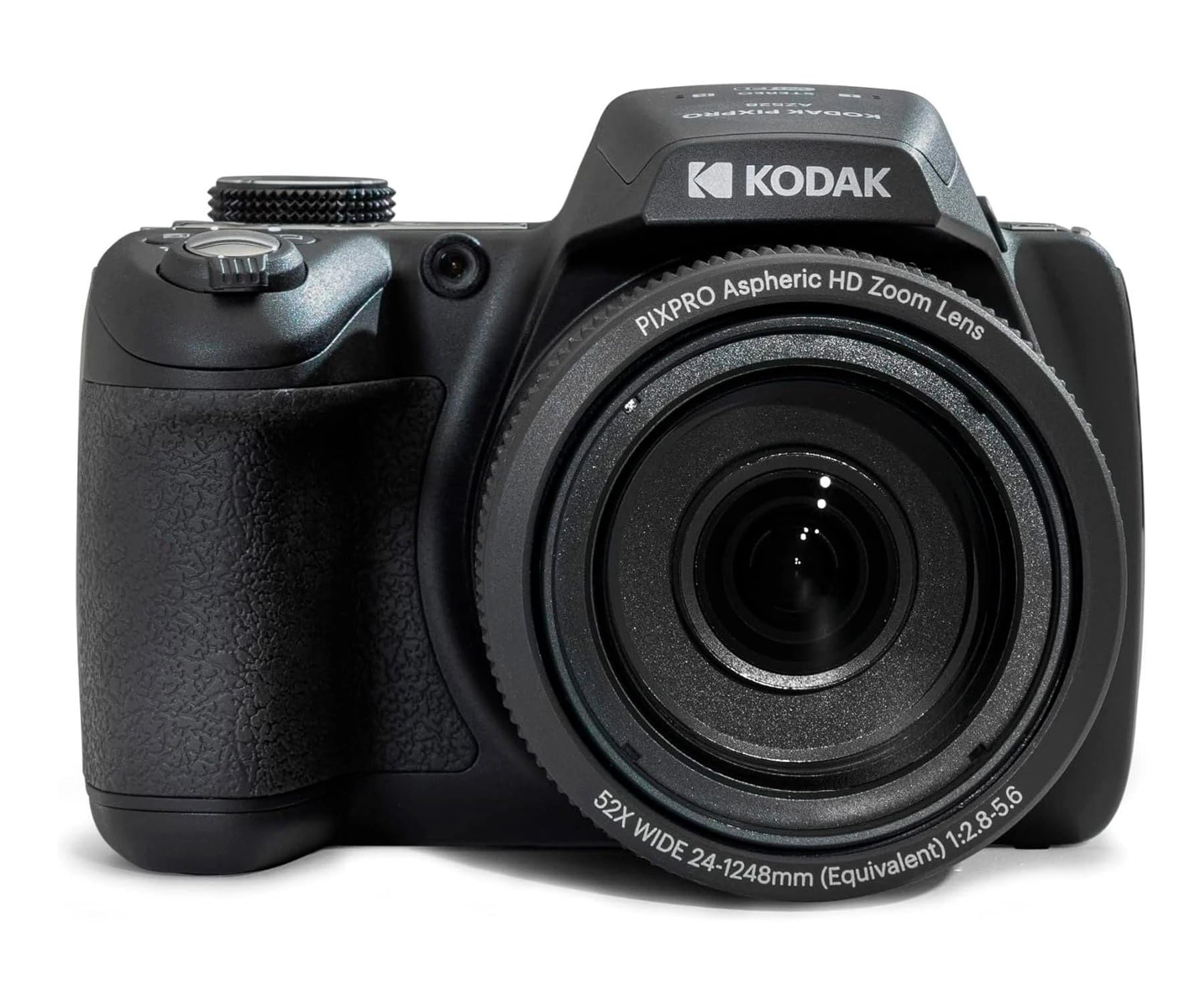
The Kodak PIXPRO AZ528 is a budget-friendly superzoom designed for travelers who need extreme magnification without spending heavily. Its 52x optical zoom (24-1248mm equivalent) reaches further than most compacts, pulling in distant birds, mountain peaks, and stadium events with genuine optical detail. The 16MP BSI CMOS sensor is backside-illuminated, which gives it a slight edge over older sensor designs in low light, and the built-in Optical Image Stabilization helps keep handheld shots steady at full zoom — though steady hands are still essential at maximum reach.
Burst shooting at 6fps is useful for capturing sequences of wildlife or sports action, and the 1080p Full HD video is decent for travel memories. Built-in Wi-Fi connects to the Kodak app for wireless image transfer and remote control via smartphone. The camera accepts up to 512GB SD cards, providing enormous storage capacity for extended trips without needing to offload files. The 3-inch LCD is bright enough for casual review, and the auto modes make it easy to hand the camera to a family member or travel companion for quick shots.
Image quality is what you expect from a budget superzoom: acceptable in bright light but soft toward the edges and noisy above ISO 800. The plastic body feels less durable than pricier competitors, and the battery life is average — plan to recharge every day of heavy use. The autofocus is contrast-detection only, so it hunts more in low light than phase-detect systems. For the traveler on a tight budget who needs a 52x zoom for daytime use, the AZ528 delivers impressive reach for the investment, but it is best suited for well-lit outdoor scenes.
Why it’s great
- 52x optical zoom (24-1248mm) at a budget-friendly price
- BSI CMOS sensor offers slightly better low-light performance
- Wi-Fi connectivity for wireless transfer and remote control
Good to know
- Image quality degrades above ISO 800; edges are soft
- Plastic build feels less durable for rugged travel
- Battery life is average; daily charging is recommended
9. Leica V-LUX 4

The Leica V-LUX 4 is a purpose-built enthusiast bridge camera that prioritizes fast action and superb glass over raw megapixels. Its 24x super-telephoto zoom (25-600mm equivalent) with a constant f/2.8 aperture across the entire zoom range is the defining feature — this is extraordinarily rare among travel zooms and allows consistent exposure and shallow depth of field even at 600mm. The 12.7MP CMOS sensor may seem modest by modern standards, but it is paired with Leica’s legendary optics that produce sharp, contrasty images with pleasing color science straight out of camera.
Action photographers will appreciate the 12fps burst rate at full resolution (and a staggering 60fps at 2.5MP), which captures rapid sequences of wildlife in motion, athletes, or festival dancers. The autofocus system reacts in under a tenth of a second, and the 1.3MP electronic viewfinder offers 100% frame coverage with full exposure information — essential for tracking fast-moving subjects in bright sunlight. Full HD video at 1080p/60fps is smooth and detailed, and the Leica V-Lux name carries a cachet that resonates with serious photographers.
The sensor shows its age compared to newer 1-inch or APS-C models, with noticeable noise above ISO 800 and limited dynamic range. The camera body, while functional, uses materials that feel plasticky given the premium price point. The learning curve is steeper than expected — the menu system is deep and some settings are nested in unintuitive locations. For the travel photographer who values a constant f/2.8 aperture, fast burst rates, and Leica glass over maximum resolution, the V-LUX 4 offers a unique niche that few competitors fill.
Why it’s great
- Constant f/2.8 aperture across the full 24x zoom range
- 12fps burst shooting at full resolution for action sequences
- Fast autofocus with less than 0.1-second reaction time
Good to know
- 12.7MP sensor is low-resolution by modern standards
- Build materials feel cheap for the premium pricing
- Steep learning curve with a deep, sometimes unintuitive menu
FAQ
Can a travel camera replace my smartphone for everyday photos?
What optical zoom range do I need for wildlife and safari travel?
Is a mirrorless camera better than a compact for travel?
Final Thoughts: The Verdict
For most travelers, the best digital camera for travel is the Panasonic LUMIX ZS99 because it delivers the rarest combination: a genuine 30x Leica zoom lens, pocket-sized body, and USB-C charging at a price that represents real value. If you shoot in low light and prioritize image quality above all else, grab the Sony RX100 VII with its 1-inch sensor and blistering autofocus. And for vlogging creators who need interchangeable lenses and unlimited 4K recording, the Nikon Z 30 offers the best video-to-portability ratio on the market.

Mo Maruf
I created WellFizz to bridge the gap between vague wellness advice and actionable solutions. My mission is simple: to decode the research and give you practical tools you can actually use.
Beyond the data, I am a passionate traveler. I believe that stepping away from the screen to explore new environments is essential for mental clarity and physical vitality.