Our readers keep the lights on and my smoothie glass nicely filled. As an Amazon Associate, I earn from qualifying purchases.
The gap between smartphone convenience and dedicated camera quality has never been narrower, yet the decision to carry a separate device still comes down to one thing: the ability to capture a scene exactly as you see it, without compromise. A dedicated digital point and shoot camera trades bulk for a proper optical zoom, a larger sensor, and controls that respond the instant you press the shutter.
I’m Mohammad Maruf — the founder and writer behind WellFizz. I’ve spent countless hours comparing sensor sizes, lens ranges, and autofocus systems to identify which models actually deliver on their promise of everyday excellence.
Whether you need a compact travel companion, a vlogging tool, or a powerful zoom for wildlife, this guide breaks down the top options to help you find the best digital point and shoot camera for your specific needs.
How To Choose The Best Digital Point And Shoot Camera
Selecting the right compact camera involves understanding the trade-offs between zoom reach, sensor performance, and portability. The key is matching the camera’s strengths to your primary shooting scenario.
Sensor Size and Image Quality
The physical size of the image sensor is the single most important factor determining low-light performance and dynamic range. A 1-inch type sensor (like those in the Sony RX100 VII) captures significantly more light than the common 1/2.3-inch sensors found in superzoom models. This translates to cleaner images at higher ISO settings and better subject separation from the background.
Optical Zoom and Lens Reach
Optical zoom lets you magnify a subject without losing resolution. A 5x zoom (like KODAK PIXPRO FZ55) is fine for everyday snapshots, while a 40x or 60x zoom (Canon SX740 HS, Panasonic FZ80D) is essential for wildlife or sports. Remember that longer zoom ranges often require a steady hand or effective image stabilization to avoid blur.
Video Capabilities and Stabilization
If you plan to record video, check for 4K resolution at 30fps or higher. Built-in image stabilization — either optical or gimbal-based — is crucial for smooth handheld footage. The Xtra Muse’s 3-axis gimbal offers professional-grade steadiness, while Panasonic’s POWER O.I.S. keeps telephoto shots stable.
Quick Comparison
On smaller screens, swipe sideways to see the full table.
| Model | Category | Best For | Key Spec | Amazon |
|---|---|---|---|---|
| Sony RX100 VII | Premium Compact | Travel & Portraits | 1-inch Stacked CMOS, 24-200mm f2.8-4.5 | Amazon |
| Panasonic LUMIX TZ/ZS99 | Travel Zoom | Pocketable high-zoom | 30x Leica zoom, 24-720mm lens | Amazon |
| Canon PowerShot SX740 HS | Superzoom | All-in-one travel | 40x optical zoom, 20.3MP sensor | Amazon |
| Nikon COOLPIX P950 | Superzoom Bridge | Wildlife & distant subjects | 83x optical zoom, 24-2000mm eq. | Amazon |
| Panasonic LUMIX FZ80D | Superzoom Bridge | Bright-light telephoto | 60x optical zoom, 20-1200mm lens | Amazon |
| Canon PowerShot V10 | Vlogging Camera | Video-first creators | 1-inch CMOS, 19mm fixed wide-angle | Amazon |
| Xtra Muse | Gimbal Camera | Ultra-steady video | 3-axis gimbal, 4K/120fps | Amazon |
| Minolta MN40Z | Budget Bridge | Entry-level superzoom | 40x optical zoom, 20MP sensor | Amazon |
| KODAK PIXPRO FZ55 | Entry-Level | Budget-friendly snapshots | 5x optical zoom, 16MP sensor | Amazon |
In‑Depth Reviews
1. Sony RX100 VII
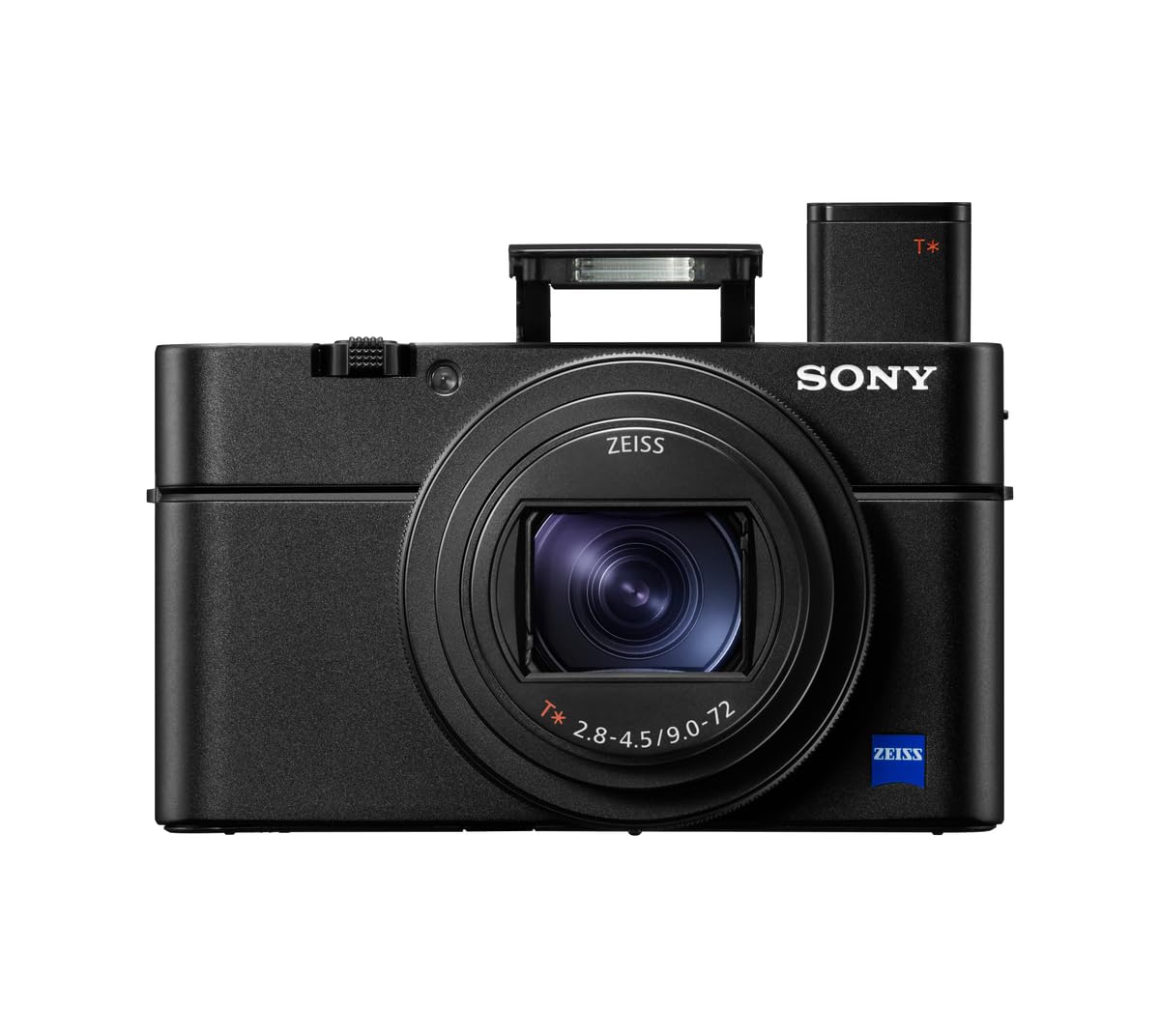
The Sony RX100 VII sets the benchmark for premium compact cameras with its 1-inch stacked CMOS sensor that delivers exceptional low-light performance and dynamic range. Its Zeiss Vario-Sonnar T* 24-200mm f2.8-4.5 lens covers a versatile zoom range in a body that slips into a jacket pocket—a rare combination of reach and portability.
Autofocus is class-leading, with 357 phase-detection and 425 contrast-detection points that lock onto subjects in 0.02 seconds. The real-time Eye AF for humans and animals works flawlessly for portraits and pets, while blackout-free shooting at 20 fps ensures you never miss a decisive moment.
4K video with active image stabilization, a microphone jack, and S-Log3 color grading make it a hybrid shooter for serious vloggers. The only real compromise is the slippery body—many users add a grip—and the price reflects its premium position. For those who demand the absolute best image quality in a point-and-shoot form factor, this is the one to beat.
Why it’s great
- Industry-leading autofocus with real-time Eye AF.
- 1-inch sensor delivers clean images up to ISO 3200.
- 4K video with S-Log3 and mic input.
Good to know
- Slippery body; an aftermarket grip is recommended.
- No weather sealing for extreme conditions.
- Battery life adequate but benefits from a spare.
2. Panasonic LUMIX ZS99 (TZ99)

The Panasonic LUMIX ZS99 packs a 24-720mm Leica DC Vario-Elmar lens into a truly pocketable body. The 30x optical zoom covers wide-angle landscapes to distant concert stages, and the 60x iZoom extends reach further without the heavy crop penalty of digital zoom alone.
Its 20.3MP sensor and hybrid autofocus system with 171 focus points provide snappy performance in good light. The tiltable 1,840k-dot touchscreen makes low-angle or overhead shots easy, and the step zoom feature lets you jump between specific focal lengths quickly—a huge advantage for event photography.
Built-in Bluetooth 5.0 and a dedicated Send Image button streamline wireless transfers to your phone. Image quality is very good up to ISO 1600, though chromatic aberration can appear at the corners at full telephoto. It is a specialized tool for travelers who refuse to carry interchangeable lenses but still want an optical zoom that reaches far.
Why it’s great
- Real 30x optical zoom in a pocket-sized body.
- Step zoom and Lens Position Resume for quick framing.
- USB Type-C charging for universal power.
Good to know
- No built-in flash.
- LCD can be hard to see in direct sunlight.
- Menu system deep and unintuitive at first.
3. Canon PowerShot SX740 HS
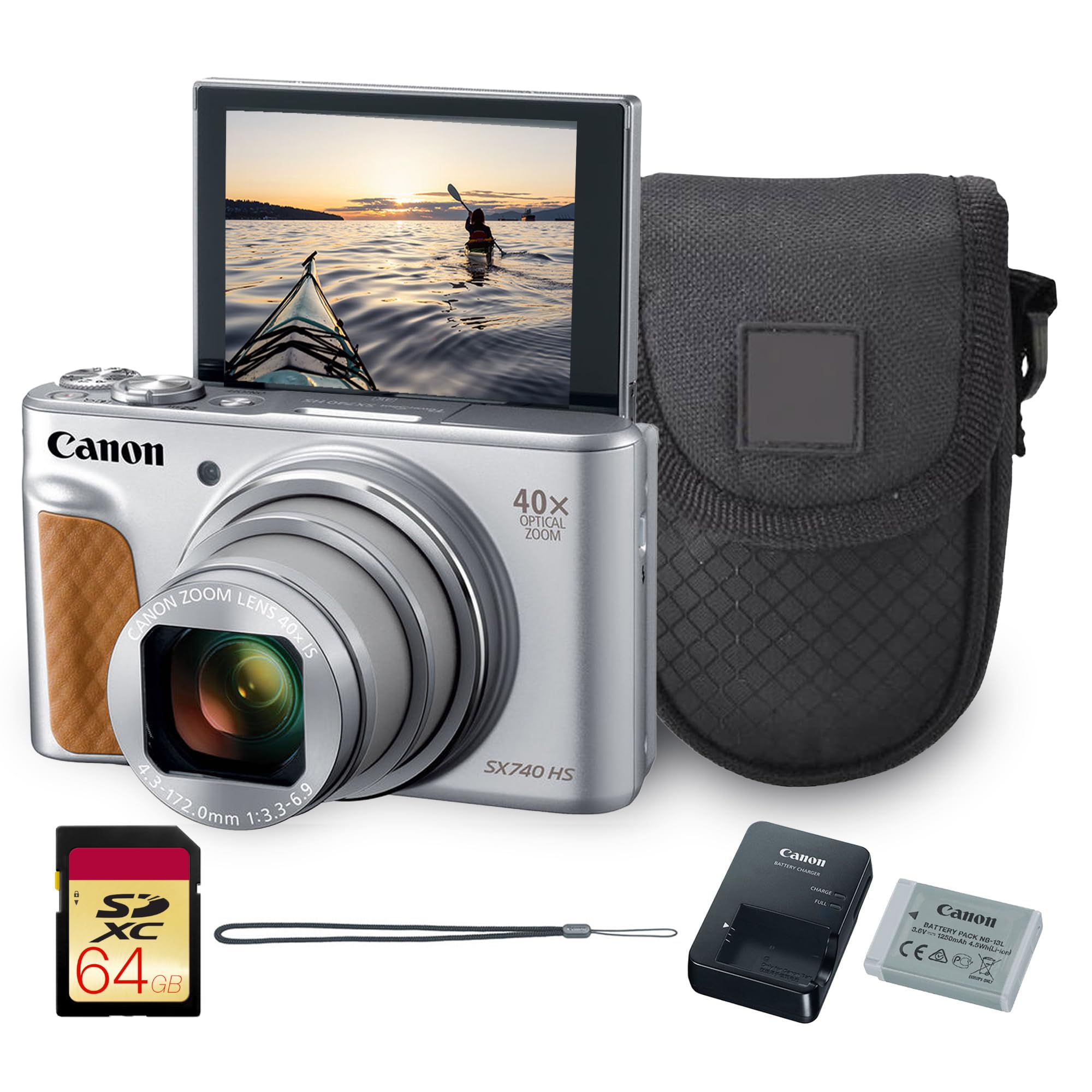
The Canon PowerShot SX740 HS balances a 40x optical zoom (24-960mm equivalent) with a lightweight, travel-friendly design. Its 20.3MP CMOS sensor and DIGIC 8 processor deliver vibrant images straight out of camera, and the Optical Image Stabilizer helps keep telephoto shots sharp in good light.
4K UHD video recording at 30fps, along with a 4K time-lapse mode, adds creative flexibility for travel vlogs. The flip-up screen is great for selfies, and built-in Wi-Fi with Bluetooth makes sharing to your phone effortless via the Canon Camera Connect app.
Battery life is strong—many users report days of moderate use on a single charge. The main trade-off is the 1/2.3-inch sensor, which struggles in low light compared to larger-sensor competitors. It comes bundled with a bag and 64GB card, making it a complete out-of-box solution for family trips.
Why it’s great
- 40x zoom covers landscapes to distant details.
- Lightweight and easy to carry anywhere.
- Long battery life for multi-day travel.
Good to know
- Small sensor limits low-light performance.
- Some units are international models without US warranty.
- Menu navigation can be slow for advanced settings.
4. Nikon COOLPIX P950

The Nikon COOLPIX P950 is a bridge camera that takes superzoom to its logical extreme with an 83x optical zoom covering a 24-2000mm equivalent range. This is the camera for moon shots, birds in distant trees, and wildlife where getting closer is not an option.
Despite the massive zoom, the camera remains relatively portable for its class. The 16MP 1/2.3-inch CMOS sensor is paired with Nikon’s VR image stabilization, which helps keep the long end usable. It shoots 4K UHD video at up to 30fps, and built-in Wi-Fi and Bluetooth simplify sharing.
The deluxe bundle includes a telephoto lens, UV filter, spare battery, and a large bag—ready for extended field use. Auto mode works well for most daylight scenes, but capturing fast-moving subjects at full zoom in low light requires manual adjustment. For nature enthusiasts who prioritize reach above all else, the P950 delivers unmatched value.
Why it’s great
- 83x optical zoom reaches 2000mm equivalent.
- Effective image stabilization for telephoto clarity.
- Comprehensive bundle with accessories included.
Good to know
- Small sensor shows noise above ISO 800.
- Autofocus can be slow at full zoom in low light.
- File transfer workflow can be finicky.
5. Panasonic LUMIX FZ80D

The Panasonic LUMIX FZ80D offers a 60x optical zoom (20-1200mm equivalent) with POWER O.I.S., making it one of the lightest ways to reach a 1200mm focal length. The F2.8-8.0 aperture provides decent light-gathering at the wide end, and the 2,360K-dot electronic viewfinder ensures clear framing even in bright sunlight.
4K video recording lets you extract 8MP stills from footage using the 4K Photo mode, and the Post Focus feature lets you choose the focal point after you shoot—a practical tool for macro and product work. Autofocus is contrast-detection with 39 points, which works well in bright conditions but can hunt in dimmer scenes.
This camera excels for hikers and social media shooters who need massive reach in a compact bridge form. Low-light performance is its biggest weakness—images become grainy at higher ISOs, and the lens requires good light to deliver sharp results at the tele end. For bright-day wildlife and travel, it is a very capable performer at its tier.
Why it’s great
- 60x zoom reaches 1200mm in a lightweight body.
- Post Focus allows focus selection after shooting.
- Excellent viewfinder for sunny-day composition.
Good to know
- Noisy images at ISO 800 and above.
- No WiFi connectivity built-in.
- Slow autofocus in low-light telephoto use.
6. Canon PowerShot V10

The Canon PowerShot V10 reimagines the point-and-shoot as a dedicated video-first camera. Its 1-inch 15.2MP back-illuminated CMOS sensor captures clean 4K video with excellent low-light performance, and the built-in stand folds to the front or back for hands-free recording on any surface.
The fixed 19mm wide-angle lens (35mm equivalent) is ideal for vlogging, group shots, and tight interiors. Audio quality is a standout feature: three stereo microphones capture clear sound, and a third microphone in the center helps cancel background noise. The retractable front-facing screen makes self-recording effortless.
Image stabilization with three modes (Off, On, Enhanced) keeps handheld footage smooth. Battery life is good but not exceptional for all-day shooting. The lack of a zoom lens limits versatility for distant subjects, but for creators who prioritize video quality and portability in a pocket-friendly package, the V10 is a purpose-built star.
Why it’s great
- 1-inch sensor delivers superior low-light video.
- Built-in stand for tripod-free recording.
- Excellent stereo microphone array.
Good to know
- Fixed wide-angle lens lacks zoom.
- Battery drains relatively fast with 4K use.
- No lens cover or protective case included.
7. Xtra Muse

The Xtra Muse is a purpose-built pocket camera with a built-in 3-axis gimbal stabilizer, making it a strong alternative to larger gimbal setups. It records 4K video at up to 120fps with smooth, shake-free footage even during active movement like running or hiking.
Its 1-inch CMOS sensor captures crisp video, and the 10-bit X-Log color mode records over a billion colors for flexible post-production grading. The 2-inch touchscreen flips for horizontal or vertical shooting, and the Master Follow mode keeps you centered in the frame while moving.
Battery life runs about 161 minutes per charge—solid for a gimbal camera. It uses microSD cards for storage. The main caveat is that third-party wireless microphones like DJI mics may not auto-connect, though firmware updates have improved compatibility. For vloggers who want gimbal-level stability without the weight, this is a smart budget-friendly choice.
Why it’s great
- Integrated 3-axis gimbal for butter-smooth footage.
- 4K/120fps for silky slow motion.
- 10-bit X-Log color for professional grading.
Good to know
- Wireless mic compatibility improved but not guaranteed.
- Touchscreen can be small for detailed adjustments.
- Requires microSD card for storage.
8. Minolta MN40Z

The Minolta MN40Z offers an impressive 40x optical zoom and 20MP stills at a very accessible price point. It shoots 1080p Full HD video at 30fps, making it a solid entry-level bridge camera for beginners who want to explore telephotography without a large investment.
Built-in Wi-Fi allows quick transfers to a smartphone, and the 3-inch LCD screen provides a clear view for framing. The optical image stabilization helps keep zoom shots steady in good daylight, and face/smile/blink detection simplifies portrait shooting.
The camera uses AA batteries, which is convenient for travelers who need easy replacements. Image stabilization is somewhat weak for low-light or action scenes, and the autofocus can be slow with moving subjects. For casual users capturing daytime landscapes and faraway details, the MN40Z delivers strong reach for the money.
Why it’s great
- 40x zoom at a very budget-friendly tier.
- Wi-Fi sharing via smartphone app.
- AA battery convenience for travel.
Good to know
- Weak stabilization for telephoto in low light.
- Autofocus can freeze needing a battery reset.
- Video limited to 1080p, not 4K.
9. KODAK PIXPRO FZ55
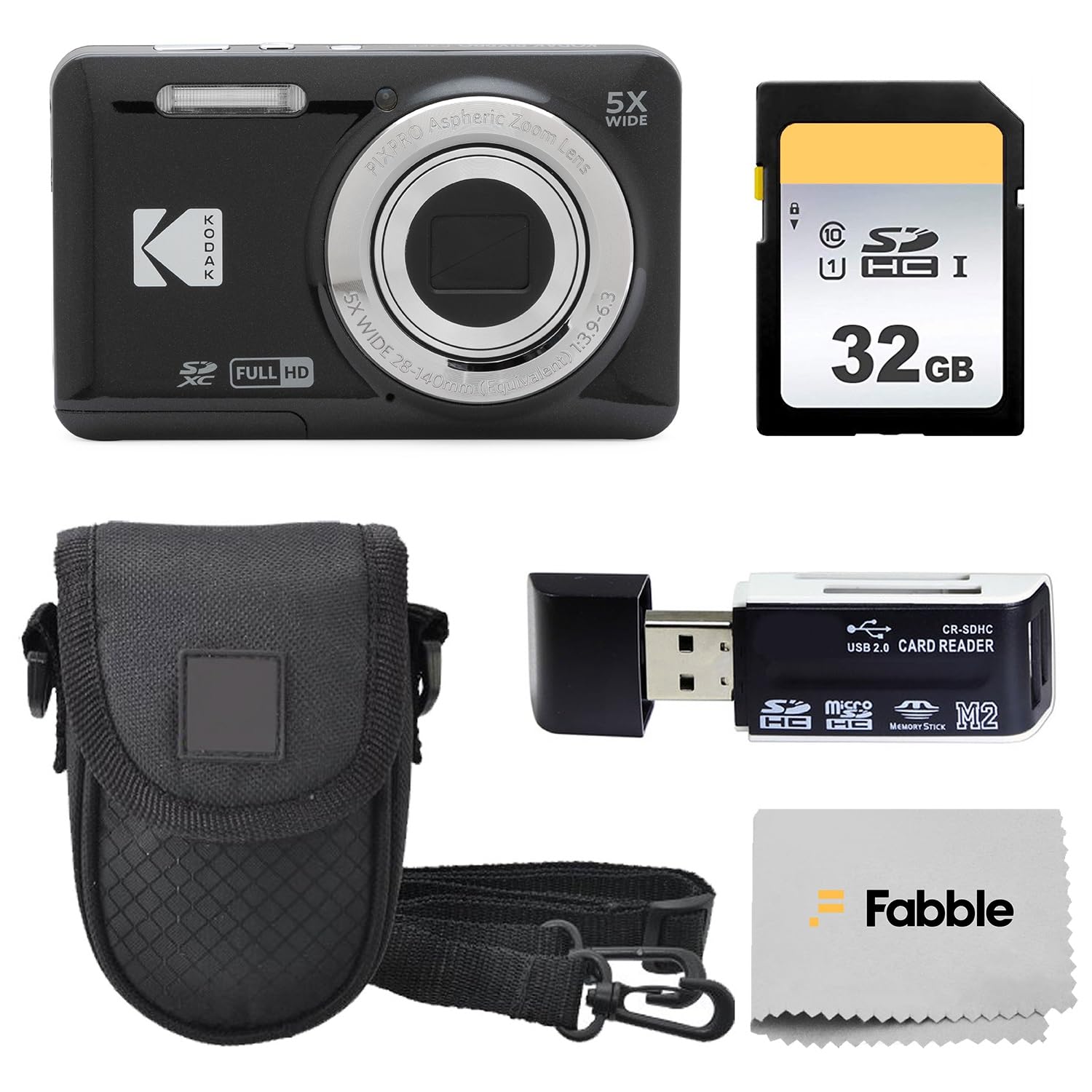
The KODAK PIXPRO FZ55 is a straightforward entry-level point-and-shoot with a 16MP sensor and a 5x optical zoom (28mm wide-angle). It records 1080p Full HD video and features a 2.7-inch LCD screen for simple composition and playback.
Battery life is around 6-8 hours of use, and the camera is small enough for a child’s pocket or a small bag. The bundle includes a 32GB SD card, protective case, and card reader—everything needed to start shooting immediately. Picture quality is good in daylight, with vibrant colors for the price.
It lacks 4K video and advanced stabilization, and the small sensor struggles in dim conditions. Autofocus uses contrast detection and can be slow in low light. This is a basic, reliable option for young photographers, gift seekers, or anyone wanting a simple camera for casual daytime snapshots without smartphone dependency.
Why it’s great
- Complete bundle ready to shoot out of the box.
- Compact and lightweight for easy carrying.
- Simple controls suitable for beginners.
Good to know
- No 4K video recording capability.
- Small sensor limits low-light quality.
- Autofocus can be slow in dim conditions.
FAQ
Is a 1-inch sensor worth the extra cost over a 1/2.3-inch sensor?
How much optical zoom do I really need for travel and events?
Can a point and shoot camera replace my smartphone for video?
What is the difference between optical zoom and digital zoom?
Do I need a camera with a viewfinder or is the LCD screen enough?
Final Thoughts: The Verdict
For most users, the best digital point and shoot camera winner is the Sony RX100 VII because it combines class-leading autofocus, a 1-inch sensor, and a versatile 24-200mm zoom in a truly pocketable body. If you need extreme reach for wildlife, the Nikon COOLPIX P950 with its 83x zoom is unmatched at its tier. And for video-first creators, the Xtra Muse offers gimbal-stabilized 4K/120fps footage in a compact, affordable package. Choose based on your priority — pure image quality, long reach, or smooth video.

Mo Maruf
I created WellFizz to bridge the gap between vague wellness advice and actionable solutions. My mission is simple: to decode the research and give you practical tools you can actually use.
Beyond the data, I am a passionate traveler. I believe that stepping away from the screen to explore new environments is essential for mental clarity and physical vitality.