Our readers keep the lights on and my smoothie glass nicely filled. As an Amazon Associate, I earn from qualifying purchases.
An overstuffed dive bag is a nightmare before you even hit the water. Oversized, rigid fins eat up suitcase real estate, add frustrating weight, and turn a short layover into a heavy ordeal. The difference between a trip that starts smoothly and one that leaves you wrestling with baggage limits often comes down to one choice — the pair of fins packed inside.
I’m Mohammad Maruf — the founder and writer behind WellFizz. I have spent hundreds of hours analyzing travel-specific dive gear, comparing blade geometry, material density, and foot pocket ergonomics so you can skip the trial-and-error.
Whether you are a recreational diver, a snorkeling enthusiast, or a freediver looking to maximize cargo space, this guide delivers everything you need to find the perfect pair. My goal is simple: help you land the best dive fins for travel that balance weight, power, and packability without compromise.
How To Choose The Best Dive Fins For Travel
A travel fin must pass three tests: it has to be light enough to fly with, short enough to fit in a standard carry-on, and powerful enough to keep you moving through currents. The following factors determine which pair earns a spot in your bag.
Blade Length and Material Composition
Shorter blades (16 to 22 inches) are the cornerstone of travel-friendly fins. Long-blade freediving fins offer superior propulsion but rarely fit in a standard suitcase. Materials like Monprene and polypropylene keep weight down — often under 3 pounds per pair — without sacrificing the blade snap needed for efficient kicking.
Foot Pocket Style: Open-Heel vs. Full-Foot
Open-heel fins use an adjustable strap — usually bungee or silicone — and pair with neoprene boots or socks. This system provides a secure fit for cold water or rocky shore entries. Full-foot fins lack a strap and are worn barefoot or with thin socks. Full-foot designs tend to be lighter and more compact, but open-heel models offer greater versatility across different water temperatures.
Strap and Closure System
Bungee and silicone straps have largely replaced traditional rubber straps on modern travel fins. Bungee straps self-adjust and slip on quickly, making transitions between boat and water seamless. Silicone straps offer similar convenience with added grip. Both systems are easy to replace if they wear out, extending the life of the fin.
Quick Comparison
On smaller screens, swipe sideways to see the full table.
| Model | Category | Best For | Key Spec | Amazon |
|---|---|---|---|---|
| Scubapro GO Sport Diving Fins | Premium | Divers needing boot compatibility & compact storage | 19.25″ blade, 25° pre-angle | Amazon |
| Aqualung Storm Dive Fins | Mid-Range | Travelers wanting lightweight Monprene with bungee strap | Single TPV Monprene, 2.2 lbs | Amazon |
| SCUBAPRO GO Travel Scuba Diving Fin | Mid-Range | Interlocking pair for compact carry-on packing | 1.7 – 3.6 lbs per pair | Amazon |
| Max Storm Dive Fins by Aqualung | Mid-Range | Divers wanting robust power transfer in a compact blade | Thermo rubber + PP blade | Amazon |
| Cressi Gara 2000 HF | Budget-Friendly | Freedivers wanting reactive polypropylene blades | 60 oz, 3-material construction | Amazon |
In‑Depth Reviews
1. Scubapro GO Sport Diving Fins
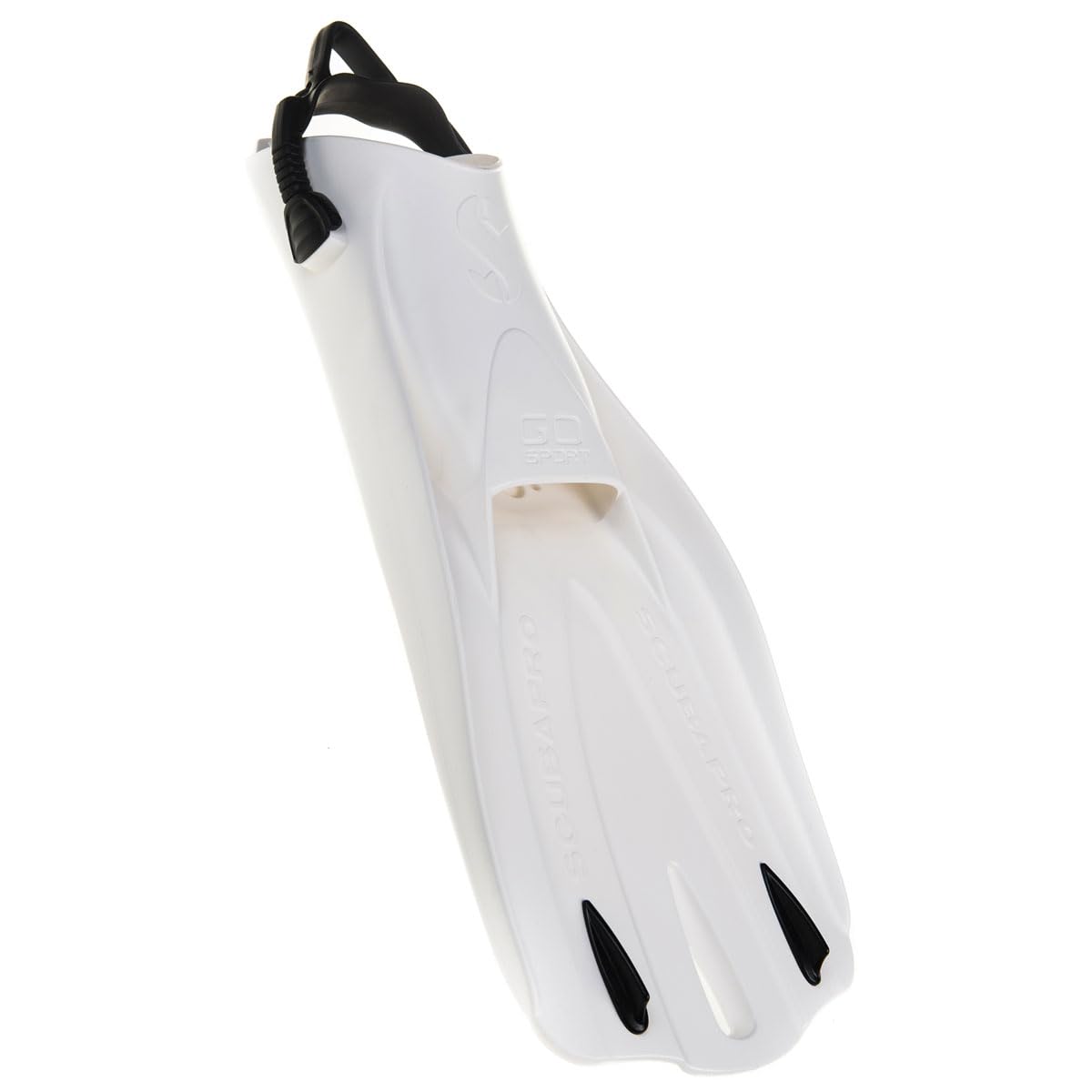
SCUBAPRO’s GO Sport Fins hit the sweet spot where travel weight meets real diving performance. The 19.25-inch blade is short enough to tuck into a 40-liter duffle, yet the 25-degree pre-angle and underside power bars deliver surprising thrust with minimal leg fatigue. The 100% Monprene construction eliminates the risk of delamination and keeps each fin featherlight — the XL pair still weighs just over 3 pounds.
The boot-fit design uses a self-adjusting bungee heel strap that slides easily over neoprene boots. Testers with 5mm and 6.5mm booties reported a snug, secure fit without heel lift, and the thumb loop adds an extra layer of stability during high-kick scenarios. The medium flex strikes a balance that works for recreational divers and more ambitious snorkelers alike.
Where these fins truly stand apart is their packability. They lie flat without weird bulges and pass the IATA carry-on test easily. If you plan to mix boat dives with shore entries, the boot-compatible design makes this a versatile do-it-all fin that won’t weigh you down between destinations.
Why it’s great
- Compact blade fits in airline carry-on luggage
- Bungee strap accommodates boots up to 6.5mm without slipping
- Durable Monprene won’t delaminate over years of use
Good to know
- Higher price point; investment for frequent travelers
- May lack raw power for strong current conditions
2. Aqualung Storm Dive Fins
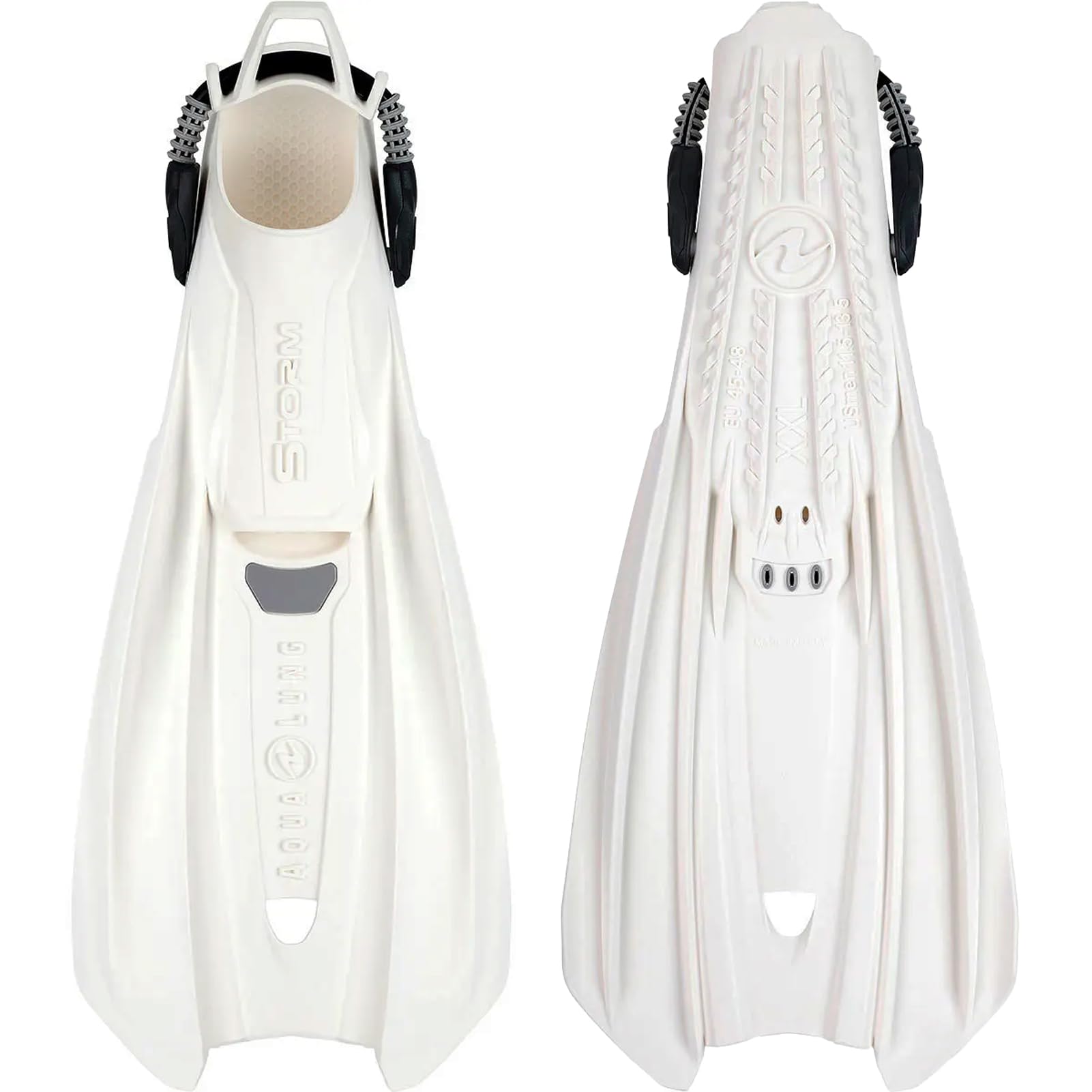
The Aqualung Storm Dive Fins are the perfect example of how much weight can be stripped from a fin without losing functional propulsion. Each pair weighs just 2.2 pounds, making them the lightest open-heel fins in the mid-range tier. The single TPV Monprene construction keeps the profile slim, and the molded channel blade helps water flow smoothly for efficient energy transfer with every kick.
The ergonomic foot pocket is designed for barefoot wear or light dive socks, though users report that 5mm boots can make the bungee strap feel tight around the Achilles. For warm-water trips where booties stay under 3mm, the fit is excellent. Color-coded size markers on the strap make grab-and-go organization simple when you are packing multiple sets of gear for a group.
The integrated blade access hole doubles as a carry point and makes hanging fins to dry after a dive easy. The textured underside deck grip adds real confidence when walking across a wet boat deck. If you prioritize ultralight packing above everything else and stick to warm-water destinations, the Storm Fins are a nearly weightless companion.
Why it’s great
- Extremely light — only 2.2 pounds per pair
- Compact blade stores easily without extra bulk
- Deck grip surface improves traction on wet surfaces
Good to know
- Bungee strap may be too tight with thick 5mm+ boots
- Blade stiffness is lower, requiring more effort in strong currents
3. SCUBAPRO GO Travel Scuba Diving Fin

The SCUBAPRO GO Travel Fin refines the concept of the modular travel fin. The fins interlock with each other to create a single flat bundle, preventing the usual fin-on-fin tangling that slows down packing. This interlocking feature is not just a gimmick — it reduces the effective packing footprint so significantly that the fins fit inside IATA-compliant carry-on luggage even inside a rolled wetsuit.
Performance-wise, the GO Travel Fin uses the same 25-degree pre-angled blade philosophy as the GO Sport model, but with a slightly softer flex profile aimed at divers who prioritize comfort over raw power. The monprene construction holds up well against wear and tear, and the replaceable bungee heel strap can be swapped out without replacing the entire fin. Testers with large feet — up to men’s size 14 — reported a secure fit with no pressure points.
The barefoot-friendly design works best with a thin neoprene sock or water sock to prevent chafing. For divers who want a dedicated warm-water travel fin that packs flatter than anything else in this price range, the GO Travel Fin is a standout solution.
Why it’s great
- Interlocking design compresses pair into a flat, tangle-free bundle
- Bungee straps are user-replaceable for long-term durability
- Works comfortably across a wide range of foot sizes (up to men’s 14)
Good to know
- Less powerful than longer-blade options for current-heavy conditions
- Best paired with dive socks rather than thick boots
4. Max Storm Dive Fins by Aqualung

The Max Storm Dive Fins prioritize power transfer in a compact package. The blade combines a thermo-rubber foot pocket with a polypropylene blade that provides noticeable stiffness without weighing down your luggage. The robust construction is built for scuba divers who want to maintain efficient propulsion during longer dives, even when moving against mild currents.
The elastic silicone strap system makes donning and doffing simple, and the buckle closure adds an extra layer of security that prevents accidental release. The foot pocket ergonomics are designed to reduce fatigue during extended dive sessions, and the blade includes a hole for easy carrying and hang-drying after a day of diving.
Buyers should be aware that the Max Storm fin is sold as a single fin, not a pair — a fact that has caused confusion. The build quality and power output are impressive, but the size of the blade displaces a significant amount of water. This demands stronger leg muscles, making it less suited for casual snorkelers or beginners. For experienced traveling divers who need more bite from a compact fin, the Max Storm delivers.
Why it’s great
- Powerful polypropylene blade provides efficient thrust
- Secure buckle closure prevents strap loss underwater
- Ergonomic foot pocket reduces calf strain on long dives
Good to know
- Sold as a single fin — you need to order two
- Full power requires strong leg muscles; not beginner-friendly
5. Cressi Gara 2000 HF

The Cressi Gara 2000 HF is a full-foot freediving fin that brings legendary reactivity to the travel scene. Its three-material construction — a special polypropylene blade fused with a soft elastomer foot pocket — creates a fin that responds instantly to each kick. The blade is noticeably stiff, which rewards experienced freedivers with excellent acceleration but can feel demanding for newer divers.
The full-foot pocket eliminates the need for a heel strap, further reducing weight and packing complexity. The pocket is designed to be worn with or without neoprene socks, giving you flexibility based on water temperature. Sizing requires care — multiple reviews mention the fit being roomy, especially for women’s sizes, so planning for a sock layer helps dial it in. The 2-year limited warranty from Cressi adds peace of mind for a long-term purchase.
These fins are not the most compact option for a suitcase, but their lightweight polypropylene composition still keeps total weight low enough for air travel. The trade-off is clear: the Gara 2000 HF offers peak freediving performance and durability in exchange for slightly more packing volume. If your travel is centered around deep skin-diving and you want a fin that translates every calorie into forward motion, this is the pick.
Why it’s great
- Three-material blade design yields exceptional reactivity
- Full-foot pocket construction reduces overall pack weight
- Trusted Italian manufacturing with a 2-year warranty
Good to know
- Stiff blade requires built-up leg strength for efficient use
- Full-foot design limits boot compatibility for cold-water entries
FAQ
Are shorter fins less powerful than long-blade fins for travel?
Can I wear open-heel travel fins without boots?
How do I know if a travel fin fits in my carry-on?
Final Thoughts: The Verdict
For most travelers, the dive fins for travel winner is the Scubapro GO Sport Diving Fins because its compact 19.25-inch blade fits in a carry-on while providing the secure boot fit and propulsion that recreational divers need. If you want absolute minimal weight, grab the Aqualung Storm Dive Fins — the lightest pair in the lineup at 2.2 pounds. And for freedivers who prioritize reactive power over packing volume, nothing beats the Cressi Gara 2000 HF.

Mo Maruf
I created WellFizz to bridge the gap between vague wellness advice and actionable solutions. My mission is simple: to decode the research and give you practical tools you can actually use.
Beyond the data, I am a passionate traveler. I believe that stepping away from the screen to explore new environments is essential for mental clarity and physical vitality.