Our readers keep the lights on and my smoothie glass nicely filled. As an Amazon Associate, I earn from qualifying purchases.
Every gardener, landscaper, and contractor knows the feeling of a shovel blade bouncing off hard-packed clay or a stubborn root ball. The difference between a frustrating afternoon and a productive one comes down to the steel in your hands — the right digging tool slices through soil and roots with authority, not brute force.
I’m Mohammad Maruf — the founder and writer behind WellFizz. My research for this guide involved cross-referencing blade gauge, steel composition, handle ergonomics, and hundreds of verified customer experiences to separate the true workhorses from the weekend warriors.
Whether you are trenching for irrigation, transplanting perennials, or breaking ground for a new bed, this focused analysis of the best digging tools will steer you toward the blade geometry and build quality that match your ground conditions.
How To Choose The Best Digging Tools
Choosing a digging shovel is not about picking the cheapest option on the shelf. The ground you work — whether it is rocky fill, heavy clay, loose loam, or root-infested topsoil — dictates the blade shape, steel thickness, and handle length you need. A trenching spade with a narrow blade will frustrate you if you need to move bulk dirt, while a wide scoop shovel will struggle to cut a clean trench for conduit. Match the tool to the task, and your back will thank you.
Blade Steel and Gauge
The blade material determines how many seasons the shovel survives. 1050MN steel offers a strong balance of hardness and flexibility, resisting bending under heavy torque. Carbon steel versions (often found in premium models) take and hold a sharper edge but may require more care to prevent rust. Gauge is equally important — 14-gauge steel is roughly a quarter-inch thick and represents a durable standard for residential and light commercial work. Thinner gauges bend under load; thicker gauges add unnecessary weight without proportional strength gains for most users.
Handle Length and Grip Style
Handle length directly affects leverage and posture. A 44-to-48-inch handle lets most users stand upright while digging, reducing lower back strain. Shorter handles (around 36 inches) improve control in tight spaces but force you to stoop. The grip style also matters: D-handles provide a secure two-handed grip for heavy prying and lifting, while T-handles or ergonomic contoured grips reduce wrist fatigue during prolonged sessions. Fiberglass handles resist splintering and weather better than wood, though a quality hardwood handle with proper grain orientation can last for years with care.
Blade Shape and Edge Design
Flat-blade trenching spades excel at cutting clean edges and slicing through turf. Round-point shovels scoop and move material efficiently. Serrated edges (V-shaped cutting tips) are purpose-built for root cutting and breaking up compacted soil — they catch and tear through fibrous material that a straight edge would slide over. Sawtooth patterns on the blade face help break up clods during insertion. For general digging, a sharpened straight edge is versatile; for root-heavy ground, a serrated tip is a game changer.
Quick Comparison
On smaller screens, swipe sideways to see the full table.
| Model | Category | Best For | Key Spec | Amazon |
|---|---|---|---|---|
| Root Slayer 22011 | Serrated Spade | Root cutting & tough soil | 13-Gauge carbon steel blade | Amazon |
| Bully Tools 14-Gauge Trench Shovel | Trenching Spade | Precision irrigation & conduit | 3-inch V-shaped 14-gauge blade | Amazon |
| HANTOP Sawtooth Flat Spade | Sawtooth Spade | Breaking hard clods & edging | 1050MN steel sawtooth blade | Amazon |
| HANTOP Drain Spade | Drain Spade | Trenching & transplanting | 1050MN steel, 7×2 inch blade | Amazon |
| Nohovu Spade Shovel | D-Handle Spade | All-around gardening & weeding | High-carbon steel, 45-inch length | Amazon |
| Ashman Heavy-Duty Round Shovel | Round-Point Shovel | Scooping, moving compost | Alloy steel, 41-inch D-handle | Amazon |
| Metal Concepts Sharpshooter | Industrial Sharpshooter | Deep clay & stump removal | Chromoly steel, 13-lb head | Amazon |
In‑Depth Reviews
1. Root Slayer 22011 Garden Shovel

The Root Slayer earns the top spot because its inverted V serrated cutting tip does what no straight-edged shovel can: it bites into roots and holds them, slicing through rather than sliding off. The 13-gauge carbon steel blade is thick enough to survive prying without bending, yet the overall 5-pound weight keeps it manageable for full-day digging sessions. Users report cutting through root balls from ornamental grasses and large shrubs with significantly less effort than a standard spade.
The resin-encased steel shaft runs through the handle, eliminating the weak point where wood handles typically snap. The extended foot tread provides solid purchase on both sides, and the raised pattern prevents foot slip even in wet clay. At 45 inches, the length suits users between 5’4″ and 6’0″ without forcing excessive stooping.
One buyer dug up over 250 gallons of rootball vines with this shovel and noted the steel shaft pried roots from four to five inches deep without failure. The bright red powder-coated finish resists rust and makes the tool easy to spot in garden beds. For a gardener facing tough soil and dense roots, this is the one tool that replaces three others.
Why it’s great
- Serrated V-tip cuts through roots that stop other shovels cold
- Resin-encased steel shaft eliminates handle breakage
- Extended foot tread provides excellent stability in slippery soil
Good to know
- Not intended for prying or excessive leverage on the shaft
- Heavier than budget options at 5 pounds
2. Bully Tools 14-Gauge 3-Inch Trench Shovel
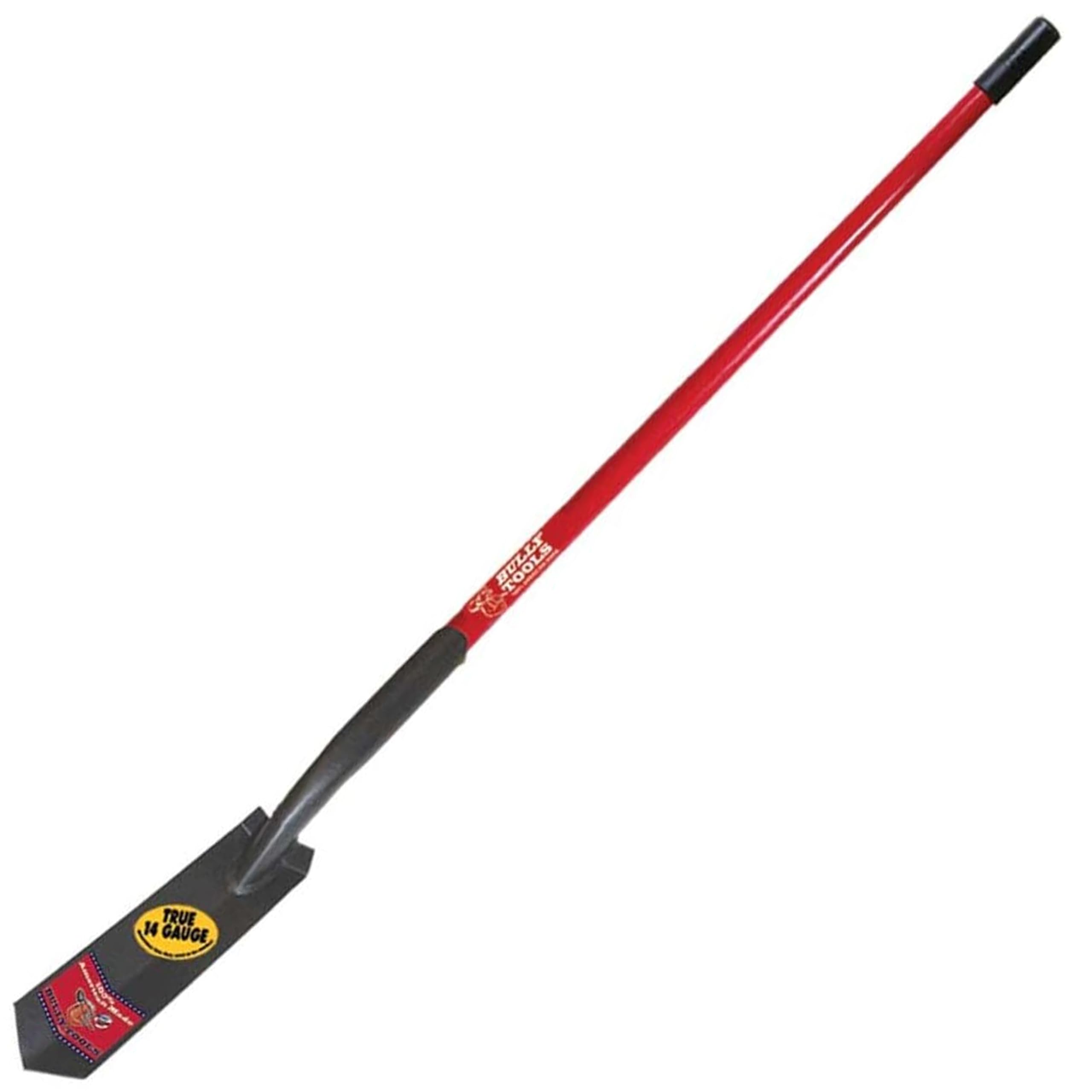
Bully Tools uses 100% American-made 14-gauge steel in this trenching spade, and the difference is immediately apparent in the heft and rigidity. The V-shaped 3-inch-wide blade is purpose-built for cutting narrow trenches for irrigation lines, conduit, or sprinkler heads without disturbing the surrounding soil walls. The narrow profile also makes it effective for transplanting seedlings and working in tight raised beds where a full-width blade would damage adjacent plants.
The reinforced fiberglass handle is wrapped with a polyester veil to reduce splintering — a common failure point on cheaper composite handles. At 47 inches, the handle provides solid leverage for a 5’8″ to 6’2″ user. The powder-coated finish resists rust, and the steel itself is up to 30% tougher than common imported alternatives according to the manufacturer’s specs.
Customer feedback confirms the durability: one user reported the previous Bully Tools trench shovel lasted ten-plus years of light commercial use. A separate buyer noted the blade broke at a weld when rocking the shovel for seedlings — not its intended use — and the company replaced it quickly under the limited lifetime warranty. This is the tool to grab when precision trenching matters more than brute digging force.
Why it’s great
- 14-gauge USA steel blade resists bending and holds up to commercial use
- V-shaped narrow blade cuts clean trenches without collapsing walls
- Limited lifetime warranty provides long-term confidence
Good to know
- Narrow blade is not suitable for general scooping or moving bulk soil
- Not designed for prying or rocking side-to-side motion
3. HANTOP Sawtooth Flat Spade (43-Inch)

The HANTOP sawtooth spade brings a unique design to the mid-range tier: the blade face features a row of serrated teeth that break up hardened dirt clods as you drive the shovel into the ground. This makes it particularly effective for edging, cutting thick turf, and working in soil that has baked hard between rains. The flat square tip also works well for moving compost and scooping loose material.
Built from 1050MN steel with a fiberglass handle and PP grip, the shovel weighs 4.5 pounds — substantial enough to power through tough ground but not exhausting to handle for extended periods. The widened foot platforms offer a stable, non-slip surface for applying full body weight, and the sawtooth edge catches and grinds through ice and compacted snow as well, according to multiple user reports.
Several reviewers noted using this shovel to break up “snowcrete” during winter storms, and one buyer cleared out large swaths of banana tree roots faster than their usual combination of axe, adze, and shovel. The 43-inch handle works well for users around 5’6″ to 5’10”. For the price, this sawtooth design punches well above its weight class in versatility.
Why it’s great
- Sawtooth blade edge breaks up hard clods and ice on contact
- Widened foot platforms provide stable weight transfer
- Versatile enough for digging, edging, and snow scraping
Good to know
- Sawtooth pattern can catch on loose roots if not aligned properly
- Fiberglass handle may feel less warm than wood in cold weather
4. HANTOP Drain Spade Digging Shovel (44-Inch)
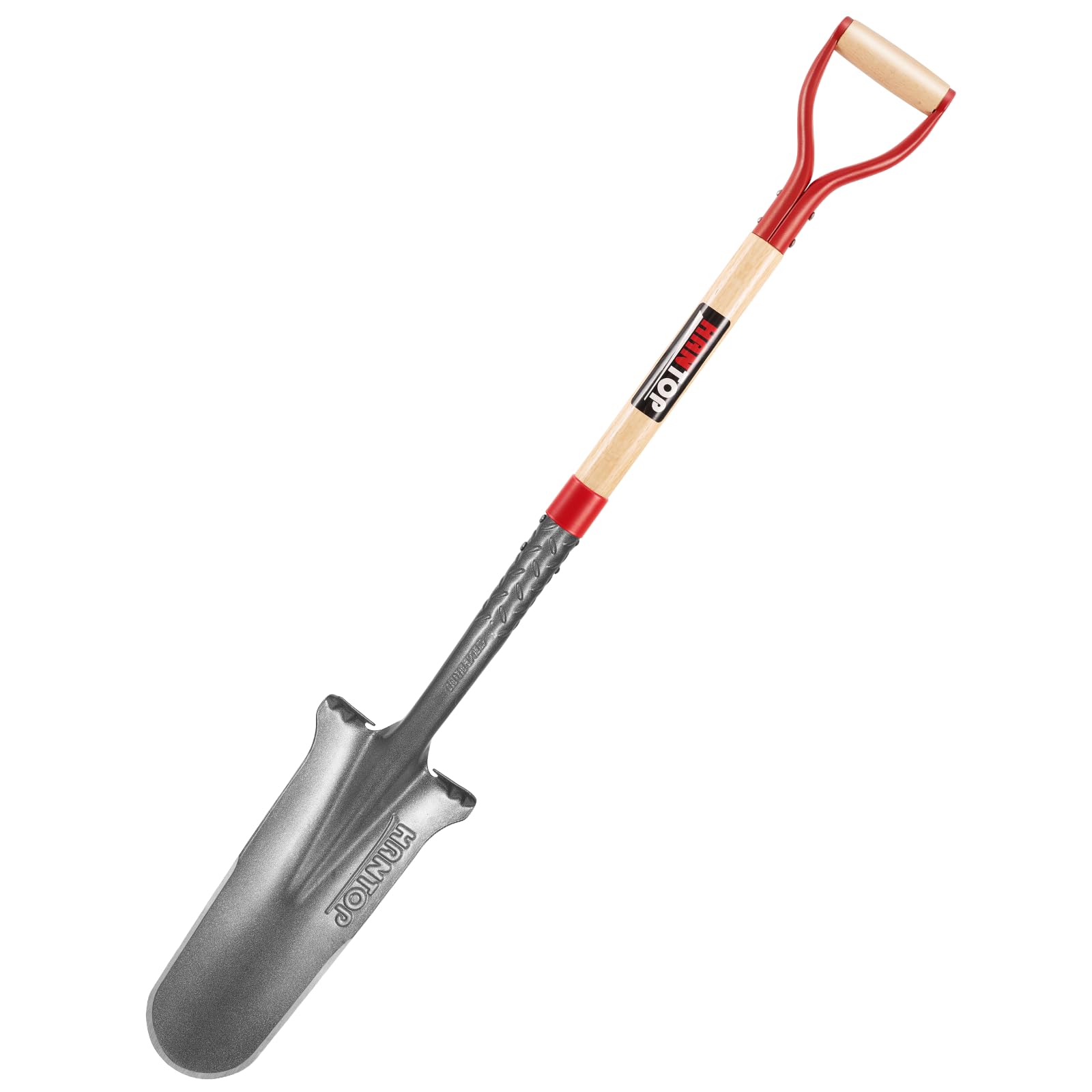
This drain spade from HANTOP uses a polished 1050MN steel head that reduces dirt adhesion — a subtle but meaningful advantage when digging in moist soil that would normally cling to a rough blade. The 7×2-inch blade profile is narrow enough for trenching and transplanting work but wider than a dedicated trenching shovel, giving it more versatility for general garden digging and slicing through thick turf.
The non-slip D-shaped oak grip positions the wrist in a neutral angle to reduce strain during extended use. The raised anti-slip wavy patterns on the widened foot pedals provide secure traction even when pushing through wet clay. At 4.4 pounds and 44 inches, the balance point favors shorter users — reviewers as short as 5’3″ found it easy to maneuver and control.
Customer feedback consistently highlights the sharpness out of the box: the blade cuts into hard soil and slices through roots without excessive force. One user compared the quality favorably to big-name brands at a higher price point. The polished finish makes cleanup quick, and the wood handle with D-grip offers a traditional feel that many gardeners prefer over fiberglass.
Why it’s great
- Polished steel head resists dirt adhesion for cleaner digging
- D-shaped oak grip reduces wrist strain during extended use
- Sharp blade cuts through hard soil and roots immediately
Good to know
- Wooden handle may require occasional oiling to prevent drying
- Blade width is narrow for trenching, not ideal for bulk scooping
5. Nohovu Spade Shovel with D-Handle (45-Inch)

The Nohovu spade shovel delivers reliable performance at an entry-level price point without cutting corners on the steel. The high-carbon steel head is coated with a rust-resistant finish, allowing you to dig in wet soil without immediate corrosion concerns. The metal D-handle connects to the solid wood handle with two rivets for a secure fit that resists loosening over time.
At 45 inches and 4 pounds, this shovel is light enough for casual gardeners but sturdy enough for routine digging in hard clay. The non-slip wide tread on the blade platform ensures foot pressure transfers efficiently without slipping. Multiple reviewers commented that it cut through heavy clay soil more effectively than standard round-point shovels, with one senior user specifically noting the reduced effort required.
The polished wood handle reduces friction against the hands, and the D-grip allows for precise control when extracting deep-rooted weeds. Some users noted the blade was not as razor-sharp as premium models, but it arrives sharp enough for most residential digging tasks. For budget-conscious buyers who still want a carbon steel blade rather than stamped steel, this is a solid entry-level pick.
Why it’s great
- High-carbon steel head with rust-resistant coating for wet soil work
- Two-rivet D-handle connection provides secure, long-lasting fit
- Light enough for daily gardening without fatigue
Good to know
- Blade edge is not as aggressively sharp as premium options
- Wood handle may warp if stored in damp conditions
6. Ashman Heavy-Duty Digging Shovel (41-Inch)

The Ashman round-point shovel fills a different niche: its cupped blade excels at scooping and moving soil, compost, and gravel rather than precision trenching. The 41-inch length with a D-handle grip makes it a good choice for users who need a compact tool for truck beds, tight garden paths, or raised beds. The handle is made from a non-conductive fiberglass composite that resists splintering and weather better than wood.
The hardened alloy steel blade arrives sharpened and ready to penetrate hard soil. Users consistently mention that this shovel outperforms hardware-store alternatives at a similar price point — one reviewer noted their previous store-brand shovel broke after two years of home use, while the Ashman shows no signs of failure. The orange handle makes it easy to spot among garden debris, and the overall 2.2-pound weight is notably lighter than most digging shovels.
Some taller users found the 41-inch handle too short for comfortable standing use, forcing a slight stoop. The shovel is best suited for users around 5’0″ to 5’8″ or for tasks that naturally require bending, such as planting in raised beds. For its intended audience — shorter gardeners or those needing a truck-ready compact shovel — the Ashman delivers impressive durability for the price.
Why it’s great
- Round cupped blade excels at scooping and moving loose material
- Non-conductive fiberglass handle resists weather and splintering
- Light 2.2-pound weight reduces fatigue during extended scooping
Good to know
- 41-inch handle may be too short for taller users standing upright
- Round-point shape is less effective for cutting precise trench edges
7. Metal Concepts Sharpshooter Shovel (All-Steel)
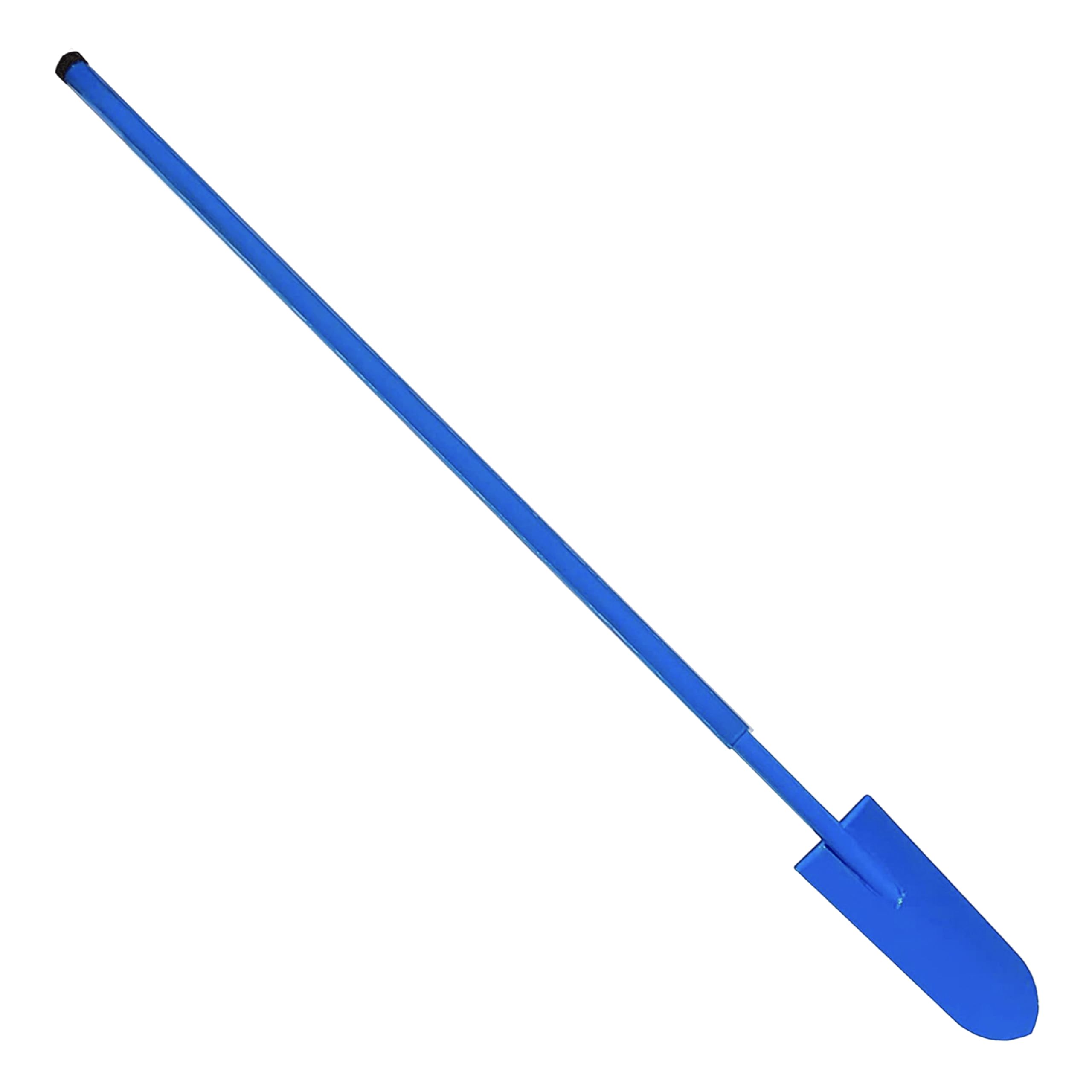
The Metal Concepts Sharpshooter is not a shovel for casual flower bed maintenance — it is an industrial-grade tool designed to punch through deep clay, break up heavy roots, and extract stumps. The 13-pound head is made from heat-sharpened chromoly steel, the same alloy used in high-end racing frames, and the entire tool is constructed from steel, steel, and more steel. There is no wood or plastic anywhere in the structure.
The 78-inch overall length keeps the user standing upright while the tool’s weight does the work of digging. This is a critical design insight: instead of forcing your body weight down onto a blade, you let the mass of the sharpshooter drive itself into the ground with a controlled drop. The hardened tip stays sharp through repeated impacts with rocks and roots, and the all-steel construction means there are no welded joints or glued handles to fail.
Reviewers consistently describe this tool as a “lifetime purchase” for commercial and heavy residential use. One buyer noted it made digging deep holes in clay soil effortless where conventional shovels bounced off. Another called it “God tier” for removing shrubs. The trade-off is obvious: at 13 pounds, this is not a tool you carry on a casual gardening walk. It lives in the truck or the shed and comes out when lighter tools fail. Made entirely in the USA.
Why it’s great
- 13-pound chromoly steel head drives through hard clay and roots by weight alone
- 78-inch handle keeps you standing upright during deep digging
- All-steel construction with no weak joints — a true lifetime tool
Good to know
- Extremely heavy at 13 pounds — not for casual or light work
- Premium price reflects industrial-grade materials and US manufacturing
FAQ
What is the difference between a drain spade and a trenching shovel?
Is a serrated shovel blade worth the extra cost for root cutting?
How do I prevent a wooden shovel handle from rotting?
What blade shape should I choose for digging in heavy clay soil?
Can I use a digging shovel to cut through tree roots?
Final Thoughts: The Verdict
For most users, the best digging tools winner is the Root Slayer 22011 because its serrated carbon steel blade and resin-encased shaft handle the widest range of tough digging conditions — roots, hard clay, and general planting — without excessive weight. If you need precision trenching for irrigation or conduit, grab the Bully Tools 14-Gauge Trench Shovel, a USA-made tool built to last a decade or more. And for breaking through deep clay or removing stubborn stumps, nothing beats the Metal Concepts Sharpshooter, a 13-pound industrial tool that lets gravity do the heavy lifting.

Mo Maruf
I created WellFizz to bridge the gap between vague wellness advice and actionable solutions. My mission is simple: to decode the research and give you practical tools you can actually use.
Beyond the data, I am a passionate traveler. I believe that stepping away from the screen to explore new environments is essential for mental clarity and physical vitality.