Our readers keep the lights on and my smoothie glass nicely filled. As an Amazon Associate, I earn from qualifying purchases.
The difference between a cabinet refinishing job that looks like it was done by a pro and one that screams “weekend warrior” comes down to the sprayer in your hand. Brushes leave streaks, rollers spatter texture, and cheap aerosol cans cost a fortune in product waste. A dedicated unit delivers a factory-smooth, even coat of paint or stain onto cabinet doors, face frames, and drawer fronts — but only if you match the machine to the material and the method.
I’m Mohammad Maruf — the founder and writer behind WellFizz. I’ve spent hundreds of hours analyzing consumer reports, technical spec sheets, and user troubleshooting threads for paint sprayer hardware, specifically the models contractors and serious DIYers rely on for kitchen and bath cabinet work.
This guide cuts through the noise to identify the best equipment for this exact job. Whether you are spraying latex enamel or water-based polyurethane, finding the right diy paint sprayer for cabinets means looking at nozzle precision, turbine power, and cleanup time — not just the sticker price.
How To Choose The Best DIY Paint Sprayer For Cabinets
Cabinet doors demand a finish that is thin enough to level out but thick enough to hide the grain — and the sprayer has to apply that finish without blasting paint into every nearby corner of your kitchen. Here are the core considerations that separate a tool suited for this job from one better left for fences and siding.
HVLP vs. Airless: Which technology fits cabinet work?
High-Volume Low-Pressure (HVLP) systems use a turbine to atomize paint into a soft, controlled fan at low PSI. This produces less overspray, wastes less material, and applies thinner coats — ideal for fine finishes on cabinet doors where runs are visible immediately. Airless sprayers push paint through a tiny opening at high pressure (2000–3000 PSI), which lays down material fast but produces more overspray and requires more masking. For kitchen cabinets, a quality HVLP or a refined airless with a fine-finish tip is usually the safer bet.
Nozzle and tip compatibility
The size of the nozzle orifice determines how thick a material the sprayer can push. For latex cabinet paints (thick, waterborne enamels), you need at least a 1.5mm or 1.8mm tip to avoid constant clogging. For stains and sealers, a 1.0mm or 1.2mm tip gives better control. Look for a kit that includes multiple tips or accepts industry-standard reversible spray tips — being able to swap or clear a clogged tip in seconds keeps your project moving.
Adjustability and pattern control
Cabinets require both horizontal and vertical spray patterns to cover doors, frames, and recessed panels without missing corners. The gun must let you dial in material flow independently of air volume — if the paint comes out fast but the atomization is weak, you get orange peel. Control over the fan width is also critical: a narrow pattern (2–4 inches) prevents overspray onto adjacent cabinets when you are spraying face frames.
Cleanup will dictate your repeat use
Thoroughly cleaning paint out of internal passages after each session is non-negotiable for any sprayer. A unit that disassembles without tools, has a clear flushing path, and includes a cleaning brush kit will get used again. Models that require full pump disassembly or soak-cleaning of every part tend to collect dust after the first project. Water-based paints must be flushed immediately to prevent cured paint from ruining seals and tips.
Quick Comparison
On smaller screens, swipe sideways to see the full table.
| Model | Category | Best For | Key Spec | Amazon |
|---|---|---|---|---|
| Graco Ultra Cordless Airless 17M363 | Airless | Fast touch-ups on one cabinet run | 0.25 gal cup with Dewalt battery | Amazon |
| Fuji Spray Mini-Mite 4 Platinum T70 | HVLP | Pro-grade finish on cabinets and furniture | 4-stage turbine, 9 PSI max | Amazon |
| PHALANX Airless Paint Sprayer | Airless | Whole-house painting including cabinets | 780W motor, 3000 PSI | Amazon |
| InoKraft MaXpray M1 | Airless | Beginner-friendly setup with easy flush | 550W motor, 0.29 GPM | Amazon |
| Wagner Spraytech FLEXiO 570 | HVLP | Latex and stain on cabinet doors | 1.5 qt cup, X-Boost turbine | Amazon |
| VEVOR 750W Stand Airless | Airless | Large cabinet sets and multiple rooms | 750W motor, 3000 PSI | Amazon |
| BATAVIA 700W HVLP Paint Sprayer | HVLP | Entry-level HVLP with multiple nozzles | 700W motor, 1 lb spray gun | Amazon |
In‑Depth Reviews
1. Fuji Spray Mini-Mite 4 Platinum T70 HVLP System
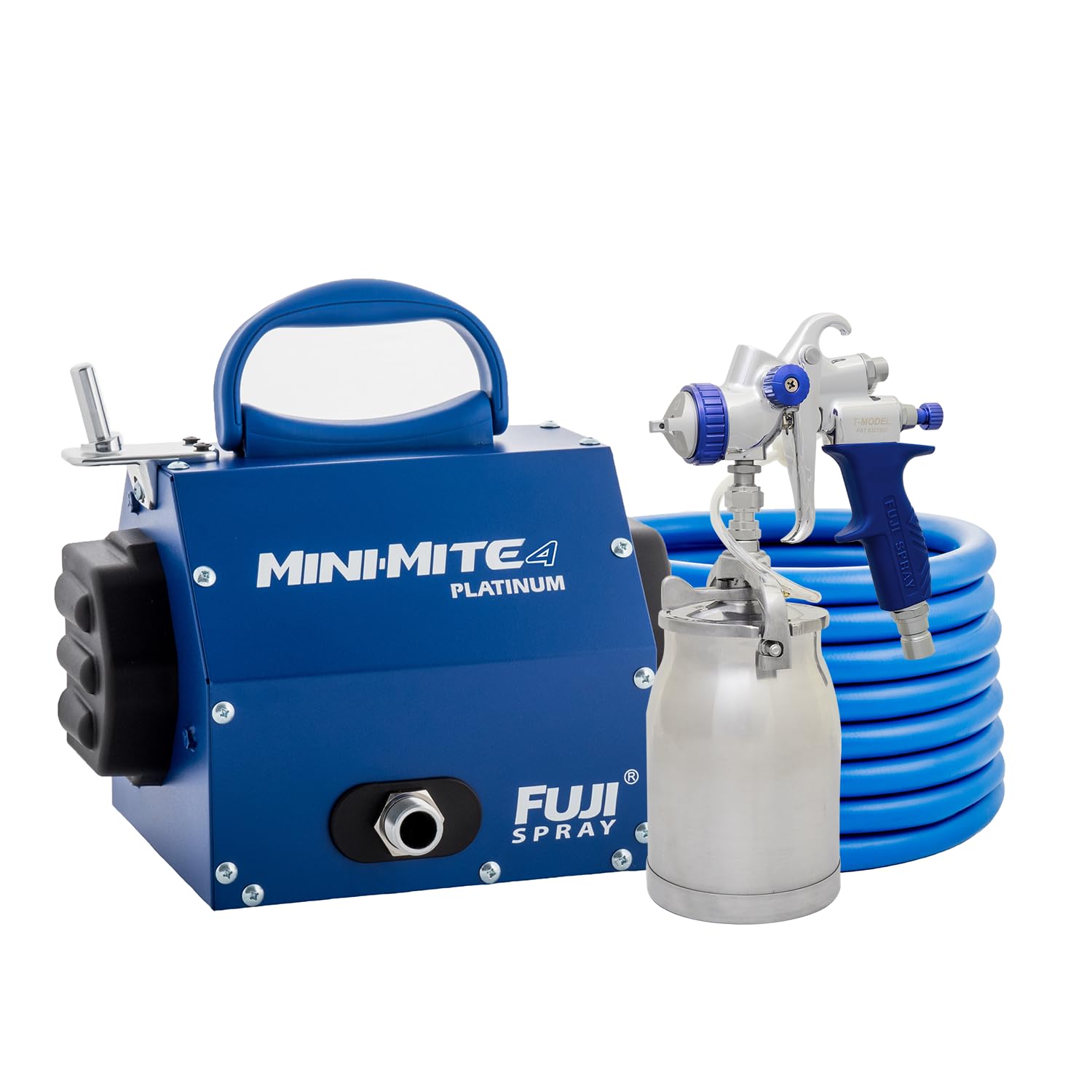
This is the gold standard for anyone refinishing cabinets indoors without a booth. The 4-stage platinum turbine produces a steady, quiet airflow that atomizes waterborne lacquer, polyurethane, and latex enamel without pulsing — the fan stays consistent from the first door to the last. The T70 bottom-feed gun reduces the need to stop and fill, and the pattern control knob adjusts horizontally or vertically from a fine 2-inch stripe to a wide 11-inch spread.
Cabinet-specific advantages show up in the details: the stay-cool handle keeps your hand comfortable during long sessions, and the 25-foot hose with an air control valve lets you dial back overspray on delicate trim. Users coming from compressor guns report zero variations in air delivery, which directly translates to fewer runs and sags on vertical door faces.
HVLP units require thinner paint than airless systems, meaning you may need to reduce thick latex cabinet paints slightly. The trade-off is a finish that looks sprayed, not plastered — and cleanup takes minutes because only air passes through the turbine. Gun disassembly is tool-free and straightforward.
Why it’s great
- Professional-grade atomization with zero pressure drop across the spray pattern
- Quiet enough for indoor kitchen use without hearing protection
- Tool-free cleanup and bottom-feed design extend productive spray time
Good to know
- Thicker latex paints may require thinning before spraying
- Premium pricing puts it out of budget for one-off projects
- Main hose is stiff; a whip hose upgrade improves maneuverability
2. Graco Ultra Cordless Airless Handheld Paint Sprayer 17M363

The Graco Ultra trades the tether of a hose and outlet for cordless mobility — powered by the Dewalt XR Lithium Ion battery platform. This is significant when painting cabinets in a room where extension cords create tripping hazards over drop cloths. The Triax triple piston pump delivers genuine airless pressure without thinning latex, and the RAC X FFLP tip system produces a fine finish that holds up on cabinet-grade materials.
Where this unit earns its spot for cabinet work is the ability to walk from door to door and grab every angle without dragging a turbine behind you. The included 514 tip applies material fast, but experienced users swap to a smaller bore tip (such as 310 or 210) for better control on narrow face frames. The 32-ounce cup is small — expect refills every few doors — but the trade-off is a lightweight gun.
Cleanup requires flushing with a garden hose and cleaning the filter screen at every refill. Users who follow that cadence report consistent performance. Skipping it causes paint to dry inside the pump passages, which is the most common failure point on cordless airless sprayers.
Why it’s great
- No cords or hoses to manage around freshly painted doors
- Sprays cabinet latex directly from the can without thinning
- Triax pump is serviceable and rebuildable for long-term ownership
Good to know
- Small cup requires frequent refills on a full kitchen set
- Higher price tier than most corded handheld units
- Battery and charger purchased separately if not already on Dewalt platform
3. PHALANX Airless Paint Sprayer 780W

The PHALANX airless is a serious contender for the homeowner who wants to refinish cabinets today and tackle the exterior siding next weekend. Its 780W motor generates 3000 PSI, which is enough pressure to atomize unthinned latex and oil-based cabinet paints into a fine mist. The upgraded anti-drip metal gun and reinforced connections address the leaking issues that plagued earlier budget airless models — cabinet painters know drips on a finished door are a disaster.
A standout feature for cabinet work is the reversible spray tip: when a piece of debris clogs the orifice, you rotate it 180 degrees and blow the obstruction out in seconds without removing the tip guard. This matters because cabinet paint is often thick and prone to small dried particles. The adjustable pressure and flow control knob lets you reduce pressure for detailed work on drawer fronts, then crank it up for large panel doors.
The 25-foot hose draws directly from a 1 or 5-gallon bucket, meaning zero downtime for refilling when you are spraying face frames. Cleanup is done via the quick-rinse system that flushes water or solvent through the pump in under 10 minutes. ETL certification adds peace of mind for indoor use.
Why it’s great
- Reversible tip clears clogs instantly without breaking the spray pattern
- Draws directly from a 5-gallon bucket for uninterrupted cabinet runs
- Pressure control allows fine-tuning for thin or thick materials
Good to know
- Heavy 19.4-pound unit requires a cart or strong arms for moving
- Setup and priming take careful reading of the instructions for first-timers
- Spray gun can leak if connections are not fully tightened before use
4. InoKraft MaXpray M1 Airless Paint Sprayer

InoKraft designed the MaXpray M1 with the first-time airless user in mind, which makes it a strong candidate for DIY cabinet refinishing. The 550W motor delivers 3000 PSI at 0.29 GPM — enough flow to spray thick latex cabinet paint without thinning. The included AtoMax 515 carbide reversible tip and 12-inch extension give you the reach and durability needed for tall cabinet faces without ladder repositioning. The 360-degree swivel joint on the gun helps navigate inside cabinet boxes and around hinge cutouts.
The real draw for cabinet painters is the Flush-Ease valve system: after the job, you connect a garden hose to the valve and flush the pump without fully disassembling it. This reduces cleanup time from a chore to a quick rinse, which is the single biggest reason DIYers neglect their sprayer and end up with clogged internals. The laminated Quick Start Guide and video tutorials walk through setup in about 15 minutes.
A few users noted that the spray gun leaked at the nozzle nut when the tip was not fully seated — this is a seating issue, not a design flaw, but it highlights the importance of checking connections. The build is mostly metal with good weight, and in long-term use, owners report it outperforms mid-level models from larger brands at a lower entry point.
Why it’s great
- Flush-Ease valve connects to a garden hose for fast pump cleanup
- Includes 12-inch tip extension for reaching high and low cabinet areas
- Mostly metal construction feels durable and stable during spraying
Good to know
- Plastic hose retains coil memory and may need stretching out before use
- Spray tip may need to be fully tightened to prevent minor leaks
- Fan pattern at lowest flow setting may still be too wide for narrow trim
5. Wagner Spraytech FLEXiO 570 Handheld HVLP Paint Sprayer

The FLEXiO 570 is Wagner’s answer to the homeowner who wants one sprayer for cabinets, fences, walls, and furniture. It uses the X-Boost turbine to spray most unthinned latex and acrylic paints, and the iSpray nozzle delivers a concentrated fan pattern that covers cabinet doors without excessive overspray. The two-speed motor lets you run high power for thick cabinet enamel and low power for thinner stains or sealers — a simple dial that produces noticeably different results.
For cabinet work, the pattern adjustment is key: you can change the fan from horizontal to vertical and vary the width by rotating the nozzle ring. This allows you to paint the flat panel of a door with a wide fan, then tighten the pattern for the frame edges without switching tips. The 1.5-quart cup holds enough for several doors before refilling, and the transparent reservoir shows your paint level continuously.
The trade-off with an HVLP system like this is overspray — the soft low-pressure fan still creates a fine mist that settles on adjacent surfaces, so masking off the kitchen is mandatory. Some users report clogging if they stop and restart mid-project without wiping the tip. Cleanup is straightforward: spray water or solvent through the system until the stream runs clear, then wipe the nozzle.
Why it’s great
- Sprays latex and acrylic without thinning, saving prep time
- Two-speed motor matches air power to material thickness
- Pattern width adjusts without changing nozzles for cabinet frames and panels
Good to know
- Overspray is heavy for an HVLP — kitchen masking is essential
- Nozzle tip needs regular wiping during extended spraying
- Not designed for ultra-fine furniture finishes like lacquer or high-gloss enamel
6. VEVOR 750W Stand Airless Paint Sprayer

The VEVOR 750W stand airless is a volume-first machine that excels when you need to move through a large number of cabinet doors quickly. The 3000 PSI output at 1.2 liters per minute lays paint down fast, and the stand-mounted design keeps the pump off the floor, away from wet drop cloths and paint splatter. It draws directly from a 1 or 5-gallon bucket, so there is no cup to refill — just dip the intake tube and keep spraying.
For cabinet work, the infinite speed control is the feature that saves material and reduces overspray. At low gear, the pump reduces paint output, allowing you to apply thinner coats on cabinet doors without runs. The fan-shaped atomization technology produces a consistent pattern that users describe as “even and fine,” with less orange peel than some budget airless units. The metal frame and rubber hose are built to endure multiple projects.
Cleanup is the main friction point: the pump is detachable, but flushing out the hose and gun requires running solvent through the system until clear. Owners report that the intake hose is a few inches too short to reach the bottom of a 5-gallon bucket, leaving about a quart of paint unusable. The noise level is moderate — ear protection is recommended for extended runs.
Why it’s great
- High flow rate covers a full kitchen in half the time of handheld models
- Variable speed control reduces paint waste on thin coats for cabinets
- Stand-mounted pump stays clean and stable during operation
Good to know
- Intake hose leaves residual paint in the bucket bottom
- Cleanup requires thorough flushing and is more involved than HVLP
- Limited pattern adjustment at partial spray settings
7. BATAVIA 700W HVLP Paint Sprayer with Split Design

The BATAVIA 700W enters the cabinet sprayer conversation by addressing the biggest complaint about budget HVLP sprayers: arm fatigue. The motor unit separates from the spray gun, and the handheld piece weighs only one pound — a meaningful difference when you are holding a gun up to a row of upper cabinets for thirty minutes. The 6.5-foot air hose gives you enough slack to move between sections without dragging the heavy motor across the floor.
It comes with four nozzles (1.0mm, 1.5mm, 2.0mm, 3.0mm) and three spray patterns, giving you genuine flexibility for different coating types. The 1.0mm nozzle is ideal for thin sealers and varnishes on cabinet doors, while the 2.0mm handles thicker latex paints. The visible anti-backflow design prevents paint from creeping back into the air line, which is a common failure point on low-cost HVLP units. Users confirm it sprays evenly and does not clog during continuous use.
ETL certification means the electrical components meet safety standards, which matters for indoor use in a kitchen. The main limitation is the 40-fluid-ounce cup: it is adequate for a few doors at a time, but you will stop to refill multiple times on a full kitchen. Cleaning is simple with the included brush and needle, and the motor compartment never touches paint, so maintenance stays focused on the gun and cup.
Why it’s great
- Ultra-light 1-pound spray gun reduces arm fatigue during long cabinet sessions
- Four nozzle sizes let you match orifice to material viscosity
- Anti-backflow design prevents paint contamination in the turbine
Good to know
- 40-ounce cup requires frequent refills on a full cabinet set
- 6.5-foot hose limits range of motion compared to longer hoses
- Plastic construction feels less durable than metal-bodied sprayers
FAQ
Can I use a budget HVLP sprayer for latex cabinet paint?
What nozzle size is best for spraying cabinet doors?
Do I need an airless sprayer or is HVLP sufficient for cabinet refinishing?
How do I prevent runs and sags on cabinet door faces?
Why does my sprayer clog even after cleaning?
Final Thoughts: The Verdict
For most users, the diy paint sprayer for cabinets winner is the PHALANX Airless Paint Sprayer because it combines the pressure needed for unthinned latex with a reversible tip and direct-feed system that keeps you spraying doors without constant refills. If you want professional-grade atomization and quieter operation for indoor work, grab the Fuji Spray Mini-Mite 4 Platinum. And for a cordless option that lets you move around cabinets without tripping over hoses, nothing beats the Graco Ultra Cordless Airless.

Mo Maruf
I created WellFizz to bridge the gap between vague wellness advice and actionable solutions. My mission is simple: to decode the research and give you practical tools you can actually use.
Beyond the data, I am a passionate traveler. I believe that stepping away from the screen to explore new environments is essential for mental clarity and physical vitality.