Our readers keep the lights on and my smoothie glass nicely filled. As an Amazon Associate, I earn from qualifying purchases.
Machinists don’t just measure parts — they measure their reputation with every thou. A caliper that drifts, sticks, or reads inconsistently costs time and materials, turning a simple check into a rework decision. The right set of digital calipers eliminates that friction, delivering repeatable, trustworthy readings shift after shift.
I’m Mohammad Maruf — the founder and writer behind WellFizz. My research process for this guide involved cross-referencing hundreds of verified user reports against published accuracy specs, IP ratings, and build materials to identify which models actually survive a real machine shop environment.
Whether you need a shop-floor workhorse for daily inspection or a secondary set dedicated to specific tooling, finding the best digital calipers for machinist means balancing precision, durability, and ease of reading under harsh workshop lighting.
How To Choose The Best Digital Calipers For Machinist
Choosing a digital caliper for machining goes far beyond a low price tag. The measurement environment — coolant spray, metal chips, temperature swings, and repeated jaw cycles — demands features that hobbyist models simply skip. Focus on these factors to pick a caliper that earns a spot in your toolbox, not the trash.
Ingress Protection (IP Rating) Matters in Wet Shops
Coolant mist and cutting oil are the top killers of budget digital calipers. An IP54 rating means the electronics are sealed against splashing water and dust ingress. Without it, a single coolant splash can lock the display or cause reading drift mid-operation. For any machinist working near a lathe or CNC mill, IP54 is not optional — it’s survival.
Repeatability Over Peak Accuracy
A caliper that claims 0.001″ accuracy is common, but the real question is repeatability — can it return to the same reading across ten jaw cycles on the same gage block? Look for models with published repeatability specs of 0.0005″ or better. Verified user reports of stable zero retention after multiple open-close cycles separate shop-grade tools from disposable imports.
Battery Type and Accessibility
LR44 cells are common in entry-level calipers but drain faster and are less standardized than CR2032 lithium batteries. A tool that eats batteries mid-afternoon is a productivity drain. Machinists prefer CR2032-powered calipers with accessible battery compartments — no tiny screws, no prying open the scale with a fingernail. A low-battery warning indicator is a bonus that avoids surprise shutdowns.
Quick Comparison
On smaller screens, swipe sideways to see the full table.
| Model | Category | Best For | Key Spec | Amazon |
|---|---|---|---|---|
| Fowler 54-101-150-2 | Premium | Daily shop floor use | Repeatability 0.0005″ | Amazon |
| Dasqua 2000-1005 | Premium-Mid | IP54 wet environment | Resolution 0.01mm | Amazon |
| iGaging 100-333-8-B | Mid-Range | Reading in low light | Super large LCD 2.4″ | Amazon |
| Werka WK6000150 | Mid-Range | General precision work | Accuracy 0.001″/0.02mm | Amazon |
| iGaging 100-164 | Budget | Fraction/decimal dual dial | Resolution 0.01″ | 1/64″ | Amazon |
In‑Depth Reviews
1. Fowler 54-101-150-2, Xtra-Value Cal Digital Caliper

The Fowler Xtra-Value Cal is the standard for machinists who need a tool that earns its place in the toolbox through consistent, day-in-day-out reliability. Its hardened stainless steel body and smooth, backlash-free slider action have earned repeated praise from users who transitioned from cheaper no-name brands. The 0.0005″ resolution and 0.001″ accuracy spec hold up in real-world gage R&R tests, and the CR2032 battery compartment is tool-free to access — no tiny screws to lose on a dark shop floor.
Users report stable zero retention across dozens of measurement cycles, a feature that directly reduces rework time. The included hard case provides solid protection, but the real value lies in the build: this is not a caliper that drifts after a week of coolant exposure. The LCD display is crisp, though some users note it becomes harder to read at extreme viewing angles — a minor trade for the build quality. The auto-off function preserves battery life between shifts.
If this caliper has a weakness, it’s the price relative to budget options. But the consensus from daily users is clear: the Fowler saves money in the long run by lasting through a full year of use without the measurement drift that plagues cheaper units. For the machinist who measures critical features every day, this is the mid-range workhorse that pays for itself quickly.
Why it’s great
- Exceptional repeatability with stable zero retention
- CR2032 battery with easy-access compartment
- Smooth jaw action with no detectable backlash
Good to know
- LCD display loses contrast at wide viewing angles
- Premium price compared to entry-level models
2. Dasqua 6″ Digital Caliper IP54
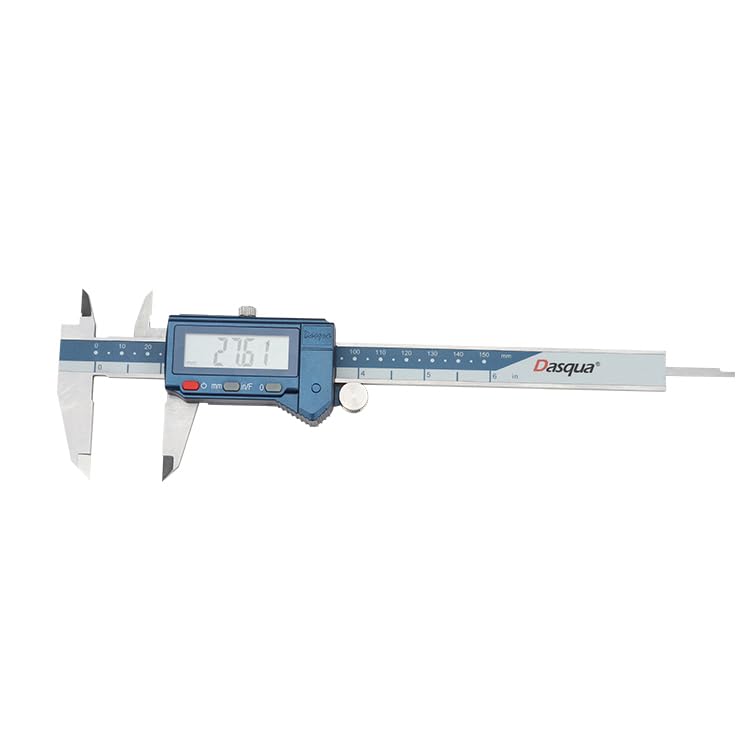
The Dasqua 2000-1005 is built specifically for the machinist who works in environments where coolant mist and fine metal dust are unavoidable. Its IP54 rating means the electronics are sealed against splashing water and airborne particles — a feature that directly prevents the display flicker and zero drift that kills unprotected calipers. Users note that the ABS (absolute) system holds its zero reference even after power cycles, eliminating the need to re-zero before every measurement.
The large, responsive LCD display switches between inch, millimeter, and fractional measurements with a single button press. Several users who own Mitutoyo calipers report that the Dasqua correlates closely enough for secondary or backup use at a fraction of the investment. The included foam-padded case protects the tool during storage, and the auto-off function kicks in after five minutes of inactivity to save battery life.
A few users noted that the slide action, while smooth, has a slightly gritty feel compared to premium Japanese calipers. This does not affect measurement accuracy, but it may be noticeable to a machinist accustomed to buttery-smooth movement. For its price range, the Dasqua delivers IP54 protection that few competitors in its tier can match, making it a smart choice for any shop with wet operations.
Why it’s great
- IP54 splash and dust resistance for wet machining environments
- ABS system retains zero reference across power cycles
- Accurate correlation with premium Mitutoyo calipers
Good to know
- Slide action lacks the buttery smoothness of high-end calipers
- Some users prefer a finer-pitch thumb roller
3. iGaging IP54 Electronic Digital Caliper 0-6″
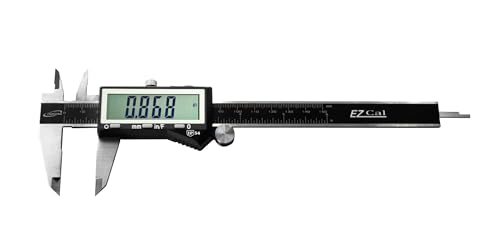
The iGaging 100-333-8-B solves one of the most common pain points for machinists: reading a tiny display under harsh workshop lighting. Its super large LCD measures 2-3/8″ x 7/8″, making it particularly effective for aging eyes or users who work in low-light conditions. The hardened stainless steel body and IP54 rating provide the same coolant and dust protection found on calipers costing twice as much, though some users note the thumb wheel has slight play that doesn’t affect actual measurement function.
User reports confirm that this caliper maintains consistent measurements even after years of daily shop use. The included spare battery, tiny replacement screws, and plastic battery guard prevent discharge during storage — a thoughtful detail that shows awareness of the real-world workshop environment. The repeatability spec of 0.0005″ is verified by users running gage R&R tests, giving confidence for inspection tasks.
The main ergonomic complaint involves balance and feel: the caliper is slightly top-heavy, and the sharp edges on the stainless steel body can cause discomfort during extended use. One user solved this with a quick sanding of the edges. For the machinist who prioritizes readability above all else, this iGaging model offers the clearest display in its price range without sacrificing the build quality needed for a shop environment.
Why it’s great
- Extra-large LCD for clear reading in low or harsh light
- IP54 rated for coolant splash and dust protection
- Proven repeatability of 0.0005″ in user gage R&R testing
Good to know
- Sharp body edges can cause hand fatigue during prolonged use
- Thumb wheel has slight lateral play
4. Werka Digital Caliper 0-6″

The Werka WK6000150 delivers a surprisingly refined package at an accessible price point. Its fine-polished stainless steel frame slides smoothly, and the 0.001″/0.02mm accuracy spec holds up in user comparisons against premium brands like Mitutoyo. The three display modes (inch, fractional inch, millimeter) cover the most common measurement systems used in machining, and the large LCD screen provides good visibility even under workshop lighting.
Multiple users noted that the included hard plastic case with a sponge cavity rivals the packaging of calipers costing three times as much. The auto-on feature activates when the slide moves, and a low battery warning flashes the display before power failure — a practical feature that prevents interrupted measurements. The package even includes a spare battery and replacement parts, which many machinists appreciate as a sign of thoughtful design.
The primary limitation is the use of LR44 batteries, which have shorter lifespans and are less standardized in machine shop drawers than CR2032 cells. Some users also noted that the digit sizes on the display appear slightly unbalanced, though this doesn’t affect readability. For a machinist who needs a reliable backup caliper or a primary tool for less demanding measurements, the Werka offers exceptional value without sacrificing the build quality that matters.
Why it’s great
- Surprisingly accurate against premium-brand references
- Professional-grade hard case with sponge cavity storage
- Auto-on feature and low battery warning
Good to know
- LR44 batteries have shorter life than CR2032
- Display digit sizes look slightly mismatched
5. iGaging Dial Caliper 6″ Fractional & Decimal Inch
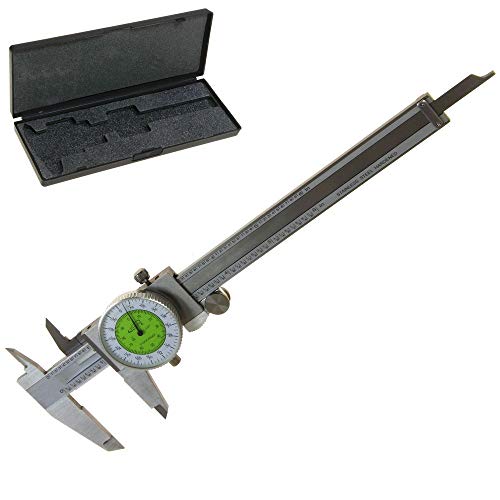
The iGaging 100-164 is a dual-scale dial caliper that serves a specific niche: machinists who prefer analog feedback or work with fraction-based prints. The dial displays both decimal inch and fractional inch scales simultaneously, saving time on conversions during setup. Its stainless steel body is rugged, and users confirm that the dial is dead-on accurate when checked against tape measures and gage blocks.
The adjustable bezel allows for fine zero setting, and the thumb wheel enables precise fine adjustment. Long-term users report that the tool remains accurate and easy to use after years of service, and the included case protects the dial from shop dust. The combination of inner, outer, and depth measurement gives it versatility for basic inspection tasks.
The key trade-off is precision: the dial reads to 0.01″ and 1/64″, which is less granular than digital models offering 0.001″ resolution. This limits its use for tight tolerance work. Some users also report that the slide action is not as smooth as premium dial calipers from Starrett or Brown & Sharpe. For a beginner machinist or for tasks like fastener sizing and rough dimension checks, this is a functional and affordable choice. For critical work under 0.01″, stick with a digital unit.
Why it’s great
- Simultaneous decimal and fractional inch display
- Rugged stainless steel construction for shop durability
- No batteries required — always ready to measure
Good to know
- 0.01″ resolution limits use for tight tolerance work
- Slide action is less smooth than premium dial calipers
FAQ
Can I use a digital caliper for roughing cuts or should I reserve it for inspection?
How often should I calibrate my digital calipers in a machine shop?
Final Thoughts: The Verdict
For most users, the best digital calipers for machinist winner is the Fowler 54-101-150-2 because it combines the build quality, repeatability, and CR2032 battery convenience that shop-floor machinists demand. If you need IP54 water and dust protection for wet environments, grab the Dasqua 2000-1005. And for a budget-friendly backup or beginner tool, nothing beats the value of the Werka WK6000150.

Mo Maruf
I created WellFizz to bridge the gap between vague wellness advice and actionable solutions. My mission is simple: to decode the research and give you practical tools you can actually use.
Beyond the data, I am a passionate traveler. I believe that stepping away from the screen to explore new environments is essential for mental clarity and physical vitality.