Our readers keep the lights on and my smoothie glass nicely filled. As an Amazon Associate, I earn from qualifying purchases.
A dirt bike’s entire personality lives through its tires—the thin ribbon of rubber that decides whether you claw up a rocky hill or spin helplessly in the loam. The wrong choice turns a confident ride into a battle against the terrain, while the right set of treads makes technical trails feel effortless.
I’m Mohammad Maruf — the founder and writer behind WellFizz. For this guide I’ve analyzed the construction, knob patterns, and real-world wear data across seven seriously capable sets, cutting through marketing noise to find the rubber that actually delivers where it counts.
Whether you’re a weekend trail rider or a deep-woods enduro junkie, this analysis of the best dirt bike tires will help you match compound and tread to your specific riding terrain.
How To Choose The Best Dirt Bike Tires
Selecting the right rubber for your bike starts with matching the tire’s intended terrain to the dirt you actually ride. A soft-terrain knobby with tall, widely-spaced lugs will flex and grip in loam but squirm and wear fast on hardpack. A hard-terrain tire with shorter, closely-packed blocks stays stable on rock and tarmac but struggles to dig in when the trail turns to deep sand or mud. Know your primary riding surface first—then match compound and carcass construction to your weight and bike’s power delivery.
Terrain Specificity and Tread Pattern
Every tire in this category is tuned for a specific surface window. Soft-to-intermediate tires (like the Tusk EMEX T-35) use tall, scoop-shaped knobs that bite into loose soil and clean out easily. Intermediate-to-hard tires (like the Tusk EMEX T-45) run shorter, reinforced blocks that resist folding under cornering loads on packed clay or gravel. Some tires carry a DOT stamp, meaning they mix a 90/10 dirt-to-road ratio with a harder compound that survives pavement transitions without chunking—trade-offs you have to weigh honestly against your typical ride.
Compound Hardness and Carcass Ply
Compound chemistry dictates how a tire grips and how long it lasts. A “gummy” soft compound, like the IRC VE-33S Gekkota, feels like it sticks to wet rock and roots but can wear through a rear set in 400–500 miles of aggressive trail riding. Standard dual-compound rubber holds up for 1,000+ miles but loses traction on slick surfaces. Carcass ply—the layers of cord inside the tire—determines puncture resistance and how well the tire absorbs impacts. A 6-ply rated casing shrugs off sharp rocks and pinch flats better than a 4-ply equivalent, though it also transmits more vibration to your hands and feet.
Quick Comparison
On smaller screens, swipe sideways to see the full table.
| Model | Category | Best For | Key Spec | Amazon |
|---|---|---|---|---|
| Pirelli Scorpion MX Extra X Set | Race / Premium | Motocross training and amateur racing | Front 80/100-21 + Rear 110/90-19 | Amazon |
| IRC VE-33S Gekkota Rear | Gummy / Enduro | Technical single-track and wet roots | 110/100-18, soft gummy compound | Amazon |
| Tusk EMEX T-45 Set | Mid-Range / Hard Terrain | Intermediate to hard-packed trails | 90/100-21 & 120/90-18, 6-ply | Amazon |
| Tusk EMEX T-35 Set | Mid-Range / Soft Terrain | Loam, sand, and soft trail riding | 70/100-19 & 90/100-16, tube-type set | Amazon |
| Kenda K760 Trakmaster Rear | Dual-Sport / Value | DOT-legal mixed-surface riding | 120/100-18, 6-ply, DOT approved | Amazon |
| Kenda K760 Trakmaster Front | Dual-Sport / Value | Affordable front DOT knobby | 80/100-21, 13mm tread depth | Amazon |
| Bridgestone Trail Wing TW | Mini / Budget | Small-displacement pit bikes and clones | 4.00-10, radial, 4-ply | Amazon |
In‑Depth Reviews
1. Pirelli Scorpion MX Extra X Set
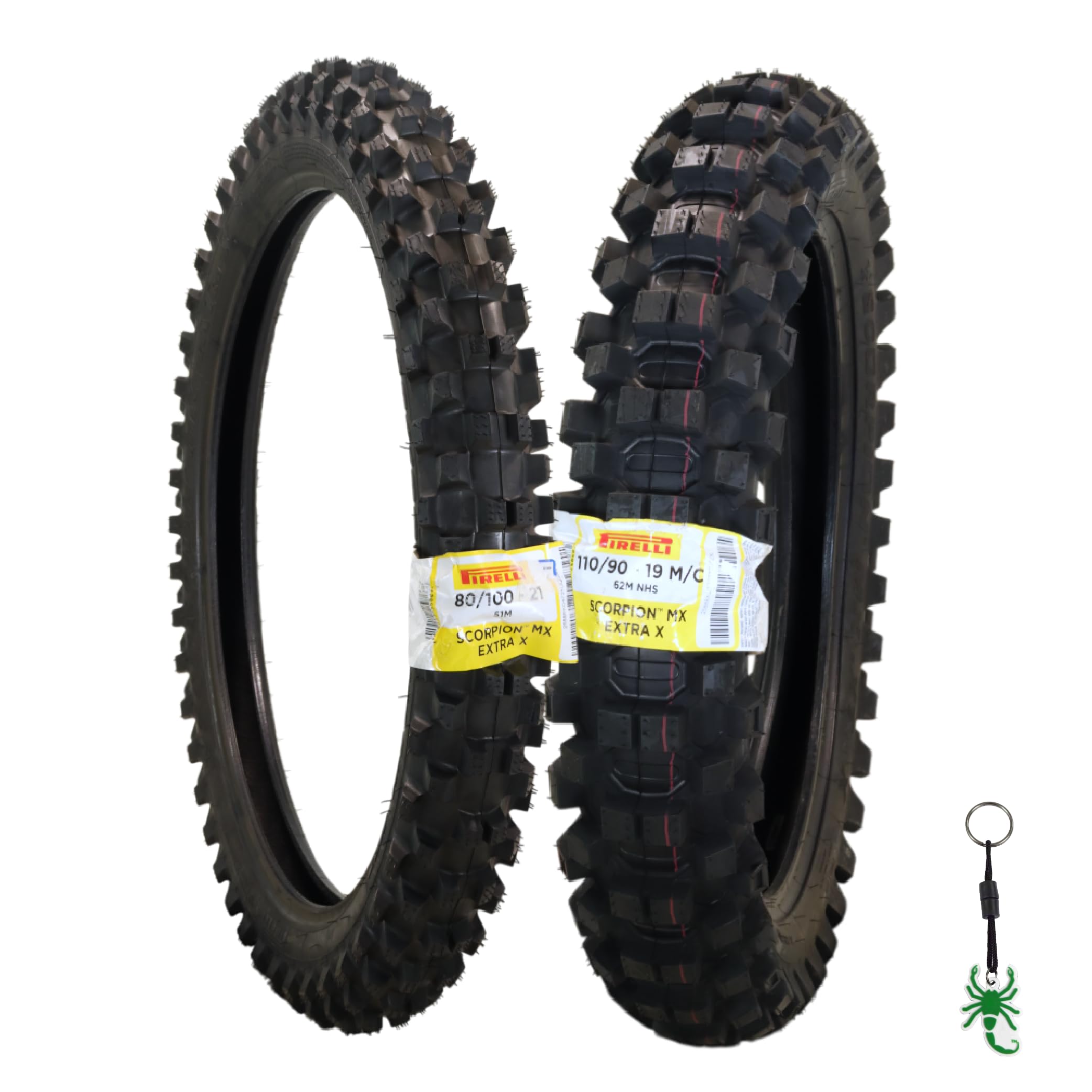
Pirelli engineered the MX Extra X for the specific demands of training and amateur racing, and it shows in every detail. The front tire uses arrow-like directional blocks that improve braking stability when you’re diving into a rutted turn, while the rear employs a bridged-lug layout that stiffens the blocks under hard acceleration. Riders on YZ450Fs and 250cc machines report excellent grip on mid-soft to mid-hard clay and loam, with minimal knob folding even at race pace.
The multi-ply carcass absorbs the shock of flat landings without transmitting harsh feedback to the rider’s arms, making it a forgiving option for long practice sessions. The set is Not for Highway Service—these are pure race tires—so you lose on-road versatility but gain pure off-road bite. One reviewer ran them on a 2006 YZ450F through an entire championship season on South Texas clay and reported zero chunking, a significant durability edge over some softer competitors.
Self-installation is tricky due to the stiff sidewall; a stand-mounted tire changer or professional mounting is highly recommended. The included keychain is a nice touch, but the real value is the balance between race-day aggression and wear resistance that allows a single set to survive a full season of practice and gates.
Why it’s great
- Superior cornering stability from reinforced side knobs
- Multi-ply carcass resists punctures on rocky tracks
- Excellent uphill traction for hole shots
Good to know
- Not DOT-approved for street use
- Stiff sidewalls make DIY mounting difficult
- Sizing errors reported with included tubes
2. IRC VE-33S Gekkota Rear 110/100-18

The IRC VE-33S Gekkota has developed a near-legendary reputation among enduro riders who face wet roots and Pennsylvania slate stone—a terrain that normally tears knobs off standard rubber. Its gummy compound sticks to slick surfaces like adhesive and pairs brilliantly with a Tubliss system at pressures around 7 PSI, where the carcass conforms to every rock instead of bouncing off it. On a Sur Ron Ultra Bee, one rider logged 300 miles of aggressive single-track with barely visible wear.
The trade-off is durability. Gummy compounds are inherently softer, and you can expect a rear tire to last roughly 350–450 miles of hard trail riding before the knobs start rounding off. That’s the price of the kind of traction that makes wet log crossings feel planted. The directional tread pattern is aggressive and self-cleaning, but IRC itself warns against excessive pavement use—the compound will scuff off quickly on asphalt, and the tire is not DOT-legal for highway service.
Users on KTM 300s and Stark Vargs report that the slightly smaller 110/100-18 footprint actually improves agility in tight switchbacks compared to a 120-width tire, with no loss of traction. If your riding involves constant rocks, roots, and off-camber mud, this tire is a cheat code for grip—just budget for more frequent replacements.
Why it’s great
- Exceptional wet-root and rock grip from gummy compound
- Works brilliantly with low-pressure Tubliss setups
- Self-cleaning tread sheds mud effectively
Good to know
- Not DOT-approved for any highway use
- Soft compound wears fast on packed trails and asphalt
- Limited to 350–500 miles for most riders
3. Tusk EMEX T-45 Front & Rear Set
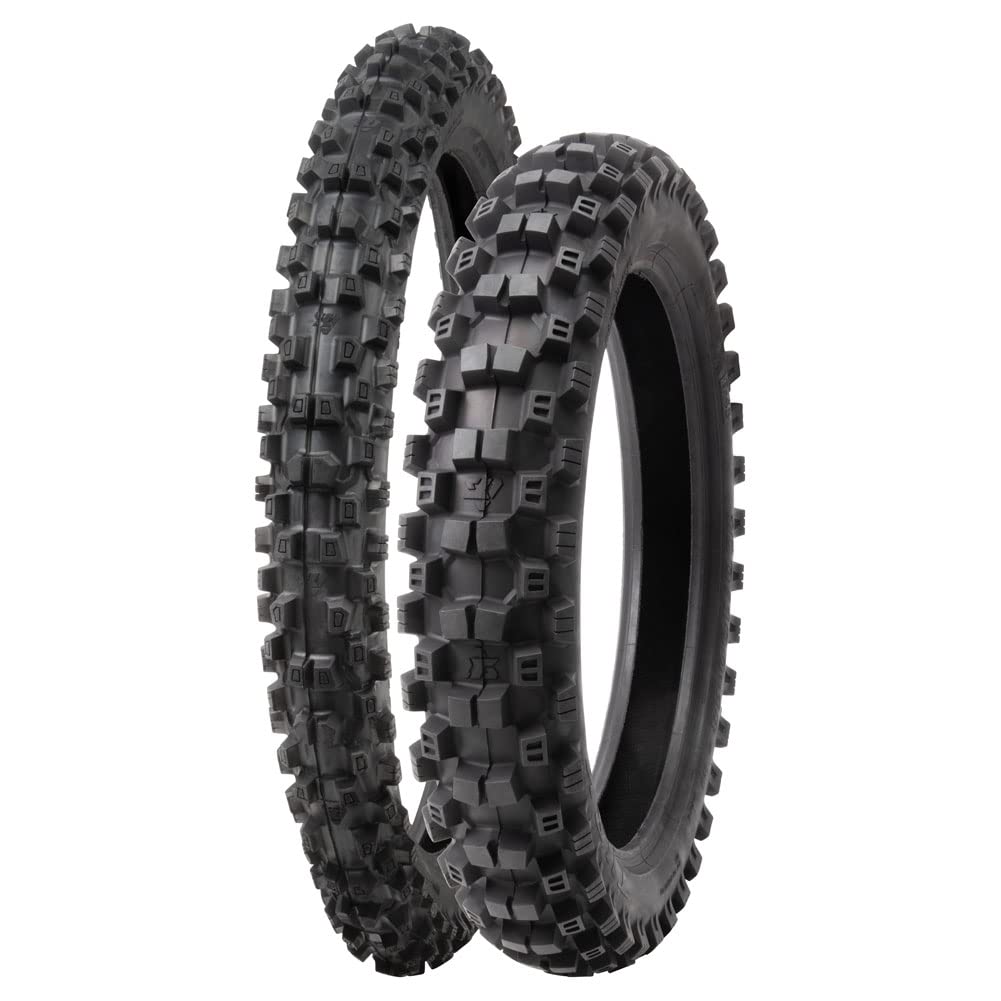
Tusk built the EMEX T-45 with deep center lugs and bridged side knobs specifically to resist flex on hard-packed surfaces. On rocky terrain where softer tires get chewed up, this 6-ply set shines: several reviewers report around 1,000 miles of abuse on sharp shale and decomposed granite with the tread still holding shape. The agressive knob pattern also clears mud reasonably well, thanks to a self-cleaning layout that prevents debris from packing between the blocks.
The tire is designed for intermediate to hard terrain, which means on deep sand or bottomless loam it won’t dig in as aggressively as a soft-terrain specialist. On hardpack, clay, and rock-strewn trails, however, the bridged knobs provide predictable cornering without that terrifying folding sensation you get from a too-tall lug. The set includes a 90/100-21 front and 120/90-18 rear, a common sizing that fits most full-size enduro and motocross bikes.
No issues with air retention were reported, and the compound strikes a solid middle ground between grip and longevity. One rider mentioned that they learned to mount these tires themselves with basic tools and video guides, noting that the stiffness of the 6-ply carcass actually made seating the bead easier compared to flimsier 4-ply tires.
Why it’s great
- Bridged side knobs prevent chunking on rocks
- 6-ply construction resists pinch flats
- Excellent value for race-inspired performance
Good to know
- Not optimized for deep sand or soft loam
- Slightly stiff ride on hardpack at higher pressures
4. Tusk EMEX T-35 Front & Rear Set

If your riding diet consists primarily of loose dirt, sand, and soft loam, the Tusk EMEX T-35 set is tuned to that exact window. The deep, scooped tread pattern bites into loose material and clears out quickly, maintaining forward drive when the trail turns to sugar sand. The set comes as a matched front-and-rear pair—a 70/100-19 front and a 90/100-16 rear—which simplifies ordering and ensures balanced geometry.
The compound is noticeably softer than the T-45, which translates to better grip in loose conditions but faster wear on rocky or abrasive trails. Reviewers note excellent air retention right out of the box and no bead-leak issues, which is sometimes a concern with budget tire sets. One customer’s son ran these on an off-road bike through a full riding season, and the tires held up without chunking or cracking—impressive given the soft-compound bias.
The trade-off for low cost is a 4-ply equivalent casing, which offers decent puncture protection for trail riding but may not survive the sharpest rocks or high-speed impact loads that a 6-ply casing would shrug off. These are tube-type tires, so factor in the cost of quality heavy-duty tubes if you’re running aggressive pressures.
Why it’s great
- Deep-tread pattern provides excellent grip in sand and loam
- Complete set in the box—no mixing and matching
- Good air retention reported from multiple buyers
Good to know
- Soft compound wears faster on abrasive terrain
- 4-ply casing is less resistant to sharp rocks
- Tube-type design requires additional tube purchase
5. Kenda K760 Trakmaster Rear 120/100-18

The Kenda K760 Trakmaster is the tire that convinced many dual-sport riders that a single set can handle both the trail and the tarmac without immediate punishment. The DOT stamp means this tire is legal for street use, and the tall, aggressive knobs give it surprising bite in mud and loose dirt for a dual-sport tire. On a KLX300 or XR650L, it transforms the bike’s off-road capability compared to bland OEM rubber.
The 6-ply casing is a serious advantage for dual-sport riders who encounter sharp rocks on the trail and then hammer down a paved connector road. Riders report that the tire grips better than the Dunlop 606 in soft conditions and wears at roughly the same rate—about a month of daily riding on a rear. The compound is noticeably durable; one reviewer noted that the tire felt almost too hard on wet pavement, with reduced traction on slick road surfaces.
The 120/100-18 sizing fits most full-size dual-sport bikes, and the directional tread pattern rolls acceptably on pavement with minimal squirm. It’s not as sticky as a pure off-road gummy, but for a 90/10 dirt-road tire that also needs to commute 20 miles to the trailhead, it’s a hard balance to beat at this price point.
Why it’s great
- DOT-approved for street-legal dual-sport use
- 6-ply casing resists punctures and pinch flats
- Grips better in soft terrain than many dual-sport tires
Good to know
- Slick on wet pavement—less road confidence in rain
- Tall knobs wear faster on long paved sections
6. Kenda K760 Trakmaster Front 80/100-21
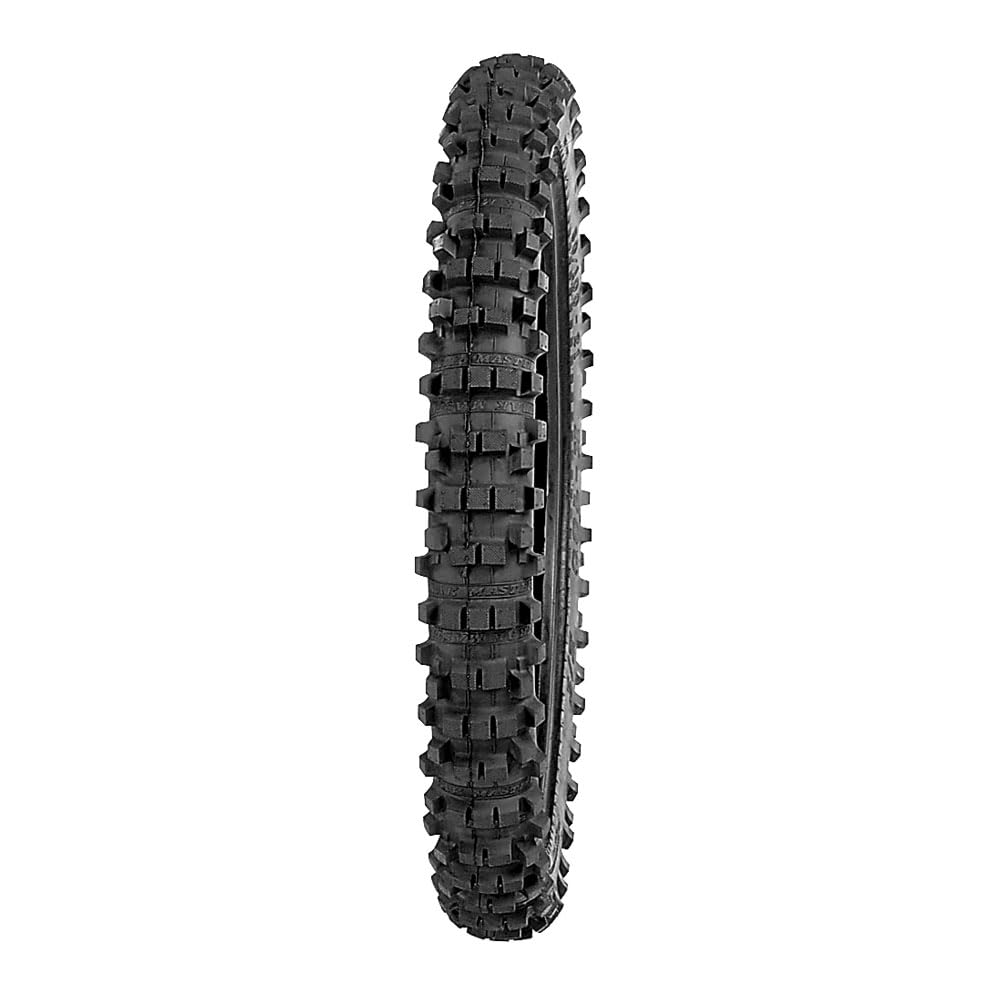
This front version of the K760 Trakmaster shares the same legendary value proposition as the rear, offering a DOT-approved knobby that won’t break the bank. The 80/100-21 size is the standard fitment for virtually all full-size dirt and dual-sport bikes, and the 13mm tread depth provides enough bite to track through mud and loose overburden without washing out. Riders coming off 15-year-old OEM tires on a KLX250 report a massive improvement in front-end confidence.
The directional tread pattern is simple but effective, and while the tire doesn’t have the advanced side-knob reinforcement of pricier options, it holds a line in most trail conditions. The compound is durable enough to survive mixed-surface riding, though like its rear counterpart, it becomes noticeably slippery on wet pavement. For riders who need a street-legal front tire that can handle moderate off-road duties, this is the most affordable way to get a DOT knobby on the bike.
One reviewer noted that while the traction rivals more expensive brands, the knobs are vulnerable to chunking on sharp rocks—a trade-off that is common with any budget dual-sport tire. For dry trail riding and fire-road exploring, it’s a no-brainer. For hard-core enduro on jagged terrain, you may want to step up to a premium option with reinforced lugs.
Why it’s great
- Extremely budget-friendly entry into DOT knobby tires
- 13mm tread depth offers serious off-road bite
- Huge upgrade over worn or stock OEM front tires
Good to know
- Knobs can chunk on sharp, abrasive rock
- Limited wet-pavement grip for a DOT tire
7. Bridgestone Trail Wing TW 4.00-10

The Bridgestone Trail Wing TW is a specialized radial tire built for smaller-displacement bikes and pit-bike-style machines like the Honda Trail 70 clone and Amigo Rocky 125. At 4.00-10, it’s a completely different league from the 21-inch and 18-inch full-size tires above, but it fills a real need for riders of mini bikes who want a self-cleaning tread that still offers a traction edge in mud and loose dirt.
The radial construction is unusual at this size and price point—most budget mini tires use bias-ply construction—which gives the Trail Wing a more compliant ride and better footprint on uneven ground. The 4-ply equivalent casing is sufficient for the low weight and modest speeds of a 125cc-class machine. Reviewers were unanimous that these tires looked, fit, and performed identically to OEM rubber, making them a straightforward replacement choice when the originals wear out.
For a mini-bike tire, the self-cleaning tread blocks genuinely work—mud clears out rather than packing solid between the lugs. Some riders reported hitting 50 mph without vibration or stability issues, which is reassuring for a budget tire on a small machine. If you ride a Honda Trail 70, Amigo Rocky, or similar small-wheel pit bike and need a drop-in replacement that maintains OEM-level performance, this is the pick.
Why it’s great
- Perfect OEM-replacement fit for small bikes
- Radial construction offers a smooth ride for this size class
- Self-cleaning tread works well in mud
Good to know
- Only fits 10-inch rims—not for full-size dirt bikes
- 4-ply casing is not built for aggressive sharp-rock terrain
FAQ
How do I know if I need a soft-terrain or hard-terrain dirt bike tire?
Can I run a DOT-approved dual-sport tire for pure off-road riding?
What does the ply rating mean for a dirt bike tire?
Final Thoughts: The Verdict
For most riders, the best dirt bike tires overall are the Pirelli Scorpion MX Extra X set if you ride track or training environments, because the reinforced knobs and multi-ply carcass deliver race-grade traction without wearing out in a single season. If you chase technical single-track with wet roots and rock gardens, grab the IRC VE-33S Gekkota for its unmatched gummy grip. And for dual-sport riders who need a single tire to handle both the trail and the pavement commute, nothing beats the value of the Kenda K760 Trakmaster rear and its matching front—just watch your speed on wet roads.

Mo Maruf
I created WellFizz to bridge the gap between vague wellness advice and actionable solutions. My mission is simple: to decode the research and give you practical tools you can actually use.
Beyond the data, I am a passionate traveler. I believe that stepping away from the screen to explore new environments is essential for mental clarity and physical vitality.