Our readers keep the lights on and my smoothie glass nicely filled. As an Amazon Associate, I earn from qualifying purchases.
A wetsuit that flushes with every kick isn’t just uncomfortable—it can end a dive early and make you rethink the sport entirely. The difference between a tolerable 60-minute session and a shiver-free two-hour drift comes down to neoprene thickness, seam construction, and how well the suit seals at the neck, wrists, and ankles. Whether you are diving in the chilly Pacific Northwest, spearfishing off Florida’s coast, or just want to extend your surf season, the right suit keeps your core warm without turning movement into a struggle.
I’m Mohammad Maruf — the founder and writer behind WellFizz. I’ve spent hundreds of hours analyzing neoprene densities, seam types, zipper placements, and thermal ratings across dozens of diving wetsuits to separate marketing claims from real-world performance.
The ideal suit balances insulation thickness with flexibility, and this guide breaks down the key specs and trade-offs so you can find the best diving wetsuit for your specific water temperature, body type, and dive style.
How To Choose The Best Diving Wetsuit
Every diver faces conflicting priorities: warmth versus mobility, durability versus price, a precise fit versus body shape variability. Understand these four factors first, and you will eliminate most suits before reading a single review.
Neoprene Thickness and Water Temperature
A 3mm suit works for warm water (70°F+) but will leave you shivering below 65°F. A 5mm suit handles 55-70°F well, while 7mm and thicker suits—like semidry designs with layered neoprene—are needed for temperate and cold water below 55°F. Some brands use variable thickness (5mm torso, 4mm limbs) to place insulation where it matters most without restricting arm and leg movement.
Seam Construction: Blind-Stitch vs Flatlock
Flatlock seams lie flat against the skin and are comfortable, but they stitch all the way through the neoprene, leaving micro-holes that allow water to pass. Flatlock is fine for warm-water suits. Blind-stitching glues the panels together first, then sews without penetrating the inner layer—creating a watertight bond that keeps cold water from flushing through the seams. For cold water, blind-stitch is necessary.
Zipper Placement and Entry System
Back zippers are traditional and common, often paired with an Aquastop flap to block water entry at the spine. Front zippers are easier to operate solo and reduce the need to twist your arm behind your back—a major advantage when your hands are cold. Semidry suits use a front horizontal zip with an internal bib that seals the zipper completely. The zipper brand matters: YKK zippers dominate for durability and smooth operation.
Fit and Mobility
A wetsuit should be snug everywhere—no air pockets at the lower back, no baggy material at the crotch, and no wrist gaps that let water rush in. If the suit feels too loose in the store, it will be worse in the water. Many suits run small, so check the brand-specific size chart and measure your chest, waist, hips, and height. A suit that fits correctly will compress against your skin, trap a thin layer of water, and warm that water with your body heat.
Quick Comparison
On smaller screens, swipe sideways to see the full table.
| Model | Category | Best For | Key Spec | Amazon |
|---|---|---|---|---|
| BARE 7MM Velocity Ultra | Premium | Cold-water scuba down to 50°F | 7mm neoprene, double-glued Secure-Lock seams | Amazon |
| Hollis NeoTek 8/7/6mm | Semidry | Cold-water extended dives, 50°F and below | 8/7/6mm variable neoprene, front zip with internal bib | Amazon |
| Cressi Morea Men’s | Mid-range | Warm-water scuba and snorkeling 70°F+ | 3mm premium neoprene, Ultraspan arms, back YKK zip | Amazon |
| Cressi Morea Women’s | Mid-range | Warm-water scuba and snorkeling tailored fit | 3mm neoprene, rubberized chest panel, anatomical cut | Amazon |
| Ocealite 5/4mm | Mid-range | Cold-water surfing and diving 55-70°F | 5mm torso, 4mm limbs, blind-stitch seams | Amazon |
| Owntop 5mm | Mid-range | Cold-water snorkeling and surfing | 5mm neoprene, 4mm CR cuffs, front YKK zip | Amazon |
| NeoSport 7mm Waterman John | Budget | Cold-water kayaking and SUP | 7mm neoprene, sleeveless, glued seams | Amazon |
| NeoSport 5mm Waterman John | Budget | Cool-water surface sports | 5mm neoprene, sleeveless, reinforced knees | Amazon |
| Seaskin 3mm Front Zip | Budget | Warm-water snorkeling and aerobics | 3mm neoprene, flatlock seams, front zip | Amazon |
In‑Depth Reviews
1. BARE 7MM Velocity Ultra Wetsuit

The Velocity Ultra is the benchmark for cold-water scuba performance in a 7mm suit. BARE wraps the torso in Omnired material that locks heat better than standard neoprene, and the double-glued Secure-Lock seam construction eliminates water entry through every panel join—a critical advantage over budget suits that rely on stitched-only seams. The internal skin-in flip seals at the mid-forearm and mid-calf create two additional thermal barriers that prevent the dreaded cold-water flush that ruins dives below 60°F.
Every practical detail has been refined: heavy-duty ankle and wrist zippers make donning and doffing far faster than a suit without them, the contoured Glideskin collar provides a 360-degree neck seal that works smoothly with or without a hood, and the back knee flex panels reduce the bulk that normally builds up behind the knee when kicking in a thick suit. Testers diving in low-60s Florida water reported feeling comfortable on extended freediving sessions, and the suit’s flexibility at 7mm is notably better than other suits at this thickness thanks to the full-stretch neoprene in the arms and shoulders.
The price point is premium, but the material quality and construction details—like the hook-and-loop collar adjustment with a Suit Saver flap that prevents snags from BCD straps—justify the investment for divers who regularly face cold water. One minor consideration: the internal neck seal combined with a hood can feel restrictive for divers with shorter necks, so try before buying if you plan to add a hood.
Why it’s great
- Omnired torso lining significantly boosts thermal retention compared to standard neoprene
- Internal forearm and calf flip seals dramatically reduce water flushing
- Double-glued Secure-Lock seams are completely watertight at all panel joins
Good to know
- Premium price point limits it to committed cold-water divers
- Neck seal may feel tight when paired with a thick hood
- Limited color options (black only)
2. Hollis Men’s NeoTek 8/7/6mm Semidry Suit
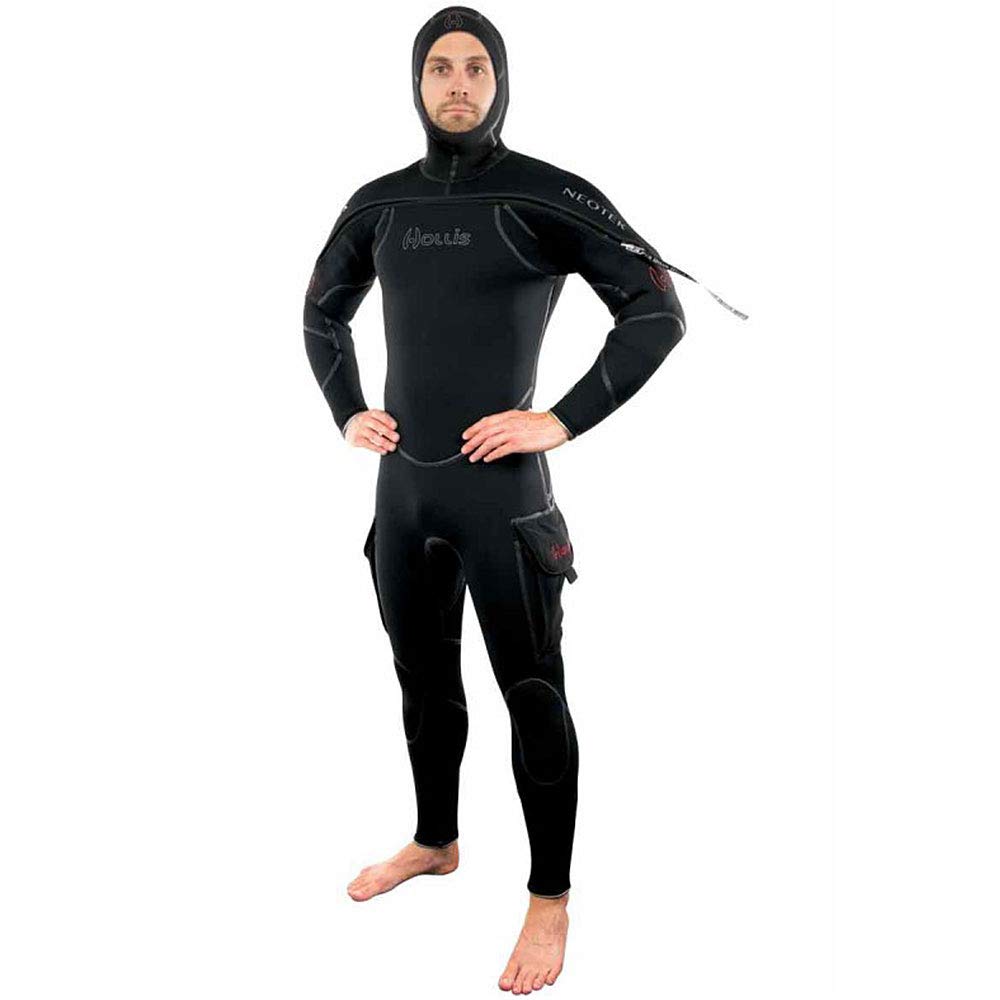
When water temperatures drop into the 40s and low 50s, a standard 7mm suit often leaves your core cold after an hour. The Hollis NeoTek uses a graduated neoprene thickness—8mm through the torso, 7mm in the upper legs, 6mm in the lower legs—to place the maximum insulation exactly where heat loss is greatest while keeping lower-body flexibility for fin work. The real differentiator is the horizontal front zipper with an internal bib, a semidry design that virtually eliminates the water exchange that plagues traditional back-zip suits.
Divers who use this suit in the Pacific Northwest’s 49-53°F year-round conditions report being comfortable for multiple consecutive dives with only a thin skin underneath. The built-in thigh pockets with internal D-rings are a practical bonus for carrying a spare mask, reel, or DSMB without needing a separate pocket system. The suit does require silicone grease on the front zipper to keep it operating smoothly, and the first few donning attempts may feel awkward until you learn the shoulder-and-hood entry technique.
Doffing can be a genuine challenge: the thick neoprene and snug neck seal mean you need to be deliberate about reversing the entry order, and some users found getting their head past the seal claustrophobic. But for dedicated cold-water divers who want a drysuit alternative without the complex valve system and cost, this suit delivers thermal protection that a standard 7mm can’t match.
Why it’s great
- Variable 8/7/6mm neoprene places insulation where core heat loss is greatest
- Horizontal front zipper with internal bib achieves semidry water retention
- Built-in thigh pockets with D-rings are incredibly practical for cold-water gear
Good to know
- Doffing requires careful technique and may feel restrictive for first-time users
- Front zipper needs periodic silicone grease for smooth operation
- Sizing can be tricky; accurate height and weight measurements are essential
3. Cressi Men’s Morea 3mm Wetsuit

With over 75 years of Italian dive heritage, Cressi understands that a 3mm warm-water suit needs to prioritize flexibility and durability over sheer insulation. The Morea uses Ultraspan neoprene in the arms and legs—a stretchy material that makes paddling, finning, and gear handling effortless—while the chest panel uses rubberized neoprene to retain heat where your core needs it most. The dorsal YKK zipper with an Aquastop flap effectively reduces water entry along the spine, a common failure point in cheaper back-zip suits.
Measured performance is consistent: divers report staying comfortable for three-hour sessions in 80°F water, and the anatomical cut adapts well to different body shapes without creating air pockets. The knee protection panels add meaningful durability for kneeling on boat decks or rocky entry points, and the overlock cuffs at the wrists and ankles prevent fraying over time. The suit’s weight is notably low at 0.2 kg—a direct benefit of the 3mm thickness—making it easy to pack for travel.
Sizing runs slightly small compared to US casual wear: many buyers sized up at least one step from their normal shirt size. The brand’s size chart is reliable, so measure your chest and waist before ordering. For warm-water scuba, snorkeling, and paddle boarding, this suit balances comfort, durability, and brand reliability in a way that budget alternatives rarely match.
Why it’s great
- Ultraspan neoprene in arms and legs delivers exceptional mobility for 3mm suit
- Rubberized chest panel adds targeted core warmth without bulk
- Aquastop flap on back zipper effectively blocks spine-area water entry
Good to know
- Runs one size small; consult Cressi’s specific size chart before ordering
- 3mm thickness limits use to water temperatures above 70°F
- Not designed for cold-water or semidry use
4. Cressi Women’s Morea 3mm Wetsuit
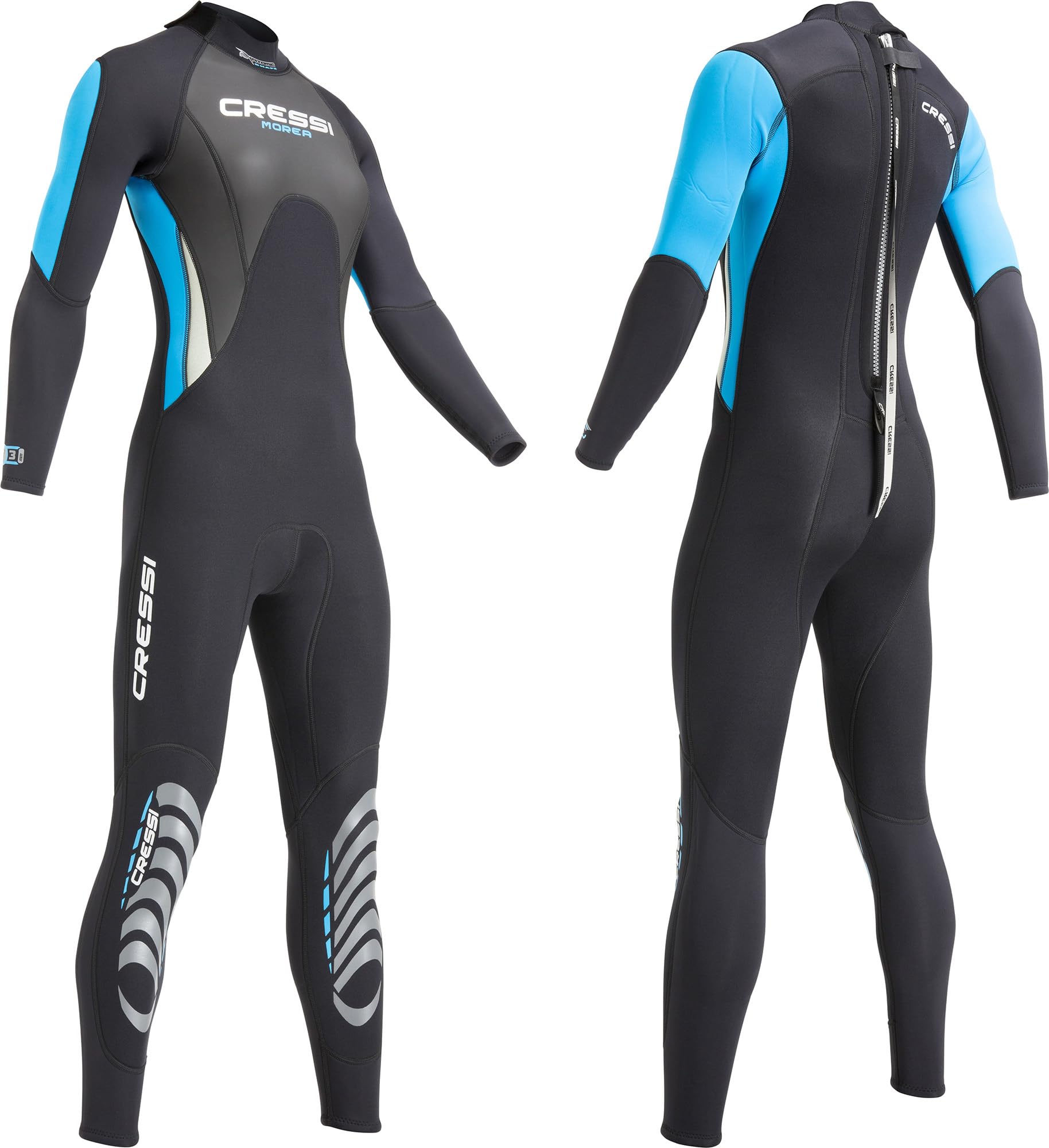
The women’s version of the Morea shares the same premium 3mm neoprene and Ultraspan arm construction as the men’s model, but the anatomical cut is tailored specifically to the female form—narrower shoulders, a contoured waist, and a wider hip area. The rubberized chest panel sits over the torso’s core, providing needed warmth for female divers who often feel cold faster than their male counterparts. The back YKK zipper includes the same Aquastop flap to seal out water along the spine.
Women divers report consistent satisfaction in water temperatures from 74°F to 80°F, with the suit’s stretchy neoprene allowing full range of motion for scuba gear handling and fin kicks. The knee overlays add durability for shore entries, and the open-cell neck seal provides a comfortable seal that doesn’t chafe even after hours in the water. One tester noted that the suit is 85% as effective as premium brands costing 50% more, making it a strong value play for women who dive regularly in warm water.
The fit works best for straight-to-slim body types. Women with a significantly narrower waist relative to their hips may experience an air gap at the lower back, which can cause cold water flushing during deeper dives. Sizing is consistent with Cressi’s chart, but if you fall between sizes, ordering up is the safer bet because the neoprene compresses when underwater and loose material creates more problems than slightly snug panels.
Why it’s great
- Anatomical women’s cut eliminates the baggy fit common in unisex suits
- Ultraspan arm neoprene provides excellent flexibility for gear handling
- Premium neoprene quality noticeably exceeds budget-priced alternatives
Good to know
- Women with very narrow waists may experience lower-back air gap flushing
- 3mm thickness restricts use to warm water 70°F and above
- Limited color options; only black/aquamarine available
5. Ocealite Men’s 5/4mm Front Zip Wetsuit
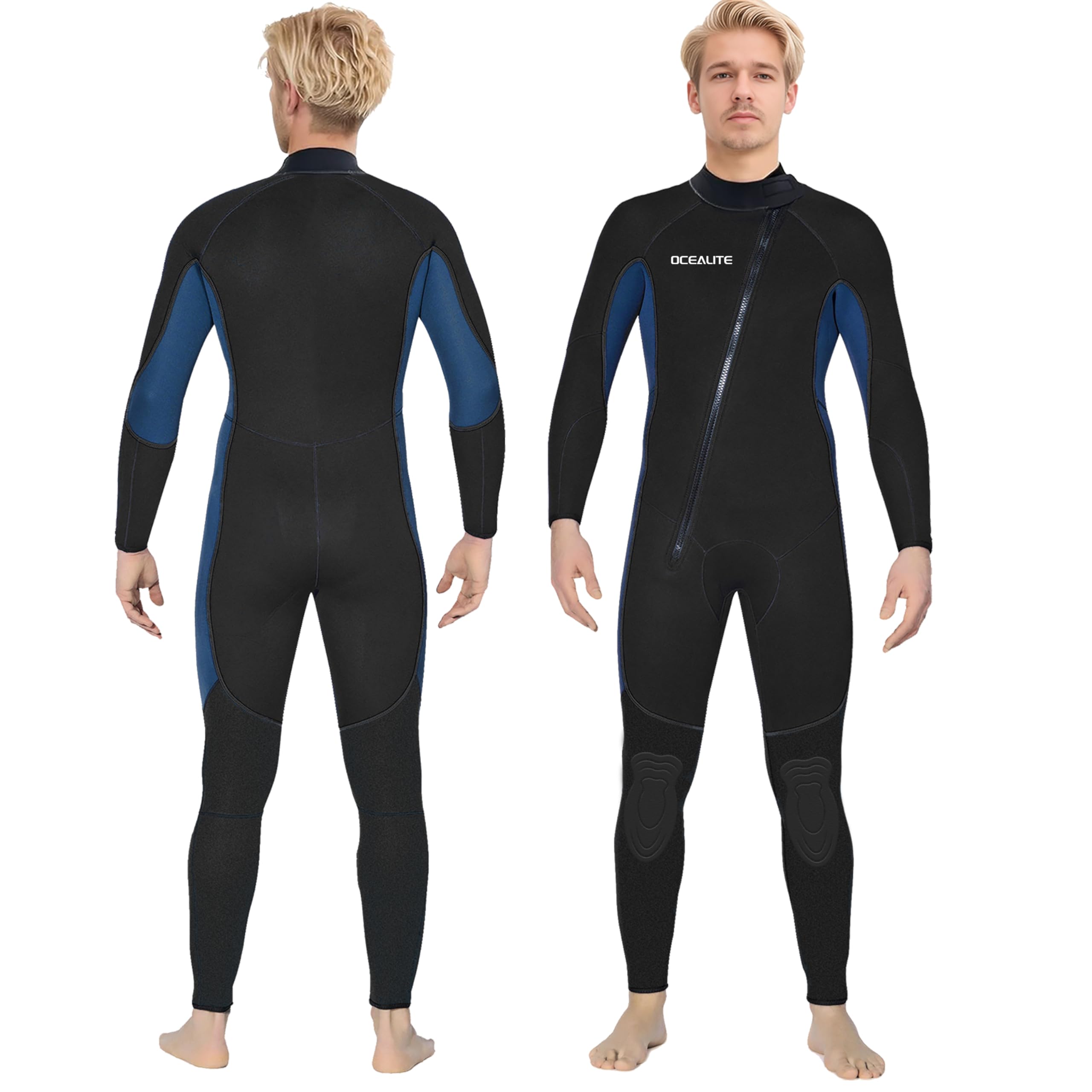
The variable-thickness design—5mm neoprene in the torso for core warmth, 4mm in the arms and legs for mobility—is a smart approach that most budget-conscious suits ignore. The glued and blind-stitched seams create a watertight bond that cold-water surfers and divers rely on, and the front-entry YKK zipper makes solo donning easy even when your hands are cold and wet. PU foam knee pads add abrasion resistance for reef entries and kneeling on surfboards without adding the stiffness that rubberized knee panels sometimes cause.
The 5/4mm configuration hits a sweet spot for water temperatures between 55°F and 70°F, making it versatile for northern California surfing, New England spring diving, and Pacific Northwest paddle boarding. The Lycra seam finish at the wrists, ankles, and neckline reduces chafing significantly compared to raw neoprene edges, and the internal storage pocket provides a secure spot for a car key or dive card without adding external bulk.
The fit works best for average-to-tall body types: one user at 6’6″ found the torso slightly short, which can create a cross-chest flushing channel during deeper dives. The suit runs slightly small overall, so if your measurements are at the top of a size range, stepping up one size improves both comfort and thermal performance. For the price point, the blind-stitch construction alone justifies the purchase over cheaper flatlock alternatives.
Why it’s great
- Variable 5/4mm thickness places insulation at the core while maintaining arm mobility
- Glued and blind-stitched seams are watertight at a mid-range price
- PU knee pads offer genuine durability without restricting leg movement
Good to know
- Sizing runs small; order one size up from your usual US size
- Torso length may be insufficient for very tall individuals over 6’4″
- No Aquastop flap on the front zipper—some water may enter at the chest
6. Owntop 5mm Front Zip Wetsuit

A 5mm full-body suit with 4mm CR neoprene cuffs at this price point is uncommon. Owntop uses 5mm neoprene throughout the body for consistent insulation, then switches to 4mm CR neoprene at the cuffs—a material that seals more effectively against the wrists and ankles to reduce water flushing at those entry points. The front YKK zipper is the same brand used by suits costing twice as much, and the UPF50+ nylon outer layer adds protection against sun damage and minor scrapes from coral or rocks.
Divers have confirmed this suit performs well in 70°F water over multiple days of diving—not as warm as a premium suit, but perfectly adequate for recreational diving in temperate conditions. The snug-fit design at the wrist and ankle is effective; water entry is minimal compared to budget suits with loose fabric gathers. One user noted that a chlorinated pool degraded the fabric faster than natural seawater, so this suit is best reserved for ocean use.
The sizing runs small, and the chest area in particular can be tight for broader builds. Use your chest, waist, and hip measurements rather than your regular clothing size when ordering. The suit is stiff when new but loosens slightly after the first few wears as the neoprene breaks in. For a cold-water suit under the premium price barrier, this offers legitimate insulation performance.
Why it’s great
- 5mm neoprene provides solid cold-water insulation at a surprisingly low cost
- CR neoprene cuffs at wrists and ankles reduce water flushing effectively
- YKK front zipper is durable and reliable for daily use
Good to know
- Sizing runs small; use body measurements, not clothing size, to select
- Fabric degrades faster in chlorinated pools than in seawater
- Neoprene may feel stiff initially and requires a break-in period
7. NeoSport 7mm Waterman John Wetsuit

The Farmer John configuration—a sleeveless, full-torso wetsuit that leaves your arms free—is a smart alternative for paddlers, kayakers, and SUP enthusiasts who need a wetsuit’s core warmth without the arm restriction of a full suit. The NeoSport 7mm Waterman John uses thick neoprene with glued seams that hold up well under repeated exposure, and the reinforced knee panels add genuine durability for kneeling in a kayak or surfboard. The shoulder velcro strap aids entry, though the single shoulder opening and lack of ankle zippers make donning and doffing noticeably slower than front-zip alternatives.
The 7mm thickness is effective for cold-water surface sports: users report comfort water skiing in cold conditions and extending kayaking season well into winter. The sleeveless design prevents overheating during active paddling while keeping the core warm. The comfort at the groin area is notably better than many suits at this thickness, where bulk tends to bunch uncomfortably. One user went so far as to credit the suit’s thick neoprene with preventing a serious leg injury from a shark bite—the neoprene absorbed the strike that would have otherwise cut skin.
Fit runs true to size for the brand, but the suit can be difficult to remove after a cold session because the thick neoprene holds its shape against your body. If you need arm mobility and core warmth in cold water, this design is worth serious consideration, but divers who need sealed cuffs for scuba should look at full-sleeve alternatives.
Why it’s great
- 7mm neoprene provides excellent core warmth for cold-water surface sports
- Sleeveless design allows unrestricted arm movement for paddling and rowing
- Reinforced knee panels add durability for kneeling on hard surfaces
Good to know
- No ankle zippers make the suit difficult to remove after cold-water sessions
- Sleeveless design limits use for scuba diving where arm insulation is needed
- Single shoulder opening can be awkward when donning independently
8. NeoSport 5mm Waterman John Wetsuit
The 5mm version of the Waterman John is a more versatile alternative to the 7mm variant, trading maximum insulation for easier movement and the ability to layer jackets over the top. The sleeveless design means you can wear it under a 3mm or 5mm neoprene jacket in cold conditions, or wear it alone in warmer water—a modular approach that saves you from owning three separate suits. The glued seams hold up to regular use, and the knee pads provide adequate protection for kayaking and shore diving.
Users report that the suit fits true to the brand’s sizing, though some users note that Chinese manufacturing variations can make sizing unreliable across batches. One experienced diver who has owned 50 wetsuits described this as a “not great, not bad” suit, noting that it works for its price point but lacks the precision fit and feature set of premium suits. The crotch area can be slightly baggy on taller frames, which can cause water flushing during active movement.
The suit shines as an entry-level cold-water layer for surface sports like surf fishing, where you wear it under waders or a jacket. The 5mm thickness is appropriate for 55-65°F water, and the sleeveless design prevents the overheating that plagues full suits during active exertion. For divers who need a modular system rather than a single go-to suit, this fills a specific gap effectively.
Why it’s great
- 5mm sleeveless design allows layering under jackets for customizable warmth
- Reinforced knees add durability for kneeling in rocky entry points
- Versatile across multiple sports: kayaking, surf fishing, and paddle boarding
Good to know
- Sizing can be inconsistent between production batches
- Crotch area may be baggy on taller frames, allowing water flushing
- Not suitable as a standalone suit for scuba diving below 55°F
9. Seaskin 3mm Front Zip Full Wetsuit

At the entry-level price point, the Seaskin 3mm suit makes warm-water diving accessible without demanding a major investment. The three-layer fabric construction—nylon outer, neoprene middle, soft inner lining—achieves the basic insulation function that a 3mm suit should, and the front zipper is a genuine convenience feature typically missing from suits in this price bracket. The flatlock seams are comfortable against the skin and suitable for warm water where watertight sealing is less critical.
The suit’s fit is impressively consistent given the low entry price. One 5’7″, 140 lb diver reported that the size small fit perfectly, while a 5’3″, 115 lb woman found the women’s small provided a snug but not restrictive fit. The ankle zippers are a welcome detail for donning and doffing—a feature that many budget suits omit entirely. The UV and biological protection claims are valid for the nylon outer layer, providing a practical barrier against jellyfish and sun exposure during surface intervals.
Build quality limitations are clear at this price point. The flatlock seams will allow water passage in colder conditions, so this suit is strictly for warm water 70°F and above. Some users noted a chemical odor from the new neoprene that dissipates after airing out for a day or two. The material may stretch slightly over time, so a snug fit when new is actually ideal. For snorkeling, water aerobics, and warm-water scuba in tropical destinations, this suit offers functional performance at a cost that leaves room in the budget for other gear.
Why it’s great
- Front zipper at this price point is a rare convenience feature for solo donning
- Three-layer neoprene construction provides adequate warmth for 70°F+ water
- Consistent sizing across multiple body types reported by users
Good to know
- Flatlock seams are not watertight; unsuitable for water below 70°F
- Neoprene may emit a chemical smell when new that requires airing out
- Material may stretch over time, making an initially snug fit preferable
FAQ
What water temperature requires a 7mm wetsuit versus a 5mm wetsuit?
Should I buy a front-zip or back-zip diving wetsuit?
How tight should a diving wetsuit fit?
Final Thoughts: The Verdict
For most users, the best diving wetsuit winner is the BARE 7MM Velocity Ultra because its Omnired torso lining, Secure-Lock seams, and internal flip seals deliver genuine thermal performance that standard 7mm suits lack. If you want the modular flexibility of a semidry design for the coldest water conditions, grab the Hollis NeoTek 8/7/6mm. And for warm-water scuba and snorkeling at a reasonable investment, nothing beats the Cressi Morea 3mm.

Mo Maruf
I created WellFizz to bridge the gap between vague wellness advice and actionable solutions. My mission is simple: to decode the research and give you practical tools you can actually use.
Beyond the data, I am a passionate traveler. I believe that stepping away from the screen to explore new environments is essential for mental clarity and physical vitality.