Our readers keep the lights on and my smoothie glass nicely filled. As an Amazon Associate, I earn from qualifying purchases.
The biggest mistake home gardeners make when starting seeds is using heavy garden soil or standard potting mix that compacts, drowns delicate roots, and invites damping-off fungus. The difference between a tray of leggy, struggling seedlings and a flat of sturdy, transplant-ready starts comes down to one thing: the physical texture and drainage of your medium.
I’m Mohammad Maruf — the founder and writer behind WellFizz. I’ve spent countless hours analyzing soil science, reviewing grower forums, and cross-referencing lab data to understand exactly what makes a seed-starting mix perform.
After researching dozens of formulations, comparing particle sizes, water-holding capacities, and pH buffering, I’ve narrowed the market down to the five best contenders that deliver consistent germination. This guide covers the top options for the best dirt for seed starting, ranked by performance and value.
How To Choose The Best Dirt For Seed Starting
Seed-starting mix is not regular potting soil. The goal is a lightweight, sterile medium that drains quickly but holds enough moisture against the seed coat to trigger germination. Here are the critical factors to evaluate before buying.
Texture and Particle Size
Young roots are tiny and fragile. A mix with large bark chunks, wood chips, or dense clay forces roots to detour around obstacles, stunting early growth. Look for a fine, consistent texture that feels fluffy between your fingers. Blends that sift through a quarter-inch screen are ideal for seed trays and plug cells.
Moisture Retention vs. Aeration
Seeds need constant moisture to germinate, but saturated medium suffocates roots and invites fungal disease. The best mixes use a balance of coco coir or peat moss for water-holding capacity and perlite or vermiculite for air pockets. A mix that stays damp without forming a mud paste is the gold standard.
pH Balance and Nutrient Load
Most seeds germinate best in a pH range of 5.5 to 6.5. Blends that include lime or are labeled pH-balanced remove the guesswork. Avoid heavy pre-fertilized soils — seedlings need minimal nutrients for the first two weeks, and excess salts from fertilizer can burn tender root hairs.
Organic Certification and Sterility
Sterile medium means fewer weed seeds, no soil-borne pathogens, and no pest eggs. Organic-certified options give you peace of mind if you plan to grow edible starts. Coco coir bricks also have a long shelf life and take up minimal storage space until you hydrate them.
Quick Comparison
On smaller screens, swipe sideways to see the full table.
| Model | Category | Best For | Key Spec | Amazon |
|---|---|---|---|---|
| Old Potters Germination Mix | Premium | High-volume germination | 24 quarts fine peat blend | Amazon |
| Black Gold Seedling Mix (2 Pack) | Premium | Consistent multi-tray seeding | 2 x 8 quarts fine texture | Amazon |
| Modellor Coco Coir (4 Bricks) | Mid-Range | Budget bulk and versatility | Yields 36 quarts fluffy coir | Amazon |
| Midwest Hearth Potting Soil Mix | Mid-Range | Small batch seed starting | 8 dry quarts, triple blend | Amazon |
| Jiffy Organic Seed Starting Mix | Budget | Traditional peat-based starting | 10 quarts peat-vermiculite | Amazon |
In‑Depth Reviews
1. Old Potters Germination Mix
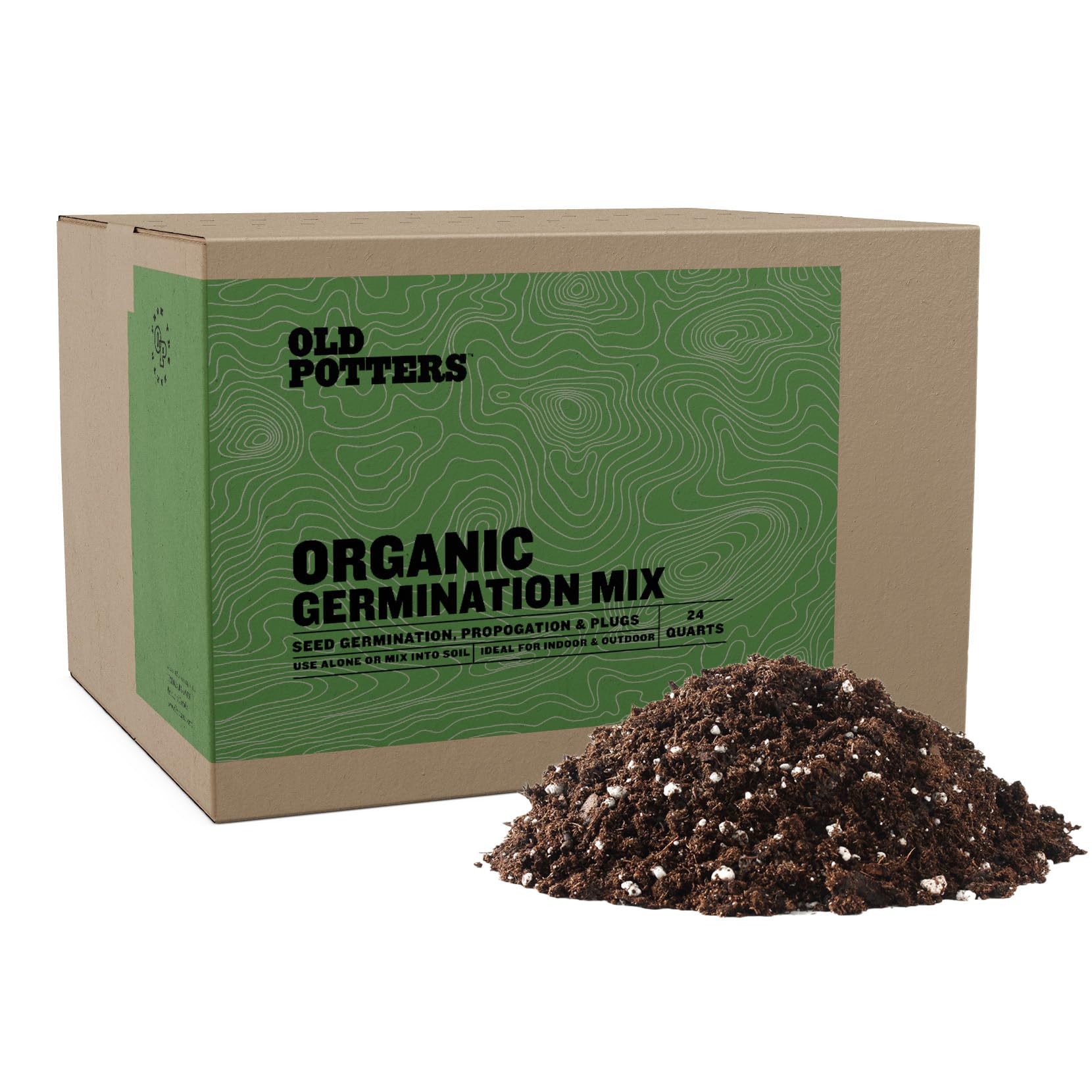
The Old Potters Germination Mix delivers the most optimized particle size distribution of any product in this review. With 80-90% fine Canadian sphagnum peat moss and a precise blend of fine perlite and vermiculite, this 24-quart bag provides a fluffy, consistent texture that seeds penetrate easily. The pH is locked between 5.4 and 6.3 with calcitic and dolomitic limestone, eliminating guesswork for the grower.
Grower feedback highlights a 90% germination rate across multiple seed types, with no reports of damping-off or fungal outbreaks. The mix supports both sub-irrigation and overhead watering without turning into a crusty surface layer. Users noted that the fine consistency makes it excellent for plug trays and cutting propagation, not just seed germination.
For serious home gardeners or anyone running multiple trays each season, this is the most reliable and cost-effective blend per quart. The only caveat is the larger bag size — it takes up storage space, but the performance justifies the footprint.
Why it’s great
- Fine, consistent texture ideal for delicate root systems
- Balanced pH and electrical conductivity for strong early growth
- Large 24-quart volume suits multiple trays without rebuying
Good to know
- Bag is large and may require dedicated storage space
- Fine texture can compact if overwatered repeatedly
2. Black Gold 1311002 Seedling Mix (2 Pack)

The Black Gold Seedling Mix from SUN GRO comes as a two-pack of 8-quart bags, giving you two separate containers to stagger use across seeding waves. The fine peat-based texture contains no large bark chunks or twigs, as verified by multiple user reviews praising the lack of debris. This consistency ensures uniform moisture contact with every seed in the tray.
Germination results are consistently strong across vegetables, herbs, and flowers. Users reported vigorous sprouting within days and noted that the mix holds together well when transplanting plugs into larger pots — a sign that the root ball structure is good. The resealable bag design helps keep unused mix fresh between uses.
Some experienced growers noted that this ready-mix produced slower true leaf development compared to a custom blend of coco coir, perlite, and worm castings. For pure convenience and beginner success, however, this is a top-tier choice. The two-pack format is especially convenient for gardeners who start seeds in waves rather than all at once.
Why it’s great
- No large chunks or twigs — fine texture throughout
- Two separate bags prevent waste between planting seasons
- Holds transplant shape well when moving seedlings
Good to know
- Dries out faster than homemade blends with coco coir
- Some advanced growers prefer custom mixes for later growth stages
3. Modellor Premium Super Washed Coco Coir (4 Bricks)
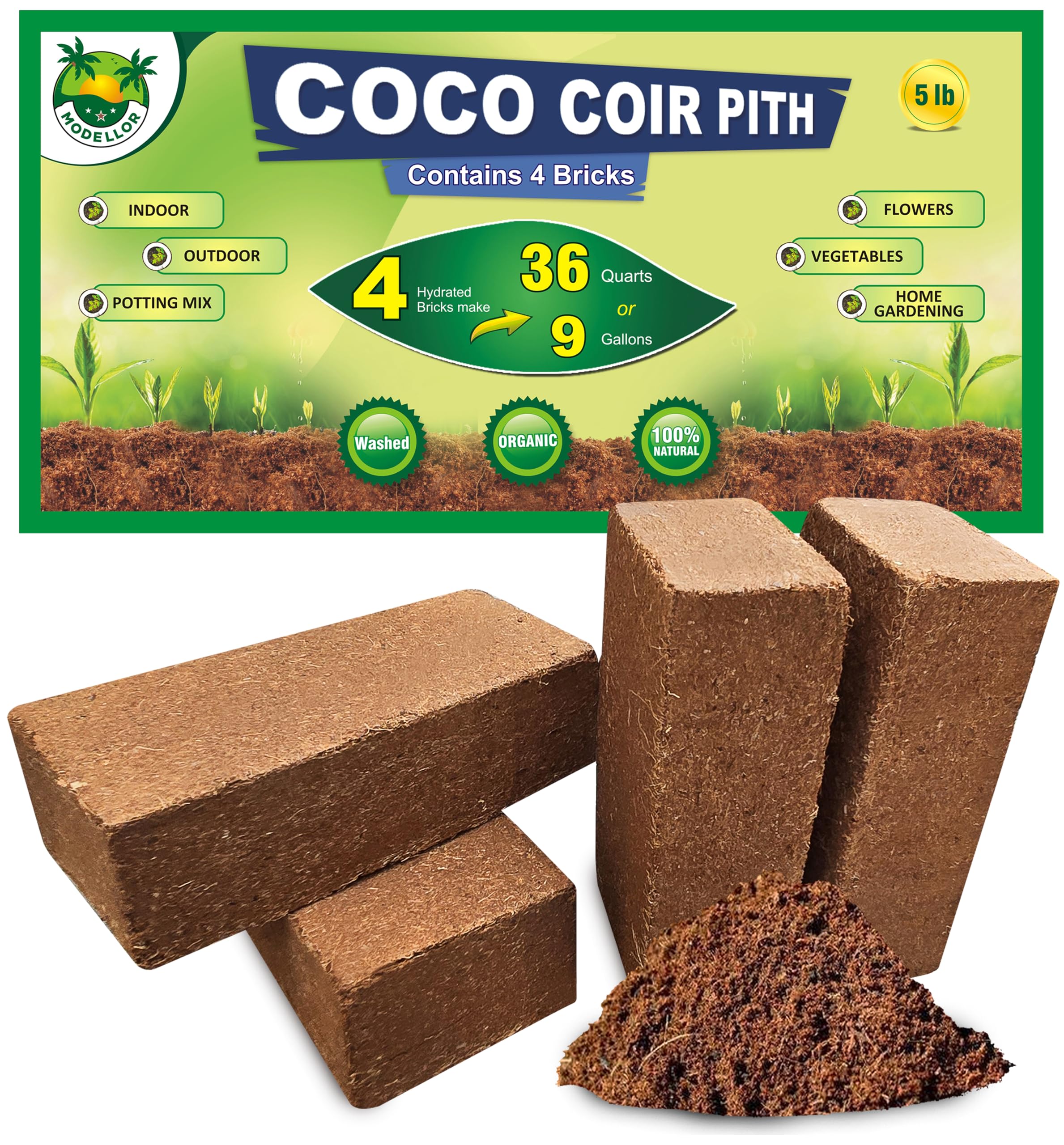
Modellor’s coco coir bricks are a brilliant alternative for gardeners who want a lightweight, shelf-stable medium that expands into 36 quarts of fluffy growing material. Each of the four 1.25-pound bricks hydrates into roughly 9 gallons of coir, giving you massive volume from a compact package. The triple-wash process removes excess salts, so you don’t need to pre-rinse before use.
The texture is airy and open, promoting rapid root penetration and excellent drainage. Growers using this for microgreens reported dense, uniform stands with no salt burn. The pH is pre-balanced, which means you can use it straight out of the bucket after hydration. It also works as a base for custom blends — just add perlite or vermiculite for extra aeration.
One brick takes a while to fully hydrate if you don’t break it apart first. Some users found that soaking larger chunks required more time than expected. Once expanded, however, the quality is consistent across bricks, with no debris, smells, or discoloration. This is an eco-friendly peat moss alternative that performs every bit as well for seed starting.
Why it’s great
- Expands to 36 quarts — huge value from compact bricks
- Triple-washed and pre-buffered, no rinsing needed
- Sterile, sustainable, and free of weed seeds
Good to know
- Bricks require soaking and patience to fully hydrate
- On its own, coir has minimal nutrients for later growth stages
4. Midwest Hearth Premium Potting Soil Mix

Midwest Hearth combines Canadian sphagnum peat moss, perlite, and vermiculite in a ready-to-use 8-quart bag that matches the formulation professional growers rely on. The texture is light and fluffy — a critical feature for seed starting because it prevents the dense compaction that traps moisture against tender stems. The pH is controlled to suit a wide range of plants.
Customer feedback highlights excellent germination rates for petunias, vegetables, and houseplant seeds. The resealable bag keeps the mix fresh between uses, and the 8-quart size is ideal for gardeners starting one or two trays per season. Users reported no visible weeds or insect larvae, confirming the sterility of the blend.
The primary limitation is the smaller volume — for heavy multi-tray seeding, you’ll need multiple bags. Some users also noted that the fine texture can dry out quickly if left in direct sun or under heat mats without a humidity dome. Still, for small-scale seed starting with consistent results, this is a dependable mid-range option.
Why it’s great
- Professional grower formulation in a convenient size
- Resealable bag keeps unused mix fresh
- No weeds, bugs, or large filler particles
Good to know
- Small 8-quart bag may not be enough for multiple large trays
- Fine texture can dry quickly under heat mats without dome coverage
5. Jiffy Natural & Organic Seed Starting Soil Mix

Jiffy’s Organic Seed Starting Mix is the most traditional option on this list, relying on peat moss for water retention and vermiculite for aeration, with lime added to stabilize pH. The 10-quart bag produces a fine-textured medium that has been a staple in home gardening for decades. Users consistently report excellent germination rates and healthy seedling development.
The mix holds together well enough to make transplanting easy — seedlings come out with a clean root ball that doesn’t crumble apart. The fine particle size means no bark or large wood fragments that can block water distribution. Multiple reviewers called it their “favorite starter soil” because of how reliably it works for vegetables like tomatoes and peppers.
Some users found it slightly expensive compared to mixing your own components, but for the convenience of an organic, pre-mixed, ready-to-use bag, it delivers consistent performance. The light weight also means it’s easy to carry and store. If you want the classic peat-based experience with proven results, this is a reliable entry-level pick.
Why it’s great
- Classic peat-vermiculite formulation with lime for pH balance
- Fine texture with no bark chunks or debris
- Holds transplant shape well for easy moving
Good to know
- Per-quart cost is higher than bulk alternatives
- Peat-based formula is not as renewable as coco coir
FAQ
Can I use regular potting soil instead of a seed-starting mix?
Should I choose peat moss or coco coir for seed starting?
How does fine perlite help seedling roots compared to coarse perlite?
Why do some seed-starting mixes need to be pre-moistened before planting?
Final Thoughts: The Verdict
For most users, the best dirt for seed starting winner is the Old Potters Germination Mix because it combines a professionally balanced fine peat blend with a generous 24-quart volume at a fair per-quart cost. If you want a compact, shelf-stable alternative that expands into bulk volume, grab the Modellor Coco Coir bricks. And for beginner-friendly convenience in a classic peat-based formula, nothing beats the Jiffy Organic Seed Starting Mix.

Mo Maruf
I created WellFizz to bridge the gap between vague wellness advice and actionable solutions. My mission is simple: to decode the research and give you practical tools you can actually use.
Beyond the data, I am a passionate traveler. I believe that stepping away from the screen to explore new environments is essential for mental clarity and physical vitality.