Our readers keep the lights on and my smoothie glass nicely filled. As an Amazon Associate, I earn from qualifying purchases.
The jump from a smartphone to a dedicated mirrorless camera is immediate and dramatic. You gain a larger sensor that captures more light, interchangeable lenses for creative control, and an electronic viewfinder that shows your exposure before you press the shutter. The question is not whether to switch, but which body and lens combination delivers the right balance of resolution, autofocus speed, and portability for the way you shoot.
I’m Mohammad Maruf — the founder and writer behind WellFizz. This guide is built from dozens of hours comparing sensor readout speeds, phase-detection coverage zones, burst rates, and real-world image quality across the current mirrorless landscape.
Whether you are stepping up from a DSLR or buying your first interchangeable-lens camera, this deep-dive covers what matters most when choosing the best digital camera mirrorless for your budget and creative goals.
How To Choose The Best Digital Camera Mirrorless
Mirrorless cameras have matured into the dominant format for photographers who want DSLR-level image quality without the weight of a reflex mirror and optical prism. The key differences between models come down to sensor size, autofocus system, burst capabilities, and how comfortably the body fits your hands. The right choice depends entirely on what and how you shoot — portraits, travel, fast action, or video.
Sensor Size: APS-C vs. Full-Frame
APS-C sensors are smaller than full-frame, which makes the camera body and lenses lighter and cheaper. You still get excellent image quality and good low-light performance, but you lose about one stop of depth-of-field control and dynamic range compared to full-frame. Full-frame sensors, found in premium models, deliver shallower depth of field, better high-ISO noise characteristics, and wider dynamic range — but the lenses are larger and more expensive. If you shoot mostly in good light and want a compact kit, APS-C is the smarter choice. If you frequently shoot in low light or need maximum control over background blur, full-frame justifies the added cost.
Autofocus Coverage and Type
Phase-detection autofocus (PDAF) points on the sensor plane create a focus grid that covers a percentage of the frame. A wider spread, such as 93% coverage on some Sony models, keeps moving subjects sharp even near the edges. Dual-pixel AF, used by Canon, uses every pixel for phase detection, which gives smooth rack-focus in video and reliable eye tracking on humans and animals. Contrast-only AF, found on older or budget bodies, hunts more in low light and is slower for video. The number of AF points matters less than the coverage area and the type — look for at least 425 phase-detection points for reliable performance.
Burst Rate and Buffer Depth
A camera that shoots 10 fps is useless if the buffer fills after ten frames. Buffer depth — the number of continuous shots before the camera slows down — is often the hidden spec that separates enthusiast bodies from pro-level ones. Mechanical shutter burst rates are slower but produce less rolling shutter distortion on fast-moving subjects. Electronic shutter can reach higher fps but may introduce banding under artificial lights. For most users, 8-11 fps with a buffer of at least 30 raw frames is the sweet spot for action and wildlife.
In-Body Image Stabilization (IBIS)
IBIS shifts the sensor to counteract hand shake and works with any lens attached, including adapted manual glass. A 5-axis IBIS system rated for 5 stops of correction allows you to handhold at shutter speeds four to five times slower than you could without stabilization. This matters most in low-light interiors, twilight landscapes, and handheld video. Some entry-level mirrorless bodies omit IBIS entirely, relying on lens-based stabilization, which is less effective with non-stabilized primes.
Quick Comparison
On smaller screens, swipe sideways to see the full table.
| Model | Category | Best For | Key Spec | Amazon |
|---|---|---|---|---|
| Sony a7 IV | Full-Frame | Hybrid photo/video pro | 33MP BSI CMOS, 10-bit 4K 60p | Amazon |
| Nikon Z 7II | Full-Frame | High-res landscape & studio | 45.7MP BSI CMOS, dual card slots | Amazon |
| Sony a7 III | Full-Frame | All-round full-frame value | 24.2MP BSI, 693 phase-detection points | Amazon |
| Nikon Z 6II | Full-Frame | Versatile stills/video hybrid | 24.5MP BSI, 14 fps burst | Amazon |
| Sony a6400 | APS-C | Fast action & vlogging | 24.2MP, 0.02 sec AF | Amazon |
| Canon EOS RP | Full-Frame | Entry-level full-frame travel | 26.2MP, 5-stop IBIS with select lenses | Amazon |
| FUJIFILM X-T30 III | APS-C | Everyday creative & film simulations | 26.1MP X-Trans, 20 film sims | Amazon |
| Canon EOS R50 | APS-C | Beginner vlog & content creator | 24.2MP, Dual Pixel AF II | Amazon |
| Sony a6100 | APS-C | Budget action & portrait | 24.2MP, 11 fps burst | Amazon |
| Panasonic LUMIX G85 | Micro 4/3 | Stabilized video on a budget | 16MP, 5-axis IBIS + OIS | Amazon |
| Canon EOS R100 | APS-C | Budget starter & travel | 24.1MP, DIGIC 8 | Amazon |
In‑Depth Reviews
1. Sony Alpha a7 IV
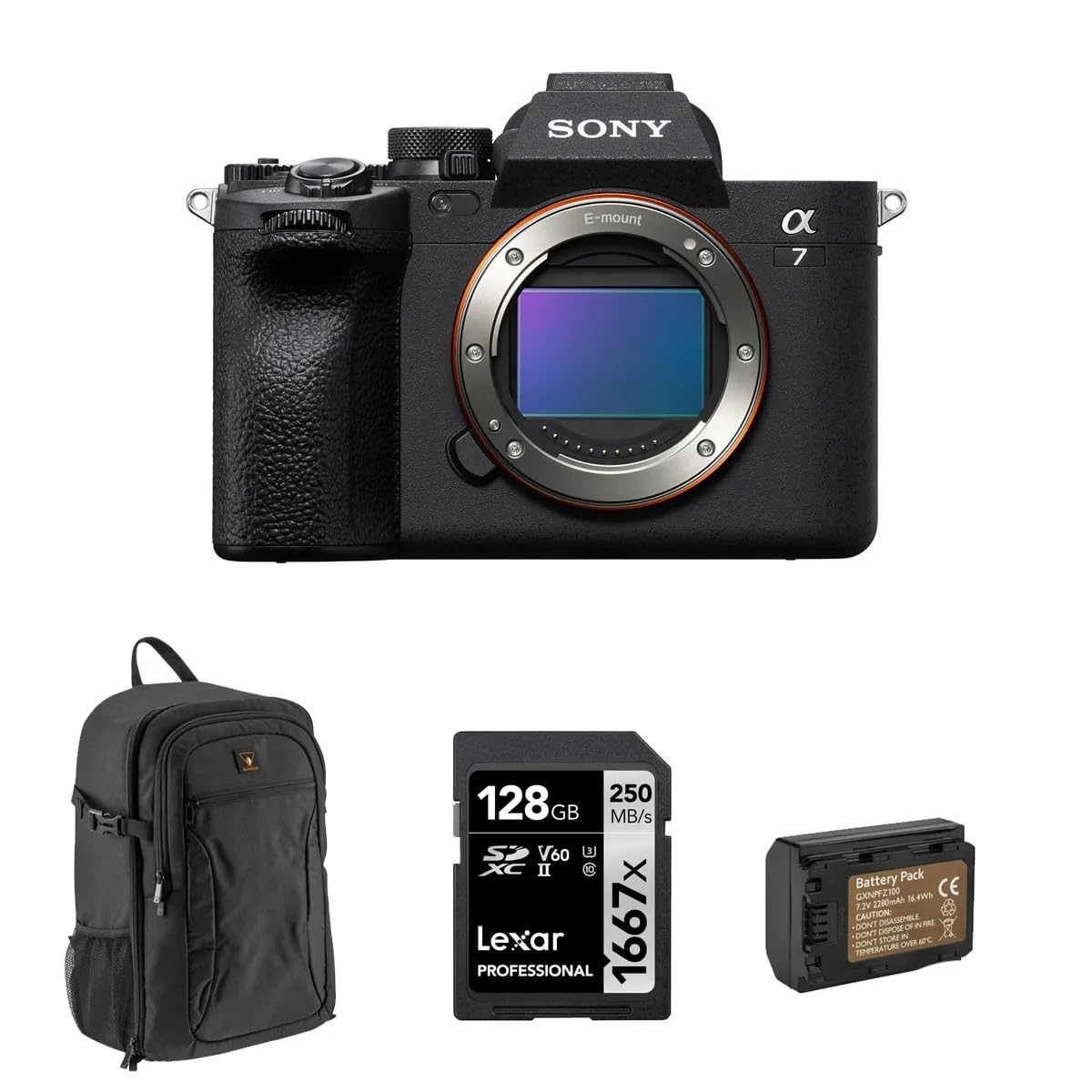
The Sony a7 IV sets a new benchmark for hybrid mirrorless cameras with its 33-megapixel BSI CMOS sensor and BIONZ XR processor. The 33MP resolution splits the difference between the 24MP a7 III and the 61MP a7R IV, offering enough detail for large prints while maintaining manageable file sizes and fast readout speeds. The sensor delivers 15 stops of dynamic range and clean ISO performance up to 6400, making it a reliable tool for wedding, event, and portrait photographers who need to handle variable lighting without hesitation.
Video capability is where the a7 IV truly separates itself from earlier Sony full-frame bodies. It records 4K 60p oversampled from a 4.6K region in 10-bit 4:2:2 with S-Cinetone and S-Log3 color profiles, giving videographers flat gamma for grading straight out of camera. The fast hybrid AF system covers 759 phase-detection points across 94% of the sensor, and real-time tracking stays locked on human, animal, and bird eyes with minimal drift. The vari-angle touchscreen and QVGA OLED Tru-Finder EVF make composition intuitive from any angle.
The body is weather-sealed with a deep grip that suits larger lenses, though the kit bundle typically includes a 28-70mm lens that feels undersized for the sensor’s potential. The Lexar 128GB UHS-II card included in the bundle is fast enough for 4K video but fills quickly if you shoot uncompressed raw stills. For photographers who want a single camera that handles professional stills and serious video without compromise, the a7 IV is the most complete tool in its class.
Why it’s great
- 33MP sensor delivers a balance of resolution and file manageability ideal for hybrid work
- 4K 60p 10-bit internal recording with S-Cinetone and S-Log3 provides professional-grade video color science
- 759-point phase-detection AF with real-time eye tracking stays accurate in low light
- Vari-angle LCD and high-res EVF enable flexible composition for photo and video
Good to know
- Kit lens does not resolve the full potential of the 33MP sensor; budget for a higher-quality prime or zoom
- Buffer depth in uncompressed raw is modest; use compressed raw for extended bursts
- Overheating protection can trigger after extended 4K 60p recording in warm environments
2. Nikon Z 7II

The Nikon Z 7II is built for photographers who need every pixel to count. Its 45.7-megapixel BSI CMOS sensor resolves fine detail that 24MP and even 33MP bodies miss, making it a natural fit for landscape, studio, product, and architectural work where cropping is part of the workflow. The dual EXPEED 6 image processors provide a 3.3x buffer improvement over the original Z 7, allowing bursts of up to 10 fps with full autofocus tracking before the buffer fills. The base ISO of 64 gives clean files with an extra stop of dynamic range compared to sensors that start at ISO 100.
Build quality is exceptional, with full weather sealing across the magnesium-alloy chassis. The dual card slots accept one CFexpress/XQD and one UHS-II SD card, giving you the convenience of SD for daily use and CFexpress for high-bitrate video or rapid-fire bursts. The 5-axis sensor-shift IBIS is rated for 5 stops of correction and works with any lens, including adapted F-mount glass via the FTZ adapter. The electronic viewfinder is a 3.69M-dot OLED unit with a smooth 60 fps refresh rate that makes manual focus confirmation easy with the peaking overlay.
Video recording reaches 4K 60p with full-pixel readout, though the Z 7II lacks 10-bit internal recording that videographers may want. The autofocus system has improved eye detection for humans and animals, but it can lose tracking on fast erratic subjects compared to Sony’s real-time AF. The Z 7II is best suited to deliberate shooting — studio sessions, landscapes on a tripod, or editorial work where resolution is the priority over speed. It is a tool that rewards patience and precise technique.
Why it’s great
- 45.7MP sensor delivers class-leading detail and dynamic range for print and commercial work
- Dual card slots (CFexpress/XQD + UHS-II SD) provide backup for mission-critical shoots
- 5-axis IBIS with 5 stops of correction works reliably with all Z and adapted F-mount lenses
- Solid magnesium-alloy build with extensive weather sealing handles harsh outdoor conditions
Good to know
- No 10-bit internal video recording limits color grading flexibility for videographers
- AF eye tracking is reliable but occasionally loses fast-moving subjects
- High resolution demands high-quality lenses and steady technique to realize full potential
3. Sony a7 III

The Sony a7 III remains a compelling full-frame workhorse years after its launch, thanks to a 24.2-megapixel back-illuminated sensor that punches above its age. The BSI architecture delivers excellent high-ISO performance, with usable files up to ISO 12800 and a 15-stop dynamic range that rivals many current mid-range bodies. The readout speed of 1.8x enables smooth silent electronic shutter shooting at up to 10 fps with full autofocus tracking, making it more than capable for sports and wildlife in good light.
The 693 phase-detection AF points cover 93% of the frame, and the companion 425 contrast-detection points provide dense coverage for reliable acquisition in low contrast scenes. Real-time eye AF works for humans and animals, though it is a generation behind the a7 IV in tracking persistence. The battery life is exceptional — the NP-FZ100 cell is rated for 710 shots per charge, and most users report getting through a full wedding day on one battery with careful shooting. The 28-70mm f/3.5-5.6 kit lens is adequate for everyday use but soft at the wide end, so pairing the body with a 24-105mm f/4 or a fast prime unlocks the sensor’s real sharpness.
Video specs max out at 4K 30p with full-pixel readout and no crop, plus S-Log2 and S-Log3 gamma for grading. The 4K footage holds up well for social media and smaller productions, but the lack of 10-bit recording, overheating in 4K with long takes, and the absence of a vari-angle screen limit its video utility for dedicated filmmakers. For a photographer who wants an affordable full-frame body with reliable autofocus and great battery life, the a7 III is still one of the best investments you can make in the used or new market at this price tier.
Why it’s great
- BPI 24.2MP sensor delivers excellent low-light performance and wide dynamic range for the price
- Battery life rated for 710 shots per charge easily outlasts competing full-frame bodies
- 693 phase-detection AF points provide broad coverage and reliable subject tracking
- Fast 10 fps burst with silent electronic shutter works well for action and event photography
Good to know
- Kit lens is soft at the wide end and limits the sensor’s resolving power
- No 10-bit video recording or vari-angle screen; 4K 60p only via external recorder
- Menu system can feel cluttered compared to more recent Sony bodies
4. Nikon Z 6II

The Nikon Z 6II strikes a well-calculated balance between resolution, speed, and video capability for photographers who need a single do-it-all body. Its 24.5-megapixel BSI CMOS sensor is the same class found in the Sony a7 III, but with a cleaner noise profile at higher ISOs thanks to Nikon’s color science and the second EXPEED 6 processor. The burst rate of 14 fps with mechanical shutter is faster than most rivals at this tier, and the buffer holds 124 12-bit raw frames before slowing down — enough for sustained bursts during sports or wildlife sequences.
The autofocus system uses 273 hybrid phase-detection points that cover 90% of the frame. Eye detection on humans and animals works well in single-shot mode but can feel less sticky than Sony’s real-time tracking when the subject moves unpredictably through the frame. The 5-axis IBIS is rated for 5 stops and is effective for handheld video and low-light stills, though it cannot fully replace a gimbal for walking shots. The 3.68M-dot OLED EVF is clear and lag-free, and the 3.2-inch tilting touchscreen is responsive for focus point selection.
The dual card slots accept one CFexpress/XQD and one UHS-II SD, a welcome upgrade over the single slot of the original Z 6. 4K video recording hits 60p with full-pixel readout and no crop, with 10-bit output available via HDMI to an external recorder. The body is weather-sealed and comfortable with larger Z lenses like the 24-70mm f/2.8 S. The main limitation is the Z lens lineup, which is growing but still thinner than Sony’s or Canon’s RF selection. The Z 6II is a strong option for photographers who want fast burst speeds, solid IBIS, and dual card slots in a full-frame body.
Why it’s great
- 14 fps mechanical burst with a deep buffer of 124 raw frames handles sustained action well
- Dual card slots (CFexpress/XQD + UHS-II SD) provide backup and flexibility
- Clean high-ISO output with excellent color rendition from the BSI sensor
- Solid weather sealing and ergonomic grip make it comfortable for long shoots
Good to know
- AF eye tracking can lose fast-moving subjects; less sticky than Sony’s real-time system
- Z lens lineup is narrower than Sony E-mount, especially for third-party options
- Screen tilts but does not flip forward for self-filming or vlogging
5. Sony a6400

The Sony a6400 is built for speed. Its 24.2-megapixel APS-C sensor is paired with the same BIONZ X processor found in Sony’s full-frame bodies, enabling an autofocus acquisition time of 0.02 seconds that remains among the fastest in the APS-C class. The 425 phase-detection points cover 84% of the sensor area, and real-time eye AF works for both humans and animals with sticky persistence that few APS-C rivals can match. Continuous shooting hits 11 fps with mechanical shutter and 8 fps with silent electronic shutter, with a buffer that holds 46 raw frames.
The tilting LCD screen flips 180 degrees upward for self-filming and vlogging, though it blocks the hotshoe when extended. The magnesium-alloy body is splash and dust resistant, adding durability for outdoor use. The 18-135mm f/3.5-5.6 OSS kit lens provides a versatile 27-202.5mm full-frame equivalent zoom range with optical stabilization, which compensates for the lack of in-body stabilization. The 2.36M-dot OLED EVF is crisp and responsive, with minimal blackout during bursts.
Video recording hits 4K 30p with full-pixel readout and no crop, plus slow-motion options at 1080p 120 fps. The internal mic is mediocre, but the external mic input allows for clean audio with a lapel mic. The menu system is the typical Sony labyrinth, though customizable buttons alleviate some frustration. The a6400 excels for action photographers, wildlife enthusiasts, and vloggers who need reliable autofocus and high burst rates in a compact, weather-resistant body.
Why it’s great
- 0.02-second autofocus acquisition with 425 phase-detection points is class-leading for APS-C
- Real-time eye AF for humans and animals is reliable and sticky for moving subjects
- Magnesium-alloy body with weather sealing adds durability for outdoor use
- 11 fps burst with deep buffer handles wildlife and sports effectively
Good to know
- No in-body image stabilization; relies on lens-based OIS for stabilized video
- Screen tilts 180 degrees but blocks hotshoe when flipped up for self-filming
- Sony menu system can be confusing; rely on custom buttons for quick access
6. Canon EOS RP

The Canon EOS RP is the lightest and most compact full-frame mirrorless camera on the market, making it an ideal entry point for photographers who want the depth and dynamic range of a 35mm sensor without the weight penalty. The 26.2-megapixel CMOS sensor is paired with the DIGIC 8 processor, delivering clean JPEGs straight out of camera with Canon’s pleasing color science. The RF 24-105mm f/4-7.1 IS STM kit lens provides a versatile 24-105mm full-frame equivalent range with optical image stabilization rated at 5 stops, though the variable aperture limits low-light performance at the telephoto end.
The Dual Pixel CMOS AF covers 88% of the frame with 4779 selectable AF points, providing smooth and accurate autofocus for both stills and video. Eye detection works for humans and animals and is reliable in good light, though it can lose tracking in dim conditions. The 2.36M-dot EVF is clear, and the vari-angle touchscreen is excellent for waist-level and overhead shots. The body is small enough to fit in a large jacket pocket with a compact prime, but the RF lens lineup is still growing, and native lenses remain expensive compared to adapted EF glass.
4K video is limited to 24p with a 1.6x crop and uses contrast-detect AF in 4K mode, which makes the RP less suited for serious video work. The battery life is modest at around 250 shots per charge, and the single UHS-II SD card slot provides no backup. The RP is best for travel photographers and enthusiasts who want full-frame image quality in the smallest possible package, but it demands patience with its video limitations and battery discipline.
Why it’s great
- Smallest and lightest full-frame mirrorless body available, ideal for travel and street photography
- Dual Pixel CMOS AF provides smooth, reliable autofocus stills and 1080p video
- RF 24-105mm kit lens offers versatile 24-105mm range with optical stabilization
- Canon’s JPEG color science produces pleasing skin tones straight out of camera
Good to know
- 4K video has heavy 1.6x crop and uses contrast-detect AF, limiting video usability
- Battery life is low at ~250 shots; carry at least one spare for a day of shooting
- Single UHS-II SD card slot with no backup for paid event photography
7. FUJIFILM X-T30 III
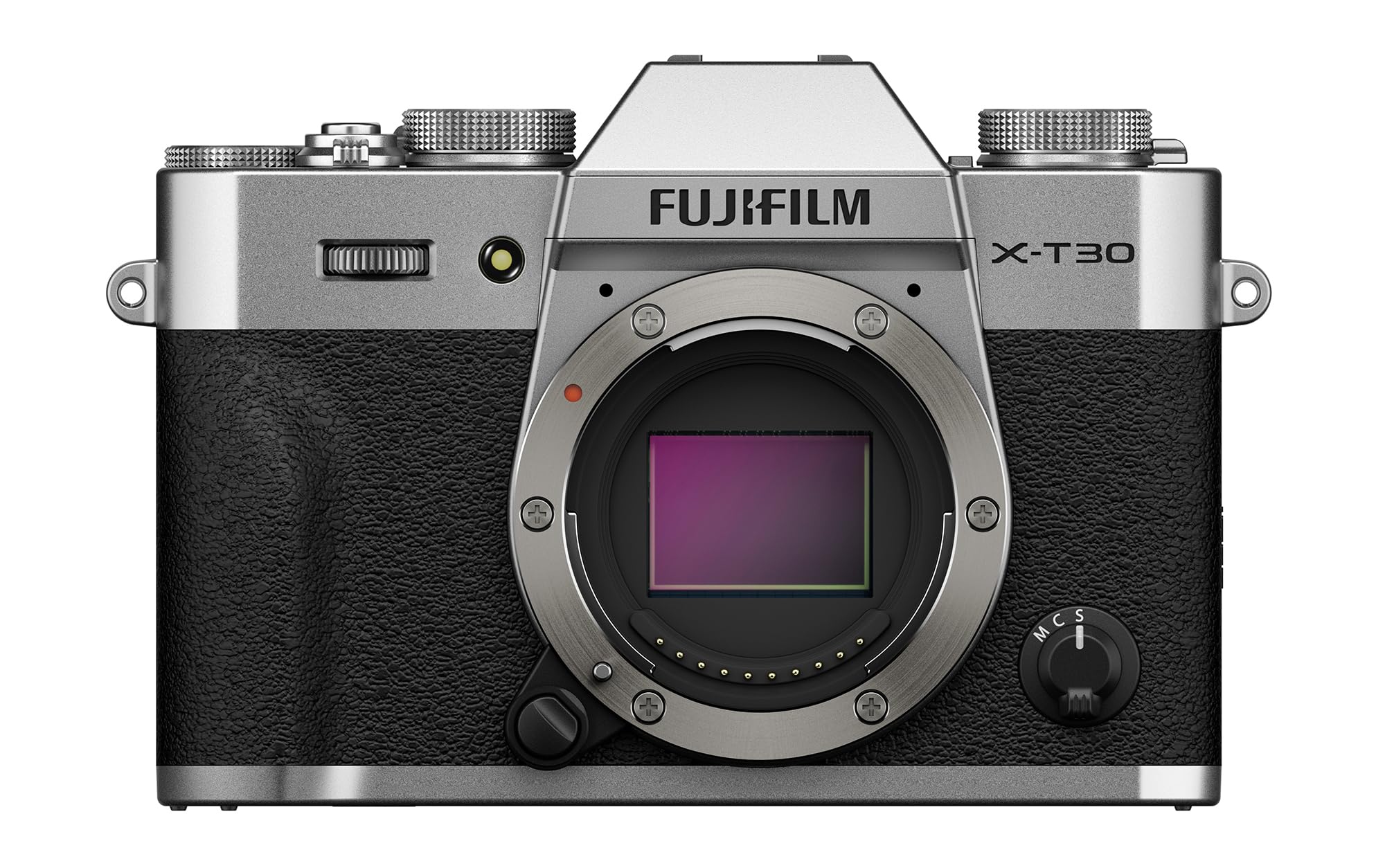
The FUJIFILM X-T30 III is for photographers who value the shooting experience as much as the final image. Its 26.1-megapixel X-Trans CMOS 4 sensor uses a unique color filter array that reduces moiré and produces organic-looking files with minimal sharpening artifacts. The 20 built-in Film Simulations — including Provia, Velvia, and the new Nostalgic Negative — allow you to dial in a specific look in-camera without post-processing, and the physical shutter speed, ISO, and exposure compensation dials make adjustments tactile and immediate.
The AI-powered subject detection autofocus is a significant upgrade over previous X-T30 models, using deep learning to recognize and track human faces, eyes, animals, birds, cars, and bikes. The 425 phase-detection points cover the majority of the sensor area, and the burst rate reaches 8 fps with mechanical shutter or 20 fps with the electronic shutter in the 1.25x crop mode. The 2.36M-dot OLED EVF is clear, and the 3.0-inch tilting touchscreen is responsive for focus point placement.
The 13-33mm f/3.5-6.3 OIS kit lens provides a 20-50mm full-frame equivalent zoom range with image stabilization, though the variable aperture is slower than Fuji’s f/2.8 zooms. The body lacks in-body image stabilization, so lens-based OIS is your only stabilization option. The X-T30 III is a joy to shoot with, especially for street and travel photography, but it is less suited for long telephoto work or video. Its compact size and film-simulation capabilities make it one of the most rewarding APS-C cameras to shoot with for pure enjoyment.
Why it’s great
- 20 Film Simulations produce beautiful JPEGs with distinct color profiles, reducing editing time
- Physical dials for shutter speed, ISO, and exposure compensation offer tactile control
- AI-powered subject detection AF reliably tracks humans, animals, and vehicles
- Compact and stylish design encourages everyday carry and spontaneous shooting
Good to know
- No in-body image stabilization; relies on lens-based OIS only
- 13-33mm kit lens has a variable f/3.5-6.3 aperture, limiting low-light performance
- Video features are adequate but not competitive with Sony or Canon hybrid bodies
8. Canon EOS R50
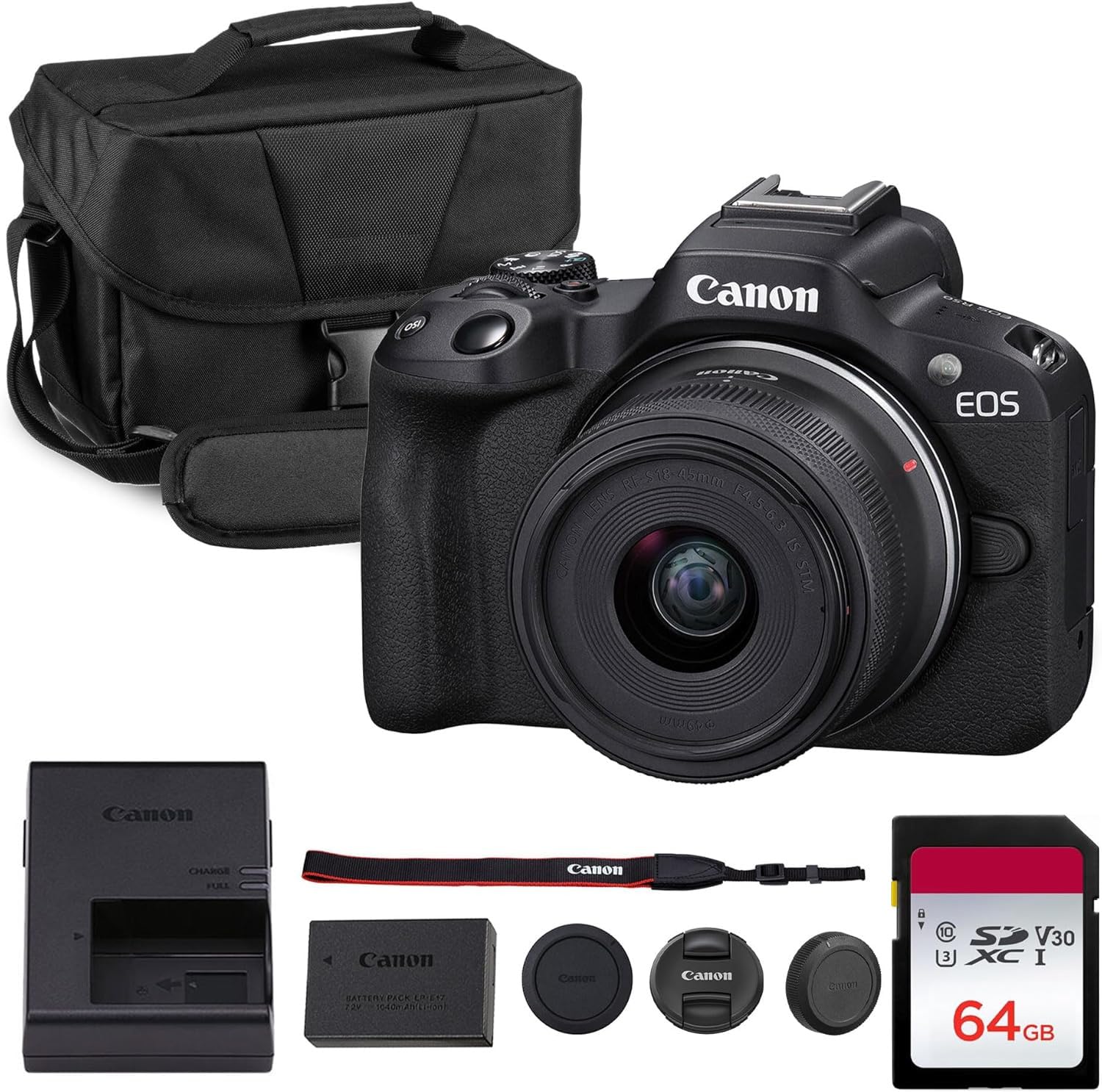
The Canon EOS R50 is designed for content creators stepping up from a smartphone who want a lightweight, user-friendly camera with strong autofocus. The 24.2-megapixel APS-C CMOS sensor is paired with DIGIC X processor — the same engine used in Canon’s higher-end R bodies — enabling Dual Pixel CMOS AF II with 651 phase-detection zones that cover the entire frame. Eye detection for humans and animals is reliable, and the autofocus can track a subject running toward the camera with minimal hunting.
The 18-45mm f/4.5-6.3 IS STM kit lens is compact and retracts when not in use, making the R50 a pocketable option when paired with a small prime. The vari-angle touchscreen flips forward for vlogging, and the 2.36M-dot EVF is clear enough for composition in bright sunlight. Creative Assist mode provides in-camera guides for adjusting brightness, color, and blur effects without understanding exposure triangle theory. The bundle includes a 64GB UHS-I SD card and a shoulder bag, making it ready to shoot out of the box.
Oversampled 4K video at up to 30 fps with Dual Pixel AF provides sharp footage with smooth focus transitions. The video quality is impressive for the price, though the kit lens aperture darkens at the telephoto end, making indoor 4K challenging without supplemental light. The battery is rated for 370 shots and charges via USB-C. The R50 is a smart entry point for new creators who want a system with a clear upgrade path to Canon’s RF full-frame bodies, but the kit lens is the weakest link in the system.
Why it’s great
- Dual Pixel CMOS AF II provides reliable eye detection and subject tracking across the full frame
- Lightweight and compact body with retracting 18-45mm kit lens is highly portable
- Oversampled 4K 30p video with smooth AF transitions is great for social content
- Creative Assist mode helps beginners learn exposure without complex menus
Good to know
- Kit lens aperture darkens at 45mm, limiting low-light performance at the telephoto end
- No in-body image stabilization; relies on lens-based IS for video stabilization
- Single UHS-I SD slot and no headphone jack limits video monitoring
9. Sony a6100
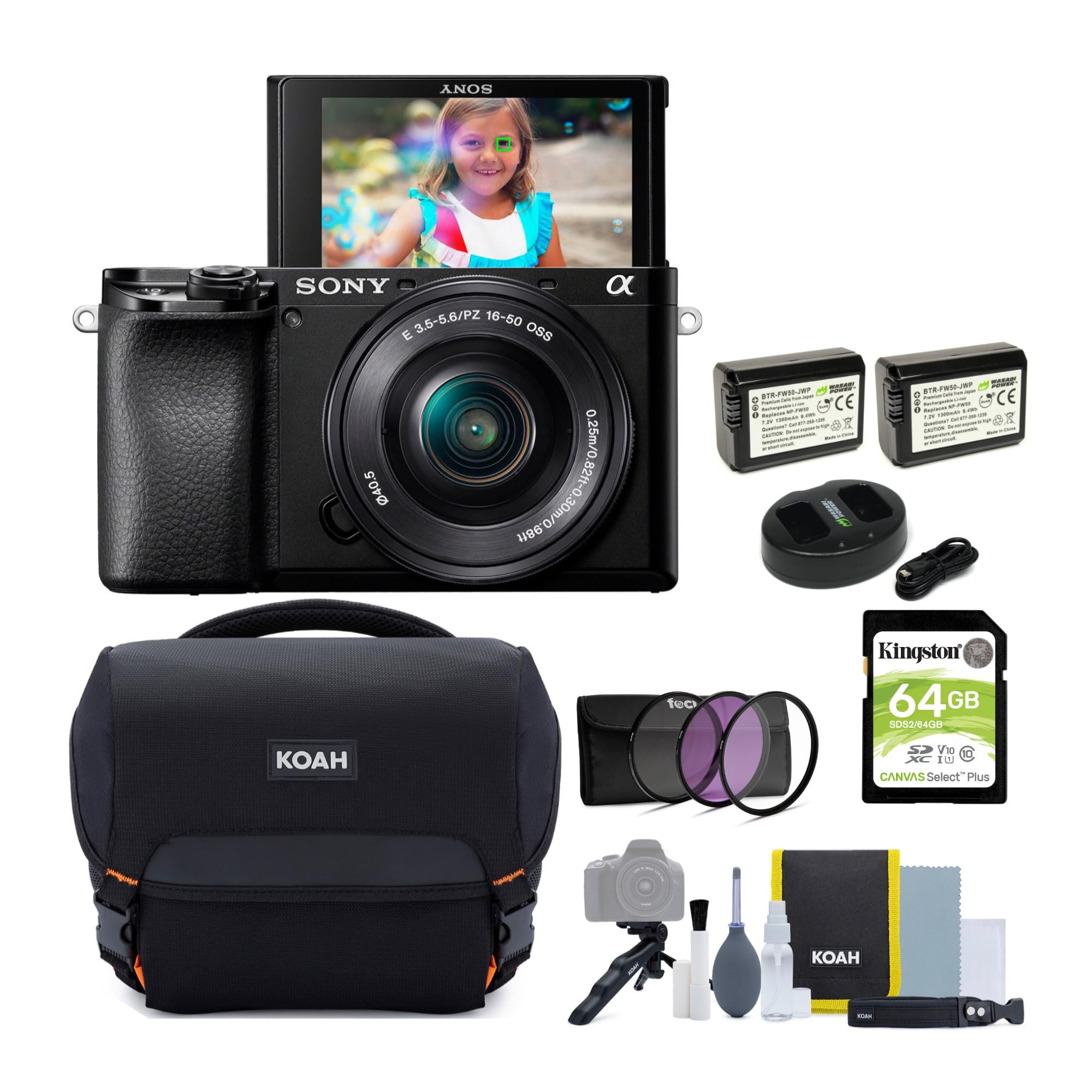
The Sony a6100 delivers the same 24.2-megapixel APS-C sensor and 4D FOCUS autofocus system as the more expensive a6400, but at a lower price that makes it one of the best value APS-C cameras for action photography. The fast hybrid AF system uses 425 phase-detection points and 425 contrast-detection points to achieve 0.02-second acquisition, with real-time eye tracking for humans and animals that works reliably in good light. The burst rate of 11 fps with mechanical shutter and 8 fps with electronic shutter is competitive with higher-tier models.
Bundled with a 16-50mm f/3.5-5.6 OSS kit lens, the a6100 kit provides a 24-75mm full-frame equivalent zoom range with optical stabilization. The 3.0-inch tilting LCD screen flips to 180 degrees for selfies and vlogging, though it lacks the high resolution and touch responsiveness of more expensive alternatives. The OLED EVF is functional at 1.44M-dot, but it is smaller and has lower refresh than the a6400’s unit. The bundle includes a gadget bag, filter kit, extra battery, and 64GB SDHC card, providing good value for beginners.
The a6100 records 4K 30p video with full-pixel readout and S-Log2 and S-Log3 gamma profiles. The lack of 4K 60p and the absence of a headphone jack limit its appeal for serious videographers. The battery life is modest at around 380 shots, and the grip is small for users with larger hands. The a6100 excels in its class for fast autofocus and burst speed, making it a strong choice for parents wanting to capture kids in motion or hobbyists dipping into wildlife photography without spending a premium.
Why it’s great
- 0.02-second AF with 425 phase-detection points and real-time eye tracking is class-leading for the price
- 11 fps burst with mechanical shutter handles kids, pets, and action effectively
- Compact kit with 16-50mm OSS lens and bundled accessories offers good value
- 4K 30p video with S-Log profiles provides versatile color grading options
Good to know
- Battery life is modest at ~380 shots; extra batteries are recommended for full-day shoots
- EVF is lower resolution and smaller than the a6400’s viewfinder
- 4K video lacks 60p and has no headphone jack for audio monitoring
10. Panasonic LUMIX G85

The Panasonic LUMIX G85 is a Micro Four Thirds camera that compensates for its smaller sensor with best-in-class stabilization and video-friendly features. The 16-megapixel sensor removes the low-pass filter, resulting in sharper fine detail compared to some 20MP Micro 4/3 sensors with AA filters. The class-leading 5-axis in-body image stabilization works in conjunction with the 12-60mm f/3.5-5.6 Power O.I.S. lens stabilization, producing results that can handhold shots at shutter speeds up to five stops slower than what the IS alone could achieve.
The magnesium-alloy body with weather-sealing allows confident shooting in drizzle and dusty environments. The 2.36M-dot OLED EVF is bright and responsive with a 0.74x magnification that is larger than many APS-C viewfinders. The 3.0-inch tilting touchscreen is responsive for menu navigation and focus point selection. The autofocus is contrast-detect only with DFD technology, which is fast at 0.07 seconds in good light but can hunt in low light conditions. The 49-point AF area provides adequate coverage, but it lacks the phase-detection depth that Sony and Canon systems offer.
4K video at 30p with no crop is a highlight, and the 4K Photo mode allows pulling 8MP stills from video at 30 fps. The microphone input enables clean audio, but the absence of a headphone jack is a missed opportunity for video users. The battery life of 330 shots is adequate but not exceptional. The G85 is an excellent value for videographers who prioritize stabilization and weather-sealing over sensor size, but still photographers who need fast low-light focus will find Micro 4/3 limiting compared to APS-C alternatives at a similar price.
Why it’s great
- 5-axis IBIS combined with Power O.I.S. lens stabilization delivers unmatched handheld stability for video
- Weather-sealed magnesium-alloy body handles outdoor shooting in inclement conditions
- No-crop 4K video recording with 4K Photo mode provides useful still extraction capability
- Large, bright OLED EVF with 0.74x magnification is one of the best in its class
Good to know
- 16MP sensor has lower resolution than competing APS-C and full-frame bodies
- Contrast-detect AF hunts in low light; not ideal for indoor fast-moving subjects
- No headphone jack for audio monitoring during video recording
11. Canon EOS R100

The Canon EOS R100 is the smallest and lightest body in the EOS R series, designed as a budget-friendly entry point for new photographers who want APS-C performance in an interchangeable-lens system. The 24.1-megapixel CMOS sensor paired with the DIGIC 8 processor delivers clean images with Canon’s characteristic color science, and the RF-S 18-45mm f/4.5-6.3 IS STM kit lens provides optical stabilization for sharp handheld shots. The 143-zone Dual Pixel CMOS AF covers a wide area with human face and eye detect, and animal and vehicle detection adds versatility for wildlife and automotive shooting.
Continuous shooting reaches 6.5 fps with One-Shot AF and 3 fps with servo AF, which is adequate for static subjects but slow compared to competitors like the a6100. The 2.36M-dot EVF is clear, and the 3.0-inch LCD screen is functional though not touch-enabled. The control layout is beginner-friendly with a guided menu system that explains settings. The body includes a pop-up flash, which is useful for fill light in daylight but weak for indoor use.
4K video records at up to 24 fps with no headphone or microphone input, making the R100 unsuitable for serious videography. The battery life is rated at 300 shots per charge. The RF-S lens lineup is still small, and native lenses are priced close to full-frame RF glass, limiting upgrade options. The R100 is best suited for absolute beginners who want a simple, lightweight camera to learn photography basics with a clear upgrade path to higher-end Canon R bodies, but the slow burst rate and minimal video features mean it is quickly outgrown.
Why it’s great
- Smallest and lightest camera in the EOS R series, ideal for travel and everyday carry
- Dual Pixel CMOS AF with human, animal, and vehicle detect works well for still subjects
- Pop-up flash provides fill light capability for outdoor portraits
- Beginner-friendly guided menu system helps new users learn exposure settings
Good to know
- Slow burst rate of 6.5 fps with One-Shot AF limits action and wildlife shooting
- No microphone or headphone jacks make the R100 unsuitable for serious video work
- RF-S lens lineup is small and priced close to full-frame RF glass
FAQ
Is APS-C or full-frame better for a beginner mirrorless camera?
How does in-body image stabilization affect lens choices?
Do I need a full-frame sensor for 4K video?
Final Thoughts: The Verdict
For most users, the best digital camera mirrorless winner is the Sony Alpha a7 IV because it combines a 33MP full-frame sensor with professional 4K 60p 10-bit video and reliable real-time autofocus in a single body. If you want maximum resolution for print or commercial work, grab the Nikon Z 7II with its 45.7MP sensor and dual card slots. And for a compact creative companion that makes shooting fun with built-in film simulations, nothing beats the FUJIFILM X-T30 III.

Mo Maruf
I created WellFizz to bridge the gap between vague wellness advice and actionable solutions. My mission is simple: to decode the research and give you practical tools you can actually use.
Beyond the data, I am a passionate traveler. I believe that stepping away from the screen to explore new environments is essential for mental clarity and physical vitality.