Our readers keep the lights on and my smoothie glass nicely filled. As an Amazon Associate, I earn from qualifying purchases.
A fast break turns into a frozen screen, the quarterback drops back and the image pixelates, the puck is in the crease but all you see is the loading spinner. The wrong streaming device turns every game into a test of patience, robbing you of the live-moment thrill that makes sports worth watching. The difference between seeing the play and missing it often comes down to a single piece of hardware connected to your TV.
I’m Mohammad Maruf — the founder and writer behind WellFizz. I’ve spent dozens of hours cross-referencing processor benchmarks, Wi-Fi standards, audio codecs, and real buyer feedback to isolate exactly which streaming players handle high-motion sports content without compromise.
From live NFL RedZone and Champions League soccer to UFC pay-per-view and MLB playoffs, the best device for streaming sports must combine low-latency decoding, stable wireless connectivity, and support for frame-rate matching to keep fast action crisp and smooth.
How To Choose The Best Device For Streaming Sports
Not every streaming box handles the demands of live sports equally. The heavy bitrate of a 60-fps broadcast, the rapid camera pans, and the need for near-zero input lag all place stress on hardware that was often designed for steady, on-demand playback. Knowing the key specs separates a game-day setup from a frustration machine.
Processor Power and RAM
The chip inside your streaming device dictates how fast apps launch and how smoothly the video plays. Live sports apps like ESPN, YouTube TV, and Fubo push constant data streams that demand quick decoding. A device with at least 2GB of RAM and a modern quad-core or octa-core processor handles channel-switching without freezing, especially when you jump between multiple games during a busy Saturday.
Wireless Connectivity and Ethernet
Packet loss kills the live-sports experience. Wi-Fi 6 reduces latency and handles interference from other household devices better than older standards, but nothing beats a wired Ethernet connection for rock-solid stability. If your router sits far from your TV, prioritize a streaming player with a built-in Ethernet port or one that supports USB-to-Ethernet adapters.
Frame-Rate Matching and Motion Handling
Many TVs introduce processing judder when they try to convert 50- or 60-Hz sports broadcasts. A device that supports automatic frame-rate matching (switching the output to match the source content) eliminates the soap-opera effect and keeps player movements looking natural. Look for this feature listed under HDMI handshake or refresh rate settings.
Audio Pass-Through and Surround Support
The roar of the crowd and the crunch of a tackle matter as much as the picture. Dolby Atmos and Dolby Digital Plus pass-through let your soundbar or receiver decode the full audio signal rather than compressing it inside the streaming stick. For sports bars or dedicated home theaters, this spec is non-negotiable.
Quick Comparison
On smaller screens, swipe sideways to see the full table.
| Model | Category | Best For | Key Spec | Amazon |
|---|---|---|---|---|
| Roku Ultra | Premium | Cord-cutters wanting wired stability | Ethernet port + Wi-Fi 6 | Amazon |
| Amazon Fire TV Cube | Premium | Hands-free voice control during games | Octa-core processor + Wi-Fi 6E | Amazon |
| Onn 4K Plus | Mid-Range | Budget-friendly Google TV experience | 2GB RAM + 16GB storage | Amazon |
| Amazon Fire TV Stick 4K | Entry-Level | Portable 4K streaming for secondary TVs | Wi-Fi 6 + Dolby Vision | Amazon |
| Roku Express 4K+ | Budget | Simple no-frills sports streaming | Voice remote + 4K HDR | Amazon |
In‑Depth Reviews
1. Roku Ultra

The Roku Ultra is the only player in this roundup that includes a dedicated Ethernet port alongside Wi-Fi 6 support, making it the most reliable choice for live sports in homes where wireless congestion is a problem. It supports Dolby Vision, HDR10+, and Dolby Atmos pass-through, so the picture and audio quality match what your TV and soundbar can deliver natively. The interface remains clean and free of heavy advertising clutter, which keeps you focused on the game rather than shopping recommendations.
Users consistently praise the 30 percent faster performance over other Roku models, with app switching that feels instant during multi-game viewing sessions. The rechargeable Voice Remote Pro includes backlit buttons for dark rooms and a lost-remote finder, both small but meaningful details when you are juggling snacks and a drink during overtime. Bluetooth headphone mode lets you listen to the broadcast without disturbing others, a feature that works well for late-night west coast games.
The main trade-off is the higher investment compared to stick-style devices, and some early units experienced closed-captioning bugs that Roku has since acknowledged. For anyone serious about live sports and tired of buffering, the Roku Ultra justifies its position as the most complete hardware package available today.
Why it’s great
- Ethernet port eliminates Wi-Fi dropouts during high-bitrate streams
- Backlit remote with lost-remote finder solves a real dark-room problem
- Dolby Vision and Atmos pass-through for full theater immersion
Good to know
- Higher cost than stick alternatives
- Standby light cannot be disabled by users
- Some early units had closed-captioning glitches
2. Amazon Fire TV Cube
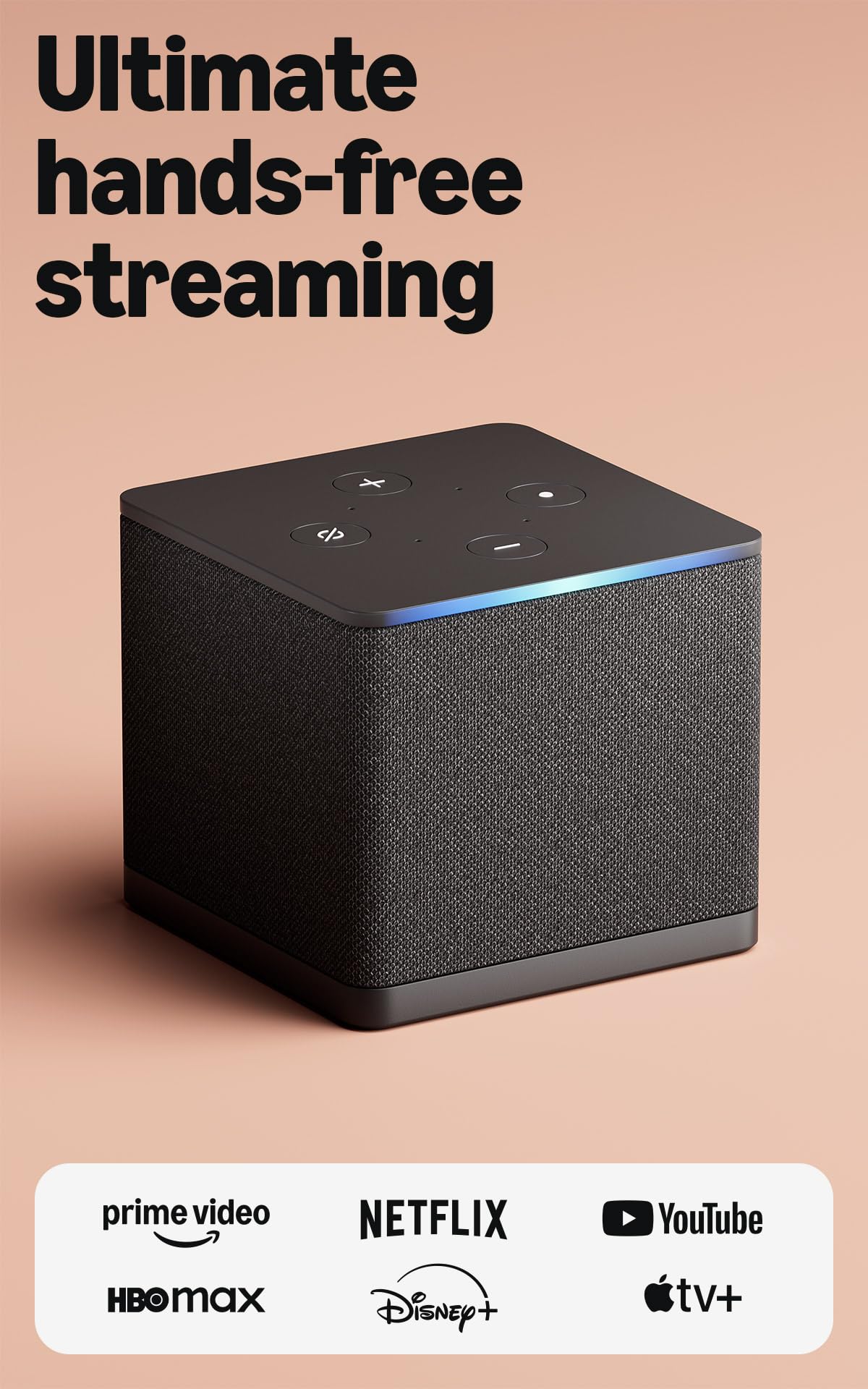
The Fire TV Cube is the only streaming player with a built-in speaker and far-field microphones, letting you control the TV without holding a remote. During a heated game when you do not want to hunt for the clicker, saying “Alexa, open ESPN” or “Alexa, go to the NFL channel” works from across the room. The octa-core processor makes it the fastest device here for app launches, and Wi-Fi 6E support gives it a future-proof edge if you have a compatible router.
Reviewers note that the HDMI-in port allows you to connect a cable box or game console and control both through the Cube, reducing remote clutter. The device also supports Dolby Vision and Dolby Atmos, producing vibrant sideline colors and crowd immersion. Hands-free Alexa can even check scores, dim the lights, or pull up the weather without interrupting the broadcast.
However, the Fire TV interface is more ad-heavy than Roku’s, and some users report audio bugs where the device defaults to PCM instead of Dolby Digital Plus. The lack of an included HDMI cable is a minor annoyance at this tier. For power users who want voice-first control and raw processing speed, the Cube is the clear winner.
Why it’s great
- Hands-free voice control works from across the room
- Fastest app loading of any device tested
- HDMI-in port consolidates cable box and console
Good to know
- Interface includes sponsored ads and suggestions
- Audio codec defaulting bugs reported by some users
- No HDMI cable included in the box
3. Onn 4K Plus
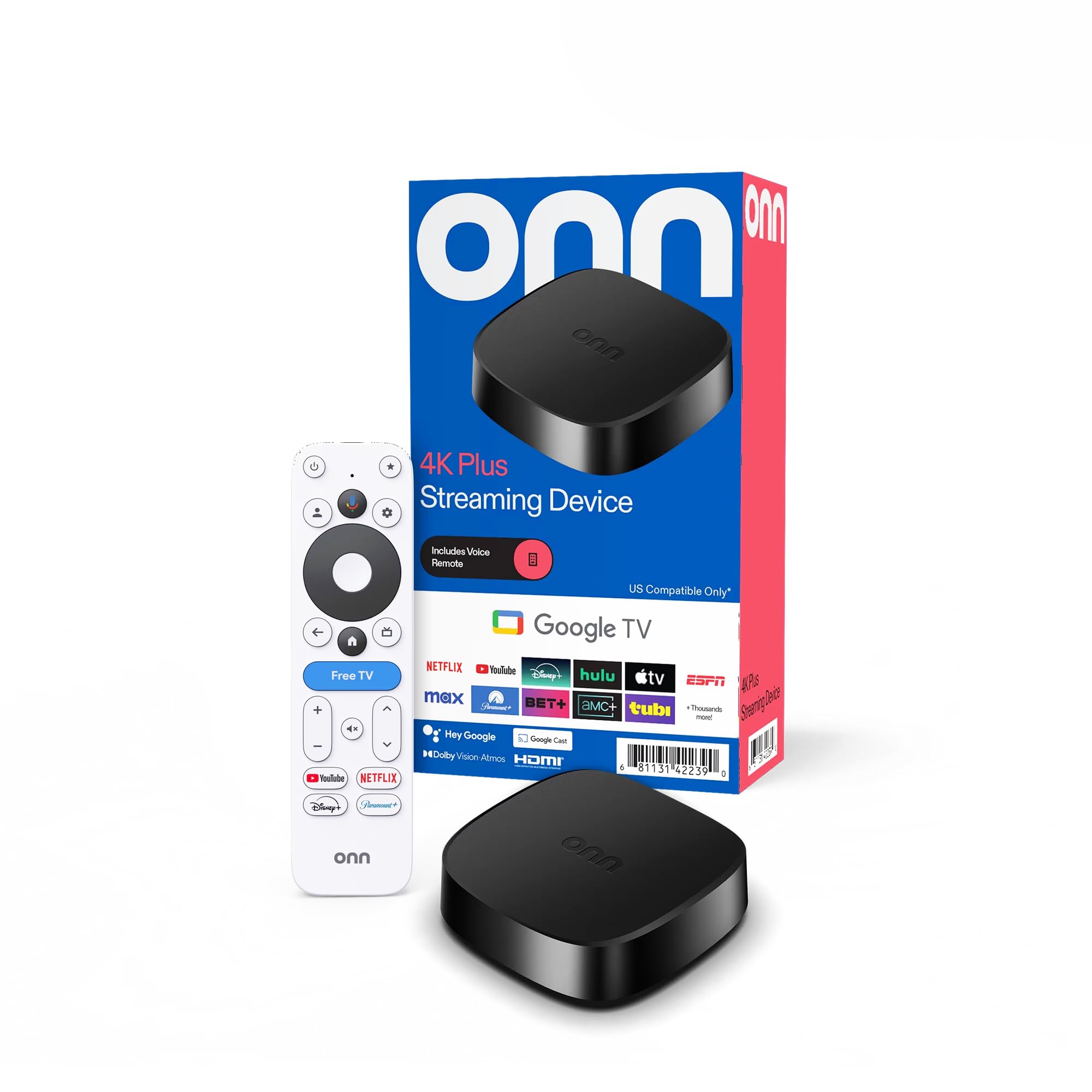
The Onn 4K Plus punches above its price tier by offering 2GB of RAM and 16GB of internal storage, which keeps the Google TV interface snappy even when you are jumping between multiple sports apps. It supports Dolby Vision and Dolby Atmos, so the color grading of green grass and the roar of the crowd come through clearly. The Wi-Fi 6 connectivity ensures that live streams from YouTube TV or Sling stay stable even when other devices are hogging bandwidth.
Customers report that the setup is straightforward and the interface feels intuitive, especially for those already familiar with Google TV’s content aggregation. The voice remote with Google Assistant works well for searching games by league or team name. The 16GB storage capacity is double what many budget sticks offer, meaning you can download several sports apps and games without running out of space.
One limitation is that certain features and channel availability are restricted to the United States, so international buyers may face setup hurdles. The build quality feels less premium than the Roku Ultra or Fire TV Cube, but for the price, the performance per dollar is outstanding. For a secondary TV or a dedicated sports room, this is a smart choice.
Why it’s great
- 2GB RAM and 16GB storage for smooth multi-app use
- Dolby Vision and Atmos support at a budget-friendly price
- Wi-Fi 6 keeps live streams stable
Good to know
- Features and content are US-only
- Build feels less substantial than premium competitors
- No Ethernet port for wired connections
4. Amazon Fire TV Stick 4K
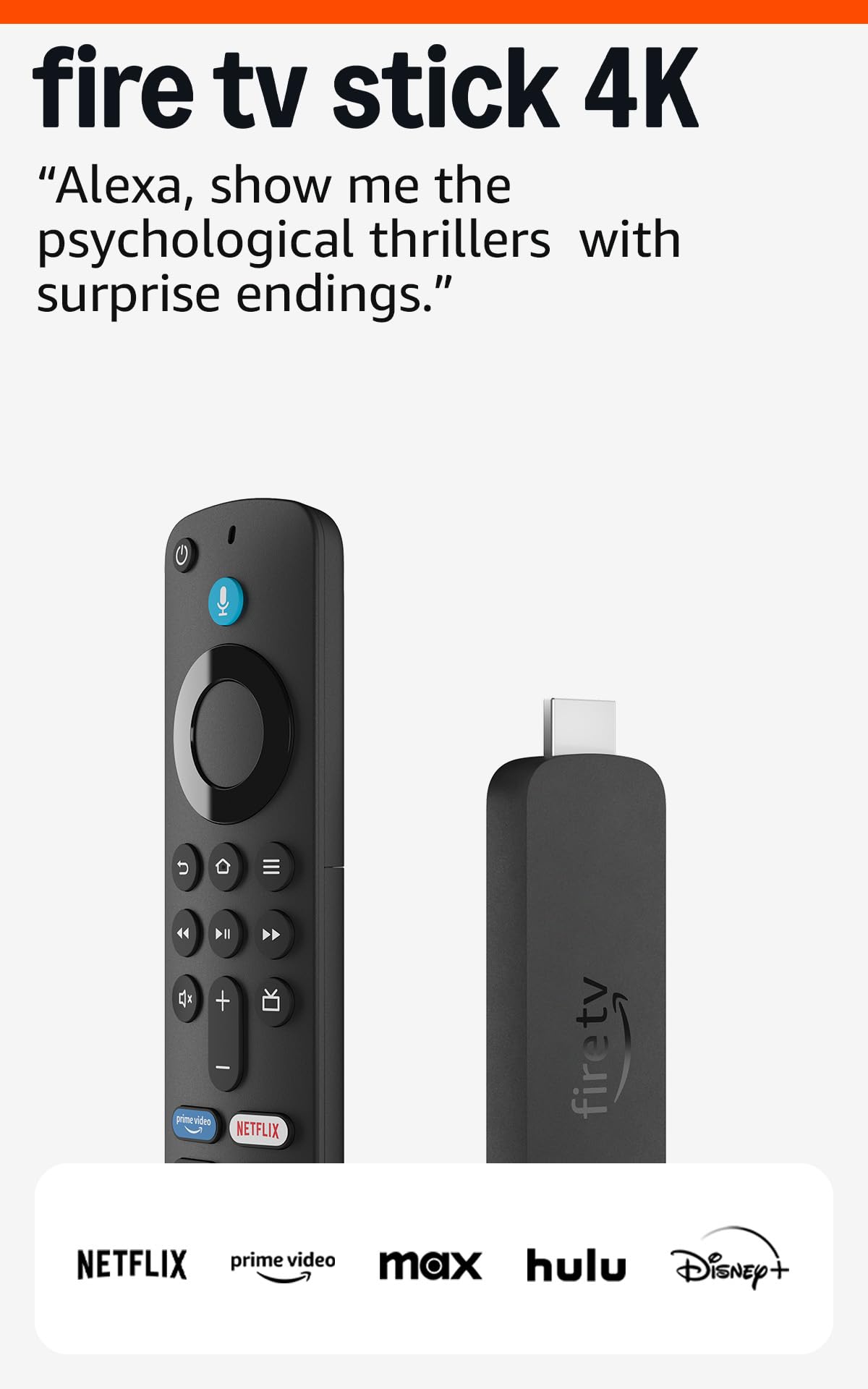
The Fire TV Stick 4K brings 4K streaming and Dolby Vision support to a dongle form factor that hides behind the TV, making it perfect for bedrooms or secondary displays where you want to catch a game without a full media console. The inclusion of Wi-Fi 6 is a significant upgrade over older Fire Sticks, reducing buffering during peak viewing hours when the household network is under load. Alexa voice search works well for finding specific games by league or team.
This like-new refurbished unit has been tested and certified to work like new, which keeps the cost down while still delivering full performance. Users consistently describe the setup as plug-and-play, and the compact size makes it easy to take on trips or move between TVs. The Fire TV interface integrates tightly with Prime Video and other Amazon services, which is convenient if you are already in that ecosystem.
The stick lacks an Ethernet port and HDMI-in, so it relies entirely on Wi-Fi for connectivity. Some users noted that app subscriptions did not transfer automatically from older Fire Sticks, requiring manual re-authorization. For a straightforward, low-profile streaming solution that handles sports well on a secondary TV, this is a solid pick.
Why it’s great
- Wi-Fi 6 reduces buffering on busy networks
- Compact dongle design hides behind the TV
- Refurbished option offers good value
Good to know
- No Ethernet port for wired connections
- Subscriptions may not transfer automatically between devices
- Fire TV interface includes ads
5. Roku Express 4K+

The Roku Express 4K+ delivers the same intuitive Roku interface found on the Ultra at a fraction of the hardware cost. It supports 4K, HDR, and voice search via the included remote, so you can navigate to your favorite sports channels without a complicated learning curve. The setup is famously simple — plug into the HDMI port, connect to Wi-Fi, and start streaming live TV within minutes.
Customer feedback highlights how well this device solves the problem of a slow or freezing smart TV interface. Many users report that the Express 4K+ runs smoother than their built-in TV apps, especially for high-bitrate content like live sports. The voice remote works with Siri, Alexa, and Google Assistant, giving you flexibility regardless of your smart home ecosystem. The compact box design sits neatly on a media shelf or can be mounted behind the TV with the included adhesive strip.
The main limitations are the lack of Dolby Vision and Dolby Atmos support, so picture and audio are not quite as refined as on the Ultra or Fire TV Cube. The remote is not backlit, which makes it harder to use in a dark room, and the device relies on Wi-Fi only with no Ethernet option. For the entry-level price, the Roku Express 4K+ offers a surprisingly capable sports-streaming experience.
Why it’s great
- Easy setup and clean Roku interface
- Voice remote works with multiple assistants
- Solves freezing issues of older smart TVs
Good to know
- No Dolby Vision or Dolby Atmos support
- Remote lacks backlit buttons
- No Ethernet port for wired stability
FAQ
Does Wi-Fi 6 really make a difference for live sports streaming?
Should I use Ethernet or Wi-Fi for streaming sports?
Is Dolby Atmos important for watching sports?
Final Thoughts: The Verdict
For most users, the device for streaming sports winner is the Roku Ultra because its Ethernet port, Dolby Vision and Atmos support, and backlit remote solve every major pain point of live sports viewing in one polished package. If you want hands-free voice control and the fastest processor on the market, grab the Amazon Fire TV Cube. And for a secondary TV or a dedicated budget setup, nothing beats the value of the Onn 4K Plus.

Mo Maruf
I created WellFizz to bridge the gap between vague wellness advice and actionable solutions. My mission is simple: to decode the research and give you practical tools you can actually use.
Beyond the data, I am a passionate traveler. I believe that stepping away from the screen to explore new environments is essential for mental clarity and physical vitality.