Our readers keep the lights on and my smoothie glass nicely filled. As an Amazon Associate, I earn from qualifying purchases.
Black spot and powdery mildew can turn a dream rose garden into a weekly battle with fungicides. A single season of unchecked fungal pressure defoliates a bush, drains its energy, and stunts bloom production. The solution is not more chemicals — it is planting genetics that repel disease before it takes hold. Breeders have spent decades selecting for foliage that stays clean, even in humid climates or crowded beds where pathogens thrive.
I’m Mohammad Maruf — the founder and writer behind WellFizz. My research focuses on isolating the specific genetic traits and rootstock selections that separate truly disease-resistant varieties from marketing claims, reviewing hundreds of customer growth reports across USDA hardiness zones.
Below, you will find the top-rated varieties that deliver real immunity to the most common rose diseases, all ranked by real-world performance. This is the definitive guide to the best disease resistant roses available for planting today.
How To Choose The Best Disease Resistant Roses
Not every bush labeled “easy care” shrugs off fungus equally. The genetic lineage matters more than the fertilizer you apply. Look for varieties bred from Rosa x ‘Knock Out’, Rosa x ‘Drift’, or Heirloom own-root stock — these carry specific resistance genes that reduce black spot and powdery mildew incidence dramatically compared to hybrid teas.
Own-Root vs. Grafted Plants
Own-root plants grow from cuttings of the parent variety, meaning the entire plant — roots, stems, and blooms — shares identical genetic disease resistance. Grafted plants marry a hardy rootstock to a top variety, but if the graft fails or the rootstock sends up suckers, you lose the resistant canopy. For long-term immunity, own-root is the safer bet.
Mature Size and Spacing
A bush that reaches 4 feet wide needs at least 3 to 4 feet of clearance on each side. Crowded foliage traps humidity, creating the perfect germination bed for fungal spores. Compact Drift varieties (18–24 inches) suit smaller gardens and containers while allowing natural airflow around the leaves.
Quick Comparison
On smaller screens, swipe sideways to see the full table.
| Model | Category | Best For | Key Spec | Amazon |
|---|---|---|---|---|
| White Knock Out | Shrub | Reliable disease-free foliage | 42″ W x 42″ H | Amazon |
| Rise Up Ringo Climbing | Climber | Vertical color with low spray | 24–36″ W x 36–60″ H | Amazon |
| Heirloom Eden Climber | Climber | Arched trellis / wall coverage | 10′ x 6′ mature spread | Amazon |
| Pink Drift Rose | Groundcover | Small-space continuous color | 1–2′ H x 3′ W | Amazon |
| Heirloom Blaze Climber | Climber | Large-scale arch / fence coverage | 10–11′ H x 9–10′ W | Amazon |
| Peach Drift Rose | Groundcover | Budget-friendly container accent | 24″ W x 18″ H | Amazon |
| Double Pink Knock Out | Shrub | Entry-level low-maintenance | 3–5′ H x 3–4′ W | Amazon |
In‑Depth Reviews
1. Knock Out 2 Gal. White Rose Shrub

The White Knock Out is the benchmark for disease-resistant shrub roses in the mid-range tier. Its 42‑inch mature spread strikes an ideal balance between presence in the landscape and manageable spacing — you get a full, rounded bush without the crowding that encourages black spot. Customers consistently report that this variety emerges clean even after wet springs that damage other hybrids.
Rated for USDA zones 4 through 11, it shrugs off both northern cold snaps and southern humidity. The pure white blooms contrast sharply against the dark green foliage that stays intact without heavy spraying. Multiple verified buyers noted that plants arrived with healthy, damp soil and were actively blooming within days of planting.
The deciduous habit means the bush drops leaves in winter and rebounds in spring with fresh, disease-free growth. For anyone who wants a proven, low-spray white rose that fills a 3.5‑foot circle with steady color from spring through frost, this is the standard.
Why it’s great
- Proven genetic resistance lineage from the Knock Out family
- Generous 42-inch width provides full bed coverage without overcrowding
- Adaptable from zone 4 cold to zone 11 heat
Good to know
- Single-petal form — not as lush as double-bloom varieties
- A small percentage of units have arrived with black spot; inspect upon delivery
2. Proven Winners Rise Up Ringo Climbing Rose

Rise Up Ringo from Proven Winners brings a unique double-flower look — golden yellow petals with a bright red eye — to a compact climbing habit that tops out at 36 to 60 inches tall. That moderate vertical reach makes it perfect for pillars, obelisks, or low trellises where a full-size climber would overwhelm the structure. Its low-maintenance profile is backed by genetic selection for disease resistance typical of the Proven Winners breeding program.
Gardeners report that this bush doubled in size within two months of planting, and that the foliage resisted spotting despite average watering. The deciduous nature means it drops leaves cleanly in winter with no residual fungal residue, then regrows vigorously in spring. Recommended spacing of 24 inches leaves room for airflow around the canopy.
A small number of buyers noted that the plant did not bloom its first season, which is common for young climbers establishing root systems. By year two, the flush of two-tone blooms reliably covers the trellis. If you want a climber that combines visual drama with true genetic disease tolerance, this is the strongest option in the mid-range.
Why it’s great
- Unique double-color bloom pattern (yellow with red eye)
- Compact vertical habit suited for small structures
- Low maintenance with strong genetic disease resistance
Good to know
- First-year bloom may be sparse while roots establish
- Requires support structure at planting time
3. Heirloom Eden Climber Rose
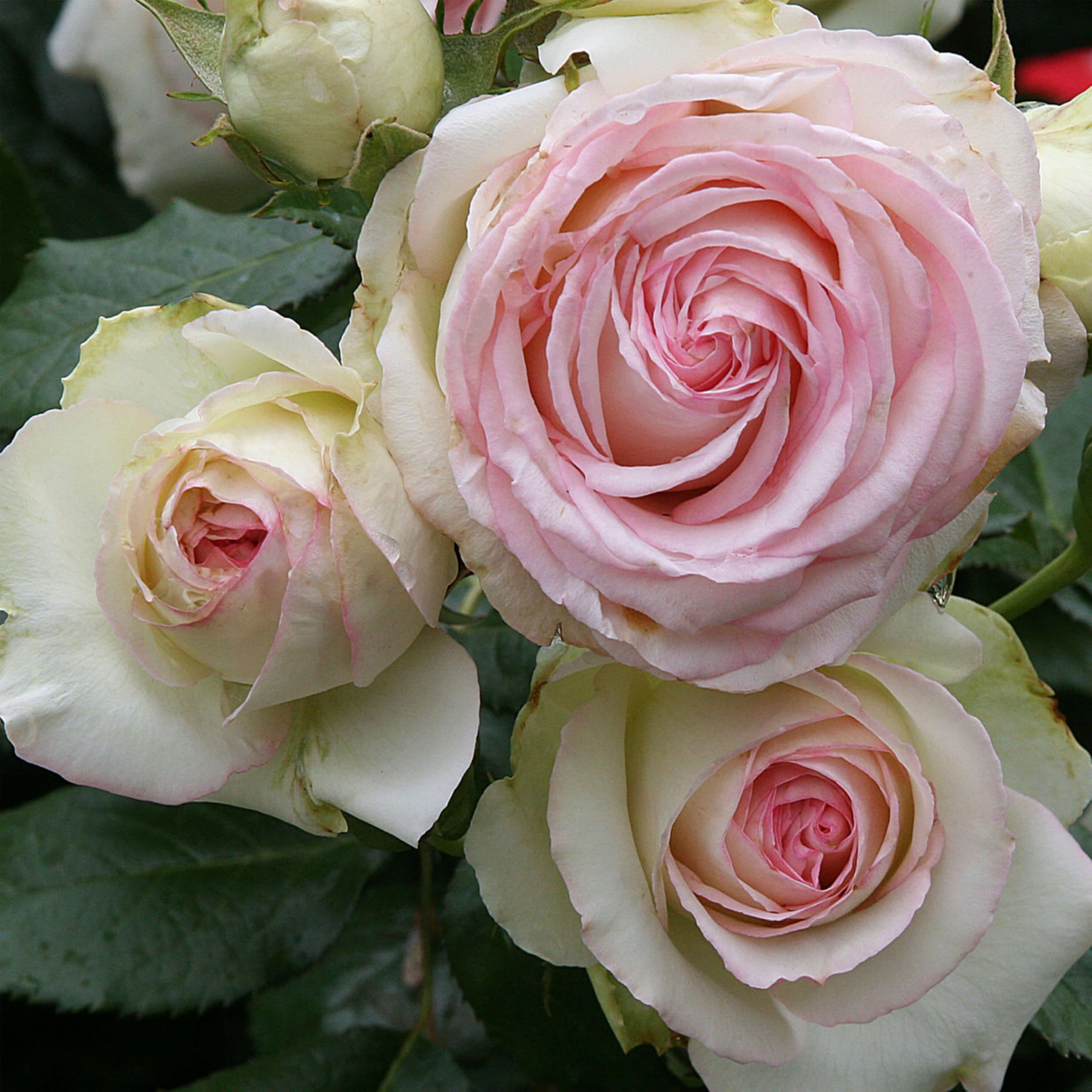
The Eden Climber from Heirloom is an own-root plant — the root system and the canopy share identical genetics, which eliminates the risk of graft failure compromising disease resistance later. Mature at 10 feet tall by 6 feet wide, this climber produces large, cupped blooms in soft pink and cream tones that repeat in flushes from spring through fall.
Its hardiness range covers zones 5 through 10, and customers in windy West Texas report that it withstands strong gusts without stem damage. The plant arrives as a 12‑ to 15‑inch bare-root or container start and is partially defoliated for shipping health. Within three weeks, multiple buyers observed active budding and vigorous leafing from bare stems.
The own-root guarantee means that even if the plant is cut back to the ground by a hard winter, the new growth retains the same genetic disease resistance. For anyone covering a north-facing wall or a large arch, this variety offers the highest long-term immunity insurance in the premium tier.
Why it’s great
- Own-root genetics guarantee identical disease resistance in regrowth
- Repeat blooming from spring through fall
- Wind-tolerant stem structure
Good to know
- Slower to establish full height compared to grafted climbers
- Some customers experienced unresponsive customer service on issues
4. Drift Roses Pink Drift Rose
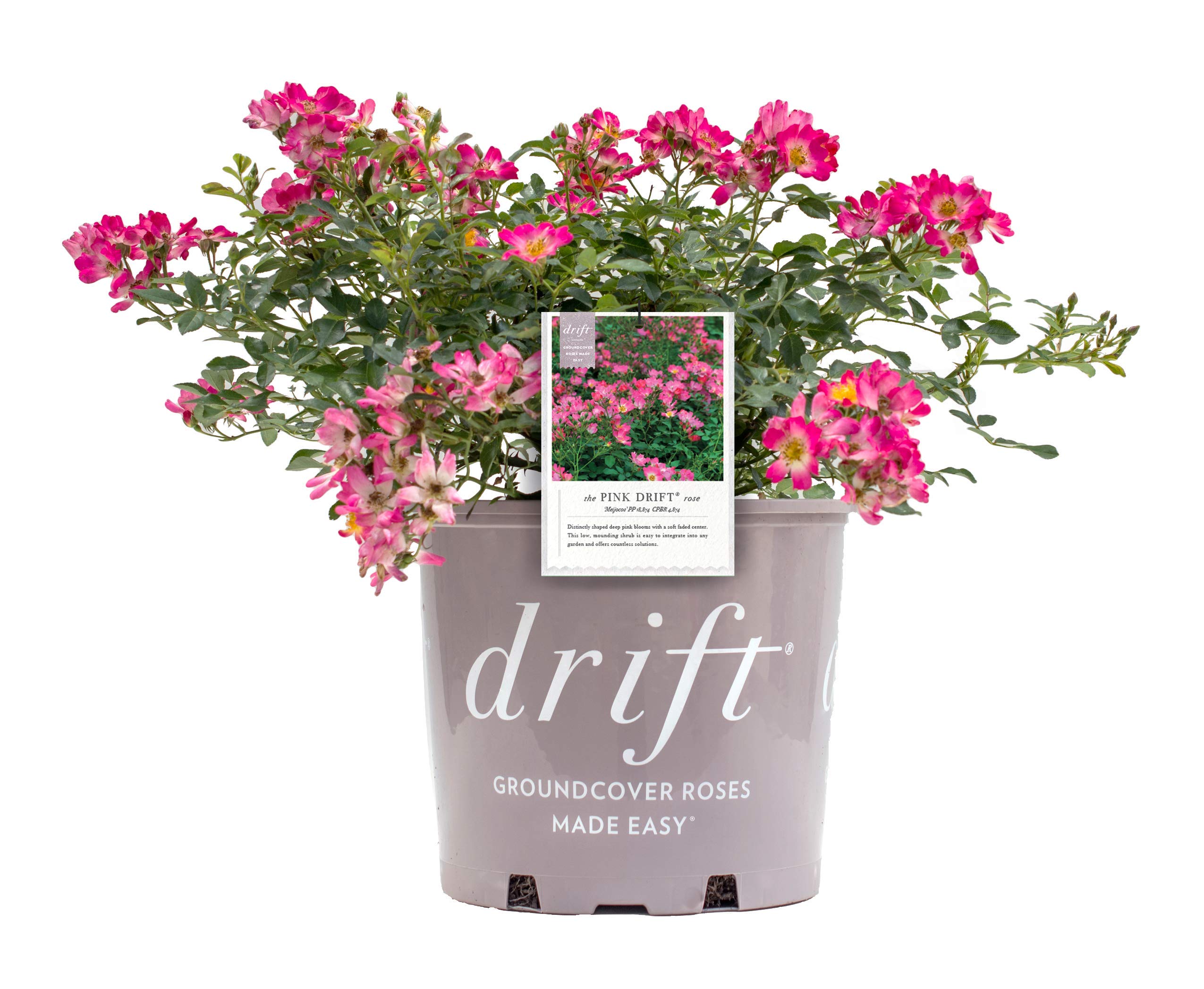
The Drift series is known for its groundcover habit — mature height stays under 2 feet while it spreads 3 feet wide, creating a dense carpet of foliage that naturally chokes out weeds, but the real strength is disease resistance. Customers in humid zones like New England report that the foliage remains clean all season without any fungicide, even during wet July weeks that blacken traditional hybrid teas.
This Pink Drift blooms from late spring through fall, producing clusters of small pink flowers that fade to a creamy edge. The compact size makes it ideal for slopes, border edges, and container planters where airflow around the leaves is naturally good. The plant arrives fully rooted in a #2 container and can go straight into the ground as long as the soil is workable.
Buyers note that the bush tolerates urban stressors — heat reflection from pavement, dog traffic, and shallow tree root competition — without dropping leaves. The deciduous winter dormancy allows it to reset each spring with fresh, fungus-free foliage. For small-space gardens that cannot accommodate large shrubs, this is the most reliable disease-resistant pick.
Why it’s great
- Groundcover habit naturally improves airflow around leaves
- Urban-tolerant — handles heat, exhaust, and root competition
- Continuous blooms with minimal dead-heading
Good to know
- Flower color can show variegation (pink, peach, or cream tones)
- Mature spread of 3 feet may feel small as a standalone specimen
5. Heirloom Blaze Climbing Rose
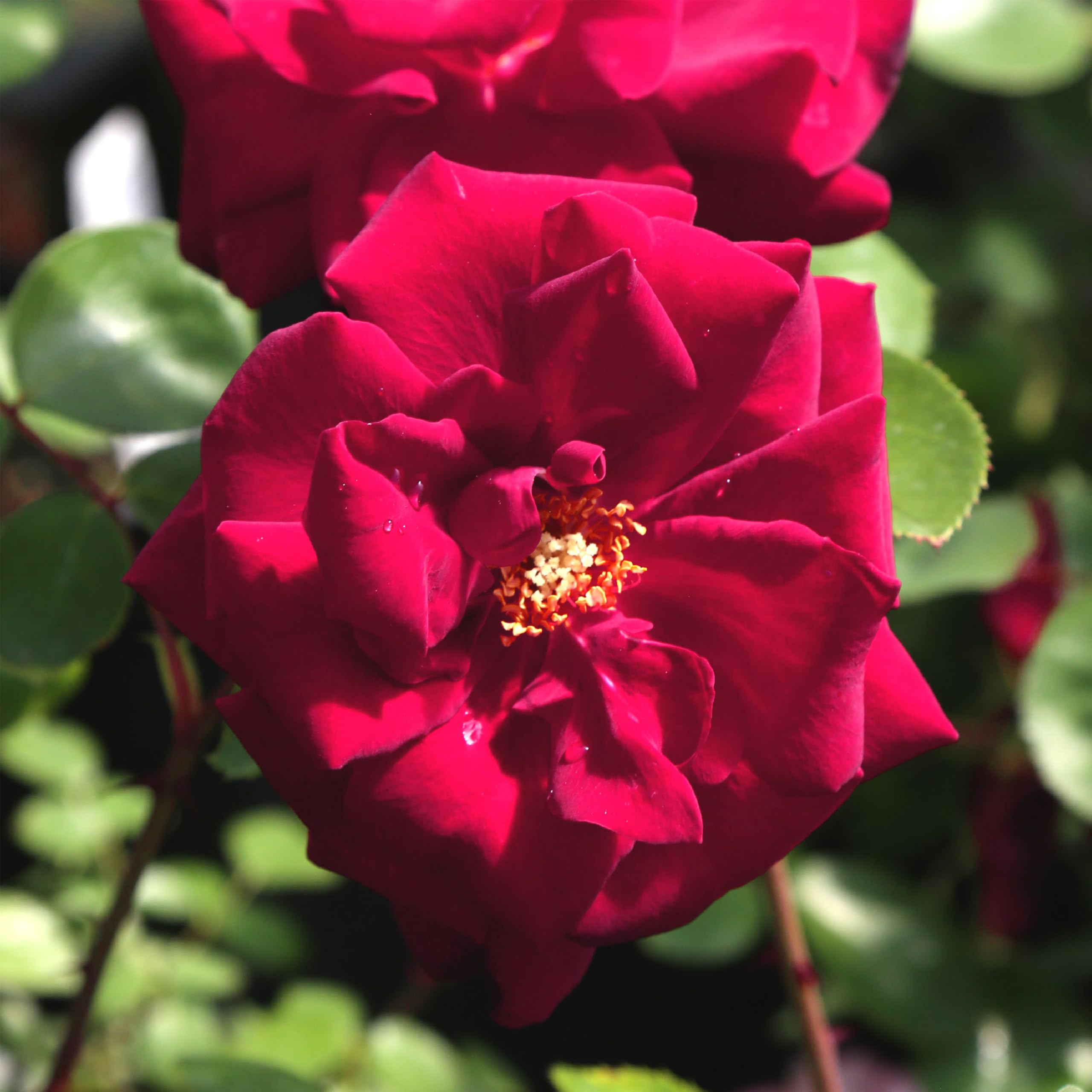
The Heirloom Blaze climber is built for scale — it reaches 10 to 11 feet in height with a 9‑ to 10‑foot spread at maturity, making it a candidate for large arches, fence lines, and garage walls. The own-root construction means the entire plant — every stem and leaf — carries the same genetic profile, so disease resistance is uniform from crown to tip.
One customer documented a fourth-year Blaze that had overtaken its trellis entirely with zero black spot, even though it received only 4 hours of afternoon sun. The continual blooming habit produces large red clusters from spring through fall, and the lightly fragrant flowers attract pollinators without overpowering nearby seating areas.
The plant ships in a 1‑gallon container with rich loam soil, and arrives 12 to 15 inches tall with partial defoliation for transport health. It takes 2 to 3 years to reach full coverage, but owners report that once established, the bloom output outstrips typical grafted climbers like Don Juan or New Dawn in both quantity and disease endurance.
Why it’s great
- Massive mature size for large vertical coverage
- Own-root genetics prevent disease resistance loss from root suckers
- Outperforms classic climbers in bloom volume after year 3
Good to know
- Requires a very strong support structure at full growth
- Some units have struggled to survive the first year in certain microclimates
6. 2 Gallon Peach Drift Rose

The Peach Drift Rose enters the budget-friendly tier without sacrificing the gene-based disease resistance that defines the Drift series. Its compact size — 24 inches wide by 18 inches tall — fits neatly into containers, small beds, or tight landscape borders where space is limited but fungal resistance is non-negotiable.
Customers in southern Texas report that this bush blooms continuously on only 3 hours of direct sun, and that the foliage stays clean even in high humidity. The peach-colored blooms open with a soft yellow undertone and fade gradually, providing weeks of color from a single flush. The plant ships dormant during winter through early spring, which minimizes shipping stress and allows the root system to establish before the active growing season.
The Drift series is bred specifically for disease resistance, and the Peach Drift maintains that reputation. Buyers consistently mention that the plant arrived healthy with damp soil, and that the 8‑pound root ball gave them confidence that the bush would survive transplant shock. For the lowest entry price into a proven resistant line, this is the smart move.
Why it’s great
- Smallest footprint — ideal for containers and tight spaces
- Thrives and blooms in partial sun (3+ hours)
- Lowest price point with no genetic compromise on resistance
Good to know
- Ships dormant — no visible foliage upon arrival
- Mature size may look underwhelming as a standalone specimen
7. Double Pink Knock Out Rose

The Double Pink Knock Out is the variety that made disease resistance mainstream. The Knock Out family is world-renowned for its ability to resist black spot and powdery mildew, and this double-flowered version adds a fuller, more traditional rose shape to that bulletproof genetic base. It grows to a medium bush size of 3 to 5 feet tall with a 3- to 4-foot spread.
Buyers consistently describe arrival condition as perfect — plants come with food included and green growth intact. One verified review noted that the bush doubled in size within a year when planted in a container, responding well to spring fertilizer and maintaining clean foliage all season. The plant thrives in full sun but tolerates partial shade, and it responds well to pruning if you need to keep the shape tidy.
There is one important caveat: a single buyer reported receiving a plant that declined and died despite care. This appears to be a shipping stress outlier rather than a genetic flaw, given the overwhelming volume of 5‑star reviews. For a first-time grower who wants the most forgiving, most researched disease-resistant lineage available, this is the entry point.
Why it’s great
- Double-petal blooms provide a classic rose look
- Knock Out genetics are the most tested disease-resistant line
- Includes plant food and easy care instructions
Good to know
- Occasional shipping stress can cause dieback in a small number of units
- Requires regular watering in well-drained soil to thrive
FAQ
Do disease resistant roses still need fungicide sprays?
How does own-root construction improve disease resistance?
Final Thoughts: The Verdict
For most users, the best disease resistant roses winner is the White Knock Out because it delivers the most trusted resistance genetics in a shrub size that fits both large beds and modest gardens. If you want a climber with own-root security, grab the Heirloom Eden Climber. And for a compact, budget-friendly groundcover that packs the same Drift-series immunity, nothing beats the Peach Drift Rose.

Mo Maruf
I created WellFizz to bridge the gap between vague wellness advice and actionable solutions. My mission is simple: to decode the research and give you practical tools you can actually use.
Beyond the data, I am a passionate traveler. I believe that stepping away from the screen to explore new environments is essential for mental clarity and physical vitality.