Our readers keep the lights on and my smoothie glass nicely filled. As an Amazon Associate, I earn from qualifying purchases.
Choosing the right differential fluid is a quiet decision with loud consequences: the wrong viscosity or missing limited-slip additives can turn a smooth ride into a chattering, worn-out drivetrain. Gear oil is the unsung hero inside your axle housings, responsible for cushioning hypoid gear teeth against shock loads and extreme pressure every time you accelerate, corner, or tow.
I’m Mohammad Maruf — the founder and writer behind WellFizz. I’ve spent countless hours analyzing gear oil formulations, customer field reports, and OEM specification sheets to separate marketing claims from real wear protection.
Whether you drive a daily commuter, a weekend off-roader, or a heavy-duty truck, this guide pinpoints the best differential fluid for your specific setup based on real-world feedback and measurable performance specs.
How To Choose The Best Differential Fluid
Differential fluid is a specialty lubricant engineered to handle extreme pressure, high sliding speeds, and intense heat inside hypoid gear sets. Unlike engine oil, gear oil relies on a different additive chemistry — primarily sulfur-phosphorus extreme pressure (EP) packages — to prevent metal-to-metal contact on gear tooth surfaces. Choosing the wrong fluid accelerates gear pitting, causes limited-slip clutch chatter, and can void your axle warranty.
Viscosity Grade and Your Climate
SAE 75W-90 is the most common grade for modern passenger cars and light trucks. It flows like an SAE 75 weight at cold temperatures for quick gear coverage on startup and thickens to an SAE 90 weight at operating temperature for robust film strength. In hot climates or heavy towing applications, SAE 80W-90 or 85W-140 may be necessary. Always cross-reference with your owner’s manual — deviating from the recommended grade changes gear mesh clearance and can generate excessive heat.
API Service Classification: GL-4 vs GL-5
API GL-5 fluids contain roughly double the extreme pressure additive concentration of GL-4 fluids. While GL-5 is required for hypoid differential gears, using a GL-5 fluid in a manual transmission that calls for GL-4 can corrode yellow metal synchronizers (brass or bronze). For differentials, always look for the GL-5 mark. If your vehicle has a limited-slip differential (LSD), also confirm the fluid contains friction modifiers or is explicitly labeled for LSD use — missing additives cause clutch pack shudder during turns.
Synthetic vs. Conventional Base Oils
Full synthetic gear oils (PAO, ester, or Group III blends) offer better shear stability, higher viscosity index, and longer drain intervals than conventional mineral oils. A premium synthetic can resist thermal breakdown at sustained high temperatures and maintain cold-flow properties below freezing. Conventional gear oil remains adequate for low-stress, infrequent service intervals, but shear degradation happens faster, especially in high-torque applications. If you plan to extend drain intervals beyond 30,000 miles, a synthetic GL-5 is the safer investment.
Quick Comparison
On smaller screens, swipe sideways to see the full table.
| Model | Category | Best For | Key Spec | Amazon |
|---|---|---|---|---|
| Red Line 57905 | Premium Synthetic | LSD and high-stress axles | 75W-90 GL-5, 1 gallon | Amazon |
| Royal Purple 06300 | Premium Synthetic | Max drivetrain efficiency | 75W-90, 6 quart case | Amazon |
| ACDelco 10-4016 | OEM Synthetic | GM models with G80 axle | 75W-90 GL-5, 1 quart | Amazon |
| Triax Synergy Gear Max | Mid-Range Synthetic | Extended drain intervals | 75W-90 GL-5, 1 quart | Amazon |
| Ford XY-80W90-QL | OEM Conventional | Ford/Chrysler budget swaps | 80W-90 GL-5, 1 quart | Amazon |
In‑Depth Reviews
1. Red Line 57905 75W90 GL-5 Synthetic Gear Oil

Red Line 57905 is the reference standard for synthetic gear oil among enthusiasts and mechanics who rebuild high-mileage axles. It uses a full synthetic base stock with built-in friction modifiers that eliminate the need for separate LSD additive bottles — a significant convenience when servicing clutch-type limited-slip differentials on performance cars and older trucks. The 75W-90 GL-5 formulation provides a flash point of 150°C, indicating strong resistance to thermal breakdown under sustained highway or track use. Owners of Subaru and Toyota 4WDs report that switching to this fluid resolved notchiness and limited-slip chatter that persisted with cheaper alternatives.
Red Line explicitly warns against using this oil in most manual transmissions because the extreme slipperiness can cause synchronizer mesh issues — a vital detail that keeps this review focused on differential applications only. For hypoid ring and pinion sets, the high film strength protects gear teeth even under sudden shock loads from off-road crawling or drag launches. The one-gallon size covers most rear differentials with fluid left over for a front axle service on full-time 4WD vehicles. Long-term users consistently report 400,000-mile differential life with no rebuilds, validating the durability of the PAO and ester base chemistry.
Availability can be spotty — the product is frequently out of stock during peak seasons — and the gallon jug lacks a spout or pump fitting, so a separate hand pump or funnel hose is essential to avoid mess. But the performance speaks for itself: quieter gear operation, cooler running temperatures, and zero clutch chatter during tight turns. For any driver who treats differential service as a long-term investment rather than a chore, Red Line 57905 justifies its premium position.
Why it’s great
- Contains LSD friction modifiers ready to use — no separate additive needed for clutch-type limited-slip differentials
- Exceptional film strength with flash point of 150°C resists thermal breakdown during heavy towing or track sessions
- Gallon size provides excellent per-quart value for multi-axle service
Good to know
- Not suitable for manual transmissions — can cause synchronizer mesh issues due to extreme slipperiness
- Frequently goes out of stock; worth ordering ahead of scheduled service
- Gallon jug requires a separate pump or funnel for clean filling
2. Royal Purple 06300 75W90 Max Gear Oil

Royal Purple 06300 leverages the company’s proprietary Synerlec additive technology to reduce parasitic drag inside the differential, which translates to measurable temperature drops and improved fuel efficiency in real-world driving. The case contains six quarts — exactly the right volume for most heavy-duty rear axles and many front differentials on ¾-ton and 1-ton trucks. Customer reports from Chevy Silverado 2500HD owners confirm that swapping from conventional 80W-90 to this 75W-90 synthetic dropped operating temperatures by roughly 20°F on long highway grades, a meaningful improvement for towing reliability.
The formulation includes a friction modifier additive, so no additional bottle of LSD additive is required for clutch-type limited-slip differentials. Royal Purple explicitly recommends this fluid for hypoid gears in passenger cars, light trucks, and racing applications. The copper, brass, and yellow metal compatibility is documented, meaning it is safer for transmissions that share fluid with the differential — though always verify your specific application. Users praise the quieter gear operation after changeover, especially on older trucks with worn ring-and-pinion sets where gear whine was previously pronounced.
The 6-quart case avoids per-bottle markup, but the individual quart bottles lack squeeze necks or spout caps, making controlled pouring into tight differential fill holes a challenge without a pump. Some buyers also note that the retail packaging can arrive with minor bottle scuffing during shipping, though the sealed caps prevent contamination. For heavy-truck owners looking to reduce driveline temperatures and improve power transfer efficiency, Royal Purple 06300 delivers measurable returns that justify the investment.
Why it’s great
- Synerlec additive reduces internal friction, lowering differential operating temperatures during towing
- Six-quart case covers large axles and front/rear combos on HD trucks without buying separate bottles
- Yellow metal compatible — safer for applications with bronze synchronizers in shared sump designs
Good to know
- Square quart bottles require a hand pump or funnel adapter — difficult to pour directly into tight fill holes
- Bottles can arrive with minor scuffing from shipping, though seals remain intact
- Premium price per quart compared to mid-range synthetic alternatives
3. ACDelco GM Original Equipment 10-4016

ACDelco 10-4016 is the factory-fill synthetic axle lubricant for millions of General Motors vehicles, including models equipped with the G80 automatic locking rear differential. This is the fluid that GM engineers designed around during validation testing, so compatibility with the G80’s locking mechanism is guaranteed — an important detail because aftermarket fluids lacking the correct friction profile can cause erratic lockup behavior. The 75W-90 GL-5 formulation meets API GL-5 for severe hypoid gear service and retains fluidity at cold temperatures while maintaining film strength under sustained high-speed operation.
A unique feature that divides opinion is the grape scent added to mask the typical offensive gear oil odor. For DIY mechanics working in a garage, this makes the job significantly more pleasant — no lingering sulfur smell on hands and clothing. The quart bottle has a convenient spout design that allows controlled pouring into differential fill holes without a pump, though the fill rate is slow due to the narrow opening. Owners of GM cars, SUVs, and trucks from the 2000s through current models consistently confirm that this fluid eliminates limited-slip shudder and keeps G80 axles locking smoothly.
The main drawback is the price per quart, which is significantly higher than equivalent aftermarket synthetics like Triax or Mobil 1. For non-GM vehicles, there is no performance advantage that justifies the premium over a universal GL-5 synthetic. However, peace of mind for warranty-sensitive buyers and owners of G80-equipped trucks is a valid reason to stick with the OEM fluid. A customer who used this on a 1999 GMC Yukon with a G80 axle explicitly stated he knew this fluid works and was not willing to gamble with alternatives — that is the core value proposition of OEM fluids.
Why it’s great
- Factory fill for GM G80 locking differentials; eliminates uncertainty about friction modifier compatibility
- Grape scent makes differential service more tolerable by masking harsh gear oil odor
- Maintains cold-weather fluidity while delivering robust film strength at sustained highway temperatures
Good to know
- Premium price per quart compared to aftermarket synthetic alternatives with similar specs
- Narrow spout design makes filling slow despite good control
- Unnecessary premium for non-GM vehicles where OEM spec is not required
4. Triax Synergy Gear Max 75W-90 GL-5
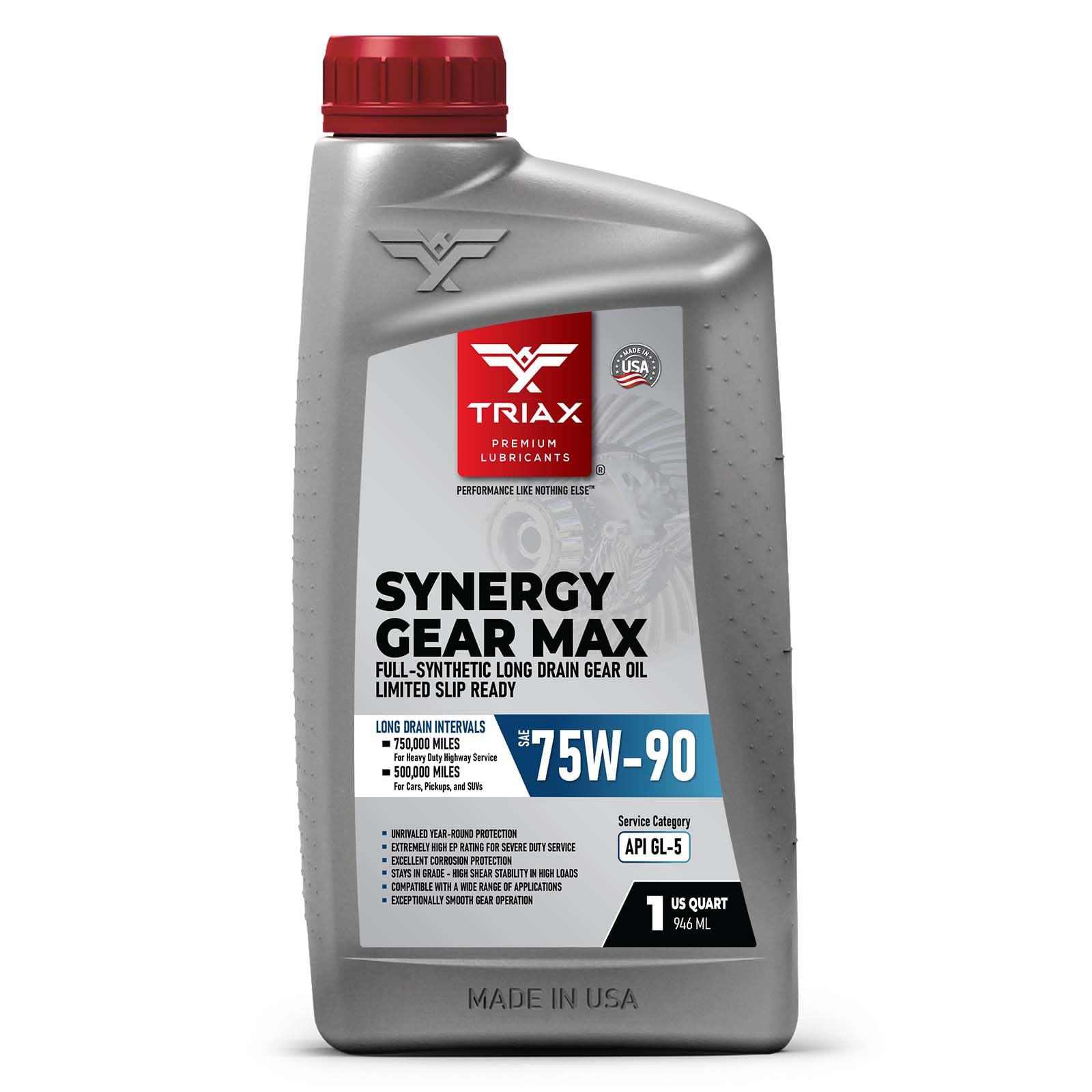
Triax Synergy Gear Max makes a bold claim that few gear oils can back up: a PAO and ester formulation rated for up to 500,000 miles of service in passenger cars and heavy-duty trucks, and 750,000 miles in Class 8 highway trucks. Independent laboratory testing shows this fluid provides up to 62% less wear than OEM specifications across multiple wear standards, and it exceeds the highest Stage 14 load test rating for extreme pressure capability — a metric that most major brand gear oils do not reach. For drivers who plan to own their vehicle for the long haul, this effectively becomes a lifetime fill if the axle seal remains intact.
The 75W-90 GL-5 formulation works in both limited-slip and open differentials without additional additives, covering hypoid gears, ring and pinion sets, and even manual transmissions that call for a GL-5 fluid. Owners of Toyota Tundras, Tacomas, and 4Runners report quiet, smooth operation after switching from OEM conventional fluid, with some noting improved cold-weather shift quality when used in transfer cases. The bottle design features a slightly tapered spout, but several users found the cap design frustrating — it does not fit standard hand pump threads, requiring the cap to be cut off for pump use.
The mid-range price per quart undercuts premium brands like Red Line and Royal Purple while offering a drain interval claim that exceeds both. For fleet operators or high-mileage commuters who want to minimize maintenance frequency, Triax delivers engineering data that supports its longevity claims. The shear stability is remarkable — the fluid is described as almost shearless, meaning its viscosity grade will not drop over mileage. The main compromises are the bottle cap design and the fact that brand recognition is lower than the established players, which may give some buyers hesitation despite the strong test results.
Why it’s great
- Claims up to 500,000-mile drain intervals for passenger trucks — effectively a lifetime fill for most owners
- Exceeds Stage 14 load test rating for extreme pressure protection, outperforming many major brand fluids
- Up to 62% less wear than OEM specifications across various standard tests
Good to know
- Bottle cap design does not accept standard hand pump threads — must cut the cap off for pump use
- Lower brand recognition compared to Red Line, Royal Purple, or OEM fluids
- Availability can be limited at local auto parts stores
5. Ford Genuine Fluid XY-80W90-QL
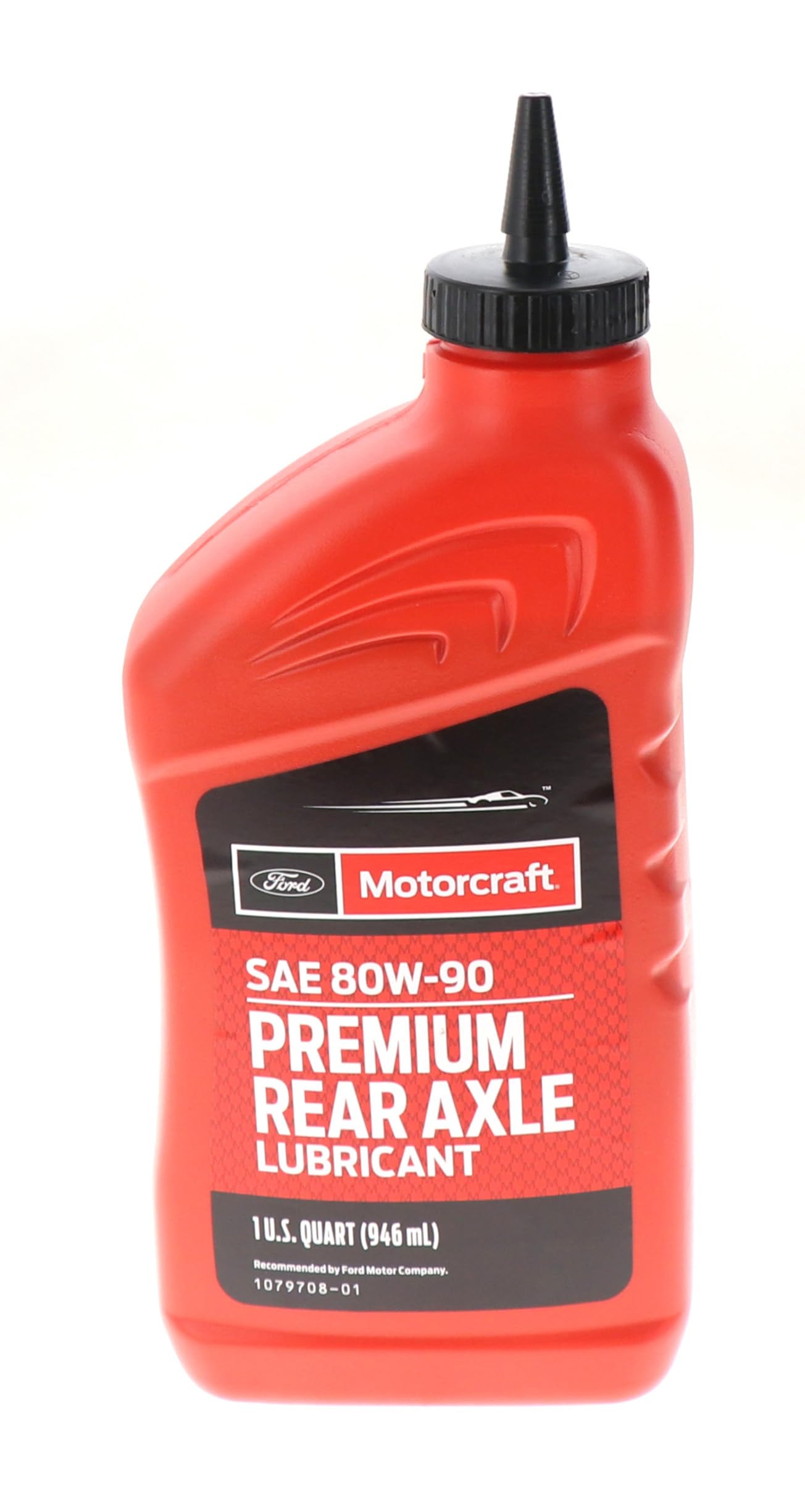
Ford XY-80W90-QL is a conventional mineral-based 80W-90 GL-5 gear oil that meets Ford’s factory warranty requirements for rear axles on F-Series trucks, Rangers, and other Ford platforms from the 1990s through the mid-2010s. The viscosity is thicker at cold temperatures than the 75W-90 synthetics, which means slower gear coverage on frigid winter mornings, but the film strength at operating temperature is appropriate for moderate-duty use. This fluid does not contain any limited-slip friction modifier additives, so owners of Ford Traction-Lok differentials must purchase a separate friction modifier bottle for proper LSD function.
A key consideration for budget-conscious buyers: the conventional base oil shears down faster than synthetic alternatives, so drain intervals should not exceed 30,000 to 50,000 miles under normal driving. For light-duty vehicles that see infrequent differential service and minimal towing, this limitation is acceptable and the low entry cost makes it an easy choice. Customer reviews from 95 Ranger and 2014 F-150 owners confirm that the fluid works as expected when matched to the correct application, with one user specifically noting that he preferred conventional for his front differential because it sees infrequent use compared to the rear.
The smell is strong — multiple reviews note the pungent gear oil odor, so gloves and ventilation are recommended during service. The bottle design is straightforward with a standard thread pattern that fits most hand pumps. For Ford owners who prioritize OEM authenticity without spending on synthetic upgrades, this fluid eliminates guesswork. But for any application involving limited-slip differentials, heavy towing, extended drain intervals, or cold-climate operation, a 75W-90 synthetic is the more capable choice.
Why it’s great
- Genuine Ford Motorcraft fluid — eliminates compatibility concerns for warranty-covered Ford axles
- Very low entry cost per quart for budget-oriented differential service
- Standard bottle threads fit most gear oil hand pumps without modification
Good to know
- Does not contain LSD additives — requires separate friction modifier purchase for Traction-Lok axles
- Conventional base oil shears faster than synthetics; recommended for shorter drain intervals
- Heavy gear oil odor; gloves and ventilation necessary during service
FAQ
Can I use 75W-90 gear oil instead of 80W-90 in my differential?
Does my limited-slip differential need special fluid with friction modifier?
How often should I change differential fluid?
Final Thoughts: The Verdict
For most users, the best differential fluid winner is the Red Line 57905 because it combines built-in LSD friction modifiers, exceptional shear stability, and proven long-term results across Subaru, Toyota, and domestic truck platforms. If you want cooler operating temperatures and measurable drivetrain efficiency for heavy towing, grab the Royal Purple 06300. And for a budget-friendly OEM match that eliminates compatibility guesswork, nothing beats the Ford XY-80W90-QL for Ford rear axles under moderate duty cycles.

Mo Maruf
I created WellFizz to bridge the gap between vague wellness advice and actionable solutions. My mission is simple: to decode the research and give you practical tools you can actually use.
Beyond the data, I am a passionate traveler. I believe that stepping away from the screen to explore new environments is essential for mental clarity and physical vitality.