Our readers keep the lights on and my smoothie glass nicely filled. As an Amazon Associate, I earn from qualifying purchases.
A direct vent propane heater is the closest you get to a central gas furnace without the ductwork: a sealed combustion loop that pulls air from outside, burns it cleanly, and vents exhaust back out the same wall penetration. Unlike vent-free models, there is zero indoor combustion gas recirculation, so there is no lingering odor, no moisture dump into the room, and no need to crack a window. For a cabin, garage, or any room that demands real heat without compromising indoor air quality, this is the category that delivers.
I’m Mohammad Maruf — the founder and writer behind WellFizz. I spent hundreds of hours analyzing BTU output, ignition reliability, vent kit compatibility, and real-world customer durability data across the direct vent propane heater market to build this guide.
After comparing eleven models — from compact wall-mounted units to high-BTU shop heaters — I identified the specific build quality, ignition hardware, and coverage specs that separate a solid investment from a frustration waiting to happen. This is the complete guide to choosing the best direct vent propane heater for your specific space and installation scenario.
How To Choose The Best Direct Vent Propane Heater
Choosing a direct vent propane heater is less about brand hype and more about matching three variables: the physical BTU output needed to heat your space, the ignition system’s reliability in cold weather, and the actual vent components included with the unit. A cheap unit with a flimsy bracket and a piezo igniter that fails in two seasons is no bargain, while a premium modulating model can pay for itself in fuel efficiency over a single winter.
BTU Output and Room Size: The 20-BTU Rule
The industry benchmark for a moderately insulated space is roughly 20 BTUs per square foot of floor area. A 300-square-foot cabin needs at least 6,000 BTUs on paper, but real-world factors — ceiling height, window glazing, and local climate — push the safe zone higher. A 17,000-BTU heater covers about 570 square feet. Going too low leaves the unit running constantly; going too high creates short cycling that wears out components faster.
Ignition Type — Battery Spark vs. Piezo vs. Electronic
Battery-powered spark ignition (usually requiring a standard AA battery) is the most dependable option for off-grid or power-outage scenarios because it does not rely on a house circuit. Piezo igniters are simpler and cheaper but are the most common failure point across customer reports — many units see piezo failure within 12-18 months. Electronic ignition with a self-diagnostic module, found on premium forced-air units, is the most reliable but also the most expensive. If the heater is your primary heat source, prioritize battery spark or electronic over piezo.
Vent Kit and Wall Thickness Compatibility
The included vent kit must match your wall construction. Standard kits accommodate 4.5-inch to 10-inch thick walls. If your wall is thicker (common in log cabins or double-stud construction), you will need additional vent pipe — and some premium units from Rinnai require ordering a separate long vent kit. Also check whether the vent pipe is double-walled stainless steel (corrosion-resistant) versus a lower-grade alternative.
Control Type: Manual Thermostat or Modulating
Entry-level heaters use a simple manual control knob with an internal thermostat that cycles the burner on and off. Mid-range and premium models offer modulating control, which ramps the flame up or down in small increments to hold a precise temperature without cycling. Modulating heaters are significantly more comfortable and fuel-efficient, but they cost more upfront.
Quick Comparison
On smaller screens, swipe sideways to see the full table.
| Model | Category | Best For | Key Spec | Amazon |
|---|---|---|---|---|
| Modine Hot Dawg HD45AS01-21 | Forced Air | Garages and Shops | 45,000 BTU / 1,500 sq ft | Amazon |
| Rinnai EX22DTP | Modulating Wall | Primary Room Heat | 20,700 BTU / 1,600 sq ft | Amazon |
| Rinnai EX38DTWP | Modulating Large | Open Floor Plans | 36,500 BTU / 1,600 sq ft | Amazon |
| Mr. Heater Big Maxx MHU80NG | Forced Air | Large Shops | 80,000 BTU / 1,000 sq ft | Amazon |
| Ashley Hearth DVAG17L | Radiant Wall | Medium Rooms | 17,000 BTU / 570 sq ft | Amazon |
| Comfort Glow 17K BTU | Convection Wall | Silent Bedroom Use | 17,000 BTU / 570 sq ft | Amazon |
| Ashley Hearth DVAG11L | Radiant Wall | Small Cabins | 11,000 BTU / 375 sq ft | Amazon |
| Rheem RTG-70DVLN-3 | Tankless Water Heater | Whole-Home Hot Water | 160,000 BTU / 7 GPM | Amazon |
| A.O. Smith ATI-310CX3 | Tankless Water Heater | Hard Water Homes | 190,000 BTU / 8 GPM | Amazon |
| Rinnai RX130iN | Tankless Water Heater | Compact High Efficiency | 130,000 BTU / 7.1 GPM | Amazon |
| Rinnai RX180iN | Tankless Water Heater | Large Family Homes | 180,000 BTU / 10 GPM | Amazon |
In‑Depth Reviews
1. Modine Hot Dawg HD45AS01-21
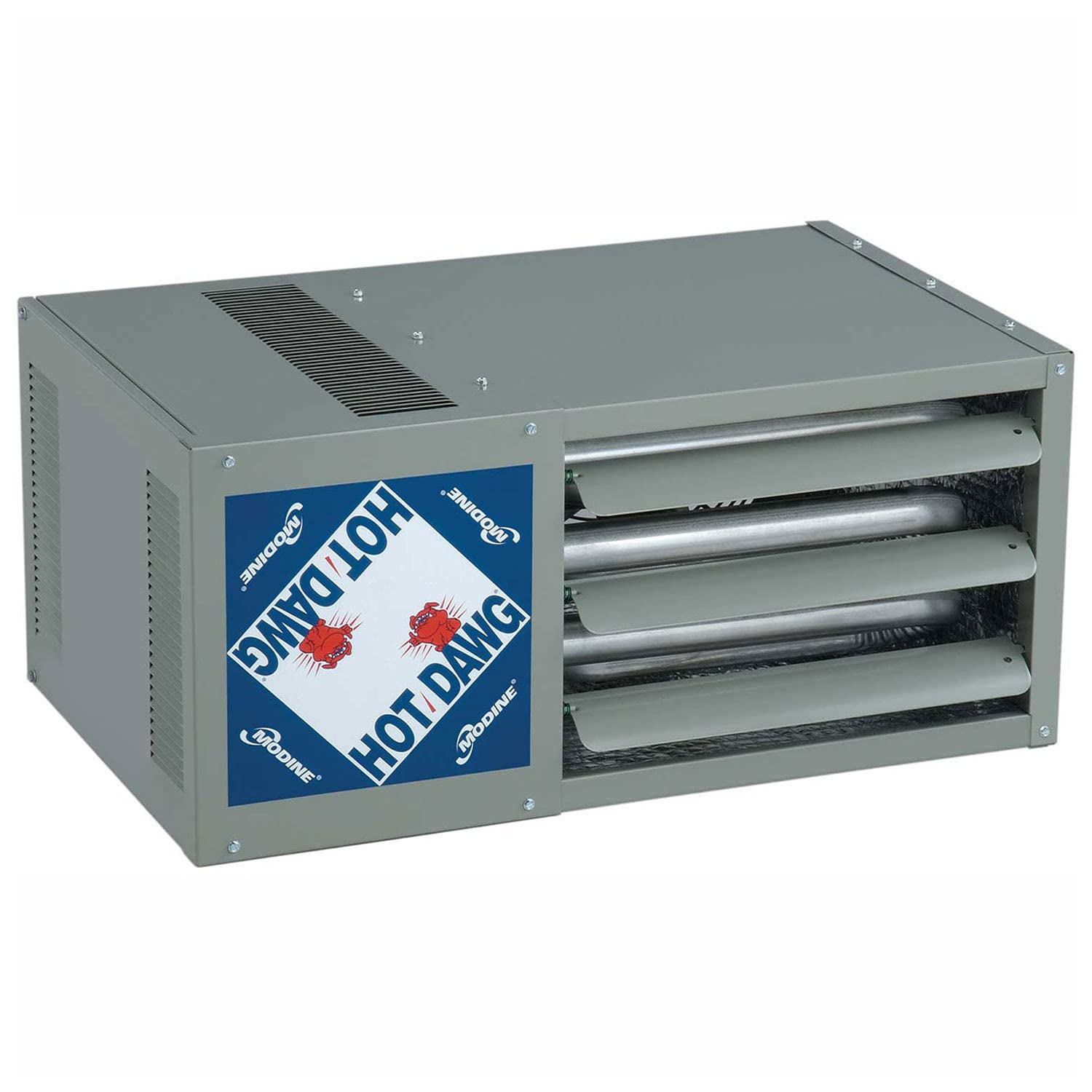
The Modine Hot Dawg HD45AS01-21 is a forced-air direct vent heater built for the shop or garage owner who demands reliable, fast heat without the finicky pilot assemblies common on budget radiant units. Rated at 45,000 BTU and covering up to 1,500 square feet, this unit uses a spark ignition with a self-diagnostic control module that eliminates the annual pilot cleaning ritual. Customers consistently report that it takes an uninsulated shop from freezing to comfortable working temperature within minutes, even when outside temps hover in the low 30s Fahrenheit. The 60-pound steel cabinet is robust enough that one buyer noted the unit survived shipping damage that would have totaled a lesser heater.
The forced-air design moves heat across the entire space rather than radiating from one spot, making it ideal for garages with high ceilings or open layouts where a wall-mounted radiant heater would leave cold corners. The included natural gas to propane conversion kit means you are not locked into one fuel source, and the 2.3-amp fan motor is quiet enough that it does not interfere with conversation or music in the shop.
Installation requires ceiling mounting and professional gas line work — this is not a weekend DIY project for a novice. The heater ships with angle brackets for ceiling mount, but you will need to supply the gas line and electrical connection for the fan. Once installed, owners report negligible fuel consumption when maintaining a 40°F setback temperature overnight, saving significant propane compared to older non-modulating units.
Why it’s great
- Self-diagnostic spark ignition eliminates pilot maintenance
- Converts between natural gas and propane with included kit
- Heats large, uninsulated spaces rapidly
Good to know
- Requires professional installation for gas and electrical
- Shipping packaging can be insufficient — inspect on arrival
- Fan requires electricity, so not suitable for total off-grid use
2. Rinnai EX22DTP Direct Vent Wall Furnace

The Rinnai EX22DTP represents a significant step up in engineering precision compared to standard on-off wall heaters. Its modulating burner adjusts the flame in tiny increments to hold a set temperature within a degree or two, eliminating the hot-and-cold cycling that makes manual-valve heaters feel drafty. Rated at 20,700 BTU with coverage up to 1,600 square feet, this unit is powerful enough for a living room, master bedroom, or open-concept cabin space. The forced-air fan circulates warmth evenly, and the cool-to-the-touch cabinet surface is a meaningful safety advantage for homes with children.
The self-diagnostic electronics and programmable thermostat allow two independent time/temperature schedules — for example, holding 55°F overnight and ramping to 68°F in the morning — which reduces propane consumption compared to running a fixed temperature around the clock. The unit also integrates with optional Wi-Fi control for remote scheduling via a smartphone.
The major caveat is the vent kit situation: the EX22DTP ships with the shortest vent option, which only fits walls up to a specific thin-wall standard. If your wall is thicker than roughly 6 inches, you must purchase a separate extended vent kit, adding cost and complexity. One customer also noted that a damaged part arrived, though Rinnai support resolved the issue. For buyers who want precise temperature control and a durable, repairable furnace, the EX22DTP is the premium choice.
Why it’s great
- Modulating burner maintains temperature without cycling
- Programmable dual-schedule thermostat for fuel savings
- Cool-to-the-touch cabinet improves safety
Good to know
- Requires separate long vent kit for thick walls
- Professional installation strongly recommended
- Premium price point reflects the modulating technology
3. Rinnai EX38DTWP Direct Vent Wall Furnace
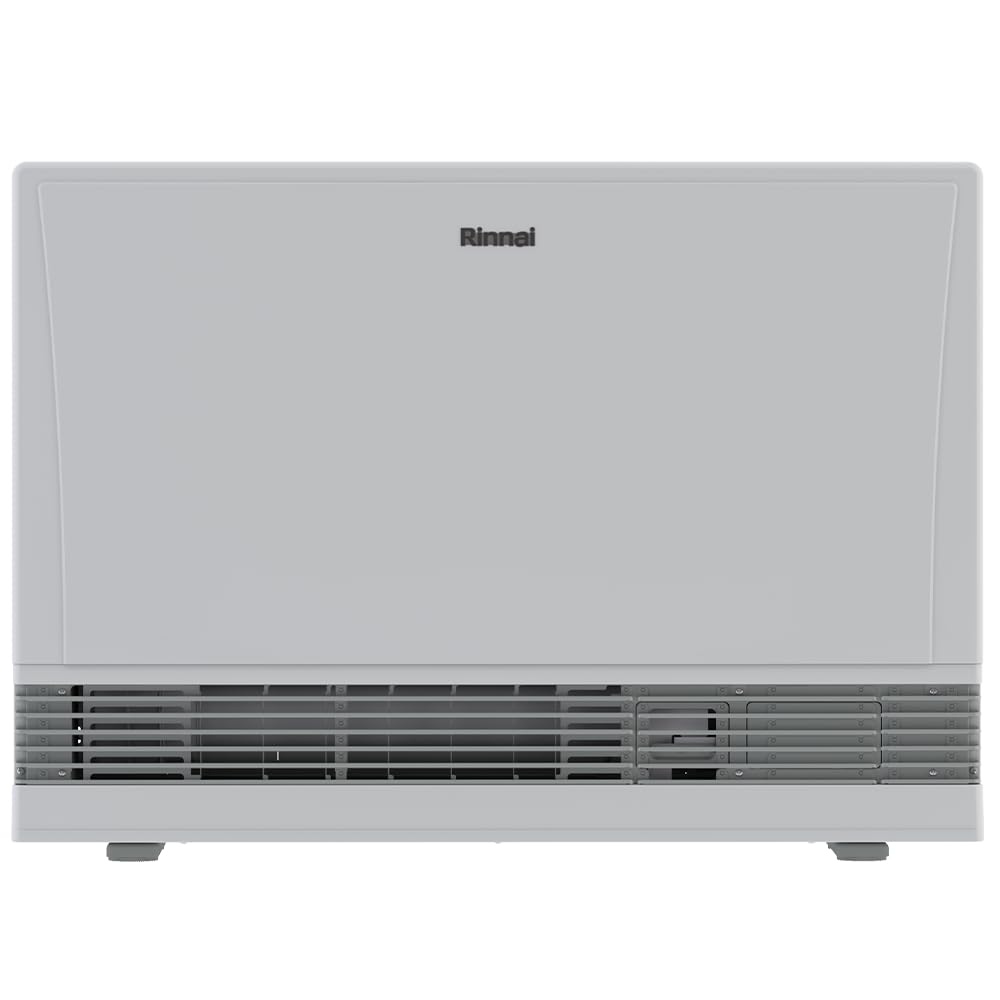
The Rinnai EX38DTWP is the largest modulating direct vent wall furnace in this roundup, delivering 36,500 BTU to cover spaces up to 1,600 square feet — an output that overlaps with smaller forced-air shop heaters but with the refined control of a modulating gas valve. At 108 pounds, this unit is a heavy piece of equipment that signals robust heat exchanger and cabinet construction. Like its smaller sibling, it uses self-diagnostic electronics and a programmable thermostat with dual schedules, but its higher output makes it suitable for open-floor-plan homes or large additions where a standard wall heater would struggle.
Customer reports highlight the variable-output advantage: one owner replaced an old Monitor GF500 and noted that the EX38DTWP was noticeably quieter and distributed heat more evenly across a 450-square-foot open room. The ability to integrate with a NEST thermostat adds remote scheduling flexibility that manual-knob heaters simply cannot match. The 0.98-amp fan motor is efficient and does not create audible hum.
The primary concern here is a documented quality control issue: at least one unit arrived with a recalled component, and the replacement part installation was described as extremely complicated due to the dense wiring. Rinnai did not offer a return for the non-defective unit, leaving the owner to manage the repair themselves. For buyers willing to accept this risk in exchange for premium modulation and output, the EX38DTWP is compelling, but verify the unit’s production date and component revisions upon delivery.
Why it’s great
- 36,500 BTU output handles large open spaces
- Modulating valve eliminates temperature swings
- Compatible with NEST thermostat for remote control
Good to know
- 108-pound weight makes wall mounting a two-person job
- Potential for recalled parts — inspect immediately
- Professional installation mandatory
4. Mr. Heater Big Maxx MHU80NG
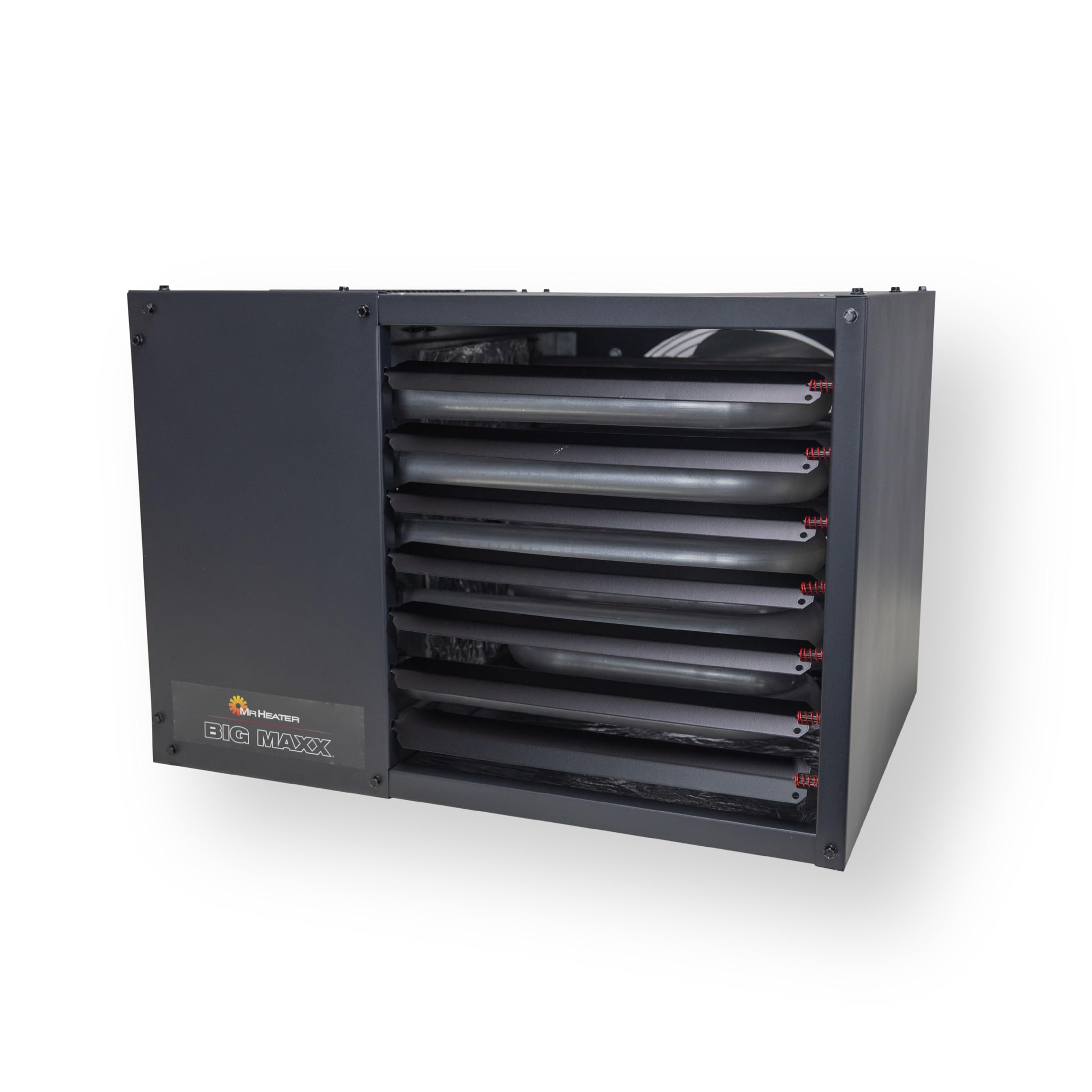
The Mr. Heater Big Maxx MHU80NG is a forced-air unit heater that brings 80,000 BTU — more than double the output of the Modine Hot Dawg — to cover up to 1,000 square feet of shop space. The headline feature is the spark ignition system that lights the main burner directly rather than maintaining a standing pilot, which eliminates the annual pilot cleaning and relighting hassle that plagues many direct vent radiant heaters. Customers with 24×36 insulated shops and 12-foot ceilings report maintaining 40°F with minimal fuel usage, and warming the space to 60°F in about 15 minutes through a Wi-Fi thermostat.
The included natural gas to propane conversion kit is a significant value-add, saving a separate purchase. The self-diagnostic control module provides error codes that help troubleshoot without calling a technician. The unit is designed for ceiling mount, and the 2.3-amp fan moves air effectively across the entire space. Several customers with propane company experience specifically recommended this model as a durable, repairable alternative to more expensive commercial units.
The biggest recurring complaint is damage from shipping — multiple customers reported dented panels or loose components due to inadequate packaging during transit. While the robust construction means most units remain repairable, it is a hassle to deal with upon arrival. Also note that this is a natural gas model that converts to propane, not a dedicated propane unit, so ensure the conversion is performed correctly before connecting to a propane supply.
Why it’s great
- 80,000 BTU heats large shops aggressively
- Spark ignition with self-diagnostic module
- Includes natural gas to propane conversion kit
Good to know
- Insufficient packaging leads to shipping damage
- Ceiling mount requires two people for safety
- Fan requires electrical connection
5. Ashley Hearth DVAG17L Liquid Propane Direct-Vent Wall Heater
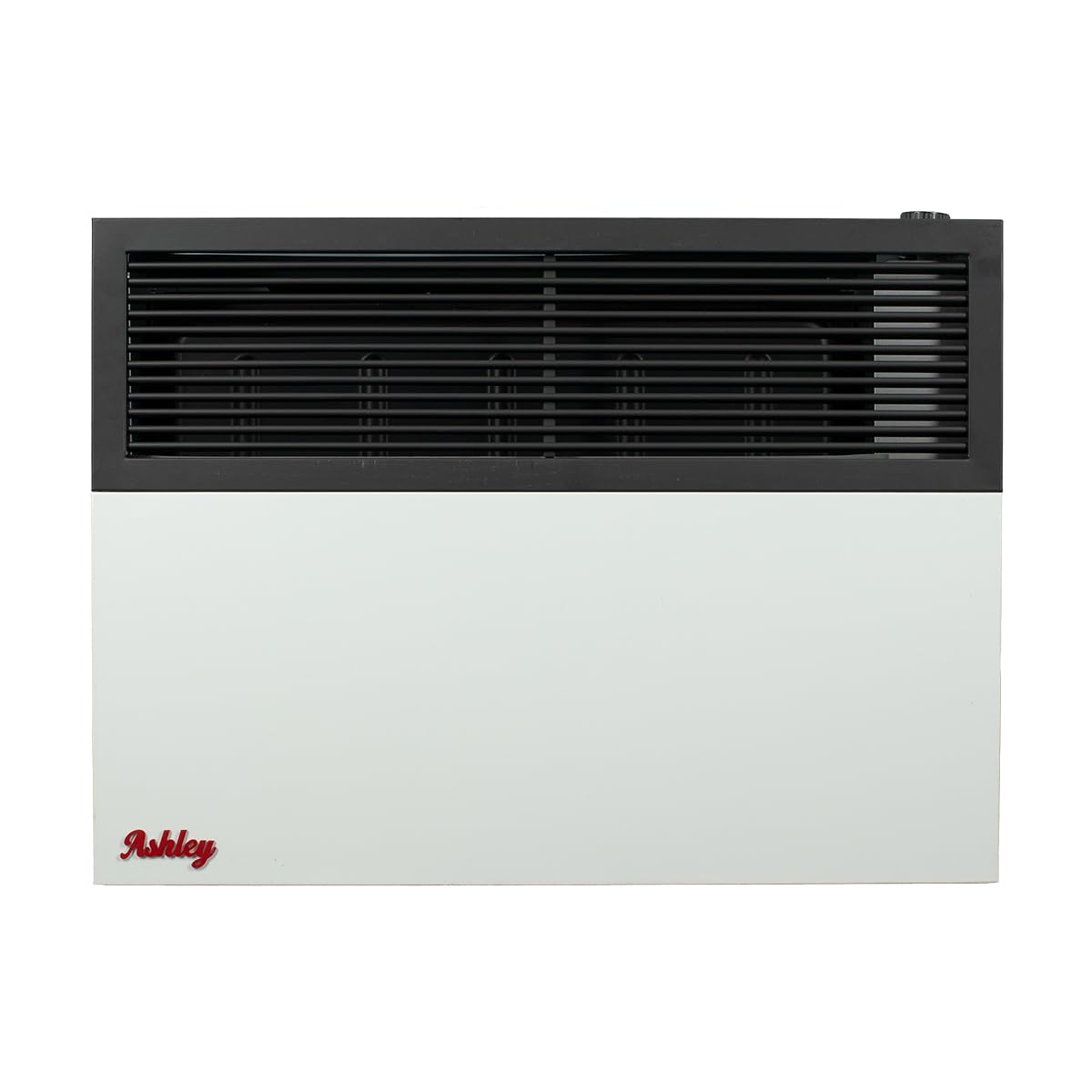
The Ashley Hearth DVAG17L is the 17,000-BTU sibling in Ashley’s direct vent lineup, designed to heat up to 570 square feet using radiant heat rather than forced air. The sealed burn system draws combustion air from outside and vents exhaust directly through the wall, making it suitable for bedrooms, mobile homes, and cabins where indoor air quality is a priority. It operates without electricity — ignition is via a battery-powered spark system using a standard AA battery — which makes it a reliable heat source during power outages.
The included vent kit is comprehensive: heat shield, vent pipe, air intake pipe, flashing, cap, and connecting rod are all in the box. The top-mounted control knob allows manual flame adjustment, and once the pilot is lit, the internal thermostat modulates the burner on and off to maintain the set temperature. The cream-colored cabinet (sometimes listed as white) is 58 pounds of steel that feels substantial for a wall-mounted unit.
The DVAG17L shares the same fundamental weakness as the DVAG11L: the piezo igniter and pilot assembly have a high failure rate. Multiple customers report the piezo failing within 12-18 months, and replacement parts from Ashley Hearth/US Stove are frequently backordered. The initial burn-off smell is also notably strong — do a first firing outdoors. If you are handy and can accept the ignition risk, the DVAG17L is a solid mid-range heater. If you want a set-and-forget solution, look at the Rinnai modulating models.
Why it’s great
- Runs without electricity – ideal for off-grid
- Complete vent kit included for standard walls
- Approved for mobile homes (USA only)
Good to know
- Piezo igniter prone to failure within two years
- Strong initial burn-off smell – fire outdoors first
- Customer support response can be slow
6. Comfort Glow 17,000 BTU Direct Vent Natural Gas Wall Heater
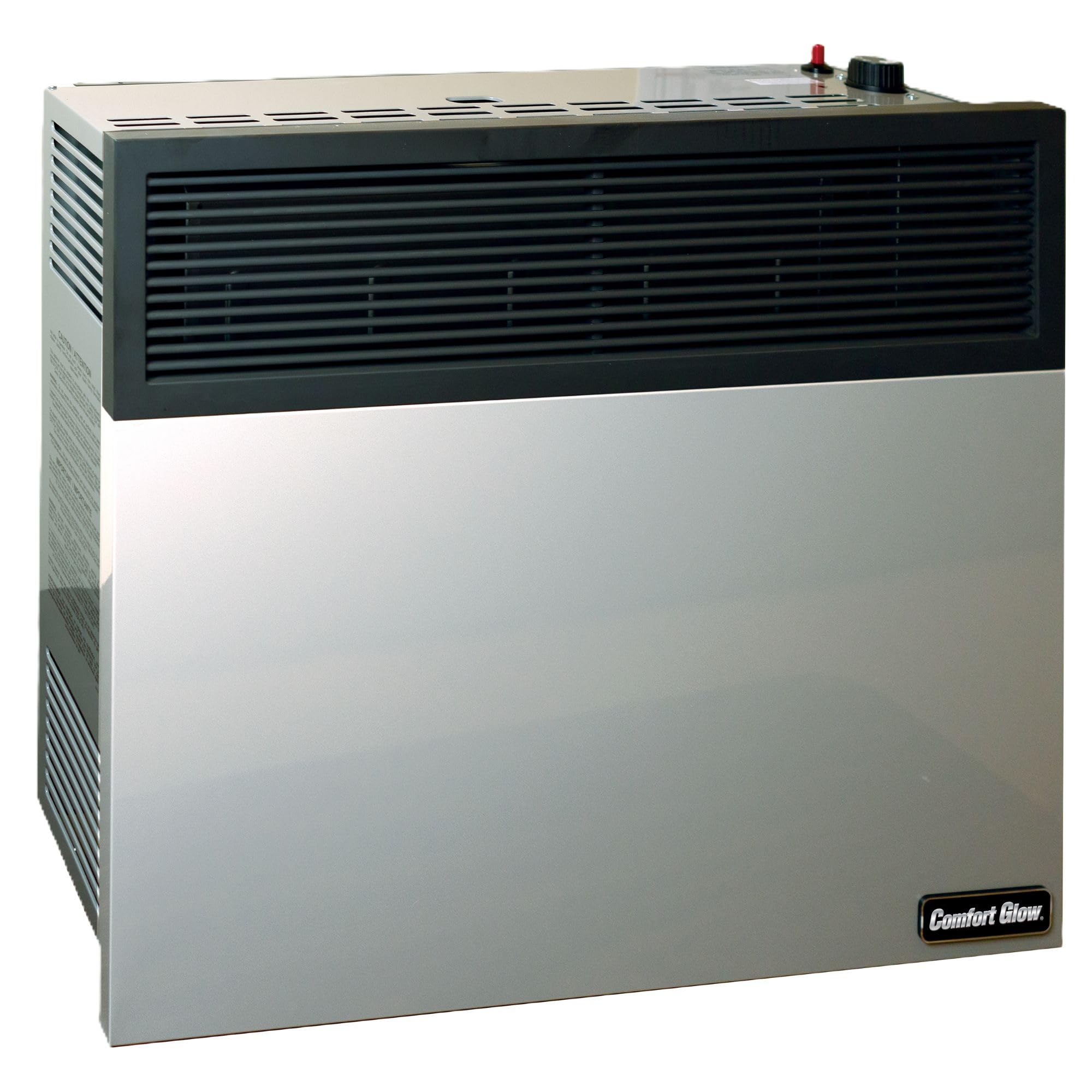
The Comfort Glow 17,000 BTU Direct Vent Wall Heater is a convection-style unit that produces heat silently — no fan noise, no burner roar — making it a strong candidate for bedrooms or home offices where audible distraction matters. The sealed burn system with electronic ignition and a safety pilot shuts off gas flow if the pilot is extinguished, adding a layer of safety for overnight use. It is one of the few direct vent heaters in this price range approved for bedrooms, bathrooms, and HUD housing facilities in both the US and Canada.
The 430 stainless steel burner is corrosion-resistant and runs without the expansion thumping noise reported on some Ashley Hearth units. The vent kit is included and fits walls from 4.5 to 10 inches thick. The gray/black cabinet is 43 pounds and measures 27.3 inches wide by 20 inches tall — wider than the Ashley Hearth but the same depth, so it protrudes only 6.5 inches from the wall.
The biggest frustration among owners is the packaging — the unit arrives in a box that offers minimal protection, and some customers received dented cabinets. Additionally, the electronic ignition does not work during a power outage, so if your home loses electricity, you lose heat even if you have propane in the tank. This is a tradeoff: the electronic ignition is more reliable than a piezo sparker, but it is grid-dependent. For permanent installation in a home with reliable power, the Comfort Glow offers good value.
Why it’s great
- Silent convection heat – no fan noise
- Approved for bedrooms, bathrooms, and mobile homes
- Stainless steel burner resists corrosion
Good to know
- Electronic ignition requires house power
- Packaging often results in cosmetic damage
- Vent pipe must be left long to avoid pilot blowouts
7. Ashley Hearth DVAG11L Liquid Propane Direct-Vent Wall Heater
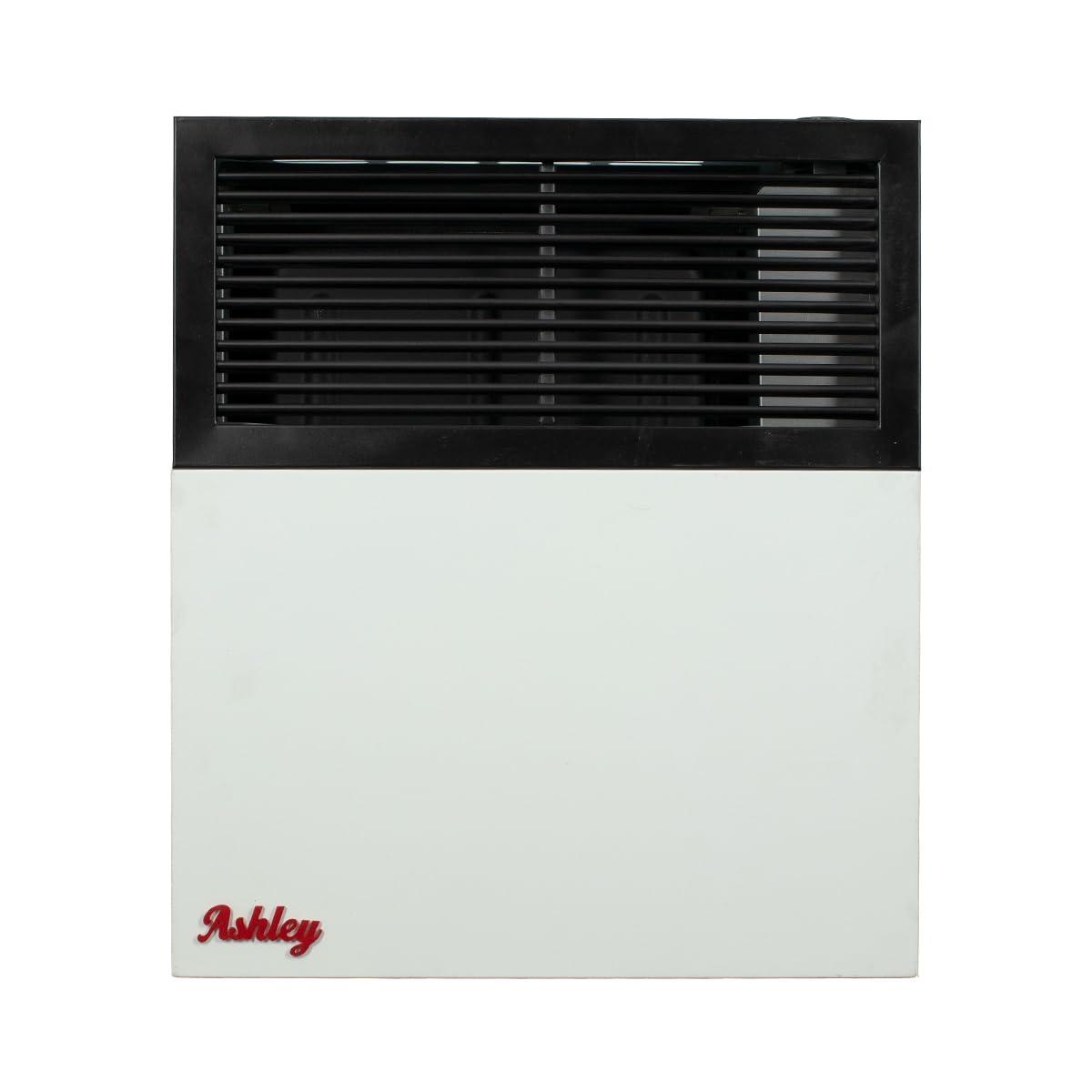
The Ashley Hearth DVAG11L is the smallest entry in Ashley’s direct vent propane heater lineup at 11,000 BTU, covering up to 375 square feet. It is a radiant heater that uses a sealed burn system and operates completely without electricity — the battery-powered manual ignition uses a standard AA battery, and the internal thermostat controls gas flow once the pilot is lit. This makes it a natural fit for small cabins, gardening sheds, or as a backup heat source in a power outage scenario where a 100-pound propane tank can provide extended runtime.
The included vent kit is identical in scope to the DVAG17L, with heat shield, vent pipes, flashing, and cap all present. The white steel cabinet is a compact 17.36 inches wide by 20 inches tall, making it one of the smallest direct vent propane heaters on the market. The top-mounted control knob provides simple adjustment, and the optional blower accessory (sold separately) can improve heat circulation if you have electricity available.
Customer feedback mirrors the larger DVAG17L: the piezo igniter is the weak point, with multiple owners reporting failure within the first year. The pilot assembly is also subject to failure from a poorly swedged base plate. Installation requires above-average mechanical skill — gas fittings arrived finger-tight on some units, indicating quality control gaps. The overall heat output is well-regarded when the unit is running, but the reliability concerns make this a cautious recommendation for buyers who are not comfortable replacing an igniter themselves.
Why it’s great
- Smallest footprint – ideal for tight spaces
- Battery ignition works without grid power
- Complete vent kit included
Good to know
- Piezo igniter fails frequently
- Pilot assembly quality control issues
- Not for beginners – installation requires mechanical skill
8. Rheem RTG-70DVLN-3 Tankless Natural Gas Water Heater
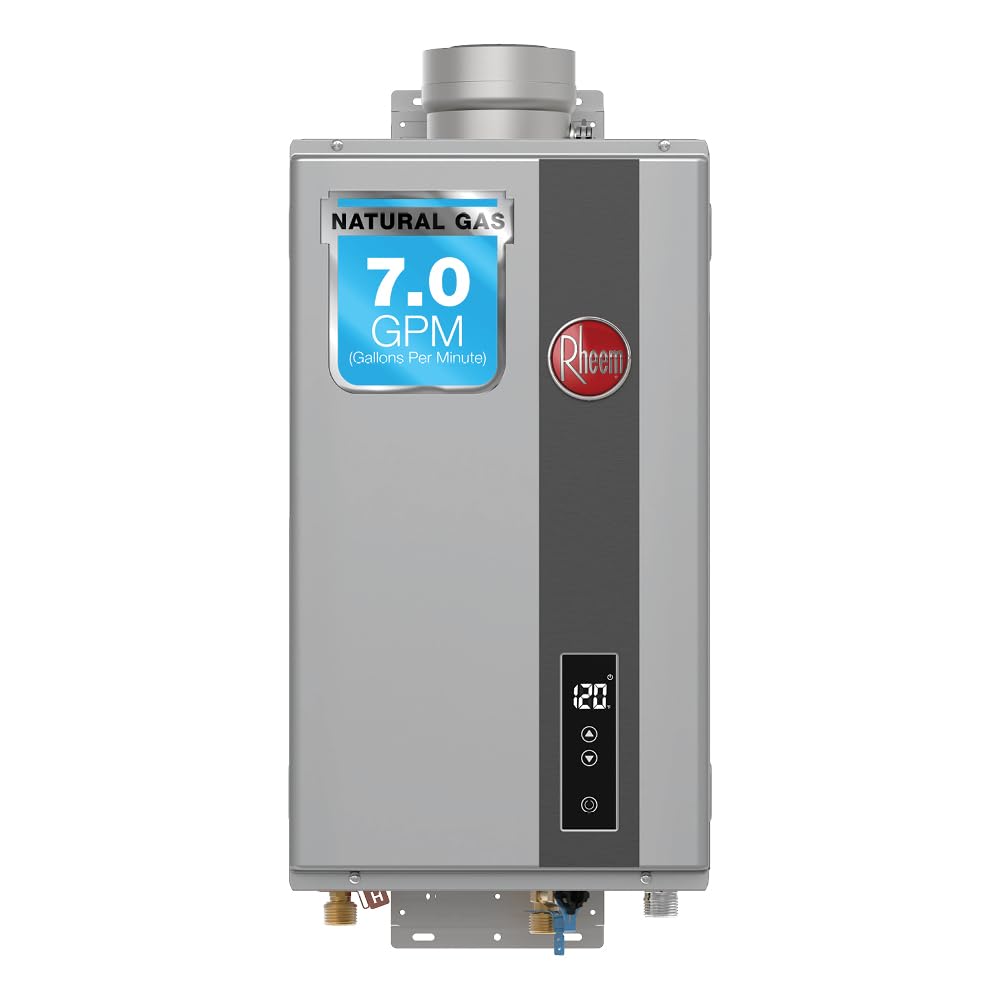
The Rheem RTG-70DVLN-3 is a high-efficiency non-condensing tankless gas water heater with a 7.0 GPM flow rate, designed for 2-3 bathroom homes. It is included in this guide because it uses direct vent technology (sealed combustion) and propane conversion is possible, making it relevant for homeowners who want to move away from a tank-style heater and use propane as the fuel source. The 160,000-BTU heat exchanger delivers hot water on demand, and the hot-start programming prevents the cold water sandwich between back-to-back showers.
The unit is compact at 13.5 inches wide by 24.2 inches tall and mounts on the wall to free up floor space. The 15-year heat exchanger warranty and 5-year parts warranty provide long-term confidence. Customer reviews are overwhelmingly positive regarding reliability and endless hot water output, with one owner specifically noting that the unit performed flawlessly after a straightforward installation by a qualified professional.
The critical catch is that this is a natural gas unit — you must verify that it can be converted to propane. The direct vent system requires special venting pipe (typically 2-inch or 3-inch PVC, depending on run length) that must be sourced separately. Additionally, professional installation is non-negotiable given the gas line sizing, venting specifications, and electrical requirements. If you are looking for a direct vent propane heater for space heating, skip this. But if you need endless hot water and want sealed combustion, the Rheem RTG-70 is a strong contender.
Why it’s great
- Endless hot water for 2-3 bathrooms
- 15-year heat exchanger warranty
- Compact wall-mount saves floor space
Good to know
- Requires special venting pipe not included
- Professional installation mandatory
- Natural gas model – verify propane conversion kit
9. A. O. Smith ATI-310CX3 Tankless Gas Water Heater
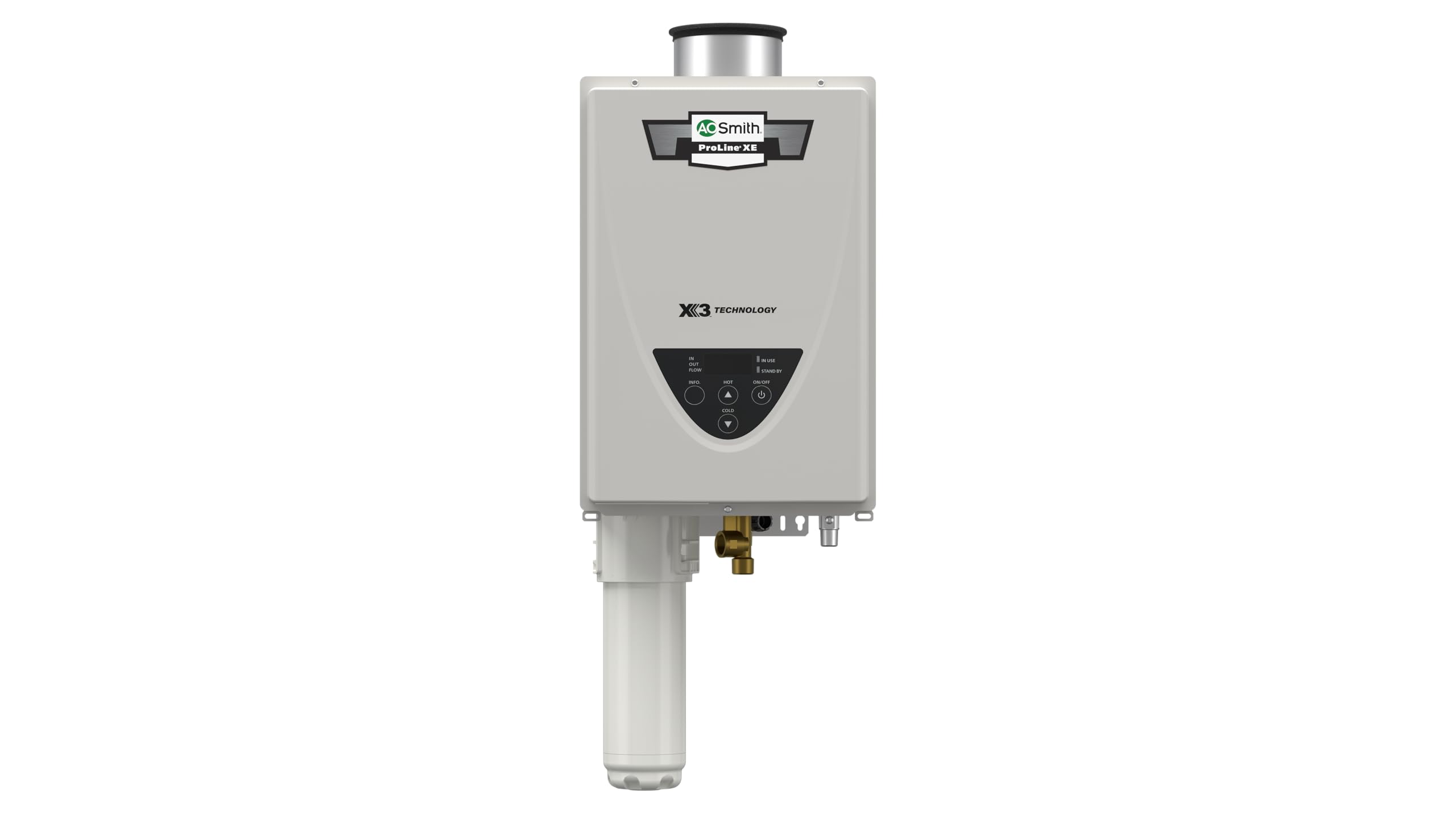
The A. O. Smith ATI-310CX3 is a premium indoor tankless water heater with a flow rate of 8.0 GPM and 190,000 BTU of heat output. Its defining feature is the X3 Scale Prevention Technology, which claims to eliminate mineral buildup without requiring annual descaling or isolation valves — a meaningful advantage for homes in hard-water regions where tankless heat exchangers typically scale up and lose efficiency within 3-5 years. The commercial-grade copper heat exchanger provides 25 times better heat transfer compared to steel, and the 15-year limited warranty on the heat exchanger in residential applications backs up the durability promise.
The unit uses direct vent technology with the APNC35 concentric vent system, which can be terminated either vertically or horizontally. It converts from natural gas to propane using the included conversion kit, and the self-diagnostic electronics monitor exhaust temperature, air-fuel ratio, and overheat conditions. Customers report stable 115°F water temperature even with multiple fixtures running simultaneously, and the quiet operation earns praise from professional installers.
At roughly , this is a significant investment, and professional installation is strongly recommended due to the gas line sizing (typically requires 3/4-inch pipe) and specialized venting. The X3 technology eliminates the need for annual descaling, but some users have reported that the initial setup can be finicky if the incoming water temperature is very cold. For homeowners committed to propane and tired of descaling their old tankless heater, the A. O. Smith ATI-310CX3 is a future-proof choice.
Why it’s great
- X3 scale prevention eliminates annual descaling
- Commercial-grade copper heat exchanger
- Propane conversion kit included
Good to know
- High price point
- Requires 3/4-inch gas line and professional install
- Concentric vent system may add cost in retrofit
10. Rinnai RX130iN Condensing Smart Sense Tankless Water Heater

The Rinnai RX130iN is a condensing tankless water heater with a 0.97 UEF rating, placing it among the most efficient units in its class. It delivers 7.1 GPM, enough to run up to four fixtures simultaneously, and the Smart Sense gas control system automatically adjusts fuel type between natural gas and propane without requiring a mechanical conversion kit — simply change the setting in the digital menu. The Versa Vent system allows indoor or outdoor installation with the same unit, adding flexibility for retrofit projects.
The stainless steel heat exchanger and condensing design capture exhaust heat that non-condensing units waste, resulting in lower propane consumption over time. The compact dimensions (19 inches wide by 31 inches tall) and 54-pound weight make it manageable for a two-person installation. Customers in cold alpine climates report that it handles two simultaneous showers plus a dishwasher without any temperature drop, even at 10°F ambient temperature.
Minor downsides include the absence of built-in flush valves and a pressure relief valve, which add about in accessories. The Wi-Fi module (Controlr) is sold separately, and some users found the companion app to have a finicky setup process. Overall, the RX130iN earns strong marks for its flexible fuel selection, condensing efficiency, and reliable performance in demanding environments.
Why it’s great
- 0.97 UEF condensing efficiency
- Gas type selection via digital menu – no conversion kit needed
- Installable indoors or outdoors
Good to know
- Does not include flush valves or pressure relief valve
- Wi-Fi module sold separately
- Slow hot water delivery compared to some competitors
11. Rinnai RX180iN Condensing Smart Sense Tankless Water Heater

The Rinnai RX180iN is the highest-output tankless water heater in this roundup, delivering up to 10.0 GPM from 180,000 BTU of heat input. This flow rate supports up to six fixtures simultaneously, making it suitable for large families and homes with multiple bathrooms, a kitchen, and a laundry room all running at once. Like its smaller sibling, it uses condensing technology to achieve a 0.98 UEF, and the Smart Sense gas control system lets you select propane or natural gas via the onboard menu.
The stainless steel heat exchanger and the Versa Vent system allow indoor or outdoor installation. The RX180iN requires professional installation due to the 3/4-inch gas line requirement and the specific venting needs, but DIY-inclined owners with plumbing experience report success after careful planning. Customer feedback emphasizes the heater’s build quality, reliability, and the instant hot water delivery once the system is fully primed.
The main tradeoff is cost — the RX180iN sits at the top of the price range. Additionally, flow rate alone does not guarantee hot water if the incoming water temperature is extremely cold; the actual delivered GPM drops as the delta-T increases. For a large home with moderate incoming water temperature, the 10 GPM rating is genuinely useful. For smaller homes, the lower-flow RX130iN is the more cost-effective choice.
Why it’s great
- 10 GPM flow supports 6 fixtures
- 0.98 UEF condensing efficiency
- Propane selectable via digital control
Good to know
- Premium price point
- Requires professional installation
- Actual GPM depends on incoming water temperature
FAQ
Can I install a direct vent propane heater in a bedroom?
Will a direct vent heater work during a power outage?
How do I choose between radiant and forced air (convection) for a direct vent heater?
Final Thoughts: The Verdict
For most users, the best direct vent propane heater winner is the Modine Hot Dawg HD45AS01-21 because it combines robust 45,000-BTU forced-air output, self-diagnostic spark ignition that eliminates pilot maintenance, and surprisingly quiet fan operation for a shop-grade heater. If you want precise modulating temperature control and a cool-to-the-touch cabinet for a living space, grab the Rinnai EX22DTP. And for a budget-friendly option for a cabin or power-outage scenario where zero electricity is required, nothing beats the Ashley Hearth DVAG11L — just be ready to address the piezo igniter if it fails.

Mo Maruf
I created WellFizz to bridge the gap between vague wellness advice and actionable solutions. My mission is simple: to decode the research and give you practical tools you can actually use.
Beyond the data, I am a passionate traveler. I believe that stepping away from the screen to explore new environments is essential for mental clarity and physical vitality.