Our readers keep the lights on and my smoothie glass nicely filled. As an Amazon Associate, I earn from qualifying purchases.
Chasing that classic film aesthetic means more than just slapping a filter on a digital image—it is about finding a camera whose sensor, lens, and color science deliver the grain, dynamic range, and warmth of analog photography straight out of the box. Whether you are a street photographer seeking the character of a 35mm rangefinder, a portrait shooter wanting the pastel tones of a vintage compact, or a creator looking for built-in film simulations that eliminate post-processing, the right tool makes all the difference.
I’m Mohammad Maruf — the founder and writer behind WellFizz. For this guide, I spent hundreds of hours cross-referencing sensor specifications, lens characteristics, built-in film simulation engines, and real-world image output to identify which cameras genuinely deliver that vintage aesthetic without requiring a darkroom.
From iconic mirrorless bodies with dedicated film recipes to renewed film cameras that capture the real deal, this roundup covers every serious option. Finding the right digital camera for vintage look means understanding which features matter most—and I’ve broken it all down right here.
How To Choose The Best Digital Camera For Vintage Look
Not every camera can deliver a convincing vintage look. The best models rely on a combination of sensor technology, optical design, and proprietary color science. Here are the critical factors to evaluate before you buy.
Film Simulation Engines and Color Profiles
This is the single most important feature for a vintage look. Cameras like Fujifilm’s X-series include dedicated film simulations—Velvia, Classic Chrome, Nostalgic Neg, and others—that emulate the color tonality, contrast curve, and grain structure of specific analog films. Some cameras offer custom recipe slots where you can save and recall your own looks. A camera without strong in-camera color science will force you to edit every shot in software, which defeats the purpose of a ready-to-go vintage aesthetic.
Sensor Size and Its Effect on Character
An APS-C or full-frame sensor provides the shallow depth of field and tonal gradation that old 35mm film cameras delivered. Smaller sensors like 1-inch or Micro Four Thirds can still create a vintage mood, but they require faster lenses and more careful framing to achieve the same look. Larger sensors also handle highlight rolloff better—a key element of the film look, where bright areas fade smoothly instead of clipping harshly.
Lens Rendering and Optical Flaws
Modern lenses are clinically sharp, which can look too sterile for a vintage aesthetic. The best vintage-look cameras use lenses with gentle aberrations, lower contrast coatings, or classic optical formulas that produce dreamy flares, soft corners, and pleasing bokeh. Some cameras allow you to mount legacy glass via adapters, giving you access to the actual lenses from the film era.
In-Camera JPEG Customization
Being able to dial in grain strength, color depth, sharpness, and tone curve adjustments inside the camera is a massive advantage. Some models let you apply multiple layers of effects—like a faded film base or a warm tungsten preset—before the shutter clicks. The most flexible cameras allow you to save those settings as custom profiles, so you can switch between a Kodachrome look and a Portra look instantly while shooting.
Quick Comparison
On smaller screens, swipe sideways to see the full table.
| Model | Category | Best For | Key Spec | Amazon |
|---|---|---|---|---|
| Fujifilm X100VI | Premium Compact | Ultimate built-in film simulations | 40.2MP X-Trans CMOS 5 HR sensor | Amazon |
| Fujifilm X-T30 III | Mirrorless | 20 film sims + interchangeable lenses | 20 built-in Film Simulation modes | Amazon |
| Ricoh GR IIIx | Pocket Compact | Custom recipes in a pocket body | 40mm f/2.8 equivalent lens | Amazon |
| Sony RX100 VII | Premium Compact | 24-200mm zoom with vintage tweaks | 1.0-Type stacked CMOS sensor | Amazon |
| OM System E-M10 Mark IV | Mirrorless | Instant Film art filter | 16 Art Filters including Instant Film | Amazon |
| Panasonic LUMIX ZS99 | Travel Zoom | 30x zoom for faraway vintage shots | 30x optical LEICA zoom (24-720mm) | Amazon |
| Canon EOS R100 | Entry Mirrorless | Affordable APS-C for lens swaps | 24.1MP APS-C CMOS sensor | Amazon |
| Canon AE-1 (Renewed) | Analog SLR | Real 35mm film experience | True 35mm film camera with FD lenses | Amazon |
| Kodak PIXPRO AZ405 | Budget Bridge | Affordable 40x zoom for beginners | 20MP sensor with 40x optical zoom | Amazon |
In‑Depth Reviews
1. Fujifilm X100VI Digital Camera – Silver

The X100VI is the gold standard for vintage look photography. Its 40.2MP X-Trans CMOS 5 HR sensor paired with the fixed 23mm f/2 lens (equivalent to 35mm) delivers exceptional image detail with characterful grain, while the 20 film simulation modes—including Velvia, Classic Chrome, and REALA ACE—produce out-of-camera JPEGs that rival the look of classic analog stocks. The 5-axis in-body stabilization provides up to 6 stops of compensation, which is remarkable for a compact rangefinder-style body and allows you to shoot handheld in dim light without losing the film feel.
Beyond the sensor and color science, the hybrid optical/electronic viewfinder is a joy to use for street photography. You can compose through the optical finder with frame lines or switch to the EVF to preview your film simulation in real time. The built-in 4-stop ND filter is a hidden gem—it lets you shoot wide open at f/2 in bright sunlight, preserving the shallow depth of field that vintage film shooters relied on. The dial-based exposure control (ISO, shutter speed, and aperture rings) forces a deliberate, slower shooting pace that naturally mimics the analog workflow.
There are trade-offs for this level of character. The fixed lens means no optical zoom—you work with the 35mm equivalent field of view and use digital teleconverter modes (1.4x and 2x) when needed. Autofocus, while improved over earlier models, can occasionally hunt in low contrast scenes, and the battery life is average for a mirrorless compact. But if you want the most comprehensive film simulation ecosystem and image quality that genuinely looks like it came from a roll of film, this camera is unmatched.
Why it’s great
- 20 film simulations including REALA ACE
- 40.2MP sensor with 6-stop IBIS
- Built-in 4-stop ND filter for wide-open daytime use
- Hybrid viewfinder with optical frame lines
Good to know
- Fixed 35mm equivalent lens (no optical zoom)
- Autofocus can be inconsistent in low contrast scenes
- Battery life is average for its class
2. Fujifilm X-T30 III Mirrorless Camera Body, Silver
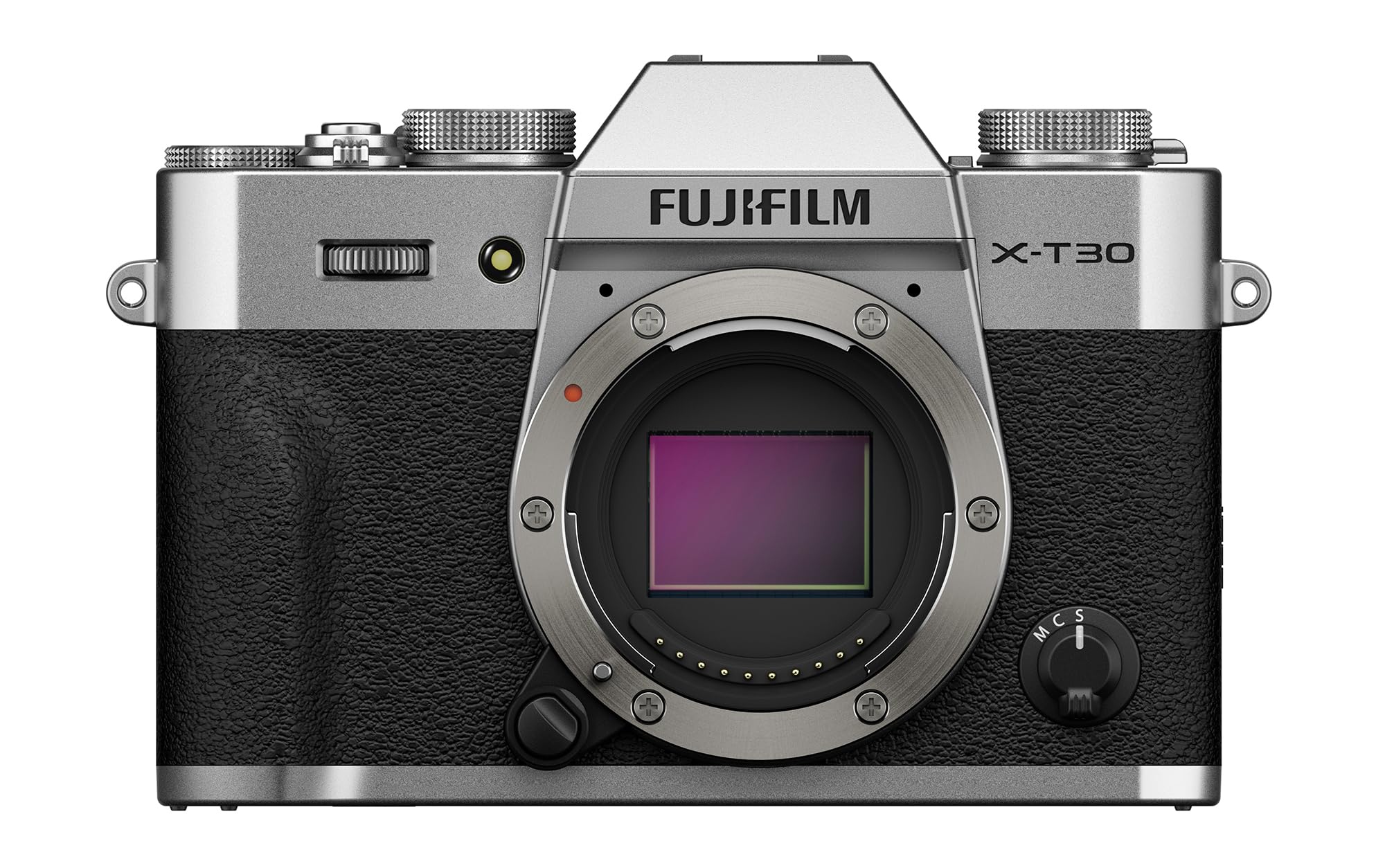
The X-T30 III brings the same film simulation engine found in Fujifilm’s flagship models into a smaller, more affordable body. With 20 built-in simulation modes—spanning from the warm tones of Classic Chrome to the punchy contrast of Velvia—you can dial in a convincing vintage look before you press the shutter. The AI-powered subject detection autofocus tracks faces, eyes, animals, and vehicles with high reliability, making it easier than ever to capture sharp shots with a retro aesthetic without missing focus.
The compact body houses an APS-C sensor that delivers excellent highlight rolloff and natural color reproduction, two essential qualities for achieving the film look. The bundle includes the FUJINON XC13-33mmF3.5-6.3 OIS kit lens, which covers wide to standard zoom ranges. The real appeal for vintage hunters, though, is the ability to swap lenses—you can mount Fujifilm’s older XF lenses or adapt vintage glass for a truly analog rendering. The auto mode is also well-calibrated for beginners who want to rely on the camera’s scene intelligence while still benefiting from the film simulations.
Unlike the X100VI, this body lacks in-body stabilization, so you’ll rely on lens-based OIS or steady hands for low-light work. The menu system is deep, and cycling through custom recipe banks takes some initial setup. The X-T30 III does not include a viewfinder in every configuration—the kit lens is a variable aperture, which limits its low-light performance. But for the price, this is the most accessible gateway to Fujifilm’s film simulation ecosystem with the flexibility of interchangeable lenses.
Why it’s great
- 20 film simulations with custom recipe slots
- AI-powered autofocus for sharp vintage portraits
- Interchangeable lens system for legacy glass
- Compact and lightweight APS-C body
Good to know
- No in-body stabilization (relies on lens OIS)
- Kit lens is a variable aperture f/3.5-6.3
- Menu system requires initial setup for custom recipes
3. Ricoh GR IIIx, Black, Digital Compact Camera

The GR IIIx is the ultimate pocket camera for vintage look enthusiasts who want to customize their color profiles deeply. Its 24.2MP APS-C sensor paired with the 40mm f/2.8 equivalent lens produces sharp, cinematic images with a natural perspective that closely matches human vision. Ricoh’s image processing engine allows you to save up to six custom color recipes—including user-shared looks that emulate everything from Kodak Portra to faded film stocks—directly on the camera. Combine that with the 0.8-second startup time, and you can pull this from your pocket, fire off a shot with your chosen recipe, and capture a genuinely vintage-looking file before anyone notices.
The fixed 40mm focal length is a deliberate choice for snapshot photography—it forces you to physically move to compose, mimicking the deliberate pace of a film rangefinder. The in-body stabilization helps keep handheld shots sharp even at slower shutter speeds. The physical control layout is stripped-down and intuitive: dedicated dials for aperture and exposure compensation, plus a customizable function button that can recall your favorite recipe instantly. The high-speed hybrid AF is reliable for street and travel photography, where you need quick focus without hunting.
The GR IIIx has a few known limitations that matter for a vintage workflow. The battery life is genuinely short—you will want at least two spares for a full day of shooting. The camera lacks a built-in flash and has no weather sealing, which limits its use in rain or dusty environments. The lens is fixed, so there is no optical zoom at all. Dust can also accumulate on the sensor through the lens mechanism, so a protective filter adapter is a wise investment. For its size, though, no other camera gives you this level of custom color control and APS-C image quality in a pocket-friendly form factor.
Why it’s great
- Custom user recipe system for distinct vintage looks
- 40mm f/2.8 lens with natural, human-eye perspective
- APS-C sensor in a truly pocketable body
- Quick 0.8-second startup for instant shooting
Good to know
- Short battery life (carry spare batteries)
- No weather sealing or built-in flash
- Fixed lens with no optical zoom
4. Sony RX100 VII Premium Compact Camera
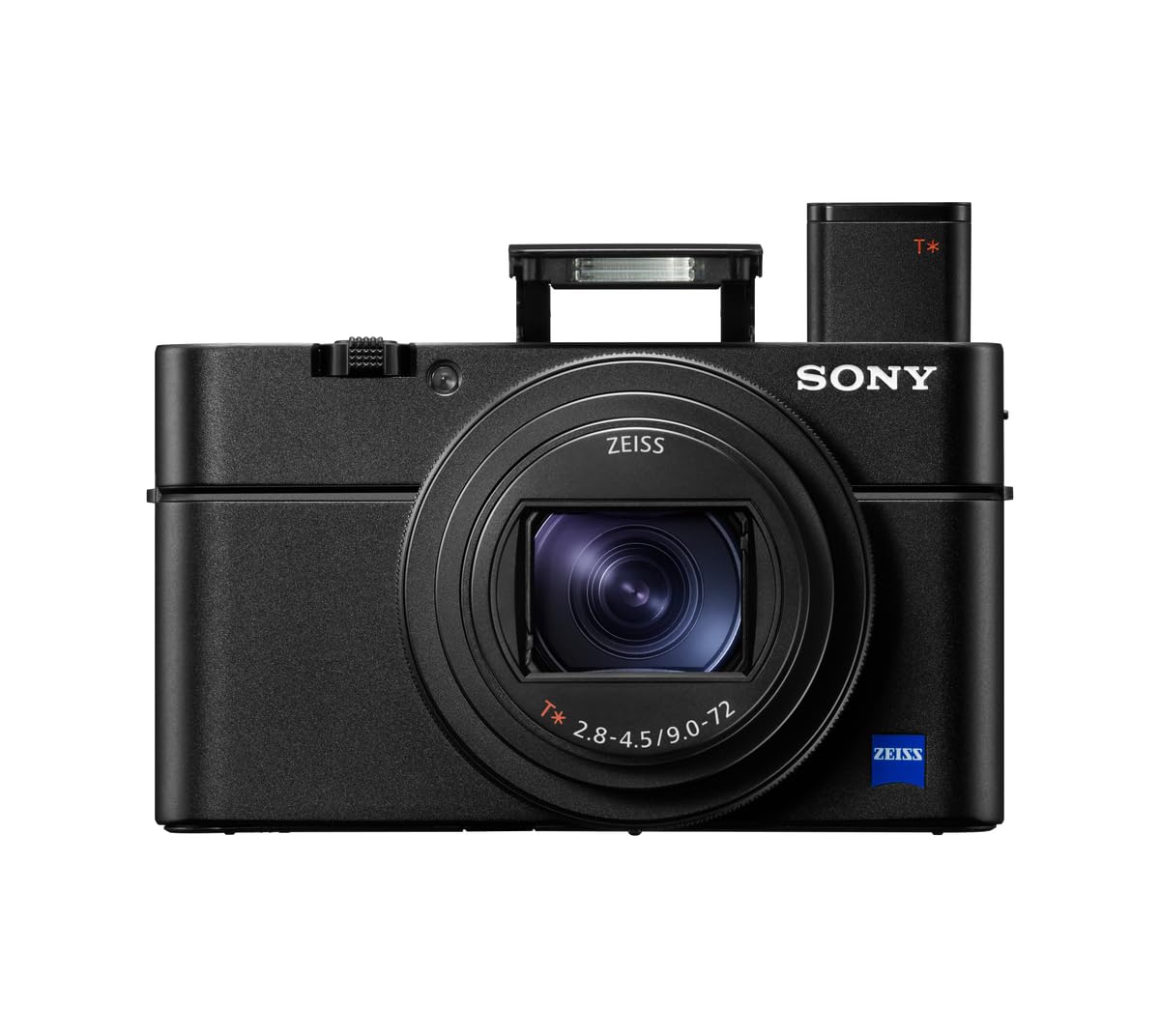
The RX100 VII is a premium compact that relies on its exceptional lens and sensor to deliver images that can be fine-tuned to a vintage aesthetic. Its 20.1MP 1.0-type stacked CMOS sensor, combined with the Zeiss Vario-Sonnar T 24-200mm f/2.8-4.5 zoom lens, offers incredible versatility—from wide-angle street scenes to tight portraits with natural bokeh. The 0.02-second autofocus with 357 phase-detection points is the fastest in this class, ensuring you never miss a candid shot. While Sony lacks Fujifilm’s dedicated film simulations, the in-camera Creative Style and Picture Effect modes allow you to tweak contrast, saturation, and sharpness toward a filmic look, and shooting in RAW gives you full flexibility in post.
This camera excels for travel and event photography where you need zoom range without swapping lenses. The 24-200mm lens covers everything from architectural details to compressed portraits, and the active mode stabilization smooths handheld 4K video. The pop-up electronic viewfinder is a lifesaver in bright sunlight, and the microphone jack makes it a legitimate tool for vloggers who want vintage-toned B-roll. The real-time Eye AF for humans and animals works reliably in both stills and movies, locking focus on moving subjects with confidence.
The RX100 VII’s vintage look capability is more about lens character and RAW processing flexibility than in-camera presets. The Zeiss T* coating reduces flare and ghosting, which is great for contrast but removes some of the optical imperfections that contribute to an analog look—you’ll need to add grain and color shifts in post if you want heavy vintage character. The menu system is complex even by Sony standards, and the small body can feel slippery without an added grip. For shooters who want a do-it-all travel companion with premium optics that can be coaxed into a retro look, it’s a strong contender.
Why it’s great
- 24-200mm Zeiss zoom lens with f/2.8-4.5 aperture
- 0.02-second autofocus with real-time Eye AF
- Active stabilization for smooth video
- Pop-up EVF and microphone jack
Good to know
- Limited in-camera vintage presets
- Complex menu navigation
- Slippery body without an added grip
5. OM SYSTEM Olympus E-M10 Mark IV Silver

The E-M10 Mark IV is a compact Micro Four Thirds mirrorless camera that packs 16 Art Filters, including a dedicated Instant Film mode that produces faded, low-contrast images with visible grain. The 20MP Live MOS sensor, combined with Olympus’s excellent 5-Axis in-body stabilization (capable of 4.5 shutter speed steps of compensation), allows you to shoot handheld in very low light while maintaining a film-like texture. The flip-down monitor triggers a selfie mode automatically, which is surprisingly useful for candid vintage-style portraits where you want to frame yourself or your subject from a low angle.
Retro aesthetics extend beyond the image output—the camera itself is designed to evoke classic Olympus film SLRs with its silver top plate, textured grip, and analog-style dials. The kit lens is the 14-42mm F3.5-5.6 EZ pancake zoom, which collapses to a remarkably compact size for a zoom lens. The scene and art modes are extensive, but the Instant Film filter is the standout for vintage lovers—it softens the image, boosts shadows, and adds a warm tint that closely mimics the look of expired Polaroid film. The in-camera panorama stitching is also handy for creating wide landscape shots with retro character.
The Micro Four Thirds sensor has a crop factor of 2x, which means achieving shallow depth of field requires faster lenses than an APS-C or full-frame system. The included kit lens at f/3.5-5.6 does not produce strong bokeh in most scenarios, so you’ll want to invest in a fast prime like the Olympus 17mm f/1.8 for a more convincingly vintage look. The wireless import relies on WiFi rather than Bluetooth, which is slower for transferring full-resolution files. For the price, though, the combination of in-body stabilization, retro design, and the Instant Film filter makes it a charming option for everyday vintage shooting.
Why it’s great
- 16 Art Filters including dedicated Instant Film mode
- 5-Axis in-body stabilization (4.5 stops)
- Retro silver body design with analog controls
- Flip-down monitor with selfie mode
Good to know
- Micro Four Thirds sensor limits shallow DoF
- Kit lens aperture is f/3.5-5.6
- Wireless transfer uses WiFi only (no Bluetooth)
6. Panasonic LUMIX ZS99 Point and Shoot Camera, Silver

The Lumix ZS99 is a compact travel zoom camera whose silver finish and compact design evoke classic point-and-shoots from the film era. Its standout feature is the 30x optical LEICA DC Vario-Elmar lens covering 24-720mm equivalent, giving you enormous reach for capturing vintage-style compressed landscapes or distant architectural details. The 20.3MP 1/2.3-inch MOS sensor is small by modern standards, but that actually works in favor of the vintage look—the smaller sensor produces more inherent depth of field and a slight softness that, when combined with the right picture settings, mimics the look of old consumer film compacts.
Panasonic includes a variety of in-camera Creative Control filters such as Old Film, Retro, and High Contrast, which can be applied in real time as you shoot. The 1,840k-dot tiltable touchscreen is excellent for composing shots from odd angles, and the USB Type-C charging means you can power up from a standard battery bank while traveling. The Send Image button with Bluetooth v5.0 makes it easy to transfer photos to your phone for instant sharing. The 4K Photo mode captures 30fps bursts, which is useful for grabbing the perfect frame from a moving scene—a technique that works well for street photography with a retro feel.
The vintage look from the ZS99 comes primarily from its lens character and in-camera filters, not from advanced color science. The small sensor limits low-light performance noticeably past ISO 800, producing noisy images that can look atmospheric if you lean into the grain, but messy if you try to keep them clean. The lens housing is reported to be somewhat fragile—one drop can dent it and affect the shutter mechanism. The lack of a flash also reduces flexibility for night shooting. For travelers who want a long zoom in a pocketable body with some retro charm, it’s a solid choice, but it won’t match the image quality of larger-sensor cameras for serious vintage work.
Why it’s great
- 30x LEICA zoom (24-720mm) for versatile composition
- Tiltable touchscreen for creative framing
- USB-C charging for travel convenience
- Built-in Creative Control filters with retro modes
Good to know
- Small sensor limits low-light vintage potential
- No built-in flash
- Lens housing can be fragile
7. Canon EOS R100 Mirrorless Camera with RF-S18-45mm Lens

The EOS R100 is Canon’s smallest and most affordable RF-mount mirrorless camera, designed as a versatile entry point for vintage look experimentation. Its 24.1MP APS-C CMOS sensor paired with the DIGIC 8 processor delivers clean, detailed files that respond very well to custom Picture Styles. Canon’s in-camera Creative Filters include options like Grainy B/W, Soft Focus, and Old Movie, all of which can be applied before shooting to approximate a retro aesthetic. The bundled RF-S18-45mm F4.5-6.3 IS STM lens covers wide to standard zoom ranges and includes optical image stabilization—useful for handheld shooting in dim environments.
Dual Pixel CMOS AF with face and eye detection covers 143 zones, providing reliable autofocus for people and pets. The 6.5-fps continuous shooting speed is sufficient for capturing candid moments. The compact body weighing under 400g with the kit lens makes it a lightweight travel companion that won’t weigh you down. Perhaps the biggest appeal for vintage look seekers is the ability to adapt Canon’s extensive catalog of FD and EF lenses using a simple mount adapter, giving you access to the actual optics from the film era with their natural aberrations, flares, and rendering characteristics.
The R100’s in-camera vintage presets are relatively basic compared to Fujifilm’s deep library—you won’t find nuanced film simulations here. The 8-bit processing and limited dynamic range (compared to higher-end Canon models) mean you have less latitude to push and pull highlights in post. The 4K video is capped at 24fps without the option for higher frame rates. For beginners who want a lightweight system camera with good autofocus and the option to explore vintage lenses, it’s a capable starting point, but serious analog aesthetic hunters will want to invest time in creating custom Picture Styles or shooting RAW and editing later.
Why it’s great
- Lightweight APS-C body with excellent autofocus
- Can adapt vintage FD and EF lenses
- Built-in Creative Filters for retro effects
- Dual Pixel CMOS AF with face/eye detection
Good to know
- Limited in-camera film simulations
- 8-bit processing restricts post-processing flexibility
- 4K video limited to 24fps
8. Vintage Canon AE-1 35mm SLR Camera with 50mm 1:1.8 Lens (Renewed)

The Canon AE-1 is the definitive analog SLR for photographers who want the real film experience, not a digital approximation. This renewed model includes the classic 50mm f/1.8 FD lens, a combination that produced some of the most iconic images of the 1970s and 1980s. The camera features shutter-priority auto exposure with TTL metering, which means you set the shutter speed and the camera selects the correct aperture—simple enough for beginners while still giving manual control. The metal body is robust and the chrome finish is instantly recognizable as a piece of photographic history.
Shooting the AE-1 is a fundamentally different process from any digital camera. You load a roll of 35mm film, advance the lever, focus manually through the split-prism viewfinder, and capture 24 or 36 frames before needing to develop. The 50mm f/1.8 lens renders images with the natural aberration, gentle flare, and creamy out-of-focus areas that digital lenses try to correct out of existence. That imperfection is the entire point for vintage look seekers—every shot carries the weight of finite frames and the anticipation of development. The shutter speed range from 1/1000 to 2 seconds plus Bulb mode gives you creative control over motion and exposure.
The AE-1 is not a point-and-shoot. You must learn to read a light meter, focus manually, and accept that you won’t see your images until after development. Renewed units vary in quality—some function perfectly, others arrive with sticky shutters or inaccurate meters. The price of 35mm film and development (roughly -20 per roll plus processing) adds a recurring cost that digital shooters may not anticipate. For purists who want the genuine analog process, the uncontrolled grain, the chemical color shifts, and the tactile feedback of winding film, this is the most authentic path to the vintage look.
Why it’s great
- Genuine 35mm film results with chemical color shifts
- Classic 50mm f/1.8 FD lens with beautiful rendering
- Robust metal construction with iconic design
- Shutter-priority AE makes metering easy for beginners
Good to know
- Requires film purchase and development costs
- No instant preview—results are unseen until developed
- Renewed condition varies; functional check recommended
9. Kodak PIXPRO AZ405-WH 20MP Digital Camera, 40X Zoom, White
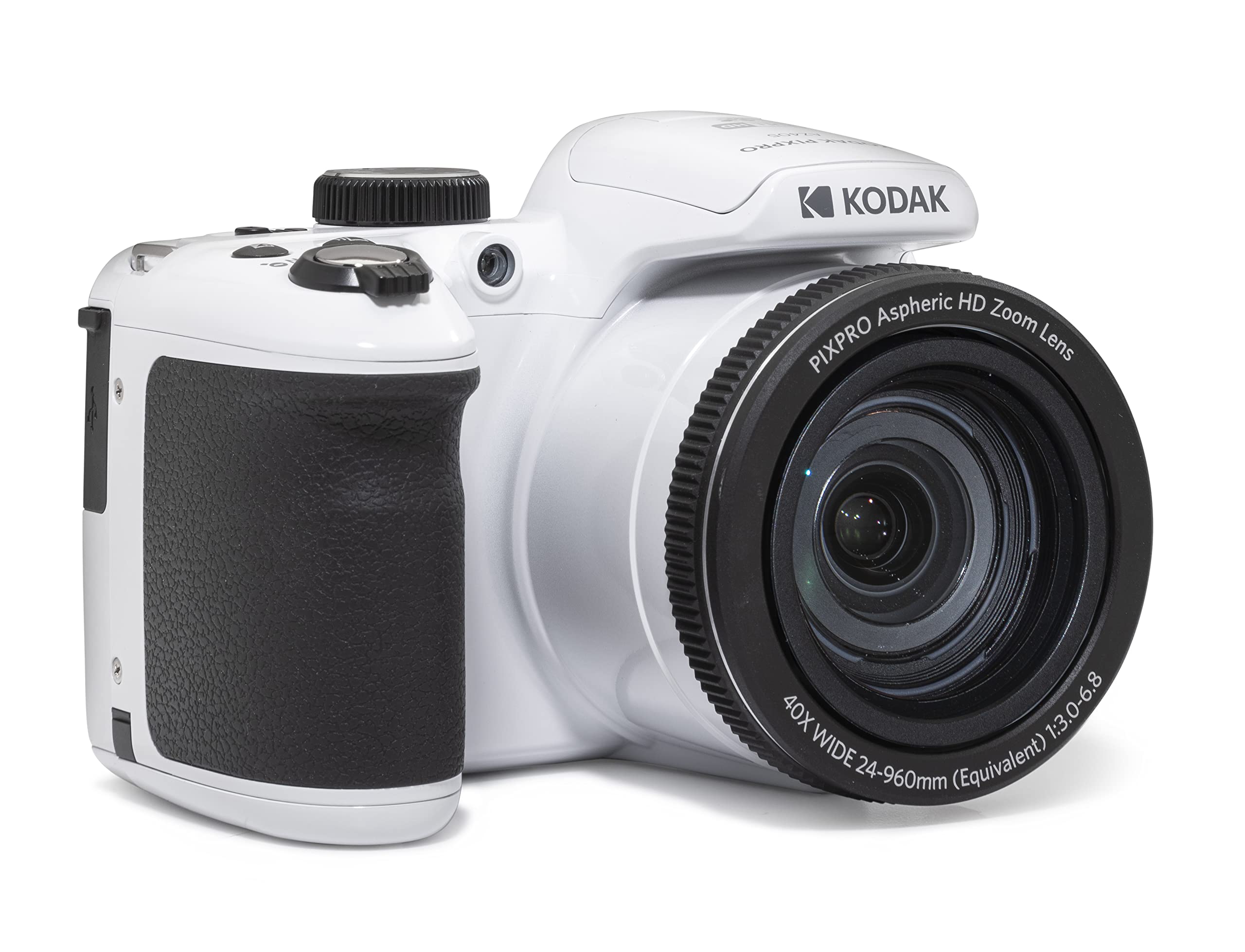
The Kodak PIXPRO AZ405 is a budget-friendly bridge camera that leans into the Kodak brand heritage for its vintage appeal. It features a 20MP CMOS sensor, 40x optical zoom covering a 24mm wide-angle to an extreme telephoto reach, and optical image stabilization to keep handheld shots steady at full zoom. The simple point-and-shoot operation makes it immediately accessible for beginners who want a zoom-heavy camera without learning complex menus. The white color option adds a retro aesthetic that matches Kodak’s classic camera designs.
The AZ405 includes multiple automatic scene modes and a 3-inch LCD for composing shots. It records 1080p Full HD video and uses AA batteries, which are universally available worldwide—a practical advantage for travelers who don’t want to carry proprietary chargers. The optical zoom is genuinely impressive for the price range, letting you capture distant subjects like wildlife or performance stages with real optical sharpness rather than digital crop. The optical image stabilization makes a noticeable difference when shooting near the full 40x zoom, reducing the camera shake that typically ruins long-telephoto shots.
The vintage look from the AZ405 comes more from its brand identity than its image processing—it lacks dedicated film simulation modes. Image quality is acceptable in good light but falls behind modern smartphone cameras in dynamic range and low-light performance. Several user reports note rapid battery drain (exhausting fresh AA batteries in fewer than 20 shots) and a tendency to lock up, requiring battery removal. The time/date settings also reset when removing the SD card. For a beginner who simply wants the Kodak name and extreme zoom range on a tight budget, it’s functional, but it won’t deliver the sophisticated vintage character of the premium options in this guide.
Why it’s great
- 40x optical zoom with 24mm wide-angle
- Optical image stabilization aids telephoto shots
- AA battery power is convenient for travel
- Budget-friendly entry point with Kodak branding
Good to know
- No dedicated film simulation modes
- Reports of rapid battery drain and lockups
- Image quality falls short in low light
FAQ
Can I get the film look from a modern digital camera without film simulations?
What is the difference between Fujifilm’s Classic Chrome and Nostalgic Neg simulations?
Does a higher megapixel sensor always give a better vintage look?
Is a dedicated vintage lens adapter worth the hassle?
Final Thoughts: The Verdict
For most users, the digital camera for vintage look winner is the Fujifilm X100VI because its 20 film simulations, 40.2MP sensor, and 6-stop IBIS deliver the most convincing and versatile out-of-camera vintage JPEGs in a portable body. If you want interchangeable lenses and the same deep film simulation engine at a lower price, grab the Fujifilm X-T30 III. And for the purest analog experience with genuine 35mm film character and the satisfaction of chemical development, nothing beats the Canon AE-1 Renewed.

Mo Maruf
I created WellFizz to bridge the gap between vague wellness advice and actionable solutions. My mission is simple: to decode the research and give you practical tools you can actually use.
Beyond the data, I am a passionate traveler. I believe that stepping away from the screen to explore new environments is essential for mental clarity and physical vitality.