Our readers keep the lights on and my smoothie glass nicely filled. As an Amazon Associate, I earn from qualifying purchases.
Choosing a DIY security system means deciding how much physical intrusion and vulnerability you are willing to accept around your home. The difference between a kit that feels like a toy and one that actually deters a break-in comes down to sensor accuracy, video resolution, and whether the alarm actually triggers a meaningful response.
I’m Mohammad Maruf — the founder and writer behind WellFizz. I spend hundreds of hours dissecting home security hardware, comparing wireless protocols, battery chemistries, and sensor reliability to separate kits that protect from those that just beep.
Whether you are securing a single door or a full property line, this analysis of the best diy security system cuts through the marketing to focus on real-world coverage, storage flexibility, and long-term dependability.
How To Choose The Best DIY Security System
Not all DIY kits deliver equal protection. The cheapest option might miss a door opening, while a premium wired system can record every license plate. Focus on sensor types, video quality, connectivity, storage, and long-term costs before buying.
Sensor Coverage and Detection Zone
The number and type of included sensors define your coverage. Magnetic door/window sensors protect entry points, while PIR motion sensors cover open rooms. Check the motion sensor’s range and field of view — some detect movement up to 35 feet with a 90-degree arc, ideal for corner placement. Look for pet immunity ratings if you have animals over 60 pounds.
Video Resolution and Night Vision
Cameras rated 2K (3MP) or better capture faces and license plates at useful distances. True color night vision uses integrated spotlights rather than infrared alone, letting you identify clothing and vehicle colors in complete darkness. Wired cameras typically offer higher resolution and stable 24/7 recording compared to battery-powered units that conserve power.
Connectivity and WiFi Compatibility
Nearly every budget-friendly and mid-range system operates only on 2.4GHz WiFi. If your router is dual-band or mesh-based, ensure a 2.4GHz channel is active for sensor pairing. Systems that support 4G cellular backup provide protection during internet outages, especially important for vacation properties or offices.
Storage and Monthly Fees
Local storage via microSD cards or built-in NVR hard drives eliminates recurring subscription costs. Cloud storage adds convenience and off-site backup but often requires a monthly plan. Many entry-level kits include free cloud trial periods, but check whether basic alerting and local recording continue after the trial expires.
Quick Comparison
On smaller screens, swipe sideways to see the full table.
| Model | Category | Best For | Key Spec | Amazon |
|---|---|---|---|---|
| SimpliSafe 11 Piece Gen 3 | Whole System | Professional monitoring option | 24-hour base station battery backup | Amazon |
| eufy SoloCam S340 | Solar Camera | Wire-free continuous power | 3K dual-camera with pan/tilt | Amazon |
| Ring Alarm 8-Piece | Whole System | Ecosystem integration | Cellular backup via Protect plan | Amazon |
| Arlo Home Security SS1501 | Sensor System | Multi-function sensors | 8 sensing functions per sensor | Amazon |
| Swann 6-Cam 2K Wired DVR | Wired System | 24/7 continuous recording | 256GB SD card included | Amazon |
| OHWOAI 5MP PoE NVR | Wired System | High-res wired surveillance | 1TB HDD pre-installed | Amazon |
| GMK 4-Pack 2K Wireless | Battery Cameras | Multi-camera outdoor coverage | Up to 3000 motion triggers per charge | Amazon |
| tolviviov 15-Piece WiFi Alarm | Whole System | Budget sensor kit with app control | 120dB siren with Alexa support | Amazon |
| D1D9 17-Piece 4G GSM Alarm | Whole System | Cellular backup without internet | 80-meter wireless range | Amazon |
In‑Depth Reviews
1. SimpliSafe 11 Piece Wireless Home Security System Gen 3
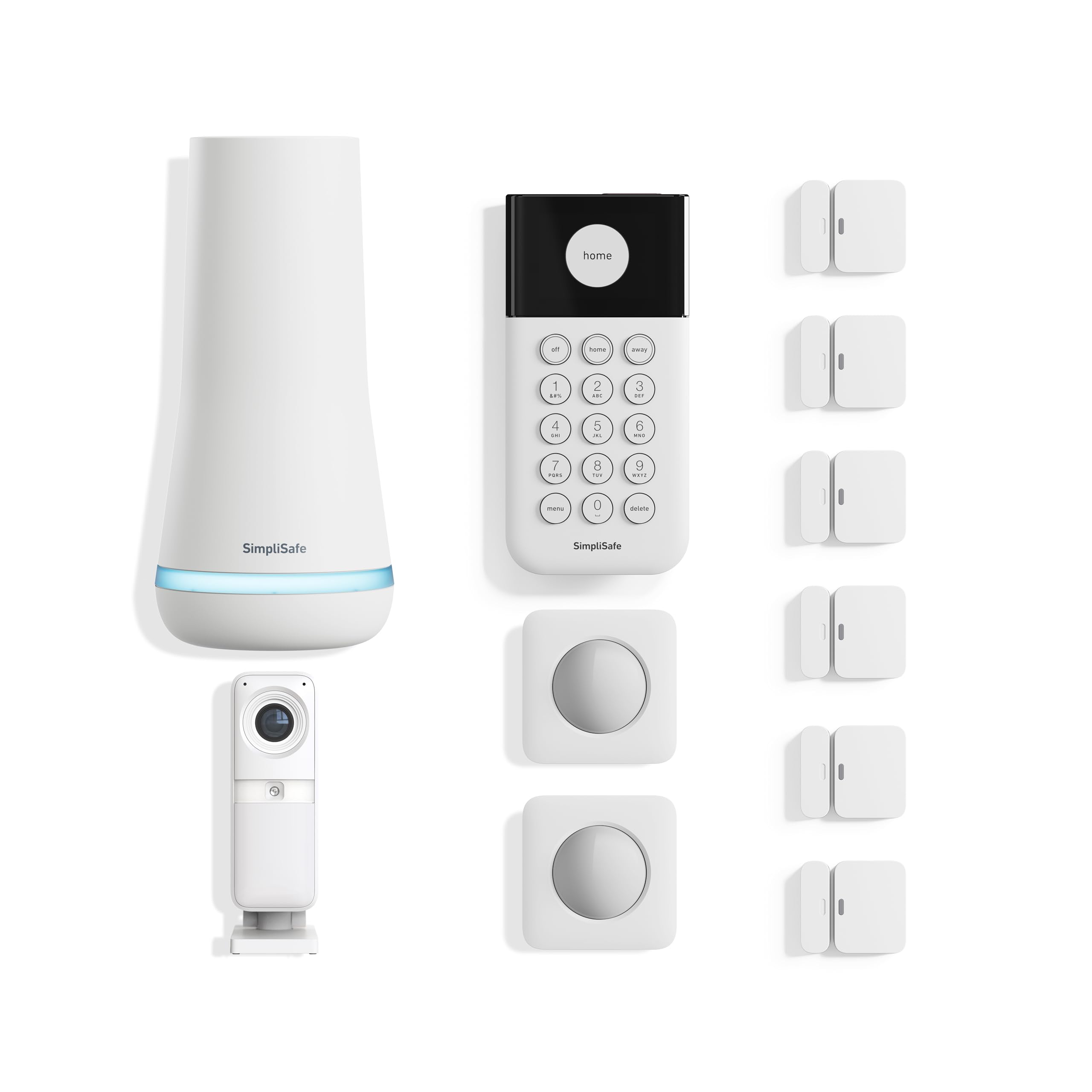
SimpliSafe’s Gen 3 system delivers the most complete out-of-box experience for a DIY security system, pairing six entry sensors, two motion detectors, and an indoor camera with a base station that last up to 24 hours on battery. The 95-decibel siren is loud enough to alert neighbors, and the optional professional monitoring plan enables 5-second alarm response and cellular backup so protection persists through WiFi and power outages.
Setup is genuinely tool-free: peel the adhesive backing on each sensor, place them on doors and windows, and pair everything through the app in under an hour. The motion sensors offer a 90-degree field of view and 35-foot range, with built-in pet immunity for animals under 60 pounds, reducing false alarms from cats or small dogs roaming at night.
One smart design choice is the smash-safe keypad — if an intruder tries to disable the system by smashing the keypad, the alarm still triggers. The indoor camera requires a Fast Protect plan for 24/7 live guard monitoring, but the sensor-only package already provides robust perimeter defense without any monthly fee.
Why it’s great
- Base station battery lasts 24 hours during power outage
- Optional professional monitoring with 5-second response time
- Pet-immune motion sensors reduce false alerts
Good to know
- Indoor camera quality is only 1080p, not 2K
- Advanced automation features require a paid subscription
2. eufy Security SoloCam S340
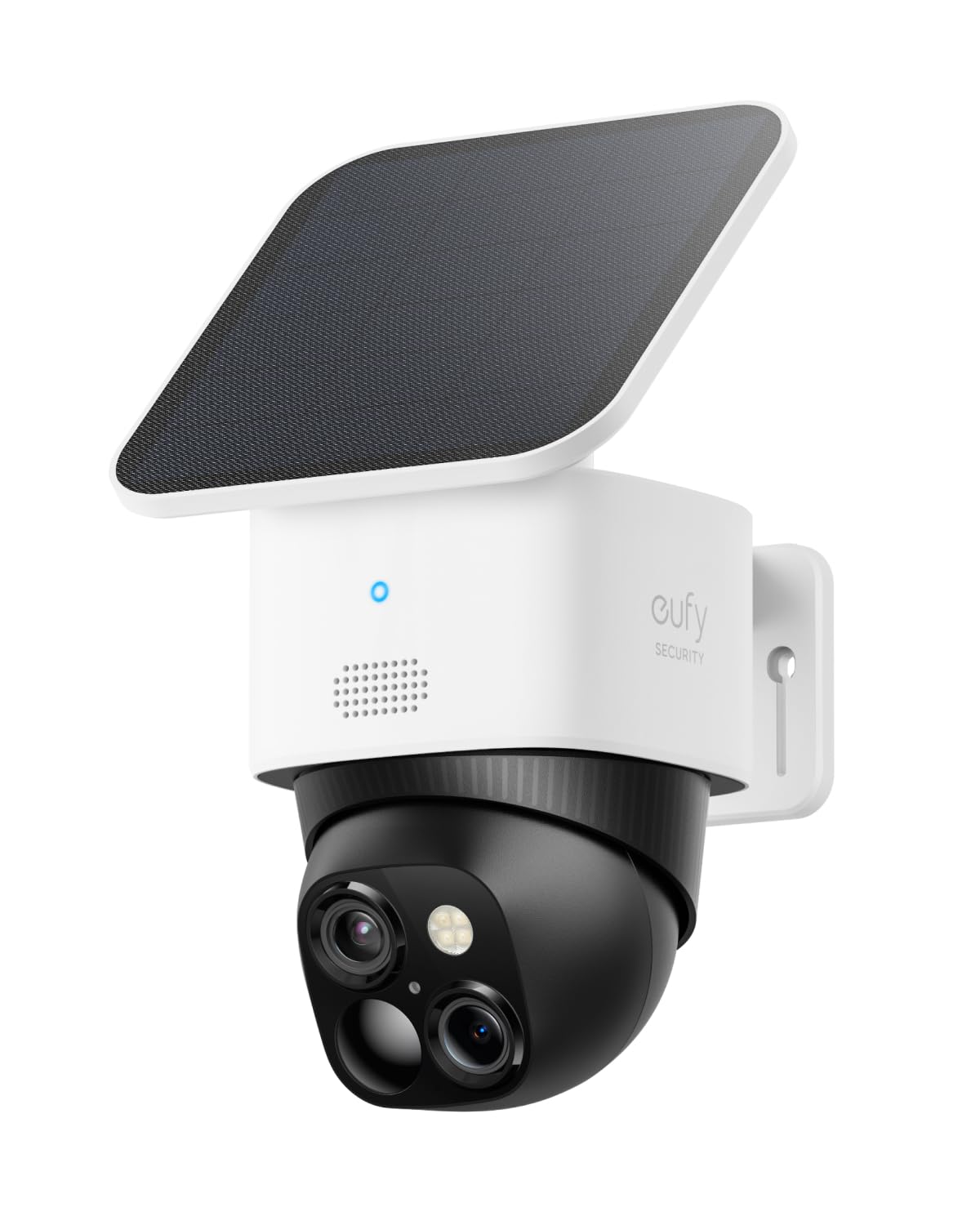
The eufy SoloCam S340 solves the biggest pain point of wireless security cameras — battery anxiety — with a removable solar panel that keeps the 10,000mAh internal battery topped off indefinitely. After an initial full charge, the camera maintains itself through normal daylight, making it ideal for mounting on a front porch, driveway, or side gate where running a power cable would be impractical.
Video quality is genuinely impressive for a battery-powered unit: the dual-camera design captures 3K resolution with an 8x digital zoom and provides 360-degree pan and tilt coverage. The active subject tracking follows people, cars, and animals across the field of view, delivering sharp clips day or night. Color night vision is functional up to 40 feet using the onboard spotlight.
The trade-off is that the camera has blind spots — motion detection only triggers directly in front of the lens, not along the full 360-degree arc. You also need to mount it vertically for full pan/tilt range, which may limit placement flexibility. Still, for users who want zero monthly fees and hassle-free solar charging, this is a standout camera.
Why it’s great
- Solar-powered with 10,000mAh battery requires minimal maintenance
- 3K video with 8x zoom and active subject tracking
- No subscription required for core features
Good to know
- Motion detection has blind spots — not truly 360-degree coverage
- Mounting requires vertical orientation for full pan/tilt
3. Ring Alarm 8-Piece Kit

Ring’s 8-Piece Alarm Kit is the smart home integrator’s dream, offering native compatibility with Alexa, Ring cameras, and Schlage smart locks so you can arm and disarm directly from a keypad or deadbolt. The kit includes a base station, keypad, four contact sensors, one motion detector, and a range extender — enough to secure a 1-2 bedroom home with minimal overlap.
Setup is straightforward: each sensor has a unique five-digit pairing code, and the app walks you through placement and testing. The contact sensors are impressively thin at about 5mm, using common CR2032 batteries that last over a year. The keypad features backup buttons for fire, police, and medical emergencies, giving it a professional alarm feel without the installation hassle.
The biggest consideration is that full functionality — cellular backup, remote arming, and professional monitoring — requires a Ring Protect subscription, starting at around per year for the combined camera and alarm plan. Without the plan, the system still works as a local alarm with push notifications, but you lose off-site connectivity.
Why it’s great
- Integrates seamlessly with Ring cameras, Alexa, and Schlage locks
- Thin sensors with long battery life using CR2032 cells
- Emergency buttons on keypad for fire, police, medical
Good to know
- Cellular backup and remote arming require paid subscription
- No glass break sensor included in base kit
4. Arlo Home Security System SS1501
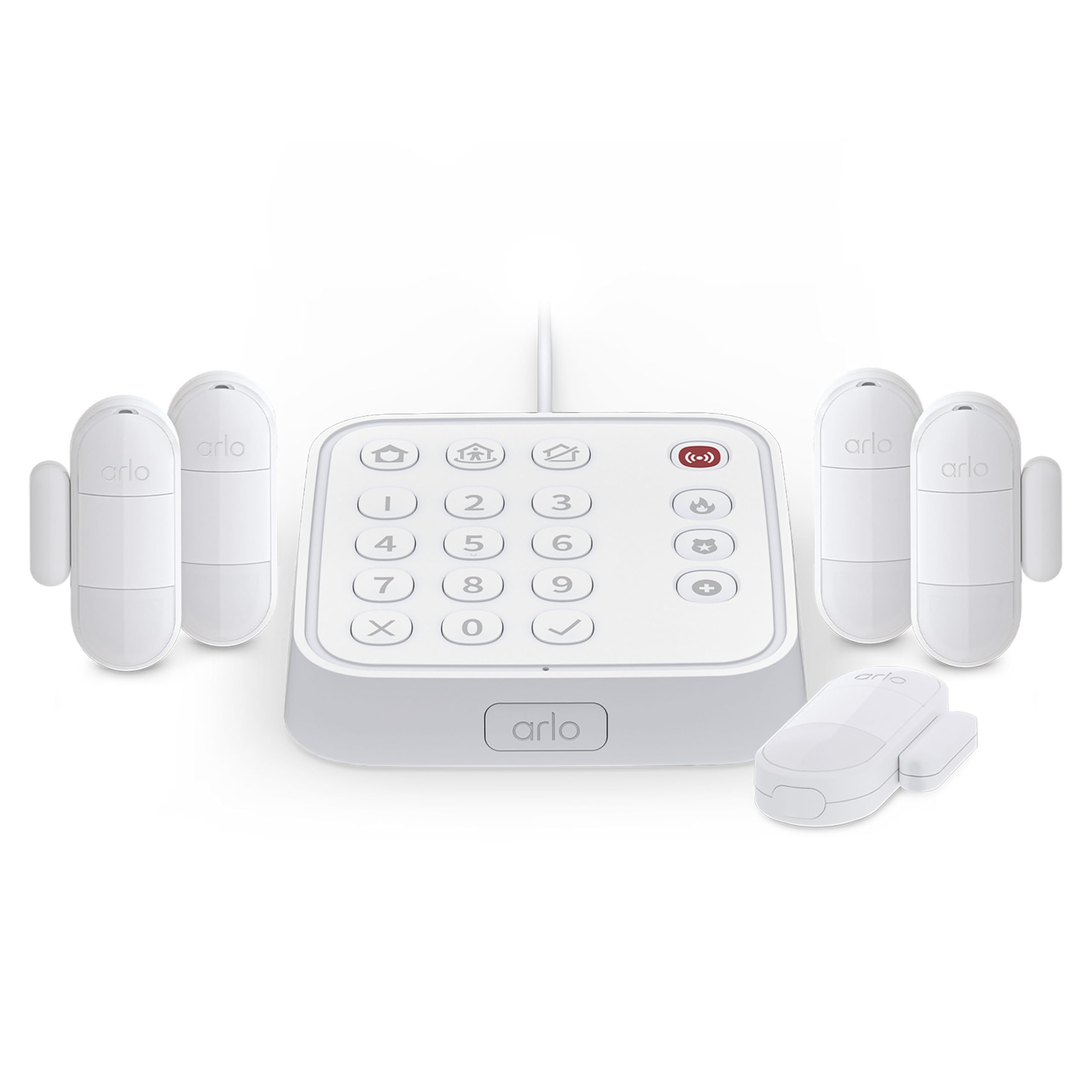
Arlo’s SS1501 shifts the focus from cameras to sensors, with each 8-in-1 wireless puck capable of detecting door/window opening, motion, tilt, temperature, light, water leaks, smoke/CO alarms, and vibration. This all-in-one approach lets you place a single sensor in a room and monitor multiple threats instead of cluttering walls with separate devices.
The keypad sensor hub functions as both the control panel and a central sensor station, with integrated motion detection, siren, and one-tap emergency buttons labeled fire, police, and medical. Setup is entirely app-driven — peel and stick the sensors, power the hub via Ethernet, and pair devices. Customers consistently report that the connection stays stable over long distances thanks to Arlo’s SecureLink technology, which extends range and improves battery life.
One limitation is the loss of advanced automation rules when migrating from older Arlo systems; the SS1501 uses only three modes (Standby, Arm Home, Arm Away). Professional monitoring and 30-day cloud storage require a paid Arlo Secure plan after the trial. Still, for users who want a non-camera-based sensor system with professional monitoring, it’s a clean and reliable solution.
Why it’s great
- 8 sensing functions per sensor reduces hardware clutter
- One-tap emergency buttons with fire, police, medical options
- Extended range and better battery life via SecureLink
Good to know
- Only three operating modes limits automation flexibility
- Cloud storage and professional monitoring require subscription
5. Swann 6-Cam 2K Wired DVR System
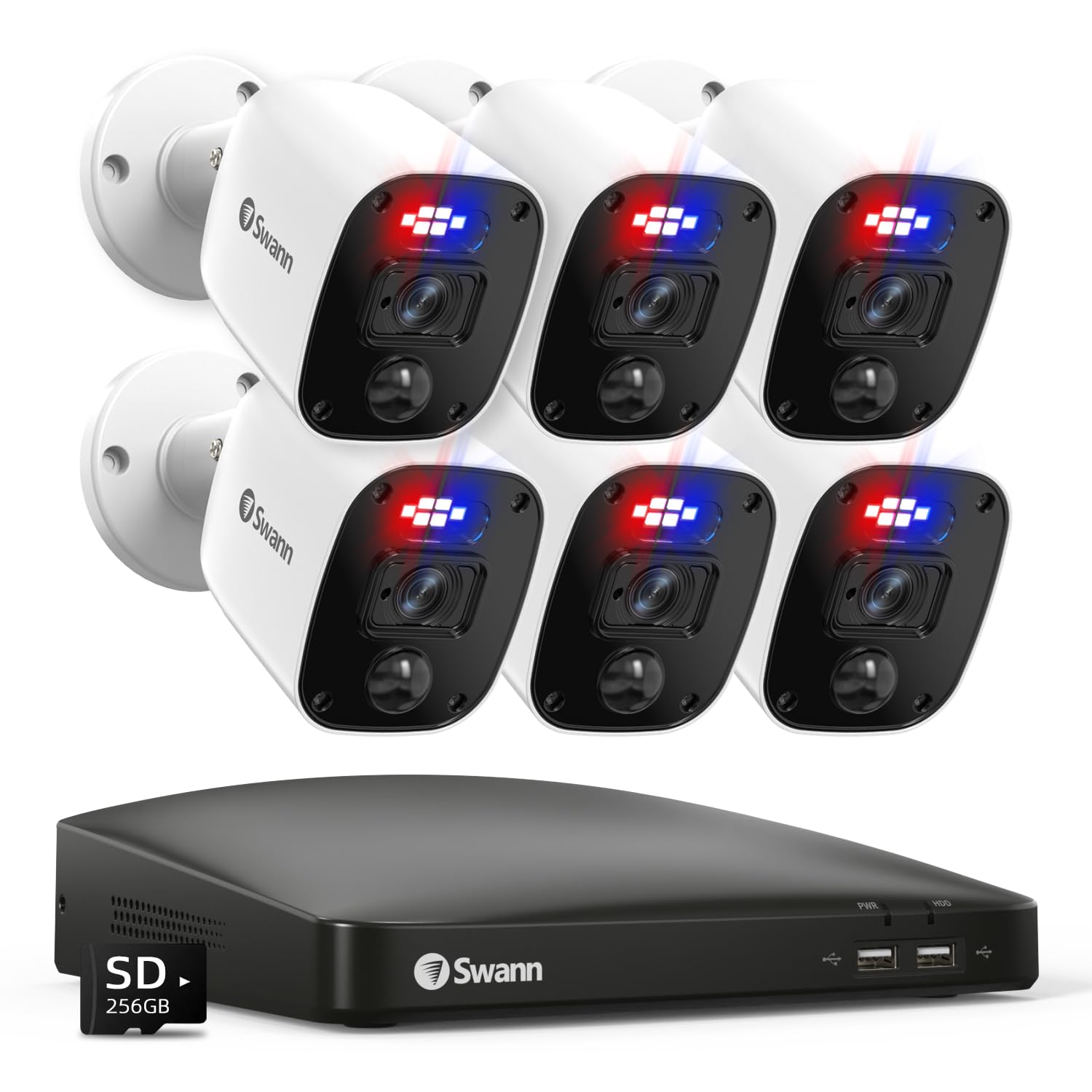
Swann’s 6-camera wired system is built for owners who want 24/7 recording without worrying about battery swaps or WiFi interference. The 2K cameras connect to the DVR via pre-terminated Ethernet cables, providing stable video at 15 frames per second with color night vision up to 32 feet using integrated spotlights.
The active deterrence feature is a differentiator: red and blue flashing lights on each camera physically discourage intruders before they approach. True Detect PIR heat and motion sensing distinguishes people and vehicles from animals and blowing leaves, reducing the false alerts that plague many wireless battery systems. A 256GB SD card is pre-installed, giving weeks of local footage with no monthly storage fees.
The downside is the wired installation — running cables through attics or under eaves requires drilling and planning, and the 60-foot camera cables may not reach every corner of a large property. The DVR unit itself is compact but needs to be near a router for app-based remote viewing. For users comfortable with basic wiring, this system offers the most reliable video capture of the group.
Why it’s great
- Active deterrence with red/blue flashing lights and spotlights
- Person and vehicle detection reduces false motion alerts
- 256GB local storage with no monthly fee required
Good to know
- Wired installation requires drilling and cable management
- Camera cables are 60 feet — may not suit very large lots
6. OHWOAI 5MP PoE Security Camera System

For users who prioritize raw video clarity and storage capacity, the OHWOAI PoE system delivers 5MP resolution per camera plus a pre-installed 1TB hard drive that stores weeks of continuous 24/7 footage. The wired Power over Ethernet design sends both power and data through a single Ethernet cable, eliminating the need for separate power outlets near each camera location.
Each camera includes built-in two-way audio, allowing real-time communication through the smartphone app. The infrared night vision produces clear black-and-white footage in zero-light conditions, and the 8-channel NVR supports HDMI and VGA output for direct connection to a monitor without needing a computer. The app, Honestview, provides free remote viewing with no monthly fee, and AI detection flags motion events for quick playback review.
The first generation of this system has some rough edges: motion sensing can be inconsistent, sometimes flagging trees as people while missing vehicle movement on the driveway. Setting up the NVR requires a wired Ethernet connection to your router, and cables must be run from the recorder to each camera — not ideal for renters. Once configured, the image quality and storage capacity justify the wired commitment.
Why it’s great
- 5MP resolution with 1TB HDD for extensive local storage
- Two-way audio built into each camera
- Free remote app with no subscription required
Good to know
- Motion detection can produce false alerts from foliage
- Wired Ethernet installation is not beginner-friendly
7. GMK Security Cameras Wireless Outdoor 4 Pack

The GMK 4-pack delivers the lowest per-camera cost in this guide without sacrificing the features that matter most for a wireless outdoor security system. Each camera captures 2K 3MP video with full color night vision, using a 3.3mm wide-angle lens that covers front doors, garages, and backyards without blind spots. The rechargeable battery claims up to 3,000 motion triggers per charge, which in real-world testing translates to 1-3 months depending on activity levels.
Setup is genuinely cable-free — each camera mounts with the included brackets, pairs to the VicoHome app, and operates entirely over 2.4GHz WiFi. The PIR motion detection triggers instant phone alerts, and the built-in siren and white light strobe can be activated remotely to scare off unwanted visitors. IP65 weatherproofing means the cameras survive rain, snow, and direct sunlight without degradation.
The main limitation is that the system does not support 5GHz WiFi, which can cause connectivity issues in homes with merged dual-band routers. The hybrid power option allows plugging in a USB cable for continuous operation in high-traffic zones, but the included mounting hardware is basic. For the price of a single premium camera, you get four reliable outdoor cameras that work independently — a compelling equation for budget-conscious buyers.
Why it’s great
- All four cameras include 2K resolution and color night vision
- Up to 3,000 motion triggers per charge reduces recharge frequency
- IP65 weatherproof rating suitable for outdoor year-round use
Good to know
- Only works on 2.4GHz WiFi — not compatible with 5GHz networks
- Basic wall mounts could be more robust for high-wind areas
8. tolviviov 15-Piece WiFi Alarm System

If your priority is maximum sensor coverage at minimal cost, the tolviviov 15-piece kit packs ten magnetic door/window sensors, one motion detector, a keypad, two remote controls, and a 120dB base station siren into a single box. The system supports expansion up to 20 sensors and five keypads/remotes, making it scalable for a medium-sized home or small office.
The app provides real-time alerts, custom arm/disarm schedules, and integration with Alexa for voice control. Setup involves peeling the adhesive backing on each sensor, pairing them with the base station, and configuring zones through the app — no drilling required. The motion sensor has a reasonable range of about 30 feet and can be placed in a corner for full room coverage, though there is no pet immunity built in.
The trade-offs are typical for a budget system: the motion sensor is basic and may trigger false alarms from pets or curtains moving in a breeze. The base station runs on WiFi only, so a power or internet outage disables the alarm unless you add a separate battery backup. For a first security system or a rental property where you cannot permanently mount hardware, the sheer number of included sensors makes this an attractive starting point.
Why it’s great
- Ten door/window sensors provide extensive perimeter coverage
- 120dB siren is loud enough to alert neighbors
- No monthly fees and expandable to 20 sensors
Good to know
- No pet immunity on motion sensor can cause false alarms
- Requires 2.4GHz WiFi — no cellular backup option
9. D1D9 17-Piece 4G GSM Alarm System
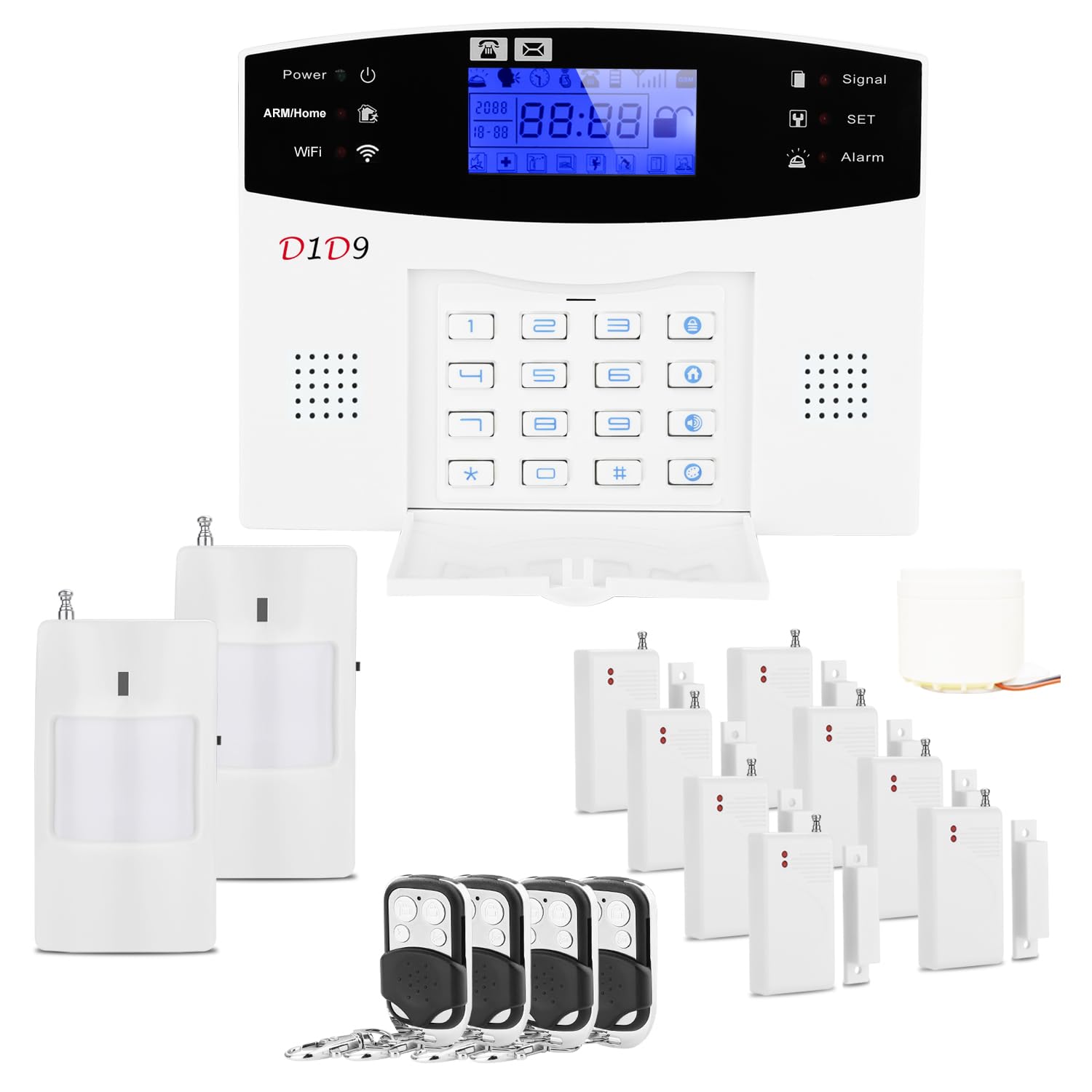
The D1D9 17-piece system is designed for properties where WiFi coverage is unreliable or nonexistent — it supports both 4G cellular and WiFi connectivity, ensuring the alarm continues working even when the internet goes down. The kit includes a mix of door/window sensors, motion detectors, remote controls, and a wired siren that covers an 80-meter range, suitable for larger homes or separate workshop buildings.
Installation follows the same peel-and-stick process as other DIY kits, with each sensor pairing wirelessly to the main control panel. The control unit itself is compact and includes an LCD interface for programming without the app if preferred. Customers report that the magnetic sensors are reliable for entry points, and the motion detectors work well in open rooms.
The remote siren has drawn criticism for intermittent connectivity — some users report the siren does not always trigger when the main base station alarms. The included batteries are listed as promotional gifts and may arrive depleted, requiring immediate replacement. For the price, the 4G capability provides a level of independence from home internet that few competitors at this price point offer, making it a niche but solid choice for rural or vacation properties.
Why it’s great
- 4G cellular connectivity works without home WiFi
- 80-meter wireless range covers large properties
- Complete 17-piece kit with multiple sensor types
Good to know
- Remote siren connectivity can be inconsistent
- Batteries shipped may be depleted — replacements may be needed immediately
FAQ
Do I need a subscription for a DIY security system?
What is the difference between PIR and radar motion detection?
Can I use a DIY security system without WiFi?
Final Thoughts: The Verdict
For most users, the best diy security system winner is the SimpliSafe 11 Piece Gen 3 because it balances broad sensor coverage, a 24-hour backup battery, and optional professional monitoring for those who want police dispatch without a long contract. If you want solar-powered wireless video with no monthly fees, grab the eufy SoloCam S340. And for continuous 24/7 recording with active deterrence and local storage, nothing beats the Swann 6-Cam 2K DVR System.

Mo Maruf
I created WellFizz to bridge the gap between vague wellness advice and actionable solutions. My mission is simple: to decode the research and give you practical tools you can actually use.
Beyond the data, I am a passionate traveler. I believe that stepping away from the screen to explore new environments is essential for mental clarity and physical vitality.