Our readers keep the lights on and my smoothie glass nicely filled. As an Amazon Associate, I earn from qualifying purchases.
The perfect travel camera isn’t about packing the biggest sensor you can afford. It’s about the ratio of zoom reach to pocketability — the one you’ll actually carry up a mountain path, through a rainstorm, and into a packed concert hall without complaining about the weight in your bag.
I’m Mohammad Maruf — the founder and writer behind WellFizz. I spend my time analyzing market trends, consumer reviews, and raw specification sheets to identify which cameras deliver genuine performance for the traveling photographer without unnecessary bulk.
After combing through hundreds of hours of owner feedback and comparing sensor sizes, zoom ranges, stabilization systems, and battery endurance across eleven top contenders, I’ve assembled the definitive list of the best digital travel camera options available right now. Each review below focuses on a specific trade-off that matters when you’re on the move.
How To Choose The Best Digital Travel Camera
The travel camera market is crowded with competing form factors: rugged compacts, superzoom compacts, mirrorless interchangeables, and premium fixed-lens models. Each type trades size against image quality, zoom versatility against low-light capability. Understanding your non-negotiable needs — whether that’s a waterproof body for snorkeling or a full-frame sensor for evening street photography — is the first step in narrowing the field to the right companion.
Zoom Range vs. Sensor Size
A 30x optical zoom tucked into a pocket-sized body (like the Panasonic ZS99) gives you the reach to capture distant landmarks and stage performances, but the small 1/2.3-inch sensor struggles the moment light drops. Conversely, an APS-C or full-frame sensor delivers superior dynamic range and cleaner shadows, but gives you less reach per millimeter of lens. For general travel, a 24-70mm equivalent or a versatile kit zoom (16-50mm or 24-105mm) covers most scenarios — landscapes, portraits, and group shots — without forcing you to swap lenses in a dusty street.
Stabilization: IBIS vs. Lens-Based OIS
In-Body Image Stabilization (IBIS) shifts the sensor to counteract hand shake, letting any lens you mount benefit from steadier shots. Lens-Based Optical Image Stabilization (OIS) works within the lens barrel. The most effective travel setups combine both, especially for handheld twilight shooting. Cameras like the OM System E-M10 Mark IV (4.5 stops of IBIS) or the Panasonic G85 (5-axis Dual I.S.) allow you to shoot 1-second exposures without a tripod — a massive advantage inside dimly lit cathedrals or evening markets.
Ruggedness and Weather Sealing
If your travels involve rain, dust, humidity, or snorkeling, a weather-sealed body or a dedicated rugged compact like the OM System Tough TG-7 is a sanity saver. Many mirrorless bodies offer partial weather sealing (sealed seams, gaskets around buttons), but the lens must also be sealed to form a complete barrier. For extreme conditions — below freezing, underwater, or dropping from a bike mount — the TG-7’s 15-meter waterproof, 2.1-meter shockproof, and 100kgf crushproof rating is a category all its own.
Quick Comparison
On smaller screens, swipe sideways to see the full table.
| Model | Category | Best For | Key Spec | Amazon |
|---|---|---|---|---|
| Sony RX100 VII | Premium Compact | All-in-one pocket powerhouse | 24-200mm f/2.8-4.5 zoom | Amazon |
| Fujifilm X100VI | Premium Fixed Lens | Street & creative color science | 40.2MP, 23mm f/2, 6-stop IBIS | Amazon |
| Sony a6400 | APS-C Mirrorless | Fast AF & interchangeable lenses | 425-phase AF points, 11fps | Amazon |
| Canon EOS RP + 24-105mm | Full-Frame Mirrorless | Entry-level full-frame travel | 26.2MP, RF 24-105mm IS STM | Amazon |
| Fujifilm X-T30 III | APS-C Mirrorless | Film simulations & compact body | 26.1MP, AI subject-detection AF | Amazon |
| Nikon Z 30 + 16-50mm | APS-C Mirrorless | Vlogging & lightweight travel | 20.9MP, 4K 30p unlimited record | Amazon |
| OM System E-M10 Mark IV | MFT Mirrorless | Stabilized compact ILC | 20MP, 4.5-stop IBIS | Amazon |
| Panasonic G85 + 12-60mm | MFT Mirrorless | Dual stabilization hybrid shooter | 16MP, 5-axis IBIS + OIS | Amazon |
| Canon EOS R100 + 18-45mm | APS-C Mirrorless | Entry-level interchangeable lens | 24.1MP, Dual Pixel CMOS AF | Amazon |
| Panasonic ZS99 | Superzoom Compact | Maximum zoom in pocket-size | 24-720mm equiv., 30x zoom | Amazon |
| OM System Tough TG-7 | Rugged Compact | Underwater & extreme conditions | Waterproof to 15m, 4x zoom | Amazon |
In‑Depth Reviews
1. Sony RX100 VII
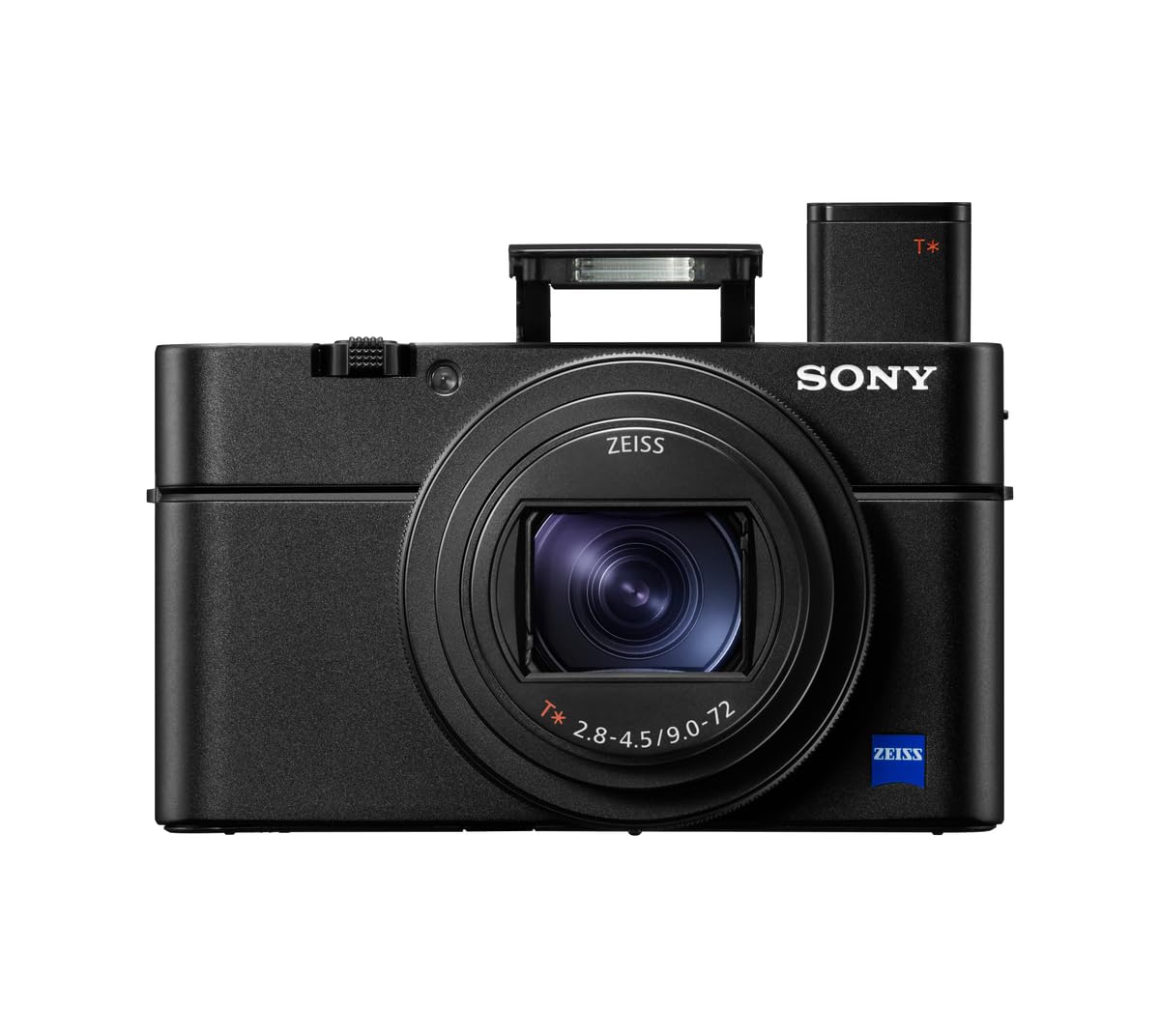
The RX100 VII packs a 1-inch stacked CMOS sensor with a 24-200mm f/2.8-4.5 Zeiss Vario-Sonnar T* zoom lens into a jacket-pocket body. That 200mm telephoto reach combined with 0.02-second phase-detection autofocus and 357 focal-plane phase-detection points makes it the most optically versatile pocket camera on the market. The real-time Eye AF for humans and animals works in both stills and video, and the 20fps blackout-free burst shooting captures fast-moving subjects without missing a frame.
Video shooters benefit from 4K with log gamma (S-Log3), a 3.5mm microphone jack, and Active Mode image stabilization that smooths handheld footage. The pop-up electronic viewfinder is essential for sunny-day composition, though the 1.44-million-dot resolution feels a generation old compared to the competition. The 24-200mm lens covers everything from wide landscapes to tight concert shots, but at the long end the f/4.5 aperture limits low-light performance compared to larger-sensor cameras.
Battery life is rated at 260 shots, which is mediocre for a day of travel — carrying a spare NP-BX1 battery is almost mandatory. The lack of built-in flash and a menu system that can overwhelm first-time users are the main complaints from reviewers. For the traveling photographer who prioritizes pocketability and versatile zoom above all else, the RX100 VII remains the benchmark.
Why it’s great
- Industry-leading autofocus speed and tracking in a pocket-sized body
- 24-200mm zoom range covers wide to telephoto without changing lenses
- 4K video with microphone input and log gamma profile
Good to know
- Battery life is short; plan for at least one spare battery per day
- Menu system is dense and requires time to learn
- Slippery body texture — a grip accessory improves handling
2. Fujifilm X100VI

The X100VI is the sixth iteration of Fujifilm’s cult-classic fixed-lens compact, and it finally adds in-body image stabilization with up to 6 stops of correction. The 40.2MP X-Trans CMOS 5 HR sensor resolves immense detail, while the 23mm f/2 lens (35mm equivalent) forces a discipline that many photographers find creatively liberating. The 20 Film Simulation modes, including the new REALA ACE profile, produce out-of-camera JPEGs that rival — and often surpass — what you can extract from a raw file on a computer.
The hybrid optical/electronic viewfinder is the star: switch between a pure EVF for critical exposure preview and an OVF for seeing outside the frame lines. The built-in 4-stop ND filter lets you shoot wide open in bright daylight without overexposure, and the leaf shutter is near-silent — ideal for street photography in quiet temples or museums. However, a fixed 35mm-equivalent lens means you zoom with your feet, and there’s no telephoto reach for distant subjects.
Autofocus, while improved over the X100V, still uses contrast-detection with phase-detect assist — it’s not as instantaneous as the Sony a6400 or RX100 VII, especially in low-contrast scenes. Battery life is also a weak point, with the IBIS and sensor drain combining for about 350 shots per charge. For the traveler who values color science, tactile control, and a camera that inspires shooting rather than menu-diving, the X100VI is a genuine companion.
Why it’s great
- Outstanding JPEG color reproduction with 20 Film Simulation modes
- 6-stop IBIS enables handheld shots in very low light
- Hybrid OVF/EVF is unique and excellent for composition and street shooting
Good to know
- Fixed 23mm f/2 lens offers no zoom range
- Autofocus speed is not competitive with phase-detect-only rivals
- Short battery life; carrying multiple batteries is necessary
3. Sony Alpha a6400

The a6400 set a new bar for APS-C autofocus when it launched, with 425 phase-detection and 425 contrast-detection points covering 84% of the sensor and a 0.02-second acquisition time. Real-time Eye AF works for humans and animals in both stills and video, and Real-time Tracking maintains lock on moving subjects even as they change direction. The 24.2MP Exmor CMOS sensor delivers clean files up to ISO 6400, and the 11fps continuous shooting with buffer for 116 JPEGs makes it a capable action camera.
The flip-up 180-degree touchscreen is a clear nod to vloggers, but the touch functionality is limited to focus-area selection — menu navigation still relies on physical buttons. The E-mount system gives access to the largest mirrorless lens library, spanning Sony, Sigma, Tamron, and Samyang, so you can adapt your kit from a compact 16-50mm pancake to a 70-350mm telephoto for wildlife. The body itself is dust- and moisture-resistant, though you’ll want a sealed lens for real confidence.
Reviewers consistently note the greenish color cast straight out of camera for raw files, which requires profile adjustments or shooting in the various Picture Profiles (including S-Log) to correct. The 4K video is oversampled from 6K and looks excellent, but the rolling shutter is severe during fast pans. The a6400 is a brilliantly fast, versatile travel ILC if you can tolerate the menu complexity and plan around the lack of in-body stabilization.
Why it’s great
- Lightning-fast autofocus with real-time Eye AF and object tracking
- Wide E-mount lens ecosystem for expanding your travel kit
- Excellent 4K video oversampled from 6K
Good to know
- Raw files have a greenish color cast that requires correction
- Severe rolling shutter in 4K video during fast movement
- No in-body image stabilization — relies on lens OIS
4. Canon EOS RP + RF 24-105mm f/4-7.1 IS STM

The EOS RP is the smallest and lightest full-frame mirrorless body Canon has ever made, and paired with the RF 24-105mm f/4-7.1 IS STM lens, the total package weighs just over 1.2 lbs. The 26.2MP sensor uses Canon’s Dual Pixel CMOS AF with 4,779 selectable AF points, giving it phase-detection coverage across almost the entire frame. The 24-105mm zoom range is the classic travel focal length — wide enough for cityscapes, tight enough for portraits — and the 5-stop optical IS makes handheld shooting at 1/15th of a second possible.
Image quality from the full-frame sensor is a clear step above APS-C: noticeably better dynamic range for pulling shadows in high-contrast scenes and substantially cleaner files at ISO 6400. The Vari-angle touchscreen flips out for low-angle and selfie shots, and the electronic viewfinder (2.36m dots) is clear and responsive. For travel photographers coming from a Canon DSLR, the RP body accepts EF and EF-S lenses via the basic mount adapter, preserving an existing lens library.
The main trade-off is the 4K video, which has a 1.6x crop and a 29-minute 59-second recording limit — a limitation that can be disruptive for travel vloggers. The kit lens’s f/4-7.1 aperture is slow, meaning the camera pushes ISO higher in low-light interiors and at the telephoto end. Battery life is rated at 290 shots per charge, but in real-world mixed use, you’ll reach for a spare before dinner. For the traveler who wants full-frame image quality in a compact, reasonably priced body, the RP delivers.
Why it’s great
- Full-frame sensor provides excellent dynamic range and low-light performance
- Classic 24-105mm zoom range covers most travel photography needs
- Compact and lightweight for a full-frame interchangeable lens camera
Good to know
- 4K video has a 1.6x crop and a 30-minute recording limit
- Kit lens has a slow f/4-7.1 maximum aperture
- Battery life is modest; spares are recommended for full-day outings
5. Fujifilm X-T30 III + XC 13-33mm f/3.5-6.3 OIS
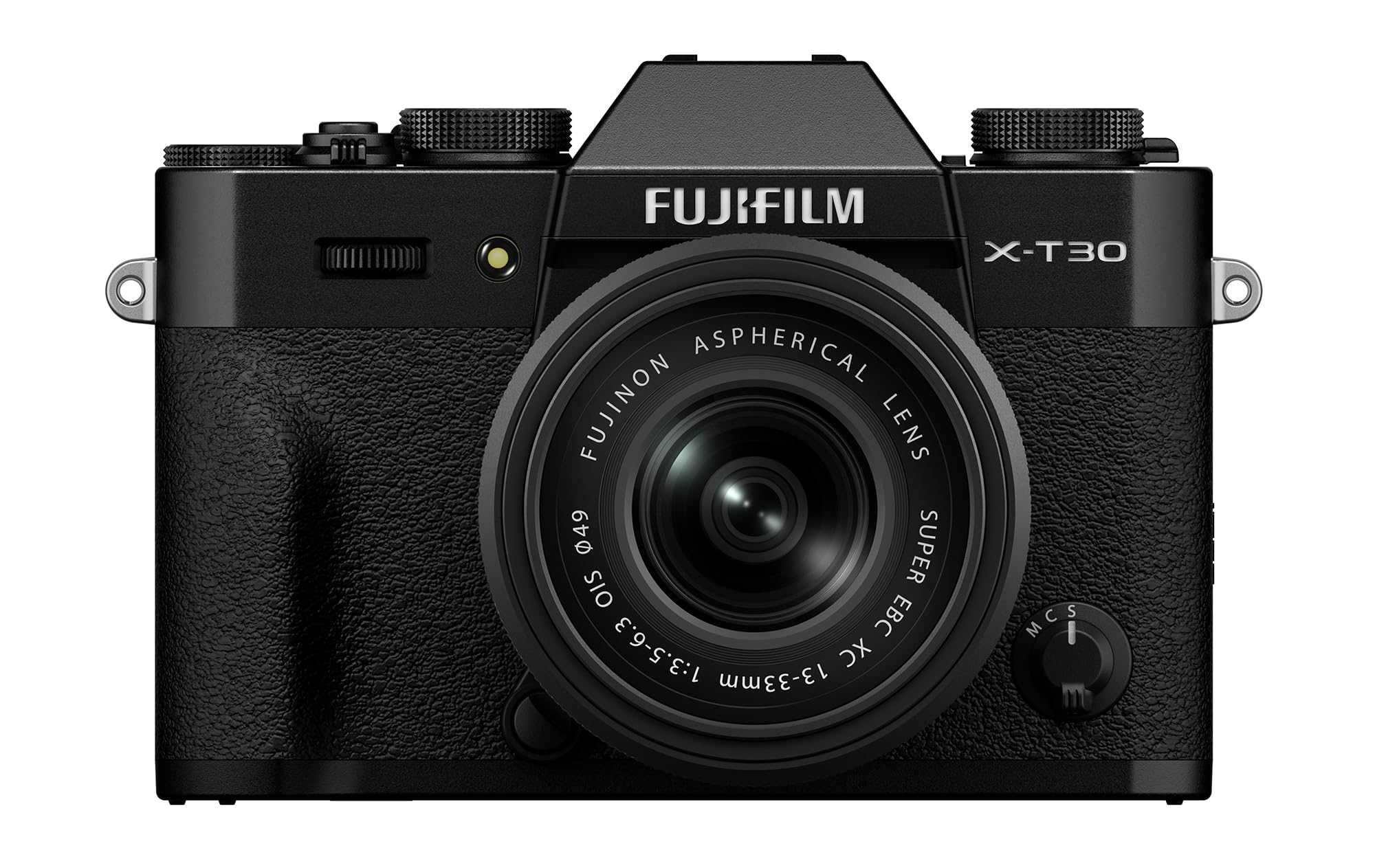
The X-T30 III inherits the 26.1MP X-Trans CMOS 4 sensor and X-Processor 4 from the higher-end X-T4, then wraps them in a smaller, lighter body that’s substantially more travel-friendly. The 20 Film Simulation modes (including Classic Chrome, Velvia, and Astia) produce JPEGs with the characteristic Fujifilm look that many travelers prefer over color-grading raw files. The AI-powered subject detection autofocus recognizes animals, birds, cars, aircraft, and trains, making it a responsive travel companion for diverse scenes.
The included FUJINON XC 13-33mm f/3.5-6.3 OIS lens gives an effective 20-50mm full-frame equivalent — wider than a typical kit zoom, which is excellent for tight interior shots and expansive landscapes. The optical image stabilization adds 3.5 stops, but the X-T30 III lacks in-body stabilization, so the lens OIS is your only defense against camera shake. The 2.36m-dot OLED viewfinder is bright and detailed, though the 0.62x magnification is slightly smaller than the X-T4’s finder.
Reviewers praise the image quality and color reproduction but note that the battery life (rated at 380 shots CIPA) drains faster in practice with Wi-Fi and AF-C enabled. The lack of dedicated headphone and microphone jacks limits video monitoring, though the built-in mic is adequate for casual travel clips. For the photographer who values film-like results straight out of camera and a compact body with retro dials, the X-T30 III is a compelling mid-range option.
Why it’s great
- Fujifilm Film Simulations produce beautiful JPEGs with minimal editing
- Compact APS-C body with AI-powered subject detection autofocus
- Wide 20-50mm equivalent zoom range from the included kit lens
Good to know
- No in-body image stabilization — relies entirely on lens OIS
- No dedicated microphone or headphone jacks
- Battery life is average; carry spares for all-day shooting
6. Nikon Z 30 + NIKKOR Z DX 16-50mm f/3.5-6.3 VR

Nikon’s Z 30 is the lightest mirrorless camera in the Z series at 405g with battery and card, and it’s purpose-built for content creators who travel. The flip-out 3-inch touchscreen with face and eye-detection AF makes self-shooting intuitive, and the red REC light on the front is a small but thoughtful feature that confirms recording without squinting at the screen. The 20.9MP DX sensor produces sharp, vibrant images, and the 4K video at 30p has no recording time limit — a major advantage over Canon’s RP.
The bundled NIKKOR Z DX 16-50mm f/3.5-6.3 VR lens is a compact retractable zoom with Vibration Reduction that stabilizes handshake by 4.5 stops. The 16mm wide end (24mm full-frame equivalent) is noticeably wider than most kit zooms, which helps when you’re vlogging at arm’s length or capturing a wide scene in a tight space. USB-C power delivery lets you shoot and charge simultaneously, and the plug-and-play webcam mode (Full HD 60p over USB-C) works without additional software.
The biggest omission for travel is the lack of an electronic viewfinder — bright sunlight makes the rear LCD hard to compose accurately, even with its high brightness setting. The Z 30 also lacks in-body stabilization, relying entirely on the lens VR, and the DX lens lineup is still growing compared to Fujifilm’s X mount or Sony’s E mount. For the travel vlogger who values light weight and unlimited 4K recording, the Z 30 is the most practical dedicated camera in this price tier.
Why it’s great
- Unlimited 4K video recording at 30p — excellent for travel vlogging
- Very lightweight at 405g with battery and card
- USB-C power delivery for extended shooting sessions
Good to know
- No electronic viewfinder — bright sunlight is challenging for composition
- No in-body image stabilization
- DX Z-mount lens selection is still limited compared to rivals
7. OM System E-M10 Mark IV + M.Zuiko 14-42mm f/3.5-5.6 EZ

OM System (formerly Olympus) has long led the market for compact camera stabilization, and the E-M10 Mark IV inherits the 5-axis in-body stabilization capable of 4.5 shutter speed steps of compensation. This means you can handhold a 1-second exposure at the 14mm wide-angle setting and get a sharp image — a real advantage when shooting inside dimly lit museums, cathedrals, or evening markets without a tripod. The 20MP Live MOS sensor, while not the highest resolution in this list, delivers excellent Micro Four Thirds image quality with good color science out of the box.
The 14-42mm EZ pancake lens retracts to a very compact profile, making the entire kit vanish into a jacket pocket — a rarity for an interchangeable-lens camera. The flip-down selfie screen automatically activates a dedicated selfie mode, a creative decision that simplifies travel-pair or solo portraits. The 121-point contrast-detect autofocus is reliable in good light, though it hunts more than phase-detect systems in low-contrast scenarios.
The Micro Four Thirds system gives you access to the largest lens ecosystem of any mirrorless mount, from ultrawide 7-14mm zooms to the tiny 45mm f/1.8 portrait lens. Reviewers consistently note that the 1-second handheld exposures enabled by the IBIS are the main reason to choose this system over similarly priced APS-C cameras. The battery life (360 shots CIPA) is decent, but the lack of a USB-C port and the reliance on an external charger are minor annoyances on the road.
Why it’s great
- Best-in-class 5-axis IBIS enables sharp handheld long exposures
- Compact pancake kit lens makes the whole setup truly pocketable
- Vast Micro Four Thirds lens ecosystem for system growth
Good to know
- Contrast-detect AF struggles in low-contrast lighting scenes
- No USB-C charging — requires dedicated external charger
- 20MP sensor resolution is lower than 24MP+ APS-C competitors
8. Panasonic Lumix G85 + 12-60mm Power O.I.S.

The G85 combines 5-axis in-body stabilization with the lens’s Power O.I.S. to create a Dual Image Stabilization system that works in both photo and video modes equally well. The 16MP Micro Four Thirds sensor has no low-pass filter, extracting noticeably sharper fine detail than older 16MP MFT sensors. The magnesium alloy front body is splashproof and dustproof, and the weather-sealed 12-60mm kit lens completes the sealing — a rare pairing at this price point for travelers who face unpredictable weather.
Video features are where the G85 punches above its weight: 4K UHD at 30p with the Dual I.S. producing remarkably smooth handheld footage, plus Panasonic’s exclusive 4K Photo mode that lets you pull 8MP stills from 30fps bursts, with Post Focus allowing you to select the focus point after the shot. The 2.36m-dot OLED viewfinder is large and clear, and the 3-inch tilt-and-touch LCD is responsive for touch-to-focus during video recording.
The 16MP resolution is the main compromise — the G85 launched in 2016, and newer 20MP MFT sensors (like in the E-M10 Mark IV) resolve more detail. The 49 contrast-detect AF points work well in good light but slow down in low light, especially during 4K video. For the travel photographer who shoots an even mix of stills and video and values weather-sealed durability, the G85 offers outstanding value for money.
Why it’s great
- Dual I.S. (IBIS + lens OIS) produces incredibly smooth handheld footage
- Weather-sealed magnesium alloy body with sealed kit lens
- 4K Photo mode with Post Focus is a versatile addition for travel
Good to know
- 16MP sensor is lower resolution than most current rivals
- Contrast-detect AF struggles in low-light conditions
- Battery life is modest for hybrid shooting; spares recommended
9. Canon EOS R100 + RF-S18-45mm f/4.5-6.3 IS STM

The EOS R100 is Canon’s most affordable RF-mount body and the smallest in the EOS R series, making it a genuine entry point into interchangeable-lens travel photography. The 24.1MP APS-C sensor with DIGIC 8 processor produces image quality that easily outclasses any smartphone and most entry-level compacts, with natural color reproduction and good dynamic range. The Dual Pixel CMOS AF covers 143 zones with human face and eye detection, making autofocus reliable even for beginners who haven’t learned advanced focus modes.
The RF-S18-45mm f/4.5-6.3 IS STM kit lens is compact and light — it extends when powered on and retracts for storage — and includes 4 stops of optical image stabilization. The 18-45mm range gives a 29-72mm full-frame equivalent, which covers everyday wide-angle to short telephoto portraits. The 6.5fps continuous shooting in One-Shot AF is sufficient for capturing walking subjects and family moments without overwhelming the buffer.
Reviewers consistently highlight the R100’s lightweight body and intuitive touchscreen menus as the main reasons to recommend it over smartphone shooting. The limitations are notable: the 4K video is limited to 24fps with a 1.56x crop and a 29-minute 59-second cap, and the 3-inch LCD has a modest 1.04-million-dot resolution that’s hard to see in bright sunlight. The R100 is a solid starter for the new travel photographer, but the video restrictions make it less suitable for anyone planning to vlog.
Why it’s great
- Excellent 24.1MP APS-C image quality at an approachable price point
- Smallest and lightest EOS R body — very travel-friendly
- Dual Pixel CMOS AF with face and eye detection is beginner-friendly
Good to know
- 4K video has a 1.56x crop and is limited to 30 minutes
- Rear LCD is hard to view in bright outdoor light
- No headphone or microphone jack for video monitoring
10. Panasonic Lumix ZS99 (TZ99)

The ZS99 is a pocket-sized superzoom, a category that has all but disappeared — it slips into a small bag or even a spacious jeans pocket and covers a 24-720mm full-frame equivalent zoom range with its 30x optical LEICA lens. That means you can shoot a wide cathedral interior at 24mm, zoom to a tight portrait at 80mm, and then punch in to 720mm for a detail shot of a gargoyle 300 meters away — all without changing a lens. The 60x iZoom extends the reach further for distant subjects, though with some digital interpolation.
The 1,840k-dot tiltable touchscreen is a meaningful upgrade over the previous ZS80, and the USB-C charging eliminates the need for a dedicated charger on the road. Bluetooth 5.0 and the dedicated Send Image button facilitate quick transfers to your phone for social sharing. The 4K Photo mode at 30fps can pull stills from video, giving you multiple attempts to nail the perfect moment, especially for moving subjects at the long end of the zoom.
Image quality is limited by the small 1/2.3-inch sensor — dynamic range is comparable to a good smartphone sensor, and low-light performance degrades quickly past ISO 800. The autofocus system received complaints from reviewers about inconsistent speed, and the lens softens at the 720mm end. For the traveler whose primary need is maximum reach in a pocketable package — and who shoots primarily in good daylight — the ZS99 is the only real option in this narrow category.
Why it’s great
- 30x optical zoom (24-720mm) in a truly pocket-sized compact body
- USB-C charging and Bluetooth 5.0 for easy connectivity
- Tiltable touchscreen for flexible composition at extreme angles
Good to know
- Small 1/2.3-inch sensor produces soft images in low light
- Autofocus speed is inconsistent compared to phase-detect systems
- Lens sharpness drops noticeably at the 720mm telephoto end
11. OM System Tough TG-7

The Tough TG-7 is the successor to the Olympus TG-6 and remains the only compact camera that can survive 15 meters of water depth, a 2.1-meter drop onto concrete, 100kgf of crushing force, and temperatures down to -10°C — all without a housing. For travelers who dive, snorkel, ski, hike in monsoon rain, or carry a camera in dusty environments, the TG-7 is a category-one choice. The 12MP back-illuminated CMOS sensor and TruePic VIII processor produce bright, saturated images in good light, and the f/2.0 maximum aperture is fast for a rugged compact.
The variable macro system is extraordinary: four dedicated macro modes, including a microscope mode that focuses as close as 1cm from the lens element, capturing details invisible to the naked eye. The five underwater modes (including Underwater Microscope and Underwater HDR) optimize white balance and exposure automatically, removing the guesswork from underwater photography. 4K video at 30p and 120fps high-speed video for slow-motion playback add creative flexibility above and below the surface.
Image quality is limited by the small sensor — 12MP is a low resolution by modern standards, and images get noisy above ISO 800. The TG-7 is also significantly bulkier than a standard compact and requires a separate battery charger (not USB-C). Reviewers love the ruggedness and the microscope mode but caution that the camera is not a direct competitor to a 1-inch or APS-C sensor for general travel photography. For the adventure traveler who needs a camera for extreme environments, the TG-7 has no substitute.
Why it’s great
- Waterproof to 15 meters without any housing — snorkel and dive ready
- Microscope mode focuses at 1cm from the lens for extreme close-ups
- Drop-proof, crush-proof, and freeze-proof for extreme travel conditions
Good to know
- 12MP sensor produces noisy images in low light and at high ISO
- Bulkier than a typical pocket compact — needs its own bag slot
- Requires external battery charger; no USB-C charging
FAQ
How much optical zoom is enough for a travel camera?
Is a full-frame camera worth the weight for travel?
What’s more important for a travel camera: zoom range or sensor size?
Do I need weather sealing on my travel camera?
Final Thoughts: The Verdict
For most users, the best digital travel camera winner is the Sony RX100 VII because it packs a 24-200mm zoom, class-leading autofocus, and 4K video into a jacket-pocket body, delivering the single most versatile travel photography package available. If you want advanced color science and film simulations straight out of camera, grab the Fujifilm X100VI. And for underwater adventures, mountain treks, and anything involving drops and splashes, nothing beats the OM System Tough TG-7.

Mo Maruf
I created WellFizz to bridge the gap between vague wellness advice and actionable solutions. My mission is simple: to decode the research and give you practical tools you can actually use.
Beyond the data, I am a passionate traveler. I believe that stepping away from the screen to explore new environments is essential for mental clarity and physical vitality.