Our readers keep the lights on and my smoothie glass nicely filled. As an Amazon Associate, I earn from qualifying purchases.
The gap between a toy and a real trail weapon comes down to one thing: frame geometry matched to your riding intent. A dirt bicycle needs to absorb roots, rocks, and ruts while keeping your weight centered for control — a poorly chosen frame turns every descent into a wrestling match.
I’m Mohammad Maruf — the founder and writer behind WellFizz. I’ve spent months cross-referencing suspension types, wheel sizes, drivetrain specs, and real-world rider feedback to separate the serious contenders from the shelf-fillers in the dirt bicycle category.
From entry-level hardtails to full-suspension rigs that claw through chunk, this guide ranks the best dirt bicycle options your money can buy, sorted by durability, trail capability, and component quality.
How To Choose The Best Dirt Bicycle
Selecting the right machine for packed singletrack or loose fire roads means weighing suspension travel, wheel diameter, frame material, and drivetrain complexity against the terrain you actually ride. Beginners often overbuy on suspension or underbuy on gearing range — knowing the trade-offs prevents wasted cash and a bike that saps your momentum on every climb.
Suspension: Hardtail vs Full-Suspension
A hardtail — front fork only — transfers pedal power directly to the rear wheel, making it more efficient on smooth climbs and pavement connectors. Full-suspension bikes add a rear shock that keeps the tire glued to the ground through rock gardens and root sections, but they weigh more and demand higher maintenance. For mixed-use dirt with occasional rough patches, a hardtail with a quality front fork delivers 90 percent of the capability at a lower entry cost. If you’re chasing downhill speed or technical enduro lines, the rear pivot becomes non-negotiable.
Wheel Diameter & Tire Width
Twenty-six-inch wheels accelerate quickly and feel playful in tight turns, while 27.5-inch wheels roll over medium obstacles with less deflection. Twenty-nine-inch wheels carry momentum best through chunky terrain but require a longer wheelbase that can feel less nimble in switchbacks. Tire width matters equally — 2.25-inch knobbies provide grip on hardpack, while 4-inch fat tires float over sand, snow, and loose gravel at the cost of added rolling resistance and weight.
Drivetrain & Brake Specs
More gears don’t automatically mean better performance. A 7-speed drivetrain with a wide-range cassette climbs steep pitches without the complexity of a front derailleur, while 21- or 24-speed setups give finer cadence control on rolling terrain. Mechanical disc brakes offer reliable stopping power in mud and dust with easy field adjustment, whereas hydraulic discs provide one-finger modulation for aggressive descending but require bleeding tools when servicing. Choose the brake type that matches your technical ability and willingness to maintain the system mid-season.
Quick Comparison
On smaller screens, swipe sideways to see the full table.
| Model | Category | Best For | Key Spec | Amazon |
|---|---|---|---|---|
| Schwinn Traxion | Full Suspension | Aggressive trail riding & climbing | 29″ wheels, 24-speed, aluminum frame | Amazon |
| Mongoose Switchback Comp | Hardtail | Efficient all-day singletrack | 27.5″ wheels, 18-speed, aluminum frame | Amazon |
| Mongoose Dolomite | Fat Tire | Sand, snow & heavy riders | 26″ wheels, 4″ knobby tires, steel frame | Amazon |
| Gravity FSX 1.0 | Full Suspension | Budget dual-suspension entry | 26″ wheels, 24-speed, disc brakes | Amazon |
| Askmy E500 | Electric Fat Tire | Extended range & pedal assist | 20″ wheels, 48V 15Ah, 750W motor | Amazon |
| Huffy 26″ Fat Tire | Fat Tire | Casual off-road & paved mix | 26″ wheels, 4″ tires, 7-speed Shimano | Amazon |
| cubsala Trident BMX | BMX | Dirt jumps & pump tracks | 20″/24″/26″ wheels, Hi-Ten steel frame | Amazon |
| Huffy Stone Mountain | Hardtail | Entry-level trail & commute | 26″ wheels, 21-speed, front suspension | Amazon |
| Razor MX125 | Electric Kids | Kids first dirt experience | 12″ wheels, 8 mph top speed, 80 min run | Amazon |
In‑Depth Reviews
1. Schwinn Traxion

The Traxion earns the top slot because it pairs a lightweight 6061 aluminum frame with genuine full suspension — a front coil fork and rear shock that together eat up babyhead rocks and log crossings without bucking the rider. The 29-inch wheels roll over obstacles with authority, and the 24-speed Shimano drivetrain with trigger shifters gives the cadence range to spin up loose climbs then sprint fire-road descents.
Mechanical disc brakes front and rear provide consistent stopping power in wet leaves and dust, and the extra-wide double-wall alloy rims resist truing after hard landings. Multiple owners report surviving 100+ mile seasons with only minor cable tension adjustments, which speaks to the build quality at this tier. The non-adjustable front shock lacks rebound damping, but for intermediate trail riders that’s a minor concession.
The factory saddle is thin enough that most riders swap it within the first week, and the plastic cable clips can stretch over time — a few zip ties solve that cheaply. If you’re ready to leave beginner-level bikes behind and want real suspension architecture, the Traxion is the most capable all-rounder in this lineup.
Why it’s great
- True front and rear suspension with 29-inch wheels smooths rough trails
- 24-speed Shimano drivetrain provides climbing gear range without gaps
- Mechanical disc brakes offer reliable all-weather stopping
Good to know
- Non-adjustable front shock lacks rebound tuning
- Factory saddle is uncomfortable for longer rides
- Plastic cable clips can stretch; zip ties recommended
2. Mongoose Switchback Comp Expert

The Switchback Comp proves that a hardtail can still rip technical singletrack when the frame is right. The small aluminum frame with internal cable routing keeps weight low and lines clean, while the 27.5-inch wheels strike a nimble balance between rollover and acceleration that shines in tight tree-line trails. The 18-speed drivetrain uses trigger shifters — a welcome upgrade over twist grips — and the mechanical disc brakes shed speed confidently on steep, loose descents.
Assembly reports consistently highlight that the derailleurs come pre-adjusted from the factory, and the welds on the frame earn praise for their smooth finish. Riders between 5’3″ and 5’6″ find the small geometry fits naturally, allowing full extension without feeling cramped. The front suspension fork is basic but sufficient for intermediate trail chatter and small drops.
The switchback ships without a kickstand, which is standard for trail-oriented hardtails, and the stock saddle is narrow enough that most riders budget for an aftermarket replacement. The plastic shifters feel slightly less precise than full-metal units, but they function reliably across seasons. For riders who want an efficient pedaling platform with modern geometry, this is the purist’s choice.
Why it’s great
- Aluminum frame with internal cable routing reduces weight and snagging
- 18-speed trigger shifters offer crisp gear changes on trail
- Mechanical disc brakes handle wet and dusty conditions well
Good to know
- No kickstand included
- Factory saddle is narrow for longer rides
- Plastic shifters feel less premium than metal
3. Mongoose Dolomite Fat Tire

The Dolomite is the fat-tire benchmark for riders who need traction on loose surfaces — sand, snow, decomposed granite, or damp grass. Its 26-inch wheels wrapped in 4-inch knobby tires float where standard mountain bike tires dig and bog down, and the alloy steel frame supports riders up to 400 pounds without flex, according to multiple verified heavy-rider reviews. The 7-speed twist-shift drivetrain is simple enough to keep working even when caked in mud.
Front and rear mechanical disc brakes provide adequate stopping power despite the additional rotational mass of the fat tires, and the beach-cruiser-style pedals offer a stable platform for boots or trail shoes. Owners consistently note that the bike arrives roughly 80 percent assembled, needing only handlebar, front wheel, and seat installation. The steel frame does add heft — the complete bike weighs around 45 pounds — but that weight contributes to a planted feel at speed.
The stock saddle is universally described as punishing, and the twist shifter can bump into a different gear when mounting the bike. Upgrading to a wider padded saddle and a trigger-style shifter are the two most common first modifications. For riders who prioritize stability and flotation over weight savings, the Dolomite is unmatched in this price bracket.
Why it’s great
- 4-inch wide tires provide superior float on sand, snow, and loose gravel
- Steel frame supports heavy riders without compromising stability
- Simple 7-speed drivetrain is easy to maintain and mud-resistant
Good to know
- Stock saddle is uncomfortable; aftermarket replacement recommended
- Twist shifter can accidentally change gears when mounting
- Heavy bike at roughly 45 pounds
4. Gravity FSX 1.0

The Gravity FSX 1.0 cracks the code of affordable full suspension by using an aluminum frame to keep weight manageable — roughly 35 pounds — while equipping an adjustable front fork and rear shock that can be tuned for rider weight and terrain. The 24-speed trigger shifter drivetrain paired with a front and rear derailleur gives the gear range needed to grind up long fire-road climbs and still have a bailout gear for steep sections.
Mechanical disc brakes front and rear provide controlled stopping, and the double-wall rims survive rocky trail abuse better than single-wall alternatives at this price. Owners report the suspension components are genuinely adjustable — preload and rebound — which is rare for bikes at this price point. The bike ships with a pump and a spare derailleur hanger, a thoughtful touch for trailside repairs.
The included assembly instructions are minimal, and no tools come in the box, so a basic mechanic’s set is required. The stock saddle is firm and gets swapped early by most riders, and the tires have adequate grip for hardpack but lose traction in loose-over-hard conditions. If you want to experience full suspension without jumping to premium pricing, the FSX 1.0 is the most honest entry point.
Why it’s great
- Adjustable front and rear suspension for rider weight tuning
- 24-speed trigger shifter drivetrain covers climbing and cruising range
- Aluminum frame keeps weight manageable for a full-suspension bike
Good to know
- Minimal assembly instructions; no tools included
- Stock tires lose grip on loose-over-hardpack conditions
- Firm saddle is uncomfortable for longer rides
5. Askmy E500 Fat Tire Electric Bike
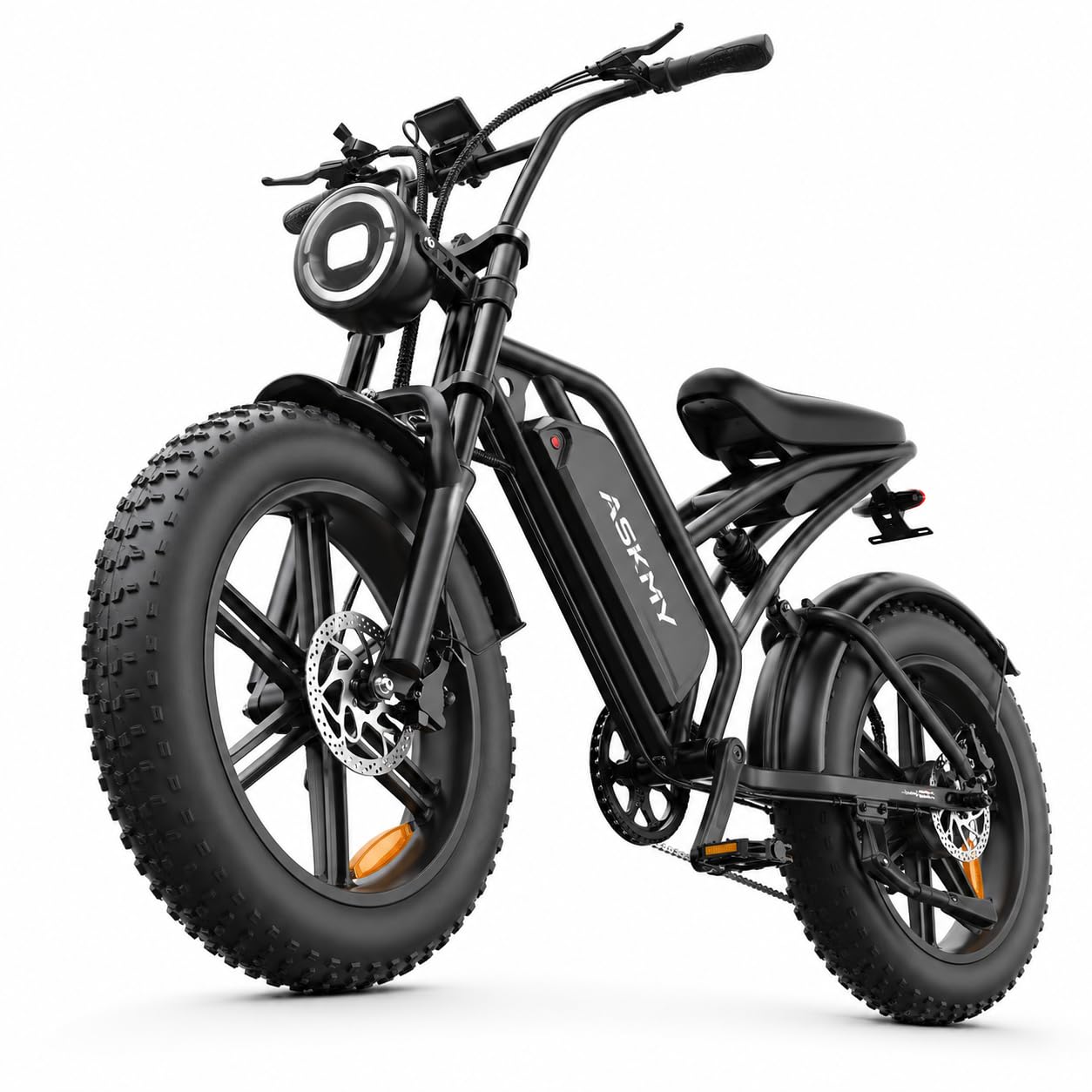
The E500 blends electric assist with fat-tire capability, making it a strong option for riders who want to extend their range on dirt without sacrificing off-road traction. The 48V 15Ah removable lithium battery delivers up to 60 miles in pedal-assist mode, and the 750W continuous (1000W peak) motor provides enough torque to climb moderate inclines without heavy pedaling. The 20-inch by 4-inch pneumatic tires offer flotation similar to the Dolomite but in a smaller diameter that improves low-speed maneuverability.
The triple suspension system — front fork, rear shock, and suspension seat post — works together to smooth out washboard sections, and the 7-speed Shimano drivetrain adds mechanical gearing for times when you want to pedal unassisted. The UL 2849 certification on the electrical system means the battery, charger, and controller meet independent safety standards, a critical consideration for any e-bike. The LCD dashboard displays speed, battery level, and pedal-assist setting in real time.
Assembly requires some mechanical confidence — the chain can arrive off the derailleur, and the front fender may need alignment. The pedal assist cannot be fully turned off while the system is powered on, which makes tight maneuvering in technical sections slightly awkward. For riders with commute-and-trail mixed needs, the E500 bridges the gap efficiently.
Why it’s great
- UL 2849 certified battery system meets strict safety standards
- Triple suspension (fork, rear shock, seat post) smooths rough sections
- 60-mile pedal-assist range extends ride time significantly
Good to know
- Pedal assist cannot be fully disabled while system is on
- Assembly requires mechanical experience; instructions are sparse
- Bike is heavy and less agile on tight technical trails
6. Huffy 26″ Fat Tire Mountain Bike
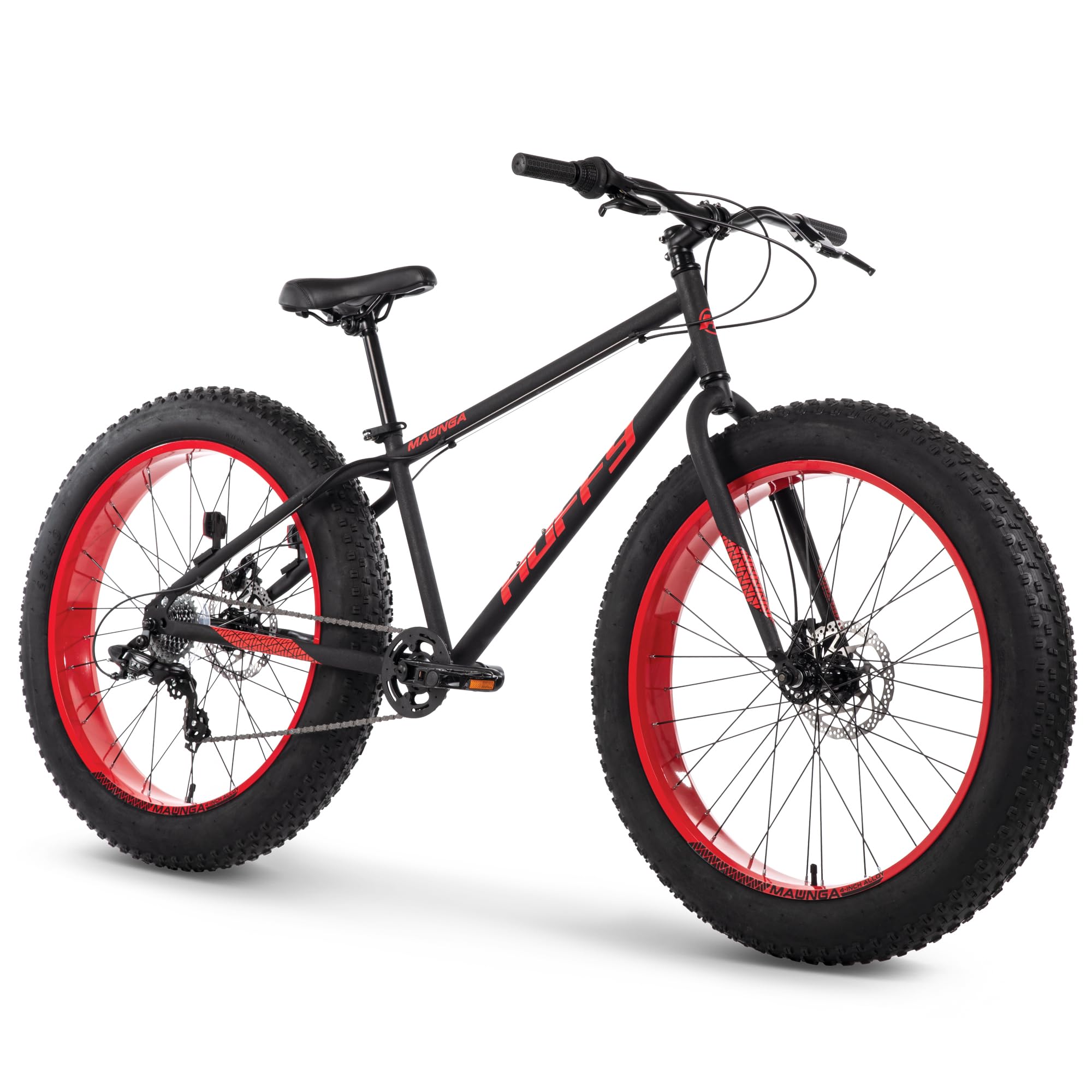
Huffy’s 26-inch fat tire bike delivers the float of 4-inch knobby rubber at a price that undercuts most competitors. The steel frame is built to shrug off bumps and scrapes, and the 7-speed Shimano twist-shift drivetrain provides enough range for moderate climbs and casual trail rides. Front and rear disc brakes improve stopping control compared to the rim brakes found on cheaper bikes, especially when the tires are caked in mud or snow.
The padded saddle and Kraton comfort grips are noticeably plusher than the minimalist saddles on the Dolomite or Traxion, making this a better choice for riders who spend as much time on pavement connector sections as on dirt. The 4-inch tires can be run at lower pressures — around 15–20 PSI — for a cushioned ride over roots and rocks, though the extra rolling resistance is noticeable on longer climbs. Assembly averages under an hour with the included tool kit.
Multiple owners report that the front derailleur cable must be routed clockwise around the bottom bracket, a detail not clearly marked in the manual that can cause shifting issues if ignored. The tires also require careful seating on the rim to avoid bead leaks. For casual off-roaders who want fat tire capability without service complexity, this is a solid entry-level pick.
Why it’s great
- 4-inch fat tires provide traction on sand, snow, and mud
- Disc brakes offer reliable stopping power in wet conditions
- Padded saddle and grips improve comfort for mixed-surface rides
Good to know
- Front derailleur cable routing detail is missing from manual
- Tire bead seating can be finicky during initial setup
- Rolling resistance is high on pavement climbs
7. cubsala Trident BMX Race Bike
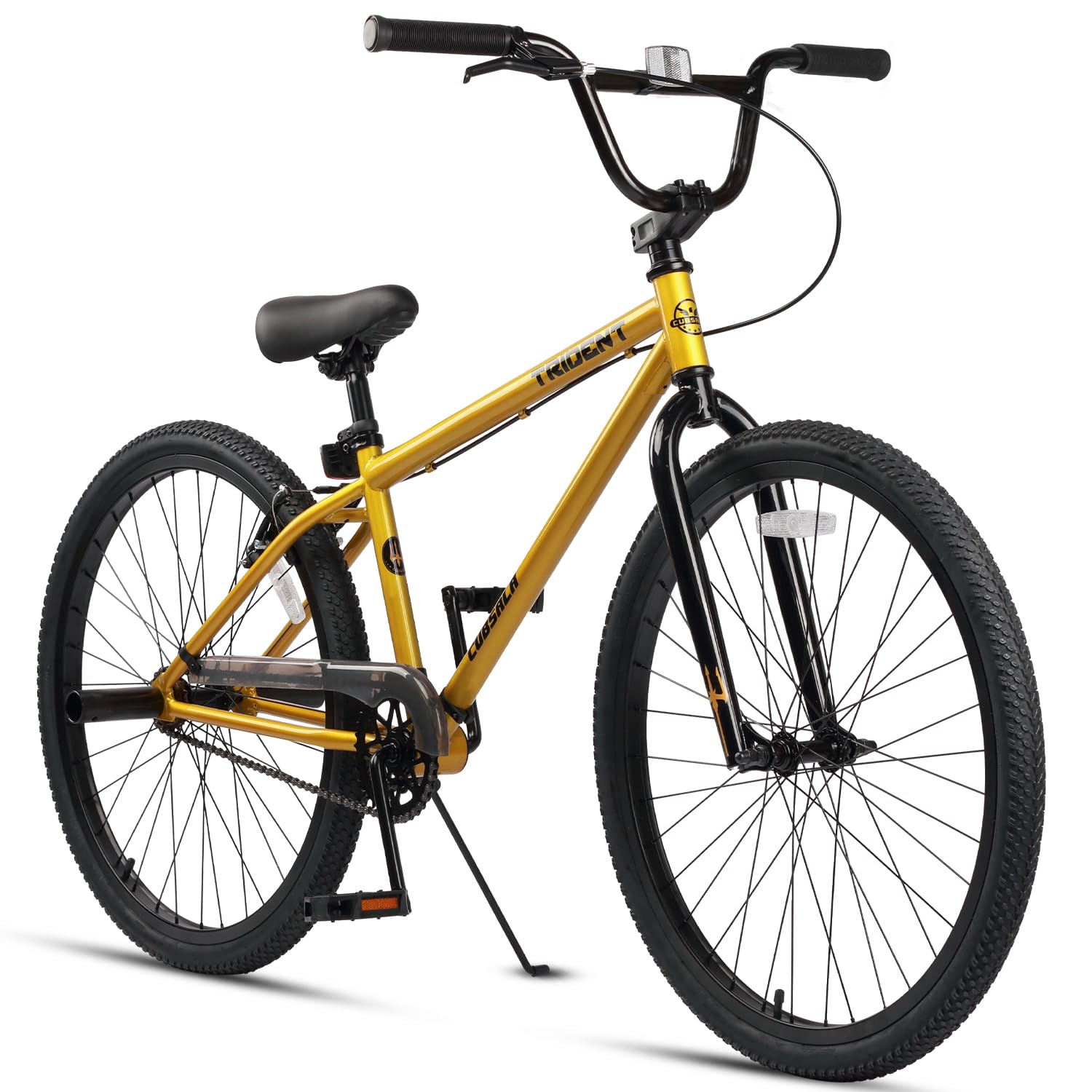
The Trident BMX from cubsala is purpose-built for dirt jumps, pump tracks, and skatepark sessions rather than cross-country trail riding. The Hi-Ten carbon steel frame is stiff and durable enough to handle repeated landings, and the single-speed drivetrain eliminates derailleur damage from case impacts. The rear V-brake provides controlled deceleration for manual tricks and corner entries without the complexity of disc brake routing.
Available in 20-inch, 24-inch, and 26-inch wheel sizes, the Trident fits riders from 4’0″ to 6’2″ depending on the variant chosen. The included pegs allow for basic grinds and trick experimentation, and the trident-style fork adds a distinctive visual that stands out in a sea of black BMX bikes. Owners consistently praise the build quality for the price point — the frame alignment is straight, and the welds are clean.
This is not a bike for climbing hills or covering distance; the single-speed gearing and upright geometry prioritize agility over efficiency. The included assembly tools and gloves simplify the 10-minute setup process. For riders who want to session dirt jumps or cruise the pump track with a bike that can take abuse, the Trident delivers exactly what the category demands.
Why it’s great
- Stiff Hi-Ten steel frame handles repeated jump landings
- Single-speed drivetrain eliminates derailleur damage risk
- Included pegs and trident fork add trick capability and style
Good to know
- Single-speed gearing is not suited for climbing or long distance
- Upright BMX geometry sacrifices pedaling efficiency on flats
- Rear V-brake less powerful than disc brakes in wet conditions
8. Huffy Stone Mountain

The Stone Mountain is Huffy’s answer to the entry-level trail bike market, combining a sleek matte black steel frame with a 21-speed Shimano twist-shift drivetrain. The front suspension fork handles small bumps and gravel sections without transmitting chatter into the handlebars, and the 26-inch wheels with all-terrain tires provide predictable traction on packed dirt and fire roads. The padded comfort saddle is noticeably softer than the minimalist seats found on the Gravity or Switchback.
Owners who have put over 1,000 commuting and trail miles on the Stone Mountain report the frame holds up well but that the rear tire wears faster than expected when ridden primarily on pavement. The assembly process is straightforward, and the included tool kit includes the necessary Allen wrenches and a Phillips screwdriver. The linear pull brakes offer adequate stopping power for moderate terrain but lack the modulation and wet-weather performance of disc brakes.
The biggest quality concern stems from inconsistent customer experiences — some units arrive with loose handlebar stems or pedals that back off during rides, which requires diligent pre-ride bolt checking. The front suspension fork has no adjustment, so heavier riders may find it bottoms out on larger drops. For a first dirt bicycle at a tight budget, the Stone Mountain works if you’re willing to inspect and tighten every fastener before the first ride.
Why it’s great
- 21-speed Shimano drivetrain offers wide gear range for varied terrain
- Front suspension fork reduces handlebar chatter on gravel and fire roads
- Padded saddle improves comfort compared to budget bike norms
Good to know
- Linear pull brakes less effective than disc brakes in wet conditions
- Some units require pre-ride bolt tightening due to quality variance
- Non-adjustable front fork may bottom out for heavier riders
9. Razor MX125 Dirt Rocket Electric

The MX125 is designed for young riders ages 5 and up who are ready to transition from balance bikes to a powered dirt experience. The authentic motocross geometry — crossbar-reinforced handlebars, 12-inch spoked wheels with pneumatic tires, and a retractable kickstand — gives kids a real dirt bike feel without the noise or heat of a gas engine. The 100-watt chain-driven motor tops out at 8 mph in high-speed mode, with a low-speed mode that caps at a slower crawl for absolute beginners.
The 12V sealed lead-acid battery delivers up to 80 minutes of continuous run time in low-speed mode, enough for multiple sessions before needing a recharge. The high/low speed control switch lets parents dial in the appropriate pace as the child gains confidence, and the hand-operated rear brake teaches proper braking technique that translates to pedal bikes later. Motorcycle-style hand grips and a padded seat add to the authentic feel.
The bike is best suited for riders between 3 and 4 feet tall; taller children will outgrow the cockpit quickly. Some users report the motor lacks torque to move a child near the 45-pound weight limit up even mild grassy inclines. For flat dirt lots and driveway exploration, the MX125 is a safe, engaging introduction to two-wheeled dirt riding that avoids the intimidation of a clutch and throttle.
Why it’s great
- Authentic motocross geometry teaches proper riding posture and brake control
- High/low speed switch lets parents match pace to skill level
- Pneumatic tires and spoked wheels provide real dirt bike feel
Good to know
- Motor may lack torque for riders near the 45-pound weight limit on inclines
- Best for riders 3-4 feet tall; growth room is limited
- Lead-acid battery has shorter lifespan than lithium alternatives
FAQ
What size dirt bicycle should I get for my height?
Is a hardtail or full-suspension dirt bicycle better for beginners?
How much should I spend on a quality dirt bicycle?
Final Thoughts: The Verdict
For most riders, the best dirt bicycle winner is the Schwinn Traxion because its full suspension and 29-inch wheels provide the widest performance envelope for intermediate trail riders at a mid-range price. If you want a lightweight hardtail for efficient singletrack and climbs, grab the Mongoose Switchback Comp. And for sand, snow, or heavier riders who need flotation and stability, nothing beats the Mongoose Dolomite.

Mo Maruf
I created WellFizz to bridge the gap between vague wellness advice and actionable solutions. My mission is simple: to decode the research and give you practical tools you can actually use.
Beyond the data, I am a passionate traveler. I believe that stepping away from the screen to explore new environments is essential for mental clarity and physical vitality.