Our readers keep the lights on and my smoothie glass nicely filled. As an Amazon Associate, I earn from qualifying purchases.
A diesel turbo that feels sluggish, triggers a check engine light, or kicks into limp mode usually has one culprit: carbon-locked variable-geometry vanes. These tiny pivoting fins inside the turbo housing control boost pressure, but soot and combustion byproducts bake onto them over time, freezing their range of motion. A purpose-formulated diesel turbo cleaner works by dissolving that baked-on carbon without removing the turbo from the engine, potentially restoring boost response and avoiding a costly replacement.
I’m Mohammad Maruf — the founder and writer behind WellFizz. I spent hundreds of hours analyzing chemical formulations, application methods, and real-world owner reports across the diesel turbo cleaning segment to separate products that actually free stuck vanes from those that merely treat the fuel system.
This guide focuses specifically on products designed to clean the turbocharger assembly in diesel engines, not general fuel injector treatments. You will learn which formulations target the vane ring directly and what results to expect from the best diesel turbo cleaner.
How To Choose The Best Diesel Turbo Cleaner
Not every diesel additive touches the turbo. Many products target injectors, fuel lubricity, or cetane boost — none of which free carbon-locked vanes. To pick the right cleaner, you must evaluate how the chemical reaches the turbo and what solvents it uses to break down hard carbon deposits.
Direct Intake Chemistry vs. Fuel System Additives
A true diesel turbo cleaner introduces solvent either through a direct intake spray (foam or aerosol that coats the turbo vanes directly) or through the fuel system at a high enough concentration to carry solvent past the injectors and into the exhaust stream during regeneration. Fuel additives labeled as “turbo cleaners” rely on the latter path, so their effectiveness depends on the percentage of active solvent and the engine’s ability to reach regeneration temperatures. Products meant for professional induction cleaning use a pressurized canister that bypasses the fuel system entirely.
Active Solvent Type and Concentration
Look for formulations that list polyetheramine (PEA), heavy aromatic naphtha, or proprietary solvent blends as primary ingredients. PEA is the gold standard for carbon dissolution in gasoline direct-injection engines, but diesel turbo cleaning often requires higher flash-point solvents that can withstand exhaust-side temperatures without instantly vaporizing. The best products also include a carrier oil that provides temporary lubrication to freed vanes so they don’t immediately seize again during the first heat cycle.
Application Method and Required Effort
Some cleaners require a multi-step procedure: warm the engine, remove the intake hose, spray directly into the turbo inlet, let it soak, then drive aggressively to burn off dissolved carbon. Others are simply dumped into the fuel tank and require sustained highway driving at elevated RPM to work. Your choice should match your mechanical comfort level. Direct-spray formulations are more labor-intensive but produce faster results on severely stuck vanes, while in-tank formulas are easier but may need multiple treatments over several tanks of fuel.
Quick Comparison
On smaller screens, swipe sideways to see the full table.
| Model | Category | Best For | Key Spec | Amazon |
|---|---|---|---|---|
| JLM Diesel Turbo Cleaner | Premium | Targeted vane cleaning | 500 ml solvent formulation | Amazon |
| Liqui-Moly Diesel Purge | Premium | Injector + turbo cleaning | 33.8 oz total (2 pack) | Amazon |
| Hot Shot’s Secret Fuel Duo | Mid-Range | Cetane boost + vane care | 16 oz each, 2 additives | Amazon |
| Rislone 4744 DPF CLEAN | Mid-Range | DPF regeneration aid | 16.9 oz, 5k mile interval | Amazon |
| Berryman 2611 | Budget | Gasoline intake cleaning | 16 oz aerosol with PEA | Amazon |
In‑Depth Reviews
1. JLM Diesel Turbo Cleaner (500ml) – J02380
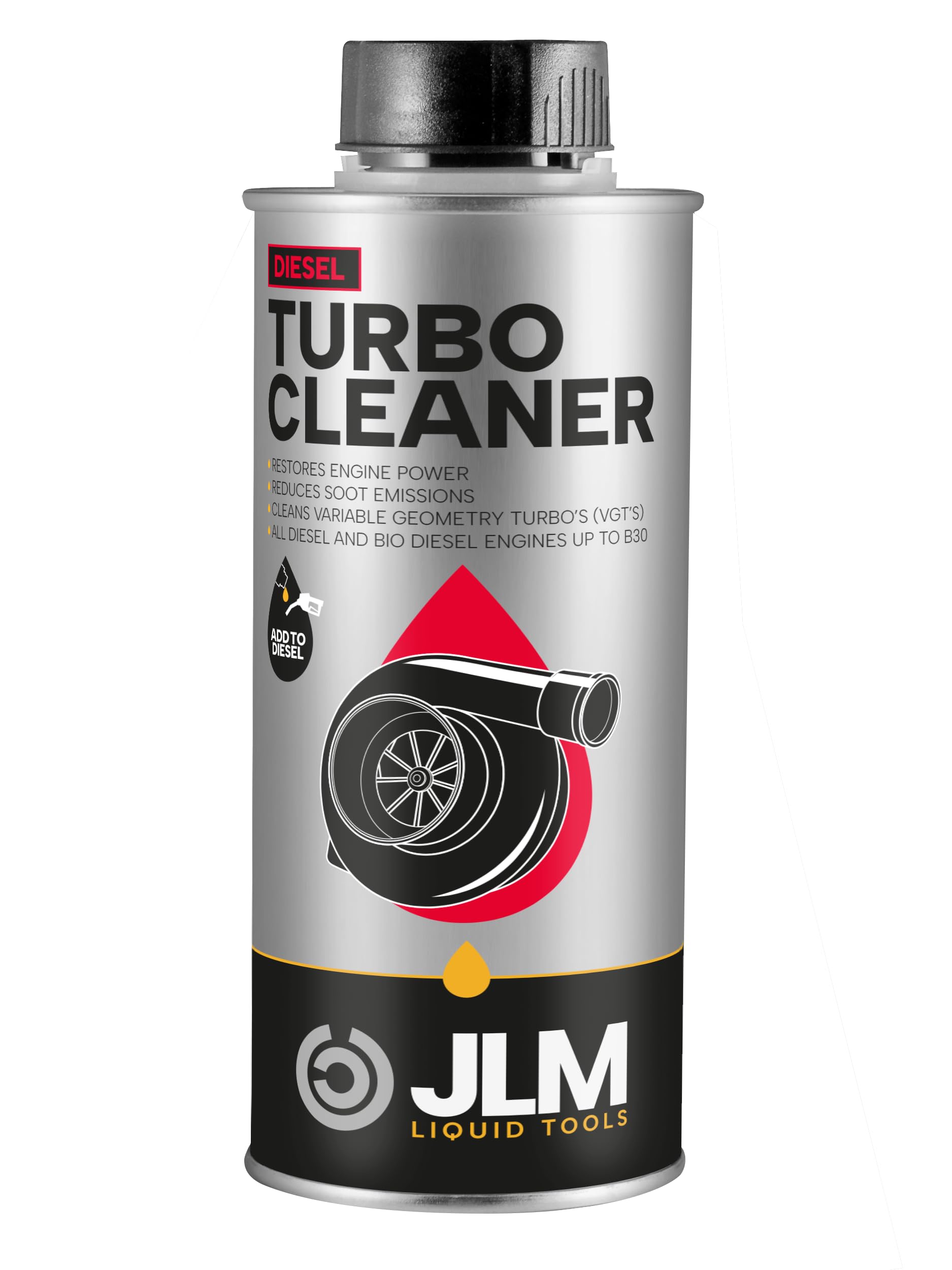
JLM Lubricants designed this 500 ml formulation specifically for cleaning turbocharger vanes in modern diesel engines. Users report a gradual restoration of turbo spool response and reduced black smoke after following the prescribed high-RPM driving routine. The solvent works best when the engine is driven in a lower gear at sustained 3,000 RPM for 30 to 40 minutes, allowing the chemical to heat sufficiently and break down carbon crust inside the vane ring.
Several owner reports on Duramax and Powerstroke trucks noted that power felt “restored” after a single bottle, with the turbo no longer triggering a check engine light for underboost. One reviewer described a stuck actuator that freed up after ten days of in-tank use, eliminating limp mode on steep grades. The formula does not repair mechanically damaged turbos, but on units with carbon-stuck vanes it shows a high success rate.
Application is straightforward: pour the entire bottle into the fuel tank when it’s at least half full, then take the vehicle on a long highway run. The active solvent carries through the fuel system, past the injectors, and contacts the turbo vanes during the exhaust stroke. For best results, combine with a fuel system cleaner that targets injectors.
Why it’s great
- Specifically targets turbo vanes, not just injectors
- Real-world reports of freed actuators and restored boost pressure
- Simple in-tank application with clear driving instructions
Good to know
- Requires a sustained high-RPM drive for best effect
- Not effective on turbos with mechanical damage or bearing failure
- May need two treatments on severely carbon-locked units
2. Liqui-Moly Diesel Purge Injection Cleaner (500 ml Set of 2)

Liqui-Moly Diesel Purge is one of the most trusted names in diesel fuel system maintenance, and this twin-pack gives you two full treatments. While it primarily targets injector spray patterns and combustion chamber deposits, its solvent chemistry also reaches the turbo when the engine is driven under load. Volkswagen TDI owners consistently report that a single can eliminates cold-start smoke and rough idle, with noticeable gains in acceleration smoothness.
The product is typically applied by pouring one bottle directly into a new fuel filter housing, not the fuel tank, which ensures the engine drinks undiluted cleaner during the first few minutes of operation. This direct-feed method delivers a very high concentration of solvent to the injectors and, by extension, the exhaust stream that passes through the turbo vanes. Several reviews on older TDI engines (2003-2005 models) describe a completely restored power curve after a 30-minute idle-and-rev cycle.
One caveat: the set does not include gloves, and the solvent has a strong odor. Work in a well-ventilated area when priming the filter housing. The second bottle can be used at the next fuel filter change or saved for another vehicle.
Why it’s great
- High-concentration direct injection through the filter housing
- Proven results on VW TDI and other older diesels with carbon buildup
- Two bottles allow for a second treatment or use on another vehicle
Good to know
- Not a dedicated turbo cleaner — injector cleaning is the primary function
- Application process is messier than in-tank additives
- No gloves or spray attachments included
3. Hot Shot’s Secret Fuel Duo – Diesel Extreme & EDT 16 oz Each

Hot Shot’s Secret packs two complementary additives into this kit: Diesel Extreme for deep cleaning and EDT for everyday cetane boost and lubricity. Owners of modern Duramax and Ecodiesel engines noticed a quieted engine tick after four weeks of using EDT in every tank, plus improved turbo spool response. The Diesel Extreme bottle is designed for an annual shock treatment that scrubs injectors, combustion chambers, and the exhaust path that reaches the turbo vanes.
The lubricity improvement is particularly valuable for modern high-pressure common-rail diesels that are prone to injector failure from poor fuel lubrication. Adding EDT at every fill-up reduces internal friction throughout the fuel system, including the high-pressure fuel pump that feeds the turbo’s electronic actuator control. For daily drivers who want continuous turbo protection rather than a one-time fix, this duo provides a sustainable maintenance schedule.
Note that this product is not a one-bottle cure for a turbo that is already stuck. The cleaning effect is gradual, relying on sustained use to prevent new carbon formation rather than dissolving heavy existing deposits. If your vanes are already locked, pair this with a dedicated turbo cleaner first, then transition to this duo for ongoing prevention.
Why it’s great
- Cetane boost and lubricity protect high-pressure fuel systems
- Gradual cleaning prevents future carbon buildup on vanes
- Two-bottle system offers both a shock treatment and daily maintenance
Good to know
- Not strong enough alone for turbo vanes that are already stuck
- Requires consistent use over multiple tanks for visible results
- Price per treatment is higher than single-bottle additives
4. Rislone 4744 DPF CLEAN Diesel DPF, Exhaust & Emissions System Cleaner

Rislone’s DPF CLEAN formula targets the entire emissions system, including the diesel particulate filter and the turbo vanes that feed it. The key mechanism is lowering the ignition temperature of soot inside the DPF, which helps passive regeneration occur more frequently at lower exhaust temperatures. This indirectly benefits the turbo because cleaner exhaust gas means less sticky soot reaching the vane ring during daily driving.
The product is designed to be used every 5,000 miles as a preventative measure, and it’s safe for all diesel configurations including DOC, DPF, SCR, and DEF systems. Users who drove short routes without regular highway regen cycles reported that a single bottle cleared their P242F code (DPF pressure differential fault) and restored normal boost levels. The formula works with ULSD, off-road diesel, and biodiesel blends up to B20.
This is not a dedicated turbo cleaner — it’s an emissions-system maintenance product with secondary turbo benefits. For a turbo that is already throwing an underboost code or clearly stuck, a vane-specific cleaner should be used first. But for preventing carbon-related turbo issues before they start, the 5,000-mile schedule is hard to beat.
Why it’s great
- Lowers DPF regeneration temperature, reducing soot load on the turbo
- Clears common OBD codes like P242F
- Safe for all modern emissions equipment and fuel types
Good to know
- Secondary turbo effect — not designed for stuck vanes specifically
- Requires regular use every 5k miles for prevention
- Not a substitute for a dedicated turbo cleaner on already-problematic units
5. Berryman Products 2611 Intake Valve and Combustion Chamber Cleaner
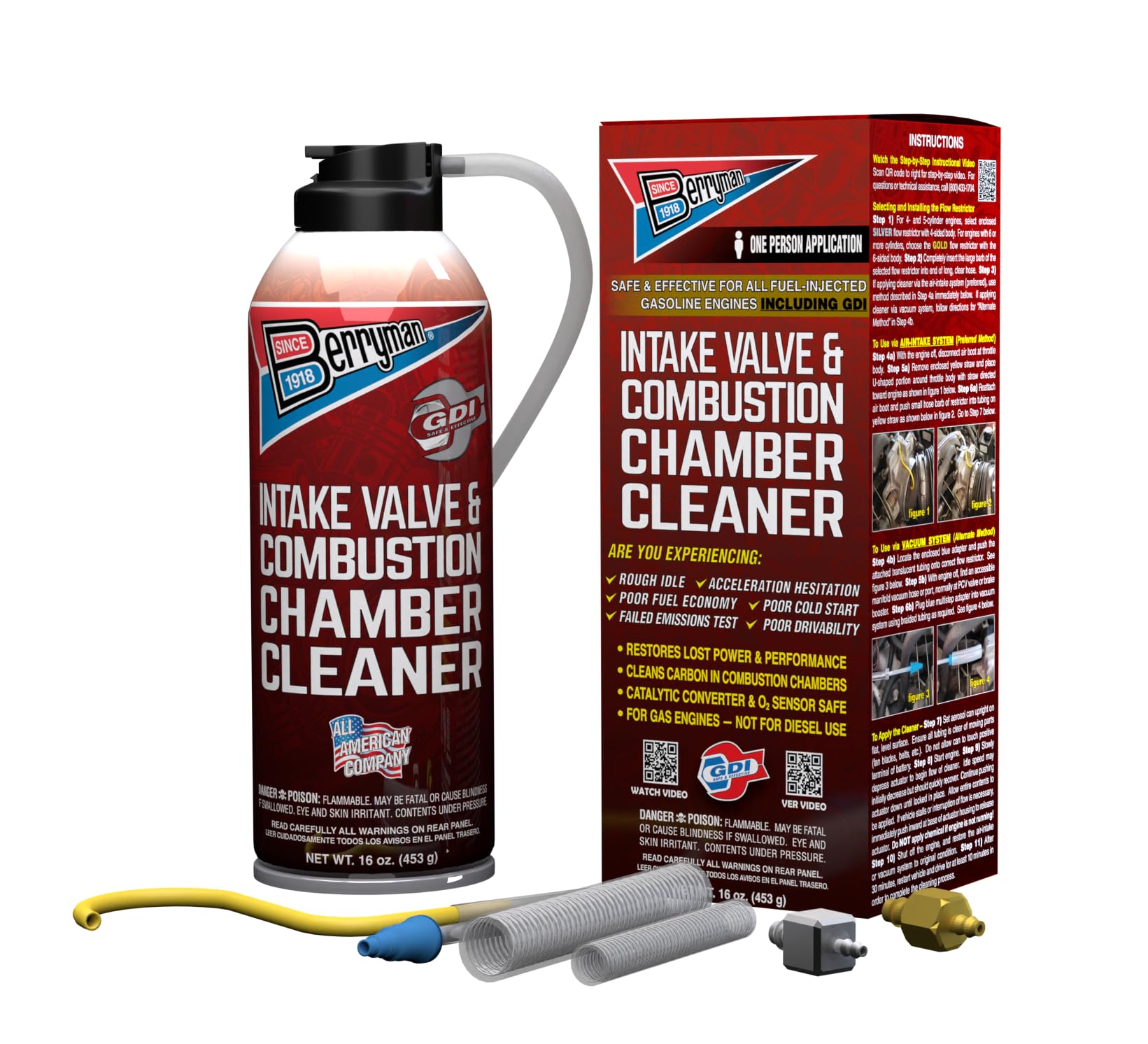
Berryman 2611 is listed here as a cautionary entry. It is a powerful intake valve and combustion chamber cleaner that contains polyetheramine (PEA) and is excellent for cleaning carbon buildup in gasoline direct-injection (GDI) engines. However, the manufacturer explicitly states on the label: “Not For Use In Diesel Engines.” The aerosol formulation and solvent chemistry are designed for gasoline’s combustion characteristics and may not be compatible with diesel’s higher compression and different combustion chamber conditions.
If you are shopping for a diesel turbo cleaner, skip this product entirely. It belongs in a gasoline tool kit, not a diesel maintenance regimen. Using it in a diesel engine could damage injectors, coat the turbo with an incompatible solvent, or cause excessive smoke. The product is reviewed here only to prevent confusion for readers who might see it in search results alongside diesel products.
For gasoline GDI vehicles with coked intake valves, Berryman 2611 works extremely well — restoring MPG, clearing misfire codes, and smoothing idle. But for the specific goal of cleaning a diesel turbo, choose one of the diesel-dedicated cleaners above.
Why it’s great
- Excellent PEA-based solvent for gasoline carbon deposits
- Comes with a well-designed application kit with multiple attachments
- Proven results on GDI engines with coked intake valves
Good to know
- Not compatible with diesel engines — clearly stated on the label
- This is a gasoline cleaner, not a diesel turbo cleaner
- Included for reference only to prevent mis-selection by readers
FAQ
Will a diesel turbo cleaner fix a turbo that has already failed mechanically?
How long does it take for an in-tank turbo cleaner to show results?
Can I use a diesel turbo cleaner on a gasoline engine?
Is it safe to use a turbo cleaner on a truck with a DPF and SCR system?
Final Thoughts: The Verdict
For most users, the best diesel turbo cleaner winner is the JLM Diesel Turbo Cleaner because it is the only product in this lineup designed specifically to target turbo vanes, with multiple verified owner reports of freed actuators and restored boost pressure. If you want a dual-purpose product that also cleans injectors during the process, grab the Liqui-Moly Diesel Purge twin-pack. And for a preventative maintenance schedule that keeps turbo vanes clean over the long term, nothing beats the Hot Shot’s Secret Fuel Duo as a daily cetane and lubricity program.

Mo Maruf
I created WellFizz to bridge the gap between vague wellness advice and actionable solutions. My mission is simple: to decode the research and give you practical tools you can actually use.
Beyond the data, I am a passionate traveler. I believe that stepping away from the screen to explore new environments is essential for mental clarity and physical vitality.