Our readers keep the lights on and my smoothie glass nicely filled. As an Amazon Associate, I earn from qualifying purchases.
For decades, exploring the night sky meant wrestling with complex mounts, star charts, and a steep learning curve that killed the hobby for most beginners. The digital telescope changes that completely — replacing manual alignment and guesswork with app-driven navigation, automated tracking, and real-time image capture that puts the cosmos directly onto your phone or tablet screen.
I’m Mohammad Maruf — the founder and writer behind WellFizz. I’ve spent hundreds of hours analyzing the hardware specifications, sensor performance, and computational imaging pipelines that define the modern digital telescope category to bring you this focused guide.
Whether you are a total beginner or an experienced astrophotographer looking for a grab-and-go solution, understanding the difference between sensor size, aperture, and software integration will help you find the best digital telescope for your specific observing goals and budget.
How To Choose The Best Digital Telescope
The shift from purely optical to digitally assisted telescopes means the buying criteria have changed. Aperture is still important, but sensor technology, software ecosystem, and portability now play equally decisive roles.
Aperture and Focal Ratio
Aperture (the diameter of the main lens or mirror) determines light-gathering power. A larger aperture captures fainter deep-sky objects. The focal ratio (f-number) affects the field of view and image brightness — a faster ratio like f/3.9 is better for wide-field nebulae, while a slower ratio offers more detail on planets and the moon.
Sensor Quality and Resolution
In a digital telescope, the camera sensor replaces your eye. Look for larger sensors (1/1.2-inch or bigger) with larger individual pixels (2.9µm or greater) for better low-light sensitivity and reduced noise. Sony Starvis sensors are a common benchmark in this category.
Tracking and Mount Type
Alt-Azimuth (AZ) mounts are simpler and intuitive for beginners, but they cause field rotation during long exposures. Equatorial (EQ) modes compensate for Earth’s rotation, enabling the longer exposures needed for faint galaxies and nebulas. Some premium digital telescopes offer both modes.
Quick Comparison
On smaller screens, swipe sideways to see the full table.
| Model | Category | Best For | Key Spec | Amazon |
|---|---|---|---|---|
| ZWO Seestar S30 Pro | Premium | One-tap deep-sky astrophotography | 4-element APO lens, 4K dual camera | Amazon |
| Vaonis Vespera Pro | Premium | High-resolution live panorama | SONY IMX676 Starvis 2 sensor | Amazon |
| Unistellar Odyssey | Premium | Citizen science & pro data export | 85mm f/3.9, RAW/FITS export | Amazon |
| DWARFLAB Dwarf 3 | Mid-Range | Ultra-portable day/night imaging | Dual lens, 4K auto-tracking | Amazon |
| DWARFLAB Dwarf Mini | Mid-Range | Travel-friendly astrophotography | 1.85 lb, Sony IMX662 sensor | Amazon |
| Celestron StarSense 150AZ | Mid-Range | App-guided Dobsonian viewing | 150mm aperture, 650mm focal length | Amazon |
| FASHIONARI Smart Telescope | Mid-Range | Dual-screen auto-focus viewing | 350X magnification, 4K camera | Amazon |
| Celestron StarSense Explorer LT 80AZ | Mid-Range | Beginner app-enabled refractor | 80mm aperture, 400mm focal length | Amazon |
| HUGERSTAR 90800 | Budget | Entry-level lunar and planetary | 90mm aperture, 800mm focal length | Amazon |
In‑Depth Reviews
1. ZWO Seestar S30 Pro Smart Telescope
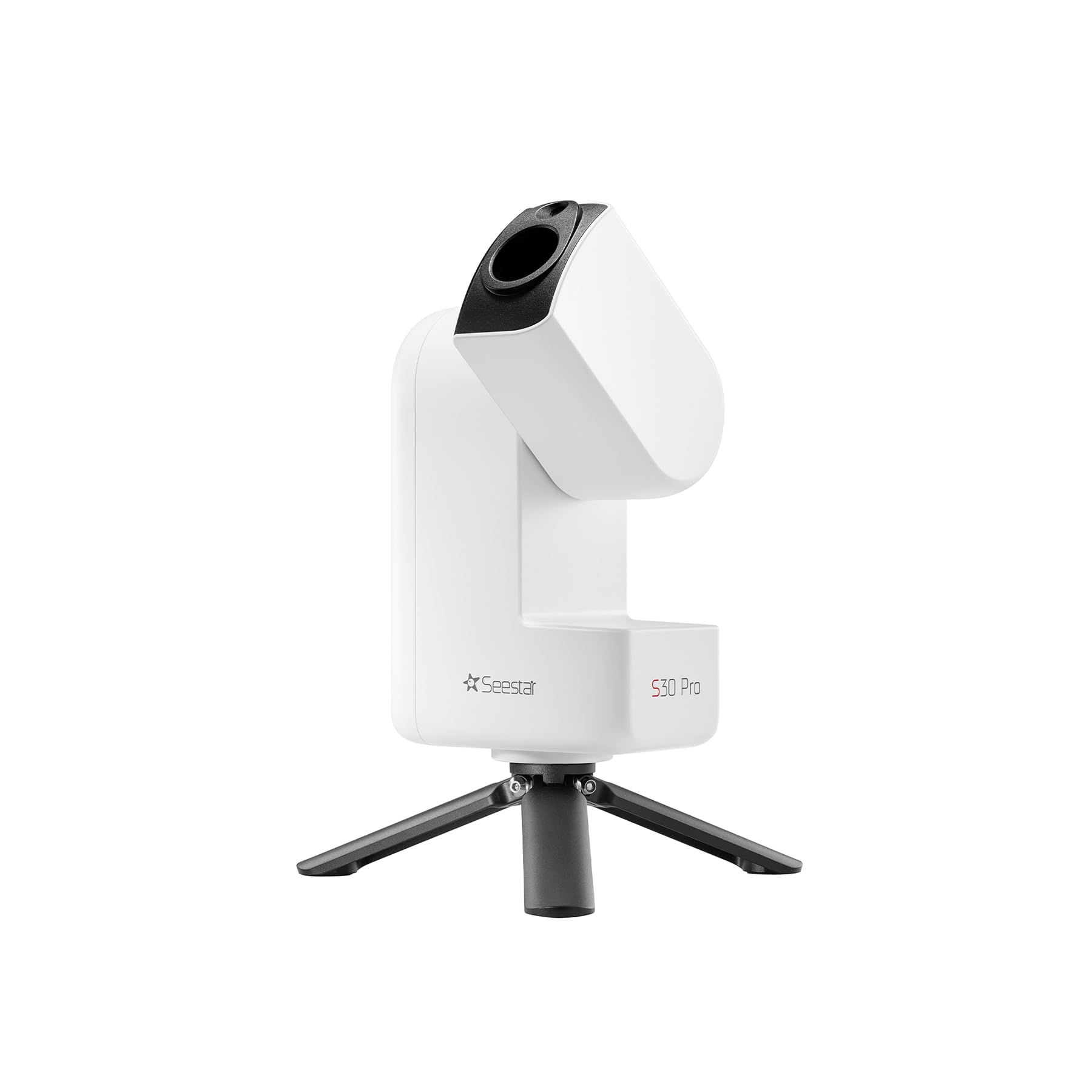
The ZWO Seestar S30 Pro stands out with a 4-element apochromatic lens that drastically reduces chromatic aberration — delivering sharper stars and higher contrast at the edges of the frame compared to standard doublet designs. The IMX585 telephoto sensor paired with an IMX586 wide-angle camera lets you switch between detailed deep-sky objects and expansive Milky Way landscapes without physically changing optics.
One-tap intelligent imaging modes handle noise reduction, scene recognition, and even mosaic stitching automatically, producing 8K ultra-wide astrophotography without manual post-processing. The built-in light pollution and IR-cut filters make it effective even from suburban backyards where skyglow would normally wash out faint nebulas.
The anti-dew protection and 128GB of onboard storage support all-night imaging sessions, and the Plan Mode lets you schedule target captures hours in advance. The tripod is included, making this a true out-of-the-box solution that rivals setups costing several times more.
Why it’s great
- Professional APO optics for sharp, color-accurate stars
- One-tap Milky Way and star trail modes eliminate manual processing
- Built-in dew heater ensures clear optics during long humid nights
Good to know
- Relies entirely on app control with no physical eyepiece
- Wide-angle landscape mode is weaker for distant terrestrial subjects
2. Vaonis Vespera Pro Smart Telescope
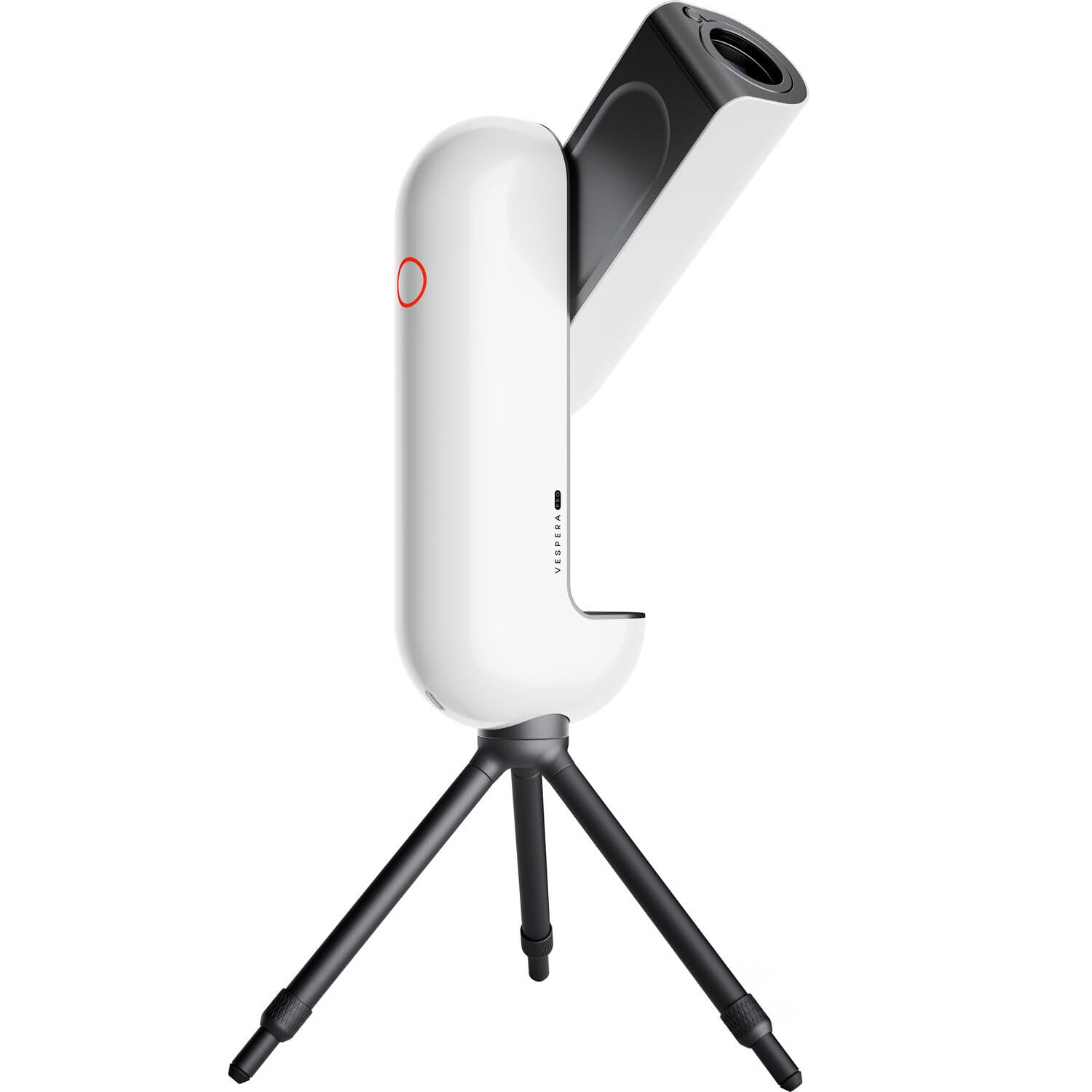
The Vespera Pro elevates itself with the SONY IMX676 Starvis 2 sensor, a back-illuminated design that captures exceptional low-light detail while maintaining low noise across the entire frame. Its proprietary CovalENS technology enables real-time live panorama capture, stitching multiple frames into a wide-field view of the night sky as you observe — something no other consumer digital telescope in this class offers natively.
The newly developed field corrector ensures the larger sensor is fully utilized, eliminating edge distortion and maintaining pinpoint stars from corner to corner. Automatic dark calibration subtracts calibration frames from your observations without user intervention, a feature typically found only in professional observatory setups.
Battery life is rated at 9 to 10 hours, and the 225GB of onboard storage allows multiple nights of raw data collection without offloading. The Expert Mode within the Singularity app unlocks manual gain and exposure control for advanced users who want to fine-tune their captures.
Why it’s great
- Starvis 2 sensor delivers class-leading low-light sensitivity
- Live panorama mode is unique for real-time wide-field views
- Automatic calibration frames reduce post-processing work
Good to know
- WiFi-only connection means no internet during use
- File transfer limited to FTP; no direct USB-C export
3. Unistellar Odyssey Smart Telescope

The Unistellar Odyssey is designed for users who want more than pretty pictures — it supports native RAW and FITS export, enabling serious post-processing in PixInsight or Photoshop. The 85mm f/3.9 optics offer a fast focal ratio ideal for wide-field nebula capture, and the motorized Alt-Az mount with one-click GoTo brings up targets from a database of over 5,000 objects in seconds.
The 37-million-star database and automatic finderscope eliminate the need for manual star-hopping. The system integrates directly with NASA and SETI citizen-science campaigns, allowing you to contribute real data on asteroid occultations and exoplanet transits — a unique feature for a digital telescope at this price tier.
Setup time is under two minutes from power-on to first observation, thanks to automatic alignment, autofocus, and self-collimation. The all-in-one design weighs just over 14 pounds including the premium tripod, making it genuinely portable compared to traditional 8-inch Schmidt-Cassegrain setups.
Why it’s great
- RAW/FITS export for professional-grade post-processing
- Citizen science integration with NASA and SETI projects
- Under two-minute setup from box to first observation
Good to know
- App connection can be inconsistent and frustrating at times
- No manual control for double-star observation or fine tracking
4. DWARFLAB Dwarf 3 Smart Telescope
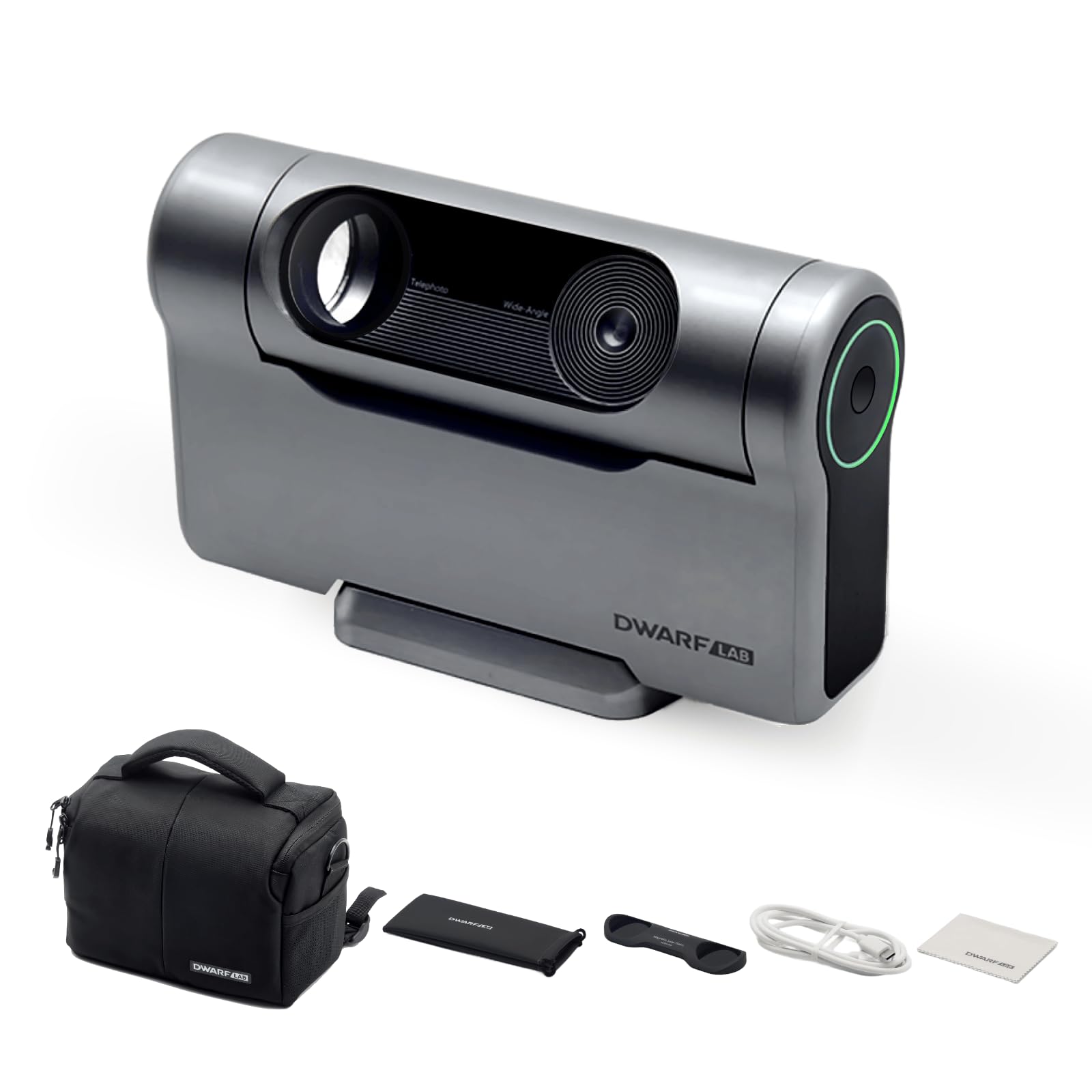
The Dwarf 3 pushes portability further with a body weight of just 3 pounds, yet includes a dual-lens system — a telephoto lens optimized for deep-space and wildlife subjects alongside a wide-angle lens for Milky Way and star trail captures. This dual-imaging design means you can use it as a daytime spotting scope and switch to astrophotography at night without changing hardware.
Professional 4K auto-tracking keeps celestial objects centered during long exposures, and the cloud-powered processing within the DWARFLAB app handles live stacking and image enhancement without requiring a PC. The magnetic filter system lets you swap between light pollution, solar, and dual-band filters in seconds.
The AZ/EQ dual mount mode gives you the simplicity of Alt-Az for quick setup and the accuracy of Equatorial mode for deep-sky imaging when mounted on a wedge. The carrying bag and all accessories fit into a standard backpack, making it the most travel-friendly option for spontaneous stargazing trips.
Why it’s great
- Only 3 pounds with dual-lens day/night versatility
- Magnetic filter system for quick-switch light management
- Cloud-based stacking reduces need for a separate computer
Good to know
- App can have intermittent connection glitches
- Results are entry-level; won’t match larger aperture rigs
5. DWARFLAB Dwarf Mini Smart Telescope
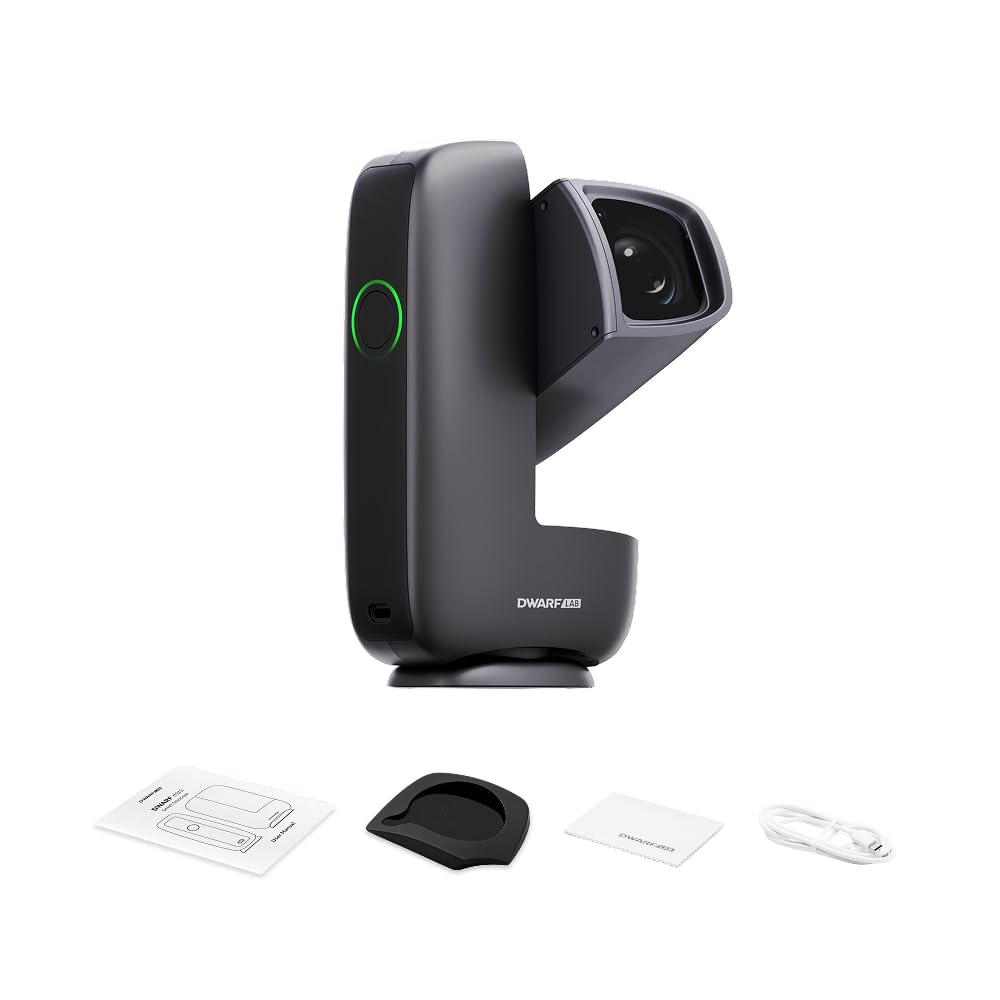
At just 1.85 pounds, the Dwarf Mini is the lightest digital telescope in this roundup, fitting into a large jacket pocket or backpack side pouch. Despite the small form, it packs a Sony IMX662 sensor with 2.9µm pixels that deliver low-noise deep-sky images, and the 360-degree pivot mount allows full sky coverage without repositioning the tripod.
The Auto GOTO system with interactive star map makes target selection intuitive — simply choose an object on your phone and the mount slews to it automatically. The built-in light pollution filter cuts through urban skyglow, and the EQ Mode supports single-frame exposures up to 90 seconds for capturing faint nebulas and star clusters.
Smart cloud processing handles image stacking and enhancement in the app, so you get finished photos without needing a separate laptop. The USB-C charging and compact design make it ideal for hikers, campers, and families who want astrophotography without the bulk of traditional equipment.
Why it’s great
- Under 2 pounds — the most portable digital telescope available
- 90-second single exposures in EQ mode for deep-sky capture
- App-based processing eliminates laptop requirement
Good to know
- Not suitable for planetary detail; best for wide-field deep-sky
- Initial WiFi connection can be finicky with some phones
6. Celestron StarSense Explorer 150AZ
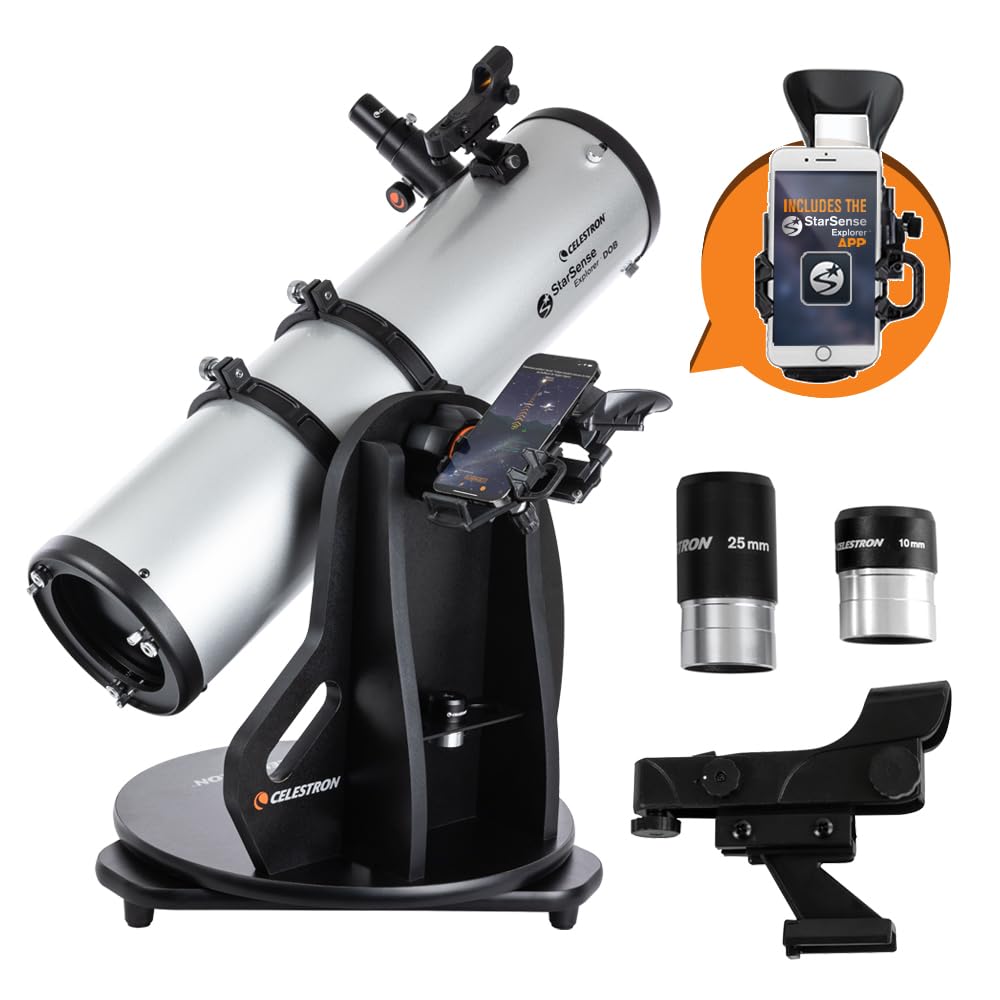
The Celestron StarSense Explorer 150AZ is a 6-inch Newtonian reflector on a tabletop Dobsonian base, delivering the largest aperture in this guide for pure light-gathering power. The parabolic mirror with aluminum and SiO2 overcoat provides high reflectivity, producing sharp, bright views of the Moon’s craters, Jupiter’s bands, and Saturn’s rings straight through the eyepiece.
The StarSense app uses patented sky recognition technology — it analyzes star patterns captured by your phone’s camera to calculate the telescope’s exact orientation, then guides you to targets with on-screen arrows. This is a visual telescope first, meaning you observe through eyepieces rather than on a screen, offering a more immersive connection to the night sky.
The tabletop Dobsonian base is stable and intuitive, with slow-motion controls for smooth tracking. The 650mm focal length at f/4.3 provides a wide field of view ideal for sweeping across star clusters and nebulae. The included 25mm and 10mm Kellner eyepieces give you a good starting range for low and high power views.
Why it’s great
- 150mm aperture captures significantly more light than smaller refractors
- Parabolic mirror provides sharp, coma-free views
- StarSense app makes navigation effortless for beginners
Good to know
- Tabletop design requires a stable surface; not ideal for field use
- Heavy pressboard base makes transport between locations cumbersome
7. FASHIONARI Smart Telescope
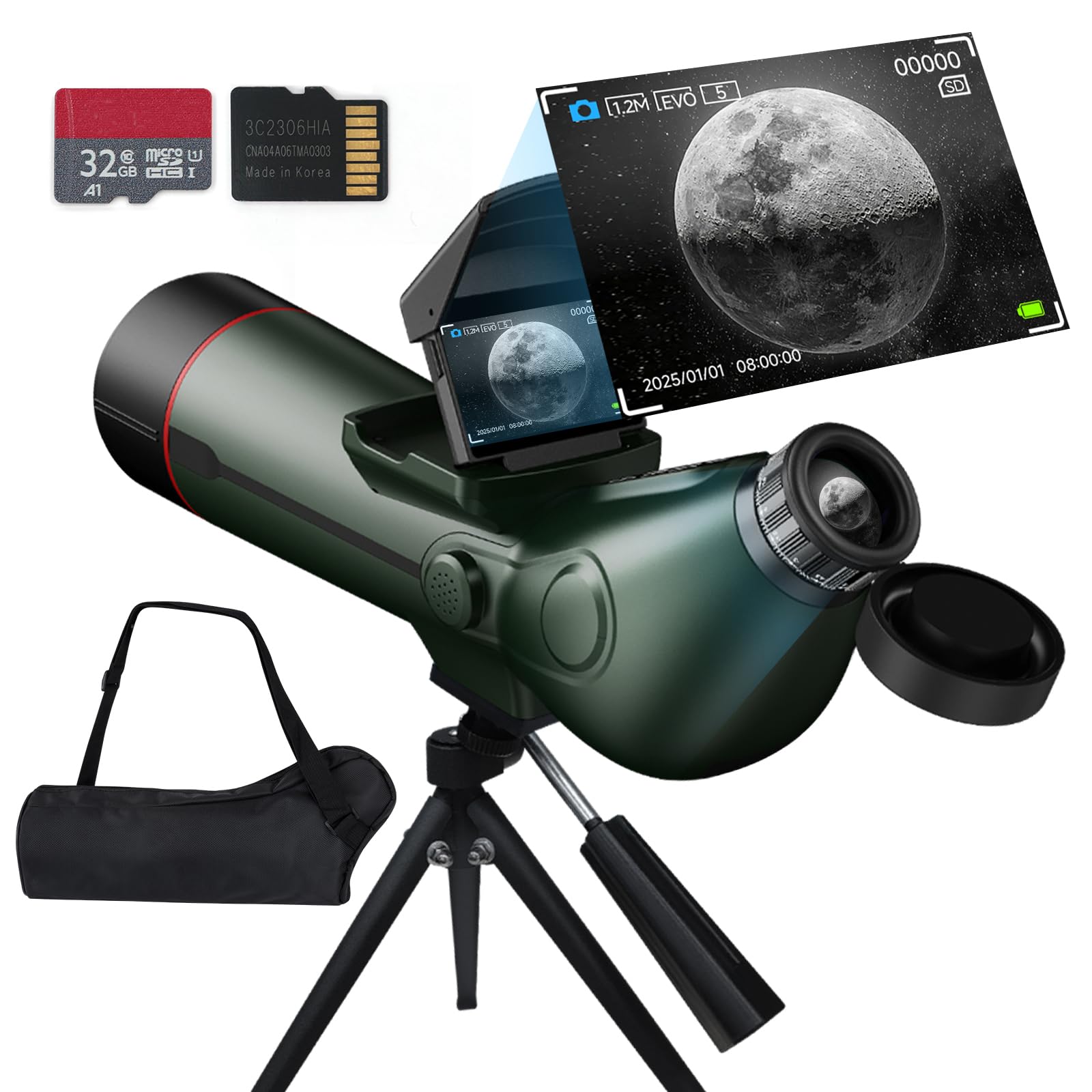
The FASHIONARI Smart Telescope is the only model in this guide with a built-in foldable external screen in addition to the standard eyepiece, allowing group viewing without passing a phone around. The 80mm aperture and 300mm focal length produce a fast f/3.89 system, and the auto-focus mechanism adjusts the lens automatically for sharp images at up to 350X digital magnification.
One-touch photo and video capture saves directly to expandable storage up to 512GB, and the starlight-grade sensor captures 4K high-resolution images even in low-light conditions. The 4500mAh battery provides up to 6 hours of continuous operation, with customizable auto shut-off settings to preserve power during long sessions.
The diopter adjustment range of +/-4 accommodates users who wear glasses, and the built-in sunshade on the external screen maintains visibility in bright daylight. This dual-screen design makes it particularly suitable for families with children or group observing sessions where everyone wants to see at the same time.
Why it’s great
- Built-in external screen for group viewing without phone sharing
- Auto-focus eliminates manual focus wheel adjustments
- Long 6-hour battery life supports all-night observing
Good to know
- Digital magnification at 350X reduces image quality beyond optical limit
- Small sensor may struggle with very faint deep-sky objects
8. Celestron StarSense Explorer LT 80AZ

The Celestron StarSense Explorer LT 80AZ is a 3.1-inch refractor designed specifically for absolute beginners who want app-guided stargazing without the complexity of GoTo mounts. The StarSense dock holds your smartphone securely, and the app uses sky pattern recognition to determine the telescope’s position — no manual star alignment or polar setup required.
The 80mm fully coated optics deliver sharp views of the Moon’s craters, Jupiter’s Galilean moons, and Saturn’s rings, with the 400mm focal length providing a wide enough field for bright nebulas like the Orion Nebula. The manual altazimuth mount includes altitude slow-motion control for smooth adjustments as objects drift across the sky.
The kit includes 25mm and 10mm eyepieces plus a 2x Barlow lens, giving magnifications from 16x to 80x for versatile viewing. The included StarPointer red-dot finderscope provides a backup aiming method when you want quick looks without pulling out your phone.
Why it’s great
- Patented StarSense technology eliminates the need for manual star alignment
- Lightweight and easy to assemble, ideal for first-time users
- 2-year US warranty from Celestron’s California-based support team
Good to know
- 80mm aperture limits deep-sky performance for faint galaxies
- Manual mount requires occasional adjustment to track objects
9. HUGERSTAR 90800 Telescope

The HUGERSTAR 90800 is a traditional 90mm refractor retrofitted for the digital age with an included phone adapter and moon filter. The 800mm focal length at f/8.89 produces a narrow field of view ideal for close-up lunar and planetary observation, and the fully multi-coated lenses deliver bright, contrast-rich views of the Moon’s craters and Jupiter’s cloud bands.
The kit includes 25mm and 10mm Kellner eyepieces plus a 3x Barlow lens, providing magnifications from 32x up to 240x. The stainless steel tripod adjusts from 28.7 to 46.4 inches, accommodating users of different heights, and the included carry bag makes transport straightforward for a telescope of this size.
Setup requires no tools — 90% of users complete assembly in under 10 minutes according to the manufacturer. The phone adapter allows basic smartphone photography of the Moon and bright planets, though the short eyepiece neck may require a third-party adapter for larger phone cases.
Why it’s great
- 90mm aperture captures good detail on the Moon and planets
- Tool-free assembly in under 10 minutes
- Includes padded carry bag for storage and transport
Good to know
- Basic finderscope requires careful alignment for accurate aiming
- Phone adapter may not fit larger phone cases without modification
FAQ
Can a digital telescope work without a smartphone or tablet?
What is the difference between AZ and EQ tracking modes in a digital telescope?
How does light pollution affect a digital telescope’s performance?
Final Thoughts: The Verdict
For most users, the best digital telescope winner is the ZWO Seestar S30 Pro because it delivers professional-grade APO optics, intelligent one-tap imaging, and robust light pollution handling in a package that works out of the box. If you want the ultimate in portability for travel and hiking, grab the DWARFLAB Dwarf 3. And for pure visual light-gathering power with app-guided navigation, nothing beats the Celestron StarSense Explorer 150AZ.

Mo Maruf
I created WellFizz to bridge the gap between vague wellness advice and actionable solutions. My mission is simple: to decode the research and give you practical tools you can actually use.
Beyond the data, I am a passionate traveler. I believe that stepping away from the screen to explore new environments is essential for mental clarity and physical vitality.