Our readers keep the lights on and my smoothie glass nicely filled. As an Amazon Associate, I earn from qualifying purchases.
The promise of a single test that reveals where your ancestors walked hundreds of years ago is compelling. But not all DNA test for ethnicity services deliver the same depth, the same regional granularity, or the same ability to connect you with living relatives who share your genetic code. Choosing the wrong one can leave you with a shallow pie chart and unanswered questions.
I’m Mohammad Maruf — the founder and writer behind WellFizz. This guide is built on hundreds of hours of comparative research, analyzing each test’s reference population database, regional breakdown granularity, relative-matching algorithms, and data-privacy controls to separate meaningful ancestry tools from simple novelty kits.
Whether you are looking for the highest-resolution ethnicity estimate possible or a premium service that also screens for genetic health risks, finding the right dna test for ethnicity starts with understanding where your sample will be analyzed and how deep the analysis goes.
How To Choose The Best DNA Test For Ethnicity
The market is dominated by two major players, but the differences in their databases, reporting styles, and privacy policies can lead to very different results. Understanding these core differences is the first step to choosing the right test for your heritage goals.
Reference Population Database Size and Specificity
A DNA test can only compare your genetic markers against the reference populations it has on file. A test like AncestryDNA, which boasts a massive database of over 3,600 geographic regions, can often provide a finer-grained picture than a smaller competitor. The more reference populations a test has, the more likely it is to pinpoint your specific ancestral villages or valleys rather than just a broad region.
Ethnicity Breakdown vs. Genetic Communities
Most tests provide a percentage-based ethnicity estimate. However, the best DNA tests go further by offering “genetic communities” or “journeys”—groups of people who share a specific migration pattern. This adds a historical layer that moves beyond simple statistics, revealing how your ancestors moved across continents.
Your Decision on Data Privacy and Control
Before you spit into a tube, you need to understand who owns your DNA data. The top-tier services allow you to download or delete your raw data at any time, and they require explicit consent before sharing your information with research partners. A test’s privacy policy should be read as carefully as its spec sheet.
Quick Comparison
On smaller screens, swipe sideways to see the full table.
| Model | Category | Best For | Key Spec | Amazon |
|---|---|---|---|---|
| 23andMe Health + Ancestry | Premium | Best all-in-one ancestry and health | 4,500+ geographic regions | Amazon |
| 23andMe+ Premium | Premium+ | Deepest ancestry analysis with health | 5,000 DNA Relatives | Amazon |
| AncestryDNA + World Explorer | Mid-Range+ | Best for building a family tree | 3,600+ regions & journeys | Amazon |
| AncestryDNA | Mid-Range | Top pick for relative matching | Largest consumer DNA database | Amazon |
| 23andMe Ancestry Service | Mid-Range | Deepest ancestry-only granularity | 4,500+ geographic regions | Amazon |
| DNA My Dog Premium | Pet DNA | Best for identifying mixed-breed dogs | 350+ breeds & health screening | Amazon |
| Embark Breed & Health (Pack of 2) | Pet Premium | Most comprehensive dog DNA test | 400+ breeds, 270+ health tests | Amazon |
In-Depth Reviews
1. 23andMe Health + Ancestry Service
This is the ultimate one-box solution for anyone who wants both a deeply detailed ethnicity breakdown and meaningful health insights. The ancestry component analyzes your DNA against over 4,500 geographic regions, often pinpointing specific ancestral villages rather than just broad countries. The health side is where 23andMe truly separates itself from AncestryDNA, offering FDA-authorized reports on genetic health predispositions and carrier status that can inform your medical decisions.
The saliva collection is straightforward, and turnaround is consistently around four to five weeks. Users consistently report that the ethnicity estimates feel more precise, with one reviewer noting that 23andMe correctly identified a small percentage of Native American ancestry that AncestryDNA missed entirely. The inclusion of Neanderthal ancestry and maternal/paternal haplogroups adds an evolutionary layer that many ancestry enthusiasts find fascinating.
For the privacy-conscious, the platform allows you to control exactly which reports you see and whether your data is used for research. The raw data is also downloadable, allowing further analysis on third-party tools like Promethease. This test represents the highest value per dollar for those who want science-backed health data alongside their ancestral journey.
Why it’s great
- FDA-authorized health reports offer actionable medical insights
- Ancestry breakdown across 4,500+ regions provides village-level granularity
- DNA Relative Finder with automatic family tree generation
Good to know
- Family tree functionality is less robust than AncestryDNA’s platform
- Some trait predictions (like taste preferences) can be inaccurate
2. 23andMe+ Premium Advanced Ancestry & Health
This is the ceiling of at-home genetic testing. The 23andMe+ Premium tier bundles the core Health + Ancestry service with a full year of exclusive access to advanced features, including pharmacogenetics reports that tell you how your body may process certain medications. For ancestry enthusiasts, the upgrade unlocks connections to up to 5,000 DNA relatives and the ability to link your DNA to historical figures through the Historical Matches feature.
The geographic breakdown remains the industry standard—over 4,500 regions with an ancestry timeline that estimates when your most recent ancestors from each population lived. Users who have taken both this and a standard AncestryDNA test frequently report that 23andMe delivers a more finely sliced ethnic pie, with one reviewer noting a 77% Irish & UK result versus Ancestry’s 56% for the same person. The Neanderthal ancestry percentage is a fun bonus detail.
Be mindful that the 1-year membership is tied to a valid payment method and auto-renews if not cancelled. Some users have reported that the cancellation process is more difficult than it should be, requiring patience. If you want the absolute deepest level of analysis—both ancestral and medical—this is the premier choice, but the annual commitment means it is best for those who will actively use the platform for research.
Why it’s great
- Pharmacogenetics reports provide medication metabolism insights
- 5,000 DNA Relative capacity for extensive family finding
- Health Action Plan creates proactive wellness steps
Good to know
- Annual membership auto-renews; cancellation process is cumbersome
- Higher upfront investment for the full package
3. AncestryDNA + 3-Month World Explorer
This bundle is the ultimate toolkit for the dedicated genealogist. The AncestryDNA test itself analyzes over 3,600 regions and journeys, but the real power is unlocked when you combine it with the 3-month World Explorer membership. This subscription gives you access to billions of historical records—census data, immigration logs, military documents, and millions of family trees—allowing you to attach documentary evidence to your DNA results.
The SideView technology is a standout feature that Ancestry has developed over its competitors. It separates your matches and ethnicity estimates by paternal and maternal sides without requiring a parent to also test. This makes it significantly easier to understand which side of your family a specific ancestral line or DNA match belongs to. Users who pair this with Ancestry’s record collection describe building multi-generational trees that run hundreds of years deep.
The subscription is redeemable only by the person activating the kit, and it will auto-convert to a paid plan unless you manually cancel. Some users have expressed frustration with the subscription management process. However, for anyone serious about building a verified family history rather than just reading a pie chart, this combination is unmatched in the consumer market.
Why it’s great
- World Explorer membership unlocks billions of historical records
- SideView separates ethnicity and matches by parental side
- Largest consumer DNA database for accurate relative matching
Good to know
- Subscription auto-renews unless cancelled after 3 months
- Some features require the subscription to be usable
4. AncestryDNA Genetic Test Kit
The standalone AncestryDNA kit is the most popular consumer DNA test on the market for good reason. It offers a robust ethnicity estimate across more than 3,600 regions, complete with interactive maps and historical journey narratives. Its primary advantage is its massive user database, which makes it the best tool for finding and connecting with genetic relatives—the sheer volume of potential matches here dwarfs every other service.
Users consistently praise the user-friendly interface and the clear, digestible ethnicity reports. The test is easy to administer, and results typically arrive within four to six weeks. Unlike the 23andMe offerings, this test focuses exclusively on ancestry and family history, so there are no health reports. However, the raw data can be downloaded and uploaded to third-party health analysis tools if you choose.
The biggest limitation is that some of the most powerful features—like viewing your matches’ family trees and searching historical records—require a separate paid subscription. Without it, the experience is limited to your ethnicity estimate and a basic relative list. For the pure ancestry-only buyer who values relative matching above all else, this test remains the gold standard.
Why it’s great
- Industry-leading DNA database for maximum relative matches
- Intuitive ethnicity reports with detailed regional breakdowns
- Raw data can be exported for third-party analysis
Good to know
- Advanced features like tree building require a subscription
- No health or wellness reports included
5. 23andMe Ancestry Service
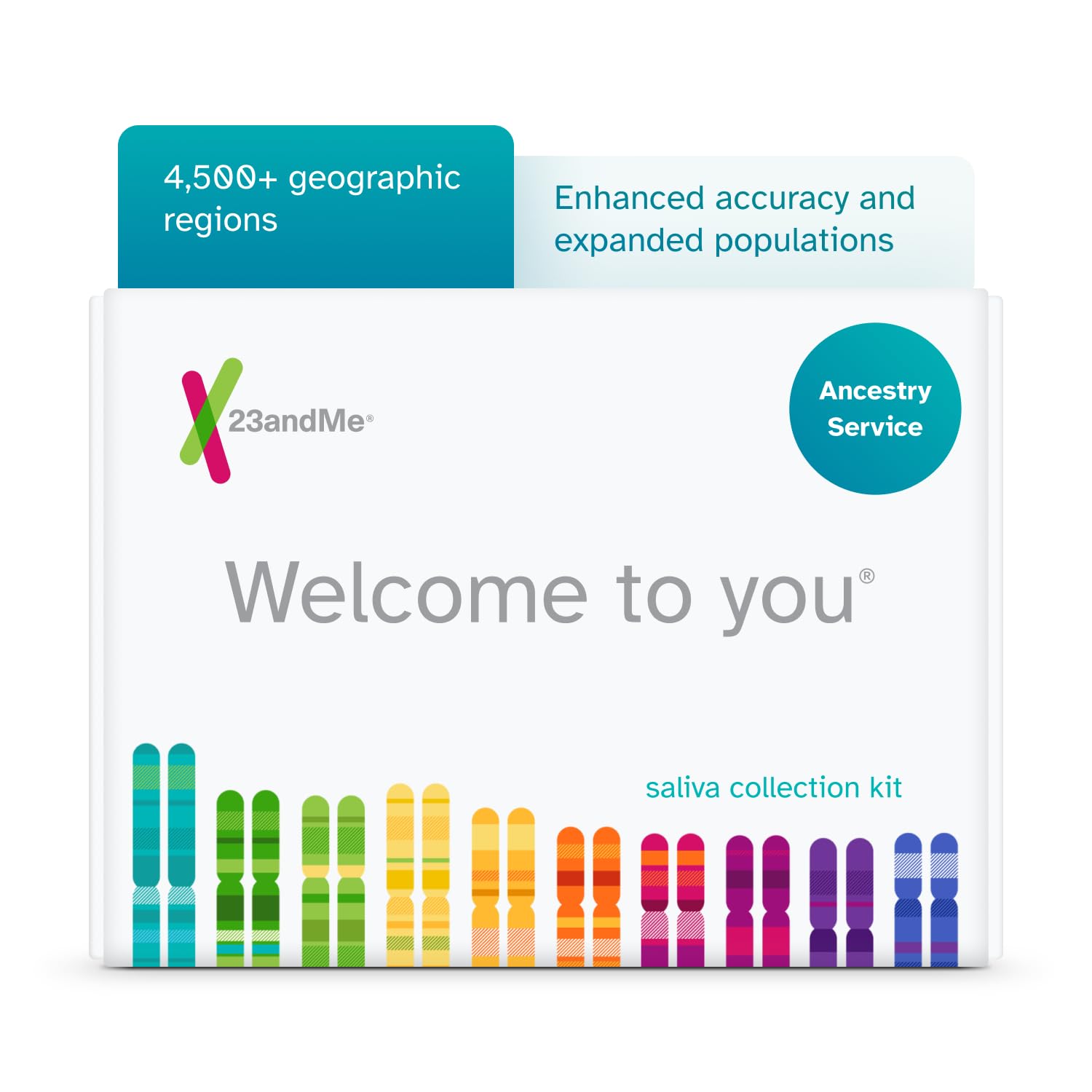
If you want the most sophisticated ancestry-only analysis available without the added cost of health reports, the 23andMe Ancestry Service is the clear choice. Its database of over 4,500 geographic regions is more granular than the competition, and the Ancestry Timeline feature estimates when your most recent ancestors from each region lived—a unique tool that adds a temporal dimension to your genetic story.
Users who have compared this test to AncestryDNA often report that 23andMe provides a more accurate ethnic breakdown for smaller or trace percentages. One reviewer specifically noted that 23andMe detected 6% Native American ancestry through raw data analysis on GEDmatch when AncestryDNA showed none. The DNA Relative Finder and automatic Family Tree features are solid, though the user base is smaller than Ancestry’s, resulting in fewer cousin matches.
The privacy controls on this test are robust, giving you granular control over what you share and whether you opt into research. The test also includes Neanderthal ancestry estimates and maternal/paternal haplogroup assignments. For the pure ancestry researcher who values geographic precision over relative quantity, this test delivers the clearest picture of your deep ancestral origins.
Why it’s great
- Most fine-grained geographic breakdown at 4,500+ regions
- Ancestry Timeline shows when ancestors lived in each region
- Includes Neanderthal ancestry and haplogroup reports
Good to know
- Smaller user database than AncestryDNA for relative matching
- No health or wellness reports included
6. DNA My Dog Premium Dog DNA Test

While this guide focuses on human ancestry, the DNA My Dog test is a solid entry-level option for pet owners who want to understand their mixed-breed dog’s background. It screens for over 350 breeds, including wolf DNA, and provides a genetic age estimate. The test is easy to administer with a simple cheek swab, and results are typically delivered within two to three weeks.
Customer reviews are mixed but generally positive, with many users reporting accurate breed identifications that helped them understand their rescue dog’s behavior and health predispositions. One reviewer found that the breed breakdown perfectly matched their vet’s professional assessment of a hunting dog mix. The test also includes personality trait insights and bonding tips based on your dog’s genetic profile.
However, some users have reported significant delays in sample processing and skepticism about the accuracy of the genetic age report. One reviewer noted that the test claimed their dog was 3 years old while the vet estimated 10. For a low-cost initial look at your dog’s breed heritage, this test provides a good starting point, but serious pet owners may want to consider the more comprehensive Embark test.
Why it’s great
- Affordable way to identify over 350 dog breeds
- Includes genetic age estimate and personality insights
- Simple cheek swab collection process
Good to know
- Genetic age estimation can be inaccurate compared to vet assessment
- Sample processing and delivery times can be slow
7. Embark Breed & Health Dog DNA Test (Pack of 2)
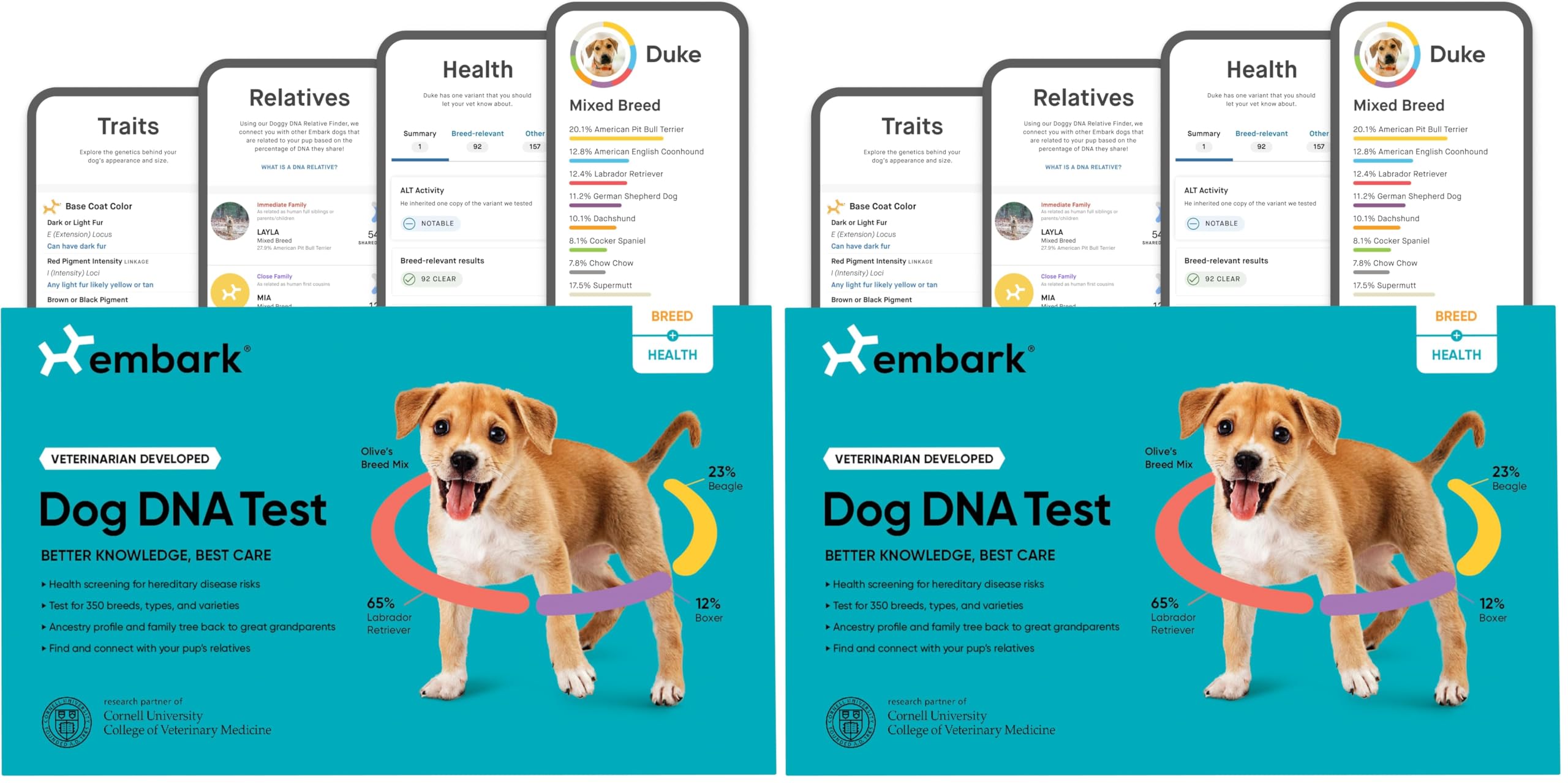
Embark is the gold standard for canine genetic testing, and this pack of two tests offers excellent value for multiple-dog households. Developed in partnership with Cornell University’s College of Veterinary Medicine, it uses a research-grade genotyping platform to test for over 400 breeds and 270 genetic health conditions—far exceeding the scope of DNA My Dog. The health screening includes specific markers for conditions like progressive retinal atrophy, drug sensitivities, and heart disease.
Users consistently rave about the accuracy of the breed identification, with one reviewer discovering their dog was 50% Great Pyrenees mixed with Lab, Australian Cattle Dog, Pit Bull, and Komondor—a breakdown that perfectly explained the dog’s size, coat, and herding behaviors. The allergy risk score is a unique feature that tests for environmental, food, contact, and flea allergies, providing actionable insights that help owners manage their dog’s comfort.
The Canine Relative Finder is another standout, using patented technology to connect your dog with genetic relatives. One reviewer found that their dog had multiple “cousins” in the database. Results are delivered in two to four weeks, and the company provides access to veterinary geneticists for questions. If you want the most comprehensive genetic picture of your dog—from breed to health to traits—Embark is the clear leader.
Why it’s great
- Most comprehensive health screening covering 270+ conditions
- Research-grade genotyping developed with Cornell University
- Unique allergy risk scores and personality quiz
Good to know
- Premium pricing reflects the high level of detail
- Pack of 2 is ideal but single kits are also available
FAQ
How long does it take to get DNA test results for ethnicity?
Can a DNA test for ethnicity tell me my exact ancestry mix?
Which DNA test is best for finding living relatives?
Final Thoughts: The Verdict
For most users, the dna test for ethnicity winner is the 23andMe Health + Ancestry Service because it provides the deepest ancestry breakdown across 4,500+ regions while also delivering FDA-authorized health reports that offer actionable medical insights. If you want a pure ancestry test with the best family tree building tools and largest relative-matching database, grab the AncestryDNA Genetic Test Kit. And for the most advanced analysis possible with pharmacogenetics and historical figure matching, nothing beats the 23andMe+ Premium.

Mo Maruf
I created WellFizz to bridge the gap between vague wellness advice and actionable solutions. My mission is simple: to decode the research and give you practical tools you can actually use.
Beyond the data, I am a passionate traveler. I believe that stepping away from the screen to explore new environments is essential for mental clarity and physical vitality.