Our readers keep the lights on and my smoothie glass nicely filled. As an Amazon Associate, I earn from qualifying purchases.
Finding a single camera that delivers exceptional still photos and smooth, high-resolution video without compromise is the central challenge of modern content creation. Whether you are documenting a trip, running a small business, or building a portfolio, the wrong choice can leave you swapping lenses mid-shoot or missing the shot entirely.
I’m Mohammad Maruf — the founder and writer behind WellFizz. My research process involves comparing sensor architectures, video bit rates, autofocus algorithms, and real-world user feedback across hundreds of hours of analysis to find the true hybrid champions.
This guide breaks down the top performers across different budgets and use cases, helping you match the right body to your specific creative goals. My goal was to find the absolute best digital camera for photography and video across the widest possible price and feature landscape.
How To Choose The Best Digital Camera For Photography And Video
The perfect hybrid body balances resolution for prints with pixel-level detail for video. Your priority should be matching sensor size and processing power to the type of content you produce most often — vlogs, weddings, sports, or travel.
Sensor Size: Full-Frame vs APS-C
Full-frame sensors (like the 24.2MP or 33MP options) offer superior dynamic range and low-light performance, giving you cleaner shadows and more natural bokeh. APS-C sensors are smaller and lighter, often packing higher pixel density for reach with telephoto lenses, and are generally more affordable.
Autofocus Architecture
Hybrid cameras need phase-detection pixels on the sensor. Look for systems with dedicated subject detection (human face, eye, animal, vehicle) that works in both stills and video. A wide coverage area (80%+ of the frame) prevents lost focus during panning or composition changes.
Video Specifications Beyond Resolution
Raw megapixel count matters less than bit depth, color sampling, and frame rates. Oversampled 4K (recorded from a 5K or 6K area) looks sharper than line-skipped 4K. Log profiles like C-Log or S-Log preserve highlight and shadow detail for color grading.
In-Body Image Stabilization (IBIS)
For handheld video, IBIS is more important than any single lens feature. A 5-axis stabilization system compensates for pitch, yaw, and roll, allowing you to shoot smooth gimbal-like footage without external rigs in many scenarios.
Quick Comparison
On smaller screens, swipe sideways to see the full table.
| Model | Category | Best For | Key Spec | Amazon |
|---|---|---|---|---|
| Canon EOS R8 | Full-Frame | Lightweight content creation & vlogging | Uncropped 4K 60p oversampled from 6K | Amazon |
| Canon EOS R6 Mark III | Full-Frame | Pro hybrid photo & video | 32.5MP sensor, 40 fps, 8.5-stop IBIS | Amazon |
| Sony a7 IV | Full-Frame | Color-graded video & portraiture | 33MP sensor, 4K 60p 10-bit, S-Cinetone | Amazon |
| Sony a7 III | Full-Frame | Budget full-frame hybrid entry | 24.2MP BSI sensor, 693 AF points | Amazon |
| Nikon Z6 III | Full-Frame | Internal 6K RAW video recording | 6K/60p N-RAW, 4000-nit EVF | Amazon |
| Nikon Z50 II | APS-C | Travel & color preset storytelling | 20.9MP APS-C, 31 Picture Controls | Amazon |
| Sony a6400 | APS-C | Fast-action photography & vlogging | 0.02 sec AF, 425 phase-detection points | Amazon |
| OM SYSTEM OM-5 Mark II | Micro Four Thirds | Weather-sealed outdoor travel | Sensor-shift IBIS, 10.7x zoom lens | Amazon |
| Canon EOS R50 | APS-C | Beginner vlogging & everyday photography | 24.2MP, 6K oversampled 4K 30p | Amazon |
| Canon EOS R100 (Bundle) | APS-C | First camera with all accessories | 24.1MP, 4K 24p, Dual Pixel AF | Amazon |
| Canon EOS R100 | APS-C | Value entry-level mirrorless | 24.1MP, 4K 24p, DIGIC 8 | Amazon |
In‑Depth Reviews
1. Canon EOS R8 (Body Only)

The Canon EOS R8 packs a 24.2MP full-frame sensor and DIGIC X processor into the lightest RF-mount body currently available, making it a standout hybrid for creators who walk and shoot all day. Its uncropped 4K 60p is oversampled from a 6K area, delivering noticeably sharper detail than most entry-level full-frame cameras, while Canon Log 3 gives grading flexibility straight out of camera.
The Dual Pixel CMOS AF II covers the entire frame with 1,053 zones, and deep-learning subject detection handles people, animals, and vehicles — including aircraft and trains — without manual switching. The 40 fps electronic shutter with full AF tracking freezes fast action, though the burst rate drops to 6 fps in mechanical first-curtain mode for flash shooters.
There is no in-body stabilization, so you will rely on lens-based IS for smooth handheld video. The LP-E17 battery yields roughly 500 stills or 60 minutes of continuous 4K recording, and the single UHS-II SD card slot is a limitation for redundant backup. Still, for its weight and sensor performance, this is the most portable full-frame hybrid under premium pricing.
Why it’s great
- Uncropped oversampled 4K 60p with C-Log 3
- Lightest full-frame RF body for all-day carry
- 40 fps electronic shutter with deep-learning AF
Good to know
- No in-body image stabilization
- Single UHS-II SD card slot
- LP-E17 battery requires frequent swaps for video
2. Canon EOS R6 Mark III (Body Only)
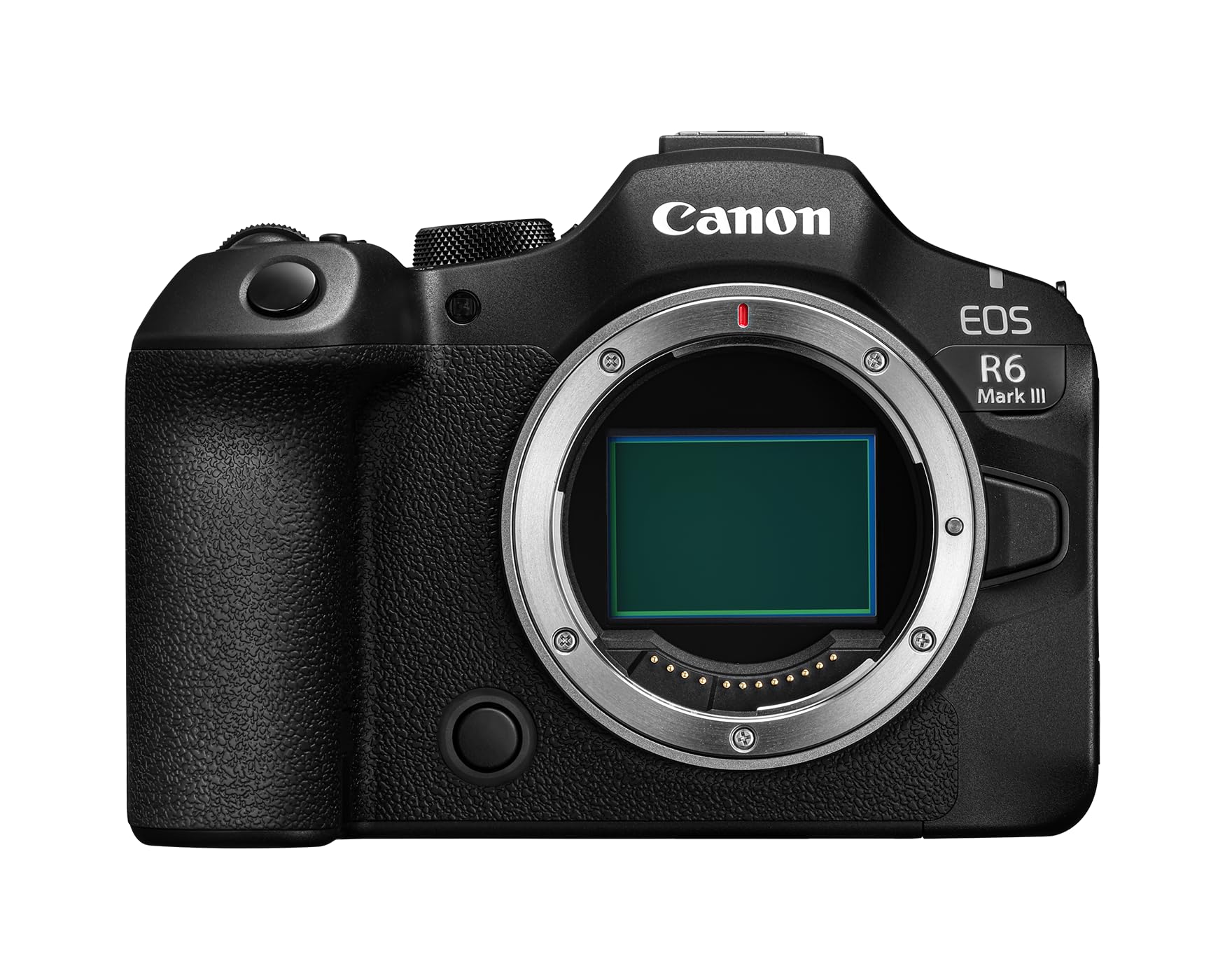
The R6 Mark III moves the hybrid benchmark forward with a new 32.5MP full-frame sensor and DIGIC X processor, offering higher resolution than its predecessor while retaining the 40 fps electronic shutter and 20-frame pre-continuous buffer. The 8.5-stop coordinated in-body stabilization (center) is the strongest in Canon’s lineup, enabling sharp handheld exposures at shutter speeds that would have required a tripod a generation ago.
Dual Pixel CMOS AF II with Register People Priority locks onto specific subjects across a 393-point phase-detection array. In practice, the system tracks fast erratic movement — birds, athletes, children — with minimal dropouts. The body includes dual card slots (CFexpress Type B plus UHS-II SD), a significant upgrade for professionals who need redundant recording without sacrificing speed.
The 14-bit RAW files show excellent dynamic range at base ISO, and noise remains well-controlled up to ISO 12800. In 4K 60p, the oversampled readout delivers sharp, artifact-free footage, though some reviewers note internal heating during extended recording sessions. The magnesium-alloy build feels dense and weather-sealed, but the camera is notably heavier than the R8, making it less suited for ultralight travel.
Why it’s great
- 8.5-stop IBIS for gimbal-like handheld shots
- 40 fps burst with 20-frame pre-capture buffer
- Dual card slots (CFexpress Type B + UHS-II SD)
Good to know
- Heavier body than R8, less portable
- Can overheat during long 4K 60p recordings
- Premium tier pricing requires lens investment
3. Sony Alpha a7 IV (Bundle)
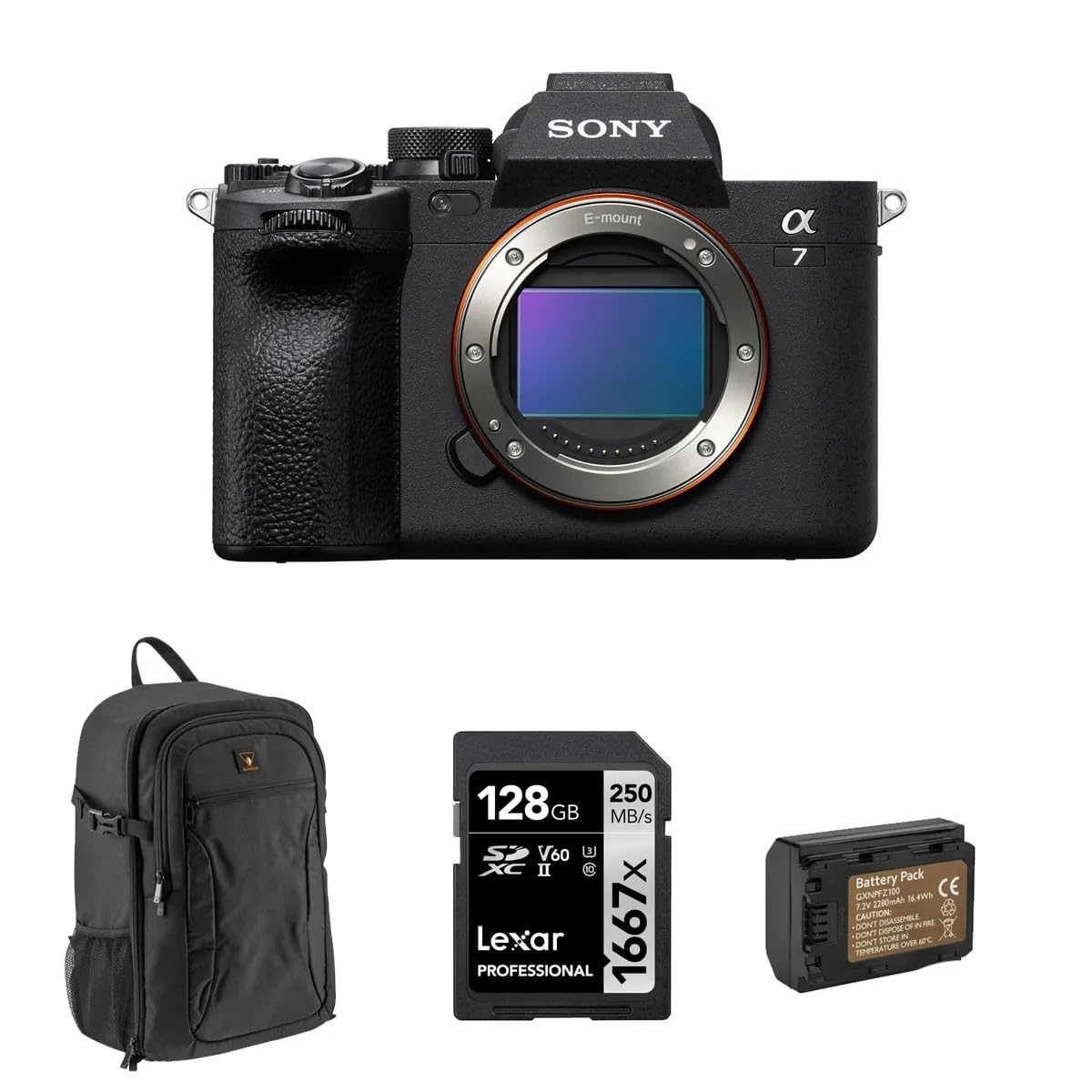
The Sony a7 IV was designed as a hybrid workhorse, pairing a 33MP BSI CMOS sensor with the BIONZ XR processor for fast readout and low rolling shutter. The 4K 60p recording uses 10-bit 4:2:2 internal color sampling with S-Cinetone and S-Log3, giving colorists enough latitude to match the camera with cinema cameras in multi-camera productions.
The Fast Hybrid AF system uses 759 phase-detection points covering 94% of the sensor, with Real-time Tracking that follows subjects reliably even when they leave the frame temporarily. The vari-angle 3.0-inch touchscreen with 1.04 million dots flips forward for vlogging, and the QVGA OLED Tru-Finder EVF provides a bright, accurate preview for manual exposure adjustments.
In-body sensor-shift stabilization compensates for up to 5.5 stops of shake, which is sufficient for most handheld video but not as aggressive as Canon’s 8.5-stop system. The included 128GB SD card and backpack bundle add immediate value, but the UHS-II SD slot is the only high-speed option — CFexpress support is absent, which limits buffer clearing speed for continuous RAW bursts. Battery life is excellent at roughly 710 shots per charge.
Why it’s great
- 10-bit 4K 60p with S-Cinetone and S-Log3
- 759-point AF with Real-time Tracking
- Long battery life (~710 shots per charge)
Good to know
- No CFexpress card slot support
- IBIS is adequate but not class-leading
- Menu system can be deep for beginners
4. Sony a7 III with 28-70mm Lens

The Sony a7 III remains a compelling entry point into full-frame hybrid photography despite being an older model. Its 24.2MP back-illuminated Exmor R sensor delivers 15 stops of dynamic range and clean files up to ISO 6400, while the 693 phase-detection AF points cover 93% of the frame — more than adequate for portraiture, events, and slow-to-moderate action.
Video capture tops out at 4K 30p in Super 35mm mode (cropped) or full-frame 4K with pixel binning, which is softer than the oversampled output from newer cameras. The silent shutter mode at 10 fps with AE/AF tracking works well for discreet event coverage, and the NP-FZ100 battery is one of the longest-lasting in any mirrorless body, rated at 710 shots.
The included 28-70mm f/3.5-5.6 lens is a capable starter, but its variable aperture limits low-light performance compared to a fast prime. The menus are layered and less intuitive than Sony’s newer designs, and the lack of a vari-angle touchscreen makes high- and low-angle framing more awkward. For a first full-frame body at a budget-conscious tier, the value is still strong.
Why it’s great
- Excellent 710-shot battery life
- 15-stop dynamic range for high-contrast scenes
- 693-point AF with 93% frame coverage
Good to know
- 4K video is cropped or pixel-binned, not oversampled
- No vari-angle touchscreen
- Menu system is dense and older-generation
5. Nikon Z6 III (Body Only)

The Nikon Z6 III stands apart in its class by offering internal 6K/60p N-RAW recording, a feature typically reserved for cameras at twice the price. The 24.5MP full-frame sensor reads out quickly enough to deliver oversampled 4K UHD and 4K/120p without a significant crop, making it a serious tool for videographers who need maximum post-production flexibility.
The electronic viewfinder is a highlight: 5.76 million dots with 4000-nit peak brightness and a 120 fps refresh rate in DCI-P3 color gamut. This makes composition in direct sunlight clearer than any LCD-only system. The hybrid phase-detection AF now operates down to -10 EV, and deep-learning subject recognition detects human faces as small as 3% of the frame — useful for wide-angle self-recordings.
The body includes dual card slots (CFexpress Type B and SD), and the in-body stabilization is effective for moderate handheld work. The menu system is deeper than some competitors and takes time to customize, and the battery life of roughly two hours of video use means spare batteries are essential for all-day shoots. For the price, no other camera in this tier records uncompressed RAW internally.
Why it’s great
- Internal 6K/60p N-RAW recording
- 5.76M-dot EVF with 4000-nit brightness
- Dual card slots (CFexpress + SD)
Good to know
- Menu system is dense and takes time to learn
- Battery life is average for video work
- Autofocus can be finicky in very low light
6. Nikon Z50 II with Two Lenses

The Nikon Z50 II is built around the idea that hybrid shooters want distinctive looks without spending hours in post-production. Its 31 built-in Picture Control presets — including Flat, Vivid, Monochrome, and Cloud Picture Controls downloadable from Nikon Imaging Cloud — let you bake a creative style into JPEGs and video files at the moment of capture.
The 20.9MP APS-C sensor is paired with the EXPEED 7 processor, enabling subject detection for people, dogs, cats, birds, and vehicles with dedicated airplane mode. The kit includes both the NIKKOR Z DX 16-50mm f/3.5-6.3 VR and 50-250mm f/4.5-6.3 VR lenses, giving 5x optical zoom coverage equivalent to roughly 24-375mm in full-frame terms — a versatile travel combo.
Video specifications include 4K UHD at 60p with in-camera 120p slow-motion in Full HD, plus electronic VR for stabilized handheld clips. The built-in flash and Night Portrait mode help in dim indoor settings. The SnapBridge app transfers photos quickly, but the Z50 II lacks in-body stabilization, relying on lens VR instead. For photographers who prioritize style and portability over raw video specs, this kit delivers excellent creative control.
Why it’s great
- 31 in-camera Picture Control presets for on-the-fly looks
- Two-lens kit covers wide to telephoto reach
- Subject detection for birds, vehicles, and animals
Good to know
- No in-body image stabilization
- Menu system takes time to customize
- APS-C sensor limits low-light dynamic range vs full-frame
7. Sony a6400 with 18-135mm Lens

The Sony a6400’s claim to fame is its 0.02-second autofocus acquisition time, made possible by 425 phase-detection and 425 contrast-detection points covering 84% of the APS-C sensor. For run-and-gun shooting — street photography, fast-moving children, sports in good light — this camera locks focus as fast as any body in its class, and Real-time Tracking and Eye AF for both humans and animals work during video as well.
The 24.2MP Exmor CMOS sensor captures clean RAW files up to ISO 6400, and the 11 fps continuous drive with mechanical shutter is sufficient for most action scenarios. The included 18-135mm f/3.5-5.6 lens covers a useful 27-202mm equivalent range, reducing the need to swap glass mid-shoot. The tiltable 3.0-inch LCD flips 180 degrees forward for self-recording, though it blocks the hotshoe when open.
Video tops out at 4K 30p from the full width of the sensor, with no pixel binning, delivering sharp footage that holds up well for YouTube and social content. The camera does not have in-body stabilization, so handheld video will be shaky without a gimbal or OSS lens. The internal microphone is mediocre, and the older NP-FW50 battery yields roughly 400 shots per charge. For the speed of its AF system alone, the a6400 remains a favorite among hybrid shooters on a mid-range budget.
Why it’s great
- 0.02-second AF with 425 phase-detection points
- Full-width 4K 30p with no pixel binning
- 180-degree tiltable screen for vlogging
Good to know
- No in-body image stabilization
- Internal microphone quality is average
- NP-FW50 battery needs frequent swaps
8. OM SYSTEM OM-5 Mark II with 14-150mm Lens
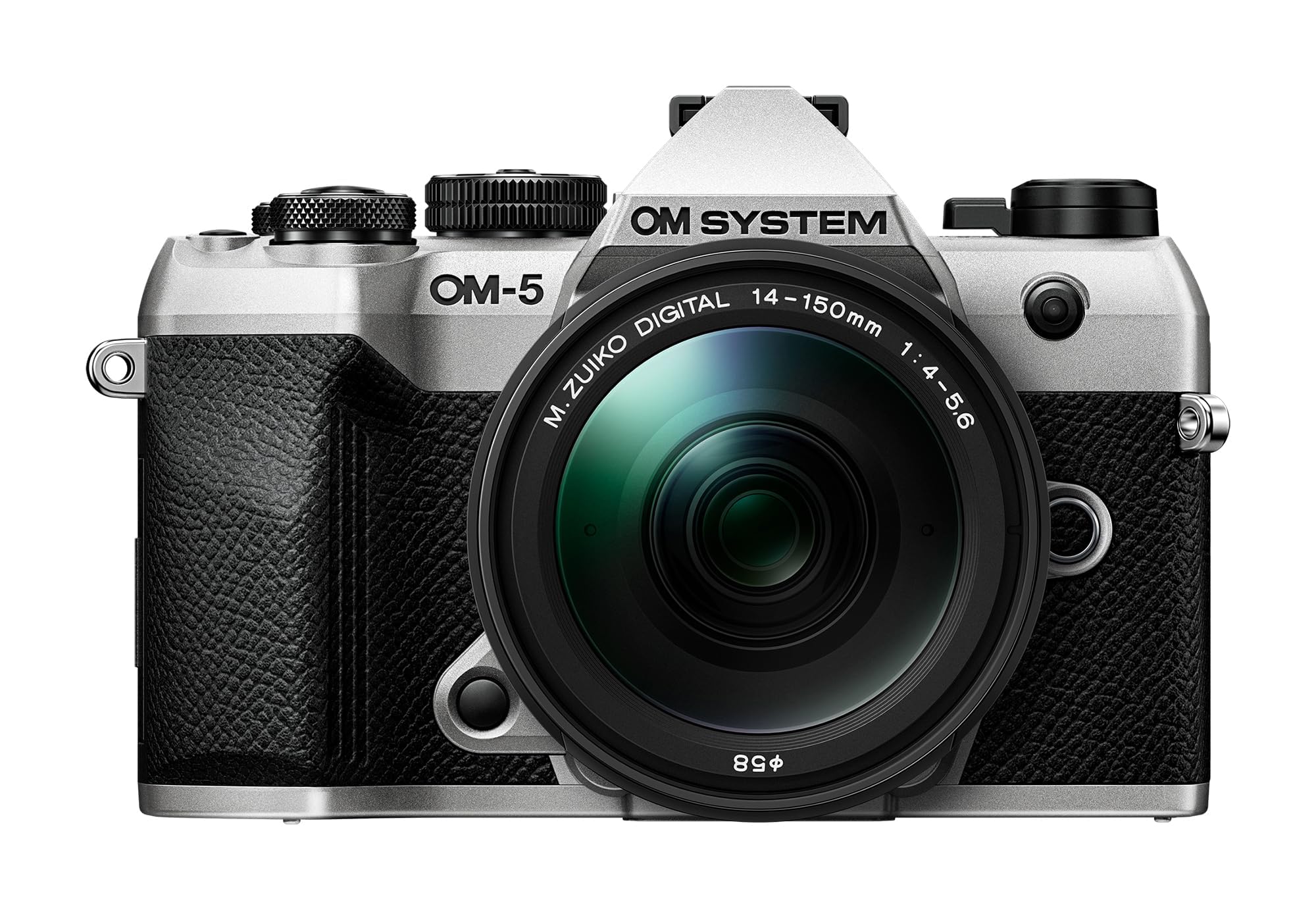
The OM SYSTEM OM-5 Mark II is purpose-built for hybrid shooters who take their gear into harsh environments. The Micro Four Thirds body is fully weather-sealed against dust, rain, and freezing temperatures, and the included M.ZUIKO 14-150mm f/4.0-5.6 II lens matches that sealing while offering a 10.7x optical zoom range equivalent to 28-300mm — one lens covers everything from wide landscapes to distant wildlife.
The 20.4MP BSI Live MOS sensor is smaller than APS-C or full-frame, but the camera compensates with an exceptionally effective 5-axis sensor-shift image stabilization system rated at 6.5 to 7.5 stops. Handheld sunset shots and slow shutter panning are sharper than what larger-sensor cameras without IBIS can achieve. The computational photography button grants access to Live ND, focus stacking, and High Res Shot modes that merge multiple exposures in-camera.
Unlimited 4K 30p recording with no record time limit makes it practical for long interviews or timelapses, and the compact body is lighter than any APS-C kit of equivalent reach. The downside is the Micro Four Thirds sensor’s reduced dynamic range and higher noise above ISO 3200 compared to full-frame alternatives. The battery is small and requires spares for a full day outdoors. For durability and stabilization, this is the best travel companion in the list.
Why it’s great
- Fully weather-sealed body and lens for extreme conditions
- 6.5-7.5 stop IBIS for rock-solid handheld shots
- 10.7x zoom reach from a single lens
Good to know
- Micro Four Thirds sensor has less DR than larger formats
- Noise increases noticeably above ISO 3200
- Small battery requires spares for full-day use
9. Canon EOS R50 with 18-45mm Lens Bundle
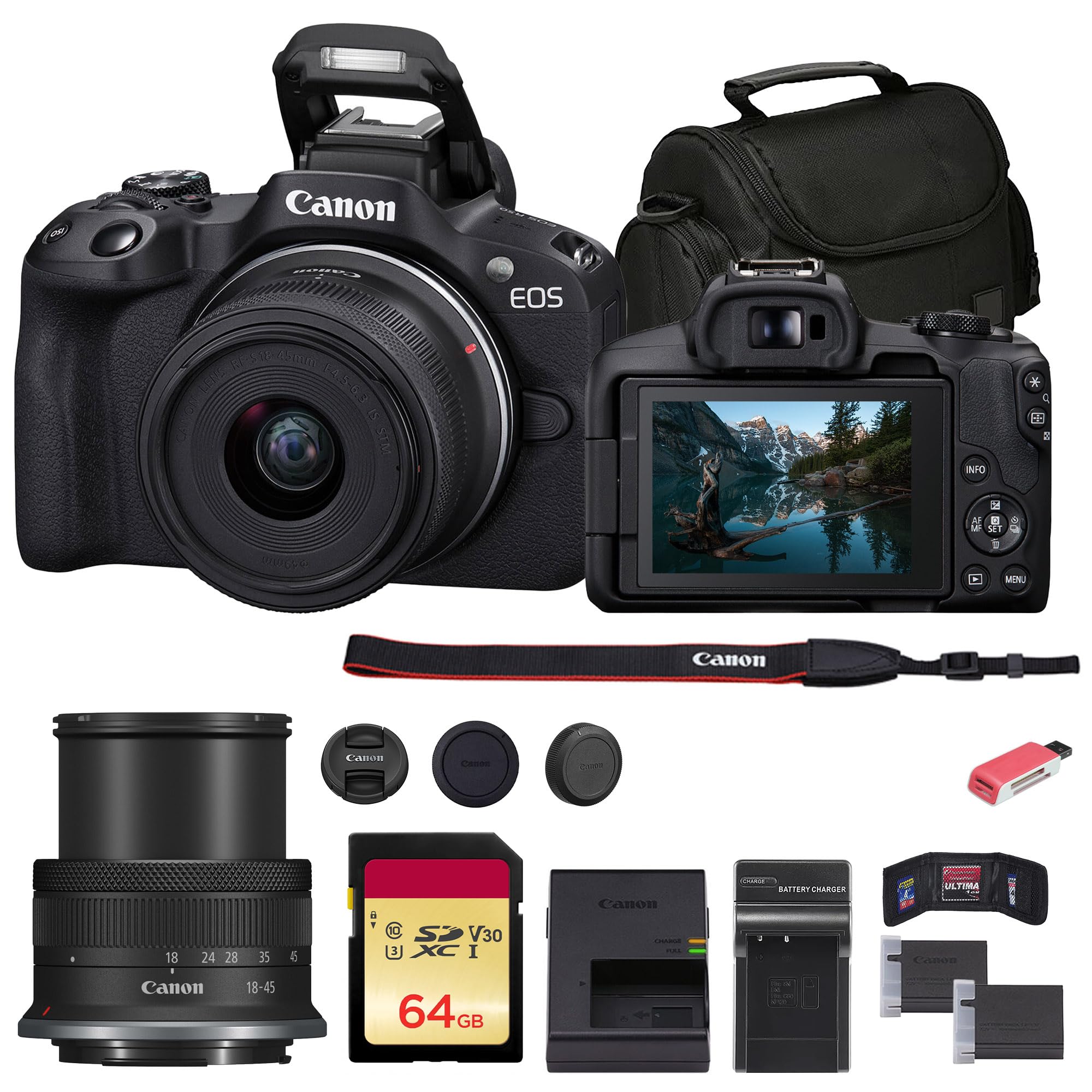
The Canon EOS R50 is positioned as the entry point for users who want hybrid capability without the learning curve. Its 24.2MP APS-C CMOS sensor feeds the DIGIC X processor, which oversamples 6K data to produce clean 4K 30p footage — a feature rare at this tier. The Dual Pixel CMOS AF II provides 651 zone points covering most of the frame, with face and eye tracking that works in both stills and video.
The 3.0-inch vari-angle touchscreen flips forward for self-recording, and the Movie for Close-Up Demo Mode automatically shifts focus to close objects held near the lens, making it useful for product reviews or unboxing content. The 15 fps electronic shutter is fast enough for capturing pets or children, and the camera is noticeably lighter than the R8, ideal for users with smaller hands or longer carry sessions.
The included RF-S 18-45mm f/4.5-6.3 IS STM lens is compact but optically modest, and some users report that upgrading to a prime lens improves sharpness significantly. The battery is the same LP-E17 as the R8, so expect roughly 500 shots per charge. The single UHS-I SD card slot is a bottleneck for 4K video recording, but for the price, this is one of the best debut hybrids available.
Why it’s great
- 6K oversampled 4K 30p for impressive video sharpness
- Dual Pixel CMOS AF II with subject tracking in video
- Close-Up Demo Mode for vlogging product shots
Good to know
- Kit lens is optically modest; a prime upgrade recommended
- Single UHS-I SD slot limits write speed for 4K
- Battery life is adequate but not exceptional
10. Canon EOS R100 with Bag & 64GB Card

This bundle of the Canon EOS R100 packages the camera with the RF-S 18-45mm f/4.5-6.3 IS STM lens, a shoulder bag, a 64GB SD card, a spare LP-E17 battery, an external charger, and a cleaning kit — everything a first-time hybrid shooter needs to start capturing immediately. The 24.1MP APS-C sensor and DIGIC 8 processor deliver the image quality expected from Canon’s EOS R series, with natural bokeh and accurate color reproduction.
The Dual Pixel CMOS AF covers 143 zones with human face and eye detection, plus animal and vehicle tracking. The body is the smallest and lightest in the EOS R line, making it genuinely pocketable for travel. Video reaches 4K at 24 fps with a moderate crop, and 120 fps slow-motion is available in HD. Wi-Fi and Bluetooth allow direct transfers to a smartphone for social sharing.
The DIGIC 8 processor is one generation behind the DIGIC X found in the R50 and above, which means lower noise processing and no oversampled 4K. The 4K 24p recording time is limited, and the single UHS-I card slot and micro-USB port feel dated. For a user who prioritizes a complete, affordable kit over cutting-edge specs, this bundle removes the guesswork of accessory shopping.
Why it’s great
- Complete out-of-box bundle with bag, cards, and spare battery
- Smallest and lightest EOS R body for easy travel
- Dual Pixel AF with face and animal tracking
Good to know
- DIGIC 8 processor is older, no oversampled 4K
- 4K 24p video has a crop and time limits
- Single UHS-I slot and micro-USB connection
11. Canon EOS R100 Body & Lens Kit

The base Canon EOS R100 kit offers the same 24.1MP APS-C sensor and DIGIC 8 processor as the bundled version above but without the extra accessories, making it the lowest-cost entry into the RF-mount system. It captures stills with natural bokeh and smooth color, and the Dual Pixel CMOS AF with 143 zones provides reliable focus for portraits and casual shooting.
The body is compact enough to slip into a jacket pocket, and the 3.0-inch LCD screen offers menu navigation and playback. Video recording reaches 4K at 24 fps with a 1.6x crop, and high-speed HD at 120 fps allows for basic slow-motion effects. Wi-Fi and Bluetooth are on board for wireless sharing, and the LP-E17 battery typically lasts through a day of moderate use.
The lack of a vari-angle screen limits self-recording angles, and the 4K crop makes the kit lens effectively tighter in video mode. The continuous shooting rate of 6.5 fps in One-Shot AF is adequate but not competitive with newer bodies. For the buyer who wants to test the mirrorless waters with the smallest possible investment in Canon’s ecosystem, this body opens the door to upgradeable RF glass later.
Why it’s great
- Lowest entry price into Canon RF-mount system
- Dual Pixel CMOS AF with face and animal detection
- Ultra-compact body for everyday carry
Good to know
- 4K 24p video has a 1.6x crop
- LCD screen is fixed, not vari-angle
- 6.5 fps burst rate is slower than contemporaries
FAQ
Do I need a full-frame sensor for hybrid video and photo work?
What does oversampled 4K mean in practical shooting?
Is in-body stabilization essential for video?
How many autofocus points do I need for hybrid work?
Why would a hybrid shooter choose Micro Four Thirds over APS-C or full-frame?
Final Thoughts: The Verdict
For most users, the best digital camera for photography and video winner is the Canon EOS R8 because it delivers full-frame image quality, uncropped oversampled 4K 60p with Canon Log 3, and the lightest RF-mount body available — an unbeatable balance for hybrid creators who shoot both stills and video in equal measure. If you want the strongest IBIS and dual card slots for professional reliability, grab the Canon EOS R6 Mark III. And for a budget-conscious entry into mirrorless hybrid shooting with a complete accessory kit, nothing beats the value of the Canon EOS R100 bundle.

Mo Maruf
I created WellFizz to bridge the gap between vague wellness advice and actionable solutions. My mission is simple: to decode the research and give you practical tools you can actually use.
Beyond the data, I am a passionate traveler. I believe that stepping away from the screen to explore new environments is essential for mental clarity and physical vitality.