Our readers keep the lights on and my smoothie glass nicely filled. As an Amazon Associate, I earn from qualifying purchases.
Walking into a garden center or scrolling Amazon for potting soil quickly turns into a five‑star headache. Every bag promises “premium” or “moisture control,” yet the real test comes weeks later: roots rotting in compacted mud, fungus gnats hatching from bark, or a plant that simply refuses to push new leaves. The difference between a thriving indoor jungle and a series of sad, drooping leaves is almost always the dirt itself — its texture, its drainage curve, and whether it was formulated for the closed ecosystem of a container, not a garden bed.
I’m Mohammad Maruf — the founder and writer behind WellFizz. I’ve spent hundreds of hours cross‑referencing soil ingredient labels, comparing particle sizes of perlite versus pumice, measuring water‑holding capacities of coco coir against peat moss, and filtering through real user data to separate truly breathable mixes from bags that turn into brick.
This guide cuts through the marketing fluff to land on five mixes that actually work for different indoor plants — from aroid aficionados to snake‑plant minimalists. If you’ve been fighting root rot or slow growth, the right dirt for indoor plants can change everything fast.
How To Choose The Best Dirt For Indoor Plants
Indoor potting mix is fundamentally different from garden soil. Garden soil compacts in a container, cutting off oxygen to roots and creating a stagnant environment that promotes rot. The best indoor mixes prioritize aeration and drainage above all else. Three factors dominate the decision: texture (how chunky or fine the particles are), water‑holding capacity, and whether the mix contains slow‑release fertilizer or relies on the grower to feed separately.
Texture and Aeration
Roots need oxygen as much as they need water. A mix packed entirely with fine peat or coir turns into a sponge that holds moisture for too long. Look for visible chunks — perlite (white volcanic glass), pumice (porous volcanic rock), bark fines, or lava rock — that create air pockets. Chunky mixes like those formulated for aroids allow water to drain within seconds and keep the root zone breathable.
Water Management
Different plants have different thirst levels. Peace lilies and ferns prefer a mix that retains moisture longer, while snake plants and succulents need sharp drainage. Coco coir retains water more uniformly than peat moss and rehydrates easily even after drying out, whereas peat moss can become hydrophobic and repel water if allowed to dry completely. The presence of vermiculite increases water retention, while extra perlite or pumice pushes drainage speed.
Added Ingredients and Fertilizer
Some mixes come pre‑loaded with slow‑release fertilizer that feeds for months; others are inert and require you to add plant food from day one. Pre‑fertilized bags simplify care for beginners, but they can burn sensitive roots if the formula is too strong. Organic components like worm castings, compost, or mycorrhizae boost microbial life and nutrient availability without the risk of chemical burn, making them a safer bet for delicate indoor plants.
Quick Comparison
On smaller screens, swipe sideways to see the full table.
| Model | Category | Best For | Key Spec | Amazon |
|---|---|---|---|---|
| Miracle-Gro Indoor Potting Mix (2-Pack) | All-Purpose | General houseplants, herbs, foliage | Feeds for up to 6 months | Amazon |
| Perfect Plants Organic Snake Plant Soil | Specialty | Snake plants, succulents | Coco coir, pine bark, perlite, sand | Amazon |
| Craft Aroid Potting Mix (Grow Queen) | Specialty Chunky | Aroids, monstera, tropicals | Peat-free, perlite-free, pumice & lava rock | Amazon |
| Soil Sunrise Peace Lily Potting Soil | Specialty | Peace lilies, moisture-loving plants | Pine bark, peat moss, perlite, lime | Amazon |
| Midwest Hearth Premium Potting Soil | All-Purpose | Seed starting, general repotting | Peat moss, vermiculite, perlite | Amazon |
In‑Depth Reviews
1. Miracle-Gro Indoor Potting Mix (2-Pack)
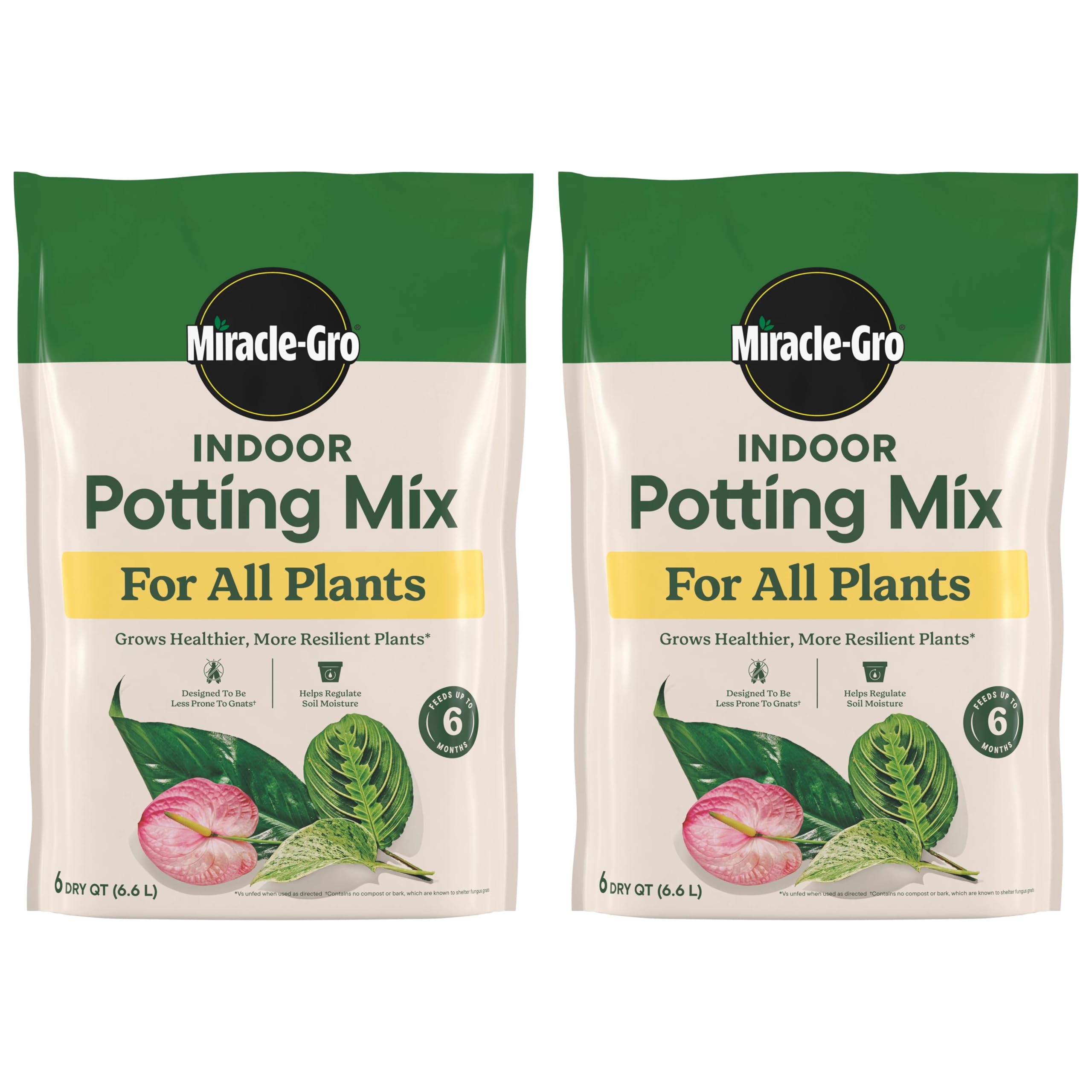
This two‑pack of 6‑quart bags delivers the most consistent, beginner‑friendly formulation on the market. The blend of sphagnum peat moss, coconut coir, and perlite creates a light, fluffy texture that drains dependably while retaining enough moisture between waterings. Unlike many bargain mixes, it contains no compost or bark — the two biggest fungal‑gnat attractors in indoor containers. Users report that plants settle in quickly, push greener growth, and show no signs of waterlogged roots even after multiple weeks.
The built‑in slow‑release fertilizer feeds for up to six months, which eliminates the guesswork of early feeding schedules for new plant parents. Each bag fills roughly four 6‑inch pots, and the two‑pack gives you a comfortable buffer for repotting several plants at once without needing to buy more. The texture stays open rather than compacting into a dense mass, which is critical for maintaining oxygen flow to root systems over time.
Some reviewers noted that the mix can be dusty when first poured, so it helps to moisten it slightly before use. For cacti, succulents, or snake plants that demand extra‑sharp drainage, you may want to mix in additional perlite — the base formula is optimized for general foliage plants, not arid‑adapted species. Overall, this is the most reliable, broadly useful indoor potting soil for anyone who wants to water with confidence.
Why it’s great
- Light, well‑aerated texture resists compaction
- Built‑in fertilizer feeds for six months
- No compost or bark — fewer fungus‑gnat problems
Good to know
- Can be dusty when dry; pre‑moisten before use
- Needs added perlite for succulents and cacti
2. Perfect Plants Organic Snake Plant Soil

Snake plants are notoriously sensitive to overwatering, and this blend addresses that directly. Coco coir replaces peat as the primary moisture‑holding ingredient, providing even water distribution without the risk of becoming hydrophobic when dry. Pine bark chips, perlite, and sand create a coarse structure that lets excess water escape within seconds, which is exactly what Sansevieria roots need to avoid rot. The bag arrives in a heavy‑duty resealable pouch that keeps leftover mix fresh — a thoughtful touch for those who repot one plant at a time.
The formula contains no slow‑release fertilizer, giving the grower full control over feeding. This is ideal for experienced plant owners who prefer to tailor nutrient schedules to each species. The all‑natural ingredients are sourced and mixed in the USA, and the 4‑quart size is plenty for repotting two to three medium snake plants. Users consistently mention that their snake plants show faster root development and perkier leaves after switching to this mix from generic potting soil.
Because the bag is smaller than standard 8‑quart options, the cost per quart runs a bit higher than all‑purpose blends. If you have a large collection or need to repot multiple big specimens, you may go through several bags quickly. Still, for snake‑plant owners who want a purpose‑built mix that virtually eliminates the risk of overwatering, this is the most straightforward choice available.
Why it’s great
- Fast drainage protects snake‑plant roots from rot
- All‑natural ingredients, no synthetic fertilizer
- Resealable bag keeps unused soil fresh
Good to know
- Higher cost per quart than all‑purpose mixes
- Small 4‑quart bag may not go far for large collections
3. Craft Aroid Potting Mix (Grow Queen)
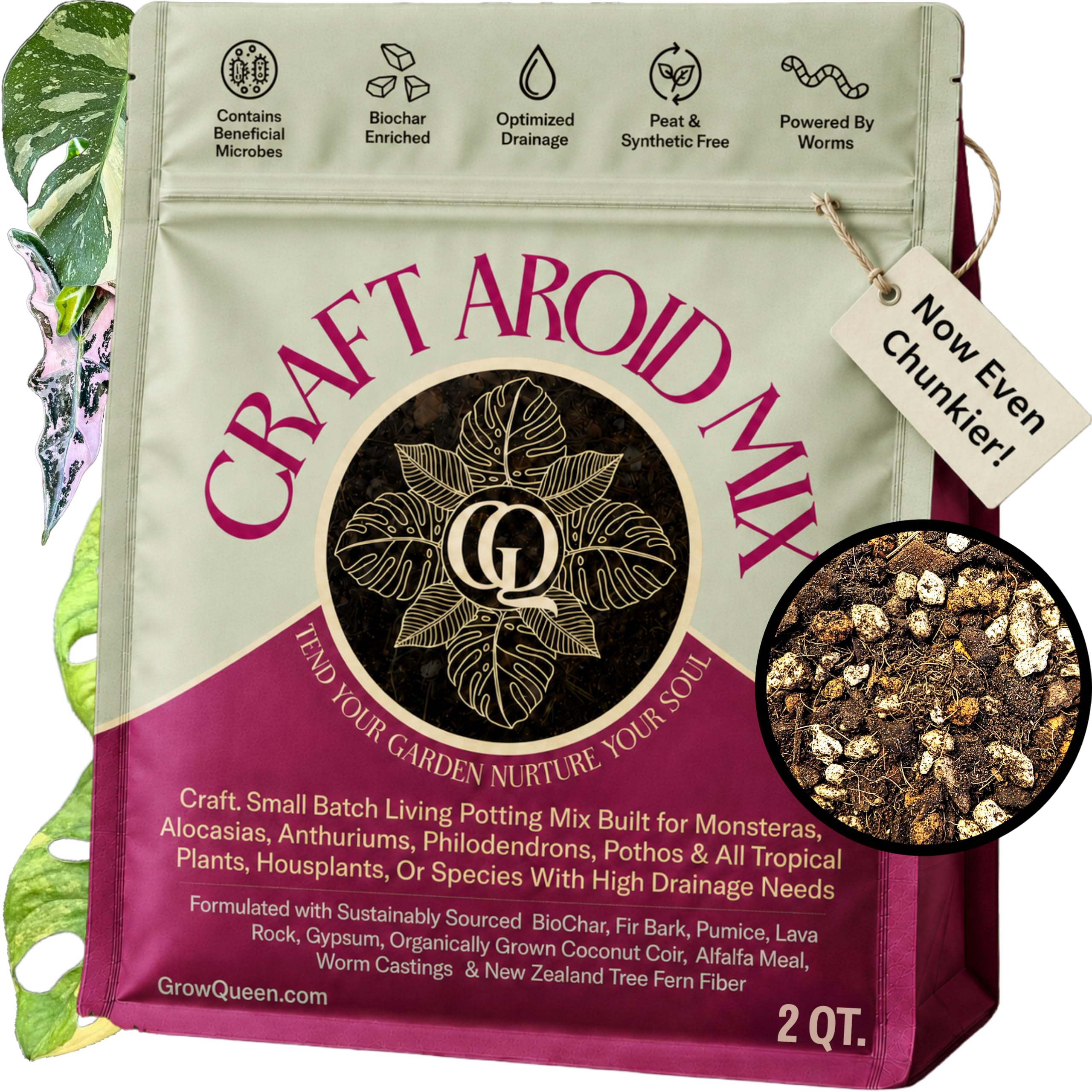
This is the most technically sophisticated mix in the lineup, engineered specifically for aroids — monstera, philodendron, alocasia, anthurium, and hoya — that naturally grow as epiphytes with roots exposed to constant airflow. The blend replaces peat and perlite with Douglas fir bark fines, pumice, lava rock, and certified organic coco coir, creating a chunky, porous structure that makes overwatering nearly impossible. Water flows through immediately while the bark and pumice hold just enough moisture to keep roots hydrated without sitting wet.
New Zealand tree fern fiber is also included to buffer pH down to around 6.0, mimicking the slightly acidic conditions of tropical forest floors. The mix already contains worm castings and beneficial microbes, so plants get a gentle nutrient boost immediately after repotting. Users report zero transplant shock, visible new growth within a week, and no signs of pests or mold even after a month of use. The 2‑quart bag is pre‑moistened and ready to use straight out of the package — no mixing, no dust clouds.
The trade‑off is bag size: at just 2 quarts, this is a premium product aimed at collectors who repot a few select plants rather than a whole shelf of foliage. If you have a large monstera or multiple tropical plants, you will need multiple bags. But for anyone who has lost aroid roots to rot from standard dense soil, this mix is a genuine solution that delivers on its breathability promise.
Why it’s great
- Extreme aeration prevents root rot in sensitive aroids
- Peat‑free and perlite‑free — eco‑conscious formulation
- Comes pre‑moistened, no dust, ready to use
Good to know
- Small 2‑quart bag; expensive for large repotting jobs
- Best suited for aroids and tropicals, not general foliage
4. Soil Sunrise Peace Lily Potting Soil Mix
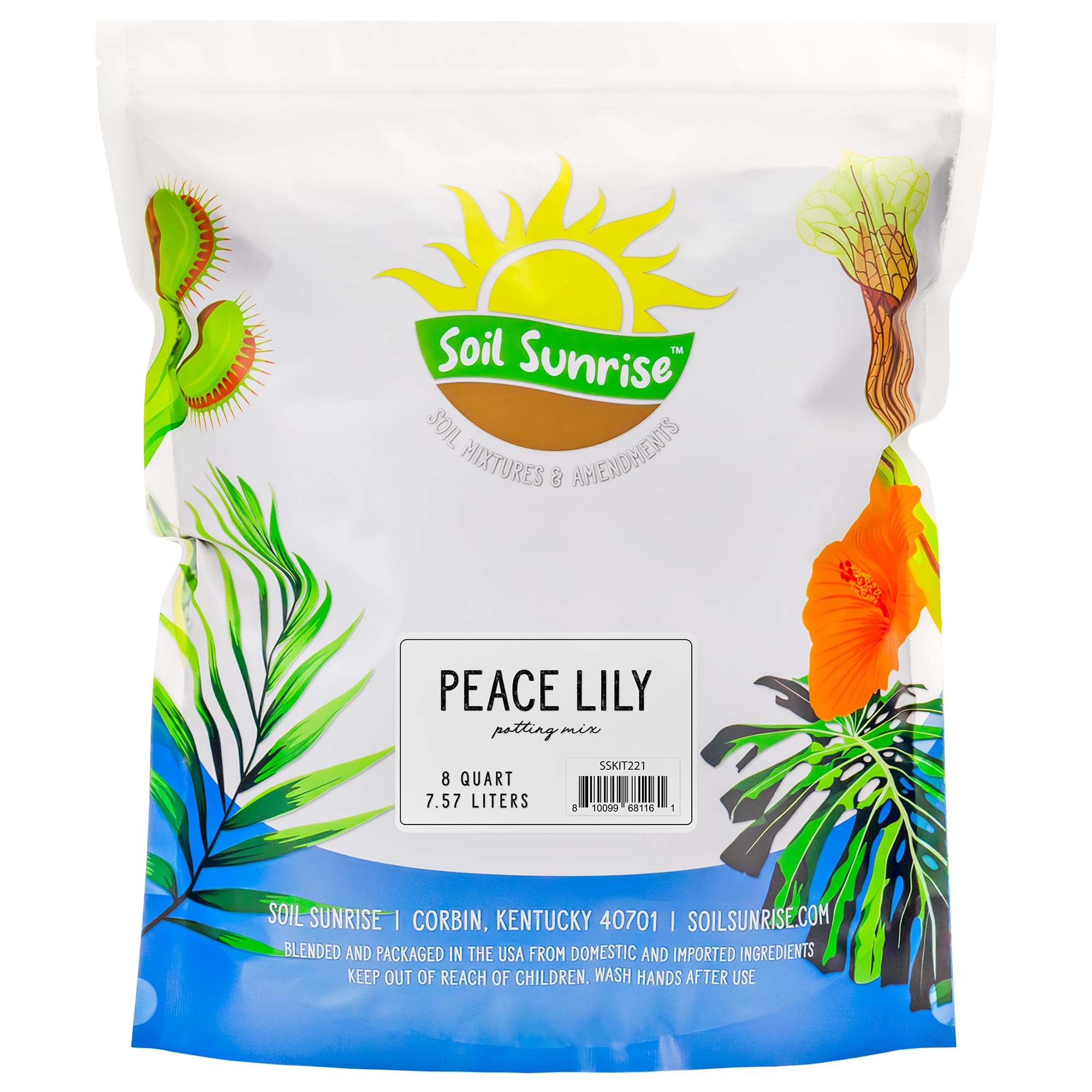
Peace lilies are among the most popular indoor plants, but they have a specific soil preference: consistently moist but never soggy. This mix from Soil Sunrise balances that line with a blend of pine bark, peat moss, perlite, sand, and lime. The pine bark provides structure and slow decomposition, while peat moss holds moisture for the broad, thirsty leaves. Perlite and sand ensure that water doesn’t pool at the bottom of the pot, which is the main cause of yellowing leaves in peace lilies.
There are no chemical or artificial fertilizers in the bag, making it safe for peace lilies that can be sensitive to high salt levels found in some synthetic blends. The 8‑quart bag gives you enough volume to repot a large peace lily or several smaller ones, and the texture stays light enough to work with easily — users specifically mention it’s “light and airy” compared to heavier garden soils. Over time, the lime helps maintain a neutral pH that peace lilies prefer.
Some buyers note that the price feels steep for the size, especially when compared to generic 8‑quart bags from big‑box brands. However, if you have a peace lily that is struggling or you want to avoid the hit‑or‑miss nature of all‑purpose mixes, this targeted formula removes the guesswork. It will also work nicely for other moisture‑loving plants like ferns, calatheas, and spathiphyllum varieties.
Why it’s great
- Balanced moisture retention without waterlogging
- No synthetic fertilizers — safe for sensitive roots
- Pine bark base provides long‑lasting aeration
Good to know
- Costs more per quart than generic potting mixes
- Best for peace lilies and similar moisture‑lovers only
5. Midwest Hearth Premium Potting Soil Mix

This bag takes a back‑to‑basics approach with a classic trio: sphagnum peat moss for moisture retention, perlite for drainage, and vermiculite for added water‑holding capacity and trace mineral availability. The result is a fluffy, light mix that works well for seed starting, small repotting projects, and general‑purpose container gardening indoors. Users consistently point out that it arrives without weeds, bugs, or clumps — a surprisingly common issue with bargain soils — and that it stays open rather than hardening around roots.
The pH is balanced for a broad range of plants, so you can use it for everything from petunias to jade plants without worrying about extreme acidity. The 8‑quart bag is a practical size for a few houseplant repots or a tray of seedlings, and the resealable packaging keeps the mix fresh for later use. Because it contains no added fertilizer, you have full control over feeding, which is ideal for growers who already have a preferred plant‑food regimen.
This mix is visibly finer in texture than the chunky aroid or snake‑plant blends, so it holds more moisture overall. If you are repotting succulents or cacti, you will need to cut it with extra perlite or coarse sand. Also, some users feel the price per quart is slightly higher than comparable generic brands, though the consistent quality and contaminant‑free delivery justify the premium for most indoor gardeners.
Why it’s great
- Consistent, weed‑free, bug‑free quality right out of the bag
- Light, fluffy texture works well for seed starting
- pH balanced for a wide variety of indoor plants
Good to know
- Finer texture holds more moisture — needs amendment for succulents
- No added fertilizer; you must feed separately
FAQ
Can I just use garden soil from outside for my indoor plants?
How often should I repot my indoor plants into fresh soil?
What does “chunky” mean in aroid soil and why does it matter?
Final Thoughts: The Verdict
For most users, the dirt for indoor plants winner is the Miracle‑Gro Indoor Potting Mix (2‑Pack) because it combines a light, well‑aerated texture with built‑in fertilizer and fungus‑gnat‑free ingredients at a practical price. If you want a specialized chunky mix that makes overwatering almost impossible, grab the Craft Aroid Potting Mix from Grow Queen. And for snake‑plant owners who need sharp drainage in a purpose‑built bag, nothing beats the Perfect Plants Organic Snake Plant Soil.

Mo Maruf
I created WellFizz to bridge the gap between vague wellness advice and actionable solutions. My mission is simple: to decode the research and give you practical tools you can actually use.
Beyond the data, I am a passionate traveler. I believe that stepping away from the screen to explore new environments is essential for mental clarity and physical vitality.