Our readers keep the lights on and my smoothie glass nicely filled. As an Amazon Associate, I earn from qualifying purchases.
Whether you are chasing golden-hour landscapes, capturing a child’s first steps, or documenting a travel adventure, the body and lens you choose define every frame you take. A camera that delivers fast autofocus, reliable low-light performance, and intuitive controls saves you from missed moments and soft images. The right sensor size and lens selection also determine how much creative freedom you have as your skills grow.
I’m Mohammad Maruf — the founder and writer behind WellFizz. My market research and spec analysis focuses on sensor technology, autofocus systems, and lens ecosystems to help you find the perfect match for your photography style.
After comparing over a dozen models across multiple price tiers, I’ve identified the most capable options to recommend. This guide covers everything from affordable entry-level cameras to high-end full-frame powerhouses to help you find the best digital camera for photography.
How To Choose The Best Digital Camera For Photography
Not all cameras are built to serve the same photographer. A vlogger prioritizing 4K video face-tracking needs a very different tool than a wildlife photographer who needs 30x optical zoom in a pocket-sized body. Understanding a few core specifications will help you filter out models that don’t match your shooting style.
Sensor Size: Full-Frame vs. APS-C vs. 1-Inch
Full-frame sensors (35.6 x 23.8 mm) deliver the best dynamic range and low-light performance, making them ideal for portraits, landscapes, and indoor shooting. APS-C sensors provide an excellent balance of image quality and affordability, while smaller 1-inch sensors in compact cameras prioritize portability. For serious photography, choose at least APS-C; for professional results, prioritize full-frame.
Autofocus System and Subject Tracking
Phase-detection autofocus points (the more the merrier) directly affect how quickly the camera locks onto a moving subject. Cameras with 425 or more points and advanced eye/face tracking (for people, animals, or vehicles) significantly reduce missed focus in fast-paced scenarios like sports or child photography.
Optical Zoom and Focal Range
For general photography, a standard zoom lens covering 24-70mm or 28-70mm is versatile. If you shoot distant wildlife or concerts, a superzoom with 30x to 40x optical reach (like the Panasonic ZS99 or Canon SX740) is essential. Keep in mind that longer zoom ranges often come with smaller maximum apertures, which affect low-light performance.
Quick Comparison
On smaller screens, swipe sideways to see the full table.
| Model | Category | Best For | Key Spec | Amazon |
|---|---|---|---|---|
| Sony A7 IV | Premium Full-Frame | Hybrid photo/video | 33MP full-frame sensor | Amazon |
| Sony A7 III | Full-Frame All-Rounder | Low-light & action | 693 AF points | Amazon |
| Canon EOS R8 | Lightweight Full-Frame | Content creation | 4K 60p uncropped video | Amazon |
| Canon EOS RP | Entry Full-Frame | Travel & vlogging | RF 24-105mm kit lens | Amazon |
| Nikon Z50 II | APS-C Travel Kit | Travel with two lenses | 20.9MP APS-C sensor | Amazon |
| Sony ZV-E10 | APS-C Vlogger | Vlogging & streaming | 425 phase-detection points | Amazon |
| Canon EOS R100 Kit | Entry Mirrorless | Beginner two-lens setup | 24MP APS-C sensor | Amazon |
| OM System E-M10 IV | Compact Micro 4/3 | Lightweight everyday carry | 5-axis IBIS (4.5 stops) | Amazon |
| Panasonic LUMIX ZS99 | Superzoom Compact | Concerts & travel | 30x optical zoom (24-720mm) | Amazon |
| Canon PowerShot SX740 HS | Superzoom Pocket | Long reach in a small body | 40x optical zoom (24-960mm) | Amazon |
| Canon EOS Rebel T7 (Renewed) | Budget DSLR | Entry-level learning | 24.1MP CMOS sensor | Amazon |
In‑Depth Reviews
1. Sony Alpha 7 IV Full-Frame Mirrorless Camera with 28-70mm Lens

The Sony A7 IV sits at the top of this list because it delivers a rare combination of high-resolution stills and professional-grade video in a single body. Its 33-megapixel back-illuminated full-frame sensor captures exceptional detail and color depth, while the BIONZ XR processor enables 4K 60p 10-bit 4:2:2 recording with 7K oversampling. The 28-70mm kit lens provides a versatile starting range for portraits, landscapes, and general walkaround photography.
Real photographers consistently praise the autofocus system for its speed and accuracy, especially when using real-time eye tracking for both humans and animals. The articulating touchscreen and comfortable grip make extended shooting sessions manageable. Battery life is strong for a full-frame mirrorless model, and the S-Cinetone color profile gives video a cinematic look straight out of camera without grading.
On the downside, the kit lens is not particularly fast at f/3.5-5.6, meaning you will want to invest in brighter primes or zooms for serious low-light work. The menu system, while improved, still has a learning curve for first-time Sony users. But for anyone seeking a hybrid camera that excels at both photography and video, the A7 IV is the most complete package.
Why it’s great
- 33MP full-frame sensor with outstanding dynamic range
- Real-time eye AF for people, animals, and birds
- 4K 60p 10-bit 4:2:2 with S-Cinetone
- Ergonomic build with articulating screen
Good to know
- Kit lens aperture is slow for low light
- Sony menu system takes time to learn
- Premium price point reflects hybrid capabilities
2. Sony a7 III Full-Frame Mirrorless Camera with 28-70mm Lens

The Sony a7 III remains a benchmark for full-frame value years after its release, and for good reason. Its 24.2-megapixel back-illuminated sensor paired with 693 phase-detection autofocus points delivers reliable focus in challenging light. The 15-stop dynamic range ensures you can recover shadows and highlights without banding, making it a favorite among wedding and event photographers working under mixed lighting.
Battery life is exceptional, rated at roughly 710 shots per charge, which is nearly double what many competing mirrorless cameras offer. The mechanical shutter can fire at up to 10 fps with continuous AF, so fast-moving subjects like pets or children are easy to track. The kit 28-70mm lens is decent for everyday use, but pairing the body with a fast prime like a 50mm f/1.8 dramatically improves low-light performance and background separation.
Video features are still capable at 4K 30p, though the lack of 10-bit internal recording shows its age next to the A7 IV. Some users find the menu system cluttered, and the rear LCD is not touch-responsive for menu navigation. Still, for pure photographic performance at a mid-range price, the a7 III is a workhorse that remains highly relevant.
Why it’s great
- 693 AF points cover 93% of the frame
- 15-stop dynamic range for shadow recovery
- Roughly 710-shot battery life
- 10 fps burst with continuous AF
Good to know
- No 10-bit internal video recording
- Menu system is aging and cluttered
- Rear screen is not fully touch-responsive
3. Canon EOS R8 Mirrorless Camera Body

The Canon EOS R8 is the lightest full-frame RF-mount body Canon has ever made, and it packs serious performance into a compact frame. The 24.2-megapixel sensor and DIGIC X processor deliver sharp, vibrant stills with excellent dynamic range. Video shooters benefit from uncropped 4K 60p oversampled from 6K, plus Canon Log 3 for advanced color grading. The Dual Pixel CMOS AF II system covers nearly the entire sensor with 1,053 zones and detects people, animals, and vehicles.
Users consistently mention the camera’s ergonomic grip and intuitive touchscreen as major advantages for long handheld sessions. The 40 fps electronic shutter (with AF tracking) is excellent for capturing fast action. The R8 also functions as a high-quality webcam over USB, which adds versatility for streamers or remote workers who also shoot photography.
The major trade-off is battery life: the LP-E17 pack yields about 500 photos or roughly one hour of 4K60 video before needing a swap. There is no in-body image stabilization, so you will rely on stabilized RF lenses for steady handheld footage. It also has a single SD card slot, which may deter pros who need redundancy. But for lightweight travel and content creation, the R8 offers remarkable image quality in a small package.
Why it’s great
- Uncropped 4K 60p oversampled from 6K
- 1,053 AF zones with deep-learning subject tracking
- Lightest Canon full-frame body
- Canon Log 3 for professional video grading
Good to know
- Small battery; carry spares
- No in-body image stabilization
- Single SD card slot
4. Canon EOS RP with RF24-105mm Lens

The Canon EOS RP is one of the most affordable full-frame mirrorless cameras available, making it an ideal gateway into the RF ecosystem. Its 26.2-megapixel sensor produces excellent color science and fine detail, especially in RAW format. The RF 24-105mm f/4-7.1 IS STM kit lens provides a versatile focal range covering wide-angle to portrait-length, and the optical stabilization helps in lower light at the wider end.
Photographers upgrading from APS-C models like the Canon T7 or Nikon D3500 will immediately appreciate the shallower depth of field and improved high-ISO performance that full-frame sensors deliver. The vari-angle touchscreen makes composing from awkward angles easy, and the electronic viewfinder is crisp. The menu system is simple and familiar for previous Canon users, with good manual controls that encourage creative growth.
Video recording is limited to 4K with a 1.6x crop and a 30-minute record limit, which reduces its appeal for serious videographers. The burst rate of 5 fps is modest, and continuous autofocus can struggle during rapid sequences. But for portrait, landscape, and everyday photography on a budget, the RP offers genuine full-frame quality at an approachable price point.
Why it’s great
- Entry-level price for full-frame sensor
- Excellent Canon color science and skin tones
- Vari-angle touchscreen for flexible shooting
- Lightweight body for travel and vlogging
Good to know
- 4K video has a 1.6x crop and 30-min limit
- 5 fps burst is slow for action
- Kit lens aperture narrows at telephoto
5. Nikon Z50 II with Two Lenses

The Nikon Z50 II is a well-rounded APS-C mirrorless camera that comes with two zoom lenses covering 16-50mm and 50-250mm, giving you wide-angle to telephoto reach in a compact travel kit. The 20.9-megapixel DX sensor delivers lifelike colors and good detail, especially in well-lit conditions. One standout feature is the 31 built-in Picture Control presets, which let you customize the look of your images in-camera and save or download new ones via the Nikon Imaging Cloud.
Autofocus is reliable for its class, with subject detection for people, dogs, cats, birds, and vehicles. Dedicated bird and airplane modes improve accuracy for specific wildlife and aviation scenarios. The built-in flash and Night Portrait mode make it functional for indoor and evening shots without external lighting. The SnapBridge app allows quick wireless transfers to your phone, which is practical for social media sharing on the go.
The kit lenses are optically decent but not exceptionally fast, with maximum apertures around f/3.5-6.3. Video support reaches 4K 60p with electronic VR, though the stabilization is not as effective as in-body systems. For travelers who want a lightweight, two-lens system that covers most shooting scenarios without carrying multiple bodies, the Z50 II is a solid choice.
Why it’s great
- Two-lens kit covers 16-250mm range
- 31 in-camera Picture Controls for creative looks
- Subject detection for animals and vehicles
- Compact and lightweight for travel
Good to know
- Kit lens apertures are slow in low light
- Electronic VR is less effective than IBIS
- Menu system can be complex for beginners
6. Sony Alpha ZV-E10 APS-C Vlog Camera Kit
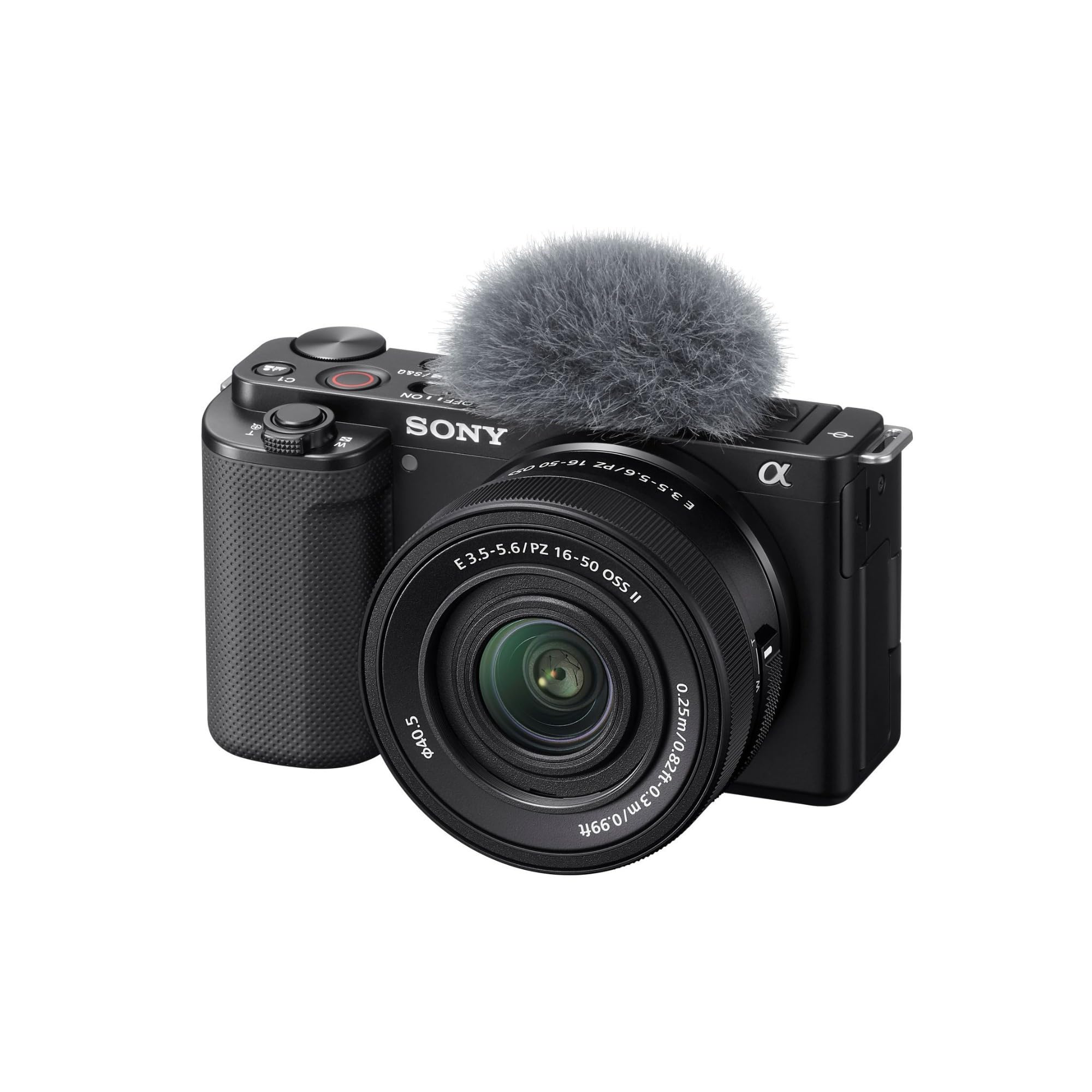
The Sony ZV-E10 is built specifically for content creators who need a versatile interchangeable-lens camera with strong video features. Its 24.2-megapixel APS-C sensor and BIONZ X processor deliver sharp images and smooth 4K video oversampled from 6K. The Product Showcase mode transitions focus from your face to an object held in front of the lens, which is extremely useful for review and tutorial videos. The Background Defocus button instantly toggles a shallow depth of field effect.
The 425 phase-detection autofocus points provide reliable subject tracking for both stills and video. The camera is also easy to live stream via a single USB cable without extra hardware. The compact body makes it convenient for handheld vlogging, and the kit lens (16-50mm) offers a decent starting focal range for everyday content.
The ZV-E10 lacks in-body image stabilization, so handheld footage can appear shaky without a gimbal. The touchscreen only works for focus point selection, not menu navigation, which slows down settings changes. Some users also report the microphone preamps are not as clean as dedicated audio interfaces. For the price, it remains one of the best vlogging-specific APS-C cameras on the market.
Why it’s great
- Product Showcase mode for review videos
- 4K oversampled from 6K with full pixel readout
- USB streaming without extra hardware
- 425 AF points with reliable face tracking
Good to know
- No in-body image stabilization
- Touchscreen limited to focus only
- Microphone preamps are average
7. Canon EOS R100 Camera Kit with Dual Lenses
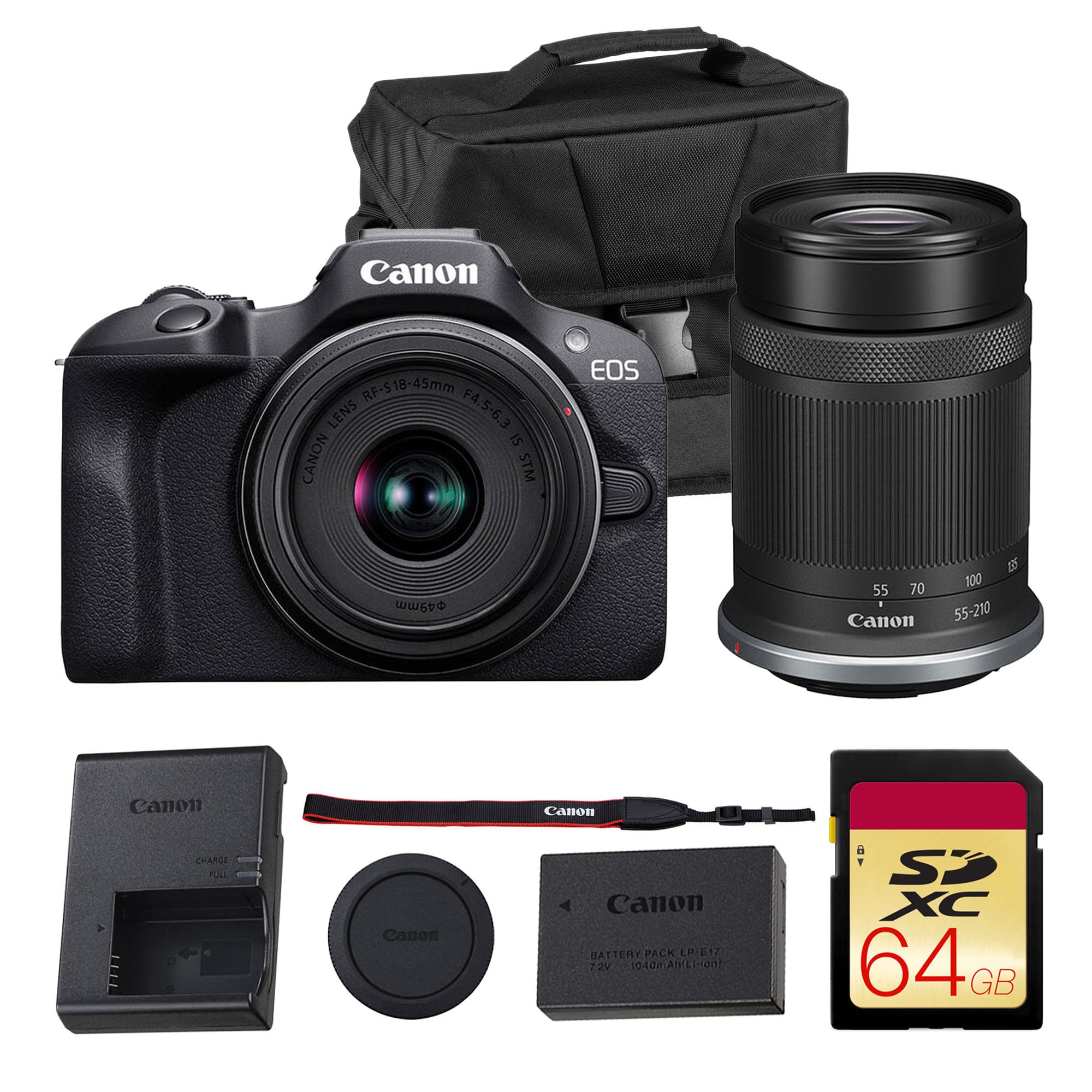
The Canon EOS R100 is an entry-level mirrorless camera designed to help beginners transition from smartphone photography to a dedicated system. It features a 24.1-megapixel APS-C sensor and Canon’s Dual Pixel CMOS AF, which provides smooth and accurate autofocus for stills and video. The kit includes two zoom lenses — an 18-45mm and a 55-210mm — covering a wide range from everyday scenes to distant subjects.
Users appreciate the camera’s light weight and straightforward interface, which makes it easy to learn the basics of exposure, composition, and lens changes. The 4K video capability is a bonus for capturing family events or travel clips. The bundled shoulder bag and 64GB memory card add immediate value for first-time buyers who do not have accessories yet.
The R100 lacks a built-in flash, so you will need an external unit for indoor events. The 45 autofocus points are fewer than what more advanced mirrorless cameras offer, and the burst rate is modest. But as a complete system for someone who wants to explore photography without a steep learning curve, this kit delivers everything needed to get started.
Why it’s great
- Two-lens kit covers wide to telephoto
- Dual Pixel AF for smooth autofocus
- Lightweight and beginner-friendly
- Includes bag and 64GB memory card
Good to know
- No built-in flash
- Only 45 autofocus points
- Modest burst speed for action
8. OM System Olympus E-M10 Mark IV with 14-42mm Lens

The OM System E-M10 Mark IV is a compact Micro Four Thirds camera that punches above its weight in stabilization and creative features. Its in-body 5-axis image stabilization provides up to 4.5 stops of shake compensation, allowing sharp handheld shots in low light without a tripod. The 20-megapixel Live MOS sensor delivers pleasing colors, and the 121 contrast-detect autofocus points cover the frame reliably in most situations.
The flip-down monitor enables a dedicated selfie mode that automatically activates when the screen is fully rotated, which is handy for travel self-portraits. The 16 Art Filters, including Instant Film, give users creative looks straight out of camera without editing. The compact body paired with the 14-42mm EZ pancake lens fits into a jacket pocket, making it one of the most portable interchangeable-lens cameras available.
The Micro Four Thirds sensor has a crop factor of 2x, which makes achieving very shallow depth of field more challenging than with APS-C or full-frame cameras. The kit lens is decent for daytime use, but upgrading to a fast prime like the Olympus 25mm f/1.8 improves low-light performance significantly. The included battery charger is not USB-C, which is an inconvenience for modern travelers.
Why it’s great
- 5-axis IBIS with 4.5-stop compensation
- Jacket-pocket size with pancake zoom
- 16 Art Filters including Instant Film
- Flip-down selfie screen with auto mode
Good to know
- 2x crop sensor limits background blur
- Kit lens needs better light for sharp results
- No USB-C charging; proprietary charger
9. Panasonic LUMIX ZS99 Point and Shoot Camera

The Panasonic LUMIX ZS99 solves a specific problem: how to capture distant subjects without carrying a full-sized telephoto setup. Its 30x optical zoom ranges from 24mm wide-angle to 720mm telephoto, powered by a LEICA DC Vario-Elmar lens. The 1.84-million-dot tiltable touchscreen makes framing from low or high angles comfortable. Built-in Bluetooth 5.0 and a dedicated Send Image button allow fast wireless transfers to your smartphone.
Concert and live-event shooters will appreciate the non-pro appearance, which often lets the camera in venues that restrict larger gear. The 4K video at 30 fps produces sharp clips, and the 120 fps high-speed video mode adds creative slow-motion options. Optical image stabilization helps smooth out handheld shots at the telephoto end, though a steady hand is still beneficial at the full 720mm reach.
The small 1/2.3-inch sensor is the main compromise: image quality, especially in low light, does not match APS-C or full-frame cameras. The 4K recording is limited to 15-minute clips, and the camera can overheat during extended video use at the longest zoom settings. This is not a camera for high-ISO studio work, but for outdoor and well-lit event photography where reach is the priority, the ZS99 delivers impressive flexibility.
Why it’s great
- 30x LEICA zoom (24-720mm) in a pocket body
- Tiltable touchscreen for creative angles
- Bluetooth 5.0 and fast image sharing
- Non-pro look passes venue restrictions
Good to know
- Small sensor limits low-light quality
- 4K video caps at 15-minute clips
- Overheating possible during long telephoto video
10. Canon PowerShot SX740 HS Digital Camera
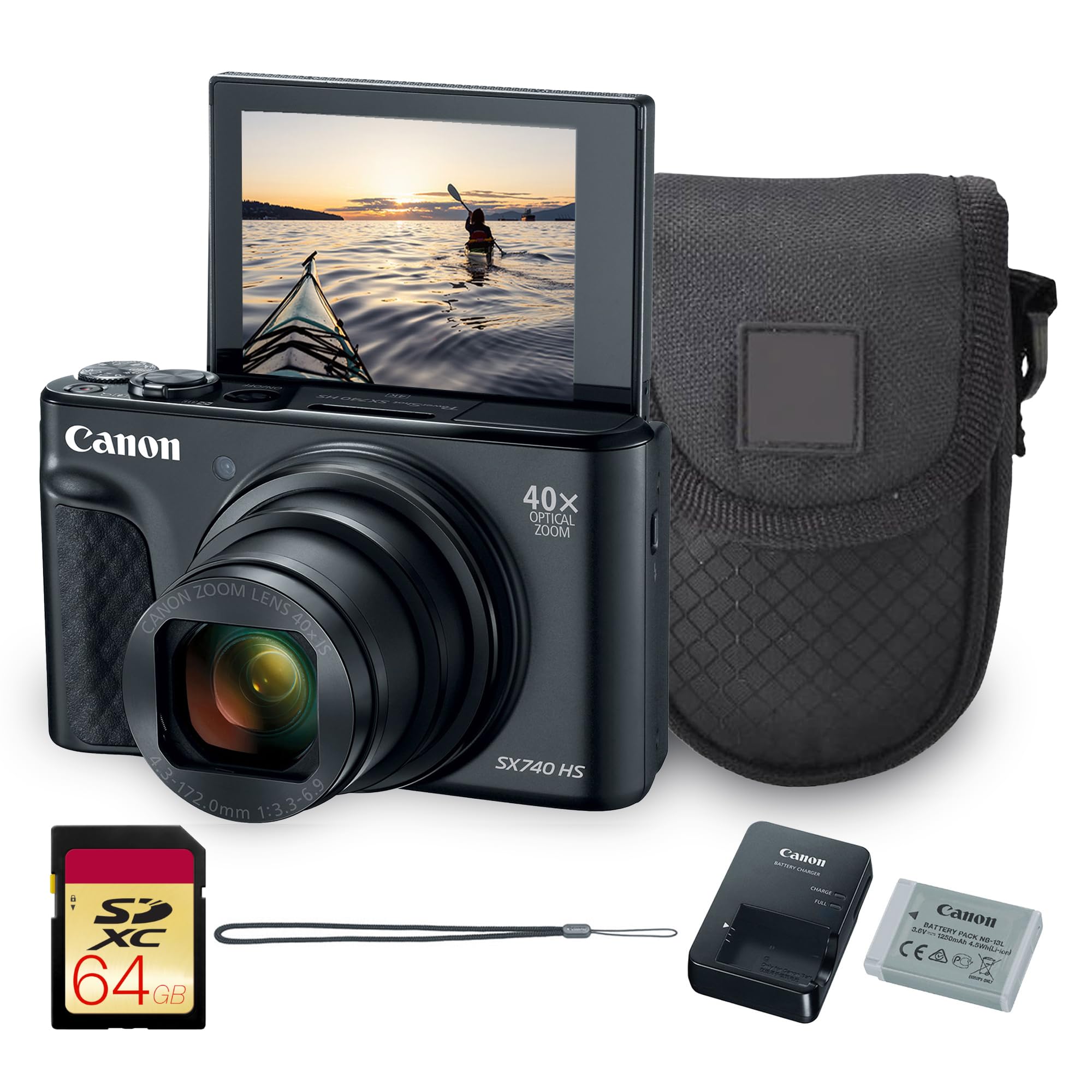
The Canon PowerShot SX740 HS packs an enormous 40x optical zoom lens (24-960mm equivalent) into a body that slides easily into a jacket pocket. The 20.3-megapixel CMOS sensor and DIGIC 8 image processor produce vibrant JPEGs with good color, even without post-processing. Built-in 5-axis image stabilization smooths handheld video at the telephoto end, making it functional for wildlife, air shows, and sporting events.
Battery life is a strong point for this class: users frequently report shooting for several days on a single charge. The flip-up screen makes selfies and vlogging practical, and the Wi-Fi and Bluetooth connectivity allow quick sharing to a phone via the Canon Camera Connect app. The included bag and 64GB card add value for travel buyers who want a grab-and-go solution.
Image quality at the longest telephoto lengths shows some softness, and the small sensor struggles in dim environments, producing noticeable noise above ISO 800. The lack of an electronic viewfinder forces composition on the rear screen, which can be difficult in bright sunlight. It is not a camera for pixel-peepers, but for travelers who want incredible reach in a tiny package, the SX740 HS is unmatched.
Why it’s great
- 40x optical zoom (24-960mm) in a pocket body
- Excellent battery life for multi-day trips
- Flip-up screen for selfies and vlogging
- 5-axis stabilization for video
Good to know
- Small sensor is noisy above ISO 800
- No electronic viewfinder
- Softness at full zoom extension
11. Canon EOS Rebel T7 DSLR with 18-55mm Lens (Renewed)

The Canon EOS Rebel T7 is a classic entry-level DSLR that offers a forgiving learning curve for first-time photographers. Its 24.1-megapixel CMOS sensor delivers solid image quality for its price tier, especially when shooting in RAW format. The 9-point autofocus system with AI Servo AF is basic but functional for still subjects and slow motion. The optical viewfinder gives a direct, lag-free view that many beginners prefer over electronic viewfinders.
This renewed model looks and functions like new at a fraction of the original retail price, making it one of the most budget-friendly ways to enter the Canon EF/EF-S lens ecosystem. The 18-55mm kit lens covers standard focal lengths for everyday photography. Built-in Wi-Fi and NFC make sharing images to a smartphone straightforward, and the 3-inch LCD provides live view for when you prefer composing on a screen.
The 9 AF points are limited compared to modern mirrorless cameras, and the camera feels slightly bulky by today’s standards. The burst rate of 3 fps is too slow for fast action. The T7 also lacks 4K video, limiting its use for modern video work. Yet for someone who wants to learn composition, aperture, and shutter speed on a real DSLR without spending much, the T7 is a proven starting point.
Why it’s great
- Very affordable entry into interchangeable-lens photography
- Canon EF/EF-S lens library is huge and cheap used
- Optical viewfinder with no lag
- Wi-Fi/NFC for easy phone sharing
Good to know
- Only 9 autofocus points
- No 4K video recording
- 3 fps burst is too slow for action
FAQ
Is a full-frame sensor worth the extra cost for a beginner?
How many autofocus points do I need for wildlife or sports photography?
Does optical zoom matter more than image stabilization in a travel camera?
Final Thoughts: The Verdict
For most users, the best digital camera for photography winner is the Sony Alpha 7 IV because its 33MP full-frame sensor, class-leading autofocus, and 4K 60p 10-bit video make it a true hybrid workhorse that handles everything from portraits to action without compromise. If you want the best all-round value and prioritize stills, grab the Sony a7 III. And for a travel-anywhere camera with incredible zoom reach, nothing beats the Canon PowerShot SX740 HS.

Mo Maruf
I created WellFizz to bridge the gap between vague wellness advice and actionable solutions. My mission is simple: to decode the research and give you practical tools you can actually use.
Beyond the data, I am a passionate traveler. I believe that stepping away from the screen to explore new environments is essential for mental clarity and physical vitality.